Introduction/Overview
Diabetes (DM), as a global chronic metabolic disease, its incidence rate continues to rise and has become a serious public health challenge. Long term hyperglycemia can lead to various complications such as cardiovascular disease, kidney disease, neuropathy, and retinopathy, seriously endangering human health. Although existing therapies such as insulin and oral hypoglycemic drugs (such as metformin, sulfonylureas, SGLT2 inhibitors, etc.) have achieved significant results, problems such as drug side effects, drug resistance, and limited control of complications still exist. Therefore, it is always an important direction for drug research and development to find new anti diabetes lead compounds with high efficiency, low toxicity and multiple targets from natural products.
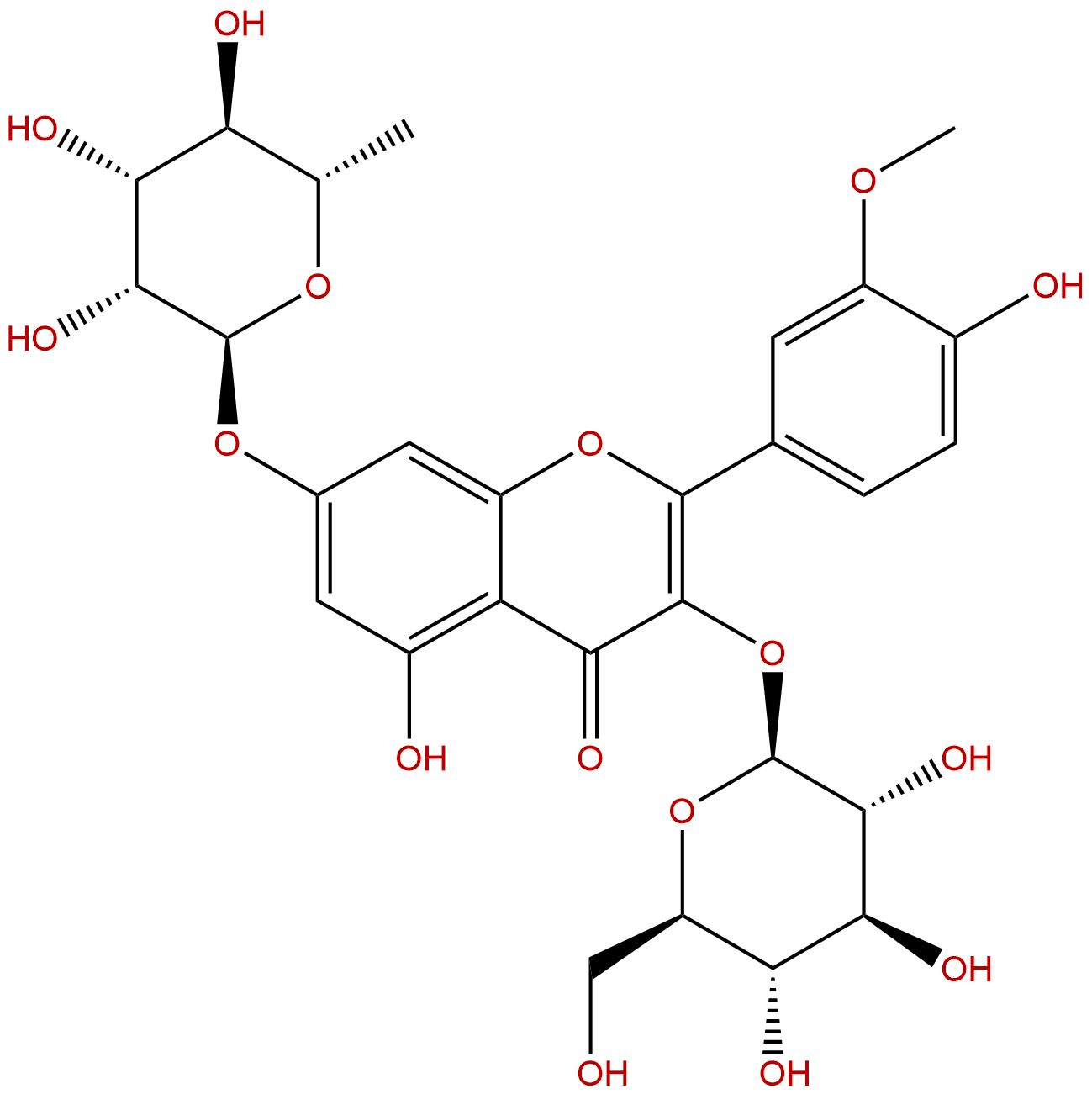
Flavonoids are widely present in the plant kingdom and have attracted much attention for their diverse chemical structures and extensive biological activities. Isorhamnetin-3-O-glucose-7-O-rhamnoside (IGR), CAS number 17331-71-4, is an O-glycosylated derivative of isorhamnetin. Isorhamnetin itself is a 3 '- O-methylated derivative of quercetin, with various pharmacological activities such as anti-inflammatory, antioxidant, anti-tumor, and improving insulin resistance. Its glycosylation modifications (such as linking glucose and rhamnose) not only affect its solubility and stability, but may also alter its bioavailability, tissue distribution, and interaction with specific targets, resulting in unique pharmacological effects. In recent years, with the development of network pharmacology and molecular docking technology, the potential of IGR in anti diabetes has gradually emerged, involving several key targets such as AMPK, SGLT2, GCK, PTPN1, etc. The purpose of this paper is to systematically review the chemical properties, plant origin, anti diabetes pharmacological activity, mechanism of action, pharmaceutical evaluation and clinical application prospects of IGR, in order to provide a comprehensive scientific reference for the in-depth research and development of this natural product.
Chemical structure and physicochemical properties
The chemical structure of IGR is based on the flavonol core. Its basic skeleton is 2-phenylchromenone-4-one, specifically isorhamnetin, which is the product of methoxylation (- OCH3) of the B ring 3 'hydroxyl group of quercetin (3,5,7,3', 4 '- pentahydroxyflavone). IGR has a glucose group attached to the 3rd hydroxyl group of the isorhamnosus skeleton and a rhamnoside group attached to the 7th hydroxyl group, forming a dual glycosidic structure. This specific glycosylation pattern is a key feature that distinguishes it from isorhamnetin monoglycosides or other diglycosides.
According to the provided pharmacological parameters, its molecular weight is 624.5480 g/mol. The calculated LogP value of the lipid water partition coefficient is -0.3716, indicating that the compound has good hydrophilicity, which is mainly attributed to the presence of multiple hydroxyl and sugar groups in its molecule. The topologically polar surface area (TPSA) is as high as 258.4300 Å ², further confirming its strong polarity characteristics, which usually indicate poor passive permeability of the cell membrane. The water solubility value is 3.2229 (usually measured in mg/mL or log mol/L, indicating moderate to high water solubility), which is beneficial for its formulation development in aqueous media. The permeability of the blood brain barrier (BBB) is predicted to be "low", indicating that it is not easy to enter the central nervous system, which may help reduce the side effects of the central nervous system for anti diabetes drugs that mainly act on peripheral metabolic organs. Preliminary toxicity screening showed that it has no inhibitory activity on hERG potassium channels ("no"), reducing the risk of inducing QT interval prolongation and apical torsion type ventricular tachycardia; The Ames test result is 0.6 (usually a value less than 1.5 or 2 times the negative control is considered negative), indicating that it has no significant genetic toxicity potential. These physicochemical and early safety properties laid a certain foundation for the subsequent development of IGR.
Plant sources and extraction methods
IGR is mainly found in various medicinal and edible plants, especially abundant in plants of the Polygonaceae, Asteraceae, and Rosaceae families. Famous traditional anti diabetes plant Sea buckthorn The leaves and fruits of Hippophae rhamnoides L. are one of its important sources. In addition, some herbs used to improve blood sugar, such as Red wheelbase grass(Trifolium pratense)、Ginkgo leaf Ginkgo Biloba L. and some others Cactus The compound or its analogues have also been detected in the Opuntia spp. variety. The traditional uses of these plants are mutually confirmed by modern pharmacological discoveries, suggesting the possibility of IGR as an active ingredient.
Solvent extraction method is commonly used to extract IGR from plant materials. Due to the strong polarity of IGR,Methanol, ethanol, or ethanol water mixed solvents It is a commonly used extraction medium. In order to improve extraction efficiency, modern technologies such as Ultrasonic assisted extraction(UAE)、Microwave assisted extraction(MAE) and Pressurized liquid extraction(PLE) has been widely used. These methods destroy plant cell walls through physical means, accelerate solvent penetration and compound dissolution, achieve higher extraction rates in shorter times and at lower temperatures, and reduce the degradation of thermosensitive components.
The crude extract contains a large amount of impurities and requires further separation and purification to obtain high-purity IGR. The conventional purification process includes: first, utilizing Macroporous adsorption resin Enrichment is carried out using AB-8 and D101 types, and water-soluble impurities such as sugars and proteins are removed based on the adsorption desorption principle to preliminarily concentrate flavonoid glycosides. Subsequently, adopting silica gel column chromatography、Polyamide column chromatography or Sephadex gel column chromatography(such as Sephadex LH-20) for medium or atmospheric pressure separation. The final high-purity preparation often relies on Preparation type high-performance liquid chromatography(Prep-HPLC), Use a reverse phase C18 chromatography column with methanol water or acetonitrile water (usually adjusted to pH with a small amount of formic acid or acetic acid) as the mobile phase for gradient elution. Monitor and collect the target peak using a UV detector (usually with maximum absorption around 254 nm or 360 nm). Structural confirmation was performed using techniques such as nuclear magnetic resonance (NMR) and mass spectrometry (MS).
Pharmacological activity research
A large number of in vitro and in vivo studies have revealed the multiple pharmacological activities of IGR in anti diabetes and its complications.
1. Hypoglycemic and glucose tolerance improvement effects:
In the STZ induced or high-fat diet combined with STZ induced diabetes rat/mouse model, oral administration of IGR rich plant extracts or pure products can significantly reduce fasting blood glucose and postprandial blood glucose levels and improve oral glucose tolerance (OGTT) results. Compared to the classic drugs metformin or glibenclamide, it sometimes shows considerable efficacy.
2. Improve insulin resistance:
Insulin resistance is the core pathological link of type 2 diabetes. Research has shown that IGR can enhance the sensitivity of insulin target tissues, such as liver, skeletal muscle, and adipose tissue, to insulin. In HepG2 liver cell models or 3T3-L1 adipocyte models with insulin resistance, IGR treatment can promote glucose uptake and utilization, and reduce intracellular lipid accumulation. In animal models, it can reduce serum insulin levels and improve insulin resistance index (HOMA-IR).
3. Regulating lipid metabolism disorders:
Diabetes is often accompanied by abnormal lipid metabolism. IGR can effectively reduce the levels of total cholesterol (TC), triglyceride (TG) and low-density lipoprotein cholesterol (LDL-C) in the serum of diabetes model animals, and simultaneously increase the beneficial high-density lipoprotein cholesterol (HDL-C), which is of positive significance in preventing cardiovascular complications of diabetes.
4. Antioxidant and anti-inflammatory effects:
Oxidative stress and chronic low-grade inflammation are the key driving factors for the occurrence, development and complications of diabetes. As a flavonoid glycoside, IGR's glycoside isorhamnetin has strong free radical scavenging ability. Research shows that IGR can increase the activities of superoxide dismutase (SOD) and glutathione peroxidase (GSH Px) in liver, kidney and other tissues of diabetes animals, and reduce the content of malondialdehyde (MDA). At the same time, it can inhibit inflammatory signaling pathways such as nuclear factor kappa B (NF - κ B), downregulate the expression of pro-inflammatory factors such as tumor necrosis factor - α (TNF - α) and interleukin-6 (IL-6), thereby reducing tissue inflammatory damage.
5. Potential protective effect on complications of diabetes:
* Diabetes nephropathy: In the animal model of diabetes nephropathy, IGR can reduce urinary protein excretion, improve glomerular filtration rate, reduce glomerular basement membrane thickening and renal interstitial fibrosis, and its mechanism is related to antioxidant, anti-inflammatory and inhibiting the expression of transforming growth factor - β 1 (TGF - β 1).
* Diabetes neuropathy: Preliminary studies suggest that IGR may play a protective role in diabetes peripheral neuropathy by improving the blood supply of the sciatic nerve, alleviating oxidative damage and inhibiting neuronal apoptosis.
* Others: Its antioxidant and vascular protective properties also suggest that it has potential intervention value for diabetes retinopathy and atherosclerosis.
Mechanism of action and molecular targets
Based on network pharmacology prediction and experimental verification, the anti diabetes effect of IGR involves a multi-target, multi-channel collaborative network. The core mechanism may revolve around the following aspects:
1. Activate the AMPK signaling pathway:
Adenosine activated protein kinase (AMPK) is a core regulator of cellular energy metabolism. IGR has been predicted and experimentally confirmed to activate AMPK (encoded by subunits such as PRKAA1). After AMPK activation, on the one hand, it promotes the translocation of glucose transporter 4 (GLUT4) to the cell membrane, increasing glucose uptake in skeletal muscle and adipocytes; On the other hand, inhibiting the expression of key hepatic gluconeogenesis enzymes such as phosphoenolpyruvate carboxykinase PEPCK and glucose-6-phosphatase G6Pase reduces hepatic glucose output. Meanwhile, AMPK activation can promote fatty acid oxidation, inhibit fat synthesis, and comprehensively improve energy metabolism.
2. Inhibition of SGLT2 activity:
Sodium glucose cotransporter 2 (SGLT2) is mainly responsible for the reabsorption of approximately 90% glucose in the original urine by the renal proximal tubules. Inhibiting SGLT2 can promote urinary glucose excretion, thereby directly lowering blood sugar levels. Molecular docking studies have shown that IGR can stably bind to the active pocket of SGLT2 protein, which may play a competitive inhibitory role, similar to the mechanism of action of currently popular SGLT2 inhibitor drugs such as empagliflozin.
3. Regulating glucokinase (GCK) and protein tyrosine phosphatase 1B (PTPN1):
GCK is a glucose sensor that senses glucose concentration in liver and pancreatic beta cells, and its activity is crucial for insulin secretion and hepatic glucose metabolism. IGR may act as a conformational regulator to positively regulate GCK activity. On the contrary, PTPN1 is a key negative regulator of the insulin signaling pathway, which dephosphorylates insulin receptors and their substrates, terminating signal transduction. Inhibiting PTPN1 can enhance insulin sensitivity. IGR is predicted to have an inhibitory effect on PTPN1, which may enhance insulin signaling.
4. Interactions with other targets:
* Monoamine oxidase A (MAOA): MAOA is associated with oxidative stress and neuropathy. Inhibiting MAOA may help protect nerve and vascular endothelial cells.
* Estrogen receptor beta (ESR2): Estrogen metabolism is related to insulin sensitivity, and signals mediated by ESR2 may be involved in regulating glucose and lipid metabolism.
* β - amyloid precursor protein (APP): This association may more point to the cross pathological mechanism between diabetes and Alzheimer's disease (often referred to as "type 3 diabetes"), suggesting the potential value of IGR in preventing and treating diabetes related cognitive decline.
These targets do not exist in isolation, but form a complex regulatory network. IGR may produce a comprehensive effect of synergistically lowering blood sugar, improving insulin resistance, and regulating metabolism by simultaneously acting on multiple key nodes such as AMPK (energy sensing), SGLT2 (urinary glucose excretion), GCK (glucose sensing), and PTPN1 (insulin signaling).
Evaluation of drug properties and pharmacokinetics
Although IGR has shown good activity in vitro and animal models, its drug like and pharmacokinetic (PK) properties are key factors determining its successful development as a drug.
Drug analysis: As mentioned earlier, the molecular weight of IGR is moderate, but its high TPSA and negative LogP values indicate that it belongs to a highly polar and low fat soluble compound. This usually leads to its Oral bioavailability may be low The reasons include poor absorption in the gastrointestinal tract (limited passive diffusion), susceptibility to hydrolysis by glycosidases in gut microbiota or intestinal wall cells (deglycosylation to produce aglycones), and significant first pass effects. Its low blood-brain barrier permeability can be considered an advantage for drugs that are not essential for central function.
Pharmacokinetic studies: At present, there are insufficient reports on the systematic pharmacokinetic studies of pure IGR, but speculation can be made based on its structural characteristics and research on similar flavonoid glycosides.
* Absorption: After oral administration, some IGRs may be absorbed in small amounts in the upper small intestine through active transport (such as relying on glucose transporters) in their original form. Most of them may enter the colon and be hydrolyzed by glycosidase secreted by the gut microbiota, releasing the glycoside isorhamnetin. Isorhamnetin has higher lipid solubility and is more easily absorbed. Therefore, the main active form of IGR in vivo may be its aglycone and subsequent metabolites (such as sulfate and glucuronide conjugates).
* Distribution: The absorbed prototype glycosides or glycoside metabolites are mainly distributed in peripheral tissues such as blood, liver, and kidneys, and are not easily accessible to the brain and deep fat.
* Metabolism: The liver is the main metabolic organ that undergoes extensive II binding reactions (glucuronidation and sulfation). The hydrolysis of gut microbiota and the metabolism of the liver jointly determine the final plasma exposure level and form.
* Excretion: Metabolites are mainly excreted in urine through the kidneys, and some may also enter the intestine through bile and be excreted in feces.
In order to enhance its medicinal properties, it may be necessary to adopt Prodrug strategy(such as modifying sugar or phenolic hydroxyl groups to increase lipid solubility)Formulation technology(such as nanocrystals, liposomes, phospholipid complexes, or cyclodextrin inclusion complexes to improve solubility and stability, or designing enteric/colon targeted formulations to avoid gastric acid and upper intestinal enzymatic hydrolysis) or Combined administration(Used in combination with glycosidase inhibitors to temporarily protect glycosidic bonds).
Clinical application prospects and prospects
As a multi target anti diabetes natural compound, IGR has broad clinical application prospects, but also faces challenges.
Potential application directions:
1. As a candidate molecule for new oral hypoglycemic drugs/health products: On the basis of further optimizing its pharmacokinetic properties (such as improving bioavailability), IGR is expected to be developed into a single component natural or plant-based drug that acts on multiple targets such as AMPK and SGLT2. Its multi mechanism synergy may be more beneficial to type 2 diabetes patients with complex pathology, especially those with insulin resistance and lipid metabolism disorder.
2. As a functional food additive or dietary supplement: In view of its existence in seabuckthorn and other edible plants, the standardized extract rich in IGR can be directly used to develop health food with the function of assisting in lowering blood sugar and regulating blood lipids, and serve the health management of patients with early diabetes.
3. Adjuvant drugs for prevention and treatment of complications of diabetes: Use its powerful antioxidant and anti-inflammatory properties to develop special drugs or adjunctive therapeutic agents for diabetes nephropathy, neuropathy or angiopathy.
4. The components of combination therapy: The combination with existing first-line hypoglycemic drugs such as metformin and SGLT2 inhibitors may produce synergistic or additive effects, achieving better blood glucose control and organ protection while reducing the dosage and side effects of each drug.
Challenges and future research directions:
1. In depth study of the mechanism of action: More direct biochemical and cellular experiments are needed to confirm the specific interaction modes (excitation/inhibition, binding sites, affinity constants, etc.) between IGR and targets such as AMPK and SGLT2.
2. Pharmacokinetic and metabolic studies of the system: It is necessary to conduct comprehensive research on the ADME (absorption, distribution, metabolism, excretion) of IGR pure products in different animal models and in humans in the future, to clarify their true active forms, plasma half-life, tissue distribution, and excretion pathways.
3. Optimization of drug properties: This is the core bottleneck that pushes IGR towards clinical practice. Experts in medicinal chemistry and pharmacy need to work together to solve the problem of low bioavailability through structural modification or advanced delivery systems.
4. Comprehensive preclinical safety evaluation: On the basis of the Ames test and hERG screening, a complete GLP toxicology study is still needed, including acute toxicity, long-term toxicity, reproductive toxicity, etc., to ensure its safety.
5. Clinical trial validation: Finally, we need to verify its effectiveness, safety and the best medication scheme in diabetes patients through rigorous Phase I-III clinical trials.
Conclusion
As a natural flavonoid diglycoside, isorhamnetin-3-O-glucose-7-O-rhamnoside (IGR), by virtue of its unique chemical structure, shows the comprehensive anti diabetes potential of regulating glucose and lipid metabolism and reducing oxidative stress and inflammation through multiple targets such as AMPK, SGLT2, GCK, and PTPN1. The preliminary pharmacological parameters show certain development advantages, but also expose the common challenge that the bioavailability of exported drugs may not be high. The study of IGR reflects the classic path of natural product drug development, from traditional medicinal plants to clear active molecules. In the future, IGR is expected to grow from a promising natural active ingredient to an innovative drug or functional product for the prevention and treatment of diabetes and its complications, providing new options for the treatment of diabetes worldwide, through interdisciplinary cooperation, based on in-depth elucidation of its molecular mechanism, focusing on breaking through its delivery and preparation bottlenecks, and completing systematic safety and effectiveness evaluation.