


Synonym name: Aervitrin
Catalogue No.: BP1420
Cas No.: 104472-68-6
Formula: C34H42O20
Mol Weight: 770.69
Botanical Source: Aerva lanata, Calendula officinalis (pot marigold) and Typha angustifolia
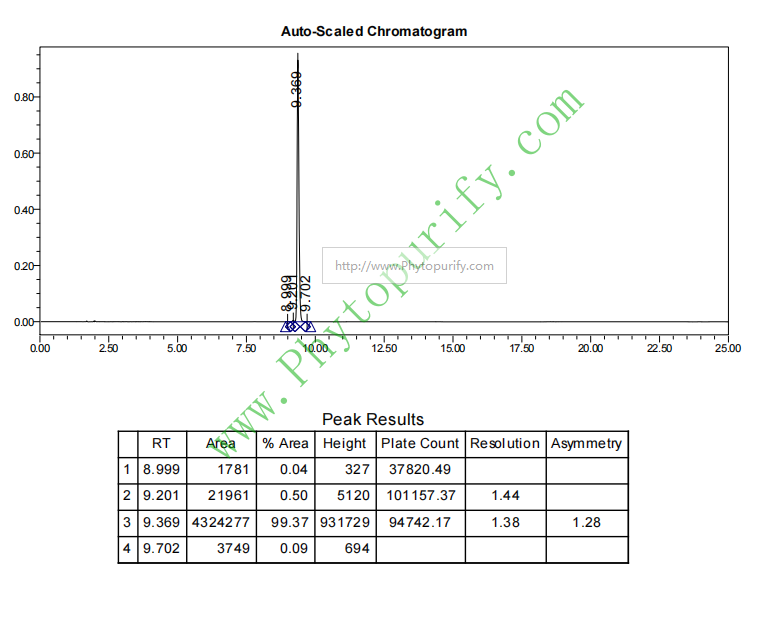
Purity: 95%~99%
Analysis Method: HPLC-DAD or/and HPLC-ELSD
Identification Method: Mass, NMR
Packing: Brown vial or HDPE plastic bottle
Can be supplied from milligrams to grams.
For Reference Standard and R&D, Not for Human Use Directly.
Inquire for bulk scale.
Description:
Typhaneoside is possibly the main active component in the bioactive fraction of Shaofu Zhuyu decoction, Shaofu Zhuyu decoction may have direct inhibitory effects on the contractility of the mice uterus. It has an inhibitory effect on the proliferation of human umbilical arterial smooth muscle cells(HUASMC) with a wide range of effective dose but the effect is started slowly.
References:
Journal of Beijing University of Traditional Chinese Medicine, 2006, 29(5):307-10.
Influence of typhaneoside on proliferation of human umbilical arterial smooth muscle cells.
To study the influence of Typhaneoside on the proliferation of human umbilical arterial smooth muscle cells(HUASMC).
METHODS AND RESULTS:
① HUASMC were primary cultured with tissue-sticking method and determined by α-actin detection.The third to fourth generations of cells were put into the experiment.② The highest concentration of Typhaneoside was 1.00×10⁻⁵ mol/L and then diluted in multiple proportions into 11 concentration groups,and a blank control group was established.After the stimulations were given to different groups for 24,48 and 72 hours,the toxicity of Typhaneoside were detected with MTT assay.③ The highest concentration of Typhaneoside was 1.00×10⁻⁶ mol/L and then diluted in 1/4 isobaric proportion into 6 concentration groups,and a blank control group was established. After the stimulations were given to different groups for 24,48 and 72 hours,the influence of Typhaneoside on the proliferation of HUASMC was observed with MTT assay. ① The cellular staining was positive under the microscope.② Typhaneoside was not toxic to HUASMC in the concentration ranges from 9.77×10⁻⁹ mol/L to 1.00×10⁻⁵ mol/L after 24,48 and 72 hours.③ Typhaneoside did not inhibit the proliferation of HUASMC in the concentration ranges of 9.77×10⁻¹⁰ mol/L to 1.00×10⁻⁶ mol/L after 24 or 48 hours,but inhibited significantly the proliferation of HUASMC after 72 hours in the concentration ranges of 1.56×10⁻⁸ mol/L to 2.5×10⁻⁷ mol/L.The effect was increased along with the dose increase but there was no significant difference.The inhibitory rate reached 9.91% to 14.99%.
CONCLUSIONS:
Typhaneoside has an inhibitory effect on the proliferation of HUASMC with a wide range of effective dose but the effect is started slowly.
Am J Chin Med. 2010;38(4):777-87.
Inhibitory effects of active fraction and its main components of Shaofu Zhuyu decoction on uterus contraction.
Shaofu Zhuyu decoction is a famous formula for treating primary dysmenorrhea in China since the Qing dynasty. In this paper, the inhibitory effects of active-guided fraction and its main bioactive components of Shaofu Zhuyu decoction on a model of non-pregnant mice uterine contraction induced by oxytocin in vitro were investigated.
METHODS AND RESULTS:
Qualitative and quantitative chemical analyses were used to correlate the chemical composition of active fraction with the spasmolytic effects. Seven ingredients in the active fraction were identified and quantified by HPLC-DAD. Three ingredients, ferulic acid, vanillic acid, and Typhaneoside, were evaluated for their effects on mice isolated uterine contraction induced by oxytocin in vitro. The ED(50) of them were 63.0 microg/ml, 57.6 microg/ml, 109.7 microg/ml, respectively. Furthermore, the inhibitory activity of the combination of these three compounds was prior to the fraction and seven compounds group. The ED(50) was 65.5 microg/ml.
CONCLUSIONS:
The data stated that ferulic acid, vanillic acid, and Typhaneoside were possibly the main active components in the bioactive fraction of Shaofu Zhuyu decoction. The study also implied that Shaofu Zhuyu decoction may have direct inhibitory effects on the contractility of the mice uterus and justified the traditional use of the prescription for treating the uterine cramping associated dysmenorrhea.
HPLC of Typhaneoside
Storage conditions:Short-term storage at 2~8℃, long-term storage at -20 ~ -80℃
317.3500
-.3521
-.4418
4.3802
.3878
.2182
Low
76.4427
5.3776
Yes
No
Yes
No
Yes
No
0.0
Yes
No
Yes
Yes
As an important treasure trove for drug discovery, natural products continue to provide modern medicine with lead compounds with novel structures and diverse activities. Among them, flavonoid glycosides have attracted much attention due to their broad pharmacological activities and relatively low toxicity. Typhaninoside (CAS number: 104472-68-6), as a flavonoid carbon glycoside isolated from traditional medicinal plants, has become a hot topic in natural product pharmacology research in recent years due to its multi-target and multi pathway biological regulatory properties. Research has shown that cattail glycoside not only exhibits significant anti-tumor potential by inducing various forms of cell death (such as apoptosis, ferroptosis, autophagy) and blocking the cell cycle to inhibit cancer cell viability, but also shows protective effects in improving glucose and lipid metabolism, reducing inflammation and oxidative stress in metabolic diseases (such as non-alcoholic fatty liver disease) and cardiovascular diseases (such as heart failure). Its unique signaling regulatory ability, especially in regulating the PI3K/Akt/mTOR autophagy pathway and the farnesol X receptor (FXR) signaling pathway, reveals the complexity of its mechanism of action. This article aims to systematically review the chemical structure, plant origin, pharmacological activity, molecular mechanism of action, pharmacological characteristics, and clinical application prospects of cattail glycoside, in order to provide comprehensive scientific references for the in-depth research and development of this compound.
The chemical name of cattail glycoside is kaempferol-3-O - (2G - α - L-rhamnose) - α - L-rhamnose (1 → 6) - β - D-glucoside, which is a flavonol glycoside compound. Its molecular formula is C34H42O20 and its molecular weight is 770.6900. Structurally, it takes kaempferol as the aglycone and connects a three sugar chain consisting of glucose and two rhamnose through glycosidic bonds, belonging to the carbon glycoside type. This structure usually endows it with good chemical stability and specific biological activity.
From the analysis of parameters related to medicinal properties, cattail glycosides exhibit typical polar molecular characteristics. Its lipid water partition coefficient (LogP) is -0.3521, indicating strong hydrophilicity. The topologically polar surface area (TPSA) is as high as 317.3500 Å ², mainly attributed to the abundant hydroxyl and glycosyl structures in the molecule. Its water solubility value is 4.3802 (usually referring to LogS or related solubility indicators), confirming its good water solubility. These physicochemical properties determine its pharmacokinetic behavior: high polarity and large TPSA result in a "low" ability to cross the blood-brain barrier, which to some extent limits its direct effects on central nervous system diseases, but may also reduce the risk of central nervous system side effects. In addition, preliminary drug safety screening showed no inhibition of hERG potassium channels (hERG inhibition: no), indicating a low potential risk of cardiac toxicity; The Ames test result was 0.0, indicating that no mutagenicity was observed in this testing system, providing preliminary support for its safety.
The main source of new glycosides in cattail comes from Typha family plants, such as Typha orientalis Presl or dried pollen from other plants of the same genus, known as the traditional Chinese medicine "Puhuang". Puhuang has the traditional effects of promoting blood circulation, removing blood stasis, stopping bleeding, and relieving pain, and cattailin is considered one of its important active ingredients. In addition, this compound may also exist in some other medicinal plants.
Its extraction and separation usually follow the conventional process of natural product chemistry. Firstly, methanol, ethanol, or ethanol water mixed solvents are used to heat reflux or ultrasound assisted extraction of plant materials (such as cattail) to fully obtain flavonoid components. After vacuum concentration, the crude extract obtained was subjected to liquid-liquid extraction and classification using organic solvents such as petroleum ether, ethyl acetate, and n-butanol. Due to its strong polarity, the new glycoside of cattail was mainly enriched in n-butanol or the aqueous layer. Further purification depends on column chromatography technology, which often uses such fillers as macroporous adsorption resin (such as D101), silica gel, polyamide or dextran gel (such as Sephadex LH-20) to perform gradient elution with chloroform methanol, methanol water and other solvent systems in different proportions. By combining thin-layer chromatography (TLC) or high performance liquid chromatography (HPLC) for tracking and detection, high-purity monomers of cattailin can be obtained through methods such as preparative HPLC or recrystallization. Modern technologies such as high-speed countercurrent chromatography (HSCCC) are also used for the separation and purification of polar natural products due to their high efficiency and rapid separation characteristics.
Typha neoglycosides exhibit a wide range of pharmacological activities, mainly focused on anti-tumor, hepatoprotective, cardiovascular protective, and antioxidant aspects.
1. Antitumor activity:
Xiangpuxin glycoside exhibits significant growth inhibitory activity against various cancer cell lines. Research has confirmed that it can effectively reduce the vitality of cancer cells, and its mechanism involves multiple cellular regulations. Firstly, it can induce cell cycle arrest, blocking cancer cells in the G2/M phase and preventing their normal mitotic process. Secondly, it can trigger various cell death programs: by promoting the activation of key proteases such as Caspase-3, it initiates the classical pathway of cell apoptosis; Inducing ferroptosis by regulating pathways related to iron metabolism and lipid peroxidation; At the same time, it can also regulate autophagy flow and affect the autophagy process of cells. These effects are usually accompanied by a significant accumulation of intracellular reactive oxygen species (ROS) levels, and the exacerbation of oxidative stress further amplifies their cytotoxic effects. Its research in hematological and solid tumors such as acute myeloid leukemia has shown potential therapeutic value.
2. Liver protection and metabolic regulation activity:
In metabolic disease models such as non-alcoholic fatty liver disease (NAFLD), cattailin has shown good hepatoprotective effects. It can significantly improve the disorder of glucose and lipid metabolism in the liver, reduce the abnormal accumulation of triglycerides and cholesterol in the liver, and alleviate hepatic steatosis. At the same time, it can also alleviate inflammation and oxidative stress damage in liver tissue, protecting liver cell function. This effect is closely related to its activation of the farnesol X receptor (FXR) signaling pathway, which is a key nuclear receptor regulating bile acid, lipid, and glucose metabolism.
3. Cardiovascular protective activity:
In studies related to heart failure after myocardial infarction, cattailin has shown potential for cardiac protection. The mechanism may involve reducing oxidative damage to myocardial cells, inhibiting excessive inflammatory reactions, and regulating the balance between autophagy and apoptosis of myocardial cells, thereby improving cardiac function and delaying the progression of heart failure.
4. Antioxidant damage activity:
Typha neoglycosides have strong antioxidant potential and can directly or indirectly counteract oxidative stress damage. Its antioxidant effect is not only reflected in the clearance of free radicals, but more importantly, it can upregulate the cell's own antioxidant defense system. Research has shown that it can activate key antioxidant transcription factors, such as nuclear factor E2 related factor 2 (NRF2, encoded by the NFE2L2 gene), thereby promoting the expression of a series of downstream antioxidant and detoxifying enzymes, including superoxide dismutase (SOD1, SOD2), catalase (CAT), glutathione peroxidase (GPX1), and heme oxygenase-1 (HMOX1). This systematic activation of the antioxidant network is one of the common foundations for its liver protective and neuroprotective effects.
The multiple pharmacological activities of cattailin stem from its precise regulation of multiple key signaling pathways within cells, and its mechanism of action is complex and orderly.
1. Regulating the PI3K/Akt/mTOR pathway and cell fate:
One of the core mechanisms of cattailin in anti-tumor activity is the inhibition of the PI3K/Akt/mTOR signaling pathway. This pathway is the core pathway that regulates cell growth, proliferation, metabolism, and survival, and is often overactivated in tumors. By inhibiting this pathway, cattailin on one hand relieves its inhibitory effect on autophagy initiation, thereby activating the autophagy process; On the other hand, pathway inhibition can lead to enhanced pro apoptotic signals and dysregulated expression of cell cycle related proteins (such as Cyclin B1/CDK1 complex), thereby inducing cell apoptosis and G2/M phase arrest. Meanwhile, AMP activated protein kinase (AMPK), as a cellular energy sensor and metabolic regulator, is also activated by cattailin. Activated AMPK can further inhibit mTORC1 activity, synergistically induce autophagy, and participate in regulating lipid metabolism and cell growth.
2. Activate the FXR pathway to improve metabolism:
In terms of liver protection and metabolic regulation, cattailin acts as an agonist of FXR. After activation, FXR enters the nucleus and forms heterodimers with retinol X receptor (RXR), binding to the promoter region of specific genes to regulate gene transcription. This leads to a series of changes in the expression of metabolism related genes: inhibition of rate limiting enzymes such as cholesterol 7 α - hydroxylase (CYP7A1), regulation of bile acid synthesis; Promote the expression of small heterodimeric chaperone (SHP) and inhibit liver lipid synthesis related genes; Simultaneously enhance the expression of insulin sensitivity related genes. The ultimate goal is to achieve a comprehensive effect of reducing liver lipid synthesis and accumulation, improving insulin resistance, and alleviating bile acid toxicity.
3. Inducing oxidative stress and activating the NRF2 antioxidant pathway:
Xiangpuxin glycoside can cause the accumulation of ROS in cancer cells, which may be an important triggering factor for its induction of apoptosis and ferroptosis. However, in normal tissues or protective models against oxidative damage, it exhibits the opposite antioxidant effect. The key molecule involved is NRF2. Under oxidative stress or stimulation by cattail glycoside, NRF2 dissociates from its inhibitory protein KEAP1 in the cytoplasm and translocates to the nucleus, where it binds to antioxidant response elements (ARE) and initiates the extensive expression of antioxidant proteins such as SOD, CAT, GPX1, HMOX1, and phase II detoxifying enzymes, thereby enhancing the cell's antioxidant defense ability. This "dual role" - promoting oxidation in tumor cells and antioxidant in normal tissues - reflects its intelligent regulatory characteristics based on differences in the cellular microenvironment, and has important therapeutic significance.
4. Other potential targets:
In addition, the direct or indirect activation of Caspase-3 by cattail glycoside is a key step in carrying out apoptosis. Its regulation of iron death related proteins such as GPX4, ACSL4, etc. is also being extensively studied. These targets interweave with the aforementioned core pathways, together forming the molecular basis of the pleiotropy of cattail glycosides.
Based on its physical and chemical properties, the medicinal properties of cattail glycoside present both advantages and challenges.
Advantages: The oral bioavailability of this compound has been confirmed by research, laying the foundation for its development as an oral formulation. Its good water solubility is beneficial for the formulation and dissolution absorption in vivo. The preliminary safety evaluation is good, with no hERG inhibition or mutagenicity warning, reducing the main risks of early development.
Challenge aspect: High polarity and high molecular weight may result in incomplete oral absorption and difficulty in crossing the blood-brain barrier, limiting its application in central nervous system diseases (unless improved through formulation techniques or structural modifications). As a glycoside compound, it may be hydrolyzed by microorganisms or enzymes in the gastrointestinal tract and body to produce aglycone kaempferol or secondary glycosides. Its true in vivo active form and metabolic profile need to be further studied.
At present, the pharmacokinetic studies of the new glycoside system in cattail (such as detailed parameters of absorption, distribution, metabolism, and excretion) are not sufficient in the public literature. Future research needs to clarify key PK parameters such as absolute bioavailability, plasma protein binding rate, major metabolic organs and metabolites, elimination half-life, etc. Whether it belongs to the substrate of efflux pumps such as P-glycoprotein also needs to be examined, which will directly affect its oral absorption and accumulation in tumor cells. Given its multi-target effects, potential drug drug interaction risks also need to be evaluated.
The diverse pharmacological activities of cattail glycoside have depicted broad prospects for its application in multiple disease fields.
1. Tumor treatment: As a multi mechanism anti-tumor candidate drug, cattailin is particularly suitable for malignant tumors that are resistant to traditional chemotherapy or require multi pathway synergistic inhibition, such as acute myeloid leukemia. Its ability to induce ferroptosis and autophagy provides a new strategy for overcoming apoptosis resistance. In the future, its combination application with existing chemotherapy drugs and targeted drugs can be explored, or derivatives based on its structure can be developed to improve efficacy and selectivity.
2. Treatment of metabolic diseases: In the field of non-alcoholic fatty liver disease (NAFLD)/non-alcoholic steatohepatitis (NASH), cattail glycoside with FXR agonist activity is an attractive candidate. Compared to synthetic FXR agonists, natural products may have a better safety profile. It can improve the metabolism of glucose and lipid, and has the comprehensive effect of anti inflammation and anti-oxidation. It is also applicable to the prevention and treatment of metabolism related diseases such as type 2 diabetes and atherosclerosis.
3. Cardiovascular disease treatment: For heart failure after myocardial infarction, cattail glycoside can exert cardioprotective effects through antioxidant, anti-inflammatory, and regulation of myocardial cell survival pathways, and is expected to become a new choice for adjuvant therapy of heart failure.
4. Neurological disorders: Despite its low blood-brain barrier permeability, its powerful NRF2 activation and antioxidant anti-inflammatory effects still have potential value for neurodegenerative diseases such as Parkinson's disease and Alzheimer's disease. In the future, the brain targeted delivery efficiency can be improved through nano drug delivery systems (such as liposomes, polymer nanoparticles) or prodrug strategies.
Future research should focus on: ① conducting more in-depth preclinical pharmacological and safety evaluations, especially long-term efficacy and toxicity studies in animal models of diseases; ② Complete pharmacokinetic and metabolic studies in accordance with system specifications, and clarify their ADME characteristics; ③ Further discovery of unknown direct targets using chemical biology methods such as chemical proteomics; ④ Optimize the structure and improve its pharmacokinetic properties, especially oral absorption and target tissue distribution, while maintaining its activity; ⑤ Actively explore new drug delivery systems that are suitable for its characteristics.
As a natural flavonoid glycoside derived from traditional Chinese medicine, cattail glycoside has demonstrated multiple significant activities in modern pharmacological research, including anti-tumor, hepatoprotective, cardiovascular protective, and antioxidant effects, due to its unique chemical structure and multi-target mechanism of action. It precisely regulates key signaling pathways such as PI3K/Akt/mTOR, FXR, NRF2, etc., affecting cell fate and metabolic homeostasis, reflecting the complexity and systematicity of the mechanism of action of natural products. Despite facing challenges such as low blood-brain barrier permeability in drug development, its proven oral bioavailability and good preliminary safety have laid a solid foundation for its further development. With the continuous deepening of understanding of its pharmacokinetics, toxicology, and action network, combined with modern medicinal chemistry and formulation technology, cattail glycoside is expected to be developed into an innovative drug or lead compound for the treatment of major diseases such as tumors, metabolic diseases, and cardiovascular diseases, fully demonstrating the potential for transformation from traditional medicinal wisdom to modern innovative drugs.
