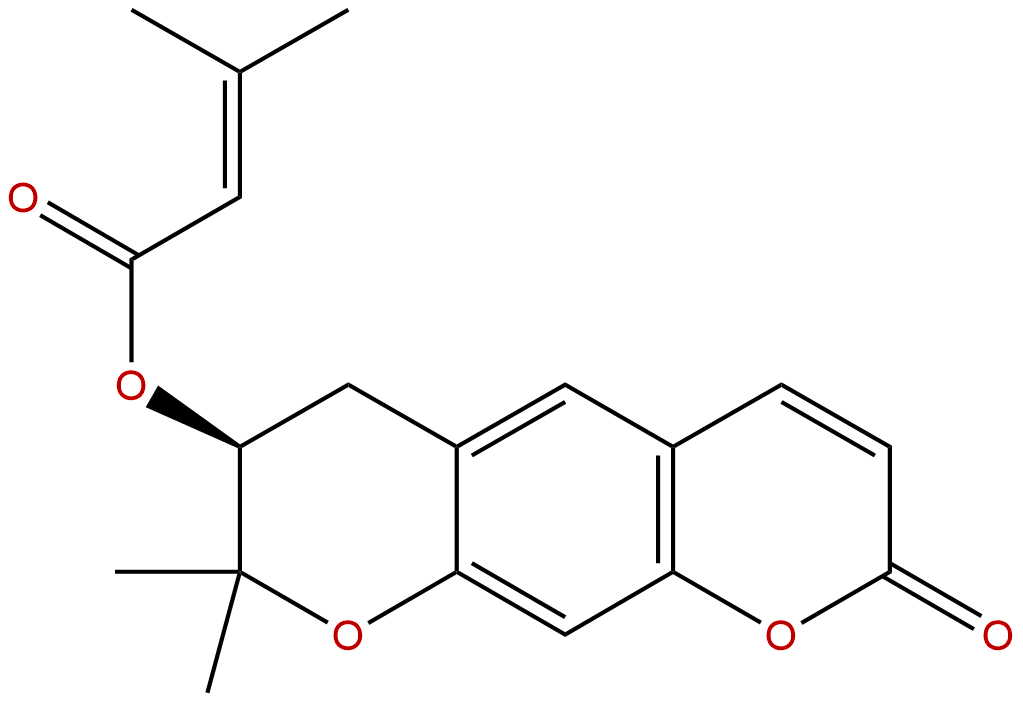


Product name: Decursin
Synonym name:
Catalogue No.: BP1624
Cas No.: 5928-25-6
Formula: C19H20O5
Mol Weight: 328.364
Botanical Source: Constit. of the roots of Angelica decursiva and Angelica gigas
Physical Description: White cryst.
Type of Compound: Coumarins
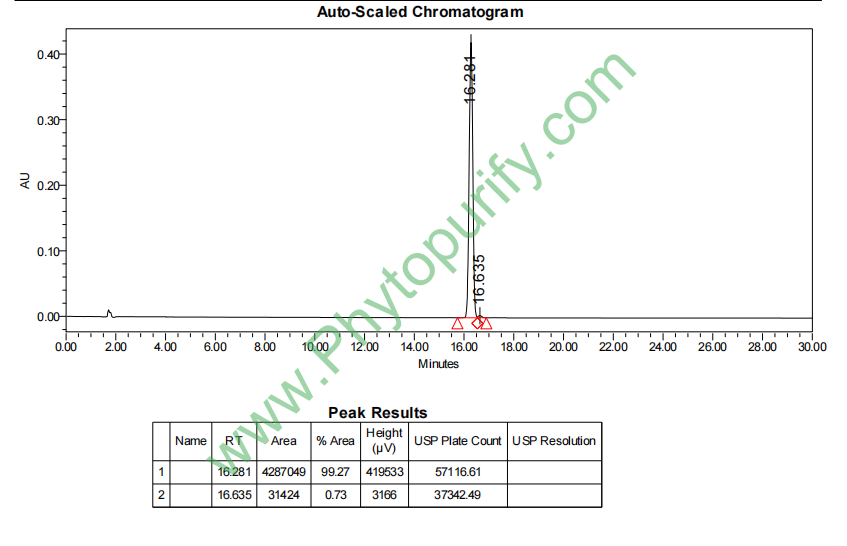
Purity: 95%~99%
Analysis Method: HPLC-DAD or/and HPLC-ELSD
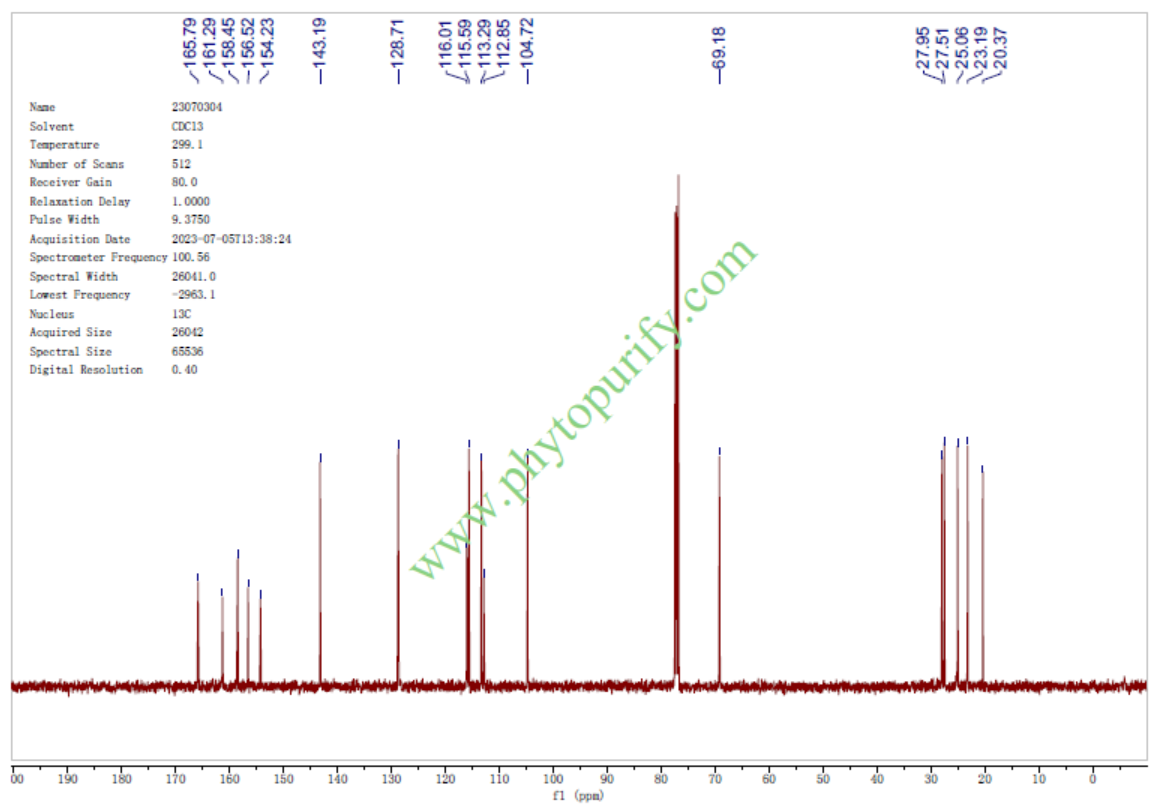
Identification Method: Mass, NMR
Packing: Brown vial or HDPE plastic bottle
The product could be supplied from milligrams to grams. Inquire for bulk scale.
We provide solution to improve the water-solubility of compounds, thereby facilitating the variety of activity tests and clinic uses.
For Reference Standard and R&D, Not for Human Use Directly.
Description:
Decursin has antiepileptic, hepatoprotective, anti-cancer, anti-inflammatory, and anti-amnesic activities, it is a novel candidate for inhibition of VEGF-induced angiogenesis. Decursin inhibited the TGF-β1 induced NOX activation and Smad signaling, it inhibited the PKCα, MAPK and NF-κB pathways. Decursin is also a novel inhibitor of NF-kappaB activation in signaling induced by TLR ligands and cytokines.
References:
Int J Oncol. 2014 May;44(5):1607-13.
Decursin prevents TPA-induced invasion through suppression of PKCα/p38/NF-κB-dependent MMP-9 expression in MCF-7 human breast carcinoma cells.
Decursin, a coumarin compound, was first isolated from the roots of Angelica gigas almost four decades ago. It was found to exhibit cytotoxicity against various human cancer cells and to possess anti-amnesic activity in vivo through the inhibition of AChE activity. However, the effect of Decursin on breast cancer invasion is unknown. Matrix metalloproteinase-9 (MMP-9) is known to be an important factor for cancer cell invasion.
METHODS AND RESULTS:
Therefore, in this study, we investigated the inhibitory effect of Decursin on 12-O-tetradecanoylphorbol-13-acetate (TPA)-induced MMP-9 expression and cell invasion, as well as the molecular mechanisms involved in MCF-7 cells. Our results showed that Decursin inhibits TPA-induced MMP-9 expression and cell invasion through the suppression of NF-κB. Furthermore, Decursinrepressed the TPA-induced phosphorylation of p38 MAPK and inhibited TPA-induced translocation of PKCα from the cytosol to the membrane, but did not affect the translocation of PKCδ.
CONCLUSIONS:
These results indicate that Decursin-mediated inhibition of TPA-induced MMP-9 expression and cell invasion involves the suppression of the PKCα, MAPK and NF-κB pathways in MCF-7 cells. Thus, Decursin may have potential value in restricting breast cancer metastasis.
Carcinogenesis. 2009 Apr;30(4):655-61.
Decursin and decursinol angelate inhibit VEGF-induced angiogenesis via suppression of the VEGFR-2-signaling pathway.
Inhibition of angiogenesis is an attractive approach for the treatment of angiogenic diseases, such as cancer. Vascular endothelial growth factor (VEGF) is one of the most important activators of angiogenesis and interacts with the high-affinity tyrosine kinase receptors, VEGFR-1 and VEGFR-2. The pyranocoumarin compounds Decursin and Decursinol angelate isolated from the herb, Angelica gigas, are known to possess potent anti-inflammatory activities. However, little is known about their antiangiogenic activity or their underlying mechanisms.
METHODS AND RESULTS:
Here, we show the antiangiogenic effects of Decursin and Decursinol angelate using in vitro assays and in vivo animal experiments. Decursin and Decursinol angelate inhibited VEGF-induced angiogenic processes in vitro, including proliferation, migration and tube formation of human umbilical vein endothelial cells. Decursin and Decursinol angelate significantly suppressed neovessel formation in chick chorioallantoic membrane and tumor growth in a mouse model. The microvessel density in tumors treated with Decursin for 14 days was significantly decreased compared with a vehicle control group. Decursin and Decursinol angelate inhibited VEGF-induced phosphorylation of VEGFR-2, extracellular signal-regulated kinases and c-Jun N-terminal kinase mitogen-activated protein kinases.
CONCLUSIONS:
Taken together, these results demonstrate that Decursin and Decursinol angelate are novel candidates for inhibition of VEGF-induced angiogenesis.
Life Sci. 2014 Jul 17;108(2):94-103.
Decursin attenuates hepatic fibrogenesis through interrupting TGF-beta-mediated NAD(P)H oxidase activation and Smad signaling in vivo and in vitro.
We studied that a potent antifibrotic effect of Decursin on in vivo liver damage model and the mechanism in inhibiting which transforming growth factor (TGF)-β1-induced human hepatic stellate cells (HSCs) activation.
METHODS AND RESULTS:
Liver injury was induced in vivo by intraperitoneal injection of carbon tetrachloride (CCl4) with or without Decursin for 4weeks in mice. Human hepatic stellate cell line, an immortalized human HSC line, was used in in vitro assay system. The effects of Decursin on HSC activation were measured by analyzing the expression of α-smooth muscle actin (α-SMA) and collagen I in liver tissue and human HSCs. Decursin treatment significantly reduced the ratio of liver/body weight, α-SMA activation, and type I collagen overexpression in CCl4 treated mice liver. The elevated serum levels, including ALT, AST, and ALP, were also decreased by Decursin treatment. Treatment of Decursin markedly proved the generation of reactive oxygen species, NAD(P)H oxidase (NOX) protein (1, 2, and 4) upregulation, NOX activity, and superoxide anion production in HSCs by TGF-β1. It also significantly reduced TGF-β1-induced Smad 2/3 phosphorylation, nuclear translocation of Smad 4, and association of Smad 2/3-Smad 4 complex. Consistent with in vitro results, Decursin treatment effectively blocked the levels of NOX protein, and Smad 2/3 phosphorylation in injured mice liver.
CONCLUSIONS:
Decursin blocked CCl4-induced liver fibrosis and inhibited TGF-β1-mediated HSC activation in vitro. These data demonstrated that Decursin exhibited hepatoprotective effects on experimental fibrosis, potentially by inhibiting the TGF-β1 induced NOX activation and Smad signaling.
Neuroreport. 2014 Nov 12;25(16):1243-9.
Decursin attenuates kainic acid-induced seizures in mice.
Epilepsy is a neurological disorder with recurrent unprovoked seizures as the main symptom. Of the coumarin derivatives in Angelica gigas, Decursin, a major coumarin component, was reported to exhibit significant protective activity against glutamate-induced neurotoxicity when added to primary cultures of rat cortical cells. This study served to investigate the effects of Decursin on a kainic acid (KA)-induced status epilepticus model.
METHODS AND RESULTS:
Thirty minutes after intraperitoneal injections of Decursin (20 mg/kg) in male 7-week-old C57BL/6 mice, the animals were treated with KA (30 mg/kg, intraperitoneally) and then examined for behavioral seizure score, electroencephalogram, seizure-related expressed protein levels, neuronal cell loss, neurodegeneration, and astrogliosis. KA injections significantly enhanced neurodegenerative conditions but treatment with Decursin 30 min before KA injection reduced the detrimental effects of KA in mice. The Decursin-treated KA-injected group showed significantly decreased behavioral seizure activity and remarkably attenuated intense and high-frequency seizure discharges in the parietal cortex for 2 h compared with the group treated only with KA. Furthermore, in-vivo results indicated that Decursin strongly inhibits selective neuronal death, astrogliosis, and oxidative stress induced by KA administration.
CONCLUSIONS:
Therefore Decursin is able to attenuate KA-induced seizures and could have potential as an antiepileptic drug.
HPLC of Decursin
NMR of Decursin
Storage conditions:Short-term storage at 2~8℃, long-term storage at -20 ~ -80℃
65.7400
3.6187
3.6187
.0055
3.3993
9.4296
High
87.5190
3.3591
Yes
Yes
No
No
No
Yes
0.6
No
Yes
Yes
Yes
Natural products have always been an important source of innovative drug discovery, among which coumarin compounds have attracted much attention due to their wide range of biological activities. Decursin, chemical name (+) - Decursin, CAS number 5928-25-6, is a pyranocoumarin compound isolated from plants belonging to the Umbelliferae family, such as Angelica decursiva. Since its discovery, a large number of studies have revealed its outstanding biological activity, especially in the field of anti-tumor, showing great potential. Research has shown that resveratrol is not only an effective cytotoxic agent and protein kinase C (PKC) activator, but also inhibits tumor cell proliferation and migration by inducing apoptosis and cell cycle arrest (G1 phase). In addition, its anti-inflammatory and analgesic activities provide evidence for its multi-target pharmacological effects. In recent years, with the development of molecular biology technology, the mechanism of action of resveratrol in inflammatory diseases such as pneumonia, especially its regulatory effect on multiple key targets such as TLR4, TNF, SIRT1, has gradually been elucidated. This article aims to systematically review the chemical structure, plant origin, pharmacological activity, molecular mechanism of action, pharmacological evaluation, and clinical application prospects of resveratrol, in order to provide comprehensive scientific references for the in-depth research and drug development of this compound.
Zihuaqianhusu is a horn shaped coumarin derivative, whose chemical structure consists of a coumarin core fused with a dimethyl pyran ring, and connected to an isovaleryloxy group at the C-3 'position. Its molecular formula is C19H20O5 and its molecular weight is 328.3640. This compound exhibits optical activity, and natural extracts are typically right-handed ((+) - Decarsin).
Its physicochemical properties have a decisive impact on its biological activity and medicinal properties. The lipid water partition coefficient (LogP) of purple clover is 3.6187, indicating its good lipophilicity, which facilitates its penetration of cell membranes and binding to hydrophobic targets. The topological polar surface area (TPSA) is 65.74 Å ², which is relatively moderate. However, its water solubility is poor, about 0.0055 mg/mL, which to some extent limits its bioavailability. It is worth noting that resveratrol exhibits high blood-brain barrier permeability, indicating its potential application value in the treatment of central nervous system related diseases. In the early safety evaluation, the Ames test result was 0.6 (usually considered>1.5 as potential mutagenic risk), indicating a low mutagenic risk; Meanwhile, the hERG inhibition test was negative, indicating a low risk of inducing QT interval prolongation in the heart, providing preliminary assurance for its cardiovascular safety.
Purple flowered Peucedanum mainly comes from plants belonging to the Umbelliferae family, among which the roots of Angelica decorsifa (also known as Peucedanum) are the main source. The roots of plants of the same genus, such as Angelica gigas, also contain high levels of purpurin and its analogues (such as Decursinol angelate).
Traditional extraction methods often use organic solvent extraction. Usually, dried plant roots and stems are crushed and subjected to reflux or ultrasonic extraction using polar solvents such as methanol, ethanol, or ethyl acetate. After vacuum concentration, the crude extract was separated and purified using techniques such as silica gel column chromatography and preparative high-performance liquid chromatography (HPLC) to obtain high-purity resveratrol. In recent years, some green extraction techniques such as supercritical fluid extraction (SFE) and microwave-assisted extraction (MAE) have also been explored and applied to the extraction of this compound to improve extraction efficiency and selectivity. Due to the coexistence of purple flowered gibberellin and its structurally similar compounds in plants, the separation and purification process requires precise chromatographic control. In addition, there have been studies reporting the acquisition of resveratrol from purple flowers through chemical synthesis or biosynthetic pathways, but natural extraction remains its main source at present.
Purple flowered Houttuynia cordata exhibits extensive and significant pharmacological activities, mainly including anti-tumor, anti-inflammatory, analgesic, and other aspects.
1. Antitumor activity:
The core pharmacological activity of purple clover extract lies in its powerful anti-tumor effect. A large number of in vitro studies have shown that it has significant cytotoxicity to a variety of human tumor cell lines, including prostate cancer, breast cancer, lung cancer, colon cancer, glioblastoma, etc., and can effectively inhibit cell proliferation. Its function is not limited to direct killing, but also strongly inhibits the migration and invasion ability of tumor cells, indicating its potential for anti metastasis. In vivo animal model experiments further confirmed that resveratrol can significantly inhibit the growth of tumor xenografts and has a synergistic effect with certain chemotherapy drugs.
2. Anti inflammatory and analgesic activity:
Purple flowered Houttuynia cordata has shown good anti-inflammatory effects in various acute and chronic inflammation models. It can significantly inhibit the production of nitric oxide (NO) and pro-inflammatory cytokines (such as TNF - α, IL-6) induced by macrophages such as lipopolysaccharide (LPS). In classic models such as carrageenan induced paw swelling in rats and acetic acid induced twisting in mice, purple flowered resveratrol showed clear analgesic effects. These activities lay the pharmacological foundation for their application in inflammatory diseases, especially pneumonia, which will be described in detail below.
3. Other activities:
The study also suggests that resveratrol may have potential activities such as neuroprotection, anti osteoporosis, and antibacterial effects, but its main research focus is still on anti-tumor and anti-inflammatory fields.
The pharmacological effects of purple clover extract are achieved by regulating multiple signaling pathways and molecular targets, and its mechanism of action has the characteristics of multiple targets and pathways.
1. Mechanism of anti-tumor effect:
* Inducing cell apoptosis: Purple flowered Houttuynia cordata can activate the Caspase cascade reaction (such as CASP3, CASP9) through the mitochondrial pathway (downregulation of Bcl-2, upregulation of Bax, leading to cytochrome c release) and death receptor pathway, ultimately leading to cell apoptosis.
* Block cell cycle: As described, purpurin can arrest the cell cycle in the G1 phase. The molecular mechanism involves downregulating key regulatory proteins in the G1 phase, including cyclin dependent kinases CDK2, CDK4, CDK6, and cyclin D1 expression, thereby preventing cells from entering the S phase from the G1 phase.
* Inhibition of proliferation and migration related pathways: It can also inhibit key signaling pathways such as Akt/mTOR, STAT3, MAPK that promote cell survival, proliferation, and migration. Its properties as a PKC activator may also be involved in regulating these processes.
2. Anti inflammatory mechanism (taking pneumonia related targets as an example):
In inflammatory disease models such as pneumonia, the mechanism of action of resveratrol involves the regulation of a series of key targets:
* Inhibition of pattern recognition receptor signals: Purple flowered Houttuynia cordata can inhibit the activation of Toll like receptor 4 (TLR4) and TLR2, thereby blocking the downstream NF - κ B and MAPK signaling pathways. This directly reduces the nuclear translocation and transcriptional activity of RELA (p65, NF - κ B subunit), as well as the production of pro-inflammatory factors TNF - α and IL-1 β.
* Regulating inflammasomes and cell pyroptosis: By inhibiting the activation of CASP1 (Caspase-1), resveratrol may interfere with the assembly of NLRP3 inflammasomes, reduce the maturation and release of IL-1 β, and inhibit Gasdermin D-mediated cell pyroptosis, which is crucial for controlling excessive inflammation in the lungs.
* Affects key enzymes and transcription regulatory factors:
* Inhibition of inducible nitric oxide synthase (NOS2): Reduce the production of excessive NO and alleviate oxidative and nitrification stress damage.
* Activate deacetylase SIRT1: The activation of SIRT1 can deacetylate and inhibit transcription factors such as RELA and SMAD3, exerting anti-inflammatory and anti fibrotic effects.
* Inhibition of protein tyrosine phosphatase 1B (PTPN1): PTPN1 is a negative regulator of the insulin and leptin signaling pathways, and its inhibition may indirectly improve the inflammatory metabolic environment. However, the role of PTPN1 in inflammation is complex and requires further research.
* Inhibition of Isocitrate Dehydrogenase 1 (IDH1): Mutant IDH1 is associated with certain cancers, while wild-type IDH1 is involved in cellular metabolism. The inhibition of purple flowered gibberellin may play a role in specific metabolic reprogramming inflammatory or tumor environments.
* Regulating the TGF - β/SMAD pathway: Inhibiting the phosphorylation or activation of SMAD3 may help alleviate the potential progression of pulmonary fibrosis in the later stages of pneumonia.
Despite its significant in vitro activity, the development of medicinal properties of purple flowered Houttuynia cordata still faces challenges, and pharmacokinetic studies are key to evaluating its potential for development.
Pharmacokinetic characteristics:
Animal studies have shown that after oral administration, the absorption of resveratrol is rapid, but its absolute bioavailability may not be high due to first pass effects and low water solubility. It is widely distributed in the body, and its high LogP value and blood-brain barrier permeability allow it to be distributed in multiple tissues including the brain. Purple flowered gibberellin is rapidly metabolized in the body, and its main metabolic pathway is the hydrolysis of ester bonds to produce the active metabolite Decursinol. The cytochrome P450 enzyme system (such as CYP3A4) is also involved in its metabolism. The prototype drug and metabolites are mainly excreted through urine and feces. A shorter half-life means that frequent administration or formulation modifications may be necessary to maintain effective blood drug concentrations.
Advantages and challenges of pharmaceutical properties:
* Advantage: Clear and potent multi-target activity; Good membrane permeability (high LogP, high BBB permeability); The risk of initial genetic toxicity (Ames test) and cardiac toxicity (hERG inhibition) is low.
* Main challenges:
1. Poor water solubility: This is the primary issue limiting its oral absorption and formulation development.
2. Poor metabolic stability: Ester bonds are easily hydrolyzed, leading to rapid clearance in the body.
3. Potential systemic toxicity: As a multi-target modulator, its selectivity towards normal tissues needs to be evaluated in more comprehensive preclinical toxicology studies.
Formulation improvement strategy:
To enhance its medicinal properties, researchers are exploring various strategies: ① Pre drug design: Modify its easily hydrolyzed ester bonds to improve metabolic stability. ② Nano delivery system: Prepare liposomes, polymer nanoparticles, solid lipid nanoparticles, etc. to significantly improve their water solubility and dissolution rate, enhance targeting of tumor or inflammatory sites, and improve pharmacokinetic behavior. ③ Crystal Engineering: Prepare eutectic or amorphous solid dispersions to improve solubility.
As a multi-target natural active molecule, the clinical application prospects of purple pre Hu Su are broad, but the transformation path still needs solid research.
1. Potential clinical application directions:
* Tumor adjuvant therapy and combination therapy: Given its multi pathway anti-tumor mechanism and potential synergistic effect with existing chemotherapy drugs, resveratrol is the most promising drug for developing as an adjuvant therapy for tumors, to enhance efficacy or reverse drug resistance. Its permeability to the blood-brain barrier makes it uniquely valuable in the treatment of brain tumors.
* Inflammatory disease treatment: Its regulatory effect on the pneumonia related target network makes it a potential candidate drug for the treatment of acute lung injury (ALI), acute respiratory distress syndrome (ARDS), and chronic pneumonia fibrosis. Its anti-inflammatory and analgesic activity can also be extended to other inflammatory diseases such as arthritis.
* Neurological disorders: The high BBB permeability provides the possibility for its treatment of neuroinflammatory related diseases such as Alzheimer's disease and Parkinson's disease.
2. Future research prospects:
* In depth mechanism exploration: Chemical biology methods such as affinity fishing and proteomics need to be used to more accurately identify its direct target and clarify the network relationships of its "multi-target" effects.
* Structural optimization and derivative development: Based on its pharmacophore, structural modification aims to enhance activity, improve water solubility and metabolic stability, reduce potential toxicity, and obtain lead compounds with more pharmacological properties.
* Advanced delivery system research: Developing targeted nano formulations or stimulus responsive drug delivery systems to achieve specific accumulation and controlled release at the lesion site is a key technological pathway for promoting their clinical translation.
* Preclinical and clinical studies of the system: Conducting standardized pharmacokinetic/pharmacodynamic (PK/PD) studies, long-term toxicity trials, and ultimately advancing to clinical trials is a necessary step in verifying its safety and efficacy.
Decursin, derived from traditional medicinal plants, is a natural product of the pyranocoumarin class. With its powerful anti-tumor, anti-inflammatory and other pharmacological activities, as well as its unique mechanism of acting on multiple targets such as PKC, cyclin, TLR4/NF - κ B, SIRT1, it has become a star molecule in natural product drug research. Despite facing challenges such as poor water solubility and fast metabolism in drug development, these obstacles are gradually being overcome through the intervention of modern medicinal chemistry and pharmaceutical technology, such as structural modification and nanotechnology delivery. In the future, with a more detailed analysis of its mechanism of action and continuous innovation in formulation technology, resveratrol and its optimized derivatives are expected to move from the laboratory to clinical practice, providing new strategies and weapons for the treatment of tumors and inflammatory diseases, demonstrating the lasting vitality of natural products in modern drug research and development.
