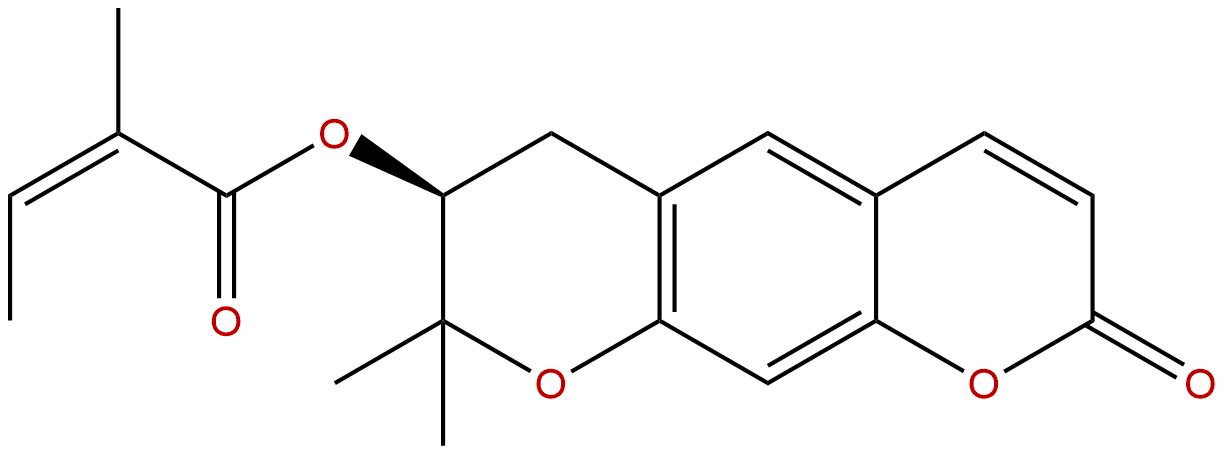


Product name: Decursinol angelate
Synonym name: Acutilobin; Decursinol mebutate
Catalogue No.: BP1812
Cas No.: 130848-06-5
Formula: C19H20O5
Mol Weight: 328.364
Botanical Source: Angelica acutiloba (Dong Dang Gui) and Angelica gigas
Physical Description:
Type of Compound:
Purity: 95%~99%
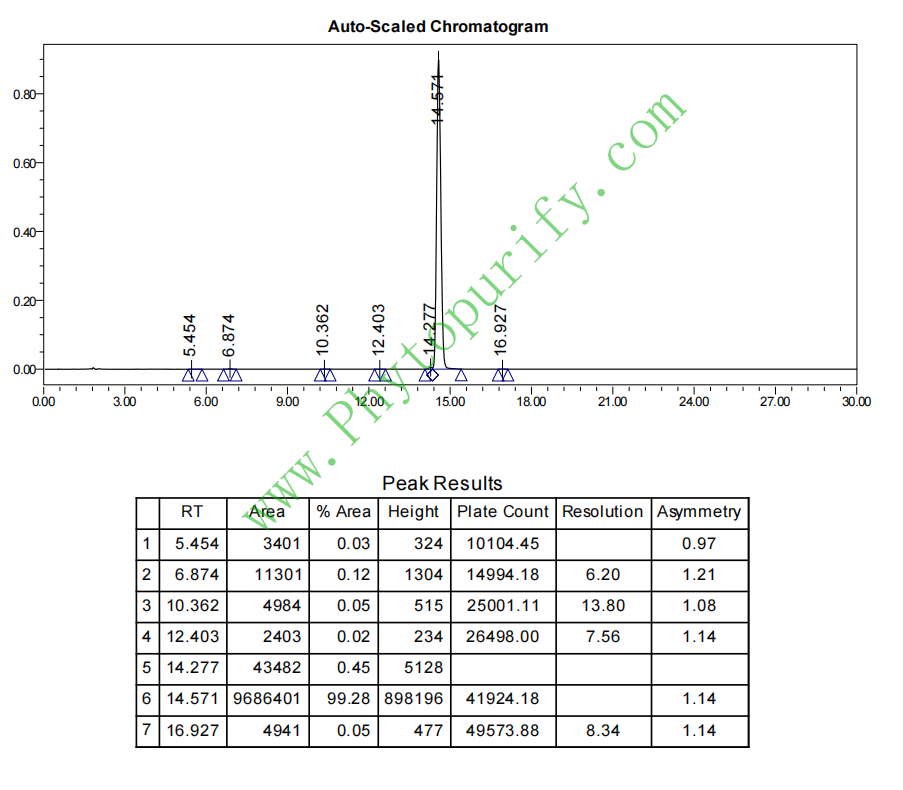
Analysis Method: HPLC-DAD or/and HPLC-ELSD
Identification Method: Mass, NMR
Packing: Brown vial or HDPE plastic bottle
The product could be supplied from milligrams to grams. Inquire for bulk scale.
We provide solution to improve the water-solubility of compounds, thereby facilitating the variety of activity tests and clinic uses.
For Reference Standard and R&D, Not for Human Use Directly.
Description:
Decursinol angelate has anti-tumor, anti-inflammatory, anti-oxidant, and hepatoprotective activities, it inhibits VEGF-induced angiogenesis via suppression of the VEGFR-2-signaling pathway; it also suppresses invasion and inflammatory activation of cancer cells through modulation of PI3K/AKT, ERK and NF-kappaB, its anti-inflammatory activity may contribute to its anti-cancer activity.Decursinol angelate has protective effects against amyloid β-protein-induced oxidative stress in the PC12 cell line. It improves wound healing by upregulating the expression of genes encoding extracellular matrix remodeling proteins, inflammatory cytokines, and growth factors. Decursinol angelate has in vitro and in vivo antifungal activity against Magnaporthe oryzae, the causal agent of rice blast.
References:
Biochem Biophys Res Commun. 2018 May 23;499(4):979-984.
Decursin and decursinol angelate improve wound healing by upregulating transcription of genes encoding extracellular matrix remodeling proteins, inflammatory cytokines, and growth factors in human keratinocytes.
The coumarins decursin and Decursinol angelate, which are found in Angelica gigas Nakai, have a variety of biological functions.
METHODS AND RESULTS:
Here, we show that treatment with these compounds improves wound healing by HaCaT human keratinocytes. Wound healing was increased by treatment with up to a threshold concentration of decursin, Decursinol angelate, a mixture of both, and a nano-emulsion of these compounds, but inhibited by treatment with higher concentrations. Immunoblotting and fluorescence imaging of cells expressing an epidermal growth factor receptor (EGFR) biosensor demonstrated that these compounds did not stimulate wound healing by inducing EGFR phosphorylation. Rather, transcriptional analysis revealed that decursin and Decursinol angelate improved wound healing by upregulating the expression of genes encoding extracellular matrix remodeling proteins, inflammatory cytokines, and growth factors.
Arch Pharm Res. 2003 Sep;26(9):727-30.
Anti-tumor activities of decursinol angelate and decursin from Angelica gigas.
The in vivo anti-tumor activities of Decursinol angelate (1) and decursin (2) isolated from the roots of Angelica gigas were investigated.
METHODS AND RESULTS:
These two compounds, when administered consecutively for 9 days at 50 and 100 mg/kg i.p. in mice, caused a significant increase in the life span and a significant decrease in the tumor weight and volume of mice inoculated with Sarcoma-180 tumor cells.
CONCLUSIONS:
These results suggest that Decursinol angelate (1) and decursin (2) from A. gigas have anti-tumor activities.
Pesticide Biochemistry & Physiology, 2011, 101(2):118-124.
In vitro and in vivo antifungal activities of decursin and decursinol angelate isolated from Angelica gigas against Magnaporthe oryzae, the causal agent of rice blast
Blast is considered the most important fungal disease of rice due to its wide distribution and destructiveness under favorable conditions. Development of new effective and environmentally benign agents against the causal pathogen, Magnaporthe oryzae, is of great interest. In the course of a search for natural antifungal compounds in medicinal plants, we found that the methanol extract of Angelica gigas roots showed a potent control efficacy against rice blast caused by M. oryzae.
METHODS AND RESULTS:
We isolated antifungal coumarins from the extract, and they were identified as decursin and Decursinol angelate. Antifungal activities of these compounds, along with kasugamycin, were tested on M. oryzae in vivo and in vitro. In an in vivo assay, the three compounds effectively suppressed the development of rice blast at concentrations more than 100μg/mL. Coumarins showed relatively weak inhibitory effect on fungal mycelial growth when compared to kasugamycin. However, they strongly inhibited M. oryzae spore germination, which was not observed in kasugamycin treatments. This is the first report demonstrating that Decursinol angelate can provide control against rice blast and that the two coumarins inhibit M. oryzae spore germination. In addition, the wettable powder formulation of the crude extract of A. gigas prohibited the development of blast symptoms on rice plants more effectively than liquid concentrate formulation of kasugamin, a commercial fungicide.
CONCLUSIONS:
Based on our study, we propose that coumarin compounds as well as the A. gigas root crude extract can be used as natural, benign fungicides for controlling rice blast.
HPLC of Decursinol angelate
Storage conditions:Short-term storage at 2~8℃, long-term storage at -20 ~ -80℃
65.7400
3.5189
3.5189
.0060
3.5544
12.2556
High
88.5986
3.3998
Yes
Yes
No
No
No
Yes
0.9
No
Yes
Yes
Yes
Natural products, as an important treasure trove for drug discovery and development, play an irreplaceable role in the long history of human fight against diseases. Among them, coumarin compounds have always been a hot topic in medicinal chemistry and pharmacology research due to their extensive and significant biological activities. Decursinol angelate (DA), a derivative of pyranocoumarin isolated from traditional medicinal plants, has attracted much attention in recent years due to its outstanding pharmacological activities in anti-tumor, anti-inflammatory, and neuroprotective aspects. Its CAS number is 130848-06-5, and its molecular formula is C19H20O5. The initial research revealed its cytotoxicity and ability to activate protein kinase C (PKC), suggesting its potential in tumor therapy. With the deepening of research, the mechanism of DA in inflammatory diseases, especially complex inflammatory diseases represented by bronchial asthma, has gradually been elucidated, involving the regulation of key inflammatory signaling pathways such as nuclear factor kappa B (NF - κ B), tumor necrosis factor alpha (TNF - α), and interleukin (IL) family. This article aims to systematically review the chemical properties, plant sources, pharmacological activities, molecular mechanisms of action, pharmacological evaluation, and clinical application prospects of DA, in order to provide comprehensive academic references for the in-depth development and transformation research of this natural product.
The chemical structure of purple flowered houchun angelica acid ester belongs to linear furanocoumarin, and its basic skeleton is composed of a coumarin nucleus (benzo α - pyranone) and a dihydropyran ring fused at positions C-7 and C-8. Specifically, its structure is the Angelica sinensis ester of 7-hydroxy-8- (2-hydroxy-3-methylbut-3-en-1-yl) -2H chromene-2-one. Angelica acid, as an unsaturated short chain fatty acid, is linked to the phenolic hydroxyl group of Decursinol through ester bonds. This esterification modification has a decisive impact on its biological activity and physicochemical properties.
According to the provided pharmacological parameters, the molecular weight of DA is 328.3640 g/mol, which belongs to small molecule compounds. The calculated lipid water partition coefficient (LogP) is 3.52, indicating that the compound has moderate lipophilicity, which is beneficial for its penetration of cell membranes, but may also affect its water solubility. The topologically polar surface area (TPSA) is 65.74 Å ², which is relatively low and further supports its good membrane permeability. The measured water solubility is relatively low, about 0.006 mg/mL, which may be one of the challenges that need to be overcome in the development of its oral dosage form. It is worth noting that DA exhibits high blood-brain barrier (BBB) permeability potential, which provides unique advantages for its application in central nervous system related diseases such as neuroinflammation, Alzheimer's disease, etc. In the preliminary safety screening, DA showed no significant inhibitory effect on hERG potassium channels (hERG inhibition: No), indicating a low risk of causing QT interval prolongation in the heart. The Ames test result is 0.9 (usually considered to be potentially mutagenic positive if>1.5), indicating that there is no significant genetic toxicity risk, but further in vitro and in vivo experiments are needed to confirm.
Purple flowered Peucedanol Angelica sinensis ester mainly comes from plants belonging to the Umbelliferae family Da Danggui The root of Angelica gigas Nakai. This plant is known as "Qianghuo" or "Korean Angelica" in traditional Korean medicine and is widely used to treat various diseases such as anemia, pain, infection, and inflammation. DA is one of the most abundant coumarin components in A. gigas roots and is also its characteristic active ingredient.
The extraction and separation of DA from plant materials usually use organic solvent extraction combined with chromatographic separation technology. The classic process is as follows:
1. Raw material pretreatment Crush the dried A. gigas roots to increase the extraction surface area.
2. Solvent extraction Polar solvents such as methanol, ethanol, or aqueous ethanol are commonly used for reflux extraction or ultrasound assisted extraction. Methanol is commonly used due to its high extraction efficiency for coumarin components.
3. Extraction and Enrichment After concentrating the alcohol extract, liquid-liquid extraction is performed using medium polarity solvents such as ethyl acetate or chloroform to enrich coumarin components and remove water-soluble impurities such as sugars and proteins.
4. Separation and purification The extract is preliminarily separated by silica gel column chromatography, commonly using petroleum ether ethyl acetate or chloroform methanol gradient elution. Further purification can be achieved by preparative high-performance liquid chromatography (HPLC) using a reverse phase C18 column with methanol water or acetonitrile water as the mobile phase. Monitoring and collection can be carried out based on the UV absorption characteristics of DA (coumarins typically have strong absorption at 250-330 nm).
5. appraisal The purified compound was structurally confirmed by nuclear magnetic resonance (NMR, including 1H NMR and 13C NMR), mass spectrometry (MS), and comparison with standard samples.
In recent years, green extraction technologies such as supercritical CO2 fluid extraction have also been explored to improve extraction efficiency and reduce the use of organic solvents.
A large number of in vitro and in vivo pharmacological studies have confirmed that purple flowered resveratrol Angelica sinensis ester has diverse biological activities, mainly manifested in anti-tumor and anti-inflammatory aspects.
1. Antitumor activity
DA shows significant cytotoxicity or growth inhibition on a variety of human tumor cell lines, including lung cancer (such as A549), gastric cancer (such as AGS), colon cancer (such as HCT116, HT-29), breast cancer (such as MCF-7), prostate cancer (such as PC-3), and leukemia cells (such as HL-60). Its function is not limited to inhibiting proliferation, but can also induce tumor cell apoptosis and cell cycle arrest. For example, in colon cancer cells, DA induces mitochondrial pathway apoptosis, leading to caspase-3 activation and PARP cleavage. In addition, the study also found that DA can inhibit the migration and invasion of tumor cells, indicating its potential for anti metastasis.
2. Anti inflammatory activity
The anti-inflammatory effect of DA is another core of its pharmacological research. DA has shown good effects in various animal models of acute and chronic inflammation.
* Bronchial asthma model In a mouse asthma model induced by ovalbumin (OVA), DA administration significantly reduced airway hyperresponsiveness, decreased infiltration of inflammatory cells (especially eosinophils) in bronchoalveolar lavage fluid (BALF), inhibited goblet cell proliferation and excessive mucus secretion, and reduced pulmonary inflammatory infiltration.
* Other inflammatory models DA can effectively inhibit the production and release of inflammatory mediators and reduce tissue edema in lipopolysaccharide (LPS) - induced macrophage inflammation models, carrageenan induced rat paw swelling models, and xylene induced mouse ear swelling models.
3. Other activities
In addition to the core activities mentioned above, studies have also reported that DA has neuroprotective effects (such as combating A β - induced neurotoxicity), anti platelet aggregation, anti osteoporosis, and certain antibacterial activities, demonstrating its multi-target properties.
The pharmacological effects of purple flowered resveratrol Angelica sinensis ester, especially its strong anti-inflammatory activity, are achieved by regulating complex cellular signaling networks. Its key targets are highly correlated with the pathological and physiological processes of diseases such as bronchial asthma.
Core mechanism: Inhibition of NF - κ B signaling pathway
The NF - κ B pathway is a core transcription factor pathway that regulates inflammation, immune response, and cell survival, and plays a central role in airway inflammation in asthma. DA has been proven to be a highly effective inhibitor of the NF - κ B pathway.
* Acting on upstream kinases DA can inhibit the activity of IKBKB (I κ B kinase β, IKK β). IKK β is responsible for phosphorylation and degradation of I κ B α (an inhibitor of the p50 precursor protein encoded by the NFKB1 gene), thereby preventing the activation of NF - κ B. DA stabilizes I κ B α by inhibiting IKK β, causing NF - κ B dimers (such as p50/RELA) to remain in the cytoplasm and unable to enter the nucleus.
* Inhibition of transcriptional activation Even under certain activation conditions, DA can inhibit the DNA binding activity and transcriptional activation function of NF - κ B. This directly leads to downregulation of the expression of a series of pro-inflammatory genes downstream.
Regulation of key inflammatory targets
DA exerts extensive inhibitory effects on multiple key targets related to bronchial asthma by inhibiting pathways such as NF - κ B
* Pro-inflammatory cytokines Significantly reduce the expression and release of key pro-inflammatory cytokines such as TNF - α (TNF gene encoding), IL-6, IL-4, etc. IL-4 plays a crucial role in Th2 cell differentiation and IgE production, while TNF - α and IL-6 are core mediators that amplify inflammatory responses.
* Inflammatory enzyme Inhibit the expression of inducible nitric oxide synthase (NOS2) and cyclooxygenase-2 (PTGS2/COX-2). NOS2 produces excessive NO, which participates in airway nerve regulation and oxidative stress; COX-2 catalyzes the production of prostaglandin inflammatory mediators.
* Other receptors Research suggests that DA may affect airway smooth muscle tone through indirect anti-inflammatory effects, but further research is needed to determine whether it has a direct impact on receptors that directly regulate airway smooth muscle, such as ADRB2 (β 2 adrenergic receptor) and HRH1 (histamine H1 receptor).
The duality of PKC activation
Early research indicated that DA is an activator of PKC. PKC is a multi subtype kinase family that plays a complex role in cell proliferation, differentiation, and apoptosis. The activation of PKC by DA may play a role in its anti-tumor effects (inducing differentiation or apoptosis), but in the context of inflammation, certain PKC subtypes (such as PKC θ) are positive regulators of T cell activation and inflammatory signaling. Therefore, the ultimate anti-inflammatory effect of DA may be that its strong inhibition of the NF - κ B pathway overwhelms its pro-inflammatory effect on the activation of certain PKC subtypes, or that the activated PKC subtypes have unique biological functions. This reflects the complexity of DA's multi-target effects.
Based on its physicochemical properties and preliminary biological data, conduct a preliminary evaluation of the pharmacological properties of DA.
Advantage:
1. Small molecular weight and clear structure Meets the basic characteristics of drug like small molecules.
2. Good membrane permeability and BBB permeability LogP and TPSA values indicate good potential for oral absorption and central distribution, providing possibilities for the treatment of neuroinflammatory related diseases.
3. Preliminary safety is good No hERG inhibition warning, Ames test negative, laying the foundation for its safety development.
4. Strong activity, multi-target It exhibits significant activity at low micromolar or even nanomolar concentrations, and its mechanism of action involves multiple disease-related targets.
challenge:
1. Poor water solubility This is the main obstacle to its development into oral formulations (such as tablets, capsules), which may need to be improved through formulation techniques (such as solid dispersions, nanocrystals, cyclodextrin inclusion) or structural modifications (preparation prodrugs).
2. Metabolic stability As an ester compound, DA is easily hydrolyzed by esterases in the body to produce Decursinol. Although Decursinol also has some activity, the exposure of DA itself may be limited and the half-life may be short. Pharmacokinetic studies (such as in rats or mice) need to clarify their absolute bioavailability, metabolic pathways, and major metabolites.
3. The complexity of multi-target effects Simultaneously acting on key pathways such as PKC and NF - κ B, a detailed evaluation of their benefit risk ratio in specific disease models is needed to clarify their therapeutic window.
At present, the pharmacokinetic research data of publicly available systems are relatively limited. Future research needs to focus on its absorption, distribution, metabolism, and excretion (ADME) characteristics in animals, especially its bioavailability after oral administration, tissue distribution (especially lung targeting), and metabolic fate of ester bonds.
As a natural lead compound with clear anti-inflammatory and anti-tumor activities, purple flowered resveratrol Angelica sinensis ester has broad clinical application prospects, but solid research work is still needed for its transformation.
Potential application directions:
1. Inflammatory diseases of the respiratory system Based on its excellent performance in asthma models, DA is expected to be developed as a novel anti-inflammatory drug for the treatment of bronchial asthma, especially for hormone insensitive or severe asthma patients. In addition, it may also have therapeutic potential for chronic obstructive pulmonary disease (COPD), acute lung injury (ALI), and other conditions.
2. Tumor adjuvant therapy or combination therapy Its anti-tumor activity makes it possible to use it as an adjuvant drug for chemotherapy or targeted therapy, to enhance efficacy or reverse drug resistance. Its multi-target characteristics may have advantages for tumors with strong heterogeneity.
3. Neurodegenerative diseases Due to its high BBB penetration and anti neuroinflammatory activity, DA is worth exploring in the treatment of diseases such as Alzheimer's disease and Parkinson's disease.
4. As an active biomarker for standardized products of traditional Chinese medicine/natural medicine DA can be used as a key indicator ingredient for quality control of Angelica gigas extracts or related compound preparations, ensuring the consistency of product efficacy.
Future research prospects:
1. In depth mechanism research Using chemical biology methods such as affinity fishing, molecular docking, and kinetic simulations to accurately identify its direct target proteins and elucidate the network relationship between its seemingly contradictory effects of activating PKC and inhibiting NF - κ B.
2. Preclinical development of the system Complete a comprehensive evaluation of pharmacodynamics (in models closer to human diseases such as humanized mouse models), pharmacokinetics, and toxicology (long-term toxicity, reproductive toxicity, etc.) in accordance with the guidelines for preclinical research of new drugs.
3. Formulation technology research and development Develop new drug delivery systems (such as pulmonary inhalation formulations, long-acting injections, and nano targeted formulations) to address their water solubility and metabolic stability issues, in order to improve efficacy and reduce side effects.
4. Structural optimization and synthesis of analogues Using DA as the lead compound, structural modification and structure-activity relationship studies were conducted to obtain derivatives with stronger activity, higher selectivity, and better pharmacokinetic properties.
Zihuaqianhuchun Angelica sinensis ester is a highly valuable natural active molecule discovered from the traditional medicinal plant Angelica sinensis. It has shown potential not only in the field of anti-tumor, but also in anti-inflammatory, especially in regulating key signaling pathways of complex inflammatory diseases such as bronchial asthma, demonstrating strong effects. It inhibits the IKK β/NF - κ B axis, downregulates a series of core inflammatory mediators such as TNF - α, ILs, NOS2, COX-2, etc., and suppresses the inflammatory cascade reaction from multiple links. Despite the challenges of water solubility and metabolic stability in drug development, its clear activity, good membrane permeability, BBB penetration, and preliminary safety have laid a solid foundation for its subsequent development. In the future, through interdisciplinary and in-depth research, including precise mechanism analysis, rational structural optimization, innovative formulation strategies, and systematic preclinical evaluation, it is expected that purple perilla alcohol Angelica sinensis ester will successfully move from an excellent natural lead compound to a new drug candidate with clinical application value, providing new choices for the treatment of inflammatory diseases and tumors.
