


Synonym name:
Catalogue No.: BP1144
Cas No.: 1258-84-0
Formula: C30H40O4
Mol Weight: 464.646
Botanical Source: numerous plants incl. Pristimera indica, Celastrus dispermus, Celastrus paniculatus, Prionostemma aspera, Pachystigma cantyi, Maytenus obtusifolia, Maytenus ilicifolia, Maytenus boaria, Maytenus amazonica , Gymnosporia montana, Crossopetalum
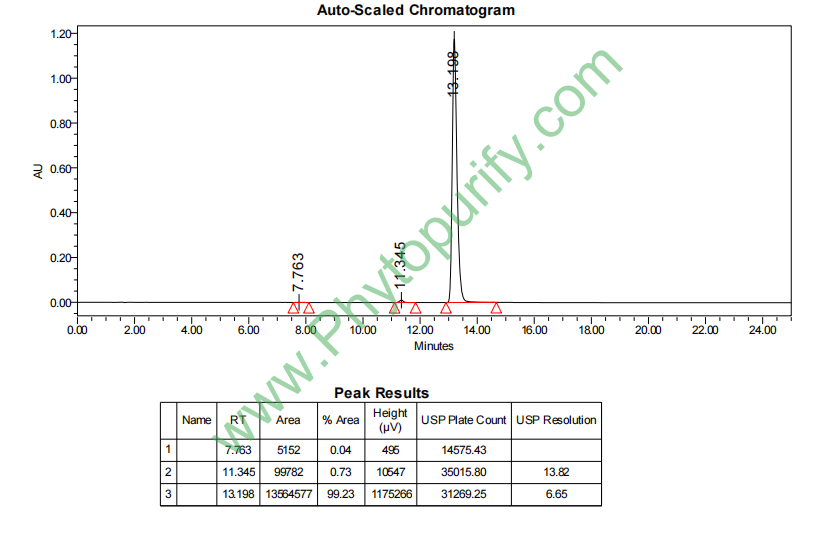
Purity: 95%~99%
Analysis Method: HPLC-DAD or/and HPLC-ELSD
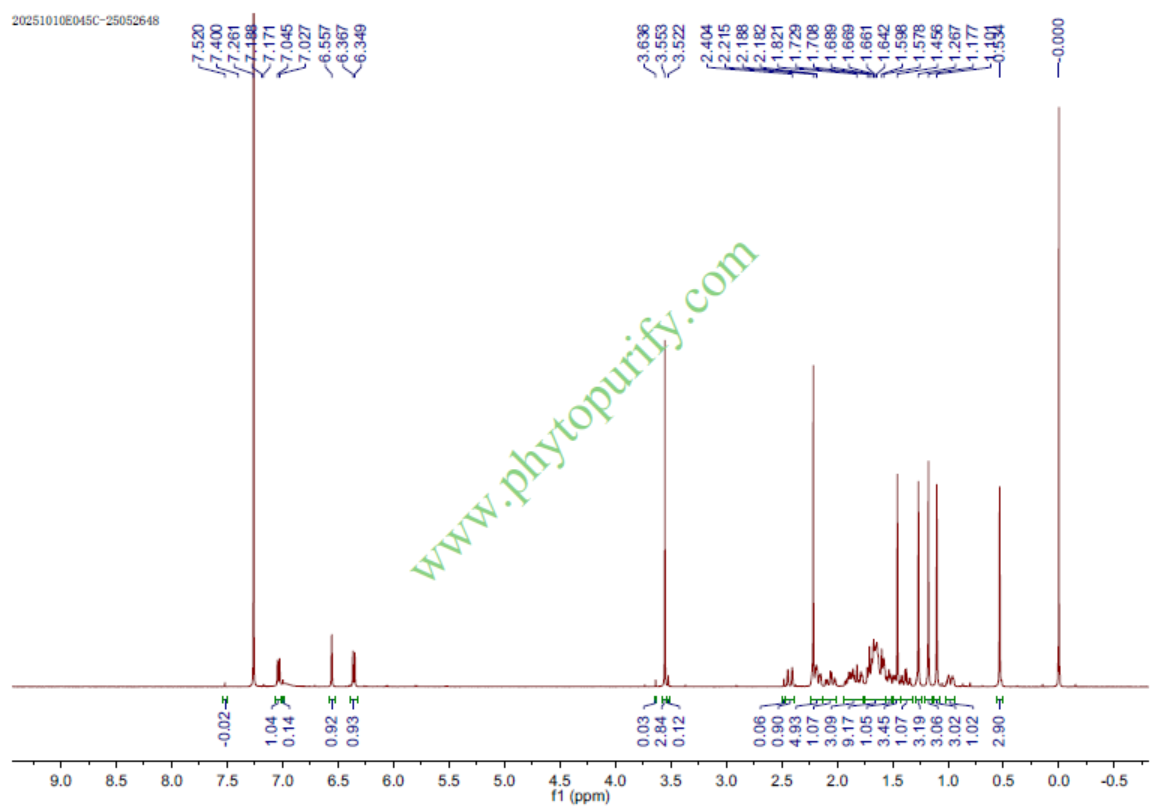
Identification Method: Mass, NMR
Packing: Brown vial or HDPE plastic bottle
Can be supplied from milligrams to grams.
For Reference Standard and R&D, Not for Human Use Directly.
Inquire for bulk scale.
HPLC of Pristimerin
HNMR of Pristimerin
Storage conditions:Short-term storage at 2~8℃, long-term storage at -20 ~ -80℃
63.6000
6.1196
6.0703
.0022
6.9393
7.7709
High
91.9175
4.9078
No
Yes
No
No
Yes
No
0.0
No
No
Yes
Yes
Natural products, as an important treasure trove for drug discovery, play an irreplaceable role in the long history of human fight against diseases. Among them, triterpenoids have always been a hot topic in medicinal chemistry and pharmacology research due to their structural diversity and wide range of biological activities. Pristimerin, a quinone methyl triterpenoid compound isolated from plants in the Celastraceae and Hippocrataceae families, has attracted widespread attention from researchers in recent years due to its outstanding and diverse pharmacological activities, particularly its significant anti-tumor potential. Its CAS number is 1258-84-0 and its molecular weight is 464.6460. Early studies revealed its anti-inflammatory, antibacterial, and antimalarial activities, while research in the past two decades has pushed it to the forefront of tumor pharmacology. Of particular note is that Platycodon grandiflorus has been identified as an efficient and reversible monoacylglycerol lipase (MGL) inhibitor, with an IC50 value of 93 nM. MGL is a key enzyme in the endocannabinoid system that degrades 2-arachidonoglycerol (2-AG), and its inhibition is associated with analgesic, anti-inflammatory, and potential anti-tumor effects. In addition, studies have confirmed that Platycodon grandiflorus can exert anti-tumor effects on multiple signaling pathways by acting on multiple key molecular targets, such as MCL1, BCL2, STAT3, MMP2, etc. This article aims to systematically review the chemical structure, plant origin, pharmacological activity, multi-target mechanism of action, pharmacological characteristics, and clinical application prospects of Platycodon grandiflorus, in order to provide comprehensive academic references for the deep development and transformation research of this natural product.
Platycodon belongs to the quinone methyl triterpenoid family, and its chemical name is (20 α) -3-hydroxy-2-oxo-24-demethyl-1 (10), 3,5,7-Friedlandiene-29-acid. Its core structure is a highly oxidized pentacyclic triterpenoid skeleton (A/B/C/D/E ring), characterized by the presence of a key ortho quinone methyl structure (quinone enone system) on the A ring, which is an important pharmacophore for its various biological activities; C-3 is a hydroxyl group; The C-23 position usually exists in the form of carboxyl groups, and sometimes also in the form of methyl esters (i.e. its analogues Celastrol, Triptolide). Its molecular formula is C30H40O4.
From the analysis of physical and chemical properties, Platycodon grandiflorus exhibits typical hydrophobic characteristics. Its calculated lipid water partition coefficient (LogP) is 6.1196, indicating its high lipophilicity. Consistent with this, its water solubility is extremely low, only 0.0022 mg/mL, which poses the primary challenge for its formulation development. Its topological polar surface area (TPSA) is 63.6 Å ², which is relatively small, further confirming its hydrophobic properties. These properties determine that Platycodon grandiflorus is easy to penetrate cell membranes in organisms, but it may also lead to poor oral absorption, tissue selective distribution in vivo, and the need for special formulations (such as nanomaterials, liposomes) to improve bioavailability. Preliminary pharmacological predictions indicate that it has a high blood-brain barrier permeability potential, which provides the possibility for its application in central nervous system related diseases such as glioma. In addition, the hERG inhibition risk prediction was negative, and the Ames test predicted a value of 0.0, indicating a low potential risk of arrhythmia and genetic toxicity, providing preliminary favorable information for its safety evaluation.
Platycodon grandiflorus is mainly found in various plants of the families Celastraceae and Pterocarpaceae. Its name comes from the originally isolated plant source, but it is actually more widely distributed. Common plants rich in resveratrol include:
1. Pristimera spp Pristimera indica is a classic source of this compound.
2. Maytenus spp For example, Maytenus heterophylla, Maytenus senegalensis, etc.
3. Tripterygium spp The famous medicinal plant Tripterygium wilfordii also contains resveratrol and its analog Tripterygium wilfordii.
4. Gymnospora spp and Salacia spp. Equivalent plants.
The extraction of Platycodon grandiflorus from plant materials is usually carried out using organic solvent extraction method. The common process is as follows: first, dry plant root bark or stem bark is crushed, and then medium to polar organic solvents (such as methanol, ethanol, ethyl acetate, or mixed solvents of different proportions) are used for extraction or reflux extraction. After vacuum concentration, the crude extract is separated and purified using various chromatographic techniques, including silica gel column chromatography, reverse phase column chromatography (such as ODS), high performance liquid chromatography (HPLC), and thin layer chromatography (TLC). Due to its usually low content and the presence of structurally similar quinone methyl triterpenoids in plants (such as celastrol, Tingenone, etc.), the separation and purification process requires precise solvent system selection and multiple chromatographic steps. In recent years, preparative separation techniques such as high-speed countercurrent chromatography (HSCCC) have also been applied to improve separation efficiency and yield. In addition, in order to meet the demand for in-depth research, total synthesis and structural modification studies are also underway, aiming to solve the problem of limited natural sources and optimize their physicochemical and pharmacological properties.
Platycodon grandiflorus exhibits a wide range of pharmacological activities, among which the most profound and remarkable is its anti-tumor effect.
1. Antitumor activity:
Numerous in vitro and in vivo studies have confirmed that Platycodon grandiflorus has strong inhibitory effects on proliferation and induces apoptosis in various human tumor cell lines, including but not limited to:
- breast cancer: It is effective for estrogen receptor positive (ER+) and triple negative breast cancer (TNBC) cells, and can inhibit cell proliferation, migration and invasion.
- prostate cancer It is toxic to both androgen dependent and non androgen dependent prostate cancer cells and can induce cell cycle arrest and apoptosis.
- ovarian cancer Can overcome chemotherapy resistance and produce synergistic effects with conventional chemotherapy drugs.
- Lung cancer Inhibit the growth of non-small cell lung cancer (NSCLC) and small cell lung cancer cells.
- liver cancer Inhibition of liver cancer cell proliferation by inducing apoptosis and autophagy.
- Hematological malignancies It exhibits significant activity against multiple myeloma, leukemia, and lymphoma cells.
- Other solid tumors: such as glioma, pancreatic cancer, colorectal cancer, etc.
Its anti-tumor activity is not only reflected in directly killing tumor cells, but also in inhibiting multiple aspects such as tumor angiogenesis, invasion, and metastasis.
2. Anti inflammatory and immune regulatory activity:
Platycodon grandiflorus exerts a powerful anti-inflammatory effect by inhibiting the activity of key inflammatory transcription factors such as nuclear factor kappa B (NF - κ B) and activator protein-1 (AP-1), downregulating the expression of cyclooxygenase-2 (COX-2), inducible nitric oxide synthase (iNOS), and various pro-inflammatory cytokines (such as TNF - α, IL-1 β, IL-6). This has been validated in animal models of rheumatoid arthritis, osteoarthritis, and inflammatory bowel disease.
3. Antibacterial and antiparasitic activity:
Early studies have shown that Platycodon grandiflorus has inhibitory effects on certain Gram positive bacteria (such as Staphylococcus aureus) and mycobacteria. In addition, it also has activity against Plasmodium and Leishmania parasites.
4. Other activities:
Including neuroprotection, anti obesity (regulating energy metabolism by inhibiting MGL), and potential anti fibrotic effects.
The pharmacological effects of Platycodon grandiflorus, especially its anti-tumor effect, are achieved by acting on multiple molecular targets and signaling pathway networks, reflecting the multi-target nature of natural products.
1. Core enzyme inhibition: Monoacylglycerol lipase (MGL) inhibition
Platycodon grandiflorus is a highly efficient and reversible MGL inhibitor (IC50=93 nM). Inhibition of MGL can lead to an increase in endogenous cannabinoid 2-AG levels, thereby activating cannabinoid CB1 and CB2 receptors. In the tumor microenvironment, this not only produces direct anti proliferative and pro apoptotic effects, but also regulates immune cell function and inhibits tumor associated inflammation, which is one of the important foundations of its pleiotropy.
2. Key anti-tumor targets:
- Apoptosis regulatory targets Platycodon grandiflorus can downregulate the expression of anti apoptotic proteins MCL1 and BCL2, while possibly upregulating pro apoptotic proteins such as BAX, disrupting mitochondrial membrane potential, leading to the release of cytochrome C, thereby activating the Caspase cascade reaction and inducing intrinsic apoptosis pathways in tumor cells.
- Signal transduction and transcriptional activation targets Platycodon grandiflorus is a potent inhibitor of the STAT3 signaling pathway. It can inhibit the phosphorylation (activation), nuclear translocation, and transcription of downstream target genes (such as Cyclin D1, BCL2, MMP2, VEGF) of STAT3, thereby suppressing cell proliferation, survival, angiogenesis, and metastasis.
- Cell cycle and DNA damage targets Research has shown that Platycodon grandiflorus can inhibit the activity of topoisomerase I (TOP1) and topoisomerase II α (TOP2A), interfere with DNA replication and repair, leading to DNA damage and cell cycle arrest (usually in G1 or G2/M phase).
- Invasion and metastasis related targets By inhibiting the expression and activity of matrix metalloproteinase-2 and -9 (MMP2, MMP9), Platycodon grandiflorus can effectively reduce the invasion and metastasis ability of tumor cells.
- Hypoxia and stress response targets Platycodon grandiflorus can inhibit the stability and transcriptional activity of hypoxia inducible factor-1 α (HIF1A), thereby weakening the adaptability and angiogenesis signals of tumor cells in hypoxic environments.
- Kinase and receptor targets It can inhibit the activity of extracellular signal regulated kinase 1/2 (MAPK1/ERK2) and interfere with the growth factor signaling pathway. In addition, the regulation of estrogen receptor (ESR1) and aromatase (CYP19A1) is a potential mechanism for its use in hormone dependent tumors (such as breast cancer).
3. Upstream regulation mechanism:
Many of the effects of Platycodon grandiflorus can be traced back to its impact on key upstream regulatory factors. The most prominent feature is its inhibition of proteasome activity. Platycodon grandiflorus can bind to the β 5 subunit (chymotrypsin like active site) of the 20S proteasome, inhibiting its function and leading to cellular misfolding and accumulation of regulatory proteins (such as I κ B α, p27, etc.), thereby inhibiting the NF - κ B pathway, inducing cell cycle arrest and apoptosis. In addition, it can induce excessive production of reactive oxygen species (ROS), leading to oxidative stress-induced cell damage.
In summary, Platycodon grandiflorus interferes with multiple key processes of tumor cell survival, proliferation, metabolism, invasion, and immune escape through a "one stone, multiple birds" approach, which may be the reason for its high efficiency and low susceptibility to drug resistance.
Although Platycodon grandiflorus exhibits excellent biological activity in vitro, there are significant challenges in its drug like properties, mainly due to its unfavorable physicochemical properties.
1. Challenges in drug development:
- Solubility and permeability The extremely high LogP value and low water solubility are the primary obstacles it faces. This results in extremely low oral bioavailability, limiting the application of traditional oral administration routes.
- Pharmacokinetic properties Limited animal pharmacokinetic studies (mainly conducted in rodents) have shown that the oral absorption of Platycodon grandiflorus is poor, it is cleared quickly in the body, has a large distribution volume, and may be mainly distributed in adipose tissue, liver, etc. Its metabolic pathway is not fully understood, and may involve redox reactions of liver CYP450 enzyme system and II binding reactions such as glucuronic acid binding.
- Potential toxicity As a potent proteasome inhibitor and ROS inducer, Platycodon grandiflorus may exhibit toxicity to normal cells, especially rapidly proliferating cells such as bone marrow cells and gastrointestinal epithelial cells, at effective doses. Its analogue Triptolide has been observed to have side effects such as hepatotoxicity and cardiotoxicity in clinical trials, suggesting that systematic preclinical safety evaluation is also needed for Platycodon grandiflorus.
2. Formulation strategy and structural optimization:
To overcome these obstacles, researchers mainly focus on two aspects:
- New drug delivery system This is currently the most active research field. By utilizing nanotechnology to encapsulate Platycodon grandiflorus in liposomes, polymer nanoparticles, micelles, nanoemulsions, or solid lipid nanoparticles, its water solubility and stability can be significantly improved, its pharmacokinetic behavior can be enhanced, targeted delivery can be achieved (such as passive targeting of tumors through EPR effect or active targeting through surface modification), and systemic toxicity may be reduced. For example, ampelopsin liposomes showed enhanced anti-tumor effect and reduced toxicity in breast cancer and prostate cancer models.
- Structural modification and development of analogues By chemically modifying the core structure of Platycodon grandiflorus, such as modifying the carboxyl group at position C-23 (ester or amide formation), modifying the quinone methyl structure of ring A, or introducing hydrophilic groups, the aim is to improve its water solubility and pharmacokinetic properties while retaining or enhancing its activity. Some semi synthetic derivatives with improved activity and selectivity have been reported in previous studies.
As a multi-target and highly active natural lead compound, Platycodon grandiflorus has broad clinical application prospects, but the transformation still needs to overcome many challenges.
1. Potential clinical application directions:
- Antitumor therapy This is the main application direction. Given its multi-target nature, Platycodon grandiflorus may be effective against various refractory, drug-resistant, or metastatic tumors. It is expected to be used as a monotherapy or in combination with existing chemotherapy, targeted therapy, and immunotherapy drugs to enhance efficacy and overcome drug resistance. The inhibition of MGL also provides a new approach for the treatment of tumors associated with dysregulation of the endocannabinoid system.
- Anti inflammatory and autoimmune diseases Based on its strong NF - κ B and STAT3 inhibitory activity, Platycodon grandiflorus can be used to treat chronic inflammation and autoimmune diseases such as rheumatoid arthritis, multiple sclerosis, and inflammatory bowel disease.
- Metabolic diseases Its MGL inhibitory activity suggests its potential in regulating energy balance, treating obesity, and related metabolic syndrome.
- neuroprotection Its anti-inflammatory and antioxidant properties, as well as good blood-brain barrier permeability, make it worth exploring in the treatment of neurodegenerative diseases such as Alzheimer's disease and Parkinson's disease.
2. Future research focus and prospects:
- In depth mechanism research Further elucidate its precise molecular mechanisms in different disease models, particularly the synergistic relationship between its multiple targets and its specificity in different cellular and tissue environments.
- Systematic pharmacokinetics and toxicology research Conducting comprehensive safety evaluations of preclinical pharmacokinetics, tissue distribution, metabolite identification, long-term toxicity, reproductive toxicity, genetic toxicity, and other aspects that comply with GLP standards is an essential step in advancing its clinical trials.
- Clinical translation of advanced formulation technology Promote the transition from laboratory research to pilot scale and preclinical evaluation of nano and targeted formulations based on Platycodon grandiflorus, and solve their delivery challenges.
- Reasonable combination therapy strategy Explore the optimal combination regimen, timing, and dosage of Platycodon grandiflorus with existing standard therapies such as paclitaxel, cisplatin, immune checkpoint inhibitors, etc., in order to achieve breakthroughs in clinical trials.
- Development of biomarkers Finding biomarkers that can predict patients' response to treatment with Platycodon grandiflorus can help achieve personalized precision medicine.
As a plant derived quinone methyl triterpenoid compound, Platycodon grandiflorus has shown great therapeutic potential in multiple major disease fields, such as anti-tumor and anti-inflammatory, due to its unique chemical structure and multi-target mechanism of action. Its new identity as a highly efficient MGL inhibitor has expanded the dimensions of its pharmacological effects. Although its inherent physical and chemical properties and potential toxicity constitute the main bottlenecks in its conversion to drugs, modern pharmaceutical technologies (especially nano delivery systems) and structural modification strategies in medicinal chemistry provide powerful tools to overcome these obstacles. In the future, through interdisciplinary collaboration, in-depth systematic pharmacology research will be conducted to optimize its drug properties and explore reasonable clinical development pathways. Platycodon grandiflorus is expected to successfully transform from a promising natural lead compound into an innovative drug for clinical treatment, contributing its unique value to human health. The research process has once again confirmed that discovering multi-target drug leads from natural products remains an effective strategy for addressing complex disease challenges.
