


Synonym name:
Catalogue No.: BP0455
Cas No.: 70553-76-3
Formula: C37H42N2O6
Mol Weight: 610.751
Botanical Source: Alkaloid from Menispermum dauricum (Menispermaceae)
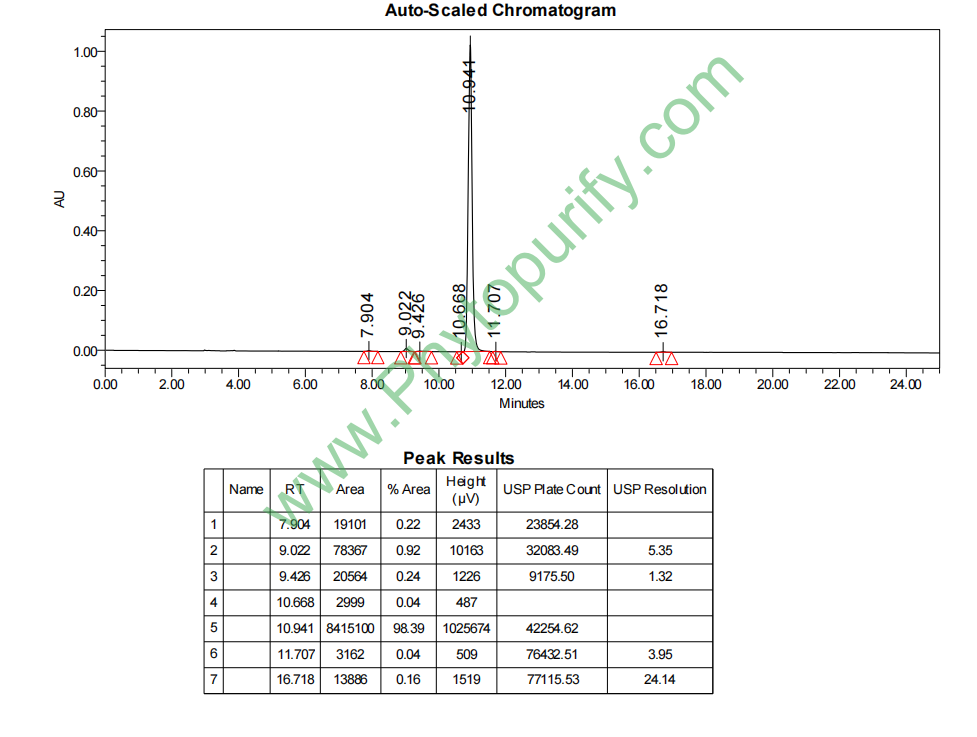
Purity: 95%~99%
Analysis Method: HPLC-DAD or/and HPLC-ELSD
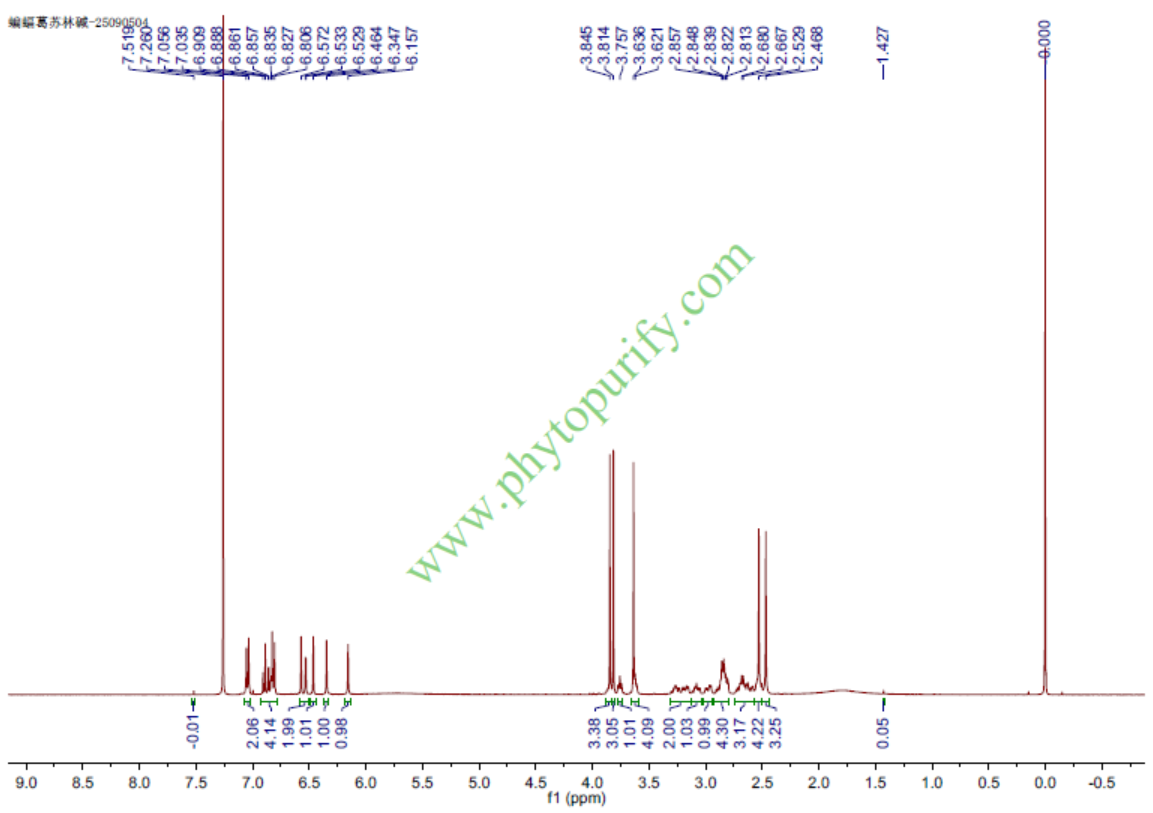
Identification Method: Mass, NMR
Packing: Brown vial or HDPE plastic bottle
Can be supplied from milligrams to grams.
For Reference Standard and R&D, Not for Human Use Directly.
Inquire for bulk scale.
HNMR of Daurisoline
HPLC of Daurisoline
Storage conditions:Short-term storage at 2~8℃, long-term storage at -20 ~ -80℃
Daurisoline, CAS number 70553-76-3, is a bisbenzylisoquinoline alkaloid derived from the traditional Chinese medicine Menispermum dauricum and its rhizome Rhizoma Menispermi. As an important natural product, dauricine has attracted widespread attention in the fields of cardiovascular disease and tumor research in recent years due to its unique chemical structure and multi-target pharmacological activity. Especially its blocking effect on hERG channels endows it with the potential to resist arrhythmia, and as an effective autophagy blocker, it provides new ideas for cancer treatment.
This review aims to systematically summarize the chemical structure and physicochemical properties, plant sources and extraction methods, pharmacological activity and mechanism of action, pharmacological evaluation and pharmacokinetic characteristics of Batrachotoxin alkaloids. Combined with its molecular targets in lung cancer and other related diseases, it explores its clinical application prospects and future research directions, providing reference for natural product pharmacology researchers and drug developers.
Batcell alkaloid belongs to the bisbenzylisoquinoline alkaloid class, with a molecular formula of C37H42N2O6 and a molecular weight of 610.75. Its structural core is formed by two isoquinoline units bridged by benzyl groups, with high molecular complexity and stereochemical characteristics. This type of structure endows it with strong biological activity and the potential to bind to multiple targets.
In terms of physical and chemical properties, the LogP value of Batrachotoxin is about 4.5, indicating that it has good lipid solubility, which is beneficial for cell membrane penetration but may affect water solubility. The polar surface area (TPSA) is 84.34 Å ², and the number of hydrogen bond acceptors is 8, indicating that it has a certain polarity and hydrogen bond formation ability in intermolecular interactions. Its blood-brain barrier penetration ability is weak, indicating limited exposure to the central nervous system. There is a potential risk of cardiac toxicity, mainly due to its inhibitory effect on hERG potassium channels. The hepatotoxicity and genotoxicity (Ames test) are not yet clear and require further research.
Batvine alkaloids are mainly isolated from Menispermum dauricum and its dried rhizome Rhizoma Menispermi. Bat Ge is a perennial woody vine plant widely distributed in Northeast China and the Korean Peninsula. It is used in traditional Chinese medicine for promoting blood circulation, removing blood stasis, relieving pain, and anti-inflammatory effects.
The extraction process usually uses alcohol solvents (such as ethanol or methanol) for reflux extraction of dried plant materials, followed by enrichment of alkaloid components through acid-base separation, liquid-liquid extraction, and other steps. During the purification process, column chromatography techniques are commonly used, including silica gel columns, C18 reverse phase columns, and high-performance liquid chromatography (HPLC) separation, to ultimately obtain high-purity Batrachotoxin alkaloids.
In recent years, the application of ultrasound assisted extraction and microwave-assisted extraction technologies has improved extraction efficiency and purity, while reducing solvent usage and extraction time, providing technical support for industrial production.
Batvine alkaloids were first discovered to have significant antiarrhythmic activity. It blocks the hERG (human Ether - à - go Related Gene) potassium channel in myocardial cells, regulates the action potential duration, stabilizes the cardiac electrophysiological state, and thus prevents the occurrence of arrhythmia. Multiple in vitro and in vivo experiments have confirmed its protective effect on arrhythmia models, especially showing good therapeutic effects in atrial and ventricular arrhythmias.
However, blocking the hERG channel may also induce cardiac toxicity, especially QT interval prolongation and potential risk of arrhythmia, which poses safety challenges for its clinical application.
In recent years, there has been an increasing amount of research on the use of Batrachotoxin in the field of cancer, especially in lung cancer models where it has shown significant anti-tumor activity. Its anti-cancer mechanism is closely related to its function as an autophagy inhibitor. Autophagy, as an important metabolic regulation and stress response process within cells, plays a dual role in the survival and drug resistance of tumor cells. Batricine inhibits autophagic flow, blocks the autophagic protective mechanism of tumor cells, enhances the sensitivity of chemotherapy drugs, and promotes tumor cell apoptosis.
In addition, bat puerarin has regulatory effects on various tumor related signaling pathways, including BCL2, STAT3, MAPK, PI3K/Akt, demonstrating its multi-target synergistic anti-tumor potential.
The pharmacological effects of Batrachotoxin involve multiple molecular targets and signaling pathways, mainly including:
HERG potassium channel As an important current channel in myocardial cells, the blockade of hERG channel is a key mechanism for the anti arrhythmic effect of Batrachamine alkaloids, but it also brings potential risks of cardiac toxicity.
Autophagy related proteins Bat puerarin inhibits autophagy flow, affects the expression of autophagy markers such as LC3-II and p62, and blocks the autophagy protective mechanism of tumor cells.
Lung cancer related targets:
In summary, Batrachotoxin exerts its pharmacological effects against arrhythmia and tumors through multi-target and multi pathway synergistic effects.
The molecular weight of dauricine is 610.75, and its higher molecular weight may affect the oral bioavailability of the drug. The LogP value is 4.5, indicating that it has strong lipid solubility, which is beneficial for cell membrane penetration, but may lead to insufficient water solubility and affect in vivo distribution. The TPSA is 84.34 Å ², which is in a moderate range and conducive to binding with the target.
The number of hydrogen bond receptors is 8, indicating strong hydrogen bonding forces in target binding, but it may also affect its ability to pass through biological membranes. Its blood-brain barrier penetration ability is relatively low, reducing the risk of central nervous system toxicity.
At present, there is limited research on the pharmacokinetics of dauricine. Previous studies have shown that it has certain metabolic stability in vivo, but the specific absorption, distribution, metabolism, and excretion (ADME) characteristics still need to be further explored. Given its hERG channel blocking activity, cardiac toxicity assessment is an important direction for future pharmacokinetic research.
In addition, there is a lack of data on liver toxicity and genotoxicity, and its safety needs to be further clarified through in vitro and in vivo toxicology tests.
Batvine alkaloids, as a natural product with multiple pharmacological activities, have broad clinical application potential. Its anti arrhythmic effect provides a new candidate drug for the treatment of cardiovascular diseases, especially in cases where traditional drugs are resistant or have significant side effects, batagiline may become an effective alternative.
In the field of tumor therapy, Batrachotoxin has demonstrated excellent anti lung cancer activity through autophagy blockade and multi-target regulation. The combination application with existing chemotherapy drugs is expected to overcome tumor drug resistance and improve treatment efficacy. In addition, its multiple regulation of lung cancer-related signaling pathways provides a theoretical basis for precision treatment.
However, the cardiac toxicity risk and pharmacokinetic characteristics of Batrachotoxin are not fully understood, which limits its clinical translation. Future research needs to focus on optimizing molecular structures to reduce the risk of hERG channel blockade, improve drug metabolic stability, and bioavailability. Meanwhile, the toxicological evaluation and preclinical safety studies of the system are key steps in its clinical development.
Combining modern drug design techniques such as computer-aided drug design (CADD), structural modification, and drug delivery system development, Batrachotoxin is expected to become an important candidate for the new generation of antiarrhythmic and anti-tumor drugs.
As a natural alkaloid of the bisbenzylisoquinoline class, Bat Ge Su Lin alkaloid has shown broad application prospects in the fields of cardiovascular disease and tumor treatment due to its unique chemical structure and multi-target pharmacological activity. Its blocking effect on hERG channels endows it with antiarrhythmic potential, while its function as an autophagy blocker provides a new strategy for anti-tumor therapy.
Although there are still some challenges in its drug development and safety, with the deepening of medicinal chemistry, pharmacology, and pharmacokinetics research, Batustrine alkaloids are expected to achieve clinical translation through structural optimization and dosage form improvement. In the future, interdisciplinary collaborative research will promote it to become an important model for the development of natural product drugs, benefiting cardiovascular and cancer patients.
