

Product name: Oleaside A
Synonym name:
Catalogue No.: BP3283
Cas No.: 69686-84-6
Formula: C30H44O7
Mol Weight: 516.675
Botanical Source:
Physical Description:
Type of Compound: Triterpenoids
Purity: 95%~99%
Analysis Method: HPLC-DAD or/and HPLC-ELSD
Identification Method: Mass, NMR
Packing: Brown vial or HDPE plastic bottle
The product could be supplied from milligrams to grams. Inquire for bulk scale.
We provide solution to improve the water-solubility of compounds, thereby facilitating the variety of activity tests and clinic uses.
For Reference Standard and R&D, Not for Human Use Directly.
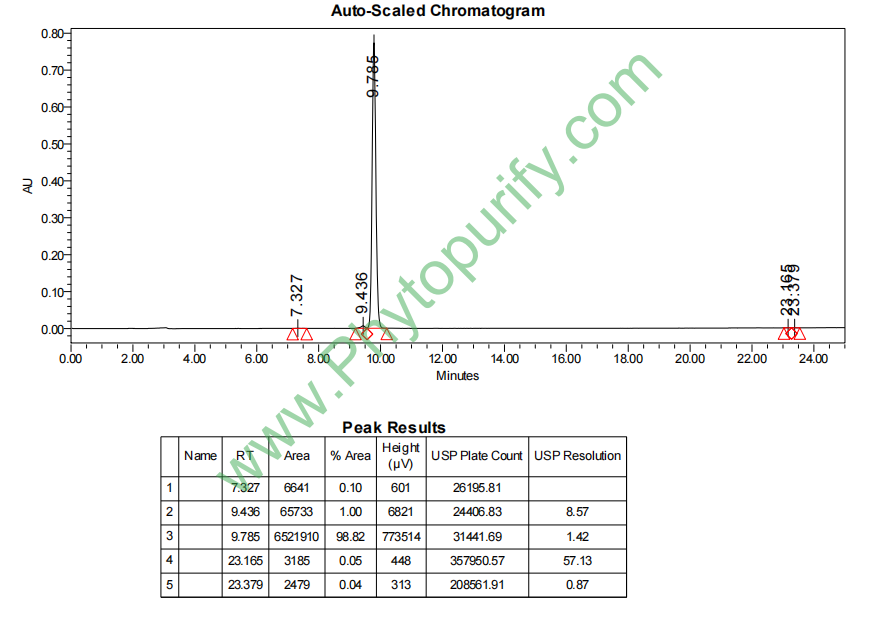
HPLC of Oleaside A
Storage conditions:Short-term storage at 2~8℃, long-term storage at -20 ~ -80℃
91.2900
3.2494
3.2494
.0119
2.3920
10.0156
High
75.0415
6.3061
No
No
No
No
Yes
No
0.3
No
No
No
No
Oleaside A, chemical name for a polar enolide monoglycoside, is a compound derived from oleander(Nerium oleander)Natural active compounds isolated from the middle. Its CAS number is 69686-84-6, molecular formula is C30H44O7, and molecular weight is approximately 516.68 g/mol. As a structurally unique natural product, oleander A has attracted attention in the fields of natural product pharmacy and medicinal chemistry due to its significant biological activity since its discovery. Preliminary studies have shown that this compound can inhibit the induction of intercellular adhesion molecule-1 (ICAM-1) by interleukin-1 alpha (IL-1 alpha) and tumor necrosis factor alpha (TNF - alpha), demonstrating potential anti-inflammatory and anti-tumor activities. Its target of action mainly targets multiple subtypes of sodium potassium ATPase (Na+/K+- ATPase) (ATP1A1, ATP1A2, ATP1B1, ATP1B2, ATP1B3), which associates its pharmacological effects with diseases such as heart failure. This article will provide a systematic professional science popularization introduction to this valuable natural product from the aspects of its chemical structure, plant origin, pharmacological mechanism, medicinal evaluation, and research prospects.
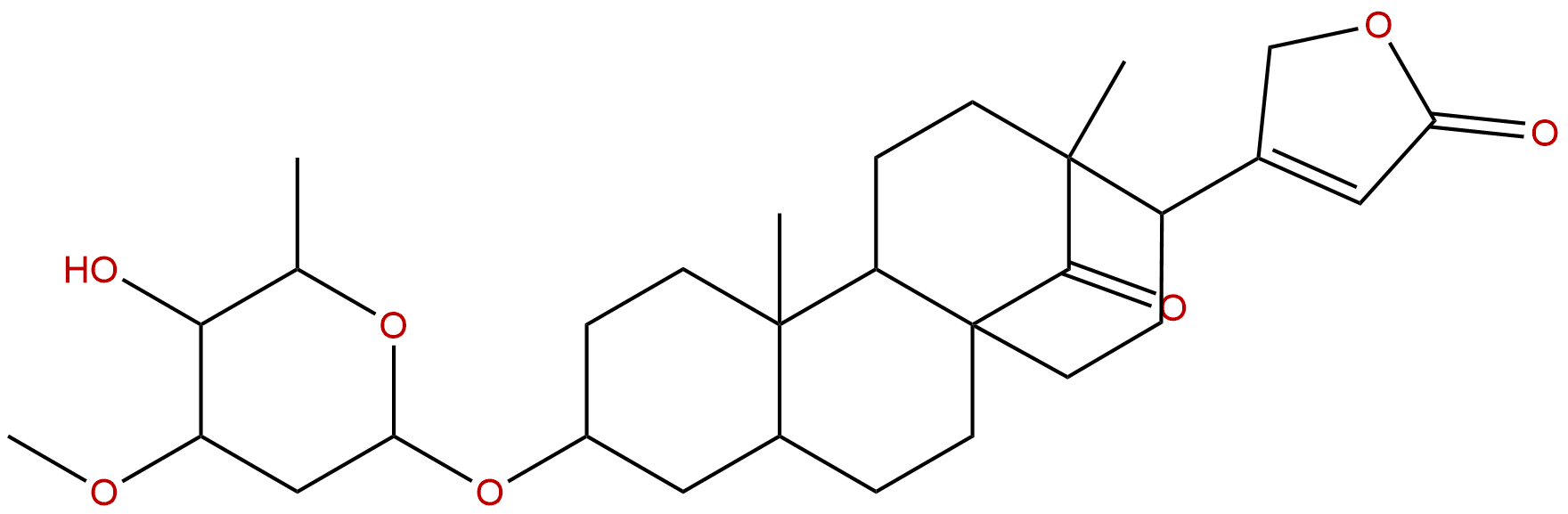
The molecular formula of oleander A is C30H44O7, which is a natural product with medium molecular weight. The SMILES structural formula is: COC1CC (OC2CCC3 (C) C (CCC45CCC (C6=CC (=O) OC6) C (C) (CCC43) C5=O) C2) OC (C) C1O. From the structural analysis, the molecule contains an enol lactone ring, a glycoside structure (monosaccharide moiety), and multiple methyl, methoxy, and hydroxyl substituents, making it a highly polar glycoside compound. This structural feature determines its unique physicochemical properties.
According to the provided pharmacological parameters, the logarithm of the lipid water partition coefficient (LogP) is 3.2494, indicating that the compound has a certain lipophilicity but not high hydrophobicity. The topological polar surface area (TPSA) is 91.29 Å ², which is relatively moderate and usually related to the ability of compounds to penetrate biofilms. The molecular weight (MW) of 516.68 is slightly higher than the empirical threshold of 500 Da for common oral drugs, which is a point that needs to be taken into account in their pharmacological evaluation. The water solubility parameter is 0.0119 (unit not specified, usually indicating low solubility), which is consistent with the lipophilic trend shown by the LogP value. The permeability of Caco-2 cells is 10.0156, indicating that it may have good intestinal absorption potential. It is worth noting that its blood-brain barrier (BBB) penetration is predicted to be "high", which means that the compound may enter the central nervous system, which is advantageous for drug development targeting central targets, but may also pose potential neurotoxic risks. The plasma protein binding rate (PPB) is 75.04%, which is a moderately high level and may affect its free drug concentration and efficacy.
The plant source of oleander A is single and clear, namely oleander(Nerium oleander L.)。 Apocynaceae, belonging to the Apocynaceae family, is an evergreen shrub native to the Mediterranean region and widely distributed as an ornamental plant in tropical and subtropical regions worldwide. It is worth noting that the entire oleander plant is toxic, mainly due to the presence of various cardiac glycoside compounds (such as oleander), which can strongly inhibit Na+/K+- ATPase on myocardial cells, leading to arrhythmia and even death.
In traditional medicine, the application of oleander has a long history but is full of risks. In Ayurvedic medicine and certain folk therapies in India, the leaves, skin, roots, and other parts of oleander have been used in extremely small doses to treat heart disease, asthma, epilepsy, leprosy, and other conditions. However, due to its extremely narrow treatment window (the effective dose is very close to the toxic dose), improper use can easily lead to serious poisoning, so modern formal medicine has strictly restricted its direct medicinal use. The discovery of oleander A represents the research approach of modern natural product chemistry to "extract essence from traditional toxic plants" and search for specific, effective, and potentially less toxic single active ingredients. It is different from classical cardiac glycosides and is a polar enol lactone monoglycoside. Its toxicity characteristics and pharmacological targets may differ from known cardiac glycosides, providing a new scientific entry point for the safe development and utilization of oleander resources.
The pharmacological activity research of oleander A is still in its early stages, but existing data reveals its multifaceted potential.
4.1 Anti inflammatory and immune regulatory activity
The existing Chinese description clearly states that oleander A "can inhibit the induction of ICAM-1 by IL-1 α and TNF - α". IL-1 α and TNF - α are two key pro-inflammatory cytokines that play a central role in inflammatory response and immune response. They can induce the expression of ICAM-1 on various cell surfaces such as endothelial cells and epithelial cells. ICAM-1 is an important cell adhesion molecule that mediates the adhesion and migration of white blood cells to vascular endothelial cells, and is a key step in the infiltration of inflammatory cells into tissues. Therefore, inhibiting the induced expression of ICAM-1 suggests that oleander A may exert anti-inflammatory effects by intervening in this early inflammatory signaling pathway. This mechanism has potential application value in the treatment of diseases driven by chronic inflammation, such as atherosclerosis, rheumatoid arthritis and some tumors (chronic inflammation exists in tumor microenvironment).
4.2 Potential anti-tumor activity
The mention of 'having anti-tumor activity' in the description may be indirectly related to its anti-inflammatory mechanism, as chronic inflammation is a promoting factor for tumor occurrence and development. In addition, a more direct effect may be related to its targeting of Na+/K+- ATPase. Research has shown that certain Na+/K+- ATPase inhibitors not only affect ion homeostasis, but also affect cell proliferation, apoptosis, and migration by activating downstream signaling pathways such as Src kinase and MAPK pathway, thereby exhibiting anti-tumor effects in specific tumor models. The inhibitory effect of oleander A on multiple ATPase subtypes may provide a theoretical basis for its anti-tumor research, but the specific pathways and cell model data still need further experimental confirmation.
4.3 Core target: Na+/K+- ATPase
The five clear targets provided by the database (ATP1A1, ATP1A2, ATP1B1, ATP1B2, ATP1B3) are all subunits of Na+/K+- ATPase (also known as sodium pump). Na+/K+- ATPase is a transmembrane protein that exists on almost all animal cell membranes. Its function is to hydrolyze ATP, pump out 3 Na+ions from the cell, and pump in 2 K+ions, thereby maintaining a sodium potassium ion gradient on both sides of the cell membrane. This gradient is crucial for maintaining cell osmotic pressure, nerve impulse conduction, resting potential of myocardial cells, and contractility.
- ATP1A1、ATP1A2: are two isomers of the catalytic alpha subunit. The α 1 subunit (ATP1A1) is widely expressed, while the α 2 subunit (ATP1A2) is mainly expressed in the heart, skeletal muscle, and brain.
- ATP1B1、ATP1B2、ATP1B3 It is the three isoforms that regulate the β subunit, mainly involved in the correct folding, membrane localization, and functional regulation of the α subunit.
4.4 Association with Heart Failure
The target information of oleander A directly associates it with the disease of heart failure. This is precisely based on its Na+/K+- ATPase inhibitor properties. Classic cardiac drugs in clinical practice, such as digoxin, exert positive inotropic effects by inhibiting Na+/K+- ATPase on myocardial cells (mainly targeting the alpha subunit). The mechanism is that after inhibiting the sodium pump, the intracellular Na+concentration increases, which in turn reduces Ca2+efflux or increases Ca2+influx through Na+/Ca2+exchangers (NCX), leading to an increase in intracellular Ca2+concentration and enhancing myocardial contractility. Therefore, based on the target of action, it is speculated that oleander A may have similar cardiotonic potential. However, the specific subtype with higher selectivity and the ratio of cardiotonic potency to toxicity (especially the risk of arrhythmia) are the key factors determining whether it can become a new candidate drug for anti heart failure. The database lists it as a related disease, indicating this research direction, but strict preclinical cardiovascular pharmacology evaluation is required.
Based on the provided pharmacological parameters, we can conduct a preliminary evaluation of the potential development prospects of oleander A as a drug, and refer to the famous "Lipinski Rule of Five" (RO5) for comparative analysis. RO5 is commonly used to predict the oral absorption characteristics of small molecule compounds, which includes: molecular weight MW<500 Da, hydrogen bond donor number HBD<5, hydrogen bond acceptor number HBA<10, and lipid water partition coefficient LogP<5.
Comprehensive Assessment Oleander A performs fairly well in terms of permeability, lipid solubility, and some toxicity indicators, but its Slightly higher molecular weight and There is a risk of chromosomal abnormalities These are two main drug-induced disorders. Especially for chromosomal aberration positivity, it is a "red flag" signal that needs to be addressed and the mechanism clarified in preclinical development. It must be confirmed through more in-depth genetic toxicity testing (such as micronucleus test, comet assay, etc.) and evaluated for its threshold effect and whether it can be eliminated through structural modification. The Na+/K+- ATPase inhibitory activity also requires a detailed pharmacological evaluation of cardiovascular safety.
At present, there is relatively limited public research literature on oleander A, and its activity data mostly comes from preliminary screening and database inclusion information. It represents a new type of active molecule discovered from the toxic plant Apocynaceae, with a structure different from traditional cardiac glycosides. Its research value lies in exploring new dimensions of the chemical composition diversity and pharmacological activity of Apocynaceae.
Research status:
1. Basic research stage Current research mainly focuses on the isolation and identification of compounds, preliminary target prediction, and cellular level activity screening. Its main pharmacological labels are its inhibition of ICAM-1 induced anti-inflammatory mechanism and Na+/K+- ATPase targeting, but there is still a lack of in-depth signal pathway research and animal model validation data.
2. Structure Activity Relationship (SAR) Blank As a single compound, its chemical structure has low similarity with other known drugs, and there has been no systematic study on derivative synthesis and activity optimization.
3. Security assessment urgently needs to be deepened As mentioned earlier, the potential risk of chromosomal aberrations is the 'Damocles sword' hanging over its development path, which must be clarified through standardized GLP toxicology studies.
Application prospects and future directions:
1. As a lead compound The core value of oleander A may lie in its unique enol lactone glycoside backbone. Pharmaceutical chemists can use it as a lead structure for systematic structural modification and optimization. The objectives include: while preserving or enhancing activity,Reduce molecular weight to improve drug properties Through chemical modification Attempt to eliminate chromosomal aberration activity Improve the selectivity for specific Na+/K+- ATPase subtypes (such as the α 2/α 1 subtype mainly expressed in the myocardium) in order to obtain new derivatives with strong cardiotonic effects and low risk of neurological side effects and arrhythmia.
2. Research on Mechanism Driven Disease Models Future research should design rigorous experiments based on its predicted targets and activities. For example:
- Anti inflammatory/anti-tumor direction Validate its effects on ICAM-1 expression and leukocyte adhesion in clear inflammatory or tumor cell models, and explore its downstream pathways.
- Cardiovascular direction Evaluate the positive inotropic effect, therapeutic efficacy, and treatment window of ex vivo heart and heart failure animal models, and compare them with classical cardiac glycosides.
3. In depth toxicology and pharmacokinetic research At the same time as conducting any efficacy research, comprehensive preclinical safety evaluations (especially genetic toxicity and cardiovascular toxicity) and pharmacokinetic (absorption, distribution, metabolism, excretion) studies must be conducted in parallel to obtain complete feasibility data for development.
In summary, oleander A is a natural product with clear bioactive targets and a unique chemical structure, providing an interesting starting point for the development of novel anti-inflammatory, anti-tumor, or cardiovascular drugs. However, its path towards candidate drugs is full of challenges, especially in terms of safety concerns. Future research needs to balance its activity potential and drug risk under rigorous scientific design, and reveal its true translational medical value through interdisciplinary collaboration.
