Introduction/Overview
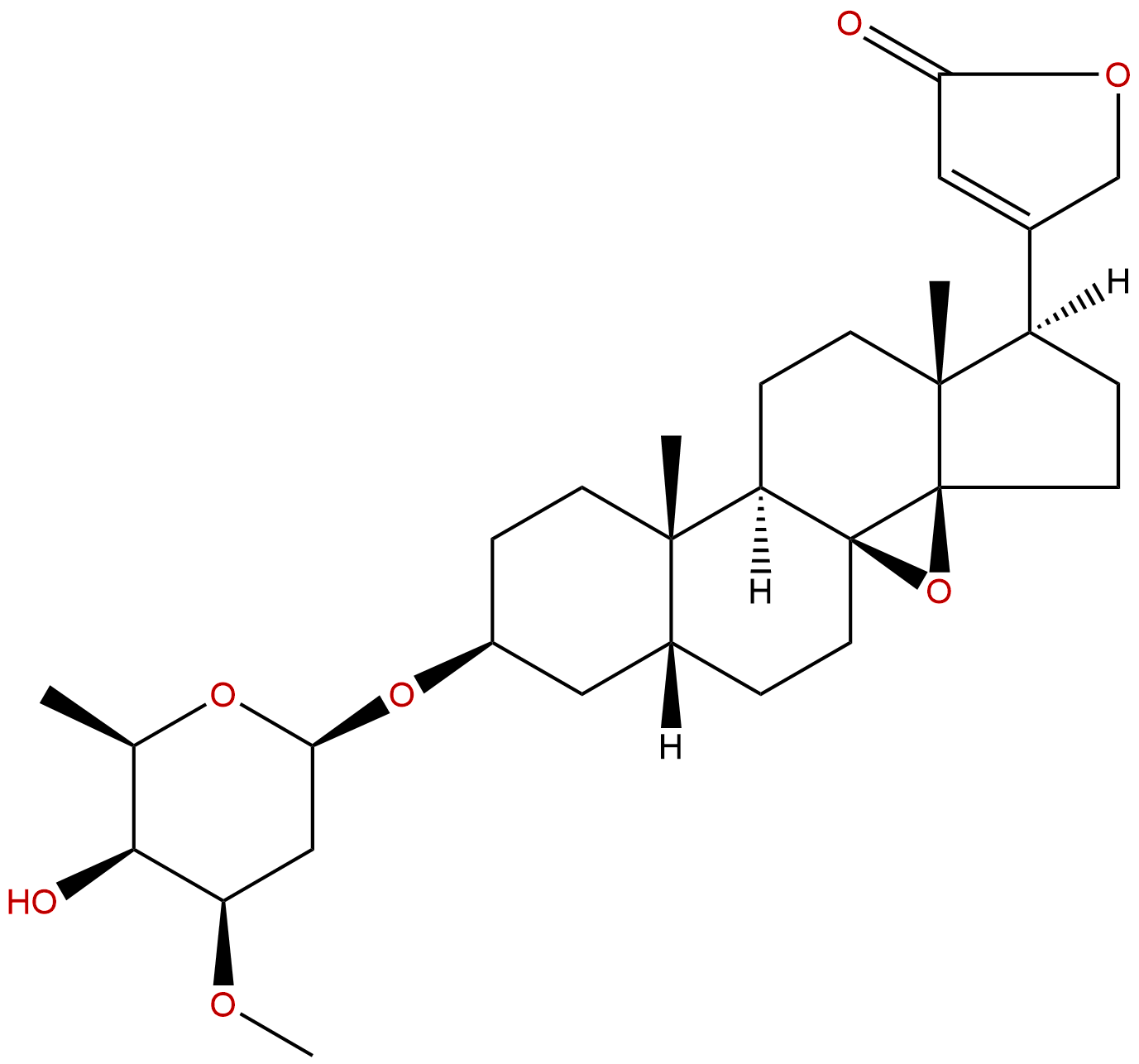
Natural products have always been an important source of innovative drug discovery, among which cardiac glycosides have attracted much attention due to their unique cardiac effects. Adynerin (CAS number: 35109-93-4) is a natural steroid compound isolated from plants of the Apocynaceae genus. Although its research history is not as long as the classic cardiac glycoside digoxin, in recent years, with the expansion of research perspectives from traditional cardiac effects to anti-tumor fields, this compound has shown remarkable biological activity. Especially its multi-target and multi pathway regulatory potential in hematological malignancies such as leukemia has made it an emerging hotspot in the pharmacological research of natural products for anti-tumor treatment. This article aims to systematically review the chemical properties, plant sources, pharmacological activities, especially the mechanism of action and molecular target network of Eucommia ulmoides Hook. f. against leukemia, and objectively evaluate and prospect its pharmacological properties and clinical application prospects, in order to provide comprehensive scientific references for the in-depth research and potential drug development of this compound.
Chemical structure and physicochemical properties
Oleander B is a steroid compound with a pyranose group at position C-23, with a molecular formula of C30H44O8 and a molecular weight of 516.6750. Its basic skeleton is a cyclopentane dihydrophenanthrene steroid nucleus, belonging to the type of cardiac glycosides. However, compared to classical cardiac glycosides such as digoxin, its glycosylation and substituents on the steroid nucleus are different, which directly affects its biological activity and toxicity characteristics.
From the analysis of physical and chemical properties, the calculated lipid water partition coefficient (LogP) is 3.7829, indicating that the compound has good lipophilicity, which is conducive to its penetration of the cell membrane and interaction with intracellular targets. The topological polar surface area (TPSA) is 86.75 Å ², which is relatively moderate. However, its water solubility is poor, only 0.0102 mg/mL, which may pose challenges in formulation development and in vivo delivery. It is worth noting that its predicted blood-brain barrier permeability is "high", indicating its potential to act on central nervous system related diseases or tumors, but at the same time, it also means that potential neurotoxic risks need to be carefully evaluated. In terms of early safety indicators, the prediction showed no significant hERG potassium channel inhibitory activity and genotoxicity (Ames test result was 0.0), which provides preliminary favorable information for its safety evaluation.
Plant sources and extraction methods
Oleander B is mainly derived from plants in the Oleander family, especially from the leaves, stem bark, and seeds of the European oleander (Nerium oleander L.), which are relatively abundant in content. Oleander, as a widely cultivated ornamental plant, is toxic throughout the plant and contains various cardiac glycosides. Oleander B is one of the important active ingredients.
Its extraction and separation usually follow the conventional process of natural product chemistry. Firstly, dry and crushed plant materials (such as oleander leaves) are extracted or refluxed with polar organic solvents such as methanol or ethanol to obtain crude extracts. Subsequently, preliminary enrichment was carried out using solvent partitioning methods, such as partitioning in chloroform water or ethyl acetate water systems at different ratios. Further purification relies on column chromatography technology, often using silica gel column chromatography and a chloroform methanol gradient elution system for separation. High performance liquid chromatography (HPLC), especially preparative HPLC, is a key step in obtaining high-purity oleander ethyl monomer. In recent years, some studies have also attempted to apply modern separation techniques such as high-speed countercurrent chromatography to improve separation efficiency and yield. Strict attention should be paid to operational safety during the extraction process, as all parts of oleander are highly toxic.
Pharmacological activity research
The pharmacological activity research of oleander B has shifted from traditional cardiovascular effects to a wider range of anti-tumor fields, with the most prominent being its anti leukemia activity.
-
Anti leukemia activity Numerous in vitro studies have shown that oleander B exhibits significant proliferation inhibition and induces apoptosis in various human leukemia cell lines, such as acute myeloid leukemia (AML) cells (HL-60, U937), acute lymphocytic leukemia (ALL) cells, and chronic myeloid leukemia (CML) cells (K562). Its half maximal inhibitory concentration (IC50) is usually in the micromolar or even nanomolar range, exhibiting strong cytotoxicity. Animal model studies have also confirmed that oleander B can to some extent inhibit the growth of leukemia xenografts and prolong the survival of model animals.
-
Anti inflammatory and immune regulatory activity Partial studies suggest that oleander B may exhibit anti-inflammatory potential by regulating inflammation related pathways such as NF - κ B, inhibiting the production of pro-inflammatory factors. However, its specific role and mechanism in immune regulation still need to be further explored.
-
Potential cardiovascular activity As a member of the cardiac glycoside family, oleander B may theoretically have a positive inotropic effect, but due to its narrow therapeutic window, high toxicity, and shifted research focus, there is relatively little direct pharmacological research on its cardiovascular aspects, and more attention is paid to it as part of its toxicity mechanism.
Mechanism of action and molecular targets
The mechanism of action of oleander B against leukemia is complex, involving intervention in multiple key cell signaling pathways and apoptosis regulatory proteins, forming a multi-target network. According to existing research, its main targets and mechanisms can be summarized as follows:
-
Inducing endoplasmic reticulum stress and apoptosis pathway Oleander B can rapidly cause an imbalance in intracellular calcium homeostasis, leading to severe endoplasmic reticulum stress. This in turn activates the AMP activated protein kinase (AMPK, encoded by PRKAA1) signal. The activation of AMPK not only regulates energy metabolism, but also further inhibits the mammalian rapamycin target protein (mTOR) pathway, suppresses protein synthesis, promotes cell cycle arrest and autophagy or apoptosis.
-
Regulating Bcl-2 family proteins and disrupting mitochondrial function Oleander B can significantly downregulate the expression levels of anti apoptotic proteins Bcl-2 and Mcl-1. Mcl-1 is a key factor that many leukemia cells rely on for survival, and its downregulation directly weakens the cell's resistance to apoptotic signals. Meanwhile, this compound may affect pro apoptotic proteins, leading to increased mitochondrial outer membrane permeability, release of cytochrome C, and ultimately activating the caspase cascade reaction to perform cell apoptosis.
-
Inhibition of survival signaling pathway:
- STAT3 signaling pathway Signal transducer and activator of transcription factor 3 (STAT3) is an important signaling node for the survival and proliferation of leukemia cells. Oleander B can effectively inhibit the phosphorylation (activation) of STAT3, thereby downregulating the expression of downstream target genes (such as Mcl-1, Cyclin D1), inhibiting cell proliferation, and promoting apoptosis.
- NOTCH1 signal pathway Abnormal activation of NOTCH1 signal is crucial in subtypes of leukemia such as T-ALL. Research has shown that oleander B can interfere with the cleavage activation of NOTCH1 or the transcription of its downstream target genes, thereby inhibiting this pro survival pathway.
- Protein kinase C (PKC)PKC α (encoded by PRKCA) is involved in regulating cell proliferation, differentiation, and apoptosis. Oleander B has been reported to affect the activity of PKC, which may be related to its ability to induce differentiation or apoptosis.
-
Affects oxidative stress and metabolism Oleander B may interfere with the cellular antioxidant defense system by affecting the nuclear factor E2 related factor 2 (Nrf2, encoded by NFE2L2) pathway. Meanwhile, its potential impact on metabolic enzymes such as isocitrate dehydrogenase 1 (IDH1) may reshape the metabolic status of leukemia cells, but the evidence in this regard is currently insufficient.
-
Potential other targets There are studies suggesting that it may interact with microtubule associated protein tau (MAPT) or affect the activity of DNA topoisomerase I (TOP1), but the specific contributions of these mechanisms in anti leukemia still need to be verified.
In summary, oleander B exerts a synergistic anti leukemia effect by simultaneously attacking the "Achilles heel" of multiple leukemia cells such as AMPK/endoplasmic reticulum stress, Bcl-2 family, STAT3, NOTCH1, etc. This may be its potential advantage in overcoming single target drug resistance.
Evaluation of drug properties and pharmacokinetics
Although oleander B exhibits excellent anti leukemia activity in vitro, its drug development faces significant challenges.
-
Analysis of Drug like Parameters Its molecular weight is moderate, but its high LogP value and extremely low water solubility are its main defects, which seriously affect its oral bioavailability and the difficulty of intravenous administration formulation. The predicted high blood-brain barrier permeability is a double-edged sword. The absence of hERG inhibition and prediction of Ames mutagenicity are the highlights of its early safety.
-
Pharmacokinetic (PK) prediction and challenges Currently, there is relatively little publicly available data on preclinical pharmacokinetic studies of the oleander B system. Based on its properties as a cardiac glycoside analogue, it can be inferred that it may undergo liver metabolism (such as CYP450 enzyme system) and be excreted through bile and kidneys. Its high lipid solubility may lead to widespread tissue distribution, especially in the heart and nervous system, which is consistent with its known cardiotoxicity and neurotoxicity. Oral absorption may not be ideal due to first pass effects and poor solubility.
-
Safety (toxicity) considerations This is the biggest obstacle that limits its clinical application. As a cardiac glycoside, its therapeutic window is extremely narrow, and cardiac toxicity (causing arrhythmia) is a fatal risk. In addition, gastrointestinal reactions (nausea, vomiting) and potential neurotoxicity (visual abnormalities, confusion) also need to be highly valued. Any development strategy must prioritize reducing systemic toxicity.
-
Formulation strategy In order to improve its water solubility and targeting, and reduce toxicity, the application of new formulation technologies is crucial. For example, preparing it into nano drug delivery systems such as liposomes, nanoparticles, and polymer micelles can increase solubility, passively target tumor tissues through enhanced permeability and retention (EPR) effects, and potentially reduce its distribution in normal tissues such as the heart. In addition, developing prodrugs or conducting structural modifications to optimize their physicochemical properties and toxicity spectrum is also a feasible direction.
Clinical application prospects and prospects
The clinical application prospects and challenges of oleander B coexist, and future research should focus on translational medicine pathways to explore its potential while avoiding risks.
-
As a lead compound for anti leukemia Its multi-target mechanism of action has theoretical advantages for the treatment of complex and drug-resistant leukemia. Future research should aim to decouple anti-tumor activity from cardiac toxicity by significantly reducing inhibition of Na+/K+- ATPase (a classic target of cardiac glycosides) while retaining or enhancing its anti-tumor activity through rational structural modifications.
-
Combination therapy strategy The combination application of oleander B with existing chemotherapy drugs (such as cytarabine and daunorubicin) or targeted drugs (such as BCL-2 inhibitor vinaclor) is worth exploring. Its unique mechanism of action may produce synergistic effects, reducing the dosage of each medication, thereby alleviating toxic side effects and overcoming drug resistance.
-
Development of Targeted Delivery System This is the most promising direction for conversion. By utilizing leukemia cell surface specific markers (such as CD33, CD123) to construct an actively targeted nano delivery system (such as the antibody drug conjugate ADC concept), precise drug enrichment can be achieved at leukemia cells, minimizing exposure to normal tissues, especially cardiac muscle cells, and fundamentally improving their therapeutic index.
-
Expand the field of diseases Based on the universality of its action targets (such as STAT3 and NOTCH 1), its efficacy in other solid tumors (such as breast cancer and glioma) with abnormal STAT3 or NOTCH signal activation is also worth preliminary exploration.
-
In depth mechanism research It is still necessary to use chemical biology methods such as affinity fishing and proteomics to more accurately identify its direct target and elucidate its complex signal network cross dialogue mechanism, providing a solid foundation for rational drug design.
Conclusion
Oleander B, as a natural steroid compound derived from oleander, has become an important candidate molecule in the research of anti leukemia natural products due to its multidimensional pharmacological effects on multiple leukemia key targets such as AMPK, Mcl-1, BCL-2, STAT3, NOTCH1, etc. However, its inherent poor water solubility, narrow therapeutic window, and typical toxicity of cardiac glycosides constitute the main barriers to its conversion into clinical drugs. Future research should no longer be limited to repeated validation of in vitro activity, but should shift towards translational research centered on solving the bottleneck of drug development. Through structural optimization, innovative formulations (especially targeted nano delivery systems), and rational combination therapy strategies, it is expected to transform this ancient plant toxin into a modern chemotherapy weapon for treating malignant tumors such as leukemia. This path is full of challenges, but given its unique molecular mechanism of action, the development of oleander B and related derivatives undoubtedly deserves sustained and cautious investment.