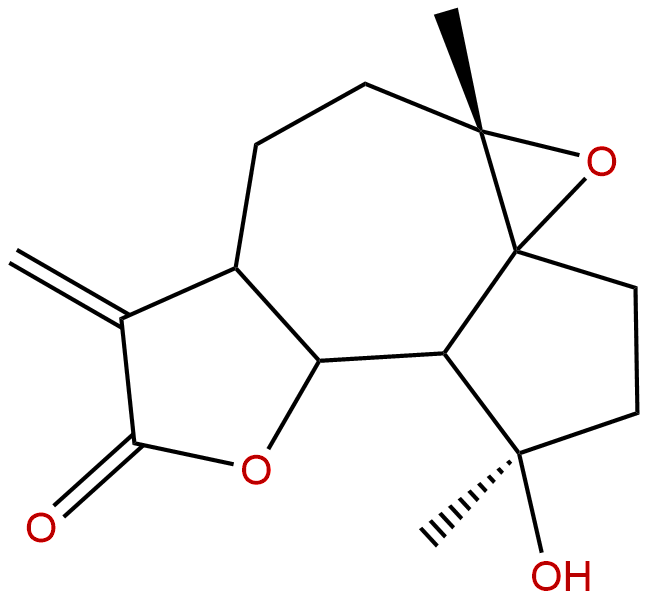
Research progress on epoxyMichaelide: a derivative of epoxyMichaelide with multi-target anti-tumor potential
Introduction/Overview
Malignant tumors are one of the leading causes of death worldwide, and their occurrence and development involve multiple complex processes such as uncontrolled cell proliferation, apoptosis escape, invasion and metastasis, and abnormal angiogenesis. Despite significant progress in strategies such as chemotherapy, targeted therapy, and immunotherapy, issues such as drug resistance, toxic side effects, and tumor heterogeneity remain severe challenges in clinical practice. Therefore, searching for lead compounds with novel structures, unique mechanisms of action, and low toxicity from natural products has always been an important direction in the development of anti-tumor drugs. Sesquiterpene lactones have become a hot topic in natural medicinal chemistry and pharmacology research due to their wide range of biological activities, especially significant anti-tumor effects.
Epoxy mycolide (EMCL, CAS number: 1343403-10-0) is a key derivative of Micheliolide (MCL). Muxiang lactone itself originates from various Asteraceae plants and has been proven to have various pharmacological activities such as anti-inflammatory and anti-tumor effects. Epoxy kaempferol undergoes significant changes in its chemical structure and biological activity by introducing epoxy groups at specific positions, exhibiting stronger or more unique pharmacological effects than its parent compound, especially in the field of anti-tumor. In recent years, studies have revealed that epoxycoumarin can exert anti-tumor effects through various pathways such as intervening in cell apoptosis, inhibiting tumor cell invasion and metastasis, and regulating the tumor microenvironment. Its targets involve multiple key proteins such as MCL1, BCL2, STAT3, MMP2, TOP1, and HIF1A, exhibiting a multi-target effect. This article aims to systematically review the chemical structure, plant origin, pharmacological activity, mechanism of action, pharmacological evaluation, and clinical application prospects of epoxy lignin, in order to provide comprehensive scientific references for the in-depth research and development of this compound.
Chemical structure and physicochemical properties
Epoxy lignin is a sesquiterpene lactone derived from lignin. Its molecular formula is C15H20O4 and its molecular weight is 264.3210. Structurally, it introduces an epoxyethane ring (- CH (O) CH -) at a specific olefin site (usually C4-C5 or C10, depending on the synthesis or derivatization pathway) on the basis of the parent nucleus structure of coumarin. This structural modification significantly alters the electronic distribution, spatial conformation, and reactivity of the molecule.
The introduction of epoxy groups not only increases the polarity of the molecule, but also makes it a potential electrophilic reagent that can covalently bind with biomolecules (such as nucleophilic amino acid residues in proteins), which may be an important chemical basis for its unique pharmacological activity. This compound contains lactone and epoxy rings, giving it multiple potential hydrogen bond acceptor sites.
The theoretical calculation of the lipid water partition coefficient (LogP) obtained is 1.3402, indicating that the compound has moderate lipophilicity, which is beneficial for its penetration into cell membranes. The topological polar surface area (TPSA) is 59.0600 Å ², which is at a moderate level, indicating good membrane permeability. The theoretically predicted water solubility value is 0.8078 mg/mL, which belongs to the range of slightly soluble to soluble. This provides a certain basis for the development of its formulation, but it may also require dosage form improvement (such as making cyclodextrin inclusion complexes, nano formulations, etc.) to improve its bioavailability. It is worth noting that its predicted blood-brain barrier permeability is "high", which suggests that epoxycoumarin or its potential therapeutic value for central nervous system tumors. The preliminary drug risk prediction shows that the hERG inhibition risk is "no", and the Ames test (prediction) result is 0.0, indicating that its potential risk of arrhythmia and genetic toxicity is low, and the safety outlook is optimistic.
Plant sources and extraction methods
There are relatively few reports on the direct natural sources of epoxy kaempferol as a derivative of kaempferol. Xylenol is widely present in various plants of the Asteraceae family, especially Wood Fragrance Genus(Saussurea)、Qingmu Xiang genus(Aristolochia, some species) and Snow lotus genus(Saussurea)Waiting for plants. For example, in traditional Chinese medicine, Guangmu Xiang(Saussurea costus)Yunmuxiang(Saussurea lappa)And Tianshan Snow Lotus(Saussurea involucrata)Both lignin and its analogues can be isolated from the samples.
At present, the main way to obtain epoxy lignin is through Chemical semi synthesis method Using naturally extracted lignin as the starting material, selective epoxidation reaction is carried out. Common epoxidation reagents include m-chloroperoxybenzoic acid (m-CPBA), hydrogen peroxide urea complexes (UHP), or tert butyl hydroperoxide (TBHP) used in the presence of metal catalysts such as vanadium and manganese complexes. The reaction conditions (such as solvent, temperature, catalyst) need to be precisely controlled to ensure high regioselectivity and stereoselectivity of epoxidation on the target double bond, thereby obtaining high-purity epoxy lignin. Subsequently, separation and purification were carried out using column chromatography methods such as silica gel column chromatography and high-performance liquid chromatography.
Another approach is to directly extract and isolate from plants containing related derivatives, but this usually results in lower yields and greater difficulty in separation and purification. With the development of synthetic biology, the use of microorganisms (such as yeast and Escherichia coli) for metabolic engineering to synthesize lignin and its derivatives (including epoxy lignin) has become an emerging research direction, with the potential to achieve green and sustainable large-scale production.
Pharmacological activity research
The most notable pharmacological activity of epoxy lignin is its wide range of antitumor activity Numerous in vitro and in vivo studies have shown that it exhibits significant proliferation inhibition and pro apoptotic activity against various human tumor cell lines.
-
Anti leukemia activity Research has shown that epoxycoumarin has strong cytotoxicity against various leukemia cells such as acute myeloid leukemia (AML) and chronic myeloid leukemia (CML). Its strength of action is usually superior to that of lignin. In animal models, it can effectively inhibit the growth of leukemia cells and prolong the survival of model animals.
-
Anti solid tumor activity: In addition to blood tumors, epoxygenalactone also showed good inhibitory effects on solid tumors such as breast cancer, lung cancer, liver cancer, colorectal cancer, glioma, etc. It can inhibit the colony forming ability of these tumor cells, induce cell cycle arrest (usually in G2/M or S phase), and significantly trigger cell apoptosis.
-
Anti invasive and anti metastatic activity The invasion and metastasis of tumors are the main causes of treatment failure and patient death. Epoxy lignin has been proven to effectively inhibit the migration and invasion ability of various high metastatic potential tumor cells. This activity is closely related to its downregulation of the expression of matrix metalloproteinases such as MMP2 and MMP9.
-
Anti angiogenic activity The growth and metastasis of tumors depend on the formation of new blood vessels. Epoxy lignin can exert anti angiogenic effects by inhibiting the expression and secretion of vascular endothelial growth factor (VEGF), as well as interfering with the luminal formation ability of endothelial cells.
-
Sensitization and reversal of drug resistance Preliminary studies have shown that epoxycoumarin may have a synergistic effect with certain conventional chemotherapy drugs (such as doxorubicin and cisplatin), enhancing the latter's killing effect on drug-resistant tumor cells. The mechanism may involve regulating the expression of apoptosis related proteins and drug efflux pumps.
Mechanism of action and molecular targets
The anti-tumor effect of epoxy lignin is not achieved through a single pathway, but acts on multiple key targets and signaling pathways, forming a multi-target network, which helps overcome the problem of resistance to single target drugs.
-
Inducing Cell Apoptosis: Targeting the BCL2 Protein Family:
- MCL1 and BCL2 MCL1 and BCL2 are important anti apoptotic proteins that are highly expressed in various tumors and help tumor cells evade apoptosis. Epoxy lignin can directly or indirectly Downregulate the protein expression levels of MCL1 and BCL2 At the same time, it may upregulate the expression of pro apoptotic proteins such as BAX and BIM, thereby disrupting mitochondrial membrane potential, promoting cytochrome C release, activating Caspase cascade reaction, and ultimately leading to tumor cell apoptosis.
-
Inhibition of STAT3 signaling pathway:
- STAT3 Signal transducer and activator of transcription factor 3 (STAT3) is a key hub connecting inflammation and tumors, and its sustained activation promotes tumor cell proliferation, survival, invasion, and immune escape. Epoxy lignin has been proven to be effective Inhibition of STAT3 phosphorylation (activation)To prevent nuclear translocation and transcription of downstream target genes (such as Cyclin D1, Survivor, VEGF), thereby exerting multiple anti-tumor effects.
-
Inhibition of DNA Topoisomerase:
- TOP1 and TOP2A DNA topoisomerases I and II are key enzymes that regulate DNA topology and are targets of various chemotherapy drugs such as irinotecan and etoposide. Research has shown that epoxycoumarin may act through Inhibit the activity of TOP1 and TOP2A Interference with DNA replication and transcription, leading to DNA damage and cell death.
-
Inhibiting tumor invasion and metastasis related proteins:
- MMP2 Matrix metalloproteinase-2 (MMP2) is the main enzyme that degrades the extracellular matrix (ECM) and is crucial for tumor invasion and metastasis. Epoxy wood fragrance lactone can significantly improve Downregulate the expression and activity of MMP2 Thereby inhibiting the ability of tumor cells to damage and invade the basement membrane.
-
Regulating hypoxia inducible factors and MAPK pathway:
- HIF1A Hypoxia inducible factor-1 alpha (HIF1A) is stably expressed in the hypoxic microenvironment of tumors, driving adaptive processes such as angiogenesis and metabolic reprogramming. Epoxy wood fragrance lactone can Inhibition of protein accumulation of HIF1 αWeakening the tumor's ability to adapt to hypoxia.
- MAPK1 (ERK2)The mitogen activated protein kinase (MAPK/ERK) pathway regulates cell growth and survival. Epoxy wood fragrance lactone may Inhibition of ERK1/2 phosphorylation Block the survival promoting signaling pathway.
-
Intervention of hormone related targets:
- ESR1 and CYP19A1: For hormone dependent tumors (such as breast cancer), epoxidized agallolactone shows a potential regulatory effect on estrogen receptor α (ESR1) and aromatase (CYP19A1). It might Antagonistic estrogen receptor signaling or inhibition of estrogen synthesis Thereby inhibiting the growth of hormone dependent tumors.
In summary, epoxy lignin has formed a synergistic anti-tumor network by simultaneously intervening in multiple key processes such as apoptosis regulation, signal transduction, DNA metabolism, invasion and metastasis, and microenvironment adaptation.
Evaluation of drug properties and pharmacokinetics
Based on its theoretical calculations and preliminary experimental data, epoxycoumarin has shown certain potential as a drug, but comprehensive preclinical pharmacokinetic and toxicological evaluations are still needed.
-
Absorption, distribution, metabolism, excretion (ADME):
- Absorption and distribution Moderate LogP and TPSA values indicate that it may have good oral absorption potential and tissue permeability. its High blood-brain barrier permeability The prediction is a significant advantage, providing the possibility for treating central nervous system tumors such as gliomas. The specific distribution characteristics in the body, such as tumor tissue targeting, need to be confirmed by in vivo radiolabeling or LC-MS/MS studies.
- Metabolism As a compound containing lactone and epoxide rings, it may be a substrate for liver metabolic enzymes. The epoxide ring may be hydrolyzed by epoxide hydrolase (EPHX) to open the ring, while the lactone ring may be hydrolyzed by esterase or undergo glucuronic acid binding reaction. It is necessary to study its main metabolites and their activity/toxicity.
- excretion Its metabolites may be mainly excreted through the kidneys or bile. The detailed excretion pathways and rates need to be elucidated.
-
Pharmacokinetic characteristics At present, the publicly available pharmacokinetic studies on the epoxy kaempferol system (such as half-life T1/2 in rats, mice, or dogs, area under the blood concentration time curve AUC, maximum blood concentration Cmax, oral bioavailability F, etc.) are not sufficient. This is a key data gap that must be filled before its clinical translation.
-
Preliminary evaluation of safety:
- HERG channel inhibition Theoretical prediction is negative, reducing the risk of causing QT interval prolongation and apical torsion type ventricular tachycardia, but experimental verification is still needed.
- Genotoxicity The Ames test predicted a negative result, indicating a low risk of direct mutagenesis. But a complete genetic toxicity test combination (such as micronucleus test, chromosome aberration test) needs to be completed.
- Acute and Long term Toxicity Standardized acute and long-term toxicity tests need to be conducted on rodents and non rodents to determine their maximum tolerated dose (MTD), no apparent adverse reaction dose (NOAEL), and major target organ toxicity.
-
Considerations for formulation development Although its water solubility is still acceptable, in order to improve bioavailability and stability, it may be necessary to develop suitable drug delivery systems, such as liposomes, polymer nanoparticles, or phospholipid complexes.
Clinical application prospects and prospects
Epoxy lignin, as a multi-target anti-tumor natural product derivative, has broad clinical application prospects, but the road ahead is long and requires in-depth exploration from multiple dimensions
-
As a novel anti-tumor candidate drug Its multi-target mechanism of action can help overcome tumor heterogeneity and drug resistance, and may be effective for patients who are resistant to existing chemotherapy and targeted therapy. especially Leukemia, glioma(Utilizing its high BBB permeability) and Triple negative breast cancer Among refractory tumors, it has unique development value.
-
Combination therapy strategy Given the complementarity of its mechanism of action, the combination of epoxycoumarin with conventional chemotherapy drugs, targeted drugs, or immune checkpoint inhibitors may produce synergistic effects and reduce toxic side effects, which is a preclinical direction worth focusing on.
-
Structural optimization and derivative development Using epoxy lignin as the lead compound, a systematic study was conducted Research on Structure Modification and Structure Activity Relationship (SAR)It is expected to obtain derivatives with stronger activity, higher selectivity, and better pharmacokinetic properties. For example, modifying epoxy rings, lactone rings, or introducing other functional groups may lead to the discovery of more promising candidate drugs.
-
Deep exploration of the mechanism of action The currently known targets may only be the tip of the iceberg. Utilize Chemical proteomics Technologies such as activity-based protein analysis (ABPP) can globally discover its direct target protein network within cells, thereby more comprehensively elucidating its mechanism of action and potentially discovering new disease treatment targets.
-
The Challenges of Translational Research To promote the clinical application of epoxy lignin, a systematic approach must be completed Preclinical pharmacodynamic, pharmacokinetic, and toxicological studies Establish a synthesis process that complies with Good Manufacturing Practice (GMP) and design a reasonable early clinical trial plan. its Potential chemical activity of epoxy groups The off target effects and long-term safety are issues that require close attention.
Conclusion
Epoxy lignin, as an important derivative of lignin, exhibits more significant and extensive anti-tumor pharmacological activity than the parent compound due to its unique epoxy chemical structure. It exerts a synergistic inhibitory effect through multiple pathways and targets by targeting multiple key tumor associated proteins such as MCL1, BCL2, STAT3, MMP2, TOP1/2A, HIF1A, etc., in inducing apoptosis, inhibiting proliferation, blocking invasion and metastasis, and regulating the tumor microenvironment. The preliminary prediction of pharmacological parameters provides favorable clues for its further development, especially its potential high blood-brain barrier permeability.
However, there are still many challenges in transitioning from lead compounds to clinical drugs. Future research needs to focus on: 1) conducting in-depth in vivo efficacy evaluation and pharmacokinetic studies; 2) Using modern chemical biology techniques to comprehensively elucidate its direct target and signal network; 3) Conduct security evaluation and structural optimization of the system to improve its drug properties; 4) Explore its potential for combined application with other treatment methods.
In summary, epoxy lignin is a highly valuable natural product lead compound for anti-tumor research. With the continuous deepening of research on its chemistry, pharmacology, and translational medicine, it is expected to provide new ideas and candidate molecules for the development of anti-tumor drugs, ultimately benefiting a large number of cancer patients.