


Product name: Costunolide
Synonym name:
Catalogue No.: BP0401
Cas No.: 553-21-9
Formula: C15H20O2
Mol Weight: 232.323
Botanical Source: costus root (Saussurea lappa), Artemisia balchanorum, Talauma ovata, Talauma mexicana, Liriodendron tulipifera, Frullania tamarischii, Frullania nisquallensis, Michelia spp., Magnolia grandiflora, Magnolia sieboldii, Gochnatia foliosa, Chrysa
Physical Description: Cryst.
Type of Compound: Sesquiterpenoids
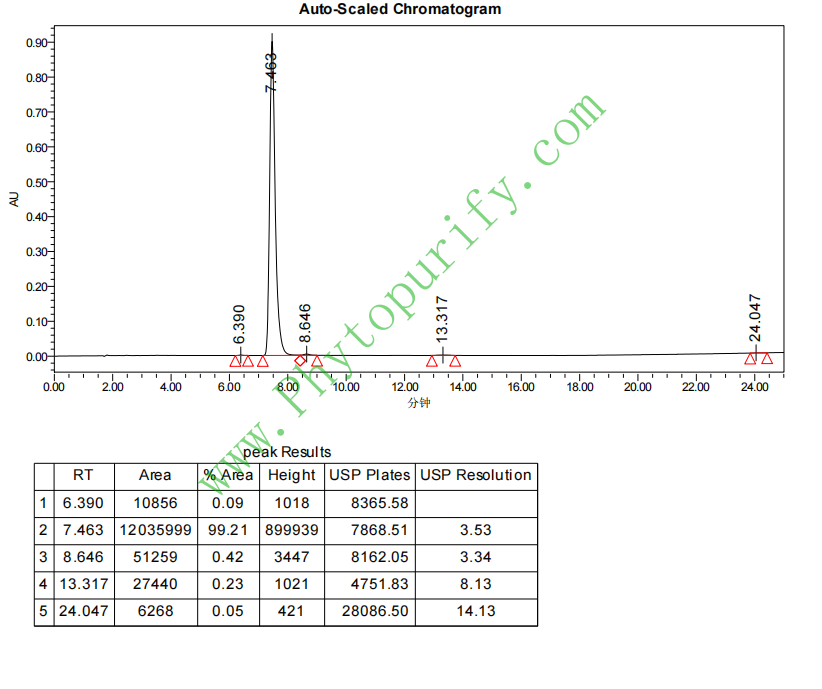
Purity: 95%~99%
Analysis Method: HPLC-DAD or/and HPLC-ELSD
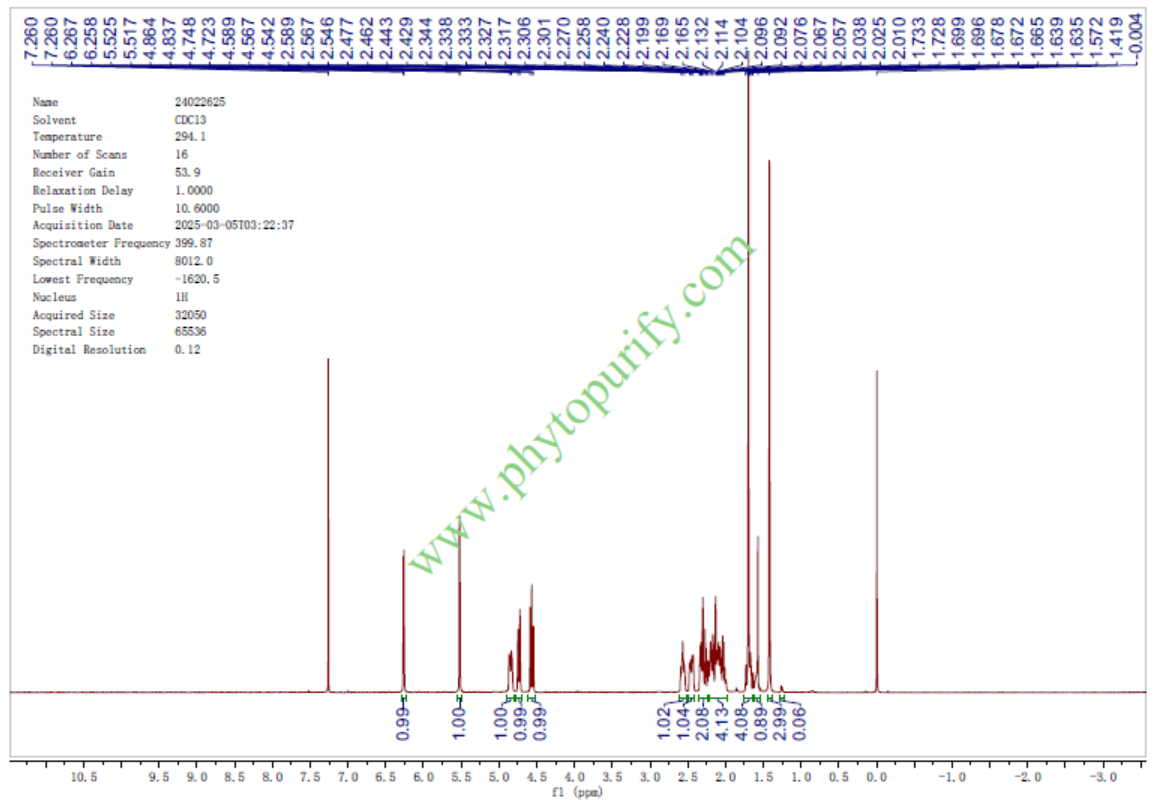
Identification Method: Mass, NMR
Packing: Brown vial or HDPE plastic bottle
Storage: Store in a well closed container, protected from air and light. Put into refrigerate or freeze for long term storage.
Whenever possible, you should prepare and use solutions on the same day. However, if you need to make up stock solutions in advance, we recommend that you store the solution as aliquots in tightly sealed vials at -20℃. Generally, these will be useable for up to two weeks.
The product could be supplied from milligrams to grams, up to kilograms.
Inquire for bulk scale.
Descriptions:
Costunolide, a sesquiterpene lactone isolated from the root of Saussurea lappa Clarke, has a variety of biological activities, including anti-carcinogenic and anti-fungal activities,
it inhibits IL-1beta gene expression by blocking the activation of MAPKs and DNA binding of AP-1 in LPS-stimulated RAW 264.7 cells. [1]
Costunolide induces the ROS-mediated mitochondrial permeability transition and resultant cytochrome c release,which is one mechanism of the anticancer effect of costunolide. [2]
Costunolide has antipyretic and anti-inflammatory activities, intraplantar injection of costunolide also reduced the paw oedema, myeloperoxidase. [3]
Costunolide(20mg/kg bw) possesses normo-glycemic and hypolipidemic activity and hence it could be used as a drug for treating diabetes. [4]
Costunolide can reduce the viability and arrest cell cycling at mitosis in hepatoma cells, also enhance the killing effect of radiotherapy against human HCC cells.[5]
References:
[1] Jong Soon Kang, Yeo Dae Yoon, Ki Hoon Lee,et al. Biochem Bioph Res Co, 2004, 313(1):171-177.
[2] Lee M G, Lee K T, Chi S G, et al. Biol Pharm Bull, 2001, 24(3):303-6.
[3] Kassuya C A L, Cremoneze A, Barros L F L, et al. J Ethnopharmacol, 2009, 124(3):369-376.
[4] Eliza J, Daisy P, Ignacimuthu S, et al. J Ethnopharmacol, 2009, 179(2–3):329-334.
[5] Liu C Y, Chang H S, Chen I S, et al. Radiat Oncol, 2011, 6(1):1-8.
[6] Dong S, Liu Y T, Peng J B, et al. Benthamscience Com, 2011, 2(1):74-78.
HPLC of Costunolide
HNMR of Costunolide
Storage conditions:Short-term storage at 2~8℃, long-term storage at -20 ~ -80℃
26.3000
3.2249
3.2249
.1664
7.4081
8.3562
High
77.1724
4.2296
No
Yes
No
No
Yes
No
0.0
Yes
Yes
Yes
Yes
Natural products have always been an important treasure trove for innovative drug discovery, among which sesquiterpene lactones have attracted much attention due to their structural diversity and wide range of biological activities. Costunolide (CAS number: 553-21-9), as a typical guaiaceae sesquiterpene lactone, is an important active ingredient in various plants such as Asteraceae. Since its structure was elucidated, numerous studies have revealed its multifaceted pharmacological potential, including antioxidant, anti-inflammatory, anti allergic, neuroprotective, and particularly outstanding anti-tumor activity. Especially in the study of breast cancer, Aucklandrin showed the ability to induce cell cycle arrest and apoptosis, making it a potential anti-cancer candidate molecule. In addition, its mechanism of action involves the regulation of key inflammation and tumor related signaling pathways such as nuclear factor kappa B (NF - κ B) and signal transduction and transcription activator 3 (STAT3), reflecting the characteristics of multi-target action. This article aims to systematically review the chemical properties, plant sources, pharmacological activities, molecular mechanisms of action, pharmacological evaluation, and clinical application prospects of lignans, in order to provide comprehensive scientific references for the in-depth research and drug development of this natural product.
The chemical name of lignans is (3aS, 6E, 10E, 11aR) -6,10-dimethyl-3-methylen-3a, 4,5,8,9,11a-hexahydrocyclodecano [b] furan-2 (3H) - one, with a molecular formula of C ₁₅ H ₂₀ O ₂ and a molecular weight of 232.3230 g/mol. Its core structure is a ten membered ring (cyclodecane) fused with an α - methylene - γ - lactone ring, belonging to the guaiaceae type sesquiterpenes. The structure contains an α, β - unsaturated carbonyl group (α - methylene - γ - lactone) and an extra cyclic methylene group, which are considered key pharmacophores for its various biological activities, especially anti-inflammatory and anti-tumor activities. Alpha methylene - γ - lactone can act as a Michael reaction receptor and covalently bind with nucleophilic groups (such as thiol groups) in biomolecules (such as proteins), thereby affecting the function of target proteins.
From the perspective of physical and chemical properties, the lipid water partition coefficient (LogP) of lignin is 3.2249, indicating its good lipophilicity. Its topological polar surface area (TPSA) is relatively low, at 26.3000 Å ². Its water solubility is poor, at approximately 0.1664 mg/mL. These parameters collectively determine its good membrane permeability. According to the prediction model, lignans have a high blood-brain barrier permeability, which provides a theoretical basis for their potential neuroprotective or therapeutic applications in central nervous system related diseases. Preliminary safety predictions indicate that it has no significant inhibitory risk on hERG potassium channels (hERG inhibition: No), and the Ames test predicted a value of 0.0, suggesting a low potential mutagenic risk. However, these computational predictions still need to be further validated through experiments.
Xylenol is widely present in Asteraceae plants and is an important secondary metabolite and bioactive marker.
Main plant sources including:
1. Yunmuxiang: Asteraceae plants of the genus Chrysanthemum Saussurea costus (syn. Saussurea lappa)Dried roots are the most classic and abundant source of lignans, from which the traditional Chinese medicine "lignans" originate.
2. Guangmu Xiang: Asteraceae spiral flowers plants Inula racemosa The root.
3. Largehead Atractylodes Rhizome: Asteraceae and Atractylodes plants Atractylodes macrocephala The roots and stems.
4. Other plants In various Asteraceae plants such as Magnolia spp.、Laurus nobilis(Laurel) and some Umbelliferae plants have also been found.
Extraction and Separation Methods:
The traditional extraction method mainly uses organic solvent extraction. After crushing plant raw materials (usually dry roots or rhizomes), reflux extraction or cold soaking extraction is carried out using solvents such as methanol, ethanol, ethyl acetate, or dichloromethane. After vacuum concentration, the crude extract was preliminarily separated by silica gel column chromatography using solvent systems of different polarities (such as petroleum ether ethyl acetate gradient elution) for elution. Due to the characteristic absorption of lignin in the ultraviolet region, it can be tracked and detected by thin layer chromatography (TLC) or high performance liquid chromatography (HPLC). Further purification is often carried out using preparative HPLC or recrystallization methods to obtain high-purity monomeric compounds.
In recent years, some green extraction techniques have also been explored for the extraction of lignin lactones, such as supercritical carbon dioxide fluid extraction (SFE-CO ₂). This method utilizes the special properties of carbon dioxide in supercritical state, which has the advantages of high extraction efficiency, no residual organic solvents, and low operating temperature that is conducive to protecting thermally unstable components. It is a potential direction for future large-scale preparation.
Numerous in vitro and in vivo pharmacological studies have confirmed that lignans have broad and significant biological activities.
Anti inflammatory and anti allergic activity Xylenol is one of the most extensively studied activities. In various acute and chronic inflammation models, such as lipopolysaccharide induced macrophage inflammation model, carrageenan induced rat paw swelling model, and mouse ear swelling model, kaempferol can effectively inhibit the production and release of inflammatory mediators. It can also inhibit degranulation of mast cells and alleviate allergic reactions.
Antitumor activity: Aucklandrin showed growth inhibition and apoptosis promoting effects on a variety of cancer cell lines, especially in the study of breast cancer. It can induce cell cycle arrest in G2/M phase in breast cancer cells (such as MCF-7, MDA-MB-231), activate caspase cascade reaction through mitochondrial pathway and death receptor pathway, and induce cell apoptosis. In addition, it has also shown anti-cancer potential against leukemia, lung cancer, liver cancer, colon cancer, prostate cancer, and neuroblastoma. Its function is not limited to directly killing cancer cells, but also includes inhibiting tumor cell invasion, migration, and angiogenesis.
Neuroprotective activity Due to its excellent blood-brain barrier permeability and anti-inflammatory and antioxidant properties, lignans have shown protective effects in neurodegenerative disease models. According to research reports, it can improve the neurotoxicity induced by β - amyloid protein, alleviate neuroinflammation mediated by microglia, and demonstrate improved cognitive and motor function in animal models of Alzheimer's disease and Parkinson's disease.
Other activities:
The pharmacological effects of lignans, especially anti-inflammatory and anti-tumor effects, are mainly achieved by intervening in multiple key cellular signaling pathways, and their effects have multi-target characteristics.
Core signaling pathways and targets:
1. NF - κ B pathway This is the most classic target of action for lignin lactones. In the resting state, NF - κ B (mainly composed of p65/RELA and p50 subunits) binds to the inhibitory protein I κ B and exists in the cytoplasm. Under the stimulation of inflammatory factors such as TNF - α or LPS, the I κ B kinase complex (IKK, including IKK α, IKK β/IKBKB, and IKK γ) is activated, phosphorylated, and degraded, allowing NF - κ B to enter the nucleus and initiate transcription of target genes. Xylenol can directly or indirectly inhibit the activity of IKK β (IKBKB), prevent the phosphorylation degradation of I κ B, and thus block the nuclear translocation of NF - κ B. This leads to the inhibition of downstream pro-inflammatory factors (such as TNF - α, IL-6), inflammatory enzymes (such as inducible nitric oxide synthase NOS2, cyclooxygenase-2 COX-2/PTGS2), and anti apoptotic protein expression.
STAT3 pathway STAT3 is another important inflammation and tumor related transcription factor. Cytokines (such as IL-6) bind to their receptors, activate JAK kinase, phosphorylate STAT3 (p-STAT3), form dimers, and enter the nucleus to regulate gene expression. Xylenol can inhibit the phosphorylation of STAT3 and its DNA binding activity, thereby downregulating the expression of downstream cell cycle proteins (such as Cyclin D1) and anti apoptotic proteins (such as Bcl-2, Survivor), which is closely related to its induction of cell cycle arrest and apoptosis.
NLRP3 inflammasome pathway In the inflammatory response, it has been confirmed that lignans can inhibit the assembly and activation of NLRP3 inflammasomes, reduce the cleavage and activation of Caspase-1 (CASP1), and thus inhibit the maturation and release of interleukin-1 β (IL-1 β) and IL-18.
Ion channel regulation Research has shown that lignans are agonists of transient receptor potential vanillic acid subtype 1 (TRPV1) and anchored protein subtype 1 (TRPA1). Activating these channels may participate in their initial sensory effects (such as irritability), but at the same time may also trigger downstream desensitization or release neuropeptides with protective effects, playing a regulatory role in complex inflammatory environments.
Reactive oxygen species (ROS) and mitochondrial pathway Xylenol can induce cancer cells to produce reactive oxygen species (ROS), leading to a decrease in mitochondrial membrane potential, release of cytochrome C, and activation of Caspase-9 and Caspase-3, inducing intrinsic apoptosis pathways.
Function characteristics The α - methylene - γ - lactone group of lignin can act as an electrophilic group and undergo Michael addition reactions with specific cysteine residues of key proteins (such as IKK β, STAT3, p65, etc.) in the above-mentioned pathways, covalently modifying and altering their functions. This is the molecular basis for their multi-target inhibition.
Although the pharmacological activity of lignans is significant, their potential as drug candidates still needs to be comprehensively evaluated.
Pharmacokinetic study:
The existing preclinical pharmacokinetic studies are relatively limited. Animal experiments (mainly conducted in rats) have shown that the absorption of lignans after oral administration is rapid but incomplete, and the absolute bioavailability is low, which may be related to its poor water solubility and first pass effect. It is widely distributed in the body and can be detected in brain tissue due to its high lipid solubility and blood-brain barrier permeability. Xylenol is mainly metabolized in the body through the liver, involving oxidation reactions of cytochrome P450 enzymes (such as CYP3A4) and binding reactions of glutathione (GSH) (Michael addition with its α - methylene - γ - lactone group). It is mainly excreted through urine and feces. The relatively short half-life suggests that frequent administration or dosage form modification may be necessary to maintain effective blood drug concentration.
Challenges and optimization strategies for drug development:
1. Water solubility and bioavailability Low water solubility and low oral bioavailability are its main bottlenecks. The strategy includes:Formulation improvement(such as making nanocrystals, liposomes, solid dispersions, cyclodextrin inclusion complexes);Prodrug design By chemically modifying its hydroxyl or lactone ring, a more water-soluble prodrug can be prepared, and the original drug can be explained by enzymes in vivo.
2. chemical stability The α - methylene - γ - lactone structure may be unstable in alkaline or nucleophilic environments.
3. Selective/toxic Although its multi-target nature is advantageous, non-specific binding to non target proteins (especially proteins containing active cysteine) may also bring potential off target toxic side effects. More in-depth security evaluation is needed.
4. structural optimization Based on its pharmacophore, a systematic structure-activity relationship study is conducted to improve activity, selectivity, and pharmacokinetic properties. For example, modifying substituents on the lactone ring or ten membered ring may result in derivatives with better activity and lower toxicity.
The transition of lignans from laboratory research to clinical translation has broad prospects, but the road is winding.
Potential clinical application directions:
1. Tumor adjuvant therapy and chemoprevention As a naturally occurring multi-target anticancer agent, it can be used in combination with conventional chemotherapy drugs to enhance efficacy, reduce drug resistance, or alleviate side effects. Its anti-inflammatory properties also make it valuable in the field of tumor chemoprevention, especially in inflammation related cancers.
2. Treatment of inflammatory diseases Can be used to treat chronic inflammatory diseases such as rheumatoid arthritis, inflammatory bowel disease, asthma, allergic dermatitis, etc. The development direction of local topical preparations (such as cream) for treating skin inflammation and promoting wound healing is possible.
3. Neurodegenerative diseases Based on its neuroprotection, anti neuroinflammation, and good BBB penetration, it is a promising lead compound for the development of therapeutic drugs for diseases such as Alzheimer's disease and Parkinson's disease.
4. Orthopedics and Metabolic Diseases It has exploratory value in the treatment of osteoporosis, diabetes and its complications.
5. Cosmetics and functional products It promotes hair growth and antioxidant activity, and can be used to develop anti hair loss shampoos, anti-aging skincare products, etc.
Future research focus and prospects:
1. In depth mechanism exploration Using chemical biology methods (such as activity-based protein analysis probes) to systematically identify its direct target protein network in cells and elucidate the precise molecular basis of its pleiotropy.
2. Optimization of drug properties in the system Strengthen systematic research on pharmacokinetics, toxicology, and safety evaluation. By utilizing modern pharmaceutical technology and prodrug strategies, the issue of bioavailability can be effectively addressed.
3. Derivative development and structure-activity relationship Synthesize a series of structurally similar compounds, conduct systematic structure-activity relationship analysis, and search for candidate molecules with stronger activity, lower toxicity, and better pharmacokinetic properties.
4. Preclinical and clinical research Validate its efficacy in animal models that are closer to human diseases, such as human tumor xenograft models and genetically modified neurological disease models, and ultimately promote high-quality clinical trials.
5. Multi omics integration research Comprehensively evaluate the overall impact of lignans on biological systems by combining transcriptomics, proteomics, metabolomics, and other technologies.
As a naturally occurring sesquiterpene lactone with a unique structure, lignans have become a star molecule in natural product pharmacology research due to their extensive pharmacological activity and clear multi-target mechanism of action. From anti-inflammatory, anti-tumor to neuroprotective, its therapeutic potential spans across multiple major disease areas. The covalent interaction between its core pharmacophore α - methylene - γ - lactone and key signaling proteins is the chemical basis for its biological effects. However, its inherent pharmaceutical defects, such as poor solubility and low bioavailability, are the main obstacles that restrict its translation into clinical applications. Future research should focus on systematically optimizing and evaluating it through interdisciplinary strategies, including medicinal chemistry, pharmacy, pharmacology, and clinical medicine. Exploring its precise target map and in vivo fate in depth will help transform it from a promising "lead compound" into a true "candidate drug", ultimately contributing modern wisdom from traditional medicinal plants to the cause of human health. The research process of lignans is a vivid example of the sustained vitality of natural products in innovative drug discovery.
