


Product name: Dehydrocostus Lactone
Synonym name: Epiligulyl oxide
Catalogue No.: BP0461
Cas No.: 477-43-0
Formula: C15H18O2
Mol Weight: 230.307
Botanical Source: Saussurea lappa, Veronica hirsuta and Zaluzania tribolia
Physical Description: Powder
Type of Compound: Sesquiterpenoids
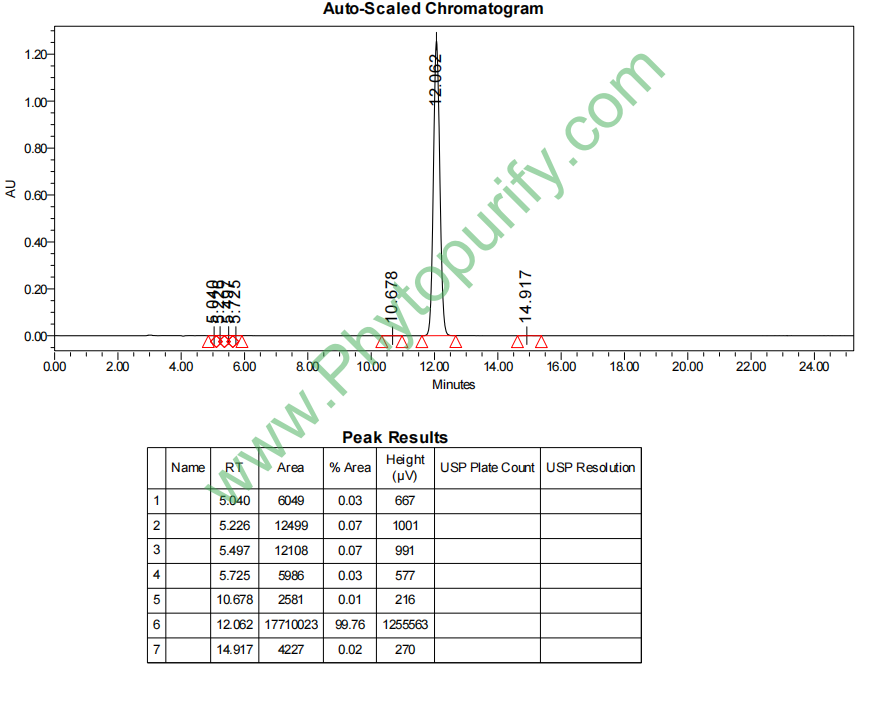
Purity: 95%~99%
Analysis Method: HPLC-DAD or/and HPLC-ELSD
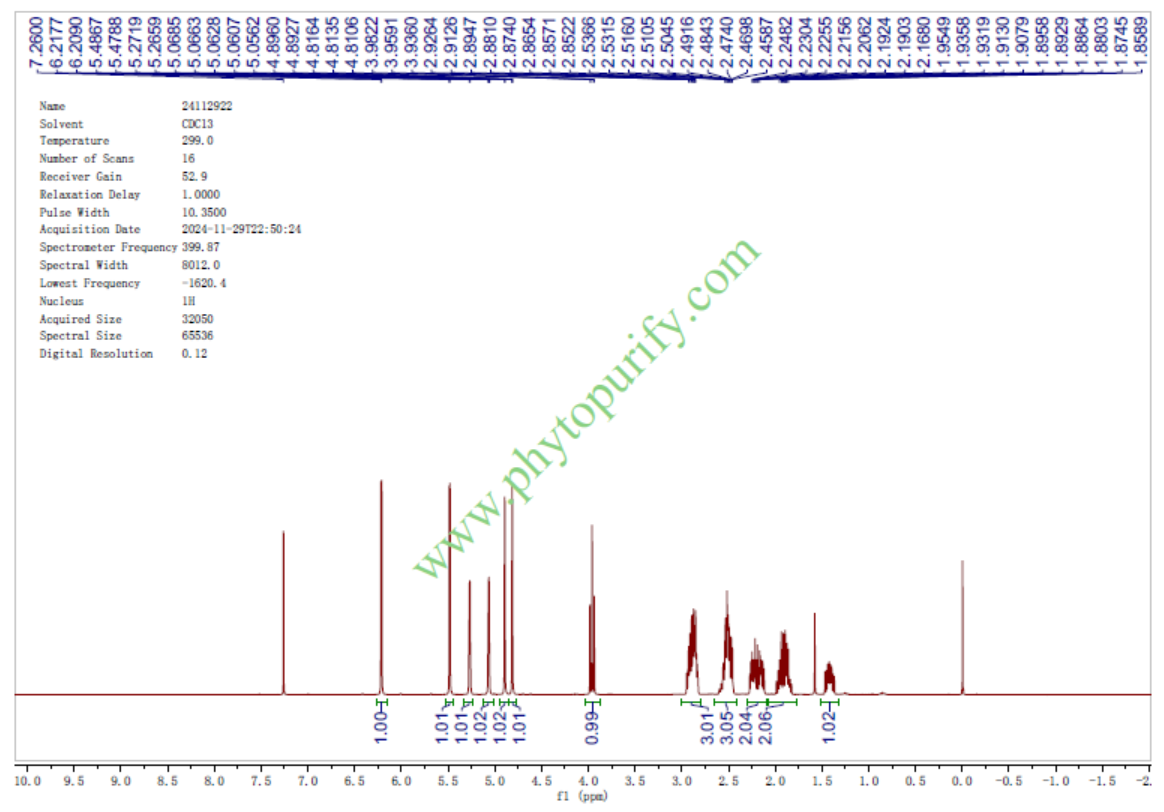
Identification Method: Mass, NMR
Packing: Brown vial or HDPE plastic bottle
Storage: Store in a well closed container, protected from air and light. Put into refrigerate or freeze for long term storage.
Whenever possible, you should prepare and use solutions on the same day. However, if you need to make up stock solutions in advance, we recommend that you store the solution as aliquots in tightly sealed vials at -20℃. Generally, these will be useable for up to two weeks.
The product could be supplied from milligrams to grams, up to kilograms
Inquire for bulk scale.
Descriptions:
Dehydrocostus lactone(DCL) is exuded from sunflower roots and low DCL concentrations stimulate germination of the root parasite Orobanche cumana.[1]
Dehydrocostus lactone(0.1-10microg/ml) can protect osteoblasts against H(2)O(2)
-induced cellular dysfunction, may be valuable as a protective agent against oxidative damage in osteoblasts.[2]
Dehydrocostus lactone increases cellular resistance to oxidant injury in HepG2 cells, may via causing the nuclear accumulation of the nuclear factor E2-related factor 2 (Nrf2) and increasing the promoter activity of antioxidant response element (ARE).[3]
Dehydrocostus lactone and costunolide exhibits strong larvicidal activity against A. albopictus with LC(50) values of 2.34 and 3.26 ug/ml, respectively, while the essential oil had an LC(50) value of 12.41 ug/ml. [4]
References:
[1] El-Nadi M, Zohni O. Phytochemistry, 2011, 72(7):624-34.
[2] Choi E M, Kim G H, Yong S L. Toxicol In Vitro, 2009, 23(5):862-7.
[3] Jeong G S, Pae H O, Jeong S O, et al. Eur J Phamarmacol, 2007, 565(565):37-44.
[4] Zhi L L, He Q, Sha S C, et al. Parasitol Res?, 2011, 110(6):2125-30.
[5] Tan S J, Qiu D, Liu G, et al. Chinese Journal of Pharmaceutical Analysis, 2011, 31(1):145-7.
HPLC of Dehydrocostus Lactone
HNMR of Dehydrocostus Lactone
Storage conditions:Short-term storage at 2~8℃, long-term storage at -20 ~ -80℃
26.3000
2.3342
2.3342
.0887
8.0482
5.4683
High
71.8789
4.4017
No
Yes
No
No
Yes
No
0.6
Yes
No
Yes
Yes
Natural products, as an important treasure trove for drug discovery, play an irreplaceable role in the history of human disease prevention and treatment. Among them, sesquiterpene lactones have always been a hot topic in medicinal chemistry and pharmacology research due to their structural diversity and significant biological activity. Dehydrocostus Lactone (DHL), CAS number 477-43-0, is a typical guaiacol lactone type sesquiterpene lactone widely found in various medicinal plants such as Asteraceae and Magnoliaceae, especially the traditional Chinese medicine Aucklandia lappa Decne. Modern pharmacological research has revealed that DHL exhibits extensive and powerful anti-inflammatory activity, making it highly promising for the treatment of inflammation related diseases such as arthritis, colitis, neuroinflammation, and cancer. This article aims to systematically review the chemical properties, plant sources, pharmacological activities, molecular mechanisms of action, pharmacological evaluation, and clinical application prospects of dehydroxylenol, in order to provide comprehensive scientific references for the in-depth research and development of this natural product.
The chemical name of dehydrocoumarin is (3aS, 6aR, 9aS, 9bR) -3a, 4,5,8,9,9a hexahydro-6a-methyl-3-methylazurono [4,5-b] furan-2 (3H) - one, which is an organic heterocyclic compound. Its core structure is the guaiacol lactone skeleton, which can be described as being replaced by a 4-hydroxy-3,8-bis (methylene) decahydroazulen-5-yl group at the 2-position of acrylic acid, and this hydroxyl group undergoes intramolecular condensation with the carboxyl group to form a stable gamma lactone ring. This unique structure is the material basis for its biological activity.
From the analysis of physical and chemical properties, the molecular weight of DHL is 230.3070 g/mol. Its lipophilic water partition coefficient (LogP) is 2.3342, indicating that the compound has moderate lipophilicity, which is beneficial for its penetration into cell membranes. The topologically polar surface area (TPSA) is 26.3000 Å ², which is a relatively small value, further confirming its good membrane permeability. The water solubility is relatively low, about 0.0887 mg/mL, which to some extent limits its direct application in aqueous systems. However, it can be improved through formulation methods such as cyclodextrin inclusion and nanomaterialization. It is worth noting that DHL exhibits high blood-brain barrier permeability, which provides the possibility for its application in central nervous system related inflammatory diseases such as Alzheimer's disease and Parkinson's disease. In early safety evaluations, DHL showed no significant inhibitory effect on hERG potassium channels (hERG inhibition: No), indicating a low risk of cardiac toxicity. The Ames test result is 0.6, indicating a low risk of mutagenicity and a good genotoxicity safety profile.
Dehydroalkanolide mainly comes from the dried roots of the plant Aucklandia lappa Decne. (also known as Saussurea costus) in the Chrysanthemum family. This medicinal herb has the effects of promoting qi circulation, relieving pain, strengthening the spleen, and reducing appetite in traditional Chinese medicine theory. In addition, this ingredient is also found in Inula helenium, Saussurea involucrata, and some Artemisia plants.
The extraction and separation of DHL from plant materials usually use organic solvent extraction combined with chromatographic separation technology. The conventional process is as follows: first, the dried plant roots and stems are crushed, and then subjected to reflux extraction or ultrasound assisted extraction using highly polar organic solvents (such as methanol, ethanol) or mixed solvents (such as ethanol water). After vacuum concentration, the crude extract was subjected to gradient extraction using solvents such as petroleum ether and ethyl acetate. DHL was mainly enriched in the moderately polar ethyl acetate fraction. Subsequently, further separation and purification were carried out using techniques such as silica gel column chromatography, preparative thin-layer chromatography, or high-performance liquid chromatography to obtain high-purity DHL monomers. In recent years, green extraction techniques such as supercritical CO ₂ extraction have also been applied to DHL extraction, which has the advantages of high efficiency and no solvent residue. The extraction rate is influenced by various factors such as plant origin, harvesting season, and extraction process.
Numerous in vitro and in vivo pharmacological studies have confirmed that dehydroxylenol has a wide range of biological activities, with anti-inflammatory effects being the most prominent and core.
1. Anti inflammatory activity: DHL has shown strong inhibitory effects on various acute and chronic inflammation models. In the lipopolysaccharide (LPS) - induced macrophage (such as RAW264.7) inflammation model, DHL can dose dependently inhibit the production of inflammatory mediators such as nitric oxide (NO) and prostaglandin E2 (PGE2). In animal models, DHL can significantly alleviate acute foot swelling induced by carrageenan or acetic acid in mice, improve clinical symptoms (such as diarrhea, rectal bleeding, colon shortening) and histopathological damage induced by dextran sulfate sodium (DSS) in mice with ulcerative colitis. In the rat model of rheumatoid arthritis induced by Freund's complete adjuvant, DHL administration can effectively alleviate joint swelling and reduce arthritis index.
2. Antitumor activity: The anti-inflammatory properties of DHL are closely related to its anti-tumor effects, as chronic inflammation is an important driving force for the occurrence and development of tumors. Studies have shown that DHL can inhibit the proliferation and induce apoptosis of breast cancer, lung cancer, liver cancer, colorectal cancer, gastric cancer and other cancer cell lines. Its mechanism involves cell cycle arrest (such as G2/M phase arrest), activation of mitochondrial apoptosis pathway, and inhibition of cell invasion and migration.
3. Other activities: In addition, research has reported that DHL has antibacterial, antiviral, antispasmodic, and protective activities against gastric mucosa. Its neuroprotective effect is also receiving increasing attention, showing potential for improving cognitive function and reducing neuronal death in Alzheimer's disease and cerebral ischemia-reperfusion injury models.
The anti-inflammatory and other pharmacological effects of dehydroxylenol are achieved by regulating a complex intracellular signaling network, with diverse targets. The core mechanism focuses on inhibiting key inflammatory pathways such as nuclear factor kappa B (NF - κ B) and signal transduction and transcription activator 3 (STAT3).
1. Inhibition of core signaling pathways:
* NF - κ B pathway: NF - κ B is the core transcription factor of inflammatory response. DHL can inhibit the activity of I κ B kinase (IKK, especially IKBKB), prevent the phosphorylation and degradation of I κ B α, thereby inhibiting the nuclear translocation of NF - κ B (such as RELA/p65 subunit) and its binding to DNA, ultimately downregulating the gene expression of inflammatory mediators such as TNF - α, IL-6, IL-1 β, COX-2 (encoded by PTGS2, PTGS1 may be a typo in the text, as PTGS1 is constitutive COX-1) and inducible nitric oxide synthase (NOS2).
* STAT3 pathway: STAT3 is another pathway closely related to inflammation and tumorigenesis. DHL can directly or indirectly inhibit the phosphorylation (activation) of STAT3, block its dimerization and nuclear translocation, thereby inhibiting the expression of downstream genes related to cell proliferation and survival (such as Cyclin D1, Bcl-2).
2. Key target regulation:
* Inflammatory factors and mediators: DHL can significantly reduce the high expression of TNF - α, IL-6, and other cytokines in macrophages stimulated by LPS and other factors. Meanwhile, it reduces the excessive production of PGE2 and NO by inhibiting the activity of COX-2 and NOS2.
* Inflammatory bodies: DHL has been proven to inhibit the activation of NLRP3 inflammasome, reduce the cleavage and maturation of caspase-1 (CASP1), and thereby inhibit the maturation and release of IL-1 β and IL-18, which is crucial in the treatment of inflammatory diseases.
* Ion channel: Research suggests that DHL may act on transient receptor potential vanillic acid subtype 1 (TRPV1) and anchored protein subtype 1 (TRPA1) channels, which are involved in the transmission of pain and neurogenic inflammation, and may be one of the mechanisms underlying its analgesic effect.
* Cell apoptosis: In tumor cells, DHL induces mitochondrial pathway apoptosis by regulating the Bcl-2/Bax ratio, activating caspase cascade reactions (such as CASP3, CASP9).
Although the pharmacological activity of dehydrocoumarin is clear, its pharmacological properties still require systematic evaluation.
Pharmacodynamics: Current pharmacokinetic studies are mostly focused on the animal level. DHL is rapidly absorbed after oral administration, but its absolute bioavailability may be lower due to its low water solubility and first pass effect. It is widely distributed in the body, thanks to its high lipid solubility and blood-brain barrier penetration ability, and can have a certain distribution in brain tissue. In terms of metabolism, DHL is mainly metabolized through the liver cytochrome P450 enzyme system (such as CYP3A4, CYP2C19), and the main metabolic pathways include hydroxylation, demethylation, and glucuronidation. The prototype drug and its metabolites are mainly excreted from the body through urine and feces. Its pharmacokinetic behavior may exhibit nonlinear characteristics.
Challenges and optimization of drug development:
1. Water solubility and bioavailability: Low water solubility is the main bottleneck limiting its oral absorption and clinical translation. The strategy includes preparing phospholipid complexes, cyclodextrin inclusion complexes, solid dispersions, or nano formulations (such as nanocrystals, liposomes, polymer micelles) to enhance their solubility and dissolution rate.
2. Stability The lactone structure may undergo ring opening under the action of acids, bases, or enzymes, affecting its stability. The formulation prescription needs to consider the pH environment and may require structural modifications to improve metabolic stability.
3. Targeted delivery: Using nanocarriers for surface modification can achieve targeted delivery of DHL to inflammatory sites or tumor tissues, improve therapeutic efficacy, and reduce systemic side effects.
4. Security: Although preliminary toxicity tests (such as hERG and Ames) have yielded good results, systematic preclinical subacute and chronic toxicology studies are still needed to comprehensively evaluate their safety.
As a natural lead compound with clear anti-inflammatory multi-target effects, dehydroxylenol has broad clinical application prospects, but also faces challenges.
Potential application areas:
1. Inflammatory disease treatment: As a new type of anti-inflammatory agent, developed for rheumatoid arthritis, inflammatory bowel disease (Crohn's disease, ulcerative colitis), asthma, chronic obstructive pulmonary disease, neuroinflammatory diseases (such as Alzheimer's disease, multiple sclerosis), etc.
2. Antitumor adjuvant therapy: Given its dual mechanism of anti-inflammatory and direct anti-tumor effects, DHL can serve as a sensitizer for chemotherapy or radiotherapy, or be used to prevent inflammation related tumorigenesis, especially in tumor types with abnormal activation of STAT3 or NF - κ B.
3. Analgesic treatment: By acting on channels such as TRPV1/TRPA1 and inhibiting inflammatory mediators, it may be developed for the treatment of inflammatory pain and neuropathic pain.
Future research directions and prospects:
1. In depth mechanism exploration: Using chemical biology methods such as molecular probes and proteomics to discover its direct target and draw more accurate signal network diagrams.
2. Structural optimization and derivative development: Using it as the mother nucleus, reasonable structural modifications are carried out to improve activity, water solubility, metabolic stability, and targeting, in order to obtain candidate drugs with better drug properties.
3. Research on Advanced Delivery Systems: Vigorously develop DHL based nano targeted delivery systems, prodrug strategies, etc. to overcome their physical and chemical deficiencies and achieve precise treatment.
4. Preclinical and clinical translation: Complete the pharmacological, pharmacokinetic, and toxicological evaluations of the system, establish reliable quality control standards, and promote its entry into the clinical trial phase.
5. Research on the integration of traditional Chinese and Western medicine: In depth exploration of the material basis and synergistic mechanism of DHL in the efficacy of Muxiang and other compound traditional Chinese medicines (such as Muxiang Shunqi Wan), providing scientific basis for the modernization of traditional Chinese medicine.
As a natural sesquiterpene lactone with abundant sources and unique structure, dehydroxylenol has become a highly anticipated star molecule in the field of natural product drug development due to its excellent multi-target anti-inflammatory activity and related pharmacological effects. The research process of DHL, from the empirical use of traditional Chinese medicine to the in-depth elucidation of its molecular mechanisms by modern pharmacology, is a model of modern research in traditional Chinese medicine. Although challenges such as water solubility and stability still exist in drug formulation, these obstacles are gradually being overcome with the rapid development of medicinal chemistry, pharmacy, and nanotechnology. In the future, through interdisciplinary integration and continuous in-depth research, dehydrocoumarin is highly likely to be successfully transformed from an excellent lead compound into an innovative drug for treating various inflammation related diseases, contributing significantly to human health. Its research and development path not only demonstrates the enormous potential of natural products, but also provides an inspiring paradigm for modern drug discovery based on traditional medical knowledge.
