| Catalog No | Package | Original Price | Price | Inventory | Quantity | Operating |
|---|---|---|---|---|---|---|
| BP3864-5mg | 5mg | $296.00 | Sign in |
|


Storage conditions:Short-term storage at 2~8℃, long-term storage at -20 ~ -80℃
256.2900
2.0223
2.0223
.0997
.6229
.4479
Low
74.4084
5.9596
No
No
No
No
No
No
0.0
Yes
No
Yes
Yes
Inflammation is a complex and highly coordinated defensive response produced by the body in response to harmful stimuli such as infection, tissue damage, or autoimmune reactions. Moderate inflammatory response helps to clear pathogens and repair damaged tissues, but excessive or persistent chronic inflammation is considered the core pathological basis for the development of various major diseases such as rheumatoid arthritis, inflammatory bowel disease, asthma, cardiovascular disease, neurodegenerative diseases, and even cancer. Therefore, developing safe and effective anti-inflammatory drugs has always been a top priority in the field of modern drug development. Although classic drugs such as nonsteroidal anti-inflammatory drugs and glucocorticoids are widely used in clinical practice, the long-term use of these drugs brings about side effects such as gastrointestinal damage, cardiovascular risk, and immune suppression, prompting researchers to continuously search for anti-inflammatory lead compounds with novel structures, unique mechanisms of action, and fewer side effects from natural products.
Lucyoside B is a compound derived from the gourd family plant, Cucurbitaceae(Luffa cylindrica Natural triterpenoid saponins isolated from (L.) Roem. Luffa, as a common vegetable and traditional medicinal plant, has a long history of application in folk medicine systems in Asia, Africa and America, and is commonly used to treat fever, edema, inflammation, pain and a variety of infectious diseases. Modern pharmacological research has confirmed that various extracts of luffa have significant anti-inflammatory, analgesic, antioxidant, and immunomodulatory activities. As one of the important active ingredients in luffa, luffa glycoside B has received widespread attention in recent years due to its outstanding potential in regulating inflammatory responses. In particular, studies have found that luffa glycoside B can effectively downregulate the production of various pro-inflammatory mediators in activated macrophages by inhibiting two key inflammatory signaling pathways, nuclear factor kappa B (NF - κ B) and activator protein-1 (AP-1). This discovery not only provides a modern scientific explanation for the traditional anti-inflammatory use of luffa, but also reveals the enormous potential of luffa glycoside B as a lead compound for novel anti-inflammatory drugs.
This review aims to comprehensively review and summarize the research progress on luffa glycoside B, covering its chemical structure and physicochemical properties, plant sources and extraction methods, pharmacological activity, mechanism of action and molecular targets, pharmacological evaluation and pharmacokinetic characteristics. It also looks forward to its clinical application prospects, in order to provide systematic references for the in-depth development and utilization of this natural product.
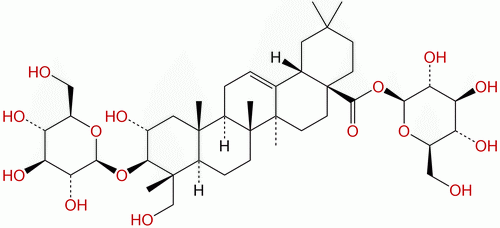
Cucurbitacin B is a typical pentacyclic triterpenoid saponin compound. Its chemical structure consists of two parts: aglycone and sugar chain. According to existing research, the glycoside skeleton of luffa glycoside B belongs to the oleanane type pentacyclic triterpenoid, and its core structure is a derivative of oleanolic acid. The sugar chain is usually composed of multiple monosaccharide molecules connected by glycosidic bonds and attached to the C-3 hydroxyl group of the aglycone. The monosaccharides that make up the B sugar chain of luffa glycosides may include glucose, rhamnose, arabinose, or xylose, and their specific connection order and sugar group composition are key factors determining their chemical properties and biological activity. The precise chemical structure typically requires analysis and confirmation through modern spectroscopic techniques such as high-resolution mass spectrometry (HR-MS) and nuclear magnetic resonance spectroscopy (NMR, including 1D and 2D NMR).
From the perspective of physical and chemical properties, the molecular formula of luffa glycoside B is C ₄₂ H ₆₈ O ₁₅, with a molecular weight of 812.9910 Da, making it a natural product with medium molecular weight. Its lipophilic water partition coefficient (LogP) is 2.0223, indicating that the compound has a certain degree of lipophilicity, but also contains multiple hydroxyl and sugar groups, making it also have a certain degree of hydrophilicity. The topological polar surface area (TPSA) is as high as 256.2900 Å ², which is much higher than the commonly believed passive transmembrane absorption threshold (about 140 Å ²), indicating that its oral absorption may be poor and it is not easy to penetrate the cell membrane through passive diffusion. The water solubility parameter is 0.0997 mg/mL, indicating its low solubility in water, which may be due to its large hydrophobic triterpenoid skeleton. In addition, it is predicted that its ability to cross the blood-brain barrier (BBB) is low, which to some extent limits its application in central nervous system diseases, but may also mean that the central nervous system side effects during peripheral administration are relatively small. Preliminary computer-aided evaluation shows that the inhibitory risk of luffa glycoside B on hERG potassium channels is low, and the Ames test result is negative (0.0), indicating that its potential genotoxicity and cardiotoxicity risks are relatively low. These physicochemical properties provide important foundational information for subsequent formulation design and pharmacokinetic studies.
Cucurbitacin B is mainly derived from plants of the Cucurbitaceae family and the Cucurbitaceae genus, with the most significant source being common luffa(Luffa cylindrica (L.) Roem., Also known as Luffa aegyptiaca Mill.)。 The various parts of luffa, including fruit, leaves, stems, roots, and seeds, contain multiple chemical components, and luffa glycoside B is mainly present in the fruit of luffa, especially in immature fruits where the content may be higher. In addition, there are loofahs(Luffa acutangula (L.) Roxb.) and other plants in the genus Cucurbita may also contain this ingredient, but the content and distribution may vary.
The extraction of luffa glycoside B usually follows the classic method in natural product chemistry for highly polar saponin compounds. The basic process includes the following key steps:
Raw material pretreatment Fresh or dried luffa fruits are crushed into a powder of appropriate fineness to increase the solvent contact area and improve extraction efficiency. Sometimes a degreasing step is used to pre treat the raw materials with non-polar solvents such as petroleum ether or n-hexane to remove fat soluble impurities.
Solvent extraction Due to the polarity of luffa glycoside B, solvents with higher polarity are usually selected for extraction. The most commonly used solvents are methanol or ethanol (usually a 70% -95% water alcohol solution). The extraction methods include traditional cold soaking, percolation, or heating reflux extraction. In order to improve extraction efficiency and shorten time, modern technologies such as ultrasound assisted extraction and microwave-assisted extraction are also widely used. The extraction process is usually repeated 2-3 times to ensure that the active ingredients are fully extracted.
Preliminary purification Concentrate the merged extracts under reduced pressure to obtain the total extract. Subsequently, the total extract was dispersed in an appropriate amount of water and subjected to liquid-liquid extraction using solvents of different polarities such as petroleum ether, ethyl acetate, and n-butanol. Due to the high polarity of luffa glycoside B, it is usually enriched in the n-butanol extraction layer. The n-butanol extract is concentrated under reduced pressure to obtain a crude extract rich in saponins.
Chromatographic Separation and Purification This is a key step in obtaining high-purity luffa glycoside B. Common chromatographic techniques include:
During the entire extraction and separation process, techniques such as thin-layer chromatography (TLC) and high-performance liquid chromatography (HPLC) are usually combined to track and detect the target compound to ensure separation efficiency and purity of the final product.
The pharmacological activity research of luffa glycoside B is currently mainly focused on the anti-inflammatory field, and its core discovery is that it can significantly inhibit the production of inflammatory mediators in activated macrophages. In addition, some studies have also preliminarily explored its potential anti-tumor, antioxidant and other activities.
This is the most core and extensively studied pharmacological activity of luffa glycoside B. Numerous in vitro cell experiments have confirmed that luffa glycoside B can effectively inhibit the activation of macrophages induced by inflammatory stimuli such as lipopolysaccharides (LPS), such as RAW 264.7 mouse macrophage lines or primary peritoneal macrophages.
The core mechanism of the anti-inflammatory effect of luffa glycoside B lies in its precise regulation of key inflammatory signaling pathways within cells. Existing research evidence suggests that luffa glycoside B mainly blocks the expression of pro-inflammatory genes by inhibiting the classic and interrelated signaling pathways of NF - κ B and AP-1.
NF - κ B is a core transcription factor that regulates inflammatory responses. In the resting state, NF - κ B (usually a p50/p65 heterodimer, where the p65 subunit is encoded by the RELA gene) binds to its inhibitory protein I κ B α and exists in an inactive form in the cytoplasm. When cells are stimulated by LPS, TNF - α, etc., the I κ B kinase (IKK, encoded by genes such as IKBKB) complex is activated, which phosphorylates I κ B α and leads to its ubiquitination degradation. The released NF - κ B immediately translocates into the nucleus and binds to the κ B site on the target gene promoter, initiating the transcription of a large number of pro-inflammatory genes including TNF - α, IL-6, iNOS, COX-2.
The inhibitory effect of luffa glycoside B on the NF - κ B pathway is manifested at multiple levels:
- Inhibition of phosphorylation and degradation of I κ B αResearch has found that luffa glycoside B can prevent the phosphorylation and subsequent degradation of I κ B α protein caused by LPS stimulation, thereby "locking" NF - κ B in the cytoplasm and preventing its nuclear translocation.
- Inhibit nuclear translocation of p65 Through immunofluorescence and nuclear cytoplasmic separation experiments, it was confirmed that treatment with luffa glycoside B can significantly reduce LPS induced migration of p65 subunits from cytoplasm to nucleus.
- Inhibition of DNA binding activity of NF - κ B Experiments such as electrophoretic mobility shift analysis (EMSA) have shown that luffa glycoside B can reduce the binding ability of activated NF - κ B to its target gene promoter region DNA sequence.
- Affects upstream kinases Cucurbitacin B may block the activation of the entire signaling pathway by inhibiting the activity of IKK complexes.
AP-1 is another important inflammation related transcription factor, mainly composed of Jun and Fos family proteins (such as c-Jun and c-Fos). The activation and expression of AP-1 are regulated by the mitogen activated protein kinase (MAPK) signaling pathway, including ERK, JNK, and p38 MAPK. After being activated by upstream signals, these kinases can phosphorylate and activate components of AP-1, or promote transcription of genes encoding c-Jun and c-Fos.
The inhibitory effect of luffa glycoside B on the AP-1 pathway is reflected in:
- Inhibition of MAPK pathway phosphorylation Research has shown that luffa glycoside B can inhibit LPS induced phosphorylation levels of JNK, ERK, and p38 MAPK, thereby blocking downstream signaling.
- Inhibit the expression and activation of c-Jun and c-Fos By inhibiting the upstream MAPK pathway, luffa glycoside B can reduce the protein expression levels and phosphorylation activation degree of c-Jun and c-Fos.
- Inhibit the DNA binding activity of AP-1 Similar to NF - κ B, luffa glycoside B can also reduce the binding of activated AP-1 to its target gene promoter region.
The NF - κ B and AP-1 signaling pathways do not exist in isolation, and they often exhibit synergistic effects in the regulation of inflammatory gene expression. The promoter regions of many pro-inflammatory genes, such as TNF - α and IL-6, contain binding sites for both NF - κ B and AP-1. Therefore, simultaneous inhibition of these two pathways by luffa glycoside B can produce a synergistic anti-inflammatory effect, effectively blocking the production of inflammatory mediators.
Overall, the direct molecular target of luffa glycoside B may be located at the intersection or upstream kinase of these signaling pathways. Although the specific targets have not been fully identified, based on existing research, their potential targets include:
- IKK complex As a key kinase in the NF - κ B pathway, it is one of the candidate targets for the action of luffa glycoside B.
- MAPK kinases (such as MKKs)As an upstream activating kinase of the MAPK pathway, it may also be its target of action.
- Pattern recognition receptors (such as TLR4)LPS mainly activates downstream signals through TLR4 receptors, and cucurbitacin B may also exert its effect by interfering with the binding of TLR4 to its ligands or the recruitment of downstream adapter proteins.
To push natural products from laboratory research to clinical applications, a systematic evaluation of their drug likeness is necessary, including their physicochemical properties, pharmacokinetic (ADME) characteristics, and safety.
According to the provided pharmacological parameters, luffa glycoside B exhibits typical "double-edged sword" characteristics:
- Molecular weight (812.99 Da)Far exceeding the limit of molecular weight less than 500 in the Lipinski Five Rules, this usually indicates poor oral absorption.
- LogP(2.02)Being within a relatively ideal range indicates that its lipophilicity and hydrophilicity have reached a certain balance, which is conducive to transmembrane transport.
- TPSA(256.29 Ų)Very high, which is the main obstacle to oral absorption. High TPSA means that the compound requires a significant amount of energy to penetrate the lipid bilayer of the cell membrane, resulting in poor membrane permeability and typically low oral bioavailability.
- Water solubility (0.0997 mg/mL)Poor, it belongs to poorly soluble drugs. This will affect its dissolution and absorption in the gastrointestinal tract, which is another bottleneck for oral administration.
- Blood brain barrier penetration (low)For the treatment of peripheral inflammatory diseases, this is an advantage as it can avoid central nervous system side effects. But for diseases that require central action, such as neuroinflammation, it is a disadvantage.
- HERG inhibition (No) and Ames test (0.0)These two parameters are very positive, indicating that the potential risk of cardiac QT interval prolongation and gene mutations caused by luffa glycoside B is low in the preliminary safety assessment.
At present, there are relatively few research reports on the pharmacokinetics (PK) of luffa glycoside B in vivo. However, based on its physicochemical properties and PK characteristics of similar saponins, the following inferences can be made:
- absorb Poor oral absorption is the biggest challenge it faces. High molecular weight and high TPSA make it difficult to be absorbed by intestinal epithelial cells through passive diffusion. In addition, it may also be a substrate for intestinal efflux transporters such as P-glycoprotein, further limiting its absorption. Its absolute oral bioavailability is expected to be very low.
- distribution After intravenous administration, due to its large molecular weight and polarity, it may mainly be distributed in plasma and extracellular fluid, and its tissue distribution may be limited. The low BBB penetration also confirms this.
- Metabolism As a saponin compound, luffa glycoside B may undergo extensive metabolism in the body. Firstly, in the intestine, its sugar chains may be hydrolyzed by glycosidases of the gut microbiota, producing secondary glycosides or aglycones (such as oleanolic acid), which may have different biological activities. Secondly, in the liver, aglycones may further undergo phase I (oxidation, reduction) and phase II (glucuronidation, sulfation) metabolism.
- excretion Metabolites and small amounts of prototype drugs may be mainly excreted through bile and urine.
Given the inherent deficiency of low oral bioavailability of luffa glycoside B, innovative strategies are needed for future drug development:
- Structural modification By means of medicinal chemistry, structural modifications can be made to the sugar chain or aglycone of luffa glycoside B, such as introducing specific functional groups to reduce molecular weight TPSA, Improve water solubility and lipid solubility while maintaining or enhancing its anti-inflammatory activity. For example, preparing prodrugs is a common strategy.
- New drug delivery system Using nanotechnology, such as liposomes, polymer nanoparticles, solid lipid nanoparticles, phospholipid complexes, etc., to encapsulate luffa glycoside B can significantly improve its water solubility, protect it from gastrointestinal degradation, promote its absorption in the intestine, and achieve targeted delivery.
- Non oral administration route Consider developing it into injectable (such as intravenous injection, intramuscular injection), transdermal patch, or inhaled formulation to bypass the barriers of oral absorption. Given its anti-inflammatory effect, local administration (such as intra-articular injections for treating arthritis or creams for treating skin inflammation) may be more feasible.
As a natural product with a clear anti-inflammatory mechanism and good preliminary safety, luffa glycoside B has shown promising clinical application prospects in the treatment of various inflammation related diseases.
Despite its broad prospects, the clinical translation of luffa glycoside B still faces many challenges, and future research should focus on the following aspects:
As a natural triterpenoid saponin isolated from the traditional medicinal plant luffa, luffa glycoside B has become a highly valuable anti-inflammatory lead compound due to its unique mechanism of inhibiting the NF - κ B and AP-1 signaling pathways simultaneously in activated macrophages, thereby effectively downregulating the production of multiple key inflammatory mediators such as TNF - α, IL-6, NO, and PGE2. Its clear pharmacological activity, relatively clear molecular mechanism, and initially demonstrated low cardiac and genetic toxicity risks have laid a solid foundation for its development as a novel anti-inflammatory drug.
However, luffa glycoside B also faces typical challenges in the process of converting natural products into drugs, especially the inherent deficiency of low oral bioavailability caused by its high molecular weight and high polarity. Future research must focus on overcoming drug resistance barriers through structural modifications or advanced drug delivery systems, while delving deeper into elucidating its targets of action, improving in vivo efficacy and pharmacokinetic data. It can be foreseen that with the continuous deepening of research and the advancement of technological means, luffa glycoside B and its derivatives are expected to provide new candidate drugs for the treatment of chronic inflammatory diseases such as rheumatoid arthritis and inflammatory bowel disease in the near future, thus transforming the traditional medicinal value of luffa into an effective weapon for modern clinical treatment. The in-depth study of luffa glycoside B is not only an exploration of a single compound, but also a vivid practice of discovering innovative drugs from traditional plant medicines.
Batch can search by a CAS number,one per line
