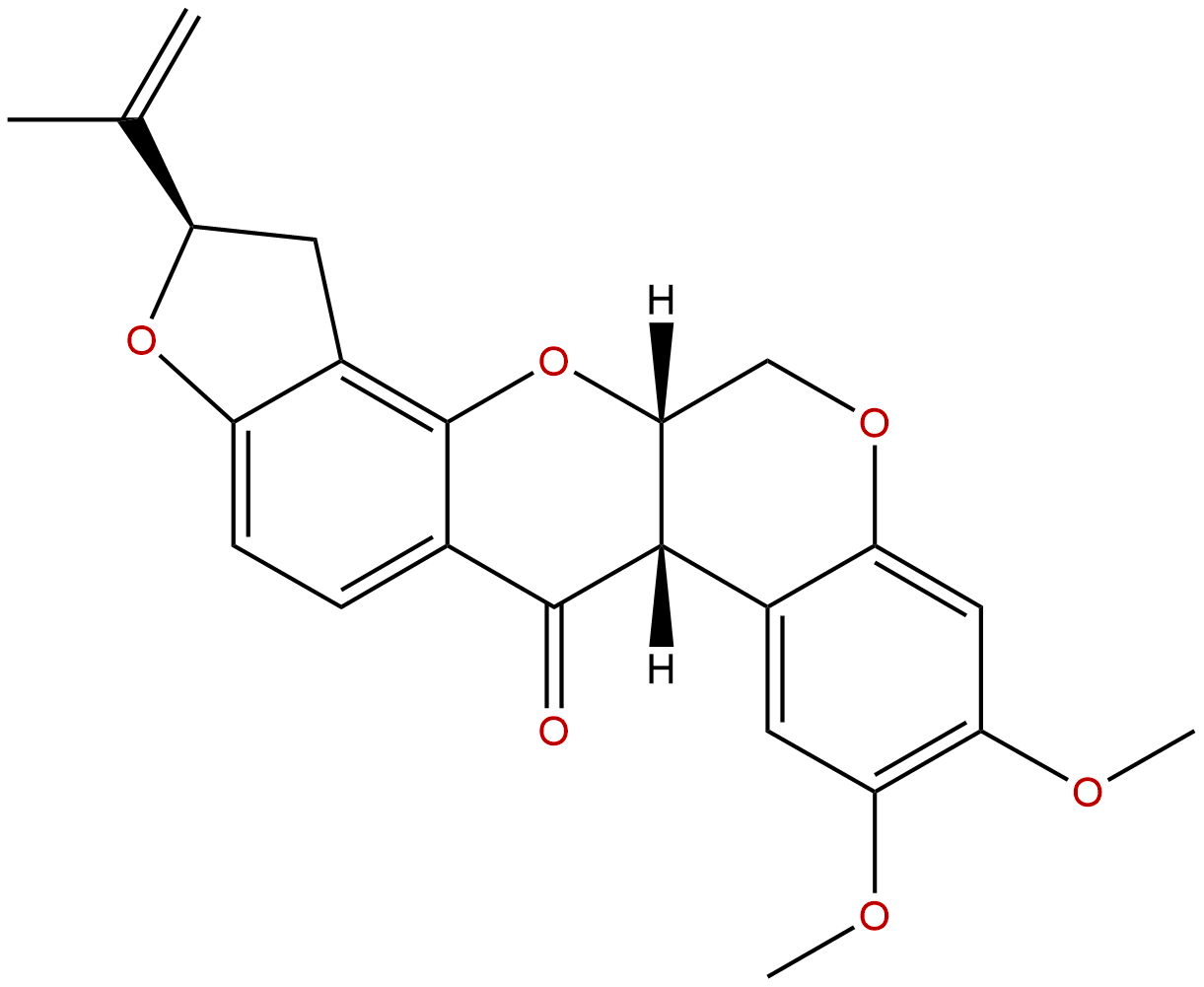


Product name: Rotenone
Synonym name:
Catalogue No.: BP3347
Cas No.: 83-79-4
Formula: C23H22O6
Mol Weight: 394.423
Botanical Source:
Physical Description: Cryst.
Type of Compound: Miscellaneous
Purity: 95%~99%
Analysis Method: HPLC-DAD or/and HPLC-ELSD
Identification Method: Mass, NMR
Packing: Brown vial or HDPE plastic bottle
The product could be supplied from milligrams to grams. Inquire for bulk scale.
We provide solution to improve the water-solubility of compounds, thereby facilitating the variety of activity tests and clinic uses.
For Reference Standard and R&D, Not for Human Use Directly.
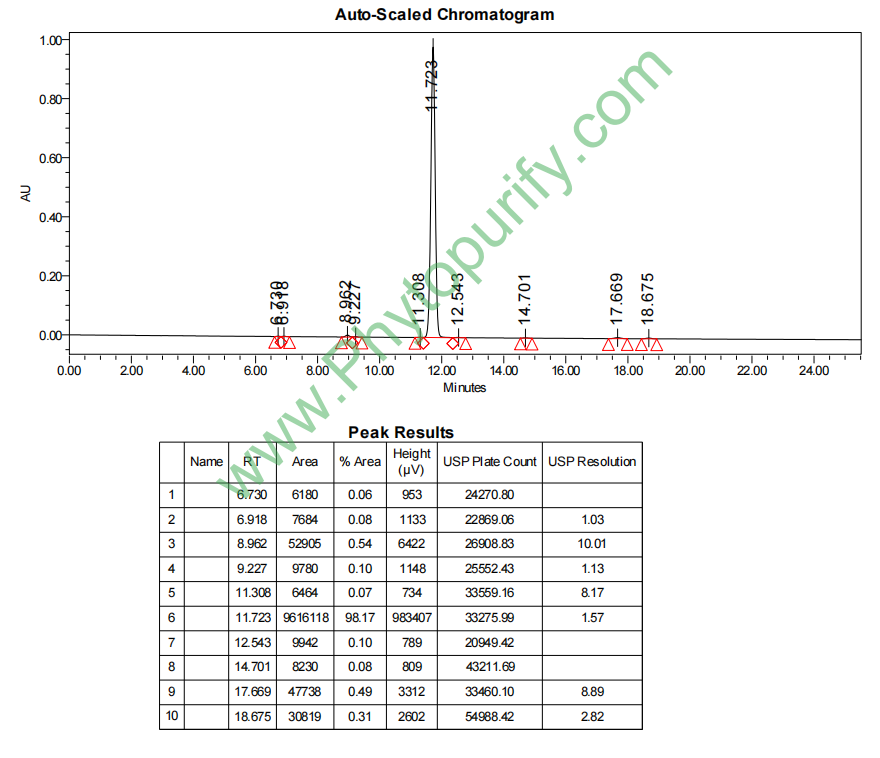
HPLC of Rotenone
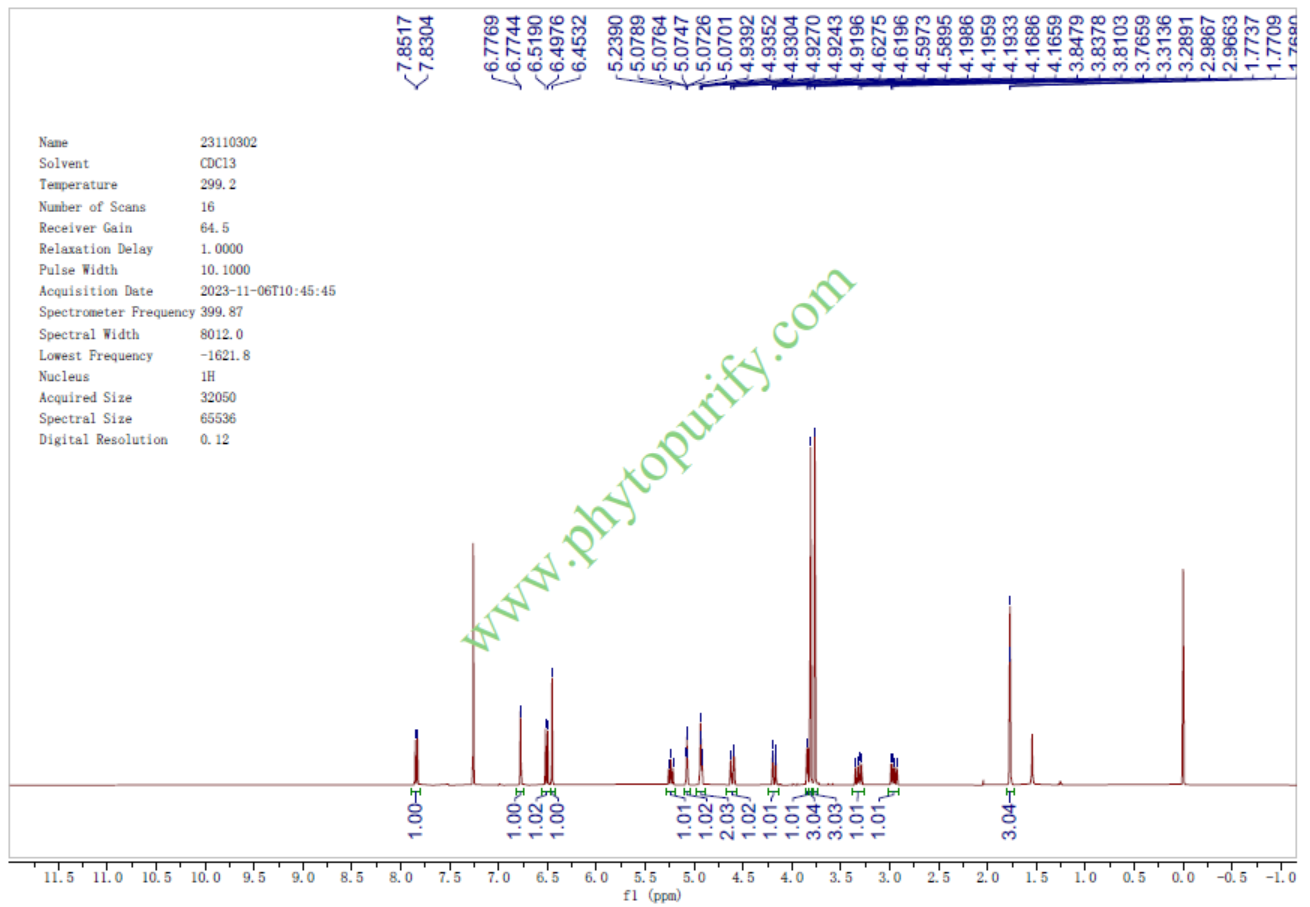
HNMR of Rotenone
Storage conditions:Short-term storage at 2~8℃, long-term storage at -20 ~ -80℃
63.2200
3.4129
3.4127
.0073
5.4813
49.6378
High
85.9462
3.8680
No
No
Yes
No
Yes
No
0.6
No
Yes
No
Yes
Rotenone, a natural organic compound with a long history of application, is a highly representative molecule in modern natural product pharmacology research. Its chemical name is (2R, 6aS, 12aS) -1,2,6,6a, 12,12a-hexahydro-2-isopropyl-8,9-dimethoxybenzopyran [3,4-b] furan [2,3-h] benzopyran-6-one. Its CAS number is 83-79-4, molecular formula is C23H22O6, and molecular weight is 394.4230 g/mol. As a specific inhibitor of mitochondrial electron transport chain complex I, fisetin plays a key role in basic life science research and is often used to construct animal models of Parkinson's disease to study the pathological mechanisms of neurodegenerative diseases. Meanwhile, its ability to induce cell apoptosis and affect dopamine metabolism has also attracted much attention in the field of oncology research.
Fish vine ketone was initially recognized and used by humans due to its potent insecticidal activity, mainly derived from the leguminous plant fish vine genus(Derris)The root. With the development of modern molecular biology and pharmacology, researchers have gradually uncovered the veil of its multiple biological activities. From the perspective of its mechanism of action, fisetin inhibits mitochondrial complex I (NADH: ubiquinone oxidoreductase), blocks electron transfer, inhibits adenosine triphosphate (ATP) synthesis, and promotes the production of reactive oxygen species (ROS) in large quantities. This profound disturbance to cellular energy metabolism and oxidative stress state is the common basis for its insecticidal, neurotoxic, and potential anti-tumor activities. This article will provide a systematic and professional review of fisetin from its chemical essence, traditional sources, multi-target pharmacological mechanisms, pharmacological evaluation, and research prospects.
Fish vine ketone belongs to the fish vine ketone class of isoflavone derivatives, and its structural core is a complex four ring fused system containing benzopyran and benzofuran structural units. From the provided SMILES string (C=C (C) [C @ H] 1Cc2c (ccc3c2O [C @ @ H] 2COc4cc (OC) c (OC) cc4 [C @ @ H] 2C3=O) O1), its stereochemical characteristics can be resolved: there are three chiral centers (2R, 6aS, 12aS) in the molecule, which are crucial for its biological activity. The isopropenyl group at position 2 (prop-1-en-2-yl) and the two methoxy groups at positions 8 and 9 are its characteristic substituents.
From the analysis of pharmacological parameters, the molecular weight (MW) of fisetin is 394.42 g/mol, slightly higher than the standard of "less than 500" in Lipinski's five rules, but still within an acceptable range. The logarithm of its lipid water partition coefficient (LogP) is 3.4129, indicating that the molecule has moderate lipophilicity, which is consistent with its ability to penetrate biological membranes, including the blood-brain barrier. The topological polar surface area (TPSA) is 63.22 Å ², far below the threshold commonly considered to be "poor permeability" (>140 Å ²), which explains its high Caco-2 cell permeability (49.6378 × 10 ⁻⁶ cm/s) and predicted "high" blood-brain barrier (BBB) penetration ability. These parameters collectively indicate that fisetin has good membrane permeability and potential for central nervous system distribution.
However, its extremely low water solubility (0.0073, usually measured in mg/mL or log mol/L, indicating poor solubility) is a major obstacle to its development as a drug. The plasma protein binding rate (PPB) is as high as 85.95%, which means that only a small amount of free drugs exert pharmacological effects in the body, which may affect the strength of drug efficacy and increase individual differences. In terms of toxicity, the Ames test result is 0.6 (usually less than 1.5 is considered negative), indicating a low risk of direct mutagenicity, but there is a risk of chromosomal aberration. In addition, its respiratory sensitization (Resp_Sens) is "yes", and it may cause an increase in serum glutamyl transferase (GGT) and alanine aminotransferase (ALT), suggesting potential hepatotoxicity and allergy risks. These physicochemical and toxicological properties are key factors that must be balanced when evaluating their application value.
The traditional source of fisetin is mainly Fabaceae, a genus of fish vine in the legume family(Derris)The Drunken Fish Grass genus(Lonchocarpus)Waiting for the root bark of plants. The information clearly states that it comes from fish vine(Derris trifoliata). In the traditional cultures of East Asia and South America, local residents have long discovered the insecticidal and fish poisoning properties of these plant roots and rhizomes. They crush the roots of plants, soak them in water, and then sprinkle the leachate into rivers or ponds. Fish vine ketone can quickly paralyze and suffocate fish to surface, making it easier to catch, hence the name "fish vine". This' toxic fish 'method has been used for hundreds of years in specific regions and is a sustainable primitive fishing and hunting technique, as fisetin is highly toxic to cold-blooded animals such as fish and insects, and relatively less toxic to mammals. It is also easily degradable in the environment and does not cause long-term pollution.
In addition to poisonous fish, extracts from fish vine roots are more widely used as agricultural insecticides, especially against pests of chewing mouthparts. It is a typical non systemic insecticide that cannot be absorbed by plants and transmitted in the body, mainly acting through contact and stomach toxicity. After pests come into contact with or feed on it, fisetin will inhibit the respiration of their cellular mitochondria, leading to energy depletion and death. Due to its natural plant origin, it was once considered a relatively safe insecticide choice in organic agriculture and home gardening. However, with the deepening understanding of its mammalian neurotoxicity, especially the discovery of its association with Parkinson's disease, the use of fisetin in agriculture has been strictly restricted or prohibited. However, its value as a research tool and potential drug lead compound is increasingly prominent.
The core pharmacological effect of fisetin stems from its strong and specific inhibition of mitochondrial respiratory chain complex I. This fundamental effect triggers a series of complex cascade reactions within the cell, resulting in diverse biological activities, mainly focusing on the seemingly contradictory yet mechanistic fields of neurotoxicity and anti-tumor potential.
4.1 Core mechanism: Mitochondrial dysfunction and oxidative stress
Mitochondrial complex I is the entrance of the electron transfer chain, responsible for transferring electrons from NADH to ubiquinone. Fish vine ketone binds to the ubiquinone binding site of complex I, blocking electron transfer. This directly leads to two serious consequences: first, a decrease in ATP synthesis, causing cells to fall into an "energy crisis"; Secondly, electrons accumulate upstream in the transmission chain and are easily leaked to oxygen, generating reactive oxygen species (ROS) such as superoxide anions. The outbreak of ROS can attack lipids, proteins, and DNA, disrupting cellular homeostasis. This mitochondrial dysfunction and exacerbation of oxidative stress are the common starting point for all downstream effects of fisetin.
4.2 Neurotoxicity mechanism and Parkinson's disease model
Fish vine ketone can highly simulate the key pathological features of Parkinson's disease (PD), making it a classic tool for constructing PD animal models. The neurotoxic mechanism is multifaceted:
- Selective vulnerability of dopaminergic neurons Dopaminergic neurons in the substantia nigra of the midbrain are metabolically active, and the metabolism of the neurotransmitter dopamine itself produces ROS, which puts these neurons in a state of high oxidative stress. The mitochondrial dysfunction and ROS production exacerbated by fisetin make them the first to suffer.
- Alpha synuclein aggregation The oxidative stress and calcium influx induced by fisetin can activate signaling pathways such as glycogen synthase kinase 3 β (GSK3 β), promote abnormal phosphorylation and aggregation of alpha synuclein, and form Lewy bodies similar to those in the brains of PD patients.
- Dopamine metabolism disorder Fish vine ketone can inhibit aldehyde dehydrogenase (ALDH) and vesicular monoamine transporter (VMAT). Inhibition of ALDH leads to accumulation of toxic metabolite 3,4-dihydroxyphenylacetaldehyde (DOPAL); Inhibition of VMAT prevents dopamine from being safely stored in vesicles in the cytoplasm, exacerbating its own oxidation and generating more ROS. DOPAL itself also has strong cytotoxicity and can promote alpha synuclein aggregation.
4.3 Anti tumor activity mechanism and target analysis
paradoxically, The mechanism that induces normal neuronal death may become the Achilles' heel in rapidly proliferating tumor cells. Tumor cells typically rely on aerobic glycolysis (Warburg effect), but their mitochondrial function is not completely normal and is at a higher baseline of oxidative stress. Fish vine ketone can further push tumor cells beyond the survival threshold and induce their apoptosis. The target information provided by the database (TP53, CASP3, MYC, BAX, CDKN1A) clearly outlines its pro apoptotic signaling network:
- TP53(p53)As the 'guardian of the genome', p53 is stabilized and activated during cellular stress such as DNA damage, oxidative stress, and oncogene activation. The severe oxidative stress and energy crisis caused by rotenone is a strong p53 activation signal.
- BAX One of the downstream target genes of p53. BAX is a pro apoptotic Bcl-2 family protein that is activated and transferred to the outer membrane of mitochondria, increasing its permeability and releasing apoptotic factors such as cytochrome c. This is a key step in mitochondrial pathway apoptosis.
- CASP3(Caspase-3)It is the "executioner" protease that executes apoptosis. After the release of cytochrome c, it forms apoptotic bodies with Apaf-1 and activates Caspase-9, which then cleaves and activates Caspase-3, leading to irreversible cell apoptosis.
- CDKN1A(p21)It is also an important target gene of p53. P21 is a cyclin dependent kinase inhibitor, and its induced expression leads to cell cycle arrest (usually in the G1 phase), providing time for cell repair of damage. If the damage is severe, it can lead to apoptosis.
- MYC It is a proto oncogene that promotes cell proliferation and metabolism. Under stress, pathways such as p53 can inhibit the activity of MYC or induce its degradation. Fish vine ketone may indirectly inhibit MYC's pro survival signal by activating p53.
In summary, fisetin activates the tumor suppressor network centered around p53 by inducing strong mitochondrial oxidative stress. On the one hand, it brakes the cell cycle through p21, and on the other hand, it upregulates pro apoptotic factors such as BAX, ultimately activating Caspase-3 to initiate the cell apoptosis program. This multi-target and mechanism specific pro apoptotic effect provides a solid theoretical basis for its anti-tumor research.
Based on the provided detailed pharmacological parameters, we can systematically evaluate the potential of fisetin as a drug candidate molecule, and refer to industry standards such as the Lipinski Rule of Five (Ro5).
5.1 Evaluation based on Lipinski's Five Rules
The Lipinski rule is an empirical rule for evaluating the oral absorption potential of compounds:
1. Molecular weight (MW)<500 The MW of rotenone is 394.42, which meets the requirements.
2. Lipid water partition coefficient LogP<5 LogP is 3.41, compliant.
3. The number of hydrogen bond donors (HBDs) is less than 5 From the structural formula, rotenone does not have typical hydroxyl groups, primary amines, etc., and the HBD quantity is 0 (carbonyl and ether oxygen are not counted), which is much better than the standard.
4. The number of hydrogen bond acceptors (HBAs) is less than 10 There are 6 oxygen atoms in the molecule (2 methoxy oxygen, 2 ether oxygen, 1 carbonyl oxygen, 1 pyran epoxy), all of which can be used as HBAs, with a quantity of 6.
Therefore, rotenone fully complies with Lipinski's five rules, indicating its good oral absorption potential. Its high Caco-2 permeability (49.64 × 10 ⁻⁶ cm/s) and effective predicted permeability (Peff: 5.48) also confirm this.
5.2 Advantages and Potential
- Good brain permeability The predicted BBB permeability is "high", which is consistent with its moderate LogP, low TPSA, and strong molecular rigidity. This is crucial for developing drugs that act on the central nervous system (although fisetin itself is a neurotoxin) or studying its brain distribution.
- Clear pharmacological targets and mechanisms As a complex I inhibitor, the mechanism of action is very clear, providing a clear direction for mechanism based optimization design.
5.3 Main Defects and Challenges
- Extremely low water solubility This is the primary challenge faced in developing any dosage form, especially injections. Low solubility can lead to irregular absorption, low bioavailability, and significant variability.
- Serious toxicity issues:
- neurotoxicity The mechanism by which it induces Parkinson's like symptoms raises doubts about its safety as a long-term medication, greatly limiting its application prospects in the treatment of chronic diseases such as tumors.
- Potential hepatotoxicity Elevated serum ALT and GGT levels, as well as the metabolic and excretion complexity that may arise from higher plasma protein binding rates, increase the risk of liver injury.
- Genetic toxicity risk There is a risk of chromosomal abnormalities, which is an important red alert.
- Respiratory sensitization May cause allergic reactions.
- Narrower treatment window As a potent mitochondrial toxin, its effective dose may be very close to the toxic dose.
5.4 Comprehensive evaluation conclusion
Fish vine ketone itself Not suitable for direct development as clinical drugs Especially for chronic diseases that require long-term medication, such as tumors and neurodegenerative diseases. The serious and mechanism related neurotoxicity and other toxic risks are fundamental obstacles that cannot be avoided. However, as a Extremely excellent drug lead compounds and pharmacological tool molecules The value is beyond doubt. The future research direction should not be to directly promote fisetin itself, but to use it as a template for structural optimization and modification, aiming to:
1. Reduce neurotoxicity By chemically modifying its distribution characteristics (such as reducing BBB penetration), or fine-tuning its binding mode with complex I, attempts are made to decouple anti-tumor activity from neurotoxicity.
2. Improve solubility Introducing hydrophilic groups or making prodrugs, nano formulations, etc.
3. Improve selectivity Explore whether there is differential sensitivity between tumor cell mitochondria and normal cell mitochondria, and use this difference to design targeted delivery systems.
At present, the application of fisetin in basic research far exceeds clinical translational research.
6.1 Research Status
- The 'gold standard' tool for neuroscience research Fish vine ketone induced PD animal models (especially rat models) can highly simulate the motor symptoms, progressive loss of dopaminergic neurons, and pathology of alpha synuclein in human PD, and are widely used in the etiology, pathological mechanism research, and neuroprotective drug screening of PD.
- Research on Tumor Mechanisms and Drug Screening At the cellular level, fisetin is often used as a positive control tool for inducing apoptosis and studying the relationship between mitochondrial function and tumor cell death. Its clear mechanism of action helps to elucidate the metabolic weaknesses of tumor cells.
- Ecotoxicological research As a classic model for environmental pollutants, it is used to study the effects of environmental toxins on the nervous system.
- The attempt to directly use it as a drug has basically stagnated Due to its toxicity, its early use as an insecticide has been largely banned, and there have been no successful reports of its clinical development as a human drug.
6.2 Application Prospects and Future Directions
The future value of fisetin lies in "leveraging strengths and avoiding weaknesses", as a source of innovative molecules for deep exploration:
1. Structural optimization and development of analogues This is the most core direction. Pharmaceutical chemists can conduct systematic structure-activity relationship studies based on its four ring skeleton. For example, modifying isopropenyl or methoxy groups, synthesizing a series of derivatives, and screening for new molecules that retain or enhance anti-tumor activity but significantly reduce neurotoxicity and complex I inhibitory activity. Some studies have reported that certain fisetin analogues exhibit selective anti-tumor activity in vitro.
2. Application of Targeted Delivery System Using nanotechnology (such as liposomes and polymer nanoparticles) to specifically deliver fisetin to tumor tissues can minimize its exposure to normal tissues (especially the brain), thereby improving therapeutic efficacy while reducing systemic toxicity. This may be a feasible way to bypass its toxicity bottleneck.
3. As a synergistic agent for combination therapy Given that fisetin can make tumor cells more sensitive to traditional chemotherapy or radiation therapy through unique mechanisms such as oxidative stress and metabolic disturbances, studying its low-dose, short course combination strategy with other therapies may open a window.
4. Continue to serve as an irreplaceable research tool Fish vine ketone will still play an irreplaceable role in revealing the metabolic commonalities between mitochondrial diseases, aging, neurodegenerative diseases, and tumors in basic scientific issues.
Summary
Fish vine ketone is a natural molecule full of contradictions and charm. It originated from ancient plant wisdom, but has become a sharp surgical knife for modern scientists to analyze the core mechanisms of life - energy metabolism and cell death. It is both a "toxin" that causes Parkinson's like lesions and a "potential killer" that induces tumor cell apoptosis. Its clear molecular mechanism of action and complex multi-target downstream effects provide a classic example for us to understand cell fate decision-making. Although its severe toxicity has closed the door to direct drug development, its unique chemical structure and clear pharmacological effects make it a valuable blueprint for rational drug design by medicinal chemists. From the story of rotenone, we not only see the rise and fall of a compound, but also a microcosm of the scientific development of natural product research, from empirical utilization to mechanism elucidation, and then to rational transformation. In the future, safer and more effective derivatives or innovative therapies developed based on the rotenone skeleton may occupy a place in the battlefield against major human diseases.
