Introduction/Overview
Natural products, as an important source of drug discovery, play an irreplaceable role in the struggle between humans and diseases. However, some natural products have attracted attention due to their potential toxicity while exhibiting strong biological activity. Dihydrorotenone (CAS number: 6659-45-6) is a type of compound with double-edged sword properties. As a reducing derivative of Rotenone, dihydroRotenone was initially widely studied and applied due to its excellent insecticidal activity. However, with the deepening of research, its role as an irreversible inhibitor of mitochondrial complex I has gradually been revealed, and thus it has been deeply linked to the pathological mechanisms of neurodegenerative diseases, especially Parkinson's disease (PD).
The discovery history of dihydrofisetin is closely related to fisetin. Fish vine ketone, as a classic natural insecticide, originates from the legume fish vine genus(Derris)And the gray bean genus(Tephrosia)Waiting for the roots and stems of plants. Dihydrorotenone is the reduction product of rotenone under specific conditions (such as catalytic hydrogenation), and its chemical structure is more stable. In the mid-20th century, with the rise of organic synthetic pesticides, fisetin compounds were once considered ideal "green pesticides" due to their relatively low mammalian acute toxicity (oral LD50 of about 2.5 g/kg in rats) and good environmental degradability. However, breakthrough discoveries in epidemiological research and animal experiments have completely changed people's understanding of these compounds. Research has found that long-term exposure to fisetin or dihydrofisetin significantly increases the risk of developing Parkinson's disease. This discovery not only provides important environmental factor hypotheses for the etiology of PD, but also makes dihydrofisetin a key tool for constructing PD animal models.
From a pharmacological perspective, the mechanism of action of dihydrofisetin is much more complex than that of a simple insecticide. It inhibits mitochondrial complex I, blocks the electron transport chain, leading to a decrease in ATP synthesis and a large production of reactive oxygen species (ROS). This mitochondrial dysfunction is considered to be the core link in inducing neurotoxicity and cell apoptosis. In addition, recent studies have revealed the unique role of dihydrofisetin in immune cells, especially plasma cells. It can selectively induce plasma cell apoptosis by triggering endoplasmic reticulum stress (ERS) and activating the p38 mitogen activated protein kinase (p38 MAPK) signaling pathway. This discovery provides a novel potential target and candidate molecule for the treatment of plasma cell malignant proliferative diseases such as Multiple Myeloma (MM).
In summary, dihydrofisetin is a complex natural product that combines insecticidal activity, neurotoxicity, mitochondrial toxicology research tools, and potential anticancer activity. This article aims to systematically review the chemical structure, sources, pharmacological activities, mechanisms of action, pharmacological properties, and research progress of dihydrofisetin in multiple disease fields, in order to comprehensively present the scientific value and potential application prospects of this compound.
Chemical structure and physicochemical properties
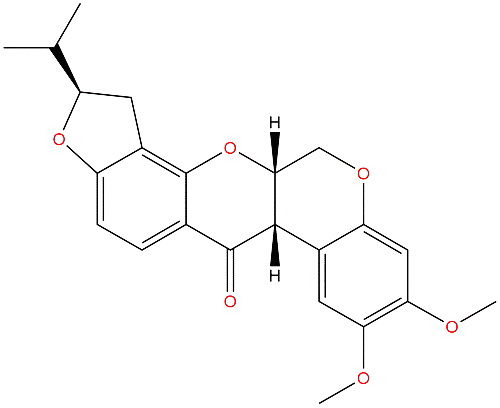
The chemical structure of dihydrofisetin belongs to the class of isoflavones, specifically derivatives in which the C-6 double bond of fisetin is reduced. Its molecular formula is C ₂∝ H ₂₄₆, and its molecular weight is 396.4390. Structurally, dihydrorotenone consists of four fused rings: an A ring (benzene ring), a B ring (dihydropyran ring), a C ring (dihydrofuran ring), and a D ring (benzopyran ring). Compared with fisetin, dihydrofisetin has a single bond (- CH ₂ - CH -) between C-6 and C-6a, rather than a double bond (- CH=CH -). This subtle structural difference leads to significant changes in its physicochemical properties and biological activity.
In terms of physicochemical properties, dihydrofisetin exhibits high lipophilicity. Its oil-water partition coefficient (LogP) is 3.9759, indicating that it is highly soluble in organic solvents such as ethanol, ether, chloroform, and acetone, while its solubility in water is extremely low, only 0.0050 mg/mL. This high lipophilicity is a key factor in its ability to easily penetrate biological membranes, including the blood-brain barrier (BBB). Its topological polar surface area (TPSA) is 63.22 Å ², which is lower than the commonly believed BBB penetration threshold (about 90 Å ²), further supporting its high BBB penetration ability. This characteristic enables it to effectively accumulate in the nervous system, thereby exerting its inhibitory effect on mitochondrial complex I, but also constitutes the structural basis of its neurotoxicity.
The chemical stability of dihydrorotenone is superior to that of rotenone. Fish vine ketone is prone to oxidation and isomerization under light and alkaline conditions, while dihydrofish vine ketone is more stable in structure due to the lack of a double bond at the C-6 position, making it less susceptible to oxidative degradation. This gives it a longer half-life in the environment, but also increases the risk of long-term accumulation in organisms. Its melting point is 165-166 ° C, and it is a white to light yellow crystalline powder at room temperature. In terms of spectral characteristics, its UV absorption peak is located at approximately 295 nm and 240 nm, while the infrared spectrum shows characteristic absorption of carbonyl (C=O, approximately 1680 cm ⁻¹) and ether bonds (C-O-C).
It is worth noting that the insecticidal activity of dihydrofisetin is closely related to its stereoconfiguration. The naturally occurring dihydrorotenone is mainly in the (6aS, 12aS) configuration, which is necessary for its binding to mitochondrial complex I and exerting inhibitory effects. Its molecular structure contains multiple chiral centers, resulting in the existence of various stereoisomers, but only specific isomers have significant biological activity. This Structure Activity Relationship (SAR) study provides important guidance for the development of more selective derivatives in the future.
Plant sources and extraction methods
Dihydrofisetin does not exist in large quantities independently in nature. It is usually a reduced metabolite of fisetin in plants or the environment. Its main source is still leguminous plants rich in rotenone, especially the rotenone genus(Derris), Grey Bean Genus(Tephrosia)The genus of chicken blood vine(Millettia)And the Drunken Fish Grass genus(Lonchocarpus)Wait. In the roots, stems, and seeds of these plants, fisetin compounds (including fisetin, dihydrofisetin, fisetin, etc.) exist in the form of mixtures. Among them, fisetin is the main component, while the content of dihydrofisetin is usually low, about 1-10% of fisetin.
The traditional extraction method is mainly based on the high lipophilicity of dihydrofisetin. The classic process involves crushing dried plant roots and stems, followed by cold soaking or Soxhlet extraction using organic solvents such as petroleum ether, ether, chloroform, or ethanol. After concentration, the extract is preliminarily purified by liquid-liquid extraction (such as using a hexane methanol system). Subsequently, separation was carried out using column chromatography (such as silica gel column, alumina column) with gradient elution of different ratios of organic solvents (such as hexane ethyl acetate or chloroform methanol). Dihydrofisetin and fisetin have similar polarities and are difficult to completely separate in chromatography. Therefore, it is usually necessary to combine preparative HPLC to obtain high-purity monomers.
In order to improve extraction efficiency and purity, modern extraction techniques have also been widely applied. For example, Supercritical Fluid Extraction (SFE) technology, especially using carbon dioxide as a solvent, can efficiently extract rotenone compounds at lower temperatures, avoiding thermal degradation. In addition, microwave-assisted extraction (MAE) and ultrasound assisted extraction (UAE) techniques significantly shorten extraction time and improve yield by disrupting plant cell walls.
In terms of analytical methods, the combination of high-performance liquid chromatography (HPLC) with ultraviolet detector (UV) or mass spectrometry detector (MS) is the standard method for qualitative and quantitative analysis of dihydrofisetin. The commonly used chromatographic column is a C18 reverse phase column, and the mobile phase is acetonitrile water or methanol water system. Because the UV absorption spectra of dihydrorotenone and rotenone are similar, mass spectrometry (such as electrospray ionization mass spectrometry, ESI-MS) can provide more accurate molecular weight and structural information, thus realizing accurate detection of trace dihydrorotenone in complex samples.
It is worth noting that, as dihydrofisetin is a reduction product of fisetin, during plant extraction, if there are reducing substances or specific enzymatic reactions present, fisetin may be partially converted to dihydrofisetin. Therefore, when analyzing the content of dihydrofisetin in plant samples, it is necessary to strictly control the extraction conditions to avoid artificial transformation. At present, by regulating the reductase genes in the biosynthesis pathway of fisetin through genetic engineering, it is expected to achieve directional enrichment of dihydrofisetin in plants, thereby reducing production costs and increasing yield.
Pharmacological activity research
Insecticidal activity
Dihydrorotenone is a broad-spectrum and highly effective natural insecticide, with insecticidal activity comparable to or even stronger than rotenone. It exhibits excellent contact and stomach toxicity against various agricultural pests, such as aphids, mites, thrips, cabbage bugs, potato beetles, etc. Its main mechanism of action is to inhibit insect mitochondrial complex I, block electron transfer in the respiratory chain, lead to depletion of intracellular ATP, and ultimately cause insect paralysis and death. Compared with fisetin, dihydrofisetin has higher chemical stability and a longer shelf life in the environment, making it advantageous in practical applications. However, due to its high lipophilicity and extremely high toxicity to non target organisms such as fish and aquatic invertebrates, its use is strictly limited. Its targets include acetylcholinesterase (AChE), gamma aminobutyric acid type A receptor (GABAAR), nicotinic acetylcholine receptor (nAChR), glutamate gated chloride ion channel (GluCl), and voltage-gated sodium ion channel (VGSC), indicating that its insecticidal mechanism may involve the synergistic action of multiple targets.
Neurotoxicity and Parkinson's disease model
The most notable pharmacological activity of dihydrorotenone is its ability to induce Parkinson's disease like symptoms. This finding stems from epidemiological investigation: the incidence rate of PD in farmers who have been exposed to rotenone pesticides for a long time is significantly higher. Subsequent animal experiments confirmed that administering dihydrofisetin to rats or mice via intravenous injection, subcutaneous injection, or oral administration can successfully simulate the core pathological features of PD, including:
1. Selective dopaminergic neuron death It mainly occurs in the substantia nigra pars compacta (SNc), leading to a significant decrease in striatal dopamine levels.
2. Alpha Synuclein Aggregation Formation of Lewy bodies like inclusions in residual dopaminergic neurons.
3. Motor dysfunction Typical PD like behavioral changes such as bradykinesia, muscle rigidity, and postural instability.
4. mitochondrial disorder The activity of complex I is irreversibly inhibited, leading to a decrease in ATP synthesis and a large production of ROS.
Therefore, dihydrofisetin has become one of the "gold standard" tool drugs for constructing PD animal models, especially rat models. This model can simulate the chronic and progressive course of PD well, and its pathological mechanism is highly similar to sporadic PD in humans. It is widely used in the study of PD pathogenesis, screening of neuroprotective drugs, and gene environment interaction research.
Antitumor activity
In recent years, the anti-tumor activity of dihydrofisetin, especially its activity against plasma cell malignancies such as multiple myeloma, has attracted widespread attention. Research has found that dihydrofisetin can selectively induce plasma cell apoptosis, while its toxicity to normal B and T cells is relatively low. Its mechanism of action is unique: it activates the unfolded protein response (UPR) by triggering endoplasmic reticulum stress (ERS). In plasma cells, due to the extensive synthesis and secretion of antibodies, the endoplasmic reticulum itself is in a highly stressed state. Dihydrorotenone further exacerbates this stress, causing UPR to shift from pro survival signals (such as the IRE1-XBP1 pathway) to pro apoptotic signals (such as the PERK-eIF2 α - ATF4 CHOP pathway). Meanwhile, dihydrofisetin can also activate the p38 MAPK signaling pathway, and the two work together to ultimately activate the caspase cascade reaction and induce cell apoptosis.
This discovery provides a new approach for the treatment of multiple myeloma. At present, the therapeutic drugs used for MM in clinical practice, such as bortezomib, also kill tumor cells by inducing endoplasmic reticulum stress, but there are side effects such as drug resistance and neurotoxicity. Dihydrofisetin, as a natural product, its unique mechanism of action may provide a new strategy for overcoming the resistance of existing drugs. In addition, its inhibitory effect on mitochondria may also enhance anti-tumor efficacy by inducing oxidative stress.
Other pharmacological activities
In addition to the main activities mentioned above, dihydrofisetin also exhibits some other pharmacological effects. For example, it has certain anti-inflammatory activity and can inhibit the production of pro-inflammatory cytokines (such as TNF - α, IL-6) in macrophages induced by lipopolysaccharide (LPS). In addition, some studies have reported that it has antifungal and antiviral activity, but the relevant research is not yet in-depth. Its inhibitory effect on mitochondrial complex I also makes it an important tool for studying mitochondrial dysfunction related diseases, such as ischemia-reperfusion injury and metabolic disorders.
Mechanism of action and molecular targets
The pharmacological activity of dihydrofisetin is rooted in its interaction with mitochondrial complex I, but its network of action extends far beyond this, involving multiple signaling pathways and molecular targets.
Irreversible inhibition of mitochondrial complex I
This is the core mechanism of action of dihydrofisetin. Mitochondrial complex I (NADH: ubiquinone oxidoreductase) is the first enzyme complex in the mitochondrial electron transport chain, responsible for transferring electrons from NADH to ubiquinone (CoQ) while pumping protons out of the mitochondrial inner membrane, establishing a proton gradient to drive ATP synthesis. Dihydrofisetin, similar to fisetin, can tightly bind to the ubiquinone binding site of complex I, blocking the transfer of electrons from the Fe-S cluster to ubiquinone. This inhibition is irreversible, meaning that once bound, the activity of complex I will be permanently lost. The consequences are twofold:
1. Energy Crisis ATP synthesis is significantly reduced, leading to cellular energy metabolism disorders. For dopaminergic neurons with high energy demands, this strike is particularly lethal.
2. oxidative stress The obstruction of the electron transfer chain leads to electron leakage, which reacts with oxygen to generate superoxide anions (O ₂⁻), which in turn produce ROS such as hydrogen peroxide (H ₂ O ₂) and hydroxyl radicals (· OH). Excessive ROS can attack lipids, proteins, and DNA, leading to cell damage and apoptosis.
Endoplasmic reticulum stress and p38 MAPK signaling pathway
In plasma cells, the mechanism of action of dihydrofisetin exhibits specificity. In addition to mitochondrial damage, it can also directly or indirectly trigger endoplasmic reticulum stress. The endoplasmic reticulum is the main site for protein folding and processing. When unfolded or misfolded proteins accumulate in the endoplasmic reticulum lumen, UPR is activated. Dihydrorotenone may induce ERS through the following mechanisms:
- ROS mediated ROS produced by mitochondria can oxidize proteins in the endoplasmic reticulum, disrupting their normal folding.
- Calcium ion homeostasis disorder There is a close physical and functional connection between mitochondria and endoplasmic reticulum (mitochondria associated endoplasmic reticulum membranes, MAMs). Mitochondrial dysfunction may lead to the release of calcium ions from the endoplasmic reticulum, further exacerbating ERS.
In the early stages of ERS, UPR attempts to restore endoplasmic reticulum homeostasis by activating the IRE1, PERK, and ATF6 pathways. However, when ERS persists and becomes severe, the transcription factor ATF4 downstream of the PERK pathway induces the expression of the pro apoptotic protein CHOP (C/EBP homologous protein). Meanwhile, dihydrofisetin can specifically activate the p38 MAPK signaling pathway. The activation of p38 can further upregulate the expression of CHOP and synergistically activate caspase-12 (endoplasmic reticulum specific caspase) and caspase-3, ultimately executing the cell apoptosis program. This mechanism of inducing apoptosis through the dual pathways of ERS and p38 endows dihydrofisetin with selective toxicity towards plasma cells highly dependent on endoplasmic reticulum function.
Multi target insecticidal mechanism
In insects, the insecticidal mechanism of dihydrofisetin is more complex. In addition to inhibiting mitochondrial complex I, it can also interact with multiple neural targets, including:
- Acetylcholinesterase (AChE)Inhibition of AChE activity leads to the accumulation of acetylcholine in synaptic cleft, causing sustained neural excitation.
- Gamma aminobutyric acid type A receptor (GABAAR) and glutamate gated chloride channel (GluCl)Interference with the signal transduction of inhibitory neurotransmitters GABA and glutamate disrupts the excitatory inhibitory balance of the nervous system.
- Nicotinic acetylcholine receptor (nAChR)As an agonist or antagonist, it affects cholinergic neurotransmission.
- Voltage gated sodium ion channel (VGSC)Delay the inactivation of sodium channels and prolong the duration of action potentials.
This multi-target mode of action makes it difficult for insects to develop drug resistance, which is also one of the important advantages of dihydrofisetin as an insecticide.
Evaluation of drug properties and pharmacokinetics
Although dihydrofisetin has shown great potential in pharmacological activity, its pharmacological development faces severe challenges, mainly due to its high toxicity and unfavorable pharmacokinetic properties.
Analysis of drug properties parameters
According to the provided pharmacological parameters, the molecular weight of dihydrofisetin (396.44 Da) is at the critical value of Lipinski's Rule of Five (<500 Da). Its LogP value (3.98) is slightly higher than the ideal range (<5), indicating strong lipophilicity, which may lead to poor water solubility and low metabolic clearance rate. Its water solubility (0.005 mg/mL) is extremely poor, making it a poorly soluble drug, which poses great difficulties for formulation development. The moderate TPSA value (63.22 Å ²) indicates good membrane permeability, but also implies that it is easy to penetrate the blood-brain barrier, which is the structural basis of its neurotoxicity. The prediction of hERG inhibition is' no ', indicating a low risk of cardiac toxicity. The Ames test result is 0.6, indicating a potential genetic toxicity risk that needs further validation.
Pharmacokinetic characteristics
- absorb Due to poor water solubility, the oral bioavailability of dihydrofisetin is very low. In rats, the oral LD50 is about 2.5 g/kg, much higher than the toxic dose of intravenous or intraperitoneal injection, mainly due to its poor gastrointestinal absorption. However, due to its high lipophilicity, once absorbed, it can quickly distribute to various tissues throughout the body, especially lipid rich organs such as the brain, liver, and adipose tissue.
- distribution Dihydrofisetin has a very high apparent distribution volume (Vd), indicating its widespread distribution in tissues. Its high BBB penetration ability enables it to reach effective concentrations in the brain, which is the basis of its induced PD model. It can also penetrate the placental barrier, causing potential toxicity to the fetus.
- Metabolism Dihydrofisetin is mainly oxidized and metabolized in the liver through the cytochrome P450 enzyme system (mainly CYP3A4 and CYP2C9), producing various hydroxylated metabolites. These metabolites may still be active, and even more toxic. In addition, it can undergo phase II metabolism through glucuronidation and sulfation, generating more water-soluble complexes for easier excretion.
- excretion Dihydrofisetin and its metabolites are mainly excreted through bile and feces, with a small amount excreted through urine. Due to its high lipophilicity, it may accumulate in the body (especially in adipose tissue) for a long time, leading to chronic toxicity.
safety evaluation
The safety of dihydrofisetin is the biggest obstacle to its development as a drug. Its acute toxicity is moderate (oral LD50 of 2.5 g/kg in rats), but its chronic toxicity, especially neurotoxicity, is extremely prominent. Long term low-dose exposure can lead to PD like pathological changes. In addition, its genetic toxicity (Ames test positive) and potential carcinogenicity also require high vigilance. Therefore, developing it as a systemic drug (such as an anti-cancer drug) carries extremely high risks.
Clinical application prospects and prospects
Given the double-edged sword nature of dihydrofisetin, its clinical application prospects show a polarized trend: on the one hand as a toxicological tool and pesticide, and on the other hand as a potential therapeutic drug.
As a tool drug for Parkinson's disease research
This is currently the most mature and widely used application of dihydrofisetin. The PD animal model established by it is an irreplaceable platform for studying the pathogenesis of PD, screening neuroprotective drugs, and evaluating gene environment interactions. In the future, by combining gene editing technologies such as CRISPR-Cas9 and novel drug delivery methods such as stereotactic injection into the brain, more accurate and controllable PD models can be constructed for studying the synergistic pathogenic effects of specific gene mutations (such as LRRK2, PINK1) and environmental factors (such as exposure to fisetin).
Optimization and risk assessment of natural pesticides
Although dihydrofisetin has the advantages of high efficiency, broad spectrum, and easy degradation as a pesticide, its extremely high toxicity and potential neurotoxicity to non target organisms (especially aquatic organisms) severely limit its application. Future research directions include:
1. structural modification Develop dihydrorotenone derivatives with higher selectivity for insect mitochondrial complex I and lower toxicity to mammals through chemical synthesis or biotransformation.
2. Formulation optimization Develop new dosage forms such as nanoemulsions and microcapsules to improve their stability, targeting, and safety of use, while reducing environmental exposure.
3. risk assessment Establish a more comprehensive exposure assessment model to clarify its migration and enrichment patterns in the food chain, as well as its long-term health risks to the human body.
The potential and challenges of anti-cancer drugs
The selective toxicity of dihydrorotenone on plasma cells provides a new approach for the treatment of multiple myeloma. However, its systemic neurotoxicity is the biggest obstacle to its development as an anti-cancer drug. Future research strategies may include:
1. Local administration For localized plasma cell tumors, intratumoral injection or local implantation of sustained-release formulations can be considered to reduce systemic exposure.
2. Targeted delivery system Using nanocarriers such as liposomes and polymer nanoparticles to deliver dihydrofisetin specifically to myeloma cells, increasing drug concentration at the tumor site through passive or active targeting (such as coupling anti-CD38 antibodies) while reducing distribution to normal tissues (especially the brain).
3. combination therapy Combining dihydrofisetin with other anticancer drugs such as proteasome inhibitors and immunomodulators, utilizing its unique mechanism of action (ERS and p38 activation) to overcome drug resistance, while reducing monotherapy dose to alleviate toxicity.
4. Prodrug strategy Design prodrugs of dihydrofisetin to be activated by tumor specific enzymes (such as certain matrix metalloproteinases) in vivo, thereby releasing active drugs locally in the tumor.
Other potential applications
The regulatory effect of dihydrorotenone on mitochondrial function makes it also have potential application value in metabolic diseases (such as obesity, diabetes) and aging research. Through low-dose, intermittent administration, it is possible to simulate the "Mitohomesis" effect, where low-level mitochondrial stress can activate cellular defense mechanisms, enhance mitochondrial function, thereby delaying aging or improving metabolism. But this requires extremely careful dosage control to avoid toxicity.
Conclusion
Dihydrorotenone, a natural product derived from ancient insecticidal plants, reveals the subtleties and dangers of nature through its unique chemical structure and complex biological activity. It is not only the key to revealing the link between mitochondrial dysfunction and neurodegenerative diseases, but also a probe to explore the mechanisms of endoplasmic reticulum stress and cell apoptosis. As an insecticide, it is efficient but dangerous; As a PD model tool, it is indispensable; As an anti-cancer candidate molecule, it has enormous potential but faces numerous challenges.
The research on dihydrofisetin deeply reflects the transformation from toxicity to medicine in modern drug development. The core contradiction lies in how to utilize its powerful biological activity while avoiding its inherent toxicity. Future research requires interdisciplinary collaboration, including synthetic chemistry, pharmacology, toxicology, nanomedicine, and clinical medicine. Developing highly selective derivatives through a deep understanding of their structure-activity relationship; Realize targeted delivery through innovative formulation technology; By precise dosage control, the treatment window can be expanded. Only in this way can we blunt the dangerous side of this double-edged sword and use its sharp side to conquer human diseases. The story of dihydrofisetin is far from over, and its value in basic scientific research and potential clinical applications still deserves further exploration and careful evaluation.