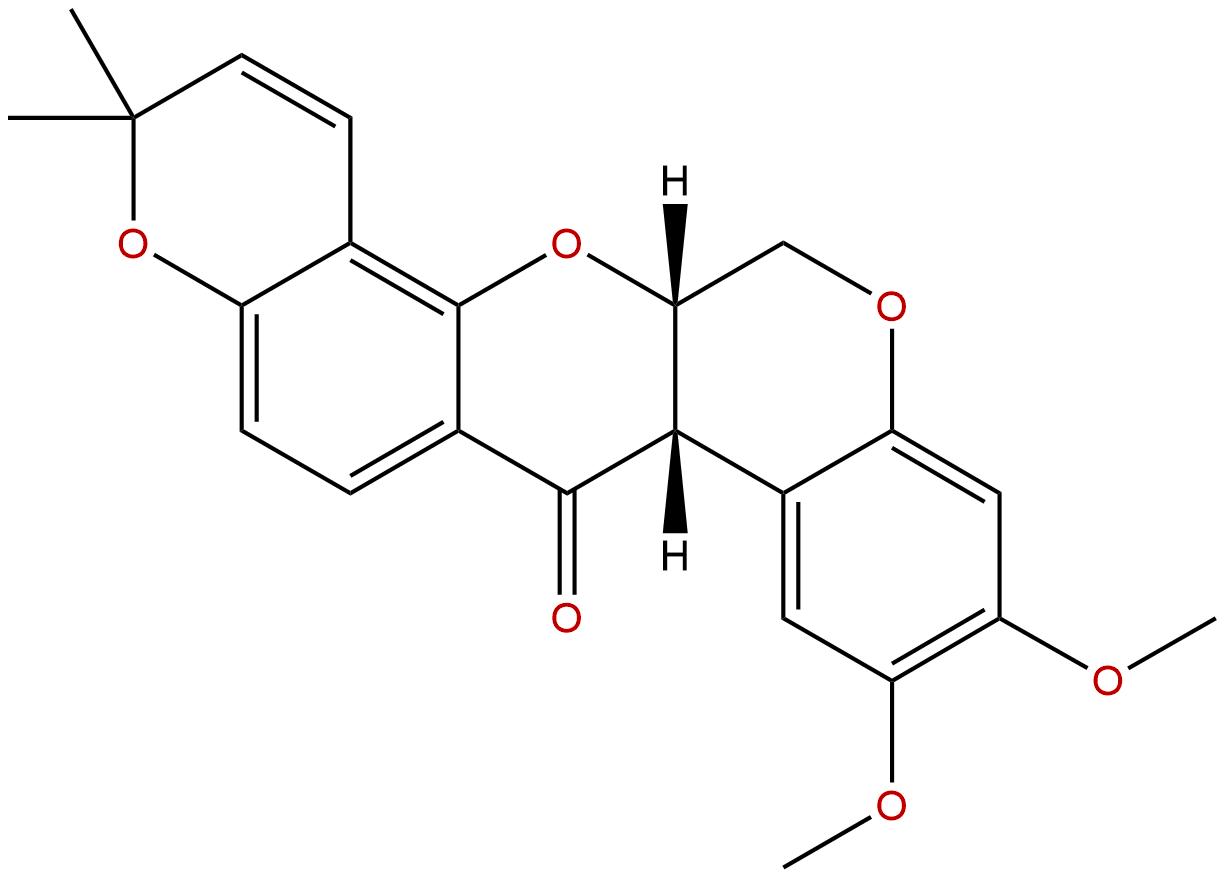


Product name: Deguelin
Synonym name:
Catalogue No.: BP3110
Cas No.: 522-17-8
Formula: C23H22O6
Mol Weight: 394.423
Botanical Source:
Physical Description: Powder
Type of Compound: Flavonoids
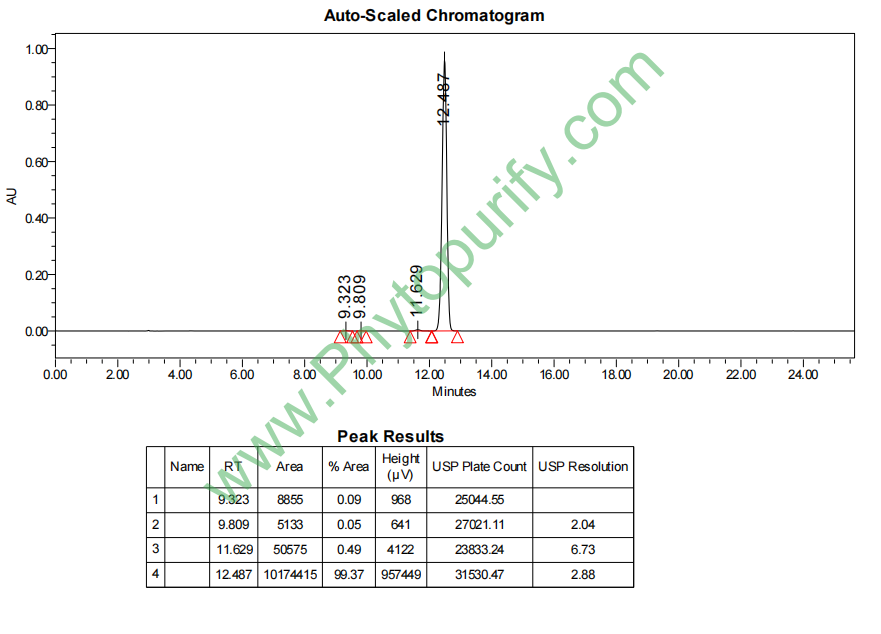
Purity: 95%~99%
Analysis Method: HPLC-DAD or/and HPLC-ELSD
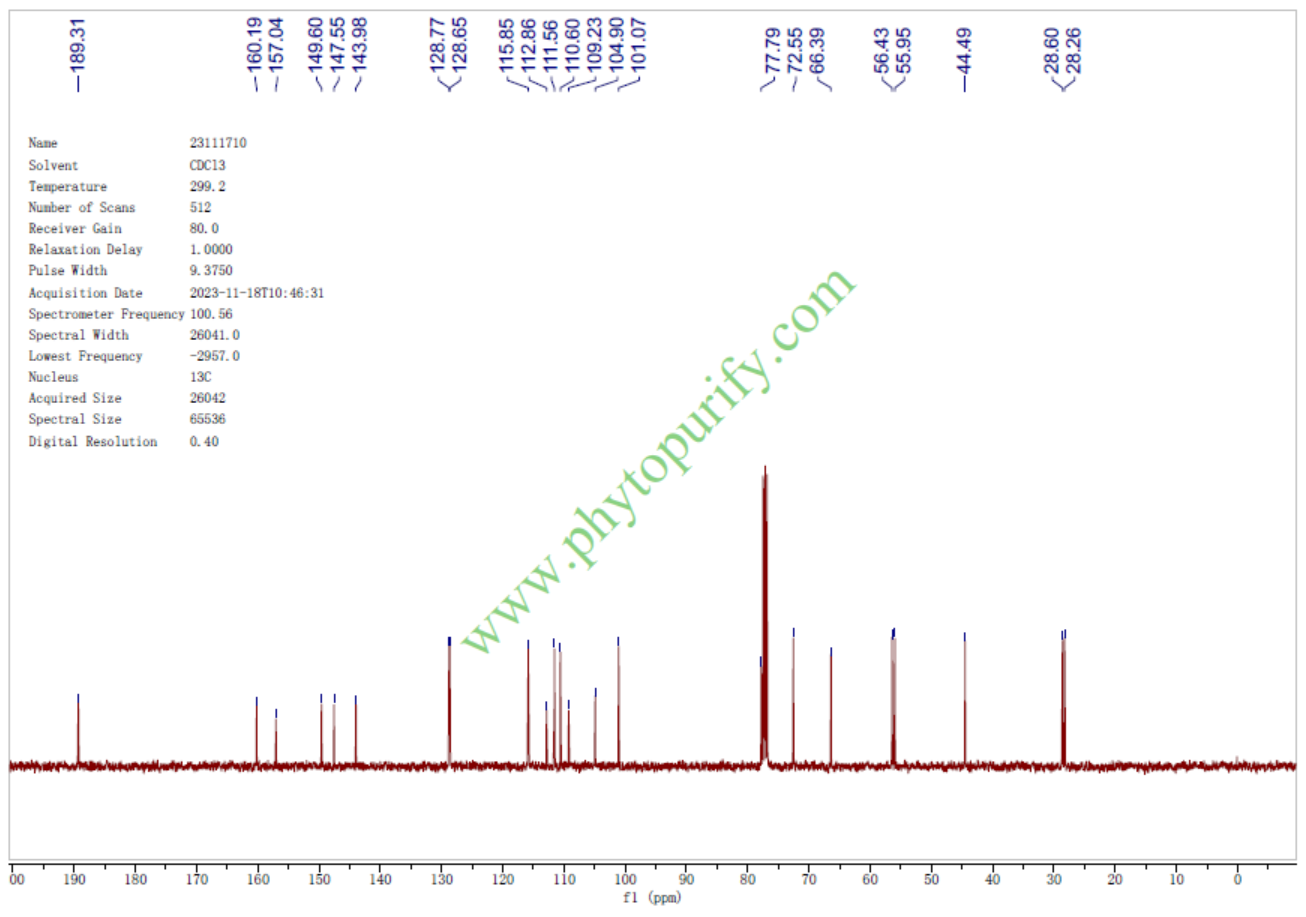
Identification Method: Mass, NMR
Packing: Brown vial or HDPE plastic bottle
The product could be supplied from milligrams to grams. Inquire for bulk scale.
We provide solution to improve the water-solubility of compounds, thereby facilitating the variety of activity tests and clinic uses.
For Reference Standard and R&D, Not for Human Use Directly.
HPLC of Deguelin
NMR of Deguelin
Storage conditions:Short-term storage at 2~8℃, long-term storage at -20 ~ -80℃
63.2200
4.0244
4.0244
.0037
5.0804
43.9069
High
87.8522
3.6984
No
No
Yes
No
Yes
Yes
0.6
No
Yes
No
Yes
Natural products have always been an important source of innovative drug discovery, among which fisetin compounds have attracted much attention due to their unique biological activity. Deguelin (CAS number: 522-17-8), as an analog of fisetin, is a natural flavonoid compound isolated from various leguminous plants. Traditionally, plant extracts containing fish vine extract have been used as insecticides and fish toxins, and their strong anti parasitic activity has long been known. However, in-depth research over the past two decades has revealed that fisetin is much more than that. It exhibits excellent chemoprevention and anti-tumor potential, and its mechanism of action involves precise intervention in multiple key signaling pathways within cells, particularly by binding to heat shock protein 90 (Hsp90), leading to a decrease in the stability of various oncogenic proteins, thereby inducing tumor cell apoptosis, inhibiting proliferation, and angiogenesis. In addition, its inherent anti parasitic activity also points to new therapeutic directions. Despite the challenges in developing its pharmacological properties, fisetin, as an efficient "molecular probe" and lead compound, provides a valuable template for developing novel therapeutic strategies for major diseases such as cancer and parasitic diseases. This article aims to systematically review the chemical properties, plant sources, pharmacological activities, molecular mechanisms of action, pharmacological evaluation, and clinical application prospects of fisetin, in order to provide reference for in-depth research in related fields.
Fishvine extract is a derivative of tetracyclic isoflavones, with the chemical name (7aS, 13aS) -13,13a-dihydro-9,10-dimethoxy-3H-bis [1] benzopyrano [3,4-b: 6 ', 5' - e] pyran-7 (7aH) - one. Its molecular formula is C23H22O6 and its molecular weight is 394.4230. Structurally, fisetin has a basic framework of isoflavones, with methoxy and double bonds attached at specific positions to form a complex three-dimensional structure, which is crucial for its specific binding with biomolecules such as Hsp90.
The key physicochemical properties of the compound are as follows: the coefficient of lipid water partition (LogP) is 4.0244, indicating that the compound has high lipophilicity; The topological polar surface area (TPSA) is 63.2200 Å ², which is relatively small and consistent with its high lipid solubility; The water solubility is extremely low, only 0.0037 mg/mL, which constitutes one of the main physical barriers to its drug development. High lipophilicity also indicates that it is easy to penetrate biological membranes, and its blood-brain barrier permeability is predicted to be "high", suggesting its potential for treating central nervous system related diseases. In early safety screening, fisetin did not show significant hERG potassium channel inhibitory activity (hERG inhibition: no), reducing the risk of causing QT interval prolongation in the heart. The Ames test result is 0.6, indicating that the mutagenic risk is low under this testing system, but further confirmation is needed in a more complete genotoxicity evaluation system.
Fish vine extract mainly comes from various plants such as Derris, Tephrosia, and Lonchocarpus in the Leguminosae family. Among them, in South America Lonchocarpus utilis and Lonchocarpus urucu, as well as Southeast Asia Derris elliptica and Derris trifoliata It is a traditional and abundant source of fish vine extract and its analogues. These plants have long been used by local residents as insecticides and fishing poisons.
The extraction of fish vine extract is usually carried out using organic solvent extraction method. Dry and crushed plant roots, stems, or leaves are often subjected to Soxhlet extraction or room temperature leaching using organic solvents of moderate polarity, such as methanol, ethanol, acetone, or dichloromethane. After filtration and concentration, the crude extract is separated and purified using a series of chromatographic techniques, including silica gel column chromatography, reverse phase high performance liquid chromatography (RP-HPLC), etc. Due to the characteristic absorption of fish vine extract in the ultraviolet region, UV detectors are often used for tracking. In recent years, modern technologies such as supercritical fluid extraction have also been explored to improve extraction efficiency and selectivity. Attention should be paid to avoiding light during the extraction process, as some fish vine ketone compounds are sensitive to light. Obtaining high-purity fish vine extract monomers is a prerequisite for conducting precise pharmacological and mechanistic studies.
Fish vine extract has a wide and powerful pharmacological activity, mainly concentrated in the fields of anti-tumor and antiparasitic effects.
1. Antitumor activity:
A large number of in vitro and in vivo studies have confirmed that rotenone has significant growth inhibition and apoptosis promoting effects on a variety of human malignant tumor cell lines, including lung cancer, breast cancer, colon cancer, prostate cancer, pancreatic cancer, leukemia, etc. Its functional characteristics are manifested as:
* Chemical preventive effect: During the initiation and promotion stages of tumors, fisetin can inhibit the formation and development of precancerous lesions by regulating cancer-related signaling pathways.
* Inhibition of cell proliferation: By blocking the cell cycle (often blocking cells in G1 or G2/M phase), DNA synthesis is inhibited, thereby preventing unrestricted proliferation of tumor cells.
* Inducing cell apoptosis: Activation of caspase cascade through mitochondrial pathway (endogenous pathway) and death receptor pathway (exogenous pathway) leads to programmed cell death in tumor cells.
* Inhibition of angiogenesis: Downregulate the expression of key angiogenic factors such as vascular endothelial growth factor (VEGF) and hypoxia inducible factor-1 alpha (HIF-1 alpha), disrupt the tumor neovascularization network, and cut off the tumor's nutritional supply.
* Inhibition of invasion and metastasis: By regulating epithelial mesenchymal transition (EMT) - related proteins and matrix metalloproteinases (MMPs), the migration and invasion ability of tumor cells can be reduced.
2. Antiparasitic activity:
The traditional insecticidal and fish killing activities of fish vine extract and its plant derived extracts stem from their toxicity to various parasites. Modern research has confirmed its activity against the following parasites:
* plasmodium: Both chloroquine sensitive and resistant strains of malaria parasites have inhibitory effects, involving multi-target effects.
* Leishmania parasites: Effective for both pre flagellar and non flagellar forms.
* Trypanosoma: It has a killing effect on Trypanosoma brucei and other organisms.
* Agricultural pests: It has stomach toxicity and contact killing effects on various insects and mites.
Its anti parasitic mechanism is complex, which may involve interfering with the parasite's energy metabolism, protein synthesis, cytoskeleton function, and inducing oxidative stress.
3. Other activities:
The study also suggests that fisetin may have potential neuroprotective and anti-inflammatory activities, but related research is still in its preliminary stage.
The multiple pharmacological activities of fisetin stem from its interference with multiple key signaling nodes and molecular targets within cells, and its core mechanism is as a natural inhibitor of Hsp90.
1. Hsp90 dependent degradation of oncogenic proteins (core mechanism):
Heat shock protein 90 (Hsp90) is an important molecular chaperone responsible for stabilizing and activating numerous client proteins, many of which are oncogenic proteins that drive tumor development (such as Akt, MEK, RAF, HIF-1 α, NF - κ B, etc.). Fish vine extract can specifically bind to the ATP binding pocket of Hsp90, inhibiting its ATPase activity. This leads to conformational changes in the Hsp90 client protein complex, causing the client protein to fail to fold correctly and subsequently being degraded through the ubiquitin proteasome pathway. Therefore, fisetin achieves synchronous inhibition of multiple downstream oncogenic signaling pathways through a single target (Hsp90):
* PI3K/Akt pathway: The stability of Akt protein decreases, and its pro survival and anti apoptotic signals are blocked.
* IKK/NF - κ B pathway: The activation of NF - κ B is inhibited, and the expression of inflammatory factors and anti apoptotic proteins regulated by it is reduced.
* MAPK/mTOR/Survivin pathway: Protein functions such as MEK1/2 and mTOR are impaired, downstream cell cycle and survival signals are inhibited, and the expression of anti apoptotic protein Survivor is reduced.
* HIF-1 α pathway: The degradation of HIF-1 α protein increases, and the tumor's ability to adapt to hypoxia and angiogenesis weakens.
* COX-2: The downregulation of cyclooxygenase-2 expression inhibits the inflammatory and tumor promoting microenvironment.
2. Multi target characteristics of anti parasitic effects:
The anti parasitic effect of fish vine extract involves a wider range of target groups, reflecting its "multi-target" characteristics:
* PFCRT and PFATP6: May interfere with the chloroquine resistance transporter and calcium ion pump function of malaria parasites.
* DHFR: Inhibiting dihydrofolate reductase affects the nucleotide synthesis of parasites.
* Translation mechanism related targets: Eukaryotic translation initiation factor 2A (EIF2A) and ribosomal proteins (RPS14, RPLP0) may interfere with parasite protein synthesis.
* Metabolic enzymes: Such as 6-phosphofructose-2-kinase/fructose-2,6-diphosphatase 3 (PFKFB3), which affects glycolysis.
* Molecular Companion: HSPA8, a member of the heat shock protein 70 family, has a similar inhibitory effect on Hsp90.
* Sterol synthase: Like lanosterol 14 α - demethylase (CYP51), it affects cell membrane integrity.
* Neuroreceptors: Gamma aminobutyric acid receptor (GABAAR) may interfere with neural signal transduction.
This multi-target mode of action makes it difficult for parasites to develop drug resistance through a single mutation, but it also increases the difficulty of understanding their selective toxicity.
Although fisetin has significant pharmacological activity, its drug like properties have obvious defects, which limit its direct application as a drug.
Disadvantages and challenges:
1. Very poor water solubility: This is the primary challenge it faces, seriously affecting oral bioavailability and formulation development.
2. Potential toxicity: High doses or long-term use may cause toxicity to normal tissues, especially high metabolic organs, with a narrow therapeutic window (the ratio of effective dose to toxic dose). Although the Ames test was initially negative, comprehensive genetic toxicity and long-term toxicity data still need to be improved.
3. Lack of selectivity: Although the inhibition of Hsp90 is the core of its anti-tumor activity, Hsp90 also performs important functions in normal cells, and complete inhibition may bring side effects. The multi-target nature of its anti parasitic properties also implies the possibility of off target effects on the host.
4. Unsatisfactory pharmacokinetic properties: Existing animal studies have shown that oral absorption of fish vine extract may be limited due to poor solubility, resulting in faster metabolism in the body and possible first pass effects. Its high LogP value and blood-brain barrier penetration are a double-edged sword, which is beneficial for treating brain diseases but may also lead to the accumulation of toxicity in the central nervous system.
Improvement strategy:
To overcome these obstacles, researchers are actively exploring various strategies:
* Structural modification: By using a semi synthetic method to chemically modify the core of fish vine extract, the aim is to improve water solubility, reduce toxicity, and enhance selectivity. For example, introducing hydrophilic groups (such as phosphate esters, glycosides, amino acid conjugates) or synthesizing water-soluble prodrugs.
* New drug delivery system: Using nanotechnology to encapsulate or load fish vine extract into carriers such as liposomes, polymer nanoparticles, micelles, and solid dispersions can significantly improve its solubility, stability, tumor targeting (through EPR effect or active targeting), and reduce systemic toxicity.
* Combination therapy: Combining fisetin with other anticancer or antiparasitic drugs with different mechanisms of action may result in a synergistic effect, reducing their respective dosages, thereby reducing toxic side effects and delaying the development of drug resistance.
The systematic pharmacokinetic study (including absorption, distribution, metabolism, and excretion) is crucial for the development of any candidate drug based on fisetin, and this part of the data still needs to be thoroughly and completely obtained.
The clinical application prospects of fish vine extract are broad, but the road is tortuous, and its future development will focus on the following directions:
1. Developing new anti-cancer drugs as lead compounds:
Fishvine extract is an excellent lead structure for developing Hsp90 inhibitors. Based on its structure optimization, it is expected to obtain clinical candidate compounds with higher activity, lower toxicity, and better pharmacokinetic properties. Some derivatives or analogues of fish vine extract have entered the preclinical research stage.
2. Develop a targeted delivery system:
Combining fisetin with tumor targeted nanocarriers is one of the most promising strategies for achieving its clinical translation. This' nanomedicine 'can achieve enrichment and controlled release at the tumor site, improving therapeutic efficacy while reducing toxicity caused by systemic exposure.
3. Explore the application in the treatment of parasitic diseases:
Given the emergence of multidrug-resistant parasites, the multi-target antiparasitic properties of fisetin deserve to be re examined. It is necessary to conduct in-depth research on its specific efficacy and selective toxicity against human parasitic diseases, and explore the possibility of developing it into new anti malarial drugs, anti leishmaniasis drugs, etc.
4. Application of chemical prevention:
The chemopreventive activity exhibited by fish vine extract at low doses makes it possible to use it for cancer prevention in high-risk populations such as smokers and those with precancerous lesions. But this requires extremely strict safety evaluations and long-term follow-up studies.
5. Combination therapy strategy:
Fish vine extract can reverse tumor resistance to certain targeted drugs by degrading various carcinogenic proteins. For example, its ability to degrade Akt and MEK may lead to synergistic effects when combined with PI3K/Akt or MAPK pathway inhibitors. Exploring the combination therapy of fish vine extract with chemotherapy, radiotherapy, immunotherapy, etc. is a hot topic in preclinical research.
Challenges and Prospects:
Future research needs to focus on addressing the selective toxicity of fisetin, elucidating its precise target network in different disease models, and completing comprehensive preclinical and clinical evaluations that meet regulatory requirements. Although it is difficult to directly use natural fish vine extract as a drug, as a "naturally inspired molecule", through the modification and empowerment of modern medicinal chemistry and pharmaceutical technology, it is highly likely to derive safe and effective next-generation therapeutic drugs.
Fish vine extract is a natural product with a long history of application and rich modern pharmacological connotations. From traditional insecticides to star molecules in modern oncology and parasitology research, their roles have undergone a profound transformation. It demonstrates the unique wisdom of natural products in intervening in complex disease networks by synchronously disrupting multiple tumor signaling pathways by inhibiting Hsp90, the "cancer protein hub". At the same time, its inherent multi-target antiparasitic activity provides new ideas for addressing the increasingly severe problem of drug resistance. Despite the limitations of poor water solubility and potential toxicity that limit its direct clinical application, these challenges are motivating researchers to make breakthroughs through strategies such as structural optimization and nanomedicine. The research process of fish vine extract perfectly illustrates the translational medicine path from traditional knowledge to modern science, from natural lead compounds to potential innovative drugs. With more precise analysis of its mechanism of action and continuous development of drug delivery technology, fisetin and its derivatives are expected to bring new hope for the treatment of major diseases such as cancer and parasitic diseases in the future.
