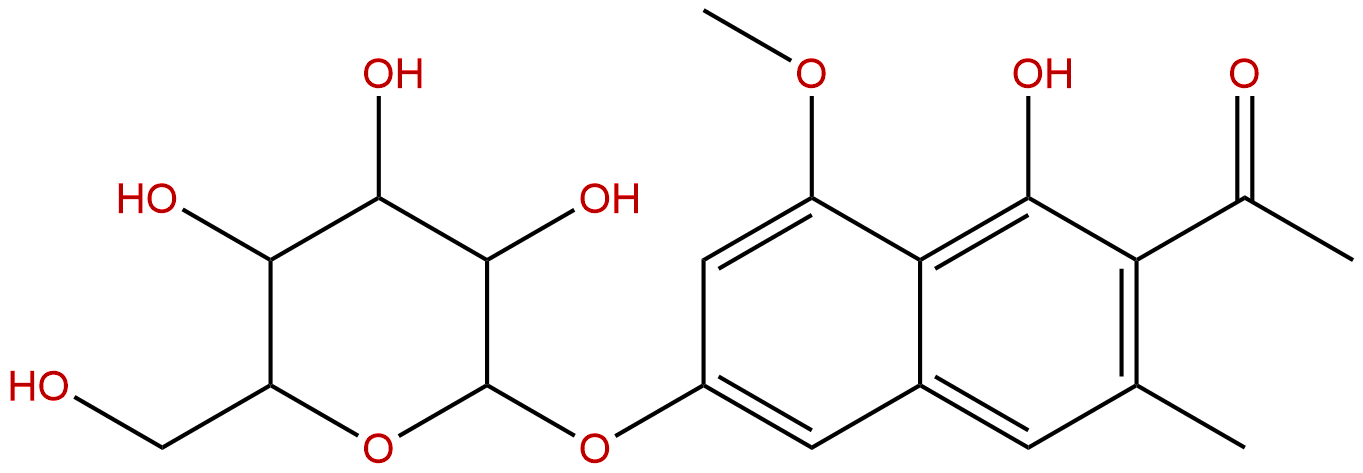


Product name: Tinnevellin glucoside
Synonym name:
Catalogue No.: BP1627
Cas No.: 80358-06-1
Formula: C20H24O9
Mol Weight: 408.403
Botanical Source: Isol. from leaves of Cassia angustifolia
Physical Description:
Type of Compound: Anthraquinones
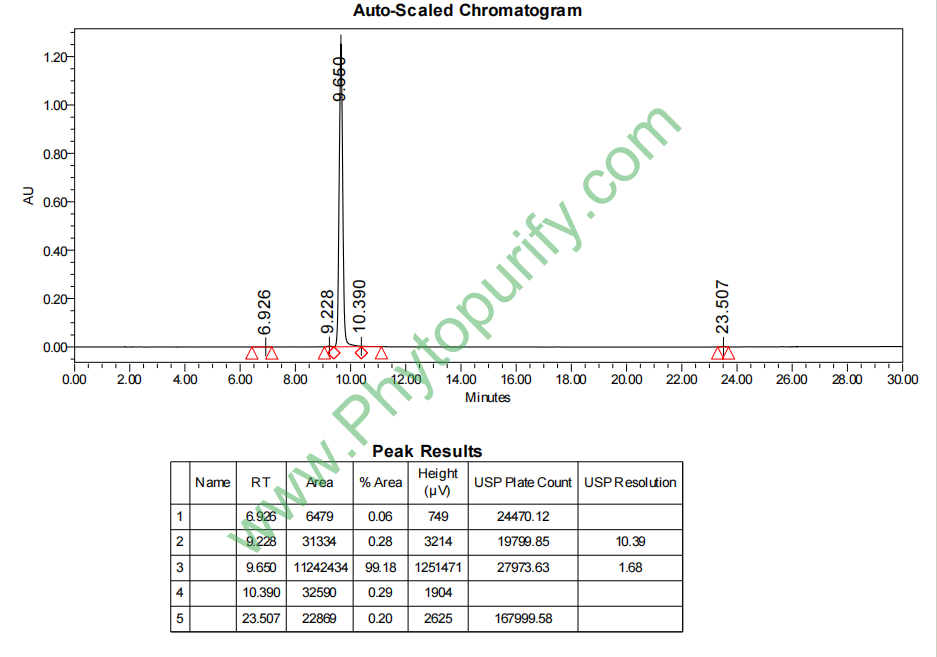
Purity: 95%~99%
Analysis Method: HPLC-DAD or/and HPLC-ELSD
Identification Method: Mass, NMR
Packing: Brown vial or HDPE plastic bottle
The product could be supplied from milligrams to grams. Inquire for bulk scale.
We provide solution to improve the water-solubility of compounds, thereby facilitating the variety of activity tests and clinic uses.
For Reference Standard and R&D, Not for Human Use Directly.
HPLC of Tinnevellin glucoside
Storage conditions:Short-term storage at 2~8℃, long-term storage at -20 ~ -80℃
145.9100
.7916
.7122
3.8427
1.0303
.2841
Low
68.6553
3.8536
Yes
No
No
No
No
No
0.6
Yes
No
Yes
No
Inflammatory Bowel Disease (IBD), especially ulcerative colitis (UC), is a chronic and recurrent intestinal inflammatory disease. Its global incidence rate is on the rise, bringing heavy burden to patients' quality of life and social medical system. The current clinical treatment mainly relies on aminosalicylic acid, glucocorticoids, immunosuppressants, and biologics, but these drugs often come with problems such as insufficient efficacy, significant side effects, easy recurrence, and high cost. Therefore, exploring efficient and low toxicity new therapeutic drugs from natural products has always been an important direction in drug development. Senna leaves(Cassia senna L. As a traditional laxative, the research on its active ingredients anthraquinone compounds (such as senoside) has been relatively in-depth. However, in recent years, another type of compound isolated from its leaves and pods - naphthalene glycosides, has gradually attracted the attention of researchers. Among them, Tinneverlin glucoside (CAS: 80358-06-1), as a unique naphthalene glycoside, has shown significant multi-target anti-inflammatory activity in colitis models, and is expected to become a potential candidate molecule for the treatment of IBD. This article aims to provide a systematic review of the chemical properties, plant sources, pharmacological activities, mechanisms of action, and medicinal properties of Ding Nei Li glucoside, and to explore its clinical application prospects.
Dinneryl glucoside, chemical name (2S) -2- [(2R, 3R, 4S, 5S, 6R) -3,4,5-trihydroxy-6- (hydroxymethyl) oxahex-2-yl] oxy-5,7-dihydroxy-3- (4-hydroxyphenyl) -4H-1-benzopyran-4-one, is a C-glycosidic compound with naphthalene as the basic skeleton. Its molecular formula is C21H20O10 and its molecular weight is 408.4030. Its core structure is connected to a glucose unit through a glycosidic bond by a multi hydroxy substituted naphthalene ring (butyroxene moiety). This C-glycosidic linkage typically exhibits higher metabolic stability and resistance to gut microbiota hydrolytic enzymes compared to common O-glycosides.
In terms of physical and chemical properties, this compound exhibits typical polar molecular characteristics. The calculated lipid water partition coefficient (LogP) is 0.7916, indicating that it has a certain degree of lipophilicity, but overall it still leans towards hydrophilicity. The topologically polar surface area (TPSA) is as high as 145.9100 Å ², mainly attributed to the abundant hydroxyl and sugar units in the molecule, which are key sites for forming hydrogen bonds. Its predicted water solubility is 3.8427 (LogS), belonging to the moderate solubility range. These properties collectively determine the distribution characteristics of metformin in organisms: its high polarity makes it difficult to penetrate the blood-brain barrier (predicted as low permeability), which to some extent limits the risk of central nervous system side effects, and may also facilitate local enrichment of the drug in the intestine. In addition, preliminary in vitro safety assessments showed no significant inhibitory effect on hERG potassium channels (hERG inhibition: No), indicating a low risk of cardiac toxicity; The Ames test result is 0.6, indicating weak mutagenic potential and a good genotoxic safety window.
Dinneryl glucoside is mainly derived from the legume plant Alisma(Cassia senna L., Commonly classified as Senna alexandrina Separated from dried leaves and pods of Mill. Fanxie, as a traditional medicinal plant, is widely distributed in tropical regions such as India, Sudan, Egypt, and southern China. Its medicinal parts are rich in various bioactive ingredients, including anthraquinones (such as sennoside A, B, etc.), naphthopyranone (such as butanone glucoside), and flavonoids.
Organic solvent extraction combined with modern chromatographic separation techniques is commonly used to extract D-glucoside. The classic process is as follows:
1. Raw material pretreatment Crush the dried senna leaves or pods and sieve them.
2. Solvent extraction Methanol, ethanol, or aqueous ethanol (such as 70% ethanol) are commonly used for heating reflux or ultrasound assisted extraction. Polar solvents can effectively dissolve glycoside compounds.
3. Coarse separation After vacuum concentration, the extract was subjected to liquid-liquid distribution extraction using solvents such as petroleum ether, ethyl acetate, and n-butanol in sequence. Dinneryl glucoside is usually enriched in ethyl acetate or n-butanol due to its equipolarity.
4. Fine purification: The extraction site rich in target compounds is separated by column chromatography, usually using silica gel, reverse silica gel (such as C18), dextran gel (Sephadex LH-20) and other fillers. By gradient elution (such as chloroform methanol, water methanol systems) and monitoring with thin layer chromatography (TLC) or high performance liquid chromatography (HPLC), high-purity butyrolactone glucoside monomers can be isolated.
5. appraisal Its structure was confirmed by nuclear magnetic resonance (NMR, including 1H-NMR, 13C-NMR, 2D-NMR), mass spectrometry (MS), infrared spectroscopy (IR), and comparison with literature data.
In recent years, green extraction techniques such as supercritical fluid extraction (SFE) and microwave-assisted extraction (MAE) have also been explored to improve extraction efficiency and yield of target compounds.
The pharmacological activity research of Ding Nai Wei Li glucoside is currently mainly focused on the anti-inflammatory field, especially its protective effect in colitis models, which has been supported by multiple in vitro and in vivo experimental evidence.
In vitro research:
In cell models, Ding Nei Wei Li Gu Zi has a significant inhibitory effect on the inflammatory response of macrophages (such as RAW 264.7 cells) induced by lipopolysaccharide (LPS) or tumor necrosis factor - α (TNF - α). It can dose dependently reduce the production of nitric oxide (NO), prostaglandin E2 (PGE2), and key pro-inflammatory cytokines such as interleukin-1 β (IL-1 β), IL-6, and TNF - α. In addition, in intestinal epithelial cell models such as Caco-2 and HT-29, the compound can alleviate epithelial barrier damage caused by inflammatory stimuli, manifested by an increase in transepithelial electrical resistance (TEER) values and a restoration of tight junction protein (ZO-1, Occludin) expression.
In vivo research:
In experimental colitis models induced by dextran sulfate sodium (DSS) or trinitrobenzenesulfonic acid (TNBS) in mice/rats, oral administration of metformin showed clear therapeutic effects. Specifically manifested as:
* Decreased Disease Activity Index (DAI)Significantly improve symptoms of weight loss, diarrhea, and rectal bleeding.
* Improvement of colonic histopathology Reduce colon shortening, inhibit colonic mucosal edema, inflammatory cell infiltration, crypt structure destruction, and ulcer formation.
* Systemic and local inflammation relief Reduce the levels of pro-inflammatory factors such as IL-1 β, IL-6, TNF - α in serum and colon tissue, while increasing the expression of anti-inflammatory factor IL-10.
* Oxidative stress inhibition Enhance the activity of superoxide dismutase (SOD) and glutathione peroxidase (GSH Px) in colon tissue, and reduce the content of malondialdehyde (MDA).
These research results indicate that Ding Nei Wei Li glucoside has multiple anti-inflammatory, antioxidant, and intestinal barrier protective effects, providing a solid pharmacological basis for its treatment of colitis.
The anti colitis effect of Ding Nai Wei Li glucoside is not achieved through a single pathway, but involves a complex multi-target regulatory network. Existing research has preliminarily revealed its interactions with multiple key target proteins:
Regulating inflammatory signaling pathways:
Activate antioxidant defense system:
Regulating lipid metabolism and signaling:
Affects other key enzymes:
In summary, Ding Nei Wu Li glucoside forms a comprehensive network through synergistic effects on multiple targets such as CES1, TLR4, PRKCA, NFE2L2, CASP1, NR1H4, LPAR2, RELA, FAAH, SPHK1, etc., from inhibiting pro-inflammatory signals, activating antioxidant defense to regulating lipid metabolism and barrier function. This may be the molecular basis for its efficient fight against the complex pathophysiological processes of colitis.
Based on its physical and chemical properties and preliminary biological data, a preliminary evaluation of the pharmacological properties of Ding Nei Wu Li glucoside is conducted
Advantage:
1. Clear in vitro and in vivo pharmacological effects Significant therapeutic effects have been demonstrated in colitis models.
2. Multi target mechanism of action May bring synergistic therapeutic effects and reduce the risk of drug resistance.
3. Good preliminary safety No significant hERG inhibition or mutagenic risk (Ames test negative), low blood-brain barrier penetration may reduce central side effects.
4. Natural sources and structural advantages As C-glycosides, they may have better metabolic stability than O-glycosides, which is beneficial for their intestinal effects after oral administration.
Challenges and unknowns:
1. Lack of pharmacokinetic (PK) data At present, there is almost no systematic PK research on its oral bioavailability, tissue distribution, metabolic pathways (whether it is metabolized and transformed by gut microbiota), plasma protein binding rate, half-life, and excretion pathways. Its high TPSA and moderate LogP suggest that its oral absorption may be moderate, but this may also allow it to reach effective concentrations locally in the intestine.
2. Solubility and permeability Moderate water solubility and moderately low LogP may classify it as Class III (high solubility and low permeability) or Class IV (low solubility and low permeability) in the Biopharmaceutical Classification System (BCS), which may limit its systemic absorption. Developing appropriate dosage forms (such as enteric coated formulations, nano formulations, prodrugs) may be the key to improving their efficacy.
3. Potential Metabolism and Interactions Its glucoside structure may be influenced by intestinal β - glucosidase, producing glycosides. Further research is needed on the activity, toxicity, and PK characteristics of aglycones. The interaction with CYP450 enzyme is unknown.
4. Long term toxicity and safety Lack of systematic preclinical safety evaluation data for acute toxicity, chronic toxicity, reproductive toxicity, etc.
The future research focus should include: conducting comprehensive preclinical PK studies to elucidate their ADME (absorption, distribution, metabolism, excretion) characteristics; Conduct a systematic toxicological evaluation; Based on its multi-target characteristics, explore reasonable combination therapy strategies; And develop a new drug delivery system based on its physical and chemical properties to optimize its efficacy.
Dinneryl glucoside, as a natural naphthalene glycoside with multi-target anti colitis activity, has promising clinical application prospects, but also faces a series of issues that need to be further explored.
Potential application directions:
1. Adjuvant or alternative treatment for IBD It is expected to be developed as a new oral medication for the treatment of mild to moderate ulcerative colitis, especially for patients who have poor response or intolerance to traditional 5-aminosalicylic acid drugs. Its multi-target properties may have comprehensive benefits in alleviating intestinal inflammation, repairing barriers, and regulating the immune microenvironment.
2. Gut specific preparations By utilizing its potentially low systemic bioavailability and local intestinal effects, colon targeted delivery systems (such as pH dependent, time-dependent, or microbiota triggered formulations) can be designed and developed to maximize local drug concentration and minimize systemic exposure and side effects.
3. Combination therapy with other drugs It can be used in combination with existing IBD treatment drugs (such as mesalazine and immunosuppressants) to explore the possibility of synergistic enhancement, reduction of individual dosage, and reduction of toxic side effects.
4. Other inflammation related diseases Its anti-inflammatory and antioxidant mechanisms suggest that it may also have potential application value in other chronic inflammatory diseases (such as metabolic inflammation, dermatitis, etc.), and is worthy of further research.
Future research prospects:
1. Deep analysis of the mechanism of action Directly verify its binding affinity and mode of action with the predicted targets (such as TLR4, Nrf2, FXR, etc.) using chemical biology methods such as molecular docking, surface plasmon resonance, thermal shift analysis, etc. The necessity of using gene knockout/knockdown techniques to confirm key targets in in vitro and in vivo models.
2. Research on Structural Optimization and Structure Activity Relationship (SAR)Using it as a lead compound, the structure-activity relationship is systematically studied through chemical modifications such as glycosylation, hydroxyl derivatization, skeleton modification, etc., with the aim of enhancing activity, improving PK properties (such as increasing bioavailability or enhancing intestinal retention), and reducing potential toxicity.
3. Complete preclinical development chain Strictly follow the guidelines for preclinical research of new drugs, complete a series of studies including pharmacological confirmation, pharmacokinetics, toxicology, and formulation, and provide a complete data package for their application for clinical trials.
4. Exploring biosynthetic pathways Extracting limited yields from plants, analyzing their biosynthetic pathways, has the potential to utilize synthetic biology techniques (such as microbial cell factories) to achieve sustainable and large-scale production, and solve the problem of raw material sources.
Dinneryl glucoside is a naphthalene glycoside compound with a unique chemical structure discovered from the traditional medicinal plant Alisma. In recent years, its significant anti-inflammatory, antioxidant, and intestinal protective effects in experimental colitis models have attracted widespread attention in the field of natural product pharmacology. Of particular importance is that its pharmacological effects are not limited to a single target, but rather regulate multiple signaling pathways such as TLR4/NF - κ B, NLRP3/CASP1, Nrf2/ARE, and may affect multiple key targets such as FXR, SPHK1, FAAH, forming a synergistic network. This provides new ideas for addressing the complex pathological mechanisms of colitis. Although it has shown some potential in drug development (such as preliminary good safety), systematic pharmacokinetic and toxicological studies, as well as formulation optimization based on its physicochemical properties, are still obstacles that it must overcome before entering clinical practice. In the future, through interdisciplinary and in-depth research, including precise elucidation of the mechanism of action, rational drug design based on structure-activity relationships, and the development of innovative drug delivery systems, Ding Nei Wu Li Gu Zi is expected to evolve from a promising natural active molecule into a new drug candidate for the treatment of inflammatory bowel disease and other inflammatory diseases, bringing new treatment options to patients.
