


Product name: Apigenin-7-O-glucuronide
Synonym name: Scutellarin A
Catalogue No.: BP0179
Cas No.: 29741-09-1
Formula: C21H18O11
Mol Weight: 446.364
Botanical Source: Occurs in Antirrhinum majus, Phlomis tuberosa and Ruellia tuberosa
Physical Description: Yellow powder
Type of Compound: Flavonoids
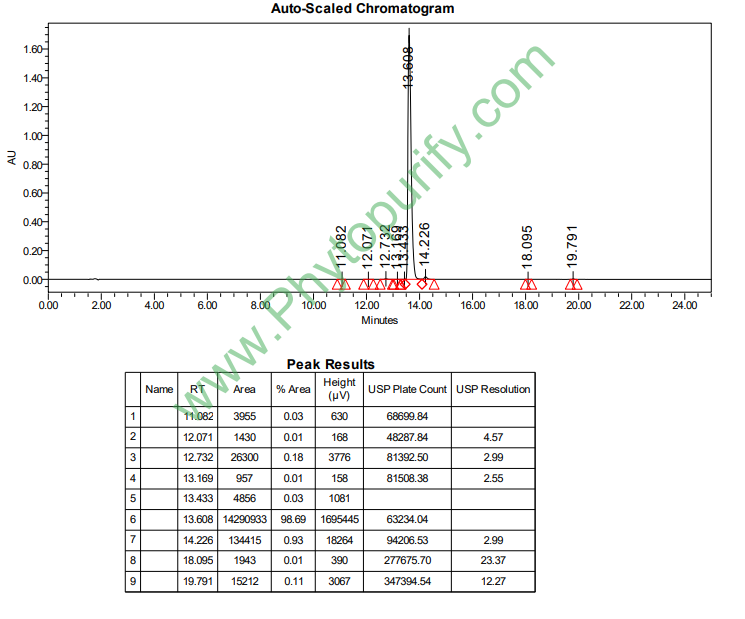
Purity: 95%~99%
Analysis Method: HPLC-DAD or/and HPLC-ELSD
Identification Method: Mass, NMR
Packing: Brown vial or HDPE plastic bottle
Storage: Store in a well closed container, protected from air and light. Put into refrigerate or freeze for long term storage.
Whenever possible, you should prepare and use solutions on the same day. However, if you need to make up stock solutions in advance, we recommend that you store the solution as aliquots in tightly sealed vials at -20℃. Generally, these will be useable for up to two weeks.
The product could be supplied from milligrams to grams, up to kilograms
Inquire for bulk scale.
Descriptions:
Apigenin 7-O-β-D-glucuronide(AG), an active flavonoid derivative isolated from the agricultural residue of Juglans sigillata fruit husks, possesses multiple pharmacological activities, including anti-oxidant, anti-complement, and aldose reductase inhibitory activities; AG protects mice from LPS-induced endotoxin shock by inhibiting proinflammatory cytokine production, suggests that AG may be used as a source of anti-inflammatory agents as well as a dietary complement for health promotion.[1]
References:
[1] Hu W, Wang X, Wu L, et al. Food Funct, 2016, 7(2):1002-13.
[2] Xue P, Zhao Y, Wang B, et al. J Chromatogr Sci, 2007, 45(4):216-9.
HPLC of Apigenin-7-O-glucuronide
Storage conditions:Short-term storage at 2~8℃, long-term storage at -20 ~ -80℃
Apigenin-7-O-glucuronide (CAS number: 29741-09-1), as an important flavonoid gluconic acid compound, has attracted widespread attention in the field of natural product pharmacology in recent years. Flavonoids have become a hot research topic in the treatment of various diseases such as antiviral, anti-inflammatory, and anti-tumor due to their diverse biological activities and low toxicity. Apigenin 7-O-glucuronide is a metabolite of apigenin modified with glucuronidation, which has unique physicochemical properties and biological activities, and has potential pharmacological value in regulating molecular targets related to HIV infection.
This review systematically summarizes the chemical structure and physicochemical properties, plant sources, and extraction methods of apigenin 7-O-glucuronide. It focuses on its pharmacological activity and mechanism of action, analyzes its pharmacokinetic characteristics based on drug parameters, and explores its clinical application prospects in diseases such as HIV infection. The aim is to provide theoretical basis and practical guidance for further research and development of this compound.
Apigenin 7-O-glucuronide is a derivative of glucuronic acid in flavonoids, with a molecular formula of C21H18O12 and a molecular weight of 446.36 Da. Structurally, the compound forms a β - glucosidic bond with glucuronic acid through the 7-hydroxyl group of the apigenin nucleus, endowing it with high polarity and abundant hydrogen bond receptor sites. In terms of physical and chemical properties, its LogP value is about 0.5, indicating good hydrophilicity, and its topological polar surface area (TPSA) is as high as 218.42 Å ², indicating that the molecule has strong polarity and more hydrogen bonding ability, which has an important impact on its bioavailability and cell membrane penetration.
Apigenin 7-O-glucuronide contains 11 hydrogen bond acceptors, and its molecular structure is stable without obvious aromatic ring damage or easily degradable groups. Its polarity and molecular weight limit its ability to pass through the blood-brain barrier (BBB permeability is unknown), which to some extent reduces the risk of central nervous system toxicity. Toxicological evaluation shows that the compound has no hepatotoxicity, cardiotoxicity, or hERG channel inhibition, and the Ames mutagenicity test is negative, demonstrating good safety characteristics.
Celerin-7-O-glucuronide is widely present in various plants, especially in plants of the Umbelliferae family such as Apium graveolens, Petroselinum crispum, and other green leafy vegetables, where its content is relatively high. As one of the main metabolites of apigenin, it often exists in plant tissues in free or bound form, especially concentrated in leaves and stems.
The methods for extracting this compound mainly include solvent extraction, ultrasound assisted extraction, and high-performance liquid chromatography (HPLC) separation and purification. The commonly used extraction solvents are methanol, water, or ethanol aqueous solutions, and the combination of ultrasound assisted technology can significantly improve the extraction efficiency. After concentration, liquid-liquid distribution, and silica gel column chromatography pretreatment, the extract was separated and purified using reverse phase HPLC to obtain high-purity apigenin 7-O-glucuronide. In recent years, the application of supercritical CO2 extraction and membrane separation technology has also provided new ideas for the industrial extraction of this compound.
The pharmacological activity research of apigenin 7-O-glucuronide mainly focuses on antiviral, anti-inflammatory, and antioxidant aspects, especially showing unique advantages in the prevention and treatment of HIV infection.
Anti HIV activity
Multiple in vitro experiments have shown that apigenin 7-O-glucuronide can inhibit virus entry and replication by regulating HIV infection related targets such as CCR5, CXCR4, and CD4 receptors. Its regulatory effect on HIV co receptors CCR5 and CXCR4 blocks the binding of the virus to host cells, reducing the virus infection rate. In addition, the indirect inhibitory effect of apigenin 7-O-glucuronide on viral integrase and reverse transcriptase also provides multi-target support for its anti HIV mechanism.
anti-inflammatory effect
This compound exhibits significant anti-inflammatory effects by inhibiting the activity of lipoxygenase (ALOX5), reducing the production of inflammatory mediators. Meanwhile, the regulation of acetylcholinesterase (ACHE) by apigenin 7-O-glucuronide can help alleviate inflammation related nerve damage and immune response, demonstrating potential neuroprotective effects.
Antioxidant and Cellular Protection
Apigenin 7-O-glucuronide has excellent free radical scavenging ability and can alleviate cell damage caused by oxidative stress. In various cell models, it activates the endogenous antioxidant enzyme system, reduces ROS levels, and protects cells from oxidative damage.
Antitumor potential
Some studies have indicated that this compound has certain anti-tumor activity by regulating the expression of topoisomerase II α (TOP2A), affecting the DNA replication and repair processes of tumor cells. Its multi-target mechanism of action provides new ideas for tumor treatment.
The biological activity of apigenin 7-O-glucuronide is closely related to its multi-target regulation. Its main targets include key receptors and enzymes involved in the HIV infection process, including:
CCR5 and CXCR4 As an auxiliary receptor for HIV virus to enter host cells, apigenin 7-O-glucuronide blocks the fusion of virus envelope and cell membrane by binding to these two receptors, thus preventing virus invasion.
CD4 receptor As the main binding receptor of HIV, this compound helps to reduce the affinity between the virus and host cells by regulating CD4.
ABCG2 transporter protein This protein is involved in drug efflux, and apigenin 7-O-glucuronide may affect intracellular accumulation and drug resistance by regulating ABCG2 expression.
ALOX5 (Lipoxygenase 5)Involved in the synthesis of inflammatory mediators, this compound inhibits its activity and reduces inflammatory response.
TOP2A (Topoisomerase II α)Regulating DNA replication and repair, the inhibitory effect of apigenin 7-O-glucuronide on it reveals a potential anti-tumor mechanism.
ADORA3 (adenosine A3 receptor) and ACHE (acetylcholinesterase)The involvement of apigenin 7-O-glucuronide in immune regulation and neuroprotection may help alleviate HIV related neuroinflammation and cognitive impairment by regulating these targets.
In addition, the compound has inhibitory effects on the inflammatory response induced by bacterial lipopolysaccharide (LPS), indicating its potential in anti infection and immune regulation.
From the perspective of pharmacological parameters, apigenin 7-O-glucuronide has good safety and drug compatibility. Although its molecular weight (446.36 Da) is slightly higher than the ideal range recommended by Lipinski's rule, it is still within an acceptable range. The LogP value is 0.5, indicating that it has moderate hydrophilicity, which is beneficial for in vivo distribution and metabolism.
The high TPSA (218.42 Å ²) and high number of hydrogen bond receptors (11) suggest strong polarity, which may limit oral bioavailability and cell membrane penetration, especially difficult to pass through the blood-brain barrier, reducing potential toxicity risks to the central nervous system.
Toxicological evaluation showed no hepatotoxicity, cardiotoxicity, or hERG channel inhibition, and the Ames test was negative, indicating a low risk of genetic toxicity and good safety.
In terms of pharmacokinetics, apigenin 7-O-glucuronide, as a glucuronide compound, may be hydrolyzed by β - glucosidase in the intestine and liver to produce apigenin and exert pharmacological effects. Its metabolic pathways mainly involve glucuronic acid binding and sulfation, and the activity and accumulation of metabolites in the body need further in-depth research.
Due to its multi-target and multi mechanism pharmacological activities, apigenin 7-O-glucuronide has shown broad application prospects, especially in the field of HIV infection prevention and treatment. It can effectively inhibit virus replication and alleviate virus related immune inflammatory responses by regulating virus entry into receptors and inflammatory mediators, providing a new drug candidate for HIV adjuvant therapy.
In addition, given its anti-inflammatory, antioxidant, and neuroprotective effects, the potential application of this compound in HIV related neurocognitive disorders and other inflammatory diseases is also worth noting. Its good safety and low toxicity provide favorable conditions for clinical development.
Future research should focus on its in vivo pharmacokinetic characteristics, activity evaluation of metabolites, and formulation optimization to enhance its bioavailability and targeting. Meanwhile, by combining modern drug design technologies such as nanocarrier systems and targeted delivery strategies, it is expected to overcome the limitations of biofilm penetration caused by their strong polarity.
The development of preclinical and clinical trials will lay the foundation for verifying its efficacy and safety, and promote the transformation of apigenin 7-O-glucuronide into clinical applications.
Apigenin 7-O-glucuronide, as an important natural flavonoid glucuronide, has shown potential value in anti HIV infection and related inflammatory diseases due to its unique chemical structure and multi-target pharmacological activity. Its good safety and pharmacological parameters provide a solid foundation for further development.
Although research on its pharmacokinetics and clinical applications is still in its infancy, with the advancement of natural product pharmacology and molecular pharmacology techniques, apigenin 7-O-glucuronide is expected to become an important candidate for novel antiviral and anti-inflammatory drugs. In the future, it is necessary to strengthen mechanism research, drug design, and clinical validation, promote its transition from laboratory to clinical application, and benefit patients.
