


Product name: Apigetrin
Synonym name: Apigenin 7-O-glucoside
Catalogue No.: BP0181
Cas No.: 578-74-5
Formula: C21H20O10
Mol Weight: 432.381
Botanical Source: flowers of Cosmos bipinnatus, Zinnia elegans, heads of Cynara scolymus, and other plant spp.
Physical Description: Yellow powder
Type of Compound: Flavonoids
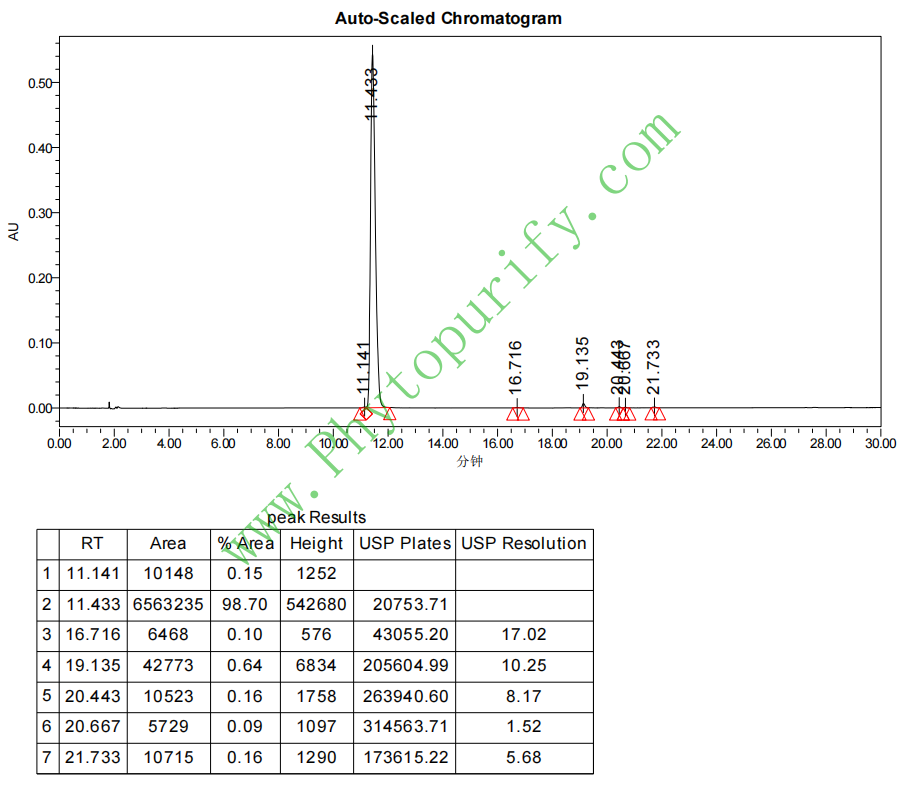
Purity: 95%~99%
Analysis Method: HPLC-DAD or/and HPLC-ELSD
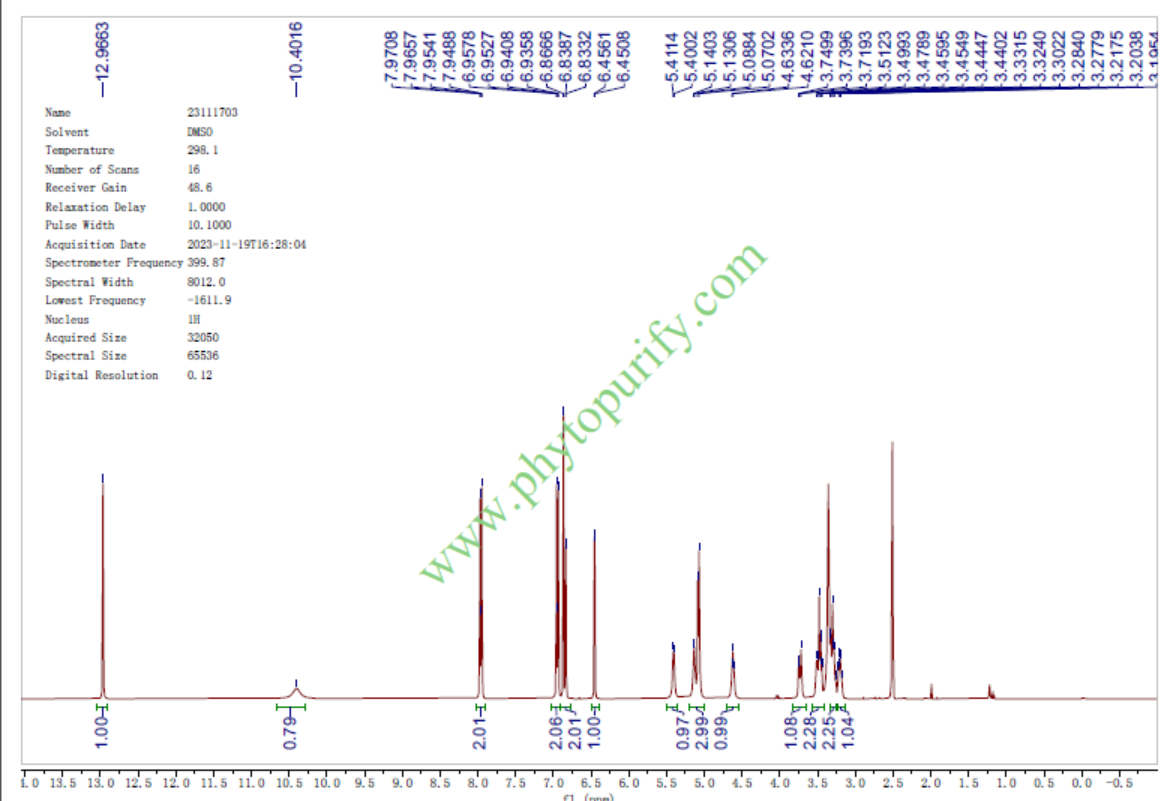
Identification Method: Mass, NMR
Packing: Brown vial or HDPE plastic bottle
Storage: Store in a well closed container, protected from air and light. Put into refrigerate or freeze for long term storage.
Whenever possible, you should prepare and use solutions on the same day. However, if you need to make up stock solutions in advance, we recommend that you store the solution as aliquots in tightly sealed vials at -20℃. Generally, these will be useable for up to two weeks.
The product could be supplied from milligrams to grams, up to kilograms
Inquire for bulk scale.
Descriptions:
Cosmosiin and rhoifolin from red wendun leaves may be beneficial for diabetic complications through their enhanced adiponectin secretion, tyrosine phosphorylation of insulin receptor-β and GLUT4 translocation.[1]
References:
[1] Rao Y K, Lee M J, Chen K, et al. Evid-Based Compl Alt , 2011, 2011(1):1-9.
[2] Chen Zaixing, Meng Shu, Zhu Xu,et al.Chinese Pharmaceutical Affairs, 2011, 25(6):547-9.
HPLC of Apigetrin
HNMR of Apigetrin
Storage conditions:Short-term storage at 2~8℃, long-term storage at -20 ~ -80℃
170.0500
.0960
.0817
1.1137
.4928
.0943
Low
81.5010
3.8045
Yes
No
No
No
Yes
No
0.6
Yes
Yes
Yes
Yes
Flavonoids, as one of the most widely distributed plant secondary metabolites in nature, have attracted much attention in pharmacological research due to their diverse biological activities. Among them, apigenin, as a classic 4 ', 5,7-trihydroxyflavone, has been widely reported for its anti-inflammatory, antioxidant, anti-tumor, and neuroprotective effects. Apigetrin, also known as apigenin 7-O - β - D-glucopyranoside, is a monoglycoside derivative formed by glycosylation modification of apigenin at the C-7 hydroxyl group. This structural modification not only changes its physicochemical properties, but may also endow it with unique pharmacological activity and bioavailability characteristics that distinguish it from the parent compound. This compound naturally exists in various medicinal plants and vegetables, such as chrysanthemums, celery, parsley, etc., and is one of the important material foundations for the efficacy of traditional herbs.
In recent years, with a deeper understanding of the pathogenesis of neurodegenerative diseases, metabolic syndrome, and chronic inflammatory diseases, the search for multi-target, high safety, and naturally derived intervention drugs has become a research hotspot. Because of its potential activity in many pathological models, such as Parkinson's disease, diabetes complications, inflammatory reaction, etc., large cascadin has gradually entered the research field. Especially its interaction with key targets closely related to Parkinson's disease such as AMPK, BACE1, TLR4, MAOA, etc. suggests that it may exert therapeutic effects by regulating complex signaling networks. This article aims to provide a systematic review of the chemical properties, plant sources, pharmacological activities, molecular mechanisms of action, medicinal characteristics, and clinical application potential of cosmos glycosides, in order to provide comprehensive scientific references for the deep development and transformation research of this natural product.
The chemical name of daidzein is apigenin 7-O - β - D-glucopyranoside, with a CAS number of 578-74-5. Its molecular formula is C21H20O10 and its molecular weight is 432.38 g/mol. Structurally, its parent nucleus is apigenin (4 ', 5,7-trihydroxyflavone), and a β - D-glucopyranose group is specifically linked to the C-7 hydroxyl group of the A ring through a glycosidic bond. This glycosylation structure is a key feature that distinguishes it from apigenin and other apigenin glycosides (such as apigenin 6-C-glucoside).
Glycosylation significantly affects the physicochemical properties of cosmos glycosides. Firstly, its lipid water partition coefficient (LogP) is approximately 0.096, indicating that the compound has a high degree of hydrophilicity, which is mainly attributed to the introduction of glucose groups increasing the polarity of the molecule. Its topological polar surface area (TPSA) is as high as 170.05 Å ², further confirming its strong polarity characteristics. Correspondingly, its water solubility (about 1.11 mg/mL) has been greatly improved compared to the highly lipophilic apigenin (LogP~2.0, extremely poor water solubility). These properties suggest that the absorption, distribution, metabolism, and excretion (ADME) process of daidzein in the body may differ fundamentally from apigenin. For example, higher water solubility may facilitate its dissolution and absorption in the gastrointestinal tract, but it may also affect its transmembrane transport, especially its ability to cross the blood-brain barrier through passive diffusion. Preliminary pharmacological predictions indicate that its blood-brain barrier permeability is low, which poses a challenge for its application in central nervous system diseases such as Parkinson's disease and suggests that it may need to indirectly exert neuroprotective effects by regulating peripheral inflammation or specific transporters. In addition, its hERG inhibition risk is negative, and the Ames test result is 0.6 (usually considered to have a potential mutagenic risk of>1.0), indicating a low risk of cardiac and genetic toxicity and a safety basis for further development.
Persimmon glycoside is widely distributed in the plant kingdom and is an important active ingredient in various medicinal plants and edible vegetables. Its main natural sources include Asteraceae plants such as chrysanthemums (Chrysanthemum morifolium), especially the yellow chrysanthemum variety, which has a high content; The leaves and stems of plants in the Umbelliferae family, such as Apium graveolens, Petroselinum crispum, and Coriandrum sativum; And leguminous plants such as Astrolus sinicus. These plants are often used in traditional medical systems for clearing heat, calming the liver, lowering blood pressure, detoxifying, etc. Their modern pharmacological effects can be partially attributed to flavonoids, including cosmos glycosides.
The extraction of cosmos glycosides from plant materials usually follows the conventional process of natural product chemistry. Firstly, it is necessary to crush the dried plant materials to increase extraction efficiency. Common extraction solvents include methanol, ethanol, or their aqueous solutions. By using techniques such as heating reflux, ultrasound assisted, or microwave-assisted extraction, it is possible to efficiently extract cosmos glycosides from plant cells. Due to the strong polarity of cosmos glycosides, high proportion alcohol water solutions (such as 70% -80% ethanol) are usually effective extraction solvents.
After vacuum concentration, the extract needs to undergo a series of separation and purification steps to obtain high-purity monomers. The commonly used methods include: 1)Liquid-liquid extraction Using the polarity characteristics of cosmos glycosides, they were initially enriched by partitioning with organic solvents such as ethyl acetate and n-butanol and water. 2)Column chromatography technology This is the key step to obtaining pure product. Silica gel column chromatography is commonly used for separation using gradient elution systems such as chloroform methanol water or dichloromethane methanol. In addition, reversed-phase silica gel (such as C18) column chromatography, polyamide column chromatography and Sephadex gel (LH-20) column chromatography are also widely used because of their good separation effects on different polar flavonoid glycosides. 3)recrystallization Recrystallizing the initially purified product in a suitable solvent system (such as methanol water) is a classic method for obtaining high-purity crystals. Modern analytical techniques such as high-performance liquid chromatography (HPLC), especially preparative HPLC, have become powerful tools for rapid and efficient separation and purification of cosmos glycosides, enabling direct targeted separation of target components from complex crude extracts.
A large number of pharmacological studies in vitro and in vivo have shown that large cascadin has various biological activities, covering many fields such as neuroprotection, anti-inflammatory, antioxidant, anti diabetes complications and anti-tumor.
1. Neuroprotective activity This is the most widely studied active direction of cosmos glycosides in recent years. In the Parkinson's disease (PD) model, puerarin exhibits significant neuroprotective effects. For example, in MPP ⁺ or rotenone induced damage models of PC12 cells or SH-SY5Y cells, pretreatment with puerarin can significantly improve cell survival, reduce lactate dehydrogenase (LDH) leakage, and inhibit cell apoptosis. In the MPTP induced mouse PD model, administration of puerarin improved motor coordination, protected dopaminergic neurons in the substantia nigra pars compacta, and maintained levels of striatal dopamine and its metabolites. Its function is closely related to reducing neuroinflammation, oxidative stress, and mitochondrial dysfunction.
2. Anti inflammatory and immune regulatory activity Daphnetin has shown inhibitory effects on both acute and chronic inflammation models. In macrophages (RAW264.7, BV2 microglia) stimulated by lipopolysaccharide (LPS), it can dose dependently inhibit the production of inflammatory mediators such as nitric oxide (NO), prostaglandin E2 (PGE2), tumor necrosis factor - α (TNF - α), interleukin-6 (IL-6), etc. In the in vivo inflammatory models induced by carrageenan or Freund's complete adjuvant, such as paw swelling in rats, puerarin also showed anti-inflammatory effects. Its anti-inflammatory mechanism involves the regulation of key inflammatory signaling pathways such as NF - κ B and MAPK.
3. Antioxidant activity Persimmon glycoside itself has the ability to scavenge free radicals, such as DPPH, ABTS free radicals, and superoxide anions. More importantly, it can upregulate the expression of phase II detoxifying enzymes and antioxidant proteins such as heme oxygenase-1 (HO-1) and quinone oxidoreductase 1 (NQO1) by activating the cell's own antioxidant defense system (such as the Nrf2/ARE pathway), thereby enhancing the cell's ability to resist oxidative stress. It plays an important role in neuroprotection and anti complications of diabetes.
4. Anti diabetes and complication activity Research has shown that cosmos glycosides can inhibit the activity of alpha glucosidase and aldose reductase (AKR1B1). The former delays carbohydrate digestion and absorption, helping to control postprandial blood sugar; The latter is the key rate limiting enzyme of the polyol pathway, and its over activation is directly related to the occurrence of complications such as diabetes cataract and neuropathy. Therefore, the large poseid has a potential dual anti diabetes effect.
5. Antibacterial and anti-tumor activity In vitro studies have shown that puerarin has inhibitory effects on certain Gram positive and Gram negative bacteria. In terms of anti-tumor, it is reported that it can inhibit the proliferation of human breast cancer, liver cancer, colon cancer and other cancer cells, and induce cell cycle arrest and apoptosis, but its anti-tumor activity is generally weaker than its aglycone apigenin, which may be related to the ability of glycosylation to affect its ability to enter cells.
The multiple pharmacological activities of cosmos glycosides stem from their interactions with multiple cell signaling molecules and protein targets, forming a multi-target regulatory network. Based on the provided target information, its potential mechanism of action in diseases such as Parkinson's disease can be summarized as follows:
1. Energy metabolism and cell survival regulation (AMPK/BCL2)AMP activated protein kinase (AMPK, encoded by PRKAA1) is a core sensor of cellular energy metabolism. Daphnetin may improve neuronal energy supply and induce autophagy to clear misfolded proteins (such as alpha synuclein) by activating AMPK, promoting glucose uptake and fatty acid oxidation, while inhibiting synthetic metabolic pathways such as mTOR. Activated AMPK can also upregulate the expression of anti apoptotic protein BCL2 or inhibit its phosphorylation inactivation, thereby stabilizing mitochondrial membrane potential, inhibiting cytochrome C release, blocking caspase dependent apoptotic pathways, and protecting dopaminergic neurons.
2. Neuroinflammation and immune response regulation (TLR4)Toll like receptor 4 (TLR4) is a key receptor that recognizes endogenous injury associated molecular patterns (DAMPs) and exogenous pathogen associated molecular patterns (PAMPs, such as LPS), and its overactivation drives neuroinflammation. Daphnetin may directly or indirectly inhibit TLR4 and its downstream MyD88/NF - κ B signaling axis, thereby reducing abnormal activation of microglia and astrocytes, lowering the expression of pro-inflammatory factors such as TNF - α, IL-1 β, IL-6, and creating an anti-inflammatory microenvironment for neurons.
3. Starch like protein metabolism and oxidative damage (BACE1/APEX1/ALOX15/AKR1B1):
- β - secretase 1 (BACE1)It is a key enzyme that generates β - amyloid protein (A β). Inhibiting BACE1 activity is an important strategy for treating Alzheimer's disease. Research suggests that daidzein may have an inhibitory effect on BACE1. Although its role in PD is not yet clear, the abnormal aggregation of alpha synuclein intersects with A β pathology, and this target may have broader neuroprotective significance.
- Purine/pyrimidine free endonuclease 1 (APEX1)Participate in DNA damage repair and oxidative stress response. Daphnetin may enhance the ability of neurons to repair oxidative DNA damage by regulating the function of APEX1.
- Arachidonic acid 15 lipoxygenase (ALOX15)Catalytic generation of lipid mediators with pro-inflammatory and pro apoptotic effects. Inhibition of ALOX15 can alleviate oxidative stress and inflammatory damage.
- Aldehyde reductase (AKR1B1): As mentioned above, inhibiting AKR1B1 can block the polyol pathway that leads to increased oxidative stress, and has a protective effect on diabetes complications and neuropathy.
4. Neurotransmitter metabolism and signal transduction (MAOA/PTPN1):
- Monoamine oxidase A (MAOA)Responsible for degrading monoamine neurotransmitters such as dopamine and serotonin. MAOA inhibitors are classic antidepressants and are also used for the treatment of depressive symptoms in Parkinson's disease. If daidzein has MAOA inhibitory activity, it may directly improve the motor and non motor symptoms of PD by increasing synaptic dopamine levels.
- Protein tyrosine phosphatase 1B (PTPN1)It is a negative regulator of the insulin and leptin signaling pathways, as well as a regulator of inflammatory signals such as JAK/STAT. Inhibition of PTPN1 can enhance insulin sensitivity and may regulate neuroinflammation, linking metabolism and neurodegenerative diseases.
5. DNA Stability and Repair (BLM)The BLM gene encodes a member of the RecQ helicase family, which is involved in DNA replication, recombination, and repair. The association between daidzein and this target suggests that it may affect genomic stability, but its specific role in neuroprotection remains to be elucidated.
In summary, cosmos glycosides may synergistically regulate multiple targets mentioned above, constructing a three-dimensional defense network against complex diseases such as Parkinson's disease from multiple levels including energy metabolism, oxidative stress, neuroinflammation, cell apoptosis, and protein homeostasis.
Although daidzein exhibits good biological activity in vitro, its potential as a drug depends on its drug affinity and pharmacokinetic (PK) behavior in vivo.
Analysis of drug properties parameters As mentioned earlier, the molecular weight of cosmos glycosides is moderate (432.38), which conforms to Lipinski's "Five Rules". Its extremely low LogP value and extremely high TPSA value are its most prominent physicochemical characteristics, which determine its strong hydrophilic nature. This property is beneficial for the development of water-soluble and oral dosage forms, but it also brings challenges:Oral absorption On the one hand, strong polarity may limit its passive diffusion through small intestinal epithelial cells, but its glycoside structure may be hydrolyzed by gut microbiota or β - glucosidase on the intestinal mucosa, releasing a more lipophilic aglycone apigenin for absorption, or actively uptake through glucose transporters (such as SGLT1), and its absolute bioavailability remains to be determined experimentally.distribution On the one hand, low blood-brain barrier permeability is the main obstacle to its treatment of central nervous system diseases. However, studies have shown that certain flavonoid glycosides can indirectly affect the central nervous system through transporter mediated or peripheral effects, and they may be more likely to enter the brain when BBB permeability increases under inflammatory conditions.Metabolism and excretion As a flavonoid glycoside, it is likely to undergo extensive phase II metabolism (such as glucuronidation and sulfation) in the intestine and liver, and may be hydrolyzed by β - glucosidase. Its prototype and metabolites are mainly excreted through the kidneys and bile.
At present, there is relatively limited research on the pharmacokinetics of the cosmos glycoside system. Limited animal pharmacokinetic studies have shown that after oral administration, the plasma concentration is low, the peak time is fast, and the half-life may be short, which may be related to its rapid metabolism and excretion. The strategies to improve its bioavailability and brain targeting include: 1)Structural modification Preparation of prodrugs or derivatives, such as esterification modification to enhance lipid solubility; Or it can be made into phospholipid complexes, cyclodextrin inclusion complexes, etc. 2)New drug delivery system Developing nano drug delivery systems such as nanoparticles, liposomes, and microemulsions, especially nano formulations modified with brain targeting ligands (such as TfR antibodies and Angiopep-2 peptides), can significantly improve their BBB penetration ability and brain distribution. 3)combination therapy Combined use with P-glycoprotein inhibitors or β - glucosidase inhibitors may increase their brain accumulation or reduce their premature hydrolysis, respectively.
As a natural active molecule with multiple targets and high safety, cosmos glycosides have broad development prospects in the following fields:
1. Adjuvant treatment and prevention of neurodegenerative diseases Given its clear neuroprotective role in PD models, cosmos glycosides have the greatest potential to be developed as disease modifying therapies (DMT) or adjunctive drugs for Parkinson's disease. It can not only be used in combination with standard therapies such as levodopa to enhance efficacy and reduce side effects, but also may delay disease progression and improve non motor symptoms (such as depression and cognitive impairment) due to its multi-target nature. It is also worth exploring in other neurodegenerative diseases such as Alzheimer's disease and Huntington's disease.
2. Prevention and treatment of metabolic diseases and their complications: Its multiple effects, such as AMPK activation, PTPN1 inhibition, AKR1B1 inhibition, make it have potential in the prevention and treatment of type 2 diabetes, non-alcoholic fatty liver disease and its complications (such as diabetes neuropathy, retinopathy). Consider developing it as a functional food or dietary supplement.
3. Chronic inflammation related diseases: such as arthritis, atherosclerosis, inflammatory bowel disease, etc. Its anti-inflammatory mechanism is clear, with low expected side effects, making it suitable for long-term management of chronic inflammatory states.
However, there are still many challenges in pushing it from the laboratory to clinical practice: firstly, a systematic and standardized preclinical pharmacological evaluation is needed, including validation in genetically modified animal models that are closer to human diseases. Secondly, comprehensive pharmacokinetic and toxicological studies (acute toxicity, long-term toxicity, reproductive toxicity, etc.) must be completed to clarify their safety window. Finally, and most importantly, it is important to design and implement rigorous clinical trials to confirm its effectiveness and safety in humans.
Future research directions can focus on: 1)In depth mechanism exploration Accurately identify its direct target and binding mode using chemical biology methods such as molecular docking, surface plasmon resonance, covalent probes, etc. 2)Study on Structure Activity Relationship Optimize the activity, selectivity, and drug properties of a series of sugar or glycoside modified derivatives through synthesis. 3)Innovative formulation development As mentioned earlier, develop brain targeted or sustained-release formulations to overcome their PK deficiencies. 4)Explore synergies Study its synergistic effects with other natural products or existing drugs, and develop compound formulations.
As an important glycoside derivative of apigenin, cosmos glycosides exhibit remarkable multi-target pharmacological activities in neuroprotection, anti-inflammatory, antioxidant, and metabolic regulation due to their unique chemical structure and improved physicochemical properties. Its mechanism of action involves multiple key targets closely related to major human diseases, such as AMPK, TLR4, BACE1, MAOA, etc., forming a synergistic network. Although there are challenges in terms of blood-brain barrier permeability and oral bioavailability, these obstacles are expected to be overcome through rational modification and optimization of modern medicinal chemistry and pharmacology methods.
The current research has laid a solid theoretical foundation for its clinical application. In the future, through in-depth interdisciplinary cooperation and systematic promotion of its preclinical and clinical research, it is expected that large cascadin will transform from a common phytochemical component into an innovative drug lead compound or functional component for the treatment of Parkinson's disease, diabetes complications and other complex diseases, contributing to the wisdom and strength of nature for human health. The continuous and in-depth research on it not only has important scientific value, but also contains enormous social benefits and economic potential.
