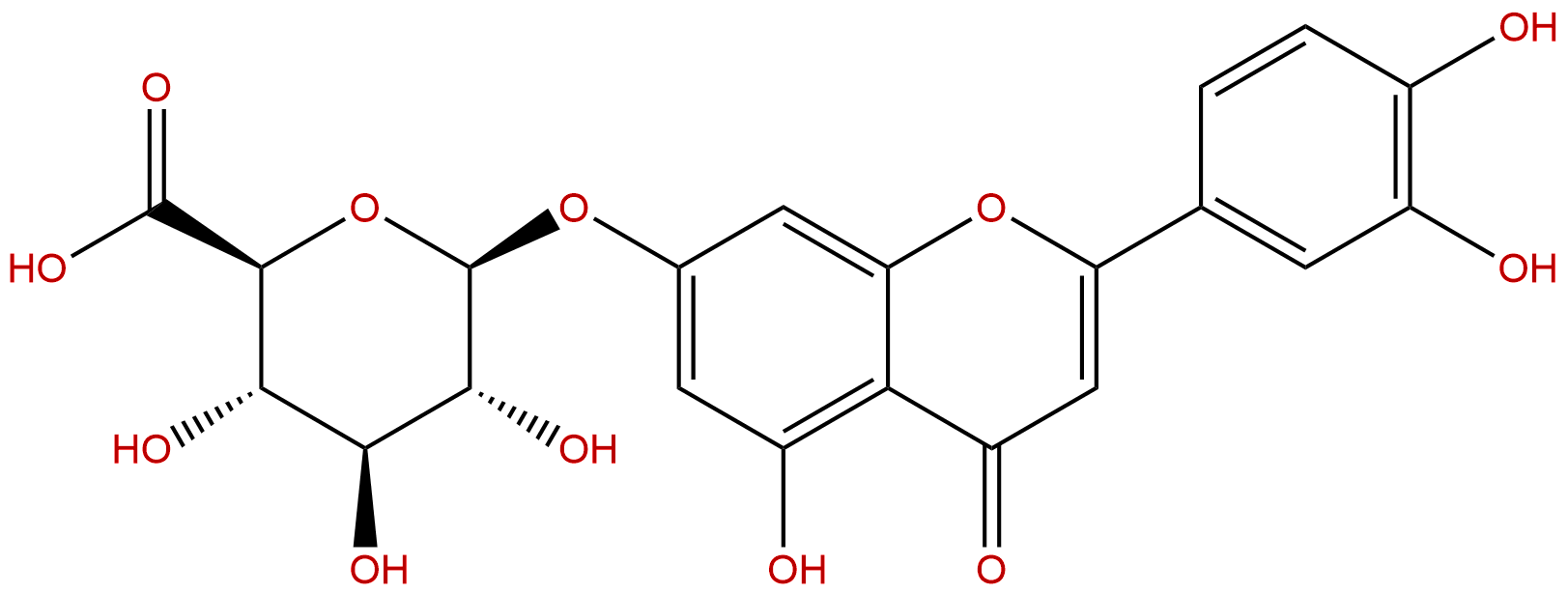


Product name: Luteolin 7-glucuronide
Synonym name:
Catalogue No.: BP1626
Cas No.: 29741-10-4
Formula: C21H18O12
Mol Weight: 462.363
Botanical Source: " Isol. from Antirrhinum majus, Chrysanthemum sp., Scutellaria spp. and other plants"
Physical Description: Yellow powder
Type of Compound: Flavonoids
Purity: 95%~99%
Analysis Method: HPLC-DAD or/and HPLC-ELSD
Identification Method: Mass, NMR
Packing: Brown vial or HDPE plastic bottle
The product could be supplied from milligrams to grams. Inquire for bulk scale.
We provide solution to improve the water-solubility of compounds, thereby facilitating the variety of activity tests and clinic uses.
For Reference Standard and R&D, Not for Human Use Directly.
Description:
Luteolin-7-O-glucuronide has anti-inflammatory activity. Luteolin 7-O-glucuronide shows potent α-glucosidase inhibitory effect with IC50 values of 14.7 uM, it also exhibits moderate α-amylase activity with IC50 values 61.5uM.Luteolin 7-O-glucuronide could inhibit Matrix Metalloproteinases (MMP) activities, with IC50s of 17.63, 7.99, 11.42, 12.85, 0.03 μM for MMP-1, MMP-3, MMP-8, MMP-9, MMP-13, respectively.
References:
J Med Food. 2015 Jan;18(1):83-94.
Quantification of major compounds from Ixeris dentata, Ixeris dentata Var. albiflora, and Ixeris sonchifolia and their comparative anti-inflammatory activity in lipopolysaccharide-stimulated RAW 264.7 cells.
The aim of the present study was to evaluate the comparative anti-inflammatory activities of Ixeris dentata (ID), Ixeris dentata var. albiflora (IDA), and Ixeris sonchifolia (IS) and to identify the main compounds present in extracts. The anti-inflammatory activity was evaluated through lipopolysaccharide (LPS)-induced nitric oxide (NO) production in RAW 264.7 murine macrophages. Five main compounds consisting of chlorogenic acid, caffeic acid, luteolin-7-O-glucoside, Luteolin-7-O-glucuronide, and luteolin were used for simultaneous high-performance liquid chromatography quantification.
METHODS AND RESULTS:
The total phenolic content present in ID (30 mg/g GAE), IDA (35.33 mg/g GAE), and IS (43.79 mg/g GAE) was correlated to the corresponding LPS-induced NO production inhibitory effect in RAW 264.7 cells as expressed with IC(50) values 26.19, 21.43, and 7.59 μg/mL, respectively. Luteolin-7-O-glucoside was found as the major compound in ID (8.76 mg/g dry weight) and IDA (10.35 mg/g dry weight) and Luteolin-7-O-glucuronide was the major compound in IS (34.66 mg/g dry weight). Luteolin 7-O-glucoside and Luteolin-7-O-glucuronide inhibited LPS-induced NO production with IC(50) values of 30 and 4.5 μM, respectively. Furthermore, luteolin, luteolin-7-O-glucoside, and luteolin- 7-O-glucuronide suppressed the expression of iNOS and COX-2, and t-BHP-induced ROS generation in LPS-stimulated RAW 264.7 cells.
CONCLUSIONS:
These results clearly showed that the anti-inflammatory potential of ID, IDA, and IS extract are primarily due to their contents of luteolin-7-O-glucoside and Luteolin-7-O-glucuronide, respectively.
Planta Med. 2017 Jul;83(11):901-911.
Correlating In Vitro Target-Oriented Screening and Docking: Inhibition of Matrix Metalloproteinases Activities by Flavonoids.
Metalloproteases are a family of zinc-containing endopeptidases involved in a variety of pathological disorders. The use of flavonoid derivatives as potential metalloprotease inhibitors has recently increased.Particular plants growing in Sicily are an excellent yielder of the flavonoids luteolin, apigenin, and their respective glycoside derivatives (7-O-rutinoside, 7-O-glucoside, and 7-O-glucuronide).
METHODS AND RESULTS:
The inhibitory activity of luteolin, apigenin, and their respective glycoside derivatives on the metalloproteases MMP-1, MMP-3, MMP-13, MMP-8, and MMP-9 was assessed and rationalized correlating in vitro target-oriented screening and in silico docking.The flavones apigenin, luteolin, and their respective glucosides have good ability to interact with metalloproteases and can also be lead compounds for further development. Glycones are more active on MMP-1, -3, -8, and -13 than MMP-9. Collagenases MMP-1, MMP-8, and MMP-13 are inhibited by compounds having rutinoside glycones. Apigenin and luteolin are inactive on MMP-1, -3, and -8, which can be interpreted as a better selectivity for both -9 and -13 peptidases. The more active compounds are apigenin-7-O-rutinoside on MMP-1 and luteolin-7-O-rutinoside on MMP-3. The lowest IC50 values were also found for apigenin-7-O-glucuronide, apigenin-7-O-rutinoside, and Luteolin-7-O-glucuronide. The glycoside moiety might allow for a better anchoring to the active site of MMP-1, -3, -8, -9, and -13.
CONCLUSIONS:
Overall, the in silico data are substantially in agreement with the in vitro ones (fluorimetric assay).
J Agric Food Chem. 2014 Jun 11;62(23):5290-5.
Bioavailability of hydroxycinnamic acids from Crepidiastrum denticulatum using simulated digestion and Caco-2 intestinal cells.
Hydroxycinnamic acids have antioxidant properties and potentially beneficial effects on human health. This study investigated the digestive stability, bioaccessibility, and permeability of hydroxycinnamic acids from Crepidiastrum denticulatum using simulated digestion and Caco-2 intestinal cells.
METHODS AND RESULTS:
The major compounds of C. denticulatum were determined to be four hydroxycinnamic acids [caftaric acid, chlorogenic acid, chicoric acid, and 3,5-di-O-caffeoylquinic acid (3,5-DCQA)] and one flavonoid (Luteolin-7-O-glucuronide) by high-performance liquid chromatography and electrospray ionization mass spectrometry. Hydroxycinnamic acids from C. denticulatum were rapidly released in the stomach and duodenum phase, maximizing the possibility of absorption in the intestinal Caco-2 cells. The digestive stability and bioaccessibility of hydroxycinnamic acids from C. denticulatum were markedly low after simulated digestion and remained minimal in the soluble fraction of the ileum phase. Unlike the four hydroxycinnamic acids, Luteolin-7-O-glucuronide was stable in terms of digestive stability and bioaccessibility during simulated digestion. The cell permeabilities (P(app A to B)/P(app B to A)) of caftaric acid (0.054) and chlorogenic acid (0.055) were higher than those of chicoric acid (0.011) and 3,5-DCQA (0.006) in general. That of Luteolin-7-O-glucuronide was not detectable, showing its low absorption in Caco-2 cells.
CONCLUSIONS:
These results indicate that the rapid release of hydroxycinnamic acids in the stomach and duodenum phase may increase the potential for absorption in Caco-2 cells, and that Luteolin-7-O-glucuronide, which was stable in terms of digestive stability and bioaccessibility, has relatively low absorption compared with hydroxycinnamic acids.
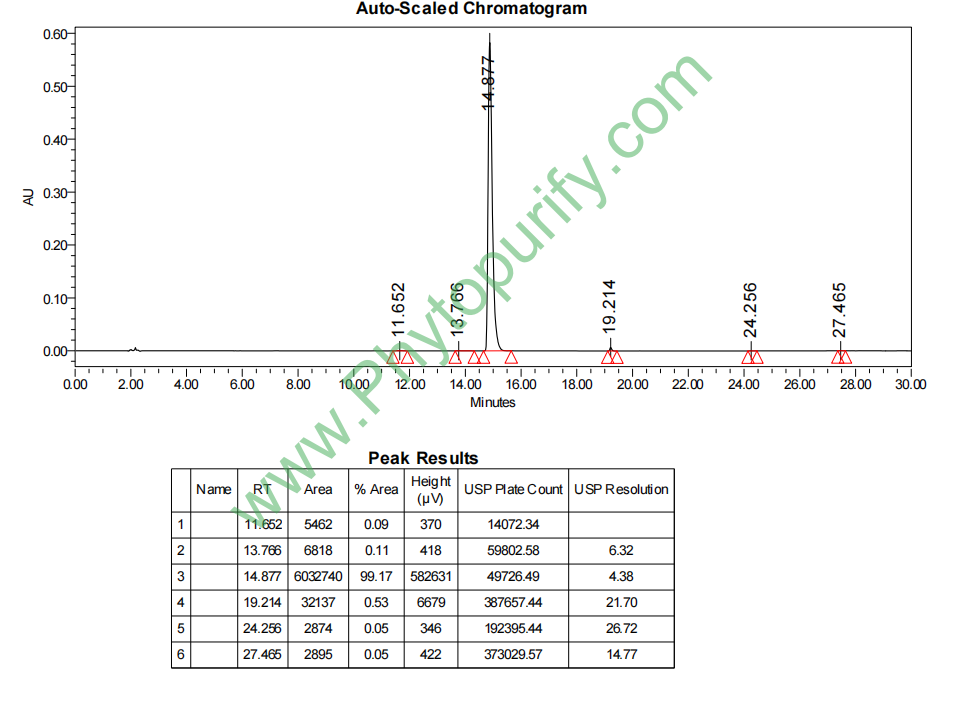
HPLC of Luteolin 7-glucuronide
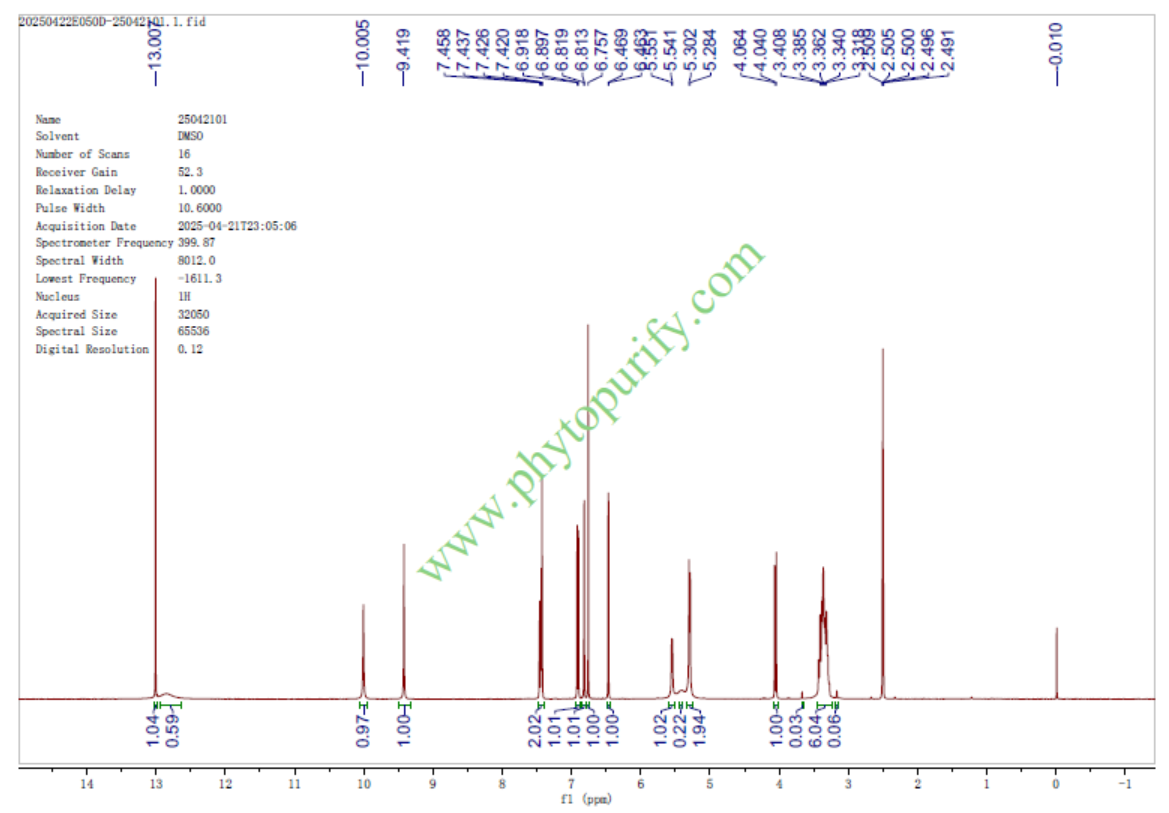
HNMR of Luteolin 7-glucuronide
Storage conditions:Short-term storage at 2~8℃, long-term storage at -20 ~ -80℃
207.3500
.2729
-1.7968
1.4221
.5745
.1633
Low
85.3664
3.9915
Yes
No
No
No
Yes
No
0.6
Yes
No
Yes
No
Natural products have always been an important source of innovative drug discovery, among which flavonoids have attracted much attention due to their broad biological activity and low toxicity. Luteolin 7-glucuronide (CAS number: 29741-10-4) is one of the important derivatives of the flavonoid glycoside compound luteolin. Compared with luteolin, its 7th hydroxyl group binds to glucuronic acid, which significantly alters its physicochemical properties and biological activity. Research has shown that luteolin-7-glucuronic acid glycoside is not only a key active ingredient in various medicinal plants, but has also been proven to be an effective inhibitor of nuclear factor E2 related factor 2 (Nrf2), exhibiting significant pharmacological activities such as anti-inflammatory and anticancer effects. Especially in respiratory inflammations such as bronchitis, this compound exerts therapeutic effects by regulating key targets such as tumor necrosis factor (TNF), prostaglandin endoperoxide synthase 2 (PTGS2/COX-2), nuclear factor kappa B1 (NFKB1), and interleukin (IL-6, IL-1B). This article aims to systematically review the chemical properties, plant sources, pharmacological activities, mechanisms of action, and medicinal properties of luteolin-7-glucuronic acid glycoside, and to explore its clinical application prospects.
The molecular formula of luteolin-7-glucuronic acid glycoside is C21H18O13, with a molecular weight of 462.3630. The core of its structure is the flavonoid mother nucleus (2-phenylchromenone), with hydroxyl groups at positions 5 and 7 of the A ring, ortho dihydroxy groups at positions 3 'and 4' of the B ring, and hydroxyl groups at position 7 connected to glucuronic acid through β - glycosidic bonds. This glycosylation modification has had a profound impact on its properties.
Firstly, the introduction of glucuronic acid greatly enhances the hydrophilicity of the molecule. The calculated lipid water partition coefficient (LogP) is 0.2729, indicating that it has good hydrophilicity. The topologically polar surface area (TPSA) is as high as 207.3500 Å ², further confirming its strong polarity characteristics. The predicted value of water solubility is 1.4221 mg/mL. Compared with the almost insoluble luteolin, its solubility has been significantly improved, which is beneficial for its absorption and distribution in organisms. However, high polarity and large TPSA also result in lower ability to cross the blood-brain barrier, indicating that its application in central nervous system diseases may be limited. In terms of preliminary safety assessment, the compound has no inhibitory activity on hERG potassium channels (hERG inhibition: No), indicating a low risk of causing QT interval prolongation in the heart. The Ames test result is 0.6, indicating a low risk of mutagenicity and a good genetic toxicity safety window.
Osmolin-7-glucuronic acid glycoside is widely present in various plants and is a characteristic component of many traditional medicinal plants. Its main plant sources include:
1. Asteraceae plants Chrysanthemum indicum and Matricaria chamomilla, among others, are one of the substance bases for their anti-inflammatory activity.
2. Lamiaceae plants Such as rosemary (Rosmarinus officinalis), thyme (Thymus vulgaris), etc.
3. Leguminous plants Such as Astrolus sinicus and others.
4. Other sources Trace amounts are also present in some vegetables and fruits.
The extraction of this compound usually follows the general method of natural flavonoid glycosides.Solvent extraction method It is the most commonly used method, which often uses methanol, ethanol, or their aqueous solutions to heat reflux or ultrasound assisted extraction of dried plant powders. Due to the high polarity of the target compound, increasing the proportion of water in the solvent appropriately (such as 70% -80% ethanol) can improve the extraction rate.Microwave assisted extraction and Ultrasound assisted extraction Can effectively shorten extraction time and improve efficiency. After filtration and concentration, the crude extract needs further purification.Macroporous adsorption resin Chromatography methods such as AB-8 and D101 are commonly used for preliminary enrichment, utilizing resin adsorption of flavonoid glycosides and elution with different concentrations of ethanol for separation. The final high-purity preparation depends on Preparation type high-performance liquid chromatography A reverse phase C18 chromatographic column is commonly used, with methanol water or acetonitrile water (pH adjusted with a small amount of formic acid or acetic acid) as the mobile phase for gradient elution. In recent years,High-speed countercurrent chromatography The technology is also applied to the preparation and separation of this compound due to its advantages of not requiring a solid carrier and high sample recovery rate.
Osmolin-7-glucuronic acid glycoside exhibits diverse pharmacological activities, with research mainly focused on anti-inflammatory and anticancer fields.
1. Anti inflammatory activity
This compound has strong anti-inflammatory effects, especially significant effects on respiratory inflammation models. In the lipopolysaccharide (LPS) - induced macrophage (such as RAW264.7) inflammation model, it can dose dependently inhibit the production of inflammatory mediators such as nitric oxide (NO) and prostaglandin E2 (PGE2). In animal models, it has a good improvement effect on acute lung injury, bronchitis, and asthma like symptoms, can reduce airway inflammatory cell infiltration, and lower the level of inflammatory factors in bronchoalveolar lavage fluid. Its anti-inflammatory activity is related to the regulation of multiple signaling pathways, which is the pharmacological basis for its treatment of diseases such as bronchitis.
2. Anti cancer activity
Luteolin 7-glucuronide showed inhibitory activity on a variety of human cancer cell lines, including non-small cell lung cancer, colon cancer, liver cancer, breast cancer, etc. Its anti-cancer effect is multifaceted:
* Inhibition of cell proliferation and induction of cell cycle arrest This compound can block cancer cells in the G1/S or G2/M phase by regulating the expression of cyclins and cyclin dependent kinase inhibitors (such as p21), preventing the progression of the cell cycle.
* Inducing cell apoptosis It can upregulate pro apoptotic proteins and induce programmed cell death in cancer cells through the mitochondrial pathway (reducing the Bcl-2/Bax ratio, activating caspase-9/-3) and death receptor pathway.
* Inhibition of metastasis and angiogenesis This compound can downregulate the expression of matrix metalloproteinases (MMPs, such as MMP-2/-9) and inhibit the migration and invasion of cancer cells. At the same time, it can inhibit the expression and secretion of vascular endothelial growth factor (VEGF), thereby hindering the formation of tumor neovascularization and cutting off the nutritional supply to the tumor.
* As an Nrf2 inhibitor Nrf2 is a key transcription factor in cellular antioxidant response, but it is consistently overactivated in many cancers, promoting cancer cell survival, proliferation, and developing resistance to chemotherapy. Osmolin-7-glucuronic acid glycoside has been proven to be an effective Nrf2 inhibitor, which can interfere with Keap1-Nrf2 interactions or promote Nrf2 degradation, thereby weakening the defense mechanism of cancer cells and enhancing their sensitivity to chemotherapy drugs.
3. Other activities
The study also suggests that it has antioxidant, antibacterial, antiviral, and potential neuroprotective effects, but further research is needed in these areas.
The pharmacological effects of luteolin-7-glucuronic acid glycoside, especially its anti-inflammatory and anticancer activities, are achieved by acting on multiple molecular targets and signaling pathway networks.
1. Anti inflammatory mechanism (taking bronchitis related targets as an example)
The characteristic of bronchitis is airway inflammation, involving excessive release of pro-inflammatory cytokines such as TNF, IL-6, IL-1B, and increased synthesis of PGE2 mediated by COX-2. The mechanism of action of luteolin-7-glucuronic acid glycoside is as follows:
* Inhibition of NF - κ B signaling pathway NFKB1 (p50) is a core member of the NF - κ B transcription factor family. This compound can inhibit the activity of I κ B kinase (IKK), prevent the phosphorylation and degradation of I κ B α, and thus inhibit the nuclear translocation of NF - κ B (p50/p65 dimer). This directly leads to a decrease in transcription of downstream TNF, IL6, and IL1B genes.
* Regulating the MAPK signaling pathway It can inhibit the phosphorylation of p38 MAPK, JNK, and ERK, which are closely related to the production and release of inflammatory factors.
* Inhibition of COX-2 (PTGS2) expression By inhibiting transcription factors such as NF - κ B and AP-1 to activate the PTGS2 gene, the synthesis of COX-2 protein is reduced, thereby lowering the production of PGE2.
* Regulating the Nrf2/HO-1 pathway Although it is an Nrf2 inhibitor, moderate Nrf2 activation in the early stages of inflammation helps to enhance the expression of antioxidant enzymes (such as HO-1) and alleviate the inflammatory amplification effect caused by oxidative stress. This compound may play a complex and intricate regulatory role in this process.
2. Anti cancer mechanism
* cell cycle regulation By upregulating CDK inhibitors such as p21 and p27 and downregulating Cyclin D1 and Cyclin B1, it leads to activation of cell cycle checkpoints.
* Activation of apoptotic signals Regulating the balance of Bcl-2 family proteins and activating the caspase cascade reaction; At the same time, it may promote apoptosis by inhibiting survival signaling pathways such as PI3K/Akt and STAT3.
* Inhibition of metastasis and angiogenesis By inhibiting transcription factors such as NF - κ B and AP-1, the expression of MMPs and VEGF is downregulated.
* Inhibition of Nrf2 pathway This is its characteristic mechanism. By inhibiting Nrf2 and reducing the expression of phase II detoxifying enzymes and antioxidant enzymes such as glutathione synthase and quinone oxidoreductase-1 (NQO1), the chemotherapy resistance and oxidative stress resistance of tumor cells are weakened, making them easier to clear.
Although the in vitro activity of luteolin-7-glucuronic acid glycoside is significant, its pharmacological properties still need to be comprehensively evaluated.
Pharmacokinetic characteristics:
As a flavonoid glycoside, its pharmacokinetic behavior is influenced by glycosidic bonds. After oral administration, it may be partially hydrolyzed by β - glucuronidase in the gut microbiota, releasing luteolin and glucuronic acid, which can be absorbed. The prototype glycoside itself may also be absorbed in small amounts through the sugar transporters of small intestinal epithelial cells. After absorption, the compound will undergo extensive II Combined Metabolism Mainly through further glucuronidation and sulfation. It is itself a glucuronic acid complex, but may undergo positional isomerism in the liver (such as transferring from position 7 to position 3 '). High polarity leads to it The distribution volume may be small It is mainly distributed in plasma and organs such as liver and kidney, and difficult to enter brain tissue (low blood-brain barrier permeability). The main excretion pathways are Excreted through the kidneys and urine Part of it is excreted through bile and enters the enterohepatic circulation.
Challenges and optimization of drug development:
1. Oral bioavailability Intestinal hydrolysis and first pass effects may lead to lower oral bioavailability. The strategy includes: development Prodrug(such as esterification modification to improve lipid solubility and membrane permeability, and hydrolysis back to the active form in vivo); Use Nano delivery system Encapsulation with liposomes, polymer nanoparticles, and micelles to protect them from intestinal enzymatic hydrolysis and promote lymphatic absorption or targeted delivery.
2. Metabolic stability Further research is needed on its detailed metabolic profile in vivo to determine whether the main metabolites are active.
3. Targeted delivery Targeting its anti-cancer activity, active targeted nano formulations mediated by folate receptors and transferrin receptors can be designed, or intelligent delivery systems responsive to the tumor microenvironment (such as low pH and high reactive oxygen species) can be utilized to increase drug concentration at the tumor site and reduce systemic toxicity.
4. Formulation development In addition to oral preparations, the development of inhalation forms (for local treatment of bronchitis and lung cancer) or injection forms can be considered.
Osmolin-7-glucuronic acid glycoside has a clear multi-target mechanism of anti-inflammatory and anticancer effects, laying a solid foundation for its clinical application.
Potential application directions:
1. Inflammatory diseases of the respiratory system As:antiinflammatory drug Developed for therapeutic purposes Chronic bronchitis, asthma, chronic obstructive pulmonary disease (COPD) Plant medicine or chemical medicine. It can be considered to be used in combination with existing bronchodilators to achieve comprehensive anti-inflammatory and antispasmodic effects. Inhalation administration is a highly promising dosage form choice.
2. neoadjuvant therapy As:Nrf2 inhibitor When combined with conventional chemotherapy drugs (such as platinum, paclitaxel) or radiotherapy, it is expected to reverse tumor resistance and improve efficacy. It can also serve as a candidate molecule for cancer chemoprevention.
3. Other inflammation related diseases Its broad-spectrum anti-inflammatory activity is worth exploring, such as colitis, arthritis, dermatitis, etc.
Future research focus:
1. In depth mechanism research Using proteomics, chemical proteomics, and other techniques to discover its direct target of action; Elucidate its specific molecular mechanism as an Nrf2 inhibitor (competitive binding to Keap1?)? Does it affect Nrf2 ubiquitination? ).
2. Systematic pharmacokinetic study In various animal models (especially disease models), comprehensively study their ADME (absorption, distribution, metabolism, excretion) characteristics and clarify their active forms (prototype glycosides or metabolites).
3. safety evaluation Complete preclinical toxicology studies of the system, including long-term toxicity, reproductive toxicity, etc.
4. Structural optimization and formulation research Based on the structure-activity relationship, modify its structure reasonably to balance activity and drug formation; Vigorously promote the research and development of new drug delivery systems.
5. clinical research After obtaining sufficient preclinical data support, gradually promote phase I and II clinical trials to verify their safety and effectiveness.
As a naturally occurring flavonoid glycoside, luteolin-7-glucuronic acid glycoside has become a highlight molecule in the pharmacological research of natural products due to its unique chemical structure, significant anti-inflammatory and anticancer activities, and novel Nrf2 inhibition mechanism. Its multi-target action characteristics in the treatment of inflammatory diseases such as bronchitis and tumors are in line with the network regulation strategies of modern drug development for complex diseases. Despite facing challenges in oral bioavailability and targeted delivery, these challenges are expected to be gradually overcome with the advancement of modern pharmaceutical and medicinal chemistry technologies. In the future, through interdisciplinary in-depth research and development, luteolin-7-glucuronic acid glycoside is highly likely to evolve from a promising lead compound into an innovative drug for treating inflammation and tumor related diseases, contributing value to human health.
