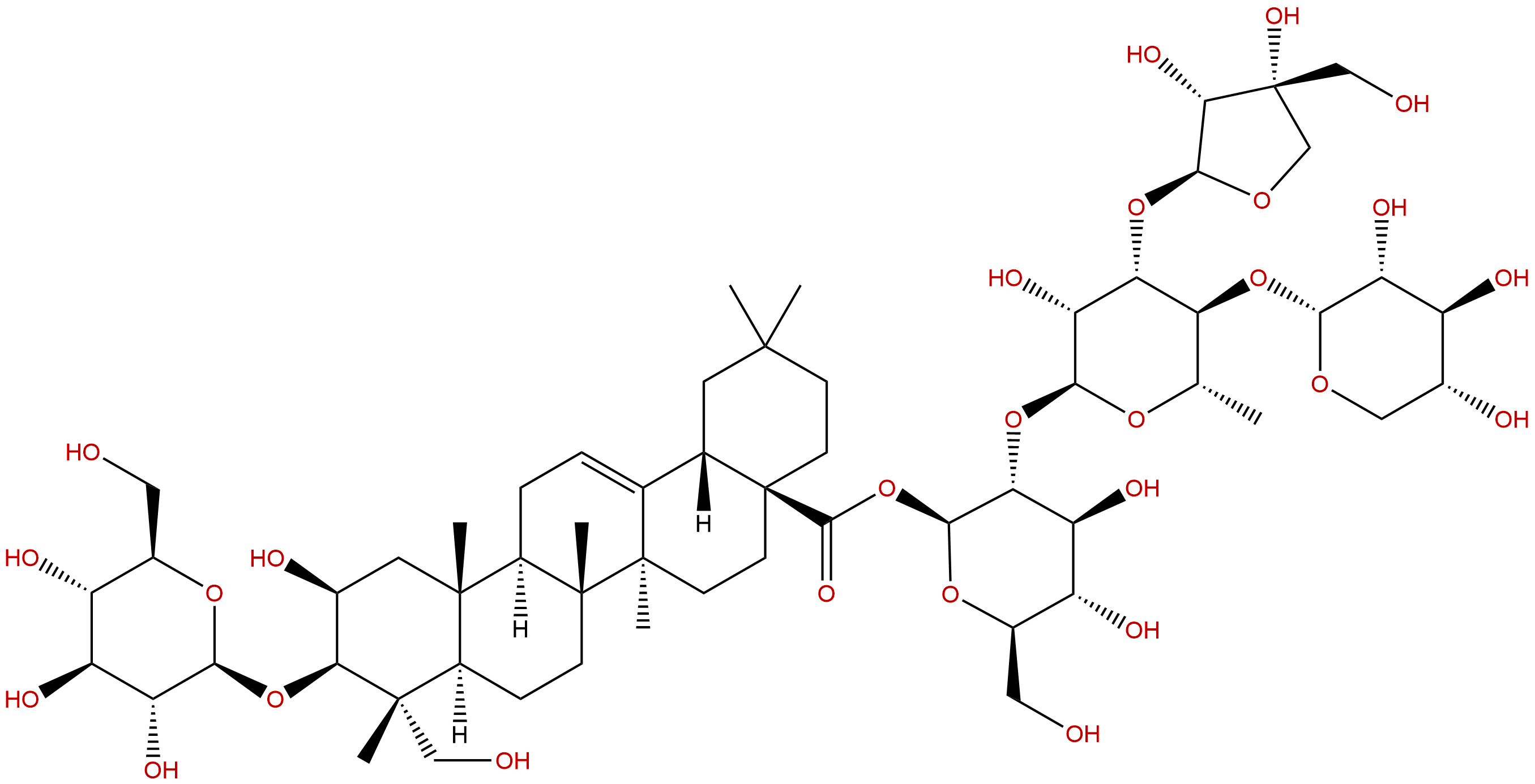


Product name: Polygalasaponin V
Synonym name:
Catalogue No.: BP1561
Cas No.: 162857-65-0
Formula: C58H94O27
Mol Weight: 1223.36
Botanical Source: Constit. of Polygala japonica
Physical Description: Powder
Type of Compound: Triterpenoids
Purity: 95%~99%
Analysis Method: HPLC-DAD or/and HPLC-ELSD
Identification Method: Mass, NMR
Packing: Brown vial or HDPE plastic bottle
The product could be supplied from milligrams to grams. Inquire for bulk scale.
We provide solution to improve the water-solubility of compounds, thereby facilitating the variety of activity tests and clinic uses.
For Reference Standard and R&D, Not for Human Use Directly.
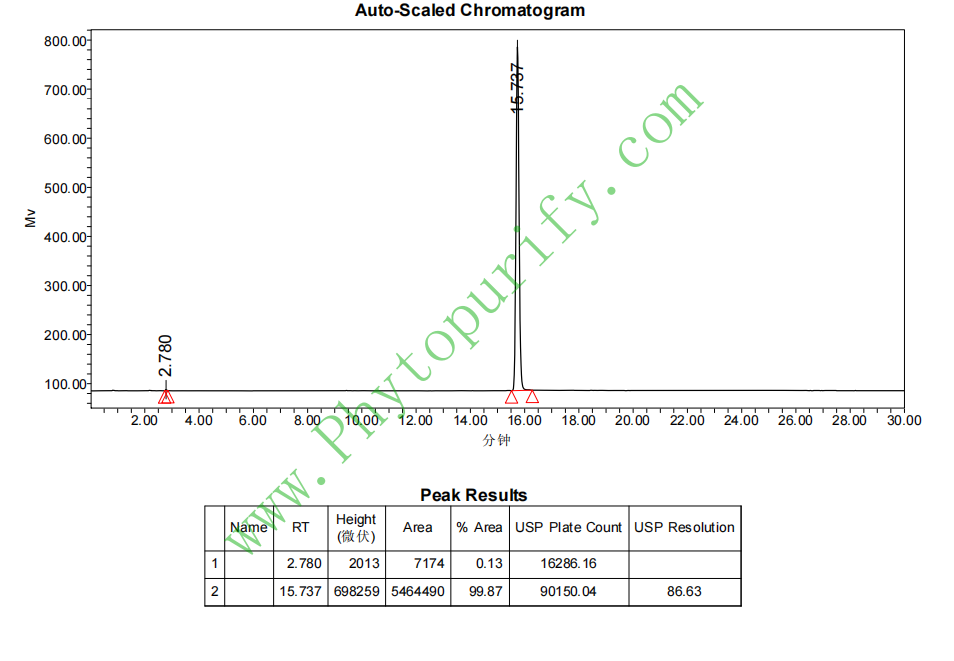
HPLC of Polygalasaponin V
Storage conditions:Short-term storage at 2~8℃, long-term storage at -20 ~ -80℃
433.0500
1.2282
1.2281
.3704
.4847
.2713
Low
67.4290
7.3559
Yes
No
No
No
No
No
0.0
Yes
No
No
Yes
Polygalasaponin V is a traditional medicinal plant derived from the melon seed gold(Polygala japonica)The triterpenoid saponins isolated from the aboveground part. Its CAS number is 162857-65-0, molecular formula is C58H94O27, and molecular weight is as high as 1223.3600 g/mol. It belongs to the complex structure of large molecule natural products. In folk medicine, melon seed gold(Polygala japonica)It is widely used as a expectorant, anti-inflammatory, antibacterial, and antidepressant drug in southern China, demonstrating its multifaceted biological activities. Modern pharmacological research further reveals that the saponin components extracted from this plant, especially the melon seed golden saponin V, exhibit significant anti anxiety and sedative hypnotic activities, and have a relatively safe dosage range, providing scientific basis for its application in the treatment of neurological diseases. However, further research has found that the compound exhibits potential anti-tumor activity by acting on multiple key cellular signaling pathways and regulatory proteins, making it a promising new star in the field of natural product anti-tumor drug development. This article will provide a systematic and professional popularization of Guazi Gin V from the aspects of its chemical structure, plant origin, pharmacological mechanism, medicinal evaluation, and research prospects.
The molecular structure of Guazi Gin V is complex, and its SMILES string provides a detailed description of its stereochemical configuration. As a triterpenoid saponin, its structural core is a steroid or triterpenoid nucleus (sapogenin), which is connected to multiple sugar groups (oligosaccharide chains). The molecular formula C58H94O27 indicates that it is a highly oxidized molecule containing 27 oxygen atoms, which is closely related to the presence of multiple hydroxyl and glycosidic bonds in its structure.
From the analysis of drug parameters, its molecular weight (MW) is 1223.3630 g/mol, far exceeding that of conventional small molecule drugs (usually<500 Da), which first suggests that it may not comply with the classical Lipinski Five Rules ("Five Principles of Drug Analogy") regarding molecular weight limitations. Its topological polar surface area (TPSA) is as high as 433.0500 Å ², which is mainly attributed to the numerous hydroxyl and sugar units in the molecule, resulting in strong molecular polarity and high hydrophilicity. The LogP value is 1.2282 and the LogD value is 1.2281, indicating that the compound has low lipophilicity at physiological pH, which is consistent with the conclusion of high TPSA. The water solubility parameter is 0.3704 (unit may be mg/mL or log mol/L, usually the higher the value, the better the solubility). Combined with its high polarity, it can be inferred that it should have moderate or good solubility in water, which is a favorable factor for drug formulation development.
However, high molecular weight and polarity also pose challenges. Its predicted Caco-2 cell permeability (Caco2_permeability) is only 0.2713 (usually a low value indicates poor permeability), and its blood-brain barrier permeability (BBB_permeability) is predicted to be "low", which seems contradictory to its traditional use in treating central nervous system diseases. This may suggest that its role in the central nervous system is not directly achieved through the penetration of the prototype drug through the blood-brain barrier, or that there is an active transport mechanism, or that its active metabolites play a role. The plasma protein binding rate (PPB) is 67.4290%, which is at a moderate level, meaning that about one-third of the drugs exist in free form in the blood and can be distributed to tissues to exert their effects.
Guazi Jin Saponin V mainly comes from the plant Guazi Jin(Polygala japonica). It is worth noting that in the provided information, the list of plant sources includes "Creeping Charlie" (scientific name)Glechoma hederacea Primulaceae, commonly referred to as Huoxue Dan, is not the same plant as Polygalaceae. There may be data confusion here. According to existing descriptions and mainstream research literature, melon seed saponin V should be correctly derived from plants in the Eupatoriaceae family Polygala japonica(Japanese Yuanzhi, commonly known as Guazi Jin) or related plants of the same genus, such as Polygala tenuifolia(Yuanzhi).
Polygala japonica As a folk medicinal plant, it has a long history of application in China. Its whole plant or root can be used as medicine, with a mild nature and a pungent and bitter taste. Its traditional effects mainly include Dispelling phlegm and cough, calming the heart and mind, reducing swelling and dispersing nodules In clinical practice, it is commonly used to treat symptoms such as cough and phlegm, insomnia and dreams, palpitations and forgetfulness, and abscesses and sores. This is highly consistent with the modern research revealing that its extract has activities such as cough suppressant, expectorant, anti-inflammatory, antibacterial, sedative, and antidepressant. The medicinal value of plants in the Yuanzhi genus is recorded in ancient texts such as the Shennong Bencao Jing, and is classified as a top-grade plant. It is believed to be able to "benefit wisdom, improve hearing and vision, never forget, and strengthen willpower and power". Guazi Jin, as a member of this genus, shares similar medicinal properties. From the traditional concept of "calming the mind and enhancing intelligence" to the modern research confirmed "anti anxiety, sedative hypnosis", and then to the newly discovered potential of "anti-tumor", it reflects the inheritance and development from traditional experience to modern scientific interpretation.
The pharmacological activity research of Guazi Jin saponin V is currently in its early stages, but it has shown the characteristics of multi-target action, especially in the field of anti-tumor potential, which is remarkable. The existing target information points to five key proteins: EGFR, TP53, KRAS, BAX, and CDKN1A. These targets do not exist in isolation, but are interwoven in a complex network of cell proliferation, apoptosis, and cycle regulation.
(1) Analysis of target network and anti-tumor mechanism:
Mechanism of action integration speculation:
Based on the above targets, we can outline the potential multi pathway anti-tumor mechanism model of Guazi Jin Saponin V:
1. Inhibit proliferation signals By intervening in EGFR and its downstream KRAS signaling, block the "throttle" that drives unlimited proliferation of tumor cells.
2. Activate tumor suppression and cell cycle checkpoint Stabilize or activate the function of p53 protein by acting on TP53. Activated p53 upregulates the expression of CDKN1A (p21), leading to cell cycle arrest in the G1 phase; On the other hand, by upregulating the expression of pro apoptotic proteins such as BAX, the intrinsic (mitochondrial) apoptotic pathway is activated.
3. Promote cell apoptosis The upregulation and activation of BAX protein directly lead to the breakdown of mitochondrial membrane potential and the release of apoptotic factors, ultimately triggering caspase dependent cell apoptosis.
Therefore, melon seed saponin V may be obtained through Multi pronged approach The strategy of inhibiting survival promoting signals while enhancing apoptosis promoting and cycle arrest signals is employed to exert anti-tumor effects. This multi-target characteristic may have advantages in overcoming the heterogeneity and drug resistance of tumor cells. Of course, these target information are mostly predictive or preliminary validation results, and their specific modes of action (such as direct binding, indirect regulation), affinity, and effectiveness in different tumor models still require extensive biochemical and cell biology experiments to confirm.
Drug efficacy evaluation is a crucial step in determining whether an active compound can be successfully developed into a drug. We combined Lipinski's Rule of Five (Ro5) and other ADMET (absorption, distribution, metabolism, excretion, toxicity) parameters to analyze the saponin V in melon seeds.
(1) Lipinski's Five Rules Compliance Analysis:
The Lipinski rule is commonly used to predict the oral bioavailability of small molecule compounds. The four main criteria are: ① MW<500 Da; ② LogP < 5; ③ The number of hydrogen bond donors (HBDs) is less than 5; ④ The number of hydrogen bond acceptors (HBAs) is less than 10. The situation of Guazi Golden Saponin V is as follows:
* MW (1223) >> 500 Serious exceedance.
* LogP (1.23) < 5: Compliant.
* HBD According to its structure (multiple sugar groups, each sugar has multiple hydroxyl groups), the number of HBDs is much greater than 5.
* HBA There are 27 oxygen atoms, most of which can be used as HBAs, and the number is much greater than 10.
Obviously, melon seed saponin V Completely inconsistent Lipinski's Five Rules. This strongly suggests that if oral administration For the target, the absorption of its prototype drug may be very poor, with extremely low bioavailability. This is consistent with its predicted extremely low Caco-2 permeability (0.2713) result.
(2) Interpretation of other pharmacological parameters:
* Absorption and distribution The low permeability of Caco-2 and BBB confirms its weak penetration ability as a large polar molecular membrane. The moderate plasma protein binding rate (67.4%) is acceptable.
* Metabolism and toxicity Ames test (0.0, usually negative), no chromosomal aberration, no hERG inhibition, no skin and respiratory sensitization, no phototoxicity, these data preliminarily indicate its Low risk of genetic toxicity and cardiac toxicity The security profile is relatively good. This provides an important security foundation for its further development.
* Hepatotoxicity markers Serological indicators predict potential effects on alkaline phosphatase (Ser_LK) and alanine aminotransferase (ALT) ("Yes"), but no effects on glutamyltransferase (GGT) and aspartate aminotransferase (AST) ("No"). This suggests that close attention should be paid to the potential risk of liver cell damage in actual preclinical studies.
(3) Comprehensive evaluation and development strategy:
Guazi Golden Saponin V as a Natural product macromolecular saponins The main challenges facing its medicinal properties are Poor oral absorption This does not mean that it has no development value, but rather that the development strategy needs to be adjusted:
1. route of administration Consider non oral routes, such as Injection administration(veins, abdominal cavity, etc.). This can bypass the absorption barrier and directly enter the systemic circulation. Its good water solubility is beneficial for the development of injectable formulations.
2. Prodrug strategy Preparation of lipophilic prodrugs by chemical modification (such as esterification of hydroxyl groups on sugar groups) to enhance membrane permeability and oral absorption, followed by hydrolysis in vivo to release active ingredients.
3. Simplified structure Using it as a lead compound, study its pharmacophore (triterpenoid nucleus or specific sugar chain), and attempt to synthesize or semi synthesize structurally similar compounds with lower molecular weight, retained activity, and compliance with drug like rules.
4. New delivery system By utilizing nano formulations such as liposomes and polymer micelles, as well as cyclodextrin inclusion techniques, the solubility, stability, and targeting properties of the product can be improved, and its bioavailability may even be enhanced to some extent.
At present, there is relatively limited specialized research literature on the saponin V in melon seeds, and most of its activity data comes from studies on total saponins or crude extracts of plants in the Euphorbia genus. Known studies have confirmed that saponins from Polygala tenuifolia have multiple activities including sedation, antidepressant, anti-inflammatory, neuroprotective, and anti-tumor effects. The target prediction and preliminary validation of the anti-tumor activity of Guazi Gin V itself have been carried out, but in-depth mechanism research, in vivo pharmacological evaluation, and pharmacokinetic studies are still in their infancy.
The application prospects are mainly reflected in the following aspects:
Future research directions should include:
* In depth study on the mechanism of action Confirm its direct or indirect effects on targets such as EGFR and p53 at the cellular and molecular levels, and elucidate its signaling pathway network.
* Comprehensive in vitro and in vivo efficacy evaluation Validate its anti-tumor activity on various human tumor cell lines and animal transplant tumor models, and explore its combined effect with standard therapies.
* Pharmacokinetic study Clarify its absorption, distribution, metabolism, and excretion processes in animal bodies, identify its main metabolites and their activities.
* Structural optimization and formulation development Based on the shortcomings of drug development, conduct research on prodrug design, structural simplification, or novel drug delivery systems to improve their pharmaceutical properties.
In summary, Guazi Jin Saponin V is a natural compound with a unique chemical structure, novel mechanism of action, and promising safety, discovered from the treasure trove of traditional Chinese medicine. Although its macromolecular properties have brought challenges to drug success, through reasonable pharmaceutical chemistry and pharmaceutical strategies, it is expected to be developed into a new drug with Chinese original characteristics for anti-tumor or nervous system disease treatment, fully reflecting the Chinese medicine development philosophy of "inheriting the essence, maintaining integrity and innovation". The research process will also provide valuable references for the development of other complex natural products.
