


Product name: Polygalasaponin F
Synonym name:
Catalogue No.: BP1122
Cas No.: 882664-74-6
Formula: C53H86O23
Mol Weight: 1091.25
Botanical Source: Polygala japonica
Physical Description: White powder
Type of Compound: Triterpenoids
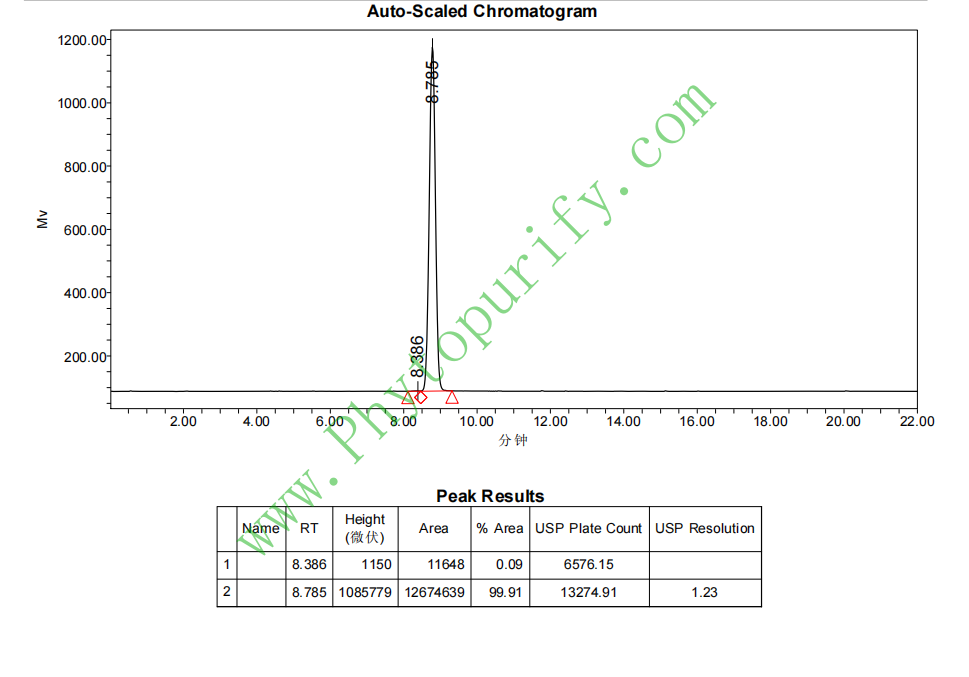
Purity: 95%~99%
Analysis Method: HPLC-DAD or/and HPLC-ELSD
Identification Method: Mass, NMR
Packing: Brown vial or HDPE plastic bottle
Storage: Store in a well closed container, protected from air and light. Put into refrigerate or freeze for long term storage.
Whenever possible, you should prepare and use solutions on the same day. However, if you need to make up stock solutions in advance, we recommend that you store the solution as aliquots in tightly sealed vials at -20℃. Generally, these will be useable for up to two weeks.
The product could be supplied from milligrams to grams, up to kilograms
Inquire for bulk scale.
Descriptions:
Polygalasaponin F (PG-F), a triterpenoid saponin isolated from Polygala japonica, can induce long-term potentiation in adult rat hippocampus via NMDA receptor activation.[1]
Polygalasaponin F can increase the viability of rotenone-induced PC12 cells, decrease rotenone-induced apoptosis, restore rotenone-induced mitochondrial dysfunction, and suppress rotenone-induced protein expression; PS-F protects PC12 cells against rotenone-induced apoptosis via ameliorating the mitochondrial dysfunction, thus, PS-F may be a potential bioactive compound for the treatment of Parkinson's disease.[2]
Polygalasaponin F can inhibit NF-κB nuclear translocation in a dose-dependent manner, and significantly inhibit the cytotoxicity of conditioned medium prepared by LPS-stimulated BV-2 microglia to neuronal PC12 cells and improve cell viability, it inhibits the secretions of neuroinflammatory cytokines by the regulation of NF-κB-signaling pathway.[3]
Polygalasaponin F has protective effects on PC12 cells injuried by serum deprivation, oxidative stress or oxygen-glucose deprivation.[4]
References:
[1] Sun F, Sun J D, Nan N, et al. Acta Pharmacol Sin, 2012, 33(4):431-7.
[2] Wu M M, Yuan Y H, Chen J, et al. J Asian Nat Prod Res, 2014, 16(1):59-69.
[3] Wei W, Yuan Y H, Gao Y N, et al. J Asian Nat Prod Res,, 2014, 16(8):865-75.
[4] Shi R L, Hu J F, Chen N H. International Conference For Physiological Sciences , 2012.
[5] Jiao Q Q, Wang W Y, Juan S U, et al. Journal of Pharmaceutical Practice, 2010, 28(2):137-9
HPLC of Polygalasaponin F
Storage conditions:Short-term storage at 2~8℃, long-term storage at -20 ~ -80℃
374.1300
1.5555
1.5552
.3453
.5316
.3182
Low
66.8726
6.8783
Yes
No
No
No
No
No
0.0
Yes
No
No
Yes
Neuroinflammation is a common pathological feature of various central nervous system diseases, such as Alzheimer's disease, Parkinson's disease, depression, and cerebral ischemic injury. The core lies in the excessive activation of neuroimmune cells such as microglia, which leads to the massive release of pro-inflammatory cytokines such as tumor necrosis factor alpha and interleukin-6, thereby causing neuronal damage and apoptosis. Therefore, targeting the neuroinflammatory signaling pathway has become an important strategy for the development of drugs for neurological and psychiatric disorders. In recent years, the discovery of natural products with anti neuroinflammatory activity from traditional medicinal plants has attracted much attention due to their multi-target and low toxicity advantages. Guazi Jin(Polygala japonica Houtt., as a plant of the Euphorbia family, is often used in traditional Chinese medicine to calm the mind, improve intelligence, and relieve phlegm and cough. Polygalasaponin F (PGSF) is a triterpenoid saponin of the oleane type isolated from guar seed gold, and is one of its main active ingredients. Research has shown that PGSF can significantly inhibit the release of inflammatory cytokines in microglia, and its effect is closely related to regulating the Toll like receptor 4-phosphatidylinositol 3-kinase/protein kinase B-nuclear factor kappa B (TLR4-PI3K/AKT-NF - κ B) signaling pathway. This article aims to systematically review the chemical structure, plant origin, pharmacological activity, molecular mechanism, and medicinal properties of PGSF, in order to provide comprehensive scientific basis for the in-depth research and development of this compound.
Polygalasaponin F (CAS number: 882664-74-6) is a structurally complex pentacyclic triterpenoid saponin of the oleanane type. Its molecular formula is C ₅₄ H ₈₆ O ₂₄, and its molecular weight is 1091.2480. Its basic skeleton is oleander 12-ene, with oligosaccharide chains connected at C-3 and C-28 positions, forming a disaccharide chain saponin structure. Specifically, the C-3 sugar chain is usually composed of glucose, xylose, etc., while the C-28 sugar chain is more complex and may contain glycosides such as glucuronic acid. This structural feature is an important basis for its high polarity and biological activity.
From the analysis of physical and chemical properties, the topological polar surface area of PGSF is as high as 374.1300 Å ², which is consistent with the presence of a large number of hydroxyl and sugar groups in its molecule, indicating its strong hydrophilicity. The calculated lipid water partition coefficient LogP value is 1.5555, indicating that the molecule exhibits a certain degree of amphiphilicity overall, but hydrophilicity dominates. The theoretical water solubility value is 0.3453 mg/mL, which belongs to the category of slightly soluble to soluble. This poses certain challenges for the development of formulations and may require improvement in solubility through techniques such as salt formation, cyclodextrin inclusion, or nanoformulation. These physicochemical parameters are the basis for evaluating the drug absorption, distribution, metabolism, and excretion characteristics.
Guazi Jin Saponin is mainly derived from the plant Guazi Jin in the Euphorbiaceae family and the Euphorbia genus(Polygala japonica Dry whole grass from Houtt. Belonging to medicinal plants such as Yuanzhi(P. tenuifolia)Yuanzhi with Egg Leaf(P. sibirica)It also contains saponins with similar structures, but there are differences in the specific composition spectrum and content. Guazi Jin, as a traditional Chinese medicine, has a wide distribution of resources, providing a guarantee for the sustainable acquisition of its active ingredients.
The extraction and separation of PGSF usually follow the conventional process of natural product chemistry. Firstly, the dried melon seed gold whole plant is crushed and subjected to heating reflux or ultrasound assisted extraction using polar solvents such as methanol, ethanol, or aqueous ethanol to fully extract saponin components. After vacuum concentration, the crude extract was subjected to liquid-liquid distribution extraction using solvents such as petroleum ether, ethyl acetate, and n-butanol. PGSF was mainly enriched in the n-butanol extraction site. Further purification relies on various chromatographic techniques. Large pore adsorption resin column chromatography is commonly used for initial impurity removal and enrichment, followed by repeated separation and purification using silica gel column chromatography, reverse phase silica gel column chromatography (such as ODS-C18), and high-performance liquid chromatography. Modern separation techniques such as high-speed countercurrent chromatography are increasingly being used for the preparation of highly polar saponins due to their advantages of irreversible adsorption and high recovery rate. The isolated monomer compounds need to be structurally confirmed by spectroscopic methods such as nuclear magnetic resonance and mass spectrometry.
A large number of in vitro and in vivo pharmacological studies have shown that the core pharmacological activity of melon seed saponins is focused on anti-inflammatory, especially anti neuroinflammatory, and exhibits related neuroprotective effects.
1. Anti neuroinflammatory activity
This is the most significant and characteristic activity of PGSF. In the lipopolysaccharide induced inflammation model of microglia (BV2 cells or primary microglia), PGSF can dose dependently inhibit the upregulation and release of key pro-inflammatory mediators. Research has confirmed that it can significantly reduce the production of nitric oxide and prostaglandin E ₂, and its molecular basis lies in the inhibition of the expression of inducible nitric oxide synthase and cyclooxygenase-2. More importantly, PGSF can effectively inhibit the secretion of various inflammatory cytokines, including tumor necrosis factor - α, interleukin-6, interleukin-1 β, etc. These cytokines are key drivers of neuroinflammation cascade amplification, and their decreased levels are directly associated with neuroprotective effects.
2. Neuroprotective effect
Based on its strong anti-inflammatory activity, PGSF has shown protective effects in various neural injury models. In a mouse model of LPS induced neuroinflammation, pre administration of PGSF can improve cognitive dysfunction, reduce activation of microglia in the hippocampus, and alleviate neuronal damage. In the model of cerebral ischemia-reperfusion injury, PGSF treatment can reduce the volume of cerebral infarction, alleviate brain edema, and improve neurological deficit scores. Its mechanism is closely related to the inhibition of excessive inflammatory response in the ischemic brain. In addition, in the Alzheimer's disease cell model induced by β - amyloid protein, PGSF also showed the potential to alleviate neuronal apoptosis.
3. Other potential activities
In addition to its central role, PGSF, as a triterpenoid saponin, may also have peripheral anti-inflammatory, cough suppressant, and expectorant activities (consistent with traditional efficacy), but there are few targeted research reports on this topic, and further exploration is needed.
The anti neuroinflammatory effect of PGSF is not achieved through a single target, but rather through the synergistic regulation of multiple targets and pathways. Its core lies in inhibiting the activation of the NF - κ B signaling pathway and involving the regulation of related inflammatory targets.
1. Core signaling pathway: TLR4-PI3K/AKT-NF - κ B axis
This is currently the clearest mechanism studied. When LPS and other pathogen related molecular patterns bind to Toll like receptor 4 on the cell membrane, downstream signals are activated. PGSF can intervene in this process:
* Inhibition of TLR4 activation or expression Reduce the initiation of inflammatory signals.
* Regulating the PI3K/AKT pathway The PI3K/AKT pathway plays a dual role in inflammation, but ample evidence suggests that PGSF exerts anti-inflammatory effects by activating this pathway. Activated AKT can phosphorylate and inhibit glycogen synthase kinase-3 β, which is a key kinase that promotes NF - κ B activity.
* Blocking NF - κ B nuclear translocation NF - κ B is the "master switch" of inflammatory gene expression. In the resting state, NF - κ B binds to the inhibitory protein I κ B α in the cytoplasm. Inflammatory stimulation leads to phosphorylation and degradation of I κ B α, allowing NF - κ B to be released and enter the nucleus. PGSF can effectively inhibit the phosphorylation and degradation of I κ B α, thereby preventing the nuclear translocation of NF - κ B p65 subunit, ultimately inhibiting the transcription of many inflammatory genes such as TNF - α, IL-6, IL-1 β, COX-2, iNOS, etc.
2. Key molecular targets
According to its pharmacological activity, the molecular target network of PGSF action includes:
* Pro-inflammatory transcription factors NFKB1 (NF - κ B p50 subunit) is its core functional node.
* Inflammatory cytokines Directly downregulate the production of TNF and IL-6.
* Inflammatory enzyme Inhibit the expression of NOS2 (iNOS) and PTGS2 (COX-2) regulated by NF - κ B.
* Signal transduction protein: Affects the activation status of STAT3, which is a key molecule in another important pro-inflammatory signaling pathway JAK/STAT.
* Ion channels and proteases There are studies suggesting that it may indirectly affect the TRPV1 and TRPA1 channels associated with neuroinflammation and pain, as well as the activity of the key cell death protein CASP1 (Caspase-1). The impact on PTGS1 (COX-1) may be minimal, which helps reduce common gastrointestinal side effects of nonsteroidal anti-inflammatory drugs.
In summary, PGSF exerts neuroprotective effects by acting on this complex target network, inhibiting the cascade reaction of neuroinflammation from multiple links.
Although PGSF has clear pharmacological activity, its potential to develop into an ideal drug still faces some challenges and requires systematic evaluation.
1. Analysis of pharmacological parameters
* Molecular size and permeability The molecular weight exceeds 1000 Da and the TPSA value is extremely high, which severely limits its ability to passively diffuse across membranes. Predicting a 'low' blood-brain barrier permeability is a major obstacle for treating central nervous system diseases. How to improve its BBB penetration rate is the focus of future formulation research.
* Solubility and stability Moderate to low water solubility may affect its oral absorption and in vivo distribution. As a saponin component, it may undergo hydrolysis or transformation in the acidic environment of the gastrointestinal tract and under the action of liver metabolic enzymes, affecting its bioavailability.
* Preliminary Safety Prediction According to existing calculation data, the risk of hERG inhibition is "no", indicating a low potential risk of arrhythmogenic cardiac toxicity. The Ames test predicted a value of 0.0, indicating that it may not have genetic toxicity. But this is only a computer simulation prediction and needs to be verified through real in vitro and in vivo toxicology experiments.
2. Current status of pharmacokinetic research
At present, there is a significant lack of reports on pharmacokinetic studies of the PGSF system, which is a key shortcoming in the development chain of this compound. Based on the commonality of its saponin compounds, it can be inferred that:
* absorb After oral administration, due to its high molecular weight and polarity, its complete absorption in the small intestine may be poor. The gut microbiota may hydrolyze its sugar chains to generate secondary glycosides, and the absorption and activity of these metabolites need to be studied.
* distribution Predicting its tissue distribution may be limited, especially with low delivery efficiency to brain tissue.
* Metabolism and excretion The liver may be its main metabolic site, and phase I and phase II metabolic reactions may occur. The prototype drug and its metabolites may be mainly excreted through the kidneys or bile.
A comprehensive pharmacokinetic study is urgently needed in the future, including quantitative analysis methodology of PGSF and its metabolites in biological samples, absolute bioavailability, tissue distribution (especially brain distribution), metabolite identification, and excretion pathways.
Guazi golden saponins, as a natural product with clear anti neuroinflammatory activity, have a clinical application prospect mainly focused on the field of neurological and psychiatric diseases, but their development path faces both opportunities and challenges.
1. Potential therapeutic areas
* Neurodegenerative diseases As an adjuvant or disease modifying therapy for Alzheimer's disease and Parkinson's disease, it delays disease progression by inhibiting chronic neuroinflammation in the brain.
* Cerebrovascular disease Used for acute neuroprotection and recovery treatment after stroke (ischemia/reperfusion injury), reducing secondary inflammatory damage.
* Neuropathic pain and depression The inflammatory mechanism plays an important role in such diseases, and PGSF may be explored as a multi-target regulator.
* Other inflammation related diseases Its peripheral anti-inflammatory activity is also worth evaluating in peripheral inflammatory diseases such as arthritis and colitis.
2. Future research directions and challenges
* In depth mechanism exploration Using techniques such as gene knockout, proteomics, transcriptomics, etc., further elucidate its upstream receptors (such as whether it directly acts on TLR4) and downstream signaling networks, and discover new targets of action.
* Overcoming the bottleneck of traditional Chinese medicine This is the key to conversion. Research directions include: ① Structural modification: modifying glycosides or aglycones while retaining pharmacophores to improve lipid solubility and BBB penetration; ② New drug delivery system: Develop drug delivery systems such as liposomes, nanoparticles, and polymer micelles, or combine them with brain targeted peptides and receptor-mediated transporters to actively promote their delivery within the brain; ③ Prodrug strategy: Design prodrugs that are converted into active forms in specific parts of the body, such as the brain.
* Conduct systematic preclinical evaluation Complete standardized pharmacological (more disease models), pharmacokinetic, and toxicological (acute toxicity, long-term toxicity, reproductive toxicity, etc.) studies to provide a complete data package for clinical trial applications.
* Explore the application of compound formulas Combining the holistic perspective of traditional Chinese medicine, studying the combination of PGSF with other active ingredients in Guazi Jin (such as other saponins and oligosaccharides), or with existing neuroprotective drugs, may produce synergistic effects and reduce toxic side effects.
Guazi Jin saponin is a representative oleanane type triterpenoid saponin isolated from traditional Chinese medicine Guazi Jin. It exhibits significant anti neuroinflammatory and neuroprotective activity through multi-target regulation, particularly by inhibiting the TLR4-PI3K/AKT-NF - κ B signaling axis. It has broad potential for development in the treatment of neurodegenerative diseases, stroke, and other conditions. However, its large molecular weight, high polarity, and predicted low blood-brain barrier permeability constitute the main obstacles to its conversion to drugs. Future research should focus on deepening the understanding of its molecular mechanisms, breaking through the bottleneck of drug development, and improving its pharmacokinetic properties through rational drug chemical modifications or advanced drug delivery techniques. Meanwhile, the preclinical safety and efficacy evaluation of the system is an indispensable part. Only through continuous interdisciplinary efforts can this natural molecule derived from traditional medicine become a new starting point for the development of modern drugs for the treatment of neuroinflammatory diseases.
