


Product name: Skimmin
Synonym name:
Catalogue No.: BP1316
Cas No.: 93-39-0
Formula: C15H16O8
Mol Weight: 324.285
Botanical Source: Polygala japonicaHoutt.
Physical Description:
Type of Compound: Coumarins
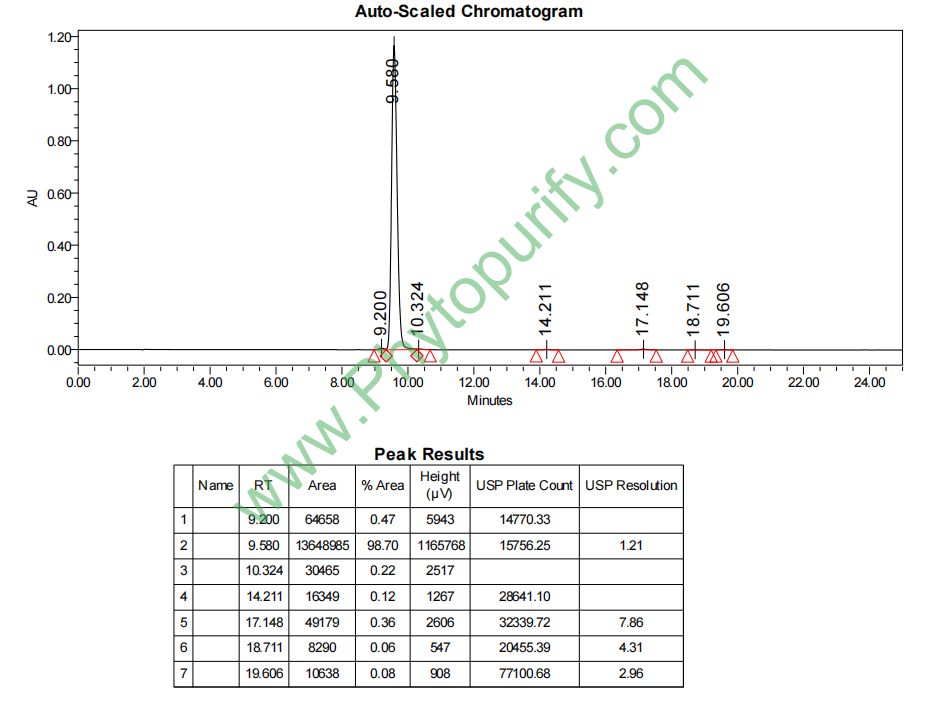
Purity: 95%~99%
Analysis Method: HPLC-DAD or/and HPLC-ELSD
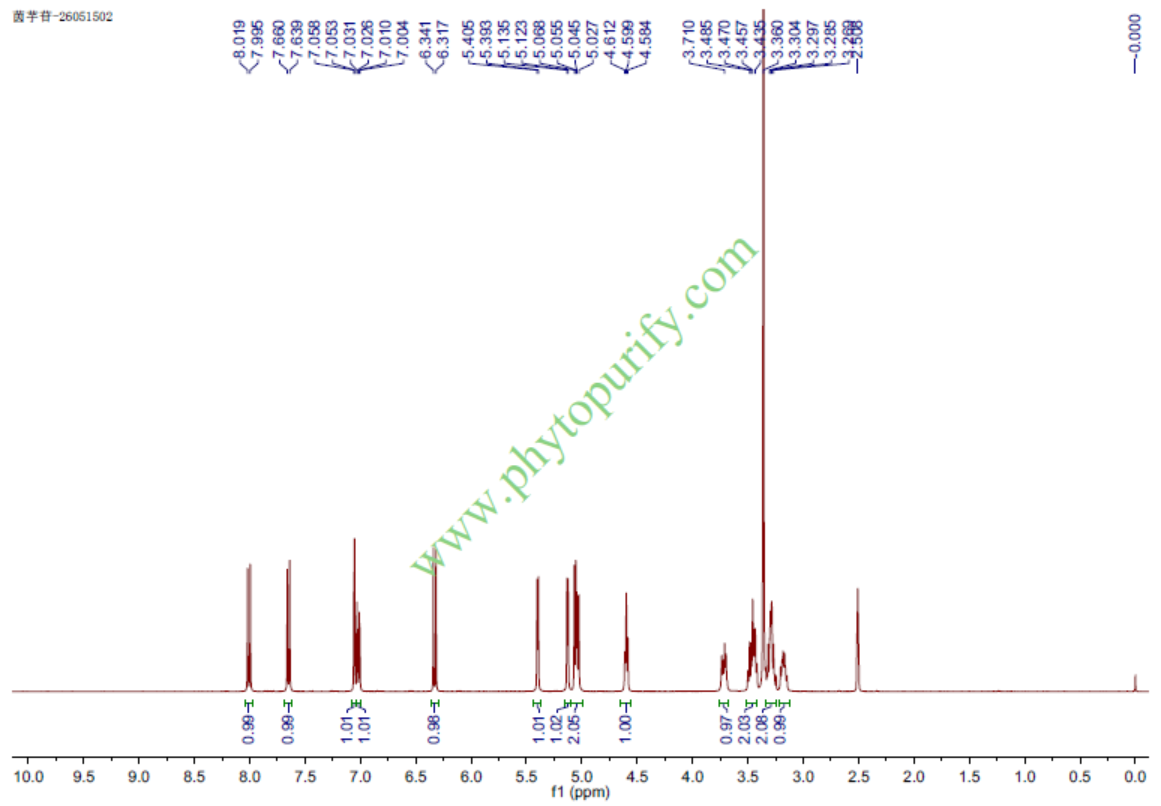
Identification Method: Mass, NMR
Packing: Brown vial or HDPE plastic bottle
Storage: Store in a well closed container, protected from air and light. Put into refrigerate or freeze for long term storage.
Whenever possible, you should prepare and use solutions on the same day. However, if you need to make up stock solutions in advance, we recommend that you store the solution as aliquots in tightly sealed vials at -20℃. Generally, these will be useable for up to two weeks.
The product could be supplied from milligrams to grams
Inquire for bulk scale.
Chengdu Biopurify Phytochemicals Ltd. is a leading company in the research, development, manufacture and marketing of High Quality Phytochemicals and Extracts(especially Active Ingredients from Traditional Chinese Medicine,TCM), Natural Active Pharmaceutical Ingredients worldwide.
The main services:
A. Supply active ingredients and reference standards of TCM, from mgs to kgs scale
B. Custom extraction and purification, target Herb Active Ingredients
C. Custom synthesis and semi-synthesis for Natural Active Ingredients
D. CR(contract research), CM(contract manufacture) and PD(process development) services from lab scale, pilot scale to commercial scale(GMP is also available)
E. TCM compounds library for drug screen,more than 3000 compounds available, many of them are rare and unique.
HPLC of Skimmin
HNMR of Skimmin
Storage conditions:Short-term storage at 2~8℃, long-term storage at -20 ~ -80℃
129.5900
-.2313
-.2313
6.6891
.6367
.4024
Low
40.8146
3.5672
Yes
No
No
No
Yes
Yes
0.9
Yes
Yes
Yes
Yes
Natural products, as an important source of drug discovery and development, play an irreplaceable role in the history of human disease prevention and treatment. Among them, coumarin compounds have attracted much attention due to their wide range of biological activities. Skimmin (CAS number: 93-39-0), also known as umbelliferin-7-O - β - D-glucoside, is a typical representative of coumarin glycosides. It is not only one of the main active ingredients that exert pharmacological effects in traditional Chinese medicine Hydrangea macrophylla, but also widely present in various plants such as Rutaceae and Umbelliferae. Due to its orally effective properties, yam glycoside has become an important bridge connecting traditional medicinal experience with modern pharmacological research.
In recent years, with the continuous deepening of research on yam glycoside, its various pharmacological activities have gradually been revealed. Early research mainly focused on its anti-inflammatory effects, which is consistent with the use of hydrangea flowers in traditional medicine for treating inflammatory diseases. Subsequent studies have continuously expanded its activity spectrum and found that it has significant potential in kidney protection, antiparasitic, anti-tumor, neuroprotection, anti cardiac fibrosis and intervention of diabetes related complications. This "multi-target, multi pathway" characteristic of action gives it unique advantages in treating complex diseases, especially those closely related to chronic inflammation and oxidative stress. The purpose of this article is to systematically review the chemical properties, plant sources, pharmacological activities, mechanisms of action, and medicinal properties of yam glycoside, and to prospect its clinical application prospects, in order to provide comprehensive scientific references for the in-depth research and development of this natural product.
The molecular formula of yam glycoside is C15H16O8, with a molecular weight of 324.2850. Its chemical structure is composed of a parent coumarin (7-hydroxycoumarin, also known as umbelliferone) connected to a D-glucose unit via a β - glycosidic bond at the 7th hydroxyl position. This glycosylation modification significantly alters the physicochemical properties and biological activity of its parent glycoside, umbelliferone.
In terms of physicochemical properties, the introduction of glycosidic bonds greatly enhances the hydrophilicity of yam glycosides. Its theoretical distribution coefficient (LogP) is -0.2313, indicating that it has low lipid solubility and strong hydrophilicity. The topologically polar surface area (TPSA) is as high as 129.59 Å ², mainly attributed to the numerous oxygen atoms (sugar groups and coumarin lactone rings) in the molecule. The predicted value of its water solubility is 6.6891 mg/mL, which belongs to the soluble range. These properties determine the distribution characteristics of icariin in organisms: its ability to cross lipid bilayers (such as the blood-brain barrier) is weak, and predictions indicate low blood-brain barrier permeability. However, its good water solubility and oral bioavailability (due to the possibility of sugar groups promoting intestinal absorption) provide the possibility for its oral administration.
From the perspective of chemical stability, coumarin mother nuclei may undergo ring opening or dimerization reactions under light, and glycosidic bonds can be hydrolyzed under strong acid or specific enzymes (such as β - glucosidase), releasing active aglycone umbelliferone. This characteristic may be of great significance in metabolism and activity in vivo, that is, yam glycosides may be absorbed and transported in the form of prodrugs, and exert their effects by releasing glycosides through enzymatic interpretation in target tissues or cells.
Yinyu glycoside is relatively widely distributed in the plant kingdom, and its main natural sources include:
1. Hydrangea family The leaves and flowers of Hydrangea macrophylla are the most famous source of icariin. Hydrangea flowers are commonly used in traditional East Asian medicine to treat malaria, inflammation, and autoimmune diseases, and icariin is considered one of its key medicinal ingredients.
2. Rutaceae family Various plants in the Rutaceae family, such as Skimmia japonica (which is derived from the English name for icariin) and Bai Xian, also contain abundant icariin.
3. Apiaceae Some Umbelliferae plants have also been detected.
4. Other There are also sporadic reports in some Solanaceae and Asteraceae plants.
The extraction method of yam glycoside follows the general principles of natural product extraction, but the stability of its glycoside structure needs to be considered. Common methods include:
* Solvent extraction method The most commonly used method is to use methanol, ethanol, or ethanol water mixed solvents for reflux extraction or ultrasound assisted extraction. Due to the high polarity of yam glycoside, an appropriate proportion of water (such as 70% -80% ethanol) can help improve the extraction rate.
* Purification and Separation After filtration and concentration, the crude extract can be enriched using macroporous adsorption resins (such as D101, AB-8), and eluted with water and different concentrations of ethanol in a gradient. Inositol is usually eluted with low to medium concentrations of ethanol. Further purification can be achieved through techniques such as silica gel column chromatography, reverse phase silica gel column chromatography (such as ODS-C18), and preparative high-performance liquid chromatography (HPLC). Its UV absorption characteristics (coumarin core has strong absorption at 300-320 nm) are convenient for HPLC detection.
* Modern extraction techniques Microwave assisted extraction and supercritical fluid extraction techniques can also be used to improve extraction efficiency and selectivity, but conditions need to be optimized to avoid hydrolysis of glycosidic bonds caused by high temperatures or extreme pH.
Numerous in vitro and in vivo pharmacological experiments have confirmed that icariin has a wide range of significant biological activities.
1. Anti inflammatory activity
This is the core activity of yam glycoside that was first recognized. In various animal models of acute and chronic inflammation, such as carrageenan induced rat foot swelling, cotton ball granuloma, and lipopolysaccharide induced systemic inflammation, icariin can effectively inhibit redness, exudation, and inflammatory cell infiltration at the site of inflammation. Its anti-inflammatory strength is comparable or superior to classical NSAIDs drugs, and its gastrointestinal side effects may be lower.
2. Renal protective activity
Yinyu glycoside has shown clear protective effects in various kidney injury models. In acute kidney injury models induced by drugs (such as cisplatin, gentamicin), chemical toxins, or ischemia-reperfusion, administration of icariin can significantly reduce plasma creatinine and urea nitrogen levels, increase creatinine clearance rate, and alleviate necrosis, vacuolization, and tubular formation of renal tubular epithelial cells. In chronic kidney disease models such as diabetes nephropathy, it can reduce proteinuria and delay the progression of glomerulosclerosis and interstitial fibrosis.
3. Antiparasitic activity
Yinyu glycoside showed good in vitro anti amoebic activity against the HM1: IMMS strain of Entamoeba histolytica. Its mechanism of action may be related to interfering with the metabolism of parasites or disrupting their cell membrane structure, providing lead compounds for the development of new anti amoebic drugs.
4. Antitumor and neuroprotective activity
Preliminary studies have shown that icariin can inhibit the proliferation of some cancer cell lines (such as breast cancer and liver cancer) and induce apoptosis. In terms of neuroprotection, it has shown potential in reducing oxidative stress, inhibiting neuroinflammation, and reducing neuronal apoptosis in Alzheimer's and Parkinson's disease cell and animal models, indicating its intervention value in neurodegenerative diseases.
5. Anti cardiac fibrosis and metabolic regulation
Yinyu glycoside can alleviate stress load or angiotensin II induced cardiac fibrosis, and improve cardiac function. Its function is related to inhibiting the activation of myocardial fibroblasts and reducing extracellular matrix deposition. In addition, icariin shows a promising application prospect in the study of diabetes and its complications, which may play a role in improving insulin resistance, inhibiting the formation of advanced glycation end products, protecting pancreatic β cells and other ways.
The multiple pharmacological activities of icariin stem from its regulation of multiple key signaling pathways and molecular targets, and its core mechanism revolves around Anti inflammatory, antioxidant, and anti fibrotic properties open.
1. Core anti-inflammatory pathway: NF - κ B and STAT3 signaling axis
The anti-inflammatory effect of yam glycoside is mainly achieved by inhibiting the nuclear factor kappa B (NF - κ B) and signal transduction and transcription activator 3 (STAT3) pathways. It can inhibit the degradation of I κ B α, prevent nuclear translocation of NF - κ B p65 subunit, and downregulate the expression of a series of pro-inflammatory mediators, including:
* cytokine Tumor necrosis factor - α (TNF - α), interleukin-6 (IL-6), interleukin-1 β (IL-1 β).
* Inflammatory enzyme Inducible nitric oxide synthase (NOS2) and cyclooxygenase-2 (PTGS2/COX-2).
Meanwhile, icariin can inhibit the JAK-STAT3 pathway activated by factors such as IL-6, block the phosphorylation and nuclear localization of STAT3, and further inhibit the transcription of inflammation and tumor related genes.
2. Regulation of inflammasomes and cell pyroptosis
Yinyu glycoside has been shown to inhibit the assembly and activation of NLRP3 inflammasomes, reduce the activity of caspase-1 (CASP1), thereby reducing the maturation and release of IL-1 β and IL-18, and inhibiting Gasdermin D-mediated cell apoptosis. This is an important mechanism for combating aseptic inflammation, such as metabolic diseases and neurodegenerative diseases.
3. Ion channels and pain perception regulation
Yinyu glycoside has a regulatory effect on transient receptor potential vanillic acid subtype 1 (TRPV1) and transient receptor potential anchor protein subtype 1 (TRPA1) channels. These two channels are important sensors for pain and neuroinflammation. Yinyu glycoside may exert analgesic and anti neuroinflammatory effects by antagonizing the activity of these channels.
4. Antioxidant and anti fibrotic mechanisms
Yinyu glycoside can activate the nuclear factor E2 related factor 2 (Nrf2) pathway, upregulate the expression of phase II detoxifying enzymes and antioxidant enzymes such as heme oxygenase-1 (HO-1), and enhance cell resistance to oxidative stress. In terms of anti fibrosis, its core is to inhibit the transforming growth factor - β 1 (TGF - β 1)/Smad signaling pathway, reduce the synthesis and deposition of extracellular matrix such as collagen and fibronectin, which has been validated in renal and cardiac fibrosis models.
5. Dual inhibition of classic inflammatory enzymes
In addition to inhibiting inducible PTGS2, icariin also has a certain regulatory effect on constitutive PTGS1 (COX-1), which may broaden its anti-inflammatory spectrum. However, further research is needed to clarify whether it inhibits or regulates gastrointestinal protective prostaglandins.
In summary, icariin acts on multiple key targets such as NF - κ B, STAT3, NLRP3, TRP channel, Nrf2, TGF - β 1, etc., forming a synergistic networked mechanism of action, which is the molecular basis for its therapeutic effect on various complex diseases.
Based on the provided pharmacological parameters and existing research, the preliminary evaluation of the pharmacological properties of yam glycoside is as follows:
1. Pharmacodynamics (pharmacokinetics)
Current research is relatively limited, but predictions can be made based on its properties. Yinyu glycoside, as a glycoside, may be absorbed in the upper small intestine through sodium dependent glucose transporter (SGLT1) or passive diffusion after oral administration. The β - glucosidase in the gut microbiota and intestinal mucosal cells may hydrolyze it into aglycone umbelliferone, which has higher lipid solubility and faster absorption. Therefore, after oral administration of icariin, there may be two active forms of the prototype drug and aglycone present in the body simultaneously. After absorption, icariin is widely distributed, but due to its hydrophilicity and large TPSA, its ability to penetrate the blood-brain barrier is predicted to be weak (BBB permeability is low), which seems to contradict its potential neuroprotective effect. This suggests that its peripheral anti-inflammatory effect may affect the central nervous system through indirect mechanisms (such as regulating peripheral immunity), or its glycoside form may play a role in the central nervous system. In terms of metabolism, glycosides may undergo deglycosylation, while coumarin mother nuclei may undergo hydroxylation, methylation, glucuronidation, or sulfation binding reactions. The excretion pathway may mainly be through the kidneys (prototype or metabolites) and bile.
2. Preliminary evaluation of safety
* Genotoxicity The Ames test result is 0.9 (usually considered negative if the number of revertant mutant colonies is less than twice that of the negative control), indicating that it is not mutagenic, but further genetic toxicity tests are needed to confirm.
* cardiotoxicity The inhibitory prediction of hERG is' no ', indicating a lower risk of inducing QT interval prolongation and apical torsion ventricular tachycardia in the heart, which is a favorable safety feature.
* acute toxicity Traditional medicinal history suggests that it has good safety within a certain dosage range, but requires systematic acute and subacute toxicity test data support.
3. Advantages and Challenges
Advantage Oral administration is effective, with multi-target effects, wide sources, and good preliminary safety (no hERG inhibition, Ames negative).
challenge:
* bioavailability The absolute bioavailability of glycoside forms needs to be clarified and may require improvement through formulation techniques such as nanomaterials and phospholipid complexes.
* Blood-brain barrier permeability Low BBB permeability may limit its direct therapeutic effect on central nervous system diseases.
* Specificity of action The multi-target characteristic is a double-edged sword. While it brings broad-spectrum therapeutic effects, it may also increase the risk of off target side effects, requiring more precise research on target contribution.
* Complete preclinical pharmacokinetic and toxicological data Currently, there is a lack of systematic ADME (absorption, distribution, metabolism, excretion) and long-term toxicity research data.
As a multi active natural product, the clinical application development of yam glycoside can focus on the following directions:
1. Adjuvant treatment for chronic kidney disease (CKD)
In view of its clear renal protective effects (anti-inflammatory, antioxidant, anti fibrosis), icariin is expected to be developed as an auxiliary drug for CKD, such as diabetes nephropathy, hypertensive kidney damage, and drug-induced kidney damage. Can be used in combination with existing RAS inhibitors, SGLT2 inhibitors, etc. to provide multi mechanism synergistic protection.
2. Inflammatory pain and arthritis
It exerts anti-inflammatory and analgesic effects by inhibiting COX, TRPV1/TRPA1 channels, and cytokines, and the gastrointestinal risk may be lower than traditional NSAIDs. It has the potential to be used for the treatment of osteoarthritis, rheumatoid arthritis, and neuropathic pain.
3. Inflammatory complications of metabolic diseases
Chronic low-grade inflammation exists in diabetes, atherosclerosis, non-alcoholic fatty liver disease, etc. Yinyu glycoside may be used to intervene in the inflammatory process of these diseases and delay the progression of complications by inhibiting core inflammatory pathways such as NF - κ B and NLRP3.
4. Anti fibrotic drugs
Targeting the TGF - β pathway is an important strategy in fibrotic diseases of organs such as the heart, lungs, and liver. The anti fibrotic effect of yam glycoside provides a possibility for its application in this field.
Future research and development directions:
* In depth mechanism research Using chemical biology methods (such as molecular probes) to identify their direct target proteins; Elucidate the spatiotemporal differences in the contribution of its prototype and aglycones in vivo.
* structural optimization Improve its pharmacokinetic properties through chemical modification, such as enhancing BBB penetration, increasing targeting, and prolonging half-life.
* Formulation development Develop new drug delivery systems, such as nanoparticles, liposomes, and prodrug formulations, to improve their bioavailability and target tissue distribution.
* Preclinical and clinical research Complete the GLP toxicology evaluation of the system as soon as possible and design reasonable clinical trials. Firstly, phase II clinical studies can be conducted in advantageous areas such as kidney protection and anti arthritis.
* Exploration of combination therapy Explore the combination therapy of icariin and existing standard therapeutic drugs, and evaluate their synergistic or attenuated effects.
Yinyu glycoside is a natural coumarin glycoside with multi-target pharmacological activity derived from traditional Chinese medicine hydrangea flowers. Starting from the traditional use of anti-inflammatory agents, modern research has expanded their activity boundaries to multiple important fields such as kidney protection, anti fibrosis, neuroprotection, anti parasitic effects, and metabolic regulation. Its mechanism of action network is clear, with the core being the regulation of key signaling pathways such as NF - κ B, STAT3, NLRP3, TGF - β, etc. It has anti-inflammatory, antioxidant, and anti fibrotic effects. The preliminary pharmacological parameters show that it has oral efficacy, low risk of cardiac toxicity and genetic toxicity, laying the foundation for its further development.
Although significant progress has been made in understanding the mechanism of action, the clinical application of icariin still faces challenges such as pharmacokinetic optimization, precise analysis of target specificity, and comprehensive preclinical evaluation. In the future, through interdisciplinary collaboration and the combination of modern medicinal chemistry, pharmacology, and systems pharmacology, icariin is highly likely to develop from an excellent natural product lead compound into an innovative drug for the treatment of chronic inflammation related diseases (especially chronic kidney disease and arthritis), fully demonstrating the transformation value from traditional wisdom to modern medicine. Its research process also provides a reference paradigm for the development of other similar multi active natural products.
