Introduction/Overview
Natural products, as an important source of drug discovery, play an irreplaceable role in the long history of human struggle against diseases. Flavonoids, as the most widely distributed class of secondary metabolites in nature, have attracted much attention due to their structural diversity and extensive biological activity. Among them, Kaempferol and its glycoside derivatives are important members of the flavonoid family, exhibiting multiple pharmacological effects including antioxidant, anti-inflammatory, anti-tumor, and cardiovascular protection. Kaempferol-3-O - α - L-arabinopyranoside, also known as Jugralin, is a natural glycoside formed by connecting the kaempferol-3-O - α - L-arabinopyranoside nucleus and an α - L-arabinopyranosyl group to the C-3 position through an O-glycosidic bond. This compound is the first from the walnut genus(Juglans)The isolation and identification of plants, and their naming also originated from this. In recent years, with the advancement of separation technology, activity screening methods, and molecular biology techniques, the unique chemical structure and potential medicinal value of Juglalin have gradually been revealed. Especially its potential in antioxidant stress-related diseases makes it a worthwhile subject for further research in the field of natural product pharmacology. This article aims to systematically review the chemical structure, plant origin, extraction process, pharmacological activity, mechanism of action, pharmacological characteristics, and clinical application prospects of Juglalin, in order to provide comprehensive scientific basis for further research and development of this compound.
Chemical structure and physicochemical properties
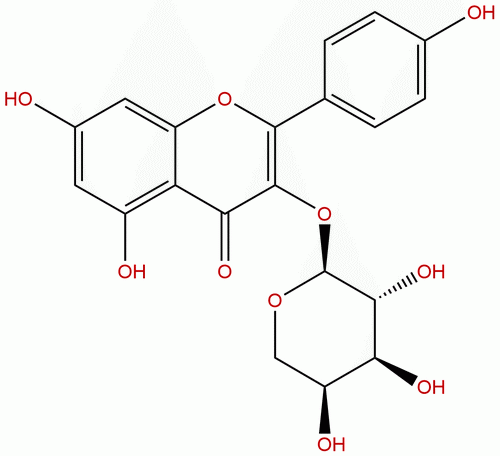
The chemical structure of Juglalin belongs to flavonol glycosides. Its parent nucleus is kaempferol (3,5,7,4 '- tetrahydroxyflavone), which has a typical C6-C3-C6 skeleton of flavonoids. On the C-3 hydroxyl group, an α - L-arabinopyranosyl group is connected via a β - glycosidic bond. Arabinose is a five carbon sugar, and its pyran ring configuration endows the molecule with specific spatial conformation and physicochemical properties. The presence of this sugar group not only increases the water solubility of the molecule, but also profoundly affects its interaction mode with biological targets.
From the perspective of physical and chemical properties, the molecular formula of Juglalin is C ₂₀ H ₁₈ O ₁₀, with a molecular weight of 418.3540 g/mol. Its lipid water partition coefficient (LogP) is 0.5598, indicating that the compound has a certain hydrophilicity, but is not completely water-soluble and has moderate lipophilicity, which is beneficial for its transmembrane transport and distribution in organisms. Its topological polar surface area (TPSA) is as high as 170.0500 Å ², which is much higher than the recommended upper limit of 140 Å ² for oral drugs, suggesting that it may have lower oral bioavailability and poorer membrane permeability. The water solubility parameter is 0.6237, which belongs to moderate to moderate water solubility. In terms of blood-brain barrier (BBB) permeability, the predicted results show that its penetration ability is low, which limits its application in the treatment of central nervous system diseases, but also reduces the potential risk of neurotoxicity. In addition, the predicted inhibition of hERG potassium ion channels was' no ', indicating a low risk of causing QT interval prolongation and arrhythmia in the heart. The Ames test result is 1.2, usually indicating that the compound may show weak or suspected positivity in bacterial reverse mutation testing, and further confirmation through in vitro and in vivo genetic toxicity experiments is needed. Overall, the physicochemical properties of Jugralin exhibit typical flavonoid glycoside characteristics, namely high polarity, low membrane permeability, and low BBB penetration, which presents opportunities (such as low toxicity) and challenges (such as low bioavailability) for its drug development.
Plant sources and extraction methods
Juglalin was originally isolated from plants in the Juglandaceae family, which is also the origin of its common name "Juglalin". Peach genus(Juglans)Plants, such as walnuts(Juglans regia)Black walnut(Juglans nigra)The leaves, bark, green bark, and root bark all contain abundant Jugralin. In addition, the compound is also widely present in plants of other families and genera, such as strawberries in the Rosaceae family(Fragaria × ananassa)Hanging hook(Rubus spp.), Some species of Fabaceae and Asteraceae plants. This widespread distribution suggests that Jugralin may be a relatively conserved secondary metabolite in the plant kingdom, involved in physiological processes such as plant defense, antioxidant, and signal transduction.
The extraction of Jugralin is usually carried out using classical phytochemical methods. Firstly, the dried plant material is crushed and subjected to cold soaking, percolation, or reflux extraction using polar solvents such as methanol, ethanol, or aqueous ethanol. Due to the high polarity of Jugralin, high concentration alcohol water mixed solvents (such as 70% -80% ethanol) often achieve higher extraction rates. After the extraction solution is concentrated under reduced pressure, crude extract is obtained. Subsequently, using liquid-liquid extraction method, such as stepwise extraction with petroleum ether, ethyl acetate, and n-butanol, Jugralin can be enriched in the n-butanol or ethyl acetate fractions. Further separation and purification mainly rely on various chromatographic techniques. Silica gel column chromatography is the most commonly used method, often using solvent systems such as chloroform methanol water or ethyl acetate methanol water for gradient elution. In addition, polyamide column chromatography, Sephadex LH-20 gel column chromatography and preparative high performance liquid chromatography (Pre HPLC) are also widely used in the purification of Juglan. In recent years, modern separation techniques such as high-speed countercurrent chromatography (HSCCC) have been successfully applied to the rapid preparation of Juglin due to their high separation efficiency and minimal sample loss. Finally, the purified product was structurally identified using spectroscopic methods such as nuclear magnetic resonance spectroscopy (NMR) and mass spectrometry (MS).
Pharmacological activity research
Jugralin, as a glycoside derivative of kaempferol, inherits multiple pharmacological activities from the parent nucleus and exhibits unique advantages in certain aspects. At present, research on its pharmacological activity mainly focuses on the following aspects:
1. Antioxidant activity
Antioxidant activity is the core and fundamental pharmacological activity of Jugralin. Numerous in vitro experiments have shown that Jugralin can effectively scavenge various free radicals, including 1,1-diphenyl-2-trinitrophenylhydrazine (DPPH) free radical, 2,2 '- diazo-bis-3-ethylbenzothiazoline-6-sulfonic acid (ABTS) cationic free radical, superoxide anion free radical, and hydroxyl free radical. Its antioxidant capacity is closely related to the phenolic hydroxyl groups in its molecular structure (especially the 4 '- hydroxyl group on the B ring and the 5,7-dihydroxy group on the A ring), which can provide hydrogen atoms or electrons to neutralize free radicals. In addition, Jugralin can inhibit the Fenton reaction and reduce the generation of reactive oxygen species (ROS) by chelating transition metal ions such as Fe ² ⁺ and Cu ² ⁺. In cell models, Jugralin pretreatment can significantly alleviate oxidative damage induced by hydrogen peroxide (H ₂ O ₂), tert butyl hydroperoxide (t-BHP), or ultraviolet irradiation, manifested by reducing intracellular ROS levels, decreasing the content of lipid peroxidation product malondialdehyde (MDA), and increasing the activity of endogenous antioxidant enzymes such as superoxide dismutase (SOD), catalase (CAT), and glutathione peroxidase (GPx).
2. Anti inflammatory activity
Oxidative stress is closely related to inflammatory response. Jugralin has shown anti-inflammatory potential in various inflammatory models. Research has shown that Jugralin can inhibit the production of nitric oxide (NO) and prostaglandin E ₂ (PGE ₂) in macrophages stimulated by lipopolysaccharide (LPS), which is related to its downregulation of inducible nitric oxide synthase (iNOS) and cyclooxygenase-2 (COX-2) expression. Meanwhile, it can also inhibit the release of pro-inflammatory cytokines such as tumor necrosis factor - α (TNF - α), interleukin-1 β (IL-1 β), and interleukin-6 (IL-6). Its anti-inflammatory mechanism may involve the regulation of nuclear factor kappa B (NF - κ B) and mitogen activated protein kinase (MAPK) signaling pathways.
3. Antitumor activity
Preliminary in vitro studies have shown that Jugralin has a proliferative inhibitory effect on certain tumor cell lines. For example, it has been reported that it can inhibit the proliferation of HepG2 cells, MCF-7 cells of breast cancer cells and HT-29 cells of colon cancer, and may induce apoptosis. The mechanism may be related to upregulating the pro apoptotic protein Bax, downregulating the anti apoptotic protein Bcl-2, and activating Caspase-3. However, compared to kaempferol, Jugralin's anti-tumor activity is usually weaker, which may be related to glycosylation reducing its binding ability to intracellular targets. At present, research on the anti-tumor activity of Jugralin is not yet in-depth, and there is a lack of in vivo animal experimental data to support it.
4. Skin protective activity
Given its strong antioxidant capacity, Jugralin shows promising application prospects in skin protection. It can inhibit oxidative damage and photoaging of skin fibroblasts and keratinocytes induced by ultraviolet B (UVB). Specifically, it is manifested by inhibiting the expression of matrix metalloproteinases (MMPs, such as MMP-1 and MMP-3), thereby reducing the degradation of collagen and delaying the formation of skin wrinkles. At the same time, it can also activate the nuclear factor E2 related factor 2 (Nrf2) signaling pathway, upregulate the expression of antioxidant enzymes, and enhance the defense ability of skin cells.
5. Other activities
In addition, Jugralin has been reported to have mild antibacterial, antiviral, and vasodilatory activity. For example, it exhibits certain inhibitory effects on certain Gram positive bacteria (such as Staphylococcus aureus) and Gram negative bacteria (such as Escherichia coli). In terms of cardiovascular function, it may dilate blood vessels by promoting the release of nitric oxide (NO).
Mechanism of action and molecular targets
The pharmacological mechanism of Jugralin is multi-target and multi pathway, with its core being the regulation of redox balance. Based on existing research, the key molecular mechanisms and targets can be summarized as follows:
1. Directly eliminate free radicals and chelate metal ions
This is its most direct antioxidant mechanism. The ortho dihydroxy group (5,7-dihydroxy group in ring A) and the 4 '- hydroxyl group in ring B are the main sites for providing hydrogen atoms in Juglalin molecules. These phenolic hydroxyl groups can directly react with ROS/RNS, reducing them to stable products and interrupting the free radical chain reaction. At the same time, the carbonyl and hydroxyl groups in its structure can chelate transition metal ions such as Fe ² ⁺ and Cu ² ⁺, inhibit Fenton and Haber Weiss reactions, and reduce the generation of highly active hydroxyl radicals from the source.
2. Activate the Nrf2/ARE signaling pathway
This is one of the core mechanisms by which Jugralin exerts cell protective effects. Nrf2 (encoded by the gene NFE2L2) is a key transcription factor for cells to respond to oxidative stress and electrophilic substances. Under normal conditions, Nrf2 binds to Keap1 and is degraded by ubiquitination. When cells are stimulated by oxidative stress or electrophilic substances (such as Juglin itself or its metabolites), the conformation of Keap1 changes, leading to the release and translocation of Nrf2 into the nucleus. In the nucleus, Nrf2 forms heterodimers with small Maf proteins, recognizes and binds to antioxidant response elements (ARE), and initiates transcription of a series of downstream protective genes, including:
- antioxidant enzymes SOD1 (Cu/Zn SOD), SOD2 (Mn SOD), CAT, GPX1, HMOX1 (heme oxygenase-1).
- Phase II detoxifying enzyme NAD (P) H: Quinone oxidoreductase 1 (NQO1), glutathione S-transferase (GST).
- Other protective proteins Thioredoxin (Trx), ferritin, etc.
By activating the Nrf2 pathway, Jugralin can significantly enhance the overall antioxidant defense ability of cells, thereby resisting various oxidative damages.
3. Inhibit NF - κ B and MAPK signaling pathways
Inflammatory response is closely coupled with oxidative stress. Jugralin can inhibit the NF - κ B signaling pathway activated by LPS, TNF - α, or ROS. It may inhibit the activity of I κ B kinase (IKK), prevent the phosphorylation and degradation of I κ B α, thereby causing NF - κ B (p65/p50) dimers to remain in the cytoplasm and unable to enter the nucleus to initiate the transcription of pro-inflammatory genes (such as iNOS, COX-2, TNF - α, IL-6). In addition, Jugralin can inhibit the phosphorylation of stress kinases such as p38 MAPK and JNK, thereby reducing the production of inflammatory mediators.
4. Regulating matrix metalloproteinases (MMPs)
MMPs are key enzymes that degrade extracellular matrix (ECM), and their overexpression is associated with pathological processes such as skin photoaging and tumor invasion and metastasis. Jugralin can inhibit the expression and activity of MMP-1 (collagenase-1) and MMP-3 (matrix metalloproteinase-1). The mechanism may involve inhibiting the activity of AP-1 (activator protein-1) transcription factor, as AP-1 is a key factor regulating MMPs gene expression. The activity of AP-1 is regulated by the MAPK pathway, therefore Jugralin's inhibition of the MAPK pathway is an important upstream mechanism for its downregulation of MMPs expression.
5. Regulation of Tyrosinase (TYR)
Tyrosinase is a key rate limiting enzyme in melanin synthesis. Jugralin has a bidirectional regulatory effect on the activity of TYR. At low concentrations, it may exhibit whitening potential by inhibiting TYR activation and melanin production induced by UV or oxidative stress through its antioxidant activity. However, in some cases, high concentrations of Jugralin or its oxidized products may act as substrates or activators, instead promoting melanin synthesis. This concentration dependent effect requires further research.
In summary, Jugralin exerts its antioxidant, anti-inflammatory, anti-aging, and potential anti-tumor effects by directly clearing free radicals, activating the Nrf2/ARE defense system, inhibiting the NF - κ B/MAPK inflammatory pathway, and regulating multiple targets such as MMPs and TYR. The core of its functional network is to restore and maintain the redox homeostasis of cells.
Evaluation of drug properties and pharmacokinetics
The development of Jugralin as a clinical drug requires careful evaluation of its drug like and pharmacokinetic (ADME) properties.
1. Evaluation of drug properties
According to Lipinski's "Rule of Five," Juglalin has a molecular weight (418.35) slightly greater than 500, a LogP (0.56) less than 5, a hydrogen bond donor count (approximately 6 phenolic and sugar hydroxyl groups) greater than 5, and a hydrogen bond acceptor count (10 oxygen atoms) greater than 10. It violates two of the rules (hydrogen bond donor>5, acceptor>10), suggesting that its oral bioavailability may be poor. In addition, its high TPSA value (170.05 Å ²) further confirms its low membrane permeability. These physicochemical properties determine that Jugralin is not an ideal candidate molecule for oral medication. However, its low hERG inhibition risk and relatively low Ames test positive risk indicate that it has a good safety basis. Therefore, Jugralin is more suitable as a lead compound for structural modification (such as prodrug design, glycosylation modification), or for development as a drug for non oral administration routes (such as topical application, injection).
2. Pharmacokinetic characteristics
At present, there are few direct studies on the pharmacokinetics of Jugralin in vivo, but it can be inferred by referring to the metabolic patterns of kaempferol and other flavonoid glycosides.
- absorb After oral administration, Jugralin has poor absorption in the gastrointestinal tract. Its high polarity and high molecular weight make it difficult to passively diffuse through intestinal epithelial cells. Part of Jugralin may be hydrolyzed by β - glucosidase produced by gut microbiota, releasing the glycoside kaempferol, which has better lipid solubility and can be absorbed. Therefore, the bioavailability of oral Jugralin is extremely low, and its in vivo effects may be mainly attributed to its metabolite kaempferol.
- distribution After absorption into the bloodstream, Jugralin and/or kaempferol will bind to serum albumin and distribute to various tissues throughout the body. Due to its low BBB penetration, the distribution of the central nervous system is limited.
- Metabolism Jugralin undergoes extensive metabolism in the body. The main metabolic pathways include: ① hydrolysis to kaempferol by glycosidase in the intestine or liver; ② Kaempferol undergoes further phase II metabolism, such as glucuronidation, sulfation, and methylation, to generate corresponding complexes, which are its main forms of existence in plasma and urine.
- excretion Metabolites are mainly excreted through bile and urine. Due to the presence of enterohepatic circulation, some metabolites may be reabsorbed, prolonging their retention time in the body.
Clinical application prospects and prospects
Based on the unique pharmacological activity and pharmacological characteristics of Jugralin, its clinical application prospects mainly focus on the following directions:
1. Skin care and anti-aging products
This is the most promising application area for Juglalin in terms of conversion potential. Its powerful antioxidant, MMPs inhibiting, and anti-inflammatory activities make it an ideal candidate ingredient for developing new anti-aging, whitening, and sun protection skincare products. Topical application can avoid the disadvantage of low oral bioavailability and directly act on the target tissue (skin). In the future, it is necessary to develop efficient transdermal drug delivery systems (such as liposomes, nanoemulsions, microneedles, etc.) to improve the skin permeability and stability of Jugralin. Preclinical studies should focus on evaluating its safety and efficacy on human skin models.
2. Adjuvant therapy for oxidative stress-related diseases
Jugralin exerts a cellular protective effect by activating the Nrf2 pathway, making it potentially useful in preventing and treating chronic diseases driven by oxidative stress, such as:
- cardiovascular disease Such as atherosclerosis and myocardial ischemia reperfusion injury.
- Neurodegenerative diseases Although BBB penetration is low, prodrugs delivered through nanocarriers or designed to cross the BBB may be used for the treatment of Alzheimer's disease and Parkinson's disease.
- Metabolic diseases Such as non-alcoholic fatty liver disease (NAFLD), diabetes complications.
- Inflammatory diseases Such as arthritis and colitis.
In these fields, Jugralin may be used as an adjuvant therapy drug in combination with existing drugs to enhance efficacy and reduce side effects. However, this requires addressing the issue of oral bioavailability and conducting rigorous in vivo pharmacological and toxicological studies.
3. Functional foods and dietary supplements
Due to its origin from edible plants such as walnuts and strawberries, Jugralin can be used as an ingredient in functional foods or dietary supplements. Daily intake of plant extracts rich in Jugralin may help enhance the overall antioxidant capacity of the body and prevent chronic diseases. But it is necessary to clarify its effective dosage and long-term safety.
Future research directions:
- structural optimization By chemical synthesis or biotransformation, the sugar moiety or parent nucleus of Juglalin can be modified to enhance its metabolic stability and bioavailability.
- Formulation development Focus on developing new delivery systems such as nanoliposomes, polymer nanoparticles, phospholipid complexes, etc. to improve their oral absorption or transdermal efficiency.
- In depth mechanism research Using omics techniques (such as transcriptomics and proteomics) and gene knockout/knock in animal models, systematically elucidate the precise molecular targets and signaling network of Jugralin in vivo.
- safety evaluation Conduct systematic long-term toxicity, reproductive toxicity, and genetic toxicity studies, especially for in-depth validation of Ames test positive results.
- clinical translation After completing sufficient preclinical research, design rigorous clinical trials to evaluate its effectiveness and safety in specific indications such as skin photoaging.
Conclusion
Jugralin, as a natural flavonoid glycoside, occupies a place in the field of natural product pharmacology due to its clear chemical structure, wide plant sources, and multiple pharmacological activities centered on antioxidant activity. It demonstrates great potential in skin protection, anti-inflammatory, and prevention and treatment of oxidative stress-related diseases by directly clearing free radicals, activating the Nrf2/ARE signaling pathway, and inhibiting the NF - κ B/MAPK inflammatory pathway. However, the challenges of low bioavailability, high polarity, and drug development that it faces as an oral medication cannot be ignored. Future research should focus on overcoming these obstacles through structural modifications and novel delivery systems, and using modern molecular biology and pharmacological methods to further elucidate their mechanisms of action. With the continuous deepening of research, Jugralin is expected to gradually develop from a plant chemical marker into a lead compound or functional component with practical application value, contributing to human health.