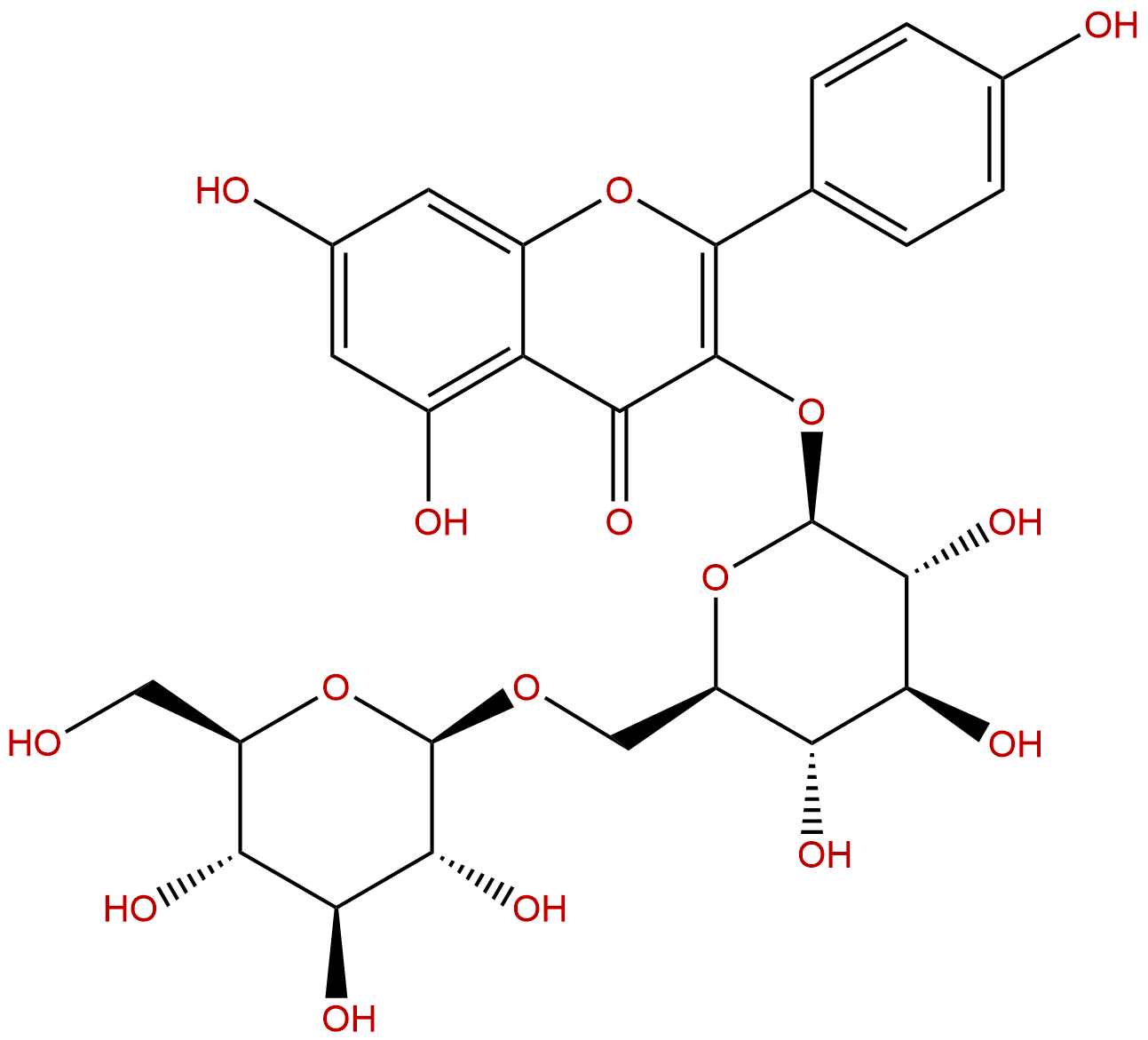


Product name: Kaempferol 3-O-gentiobioside
Synonym name:
Catalogue No.: BP3219
Cas No.: 22149-35-5
Formula: C27H30O16
Mol Weight: 610.521
Botanical Source:
Physical Description: Yellow powder
Type of Compound: Flavonoids
Purity: 95%~99%
Analysis Method: HPLC-DAD or/and HPLC-ELSD
Identification Method: Mass, NMR
Packing: Brown vial or HDPE plastic bottle
Storage: Store in a well closed container, protected from air and light. Put into refrigerate or freeze for long term storage.
Whenever possible, you should prepare and use solutions on the same day. However, if you need to make up stock solutions in advance, we recommend that you store the solution as aliquots in tightly sealed vials at -20℃. Generally, these will be useable for up to two weeks.
The product could be supplied from milligrams to grams, up to kilograms
Inquire for bulk scale.
Descriptions:
Kaempferol 3-O-gentiobioside (K3G), isolated from C. alata as an abundant flavonoid glycoside, K3G has antiinflammatory activity, shows weak inhibitory effects on Concanavalin A-induced histamine release, 5-lipoxygenase, and COX-1. [1]
References:
[1] Moriyama H, Iizuka T, Nagai M, et al. Yakugaku Zasshi , 2003, 123(7):607-11.
[2] Peng H E, Wang G C, Yao-Lan L I, et al. Central South Pharmacy, 2014(1):66-9.
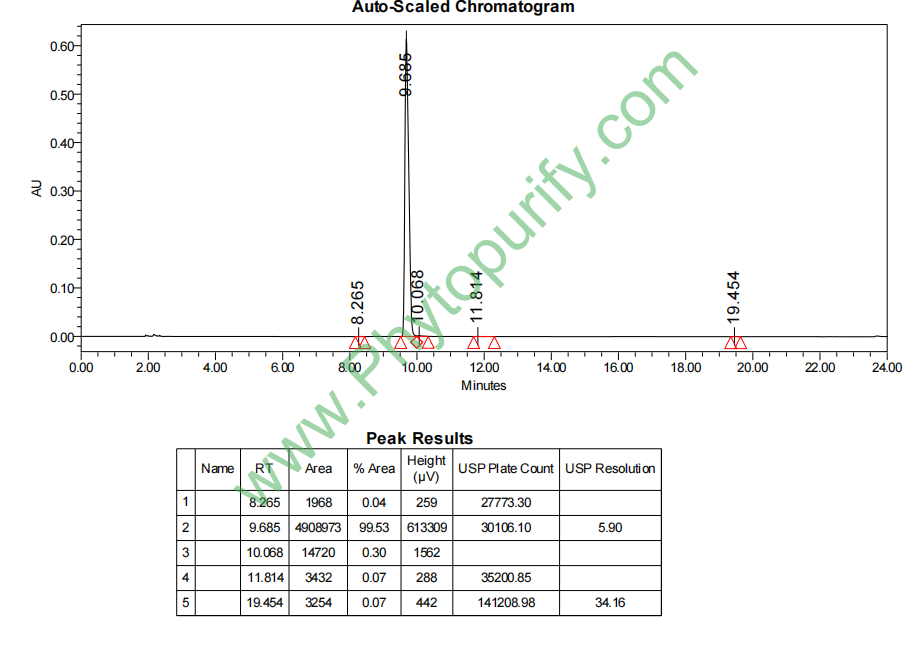
HPLC of Kaempferol 3-O-gentiobioside
Storage conditions:Short-term storage at 2~8℃, long-term storage at -20 ~ -80℃
269.4300
-.9562
-1.0493
3.2494
.3878
.1200
Low
75.3697
4.6897
Yes
No
No
No
Yes
No
1.2
Yes
Yes
Yes
Yes
Osteoporosis is a systemic bone disease characterized by reduced bone mass, destruction of bone microstructure, and increased bone fragility, leading to an increased risk of fractures. With the acceleration of global population aging, osteoporosis and the resulting fractures have become a serious public health problem, bringing heavy economic and medical burdens to patients' families and society. The current mainstream therapeutic drugs, such as bisphosphonates, selective estrogen receptor modulators, RANKL inhibitors, and parathyroid hormone analogues, can effectively inhibit bone resorption or promote bone formation, but long-term use often accompanies potential side effects such as mandibular necrosis, atypical femoral fractures, and increased cardiovascular risk. Therefore, exploring efficient and low toxicity new anti osteoporosis lead compounds from natural products has always been an important direction in the field of drug development.
Flavonoids are widely present in vegetables, fruits, and medicinal plants, and have attracted much attention due to their diverse chemical structures and extensive biological activities. Kaempferol, as a common flavonol glycoside, has been extensively studied for its anti-inflammatory, antioxidant, anti-tumor, and bone protective effects. When kaempferol combines with glycosides to form glycosides, its water solubility, bioavailability, and biological activity often undergo significant changes. Kaempferol-3-O-gentiobinoside (CAS: 22149-35-5) is a flavonoid glycoside formed by the combination of kaempferol 3-O-gentiobinoside and gentiobiose (connected by a β -1,6 glycosidic bond between two glucose molecules) at the C-3 position. This compound was originally derived from leguminous plants C. alata The leaves were isolated and showed significant α - glucosidase inhibitory activity (IC50=50.0 µ M), which entered the researchers' vision, suggesting its potential in anti diabetes. However, recent network pharmacology, molecular docking, and preliminary experimental studies have revealed that this compound may show promising application prospects in the prevention and treatment of osteoporosis by acting on multiple key targets closely related to bone metabolism. This article aims to provide a systematic review of the chemical properties, plant sources, pharmacological activities, and potential mechanisms and molecular targets of kaempferol-3-O-gentiopicroside in the treatment of osteoporosis, as well as a preliminary evaluation of its pharmacological properties, in order to provide scientific basis for the further development of this natural product.
The molecular formula of kaempferol-3-O-gentiopicroside is C27H30O16, with a molecular weight of 610.5210. Its core structure is the flavonol parent nucleus kaempferol, characterized by a gentian disaccharide group attached to the C-3 hydroxyl group. The parent nucleus of kaempferol itself has a 4 '- OH, 3,5,7-trihydroxy substitution mode, while Gentiobiose is a disaccharide composed of two molecules of D-glucose linked by β - (1 → 6) glycosidic bonds. This glycosylation modification significantly alters the physicochemical properties of the compound.
From the calculated pharmacokinetic parameters, the lipid water partition coefficient (LogP) of the compound is -0.9562, indicating its hydrophilicity. The topologically polar surface area (TPSA) is as high as 269.4300 Å ², mainly attributed to the numerous oxygen atoms on hydroxyl and sugar groups in the molecule, which are the main sources of hydrogen bond donors and acceptors. The high TPSA and negative LogP values together determine its good water solubility, with a calculated value of 3.2494 (LogS), indicating that it is easily soluble in aqueous media. However, these characteristics also affect its transmembrane transport ability. The predicted permeability of the blood-brain barrier (BBB) is "low", which means that the compound is difficult to enter the central nervous system. This may actually reduce the risk of central nervous system side effects for anti osteoporosis drugs that mainly act on the peripheral skeletal system. In terms of preliminary safety prediction, the inhibitory risk of this compound on hERG potassium channels is "no", indicating a low potential risk of causing QT interval prolongation in the heart. The predicted value of Ames test is 1.2 (usually the threshold is about 0.8-1.0, higher than which may indicate mutagenic risk, but experimental verification is needed), and its genetic toxicity needs to be further confirmed through experiments in subsequent development.
In summary, kaempferol-3-O-gentiopicroside is a water-soluble polar molecule with low brain permeability and preliminary good cardiac safety prediction. However, its large molecular weight and polarity may affect its oral bioavailability, which is one of the key issues that need to be addressed in its drug development.
Kaempferol-3-O-gentiopicroside is relatively widely distributed in nature and mainly exists in various medicinal and edible plants. Its initial reported source was plants of the genus Cassia in the legume family C. alata Leaves of (possibly winged pod cassia or related species). In addition, this compound has also been found in other plants, such as in the Rosaceae family Chinese dwarf cherry Seeds and Asteraceae snow lotus, as well as some vegetables and fruits, but the content varies depending on plant species, parts, growth environment, and harvest season.
Extracting kaempferol-3-O-gentiopicroside from plant materials usually follows the general extraction and separation process for flavonoid glycosides. Firstly, solvent extraction method is used. Due to the hydrophilicity of the compound, it is commonly extracted using medium polarity solvents or solvent mixtures, such as methanol, ethanol, acetone water systems, or methanol water systems. In order to improve extraction efficiency, modern technologies such as ultrasound assisted extraction (UAE), microwave-assisted extraction (MAE), and pressurized liquid extraction (PLE) are often applied. These methods can shorten extraction time, reduce solvent consumption, and may increase the yield of target compounds.
After filtration and concentration, the crude extract needs to be further separated and purified to obtain a single compound. Large pore adsorption resins (such as AB-8, D101, HP-20, etc.) are often used for preliminary enrichment. By utilizing their adsorption properties and the characteristics of washing with different concentrations of ethanol aqueous solutions, a large amount of impurities such as sugars and proteins are removed, and flavonoid glycosides are enriched. Subsequently, fine separation was performed using column chromatography technology. Normal phase silica gel column chromatography and reverse phase silica gel column chromatography (such as ODS-C18) are commonly used methods for separation, using gradient elution systems such as chloroform methanol water and methanol water. In addition, Sephadex gel column chromatography (such as Sephadex LH-20) uses molecular sieve and adsorption principle to isolate and purify flavonoid glycosides, which is particularly effective and often used as a key purification step. Finally, high-purity kaempferol-3-O-gentiopicroside was obtained through high-performance liquid chromatography (HPLC) or preparative liquid chromatography for final purification. The structural identification was carried out using a combination of techniques including ultraviolet spectroscopy (UV), mass spectrometry (MS), nuclear magnetic resonance hydrogen spectroscopy, and carbon spectroscopy (1H-NMR, 13C-NMR).
Although the pharmacological activity study of kaempferol-3-O-gentianobioside is at the initial stage, it has shown a variety of biological activity potential, among which the anti osteoporosis and anti diabetes activities are the most prominent.
Anti osteoporosis activity This is the most promising emerging research direction for this compound in recent years. Based on network pharmacology prediction, kaempferol-3-O-gentiopicroside may act on MCL1、BCL2、ESR1、RUNX2、SP7、TNFRSF11B、COL1A1 Regulating osteogenic differentiation, proliferation, apoptosis, as well as osteoclast differentiation and function through multiple targets. Preliminary in vitro cell experiments (although more direct research is needed to confirm its glycoside form activity) support its bone protective effect. For example, its glycoside kaempferol has been widely proven to promote the differentiation of rat bone marrow mesenchymal stem cells or MC3T3-E1 pre osteoblasts into osteoblasts, enhance alkaline phosphatase activity, promote mineralization nodule formation, and upregulate the expression of key osteogenic genes such as RUNX2, OSX (SP7), COL1A1, and OCN. Meanwhile, kaempferol can inhibit osteoclastogenesis induced by nuclear factor kappa B receptor activator ligand, reduce osteoclast specific gene expression, and decrease the formation of bone resorption cavities. As a glycoside, kaempferol-3-O-gentiopicroside may release kaempferol glycosides through intestinal microbiota or tissue enzymatic hydrolysis in vivo, or its complete molecule may have unique biological activity.
Antidiabetic activity This activity is its earliest reported pharmacological action. Studies have shown that kaempferol-3-O-gentianobioside can effectively inhibit α - glucosidase, with an IC50 of 50.0 µ M. α - glucosidase is the key enzyme responsible for the decomposition of oligosaccharides and disaccharides into monosaccharides on the brush edge of the small intestine. Inhibiting its activity can delay the digestion and absorption of carbohydrates, thus reducing the peak blood sugar after meals. It is one of the effective strategies for treating type 2 diabetes. This activity suggests that the compound may indirectly have beneficial effects on diabetes induced osteoporosis by regulating glucose metabolism.
Other potential activities Based on the extensive activity of its parent compound kaempferol, this glycoside may also have antioxidant and anti-inflammatory effects. Oxidative stress and chronic inflammation are important promoting factors for the onset of osteoporosis. The antioxidant capacity of flavonoids helps to eliminate reactive oxygen species in the bone microenvironment and protect osteoblasts from oxidative damage; Its anti-inflammatory effect may be achieved by inhibiting inflammatory pathways such as NF - κ B and downregulating the expression of pro-inflammatory cytokines (such as TNF - α, IL-1 β, IL-6), which are powerful bone resorption stimuli.
The potential mechanism of action of kaempferol-3-O-gentiopicroside against osteoporosis is complex, involving multiple signaling pathways and molecular targets that regulate both osteoblasts and osteoclasts bidirectionally. Based on the provided target information, its mechanism of action can be summarized as follows:
Promote osteoblast activity and differentiation:
Inhibition of osteoclastogenesis and bone resorption:
Improve bone microenvironment metabolism:
In summary, kaempferol-3-O-gentiopicroside may synergistically promote bone formation, inhibit bone resorption, and improve the local environment of bone metabolism through a multi-target and multi pathway network, thereby exerting anti osteoporosis effects.
Although kaempferol-3-O-gentiopicroside has shown good biological activity in vitro, its ability to become a drug depends on its pharmacological properties, namely "pseudo pharmacological" and pharmacokinetic properties.
absorb The compound has a high molecular weight (>500) and high polarity (low LogP, high TPSA), which hinders its passive diffusion across the lipid bilayer of small intestinal epithelial cells. Therefore, its oral bioavailability may be low. There are usually two ways for the absorption of flavonoid glycosides: one is through active transporters on small intestinal epithelial cells (such as sodium dependent glucose transporter SGLT1), which are absorbed in small amounts; The second is the main pathway, which is hydrolyzed by β - glucosidase secreted by the gut microbiota of the colon, releasing the glycoside kaempferol and glycosyl groups. Glycosides have higher lipid solubility and are more easily absorbed. Therefore, the detected metabolites in the blood after oral administration may be in the form of its aglycone or II binding metabolites.
distribution After absorption, kaempferol or its glycosides often bind to plasma proteins (such as albumin) in the blood. Due to its low blood-brain barrier permeability, it is mainly distributed in peripheral tissues and organs, including bones. Bone blood supply is abundant, and flavonoids have a certain affinity for bone tissue, which is beneficial for their accumulation at target sites.
Metabolism Flavonoids are widely metabolized in the body. The main metabolic sites are the liver and intestines. Phase I metabolism mainly involves hydroxylation, demethylation, and other reactions through the cytochrome P450 enzyme system; Phase II metabolism is the main pathway, including binding reactions with glucuronic acid, sulfuric acid, methyl, etc., generating more polar metabolites that are easier to excrete. If kaempferol-3-O-gentiopicroside is absorbed in its intact form, it may also undergo similar binding metabolism.
excretion Metabolites are mainly excreted through the kidneys with urine, and some can also enter the intestine through bile and be excreted with feces. There is a possibility of enterohepatic circulation.
Challenges and optimization strategies for drug development:
As a natural flavonoid glycoside with multi-target anti osteoporosis potential, kaempferol-3-O-gentiopicroside has promising clinical application prospects, but the road ahead is long.
Potential application directions:
Future research prospects:
Kaempferol-3-O-gentiopicroside is a flavonoid glycoside compound with multiple biological activities found in natural plants. From the initial anti diabetes activity to the multi target potential of anti osteoporosis revealed by network pharmacology and preliminary experiments, its research value has become increasingly prominent. This compound may exert bone protective effects on multiple levels, including promoting bone formation, inhibiting bone resorption, and improving the bone metabolism microenvironment, by regulating key targets such as the RUNX2/SP7 osteogenic differentiation axis, BCL2 family anti apoptotic pathway, RANKL/OPG balance system, and AKR1B1. However, the potential low bioavailability caused by its large molecular weight and strong hydrophilicity is the main challenge in developing it into a drug. Future research needs to clarify its molecular mechanism and confirm its in vivo efficacy, and overcome its delivery difficulties through modern pharmaceutical and medicinal chemistry methods. With the deepening of research, kaempferol-3-O-gentianoside is expected to become a candidate lead compound or functional ingredient for the prevention and treatment of osteoporosis, especially diabetes related bone disease, providing important scientific basis and material basis for the development of new, safe, multi target bone health products.
