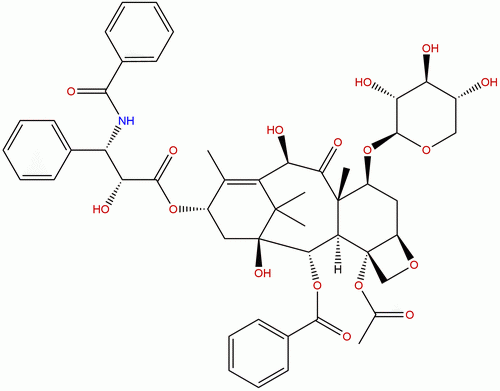


Product name: 10-Deacetyl-7-xylosyl paclitaxel
Synonym name:
Catalogue No.: SBP03710
Cas No.: 90332-63-1
Formula: C50H57NO17
Mol Weight: 943.996
Botanical Source:
Physical Description:
Type of Compound: Diterpenoids
Purity: 95%~99%
Analysis Method: HPLC-DAD or/and HPLC-ELSD
Identification Method: Mass, NMR
Packing: Brown vial or HDPE plastic bottle
The product could be supplied from milligrams to grams
Inquire for bulk scale.
For Reference Standard and R&D, Not for Human Use Directly.
Description:
10-Deacetyl-7-xylosyl paclitaxel has long been used in Chinese clinics to treat cancer, it may target mitochondrial permeability transition pore (mPTP).
References:
Planta Med. 2010 Oct;76(14):1592-5.
Transport of a hydrophilic paclitaxel derivative, 7-xylosyl-10-deacetylpaclitaxel, by human intestinal epithelial Caco-2 cells.
7-Xylosyl-10-deacetylpaclitaxel(10-Deacetyl-7-xylosyl paclitaxel) is an active compound used in traditional Chinese medicine to treat cancer. However, pharmacokinetic studies yielded low plasma concentrations of 7-xylosyl-10-deacetylpaclitaxel after its oral administration in preclinical trials. Therefore, we investigated whether the observed low oral bioavailability of this compound is due to poor absorption.
METHODS AND RESULTS:
We studied the transepithelial flux of 7-xylosyl-10-deacetylpaclitaxel using the human colonic cell line Caco-2 as a model and found out that its flux (at a concentration range of 0.5-20 μM) across the Caco-2 cell layer was linear with time for up to 3 hr. The apparent maximal concentration (K (M)) of the active efflux component was 93.4 μM. Verapamil (50 μM) and tetrandrine (25 μM) significantly decreased the active transport component.
CONCLUSIONS:
These data support the conclusion that rapid passive diffusion of 7-xylosyl-10-deacetylpaclitaxel through the intestinal epithelium is partially counteracted by the action of an outwardly directed efflux pump, presumably P-glycoprotein. The relatively high apparent permeability coefficient ( P(app)) for the apical to basolateral 7-xylosyl-10-deacetylpaclitaxel transport (16.3 ± 6.3 × 10 (-6) cm/s; n = 3) suggests that the drug may still be effectively absorbed in the intestinal tract.
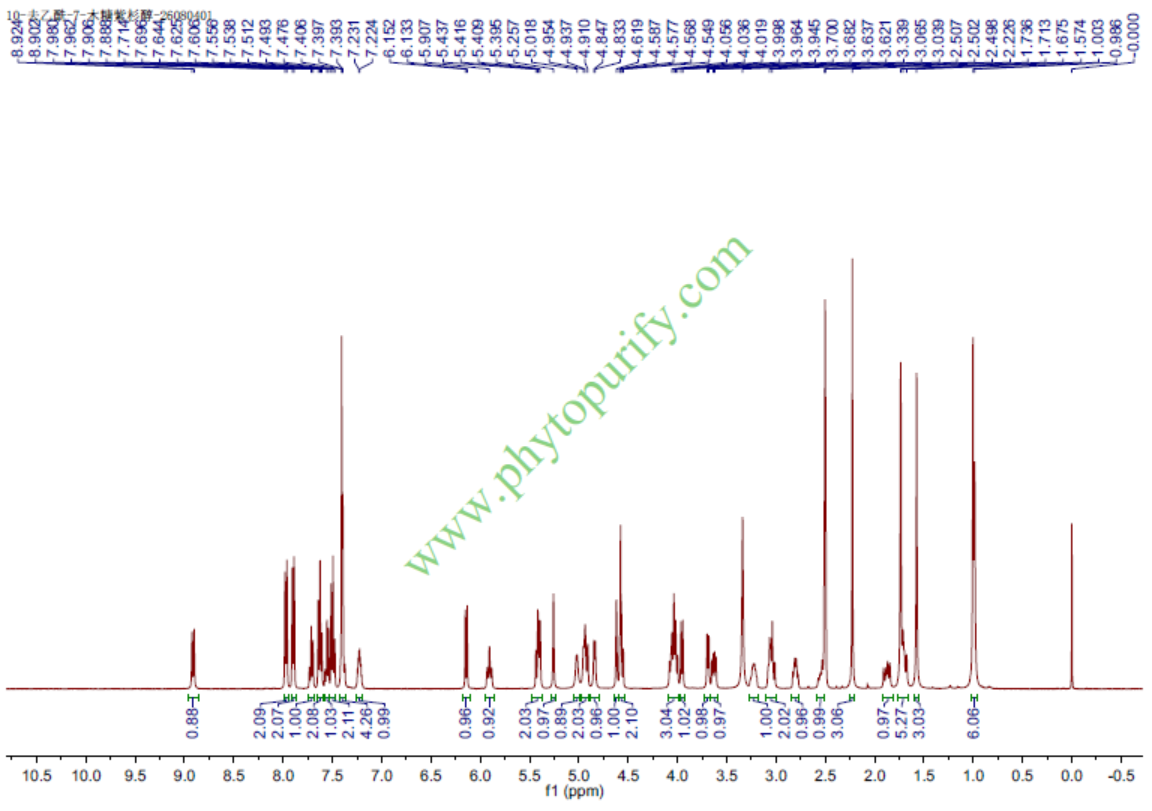
HNMR of 10-Deacetyl-7-xylosyl paclitaxel
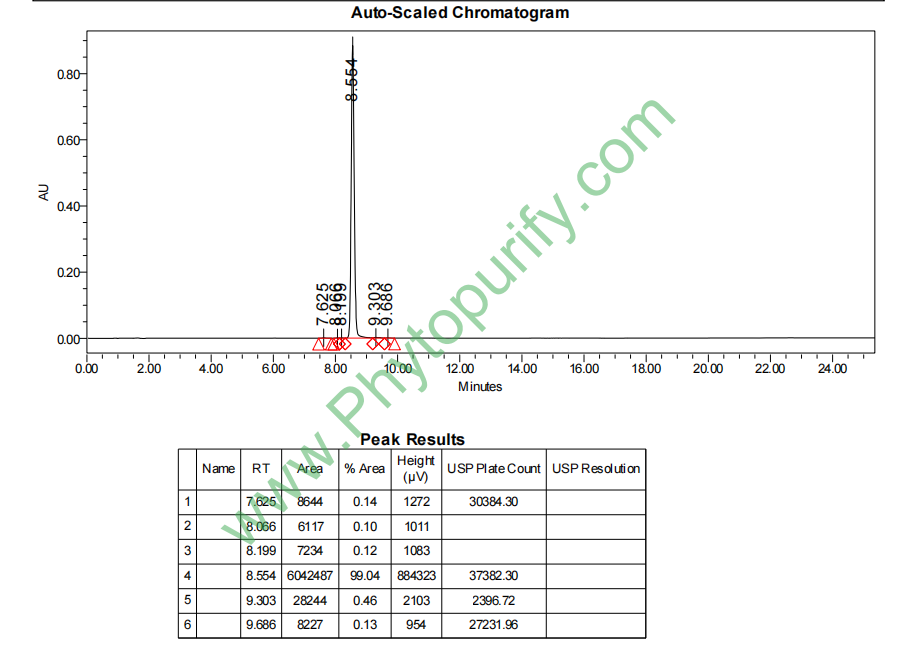
HPLC of 10-Deacetyl-7-xylosyl paclitaxel
Storage conditions:Short-term storage at 2~8℃, long-term storage at -20 ~ -80℃
274.1400
2.4421
2.4419
.0241
.4815
.2938
Low
86.0395
6.4204
Yes
No
No
No
No
No
0.0
Yes
No
Yes
Yes
10-Deacetyl-7-xylosyl paclitaxel (CAS: 90332-63-1) is a diterpenoid compound of the taxane class with significant biological activity. As a structural analogue of the star anti-cancer drug Paclitaxel, it also originates from the rare plant Taxus chinensis(Taxus chinensis). This compound has a molecular structure where the acetyl group is removed from the 10th position of the paclitaxel core and a xylose group is attached to the 7th hydroxyl group. This unique structural modification exhibits both similar and different characteristics in physicochemical properties and biological activity compared to paclitaxel. For a long time, this compound has been used in cancer treatment in clinical practice in China, and its potential anti-tumor mechanism, especially in relation to Mitochondrial permeability transition pore (mPTP) The interaction between them has always been a hot research topic. With the development of modern molecular pharmacology and computational chemistry, researchers have gradually revealed their more complex multi-target action network, involving BCL2、TP53、BRCA1、BAX、CDKN1A Waiting for multiple key tumor related genes and proteins. This article will provide a systematic professional popularization of this important natural product from the aspects of its chemical essence, plant origin, pharmacological mechanism, medicinal evaluation, and research prospects.
The molecular formula of 10-deacetyl-7-carboxylic paclitaxel is C50H57NO17, with a molecular weight of up to 943.9960 g/mol It is a typical large molecule complex natural product. Its SMILES string accurately describes its stereochemical structure: a highly modified tetracyclic diterpene core (taxane skeleton) connected to benzoyl, phenylisoserine side chains, and a key xylose unit.
From the analysis of medicinal parameters, its physicochemical properties exhibit typical characteristics of complex natural products:
- Lipophilic nature The calculated LogP value is 2.4421, The LogD value is 2.4419 This indicates that the molecule exhibits moderate lipophilicity at physiological pH. This is beneficial for its penetration through the cell membrane, but excessively high molecular weight may limit its passive diffusion efficiency.
- Polar Surface Area Topological Polarity Surface Area (TPSA) up to 274.1400 ŲThis is mainly attributed to the numerous hydroxyl, ester, and amide groups in the molecule. High TPSA is usually associated with Lower blood-brain barrier (BBB) penetrability and Lower oral bioavailability relevant. The data also confirms that its BBB penetration is' low ', which limits its potential for treating brain tumors unless through special delivery systems.
- solubility Very low water solubility, only 0.0241 mg/mL This is a common problem with taxane drugs and one of the main challenges in their clinical formulation development (such as the need to use solvents such as polyoxyethylene castor oil).
- Permeability Caco-2 cell permeability is 0.2938 The effective permeability of the human body (Peff) is 0.4815 All of them are at a relatively low level, further confirming the prediction of poor oral absorption.
These physical and chemical properties collectively describe a High polarity, low solubility, low permeability but with specific membrane affinity The molecular profile provides a key basis for its subsequent formulation development and route of administration selection.
The natural source of 10-deacetyl-7-carboxylic paclitaxel is Taxaceae family of Taxus chinensis(Taxus chinensis)Taxus plants are the main source of taxane compounds worldwide and are known as the "plant gold". In China, the medicinal history of Taxus chinensis has a long and rich history. Although it is recorded in traditional medical texts such as "Compendium of Materia Medica", the systematic understanding of its anti-cancer effects began in the second half of the 20th century.
Traditionally, the bark, branches, and leaves of Taxus chinensis have been used to treat some difficult and complicated diseases. Modern pharmacological research reveals that the substance basis of its anticancer activity is the taxane compounds. The discovery of paclitaxel is a milestone in the history of anticancer drugs, but its content in plants is extremely low (about 0.01%), and its extraction and separation are difficult, leading to a shortage of early drug sources. Therefore, scientists are committed to searching for other structurally similar compounds with higher content or similar activity from Taxus chinensis, in order to serve as precursor drugs or new candidate drugs for paclitaxel. 10-deacetyl-7-xylpaclitaxel is one of them. As a naturally occurring derivative of paclitaxel, it has certain anti-tumor activity and may also serve as an intermediate or storage form for the biosynthesis of paclitaxel. In research and clinical exploration in China, this compound and its related extracts have been used as adjuvant therapy for various cancers, accumulating valuable practical experience and providing clues for modern targeted mechanism research.
The existing description suggests that 10-deacetyl-7-xylpaclitaxel may target Mitochondrial permeability transition pore (mPTP)MPTP is a non-specific channel located in the inner membrane of mitochondria, and its abnormal opening can lead to the breakdown of mitochondrial membrane potential and the release of cytochrome C, thereby initiating the intracellular apoptotic pathway. The classic mechanism of paclitaxel drugs is to stabilize microtubule proteins, inhibit their depolymerization, thereby blocking cell mitosis and inducing cell apoptosis. And for the targeting effect of mPTP, it suggests that 10-deacetyl-7-carboxylic paclitaxel may act through Affects mitochondrial function It has opened up a pro apoptotic pathway that is different from the classical microtubule stabilization effect, which may help overcome the resistance of certain tumors to traditional paclitaxel.
Further target screening studies have revealed its broader network of action, involving multiple core tumor suppressor genes, pro apoptotic and anti apoptotic proteins:
BCL2 and BAX BCL2 is an important anti apoptotic protein, while BAX is a pro apoptotic protein. The dynamic balance between the two regulates mitochondrial outer membrane permeability (MOMP), which is the core switch of cell apoptosis. 10-deacetyl-7-carboxylic acid paclitaxel may pass through Inhibit BCL2 The functions and/or Activate BAX Breaking the balance, promoting the occurrence of MOMP, leading to the release of cytochrome C, thereby strongly inducing tumor cell apoptosis. This is complementary to the mPTP targeting mentioned earlier, jointly acting on the mitochondrial apoptosis pathway.
TP53(p53)P53 is a well-known "guardian of the genome" that is activated under conditions such as DNA damage and cellular stress. It can transcribe and upregulate various pro apoptotic proteins (such as BAX and PUMA) and cell cycle inhibitory proteins (such as p21). This compound may enhance the transcriptional activity of p53 protein by activating or stabilizing it, thereby synergistically promoting cell cycle arrest and apoptosis.
CDKN1A(p21/WAF1)P21 is a key downstream effector of p53 and a potent inhibitor of cyclin dependent kinase (CDK). Its upregulation leads to cell cycle arrest in the G1 phase. 10-deacetyl-7-carboxylic acid paclitaxel may induce p21 expression through p53 dependent or independent pathways, achieving cell cycle arrest The M-phase blockade caused by microtubule stability forms a multi cycle checkpoint strike.
BRCA1 BRCA1 is an important tumor suppressor protein involved in DNA damage repair, transcriptional regulation, and cell cycle checkpoint control. This compound may interact with BRCA1, affecting its function and interfering with the DNA repair ability of tumor cells, making them more sensitive to drug-induced DNA damage (a possible form of synthetic lethal effect).
Mechanism of Action Integration Model In summary, the anti-tumor effect of 10-deacetyl-7-carboxylic paclitaxel may be the result of multi-target and multi pathway synergy. its Classic function As a microtubule stabilizer, it interferes with the function of the mitotic spindle. its Characteristic role This may include: (a) targeting mPTP to directly induce mitochondrial dysfunction; (b) Regulating BCL2/BAX balance and initiating mitochondrial apoptosis pathway; (c) Activate the p53-p21 axis, induce cell cycle arrest and enhance apoptotic signaling; (d) May interfere with BRCA1 mediated DNA repair. This Multi-pronged approach The mode of action of the compound enables it to attack tumor cells from multiple levels, which may have Broad spectrum anti-tumor activity and Overcoming single pathway drug resistance The potential.
Based on the provided pharmacological parameters, we can conduct a preliminary assessment of the potential development of this compound as an oral or injectable drug:
Lipinski's Rule of Five Analysis:
Evaluation of other key parameters:
Comprehensive evaluation of drug properties 10-deacetyl-7-carboxylic acid paclitaxel is a High activity, multi-target but facing challenges in drug development Natural product lead compounds. Its core advantages lie in its unique multi mechanism anti-tumor activity and lower risk of gene/cardiac toxicity. The main challenge lies in Extremely poor oral absorption characteristics(Due to high molecular weight, high polarity, and low permeability) and Potential hepatotoxic signals Therefore, its future drug development direction is likely not as an oral formulation, but rather:
1. Injection development Learn from the successful experience of paclitaxel and develop it Liposomes for injection, albumin nanoparticles or cyclodextrin inclusion complexes Waiting for new formulations to solve their water solubility problems, improve targeting, and reduce toxic side effects.
2. Prodrug strategy Chemical modification of its xylose group or other hydroxyl groups to prepare water-soluble prodrugs or tumor targeted prodrugs, which release the original drug at specific sites in the body.
3. Simplification and optimization of structure Using it as a template, structural modification is carried out through medicinal chemical methods to reduce molecular weight, adjust LogP and TPSA while retaining the core pharmacophore, in order to obtain derivatives with better drug properties.
At present, research on 10-deacetyl-7-carboxylic paclitaxel is still in a relatively early stage compared to paclitaxel itself. Most of the research focuses on its isolation and identification, in vitro anti-tumor activity screening, and preliminary exploration of its mechanism of action. Its clinical experience in China is mostly based on the application of compound or crude extracts of Taxus chinensis extract, and there is insufficient systematic clinical research data for this single compound.
Current research hotspots including:
1. Deepening the mechanism of action Using proteomics, transcriptomics, and molecular docking techniques, accurately verify its direct interactions with targets such as mPTP, BCL2 family proteins, p53, and draw its complete cellular signaling network map.
2. Drug resistance research Explore whether the compound is effective against paclitaxel resistant tumor cell lines and elucidate its potential multi-target mechanism in overcoming drug resistance.
3. Study on Structure Activity Relationship Clarify the contributions of xylose groups, 10 deacetylation groups, and other functional groups in its molecule to activity, selectivity, and toxicity, providing guidance for structural optimization.
4. Biological synthesis research Analyzing the biosynthetic pathway of Taxus chinensis has the potential to efficiently produce it in microorganisms or plant cells through synthetic biology methods, solving the problem of drug sources.
Application Prospects:
- As a novel anti-tumor candidate drug Develop it through advanced drug delivery technologies such as nano targeted delivery New injectable formulations It is used to treat malignant tumors that are resistant to paclitaxel or are not applicable, such as some types of ovarian cancer, breast cancer, lung cancer, etc.
- As a component of combination therapy By utilizing its unique mechanism of action (such as affecting the mPTP and p53 pathways), combination therapy with paclitaxel, platinum, targeted drugs, or immune checkpoint inhibitors may produce synergistic effects, improve efficacy, and reduce side effects.
- As a lead compound in medicinal chemistry Its structure is a valuable starting point for rational design and optimization by medicinal chemists. Through simplification and modification, it is expected to give birth to a series of new taxane based anti-tumor drugs with independent intellectual property rights and better drug properties.
In summary, 10-deacetyl-7-xylpaclitaxel, as a complex chemical entity gifted by nature, not only continues the anti-cancer legend of the paclitaxel family, but also provides new ideas and tools for tumor treatment with its unique structural modification and multi-target mechanism of action. Despite the challenges on the path of traditional Chinese medicine, with the rapid development of modern pharmacy, medicinal chemistry, and molecular biology technologies, the active molecules in this ancient plant will surely be revitalized and contribute unique strength to the human journey against cancer. Future research requires close collaboration among multiple disciplines, from basic mechanisms to clinical translation, fully tapping into their potential value.
