


Synonym name:
Catalogue No.: BP0023
Cas No.: 142203-65-4
Formula: C33H42O12
Mol Weight: 630.687
Botanical Source: Taxus canadensis
Purity: 95%~99%
Analysis Method: HPLC-DAD or/and HPLC-ELSD
Identification Method: Mass, NMR
Packing: Brown vial or HDPE plastic bottle
Can be supplied from milligrams to grams.
For Reference Standard and R&D, Not for Human Use Directly.
Inquire for bulk scale.
HPLC of 13-Acetyl-9-dihydrobaccatin III
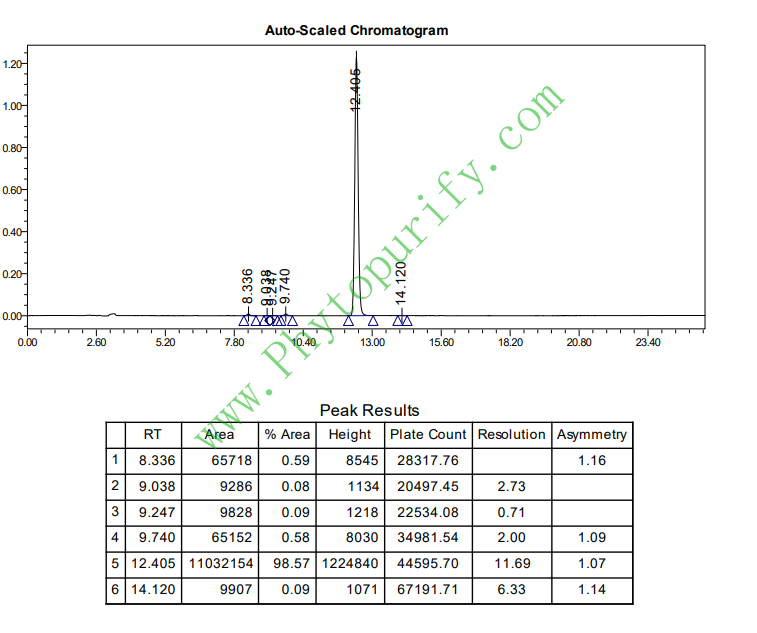
Storage conditions:Short-term storage at 2~8℃, long-term storage at -20 ~ -80℃
180.2500
3.0000
2.5000
No
No
No
Unknown
No
No
No
Natural products, as important resources for drug development, play an irreplaceable role in the field of modern medicine. Due to their unique chemical structures and significant biological activities, various natural products have become potential candidate drugs for the treatment of various diseases such as anti-tumor, anti-inflammatory, antiviral, and liver disease. 13-Acetyl-9-hydroxybaccatin III (13-Acetyl-9-DHBIII, hereinafter referred to as 13-Acetyl-9-DHBIII) is a natural product derivative isolated from Taxus plants, belonging to the diterpenoid class of Bacteroids. This type of compound exhibits rich pharmacological activity due to its complex multi ring skeleton and multifunctional functional groups, especially in multi-target regulation related to liver diseases, showing unique potential.
This article aims to systematically review the chemical structure and physicochemical properties, plant sources and extraction methods, pharmacological activity and mechanism of action, pharmacological evaluation and pharmacokinetic characteristics of 13-Acetyl-9-DHBIII, and explore its clinical application prospects and development directions in combination with its molecular targets in the treatment of liver disease, providing theoretical basis and reference for subsequent research and drug development.
The molecular formula of 13-Acetyl-9-DHBIII is C33H42O12, with a molecular weight of 630.68. This compound belongs to the derivative of diterpenoid compounds in the Bacardin class, which contains a complex polycyclic skeleton with multiple hydroxyl and ester modifications. Its key structural features include:
In terms of physical and chemical properties, the LogP value of 13-Acetyl-9-DHBIII is about 3.0, indicating that it has moderate lipid solubility and is conducive to membrane penetration. The polar surface area (TPSA) is as high as 180.25 Å ², reflecting strong molecular polarity, which may limit its passage through the blood-brain barrier (BBB), consistent with its predicted BBB non permeability. The number of hydrogen bond receptors is 12, indicating that the molecule has abundant polar groups that facilitate stable hydrogen bond interactions with protein targets.
At present, the safety indicators of liver toxicity, cardiac toxicity, and hERG channel inhibition of this compound are not clear. The Ames mutagenicity test result is negative, indicating a low risk of genetic toxicity.
13-Acetyl-9-DHBIII is mainly derived from Taxus spp., especially abundant in the bark and needles of Taxus. Taxus plants are renowned for their unique diterpenoid compounds, with the most famous representative being paclitaxel, which is widely used in anti-tumor therapy. 13-Acetyl-9-DHBIII, as a derivative of paclitaxel diterpenes, has a similar biosynthetic pathway.
The extraction method usually includes the following steps:
In recent years, with the development of green chemistry and supercritical fluid extraction technology, some studies have attempted to use supercritical CO2 extraction to improve extraction efficiency and purity, reduce the use of organic solvents, and conform to the trend of environmentally friendly preparation.
The pharmacological activity research of 13-Acetyl-9-DHBIII mainly focuses on its regulatory effect on liver diseases. Liver disease includes various pathological states such as liver fibrosis, fatty liver, hepatitis, and hepatocellular carcinoma, involving complex molecular signaling pathways and cellular pathological changes. Existing studies have shown that 13-Acetyl-9-DHBIII exhibits significant biological activity in the following areas:
Anti fibrotic effect
By inhibiting the activation of hepatic stellate cells (HSCs) and reducing collagen deposition, 13-Acetyl-9-DHBIII can alleviate the progression of liver fibrosis. The mechanism may involve regulating the TGF - β/Smad signaling pathway and downregulating fibrosis related gene expression.
Antioxidant and anti-inflammatory effects
This compound can activate the NFE2L2 (Nrf2) signaling pathway, enhance cellular antioxidant defense capabilities, and reduce oxidative stress levels. At the same time, inhibiting the activation of inflammasomes mediated by CASP1 and reducing liver inflammation response.
Regulating lipid metabolism
By affecting key enzyme activities such as IDH1 and PIK3CG, 13-Acetyl-9-DHBIII helps regulate lipid metabolism in liver cells and alleviate the pathological state of fatty liver.
Antitumor potential
In the hepatocellular carcinoma (HCC) model, 13-Acetyl-9-DHBIII inhibits tumor cell proliferation and angiogenesis, and induces cell apoptosis by regulating the PRKCA, PRKCD, and HIF1A signaling pathways.
Protect liver cell function
By regulating targets such as SHBG and TRPV1, the stability of the intracellular environment of liver cells is improved, and the detoxification and metabolic functions of the liver are enhanced.
In summary, the multi-target and multi mechanism mode of action of 13-Acetyl-9-DHBIII has laid a solid foundation for its application in the comprehensive treatment of liver disease.
The pharmacological effects of 13-Acetyl-9-DHBIII depend on its interactions with multiple key molecular targets, particularly its regulatory role in liver disease-related signaling pathways. The main targets and their mechanisms of action are as follows:
ABCB1 (P-glycoprotein)
As an important drug efflux pump on the cell membrane, ABCB1 regulates the absorption and excretion of drugs. 13-Acetyl-9-DHBIII may affect liver cell tolerance to drugs and toxins and protect the liver from damage by regulating ABCB1 expression or activity.
PRKCA and PRKCD (protein kinase C family)
These two protein kinases play critical roles in cell proliferation, differentiation, and apoptosis. 13-Acetyl-9-DHBIII affects the survival status of liver cells and the progression of liver fibrosis by regulating the activity of PRKCA and PRKCD.
IDH1 (isocitrate dehydrogenase 1)
IDH1 is involved in cellular metabolism and antioxidant reactions. 13-Acetyl-9-DHBIII may improve liver cell metabolic abnormalities, alleviate fatty liver and oxidative stress by regulating IDH1 activity.
NFE2L2(Nrf2)
As the main regulator of cellular antioxidant stress, the activation of Nrf2 enhances the expression of antioxidant enzymes. 13-Acetyl-9-DHBIII activates the Nrf2 pathway, enhancing liver cells' resistance to oxidative damage.
CASP1 (caspase 1)
CASP1 participates in the activation of inflammasomes and regulates inflammatory responses. 13-Acetyl-9-DHBIII inhibits CASP1 activity, reduces liver inflammation, and prevents inflammation mediated liver damage.
PIK3CG (Phosphatidylinositol 3-kinase gamma)
The PI3K signaling pathway regulates cell growth and metabolism. 13-Acetyl-9-DHBIII promotes liver cell metabolic balance and inhibits abnormal proliferation by regulating PIK3CG.
TRPV1 (Transient receptor potential vanillic acid receptor 1)
TRPV1 is involved in regulating cellular calcium signaling and inflammatory response. This compound may affect intracellular calcium homeostasis and inflammation levels in liver cells by regulating TRPV1 activity.
SHBG (Sex Hormone Binding Globulin)
SHBG regulates the bioavailability of sex hormones and affects liver metabolism. 13-Acetyl-9-DHBIII may indirectly affect the liver endocrine environment by regulating SHBG.
HIF1A (hypoxia inducible factor 1 alpha)
HIF1A downregulates gene expression in the tumor microenvironment and hypoxic state. 13-Acetyl-9-DHBIII inhibits HIF1A, blocks the adaptive response of liver cancer cells, and suppresses tumor progression.
The synergistic regulation of these targets constitutes the molecular basis for the multidimensional regulation of liver pathological status by 13-Acetyl-9-DHBIII.
The pharmacological evaluation of 13-Acetyl-9-DHBIII involves its physicochemical properties, safety, and in vivo behavior
Physicochemical properties
The molecular weight of 630.68 is slightly higher than the ideal range for traditional small molecule drugs, which may affect oral absorption. LogP is 3.0, indicating moderate lipophilicity that facilitates cell membrane penetration, but TPSA is as high as 180.25 Å ², suggesting strong polarity that may limit oral bioavailability and tissue distribution.
Blood-brain barrier penetrability
The prediction results show that it is not easy to pass through the blood-brain barrier, reducing the risk of central nervous system side effects, but limiting its application in brain diseases.
safety indicator
At present, there is a lack of data on liver toxicity, cardiac toxicity, and hERG channel inhibition, and further in vitro and in vivo toxicological studies are needed. A negative Ames test indicates a low risk of genetic toxicity and preliminary good safety.
pharmacokinetics
There is still a lack of systematic pharmacokinetic data. Given its complex molecular structure and potential metabolic stability issues, attention should be paid to the impact of liver metabolic enzymes (such as the CYP450 family) on its metabolic pathways. In the future, in vivo absorption, distribution, metabolism, and excretion (ADME) research should be conducted to clarify its bioavailability and half-life.
Formulation development
Considering its high polarity and large molecular weight, advanced formulation technologies such as nanocarriers, liposomes, or solid dispersions may be needed to enhance its bioavailability and targeting.
Overall, 13-Acetyl-9-DHBIII has certain potential as a drug, but systematic safety and pharmacokinetic studies are still needed to support its clinical development.
Based on the significant activity of 13-Acetyl-9-DHBIII in multi-target regulation of liver disease, its clinical application prospects are mainly reflected in the following aspects:
Liver fibrosis and treatment of cirrhosis
By inhibiting the activation of hepatic stellate cells and collagen deposition, 13-Acetyl-9-DHBIII is expected to become an anti fibrotic drug, delaying the progression of cirrhosis and improving liver function.
Non alcoholic fatty liver disease (NAFLD)
Regulating lipid metabolism and antioxidant stress, reducing liver cell fat accumulation and inflammatory response, suitable for NAFLD and non-alcoholic steatohepatitis (NASH) patients.
Adjuvant therapy for hepatocellular carcinoma
By inhibiting tumor cell proliferation and angiogenesis, 13-Acetyl-9-DHBIII may be used as an adjuvant drug for liver cancer, combined with existing chemotherapy or targeted therapy, to enhance efficacy.
Hepatitis and liver injury protection
Reduce inflammation and oxidative damage, protect liver cells from viral or drug-induced liver injury.
In the future, combining modern drug design and delivery technologies to optimize the pharmacokinetic properties of 13-Acetyl-9-DHBIII will promote its clinical translation. Meanwhile, in-depth analysis of its molecular mechanism, development of preclinical animal models, and safety evaluation are key steps in promoting its clinical application.
As an important derivative of paclitaxel natural products, 13-acetyl-9-hydroxybakartin-III has shown great potential in the treatment of liver diseases due to its unique chemical structure and multi-target pharmacological activity. It exerts multiple effects such as anti fibrosis, anti-inflammatory, antioxidant, and anti-tumor by regulating multiple key targets such as ABCB1, PRKCA, NFE2L2, etc., and has a good pharmacological basis.
However, there is still a lack of systematic research on its safety, pharmacokinetics, and clinical efficacy, and more in-depth in vitro and in vivo experiments and preclinical evaluations are urgently needed. In the future, combining modern drug development technology and optimizing its formulation and administration methods will help promote the clinical application of 13-Acetyl-9-DHBIII, bringing new treatment options for liver disease patients.
In summary, 13-Acetyl-9-DHBIII, as a potential natural product drug candidate molecule, deserves more systematic and in-depth research in liver disease and related fields.
