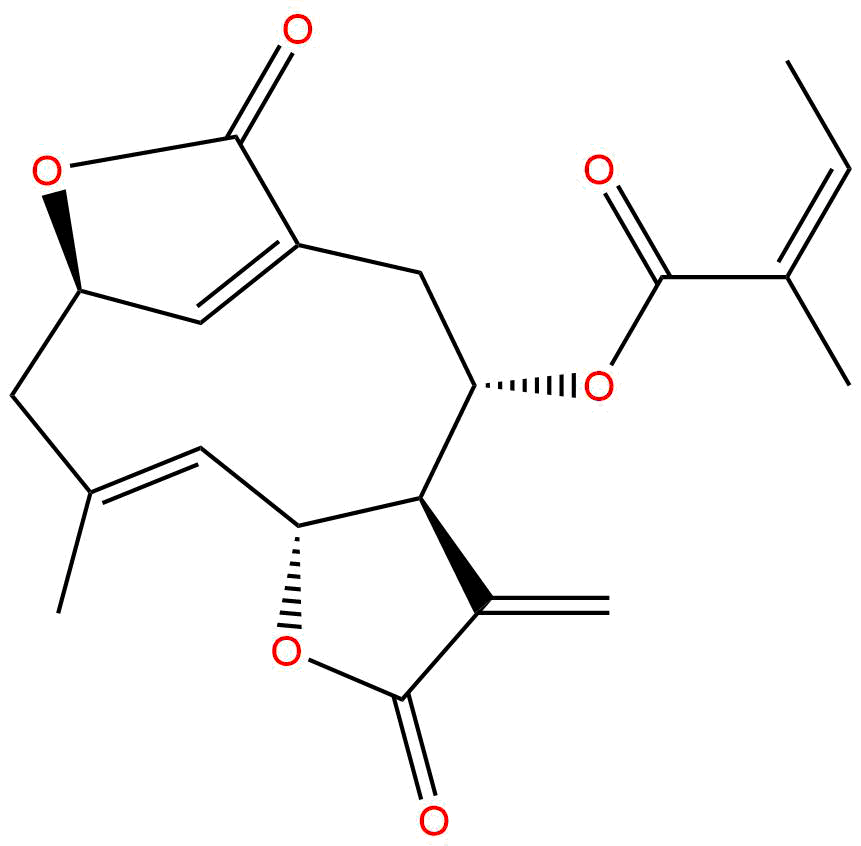


Product name: Isoscabertopin
Synonym name: Isoscabertopin
Catalogue No.: SBP02396
Cas No.: 439923-16-7
Formula: C20H22O6
Mol Weight: 358.39
Botanical Source:
Physical Description:
Type of Compound: Sesquiterpenoids
Purity: 95%~99%
Analysis Method: HPLC-DAD or/and HPLC-ELSD
Identification Method: Mass, NMR
Packing: Brown vial or HDPE plastic bottle
The product could be supplied from milligrams to grams
Inquire for bulk scale.
The structural types of sesquiterpenes in Elephantopus scaber Linn. mainly involve gimarane-type, guaiacum-type and elemene-type, etc. Ten sesquiterpene compounds were isolated and identified from Elephantopus scaber Linn. Among them, gimarane-type lactones are the main skeleton types of the sesquiterpene lactones of Elephantopus scaber Linn. At present, we isolated and obtained scabertopin,isoxyelephantopin, isoscabertopin with anti-hepatocellular carcinoma cell (SMMC-7721) activity, and deoxyelephantopin, elephantopin, 11,13-dihydrodeoxyelephantopin, and scabertopinol.
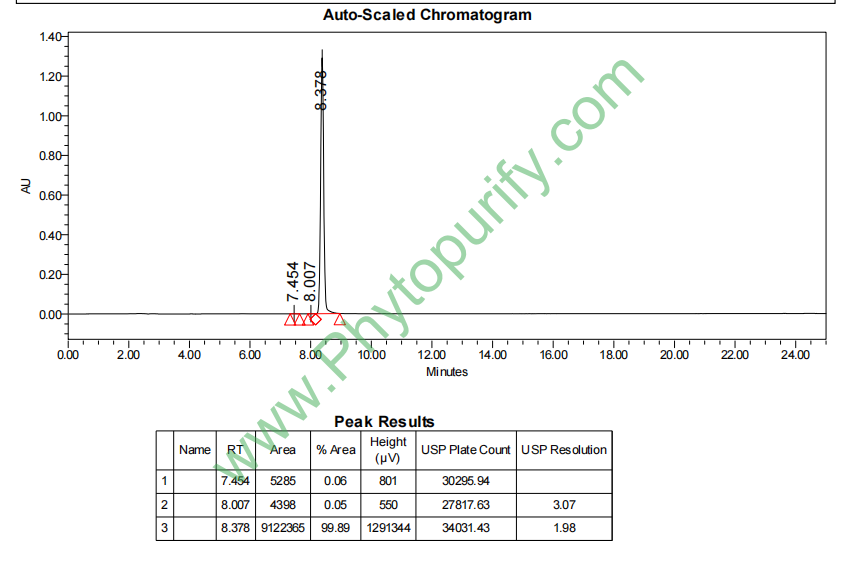
HPLC of Isoscabertopin
Storage conditions:Short-term storage at 2~8℃, long-term storage at -20 ~ -80℃
78.9000
2.2333
2.2332
.2411
4.0378
4.9656
High
71.3552
5.8688
No
Yes
No
No
Yes
No
0.0
No
Yes
Yes
Yes
Isostarbertopin, a type of lactone derived from the Asteraceae plant Isostarbertopin(Elephantopus scaber L. Natural sesquiterpene lactones isolated from (). Its CAS number is 439923-16-7, molecular formula is C20H22O6, and molecular weight is 358.39 g/mol. This compound has attracted widespread attention from researchers in the fields of natural product chemistry and drug discovery in recent years due to its unique chemical structure and significant biological activity.
The initial research showed that the lactones from different regions of Gallbladder have clear anti-tumor activity, providing preliminary clues for their application in the field of cancer treatment. However, further research has revealed another important pharmacological characteristic - anti malarial activity. According to database information, the compound can act on multiple malaria parasite specific targets, including PFCRT, PFMDR1, PFDHFR, PFK13, and PFATP6. This suggests that it may combat malaria through a multi-target mechanism, providing new candidate molecules for the development of novel antimalarial drugs. The discovery of compounds with dual activity from traditional medicinal plants not only reflects the wisdom of traditional medicine, but also demonstrates the enormous potential of modern natural product research in discovering lead compounds.
The molecular formula of the lactone from the distant gall grass species is C20H22O6, belonging to the sesquiterpene lactone family. Its SMILES string (C=C1C (=O) O [C @ @ H] 2/C=C (\ C) C [C @ @ H] 3C=C (C C@H[C @ @ H] 12) C (=O) O3 reveals its complex stereochemical structure, containing multiple chiral centers and double bonds, forming a unique cyclic lactone and ester bond structure. This complex structure is the material basis for its biological activity and also poses challenges for its synthesis and modification.
From the perspective of pharmacological parameters, the molecular weight (MW) of this compound is 358.39, which meets the requirement of "molecular weight less than 500" in Lipinski's five rules. Its lipid water partition coefficient (LogP) is 2.23 and LogD is 2.23, indicating that the compound has moderate lipophilicity, which is beneficial for its penetration into cell membranes. The topological polar surface area (TPSA) is 78.9 Å ², which is lower than the commonly considered critical value for membrane permeability (approximately 140 Å ²). This is consistent with its high Caco-2 cell permeability (4.97) and effective permeability (Peff: 4.04) data, indicating that it may have good oral absorption potential.
It is worth noting that the compound exhibits high blood-brain barrier (BBB) penetration. This characteristic may have special significance for the treatment of central nervous system disorders such as cerebral malaria, but it also suggests the need to pay attention to its potential neurological side effects during the development process. Its water solubility is 0.24 mg/mL, which is slightly soluble, and this may require consideration of solubilization strategies in formulation development.
Plant source of lactones from different species of gall grass - gall grass(Elephantopus scaber)It is a perennial herbaceous plant of the Asteraceae family widely distributed in tropical and subtropical regions. In many traditional medical systems in Asia, Africa, and the Americas, Gastrodia elata has a long history of medicinal use.
In traditional Chinese medicine, the whole herb of Didancao is used as medicine, with a bitter taste and a cold nature. It belongs to the lung, liver, and kidney meridians and has the effects of clearing heat and detoxifying, diuresis and reducing swelling, cooling blood and stopping bleeding. Commonly used for treating symptoms such as colds, fever, sore throat, damp heat jaundice, nephritis edema, and boils. In Southeast Asia, India, and other regions, Dichlorperia is also used to treat fever, inflammation, skin diseases, and as a deworming agent. These traditional uses of "clearing heat and detoxifying" and "anti-inflammatory" have an inherent correlation with the anti-tumor and anti malaria activities revealed by modern research at the pathological level of "resistance to pathogens and abnormal proliferation", reflecting the correspondence between traditional experience and modern science.
Modern plant chemistry research has isolated and identified various active ingredients from Dichloropsis pilosula, including sesquiterpene lactones, triterpenes, flavonoids, steroids, and phenolic acids. Among them, sesquiterpene lactones, represented by lactones from different regions, are considered as one of the important pharmacological substances. Systematic research on the chemical basis of traditional medicinal plants is a key way to clarify their scientific connotations of traditional efficacy and discover innovative drugs.
The pharmacological activity research of lactones from different regions mainly focuses on anti-tumor and anti malaria aspects, among which the mechanism of action of anti malaria activity is clearer due to its clear target information.
Anti malaria activity and multi-target mechanism of action:
The database information indicates that the lactones of different bile grass species act on five specific targets of malaria parasites, which constitutes a possible multi-target anti malarial mechanism:
1. PFCRT(Plasmodium falciparum chloroquine resistance transporter)This is a transporter protein on the digestive vesicle membrane of malaria parasites, closely related to the development of resistance to drugs such as chloroquine. If the compound can act on PFCRT, it may affect the pH environment or drug accumulation inside the digestive vesicles, thereby reversing drug resistance or directly interfering with the metabolic waste disposal of malaria parasites.
2. PFMDR1(P. falciparum multidrug resistance protein 1)Belonging to the ABC transporter protein family, it is another key protein that leads to the efflux and resistance of multiple antimalarial drugs (such as mefloquine and haloquine). Inhibiting PFMDR1 can increase the accumulation of drugs in the insect body and enhance their efficacy.
3. PFDHFR(P. falciparum dihydrofolate reductase)Dihydrofolate reductase is a key enzyme in the folate synthesis pathway, and drugs such as ethambutol exert antimalarial effects by inhibiting this enzyme. The lactone of different bile grass species may inhibit PFDHFR, interfere with the nucleic acid synthesis of malaria parasites, and suppress their reproduction.
4. PFK13(Kelch13 protein)The genetic mutation is the main molecular marker of artemisinin resistance. The PFK13 protein is involved in multiple cellular processes of malaria parasites, including protein degradation and stress response. Acting on this target may provide a new strategy for overcoming artemisinin resistance.
5. PFATP6(P. falciparum sarcoplasmic/endoplasmic reticulum calcium ATPase 6)It has been reported as one of the targets of artemisinin and is a key enzyme that regulates intracellular calcium ion balance. Disrupting its function can lead to an imbalance of calcium homeostasis in malaria parasite cells, causing cell death.
This Multi target mode of action It has significant advantages: on the one hand, it can simultaneously attack multiple key links in the life cycle of malaria parasites, producing synergistic effects and improving therapeutic efficacy; On the other hand, it may reduce the risk of malaria parasites developing drug resistance through single target mutations, as multiple unrelated mutations need to occur simultaneously to develop complete resistance. This is of great significance for addressing the increasingly severe problem of antimalarial drug resistance.
Antitumor activity:
Although existing descriptions only indicate its anti-tumor activity and do not provide specific targets, based on the structural characteristics of its sesquiterpene lactones, its possible mechanism of action can be inferred. Many sesquiterpene lactones exert anti-tumor effects through the following pathways:
* Inducing the generation of reactive oxygen species (ROS)Causing oxidative stress in tumor cells and disrupting their redox balance.
* Inhibition of nuclear factor kappa B (NF - κ B) signaling pathway This pathway is closely related to the proliferation, survival, invasion, and inflammatory response of tumor cells.
* Inducing cell cycle arrest and apoptosis By regulating the expression of cell cycle proteins and apoptosis related proteins (such as Bcl-2 family, caspases).
* Inhibit angiogenesis Cut off the nutritional supply to the tumor.
Future research needs to clarify the specific molecular targets and signaling pathways of the anti-tumor effects of different bile grass seed lactones.
Based on the provided pharmacological parameters and the classic rules of medicinal chemistry, a preliminary evaluation of the potential of exogenous bile grass seed lactones can be conducted:
Lipinski's Five Rules Compliance Analysis:
1. Molecular weight (MW): 358.39<500,Comply with。
2. LogP value: 2.23<5,Comply with。
3. Number of hydrogen bond donors (HBDs): Based on the molecular formula C20H22O6 and its structure, it is likely to be mainly hydroxyl groups, with an estimated number of less than 5,Comply with。
4. Number of hydrogen bond acceptors (HBA): There are 6 oxygen atoms in the molecule, all of which can serve as hydrogen bond acceptors, with a quantity of 6<10,Comply with。
5. Number of rotatable keys: From a structural perspective, it is moderate and generally considered to meet the requirements.
In summary, lactones from different regions of gallbladder grass seeds Basically meets Lipinski's five rules It indicates that it has good drug like properties and oral absorption potential.
Absorption, distribution, metabolism, and excretion (ADME) characteristics:
* absorb The high Caco-2 permeability (4.97) and Peff value (4.04) suggest that its intestinal absorption may be good.
* distribution A higher BBB penetration suggests its ability to enter the central nervous system, which is advantageous for anti cerebral malaria, but central toxicity should also be monitored. The plasma protein binding rate (PPB) is 71.36%, which is at a moderate level, indicating that a considerable portion of the drugs exist in free form and can exert their therapeutic effects.
* Metabolism and toxicity This is a risk area that requires special attention.
*The Ames test result is 0.0 (usually negative), indicating that it may not have genetic toxicity, which is a positive signal.
*However, the detection of 'chromosomal aberration' is' present ', which is a clear indication Genetic toxicity risk signal, is a "red flag" indicator that needs to be taken seriously and thoroughly studied in drug development.
*Inhibition of hERG to 'no' reduces the risk of causing QT interval prolongation and apical torsion ventricular tachycardia, which is beneficial for cardiovascular safety.
*The skin allergenicity (Skid_Sens) is "yes", indicating that the compound may have allergenic potential and should be taken into account during formulation and medication.
*The serum biochemical indicators show that its effect on glutamyltransferase (GGT), aspartate aminotransferase (AST), and alanine aminotransferase (ALT) is "yes", which strongly suggests its Potential risk of liver toxicity AST and ALT are sensitive markers of liver cell damage.
Comprehensive evaluation:
The lactones from different regions of gallbladder grass exhibit excellent pharmacological properties in terms of molecular weight, lipophilicity, and membrane permeability. Their advantages include oral absorption and brain distribution potential. However, it The potential risks of genetic toxicity (chromosomal aberration) and liver toxicity (elevated serum enzymes) are the main obstacles that prevent it from directly becoming a drug In further optimization of lead compounds, chemists need to modify their structures to preserve their anti malarial and anti-tumor activities while striving to eliminate or reduce these toxicities. Skin sensitization also needs to be considered at the formulation level.
At present, research on lactones in different regions of Gallbladder grass is still ongoing Preclinical discovery and validation stage The existing research has clarified its anti-tumor and anti malaria biological activities, especially revealing its potential to act on multiple malaria parasite targets, providing a strong theoretical basis for its development as a new type of anti malaria drug. Its chemical structure has been analyzed, and some physicochemical properties and preliminary pharmacological parameters have been evaluated.
However, there is still a lot of work urgently needed to promote its clinical application:
1. In depth mechanism research It is necessary to use techniques such as molecular docking, surface plasmon resonance, enzyme activity inhibition experiments, and gene knockout/knockdown to confirm its direct interaction with targets such as PFCRT and PFMDR1 at the molecular and cellular levels, and elucidate the detailed mechanism of its multi-target action. The specific targets of anti-tumor activity also need to be clarified.
2. Pharmacodynamic evaluation of the system It is necessary to evaluate the in vivo efficacy, dose-response relationship, and synergistic effect with other antimalarial/anti-tumor drugs in various malaria animal models (such as mouse models infected with Plasmodium bergii or Plasmodium knowlesi) and tumor animal models.
3. Comprehensive security evaluation In response to the indicated risks of genetic toxicity and hepatotoxicity, detailed toxicology studies that comply with Good Clinical Practice (GLP) must be conducted, including repeated dose toxicity tests, genotoxicity comprehensive tests, reproductive toxicity tests, etc., to comprehensively assess their safety risks.
4. lead optimization Based on the study of structure-activity relationships, the chemical structure is reasonably modified with the aim of enhancing activity, improving pharmacokinetic properties (such as reducing liver toxicity, regulating half-life), and most importantly Eliminate or significantly reduce its genetic toxicity and hepatotoxicity The complex three-dimensional structure poses a challenge to total synthesis, but also provides space for optimizing structurally similar compounds obtained through synthesis.
In terms of application prospects If the above challenges are overcome, the development of lactones from different regions of bile grass seeds is expected to become:
* New multi-target antimalarial drugs Especially suitable for dealing with multidrug-resistant malaria, it may be used as part of combination therapy.
* Candidate anti-tumor drugs Especially in terms of its possible pathways of action, explore its therapeutic effects on specific types of tumors.
* Chemical probe Even if it is difficult to develop into a drug due to toxicity issues, it can still serve as a valuable tool molecule for studying the multi-target biology and resistance mechanisms of malaria parasites.
In summary, the lactones of different species of gallbladder grass are a natural lead compound discovered from traditional herbs, with clear dual effect activity and a unique multi-target mechanism. It not only demonstrates the sustained value of natural products in drug discovery, but also clearly reveals the gap that must be bridged from lead compounds to successful drugs——Balance between activity and safety Subsequent research on it will be a test of modern drug development capabilities, and its results, whether or not new drugs can be developed, will enhance our understanding of the pharmacological effects of sesquiterpene lactones and provide new ideas for the treatment strategies of related diseases.
