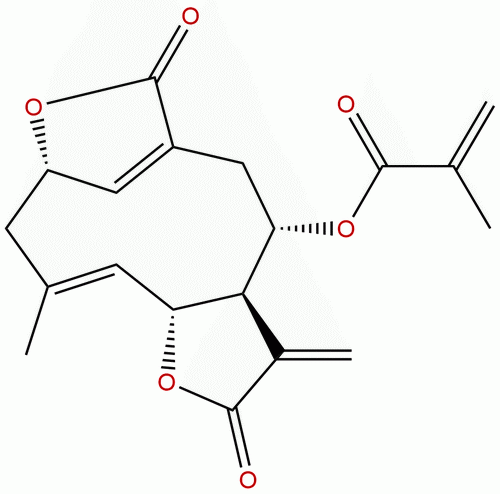


Product name: Isodeoxyelephantopin
Synonym name: Isodeoxyelephantopin
Catalogue No.: SBP02444
Cas No.: 38927-54-7
Formula: C19H20O6
Mol Weight: 344.363
Botanical Source:
Physical Description:
Type of Compound: Sesquiterpenoids
Purity: 95%~99%
Analysis Method: HPLC-DAD or/and HPLC-ELSD
Identification Method: Mass, NMR
Packing: Brown vial or HDPE plastic bottle
The product could be supplied from milligrams to grams
Inquire for bulk scale.
The structural types of sesquiterpenes in Elephantopus scaber Linn. mainly involve gimarane-type, guaiacum-type and elemene-type, etc. Ten sesquiterpene compounds were isolated and identified from Elephantopus scaber Linn. Among them, gimarane-type lactones are the main skeleton types of the sesquiterpene lactones of Elephantopus scaber Linn. At present, we isolated and obtained scabertopin,isoxyelephantopin, isoscabertopin with anti-hepatocellular carcinoma cell (SMMC-7721) activity, and deoxyelephantopin, elephantopin, 11,13-dihydrodeoxyelephantopin, and scabertopinol.
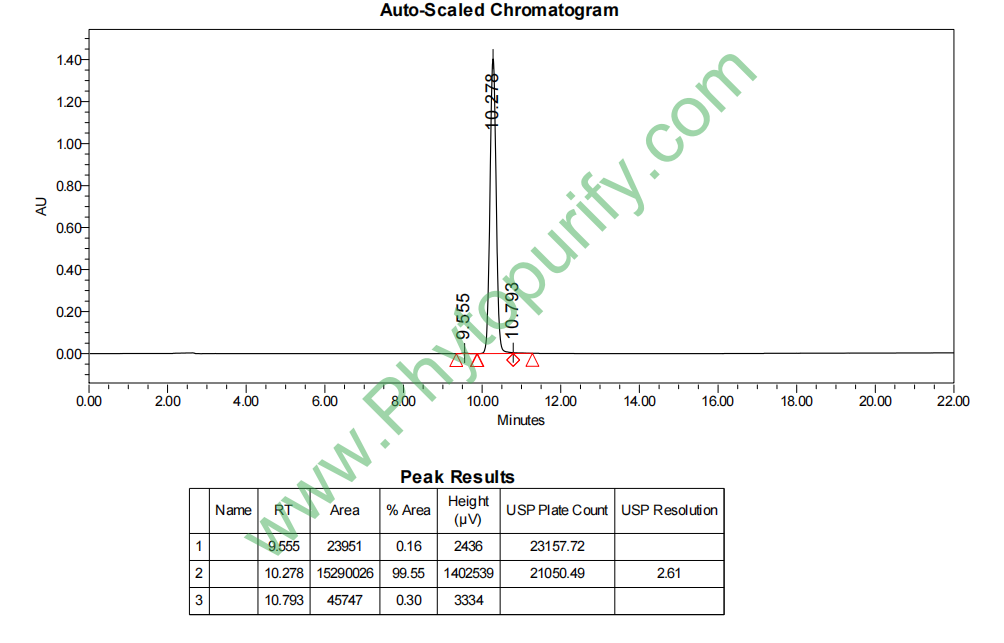
HPLC of Isodeoxyelephantopin
Storage conditions:Short-term storage at 2~8℃, long-term storage at -20 ~ -80℃
78.9000
1.7454
1.7455
.3327
4.1089
4.7942
High
65.5130
5.8278
No
Yes
No
No
Yes
No
0.0
Yes
Yes
Yes
Yes
Isodeoxyelephantopine (CAS number: 38927-54-7) is a natural sesquiterpene lactone with significant biological activity. Its molecular formula is C19H20O6 and its molecular weight is 344.3630 g/mol. This compound is mainly derived from the Asteraceae plant Gentiana scabra(Elephantopus scaber L. Separated from it. Gallbladder grass is widely distributed in tropical and subtropical regions of Asia, Africa, and the Americas. It has a long history of application in traditional medical systems in many countries and is commonly used to treat fever, inflammation, infections, and various types of pain.
Modern pharmacological research has revealed that isodeoxypicroside is one of the key active ingredients in the pharmacological effects of Dichloropsis pilosula. The research background is closely related to the development trend of natural products for anti-tumor and anti-inflammatory drugs. In recent years, with a deeper understanding of the tumor microenvironment and chronic inflammation mechanisms, natural compounds that can simultaneously intervene in inflammatory pathways and tumor progression have attracted much attention. Isodesoxypicrin is just such a representative molecule. It shows inhibitory activity on a variety of cancer cells by inducing tumor cell apoptosis, blocking cell cycle, inhibiting proliferation and regulating key inflammatory signaling pathways, especially in breast cancer research. Meanwhile, its clear anti-inflammatory mechanism makes it of significant research value in the field of inflammation related diseases. The product number SBP02444 signifies that it has become a standardized research tool in the natural product compound library, laying the foundation for subsequent medicinal chemistry and pharmacology research.
Isodeoxypicroside belongs to the guaianolide type sesquiterpene lactones, characterized by a complex fused ring system consisting of a seven membered lactone ring and a five membered lactone ring (γ - lactone), connected by a ten membered carbon bridge. Its SMILES string (C=C (C) C (=O) O [C @ H] 1CC2=C)C@H OC2=O accurately describes its atomic connection sequence and key stereochemical configuration (represented by the @ symbol). This unique rigid skeleton and multiple chiral centers are the structural basis of its biological activity. The lactone ring and alpha, beta unsaturated carbonyl groups are usually the pharmacophores that undergo Michael addition reactions with biomolecules (such as thiol groups in proteins) to exert pharmacological effects.
Analyzing its physicochemical properties from the parameters of drug properties:
- Molecular weight (MW):344.36 g/mol, Far less than 500, meeting the requirements of small molecule drugs.
- Lipid water partition coefficient (LogP/LogD)Approximately 1.75 indicates that the compound has moderate lipophilicity, which allows it to penetrate cell membranes while maintaining a certain degree of water solubility, facilitating its absorption and distribution in vivo.
- Topological Polarity Surface Area (TPSA)78.9 Å ², relatively low, which usually favors the membrane permeability of the compound.
- Water solubility The calculated value is about 0.33 mg/mL, which is slightly soluble and may pose challenges in formulation development, requiring improvement through salt formation or formulation technology.
- Permeability The permeability (Peff) of Caco-2 cells is 4.11 × 10 ⁻⁶ cm/s, with a high predicted value, indicating that it may have good intestinal absorption potential. At the same time, its blood-brain barrier (BBB) penetration is predicted to be "high", which means it may act on central nervous system targets, but also suggests potential neurotoxic risks that need to be evaluated.
Combining famous Lipinski's Five Rules Preliminary evaluation based on the "Five Principles of Similar Drugs": ① Molecular weight<500 (compliant); ② Calculate LogP<5 (compliant, 1.75); ③ Number of hydrogen bond donors (approximately 1-2 according to structure, consistent with<5); ④ Number of hydrogen bond acceptors (based on structure, 6 oxygen atoms, consistent with<10). Therefore, isodeoxypicurobilin fully complies with Lipinski's rules and has the potential to become an oral medication from a physicochemical perspective of oral absorption.
The main plant source of isodeoxypicroside is Di Dan Cao(Elephant’s Foot), scientific name Elephantopus scaber L. This is a perennial herbaceous plant widely distributed in tropical and subtropical regions such as southern China, Southeast Asia, India, and South America. Its whole plant or roots are widely used in folk medicine.
In traditional Chinese medicine (especially in the Lingnan region) and Ayurvedic medicine in India, Didan grass is considered to have the effects of clearing heat and detoxifying, diuresis and reducing swelling, cooling blood and stopping bleeding. Commonly used for treatment:
- Inflammatory diseases Such as pharyngitis, tonsillitis, nephritis edema.
- infectious diseases Such as colds, fever, pneumonia, dysentery, and skin infections (such as sores, swelling, and toxins).
- other diseases Hepatitis, cirrhosis ascites, and traumatic bleeding.
In places such as the Philippines and South America, it is also used to treat stomach pain, intestinal parasites, and rheumatism. These traditional applications of "clearing heat," "detoxifying," and "anti-inflammatory" coincide with the anti-inflammatory and anti-tumor activities of isodeoxypicrin revealed by modern research, reflecting the profound connection between traditional experience and modern science. The chemical research on Dichloropsis pilosula began in the mid-20th century, from which a series of structurally unique sesquiterpene lactones were isolated. Isodeoxypicroside is one of the most active members, and its discovery provides a modern scientific annotation for the traditional medicinal value of Dichloropsis pilosula.
The core pharmacological activity of isodeoxypicroside is concentrated in antitumor and anti-inflammatory Two aspects are closely related through a common signaling pathway.
(1) Antitumor activity and its mechanism:
Studies have shown that isodeoxycldecylcholanin has a significant growth inhibitory effect on breast cancer, liver cancer, lung cancer, colon cancer and other cancer cell lines. Its anti-tumor effect is the result of multiple pathways and multi-target synergy:
- Inducing cell apoptosis Compounds can induce apoptosis through the mitochondrial pathway, manifested as a decrease in mitochondrial membrane potential, release of cytochrome C, and activation of Caspase-3/9.
- Block cell cycle Cancer cells can be blocked in the G2/M phase, preventing them from undergoing mitosis and thus inhibiting proliferation.
- Inhibit invasion and metastasis Inhibiting the invasion and migration ability of cancer cells by downregulating the expression of matrix metalloproteinases (MMPs).
- Regulating non coding RNA It has been pointed out that it can regulate the expression profile of long chain non coding RNA (LncRNA), which may be a new mechanism of its influence on the epigenetic and signal network of tumor cells, especially in the anti breast cancer effect.
(2) Anti inflammatory activity and its core mechanism of action:
The anti-inflammatory effect of isodeoxypicroside and its effects on Nuclear factor kappa B (NF - κ B) signaling pathway The strong inhibition is closely related. NF - κ B is a core transcription factor that regulates inflammation, immunity, cell survival, and proliferation.
- Key targets According to database information, the action of isodeoxypicroside involves NFKB1(encoding NF - κ B p105/p50 subunits)TNF(Tumor necrosis factor alpha)IL6(interleukin-6)IL1B(Interleukin-1 β) and PTGS2 Multiple key inflammatory mediators, including prostaglandin endoperoxide synthase 2 (COX-2). These targets are important effector molecules downstream of the NF - κ B pathway.
- mechanism of action Under inflammatory stimuli such as TNF - α and IL-1 β, the IKK complex is activated, leading to phosphorylation and degradation of I κ B α protein, thereby releasing NF - κ B dimers (such as p50/p65) into the nucleus and initiating transcription of pro-inflammatory genes (such as IL6, IL1B, PTGS2). Isodeoxypicrin can Inhibition of NF - κ B activation To prevent nuclear translocation and significantly reduce the production of inflammatory factors such as TNF - α, IL-6, IL-1 β, and COX-2 at the transcriptional level.
- Biological significance This inhibition of the NF - κ B pathway not only explains its direct anti-inflammatory effect, but is also linked to its anti-tumor effect. Because NF - κ B is continuously activated in the tumor microenvironment, it promotes tumor cell survival, proliferation, angiogenesis, and metastasis, and inhibits apoptosis. Therefore, inhibiting NF - κ B can be both anti-inflammatory and anti-tumor. In addition, by inhibiting COX-2 (PTGS2), it may also affect prostaglandin mediated pain and inflammatory processes.
(3) Related diseases - anti-inflammatory:
Based on the above mechanism, isodeoxypicrin anti-inflammatory There is a clear application prospect in related diseases. This includes but is not limited to:
- Rheumatoid arthritis, osteoarthritis By inhibiting NF - κ B and downstream IL-6, IL-1 β, COX-2, joint synovitis and bone destruction can be alleviated (studies have suggested that it inhibits osteoclastogenesis).
- Inflammatory bowel disease Relieve excessive immune response of intestinal mucosa.
- Other chronic inflammatory diseases: such as asthma, dermatitis, atherosclerosis (inflammation driven), etc. Its anti-inflammatory effect provides lead compounds for the development of novel anti-inflammatory drugs from natural sources.
A systematic evaluation of the development potential of isodeoxypicroside based on the provided pharmacological parameters:
Advantage:
1. Excellent medicinal properties As mentioned earlier, it fully complies with Lipinski's five rules, indicating good oral absorption potential.
2. Ideal permeability Prediction of high Caco-2 permeability and high BBB permeability suggests that its bioavailability may be high and it can cross physiological barriers to act on more target tissues. This may be an advantage for treating brain inflammation or tumors.
3. Moderate protein binding rate The plasma protein binding rate (PPB) is about 65.5%, which is at a moderate level. This means that there is still a considerable proportion of free drugs in the blood that can be distributed to tissues to exert their effects, and the efficacy will not be limited by excessive protein binding.
4. No mutagenicity warning The AMES test (detecting gene mutations) yielded a result of 0.0, indicating no direct genetic toxicity risk.
Challenges and Risks:
1. Potential toxic signals:
- chromosome aberration The data shows' yes', indicating that the compound may cause chromosomal damage at higher concentrations, which is a highly vigilant toxicity endpoint in drug development and must be validated through in-depth in vitro and in vivo genetic toxicity tests (such as micronucleus tests).
- Skin sensitization Predicted as' yes', it may be related to the α, β - unsaturated lactones in its structure, which can act as electrophilic groups to bind with skin proteins and trigger allergic reactions.
- Elevated serum enzymes Prediction: It has an impact on serum alkaline phosphatase (ALK), gamma glutamyltransferase (GGT), aspartate aminotransferase (AST), and alanine aminotransferase (ALT), strongly indicating their existence Potential hepatotoxicity Risk. This is one of the most common obstacles in the development of natural products, requiring detailed animal toxicology studies to evaluate the dose, reversibility, and mechanisms of liver damage.
2. Generally water-soluble Although the LogP value is ideal, its absolute water solubility is not high, which may affect its formulation development and in vivo dissolution and absorption at high doses.
3. HERG inhibition Predicted as' no ', this is a positive signal that reduces the risk of causing QT interval prolongation and apical torsion ventricular tachycardia.
4. Other The prediction of respiratory sensitization and phototoxicity as none or no has reduced concerns in these areas.
Conclusion Isodeoxypicroside is a highly attractive lead compound for drugs, possessing excellent pharmacological activity and ideal physicochemical properties. However, it Potential hepatotoxicity and genetic toxicity are the main obstacles to clinical development Future pharmaceutical chemistry work is likely to require structural modifications around its core pharmacophores, with the aim of Reduce toxicity (such as by modifying or shielding reactive groups) while retaining or enhancing its NF - κ B inhibitory activity And further improve water solubility.
Research Status:
At present, research on isodeoxypicrin is mainly focused on Preclinical stage, including:
- Deepening pharmacological mechanisms The focus of the research is to more precisely elucidate the direct molecular targets that inhibit the NF - κ B pathway (which act on IKK?)? Or is it directly bound to the p65 subunit? )And how the specific network regulating LncRNA affects tumor fate.
- Pharmacodynamic extension In addition to breast cancer, its efficacy in triple negative breast cancer, liver cancer stem cells, lung cancer drug resistant models and other refractory tumors is being explored. Its anti-inflammatory effect has also been validated in animal models such as arthritis and colitis.
- Preliminary pharmacokinetics and toxicity Previous studies have begun to focus on its absorption, distribution, metabolism, and excretion processes in animal bodies, and have conducted preliminary assessments of its toxicity to accumulate data for future development.
Application prospects:
1. New lead compounds for anti-tumor drugs: In view of its multi-target and multi-channel anti-cancer mechanism, especially the inhibition of NF - κ B, the "star target", isodeoxycydibirin is an excellent starting point for developing candidate drugs for the treatment of inflammatory related cancers (such as liver cancer, colon cancer, breast cancer). Combined with existing chemotherapy drugs, it may have sensitization and detoxification effects.
2. Development of anti-inflammatory drugs Develop derivatives based on their structure and lower toxicity for chronic inflammatory diseases such as rheumatoid arthritis and inflammatory bowel disease.
3. Template for Pharmaceutical Chemistry Optimization Its structure provides medicinal chemists with abundant modification sites (such as hydroxyl groups, double bonds, lactone rings), which can be systematically studied for structure-activity relationships, optimized for activity, and fundamentally solved for toxicity issues through the synthesis of derivatives or analogues.
4. As a tool molecule In basic scientific research, it can serve as a specific chemical probe for studying the NF - κ B signaling pathway and its role in diseases.
Future direction:
- Structural modification and optimization This is the core task of promoting its conversion into drugs. Prepare a series of derivatives through semi synthetic or fully synthetic methods, with a focus on evaluating their efficacy toxicity ratios.
- In depth preclinical evaluation On the basis of optimized compounds, complete systematic pharmacokinetic, safety pharmacology, and GLP toxicology studies.
- Panoramic description of the mechanism of action Using omics techniques (transcriptome, proteome, metabolome) to comprehensively reveal its functional network in cells and animals.
- Exploration of a new drug delivery system Regarding its water solubility issue, new delivery systems such as nano formulations and liposomes can be studied to improve targeting and reduce systemic toxicity.
In short, as a chemical treasure bestowed by nature, isodeoxypicroside has demonstrated great potential for transitioning from traditional herbal medicine to modern medicine with its clear mechanism of action and excellent medicinal properties. Despite facing toxicity challenges, through the refinement of modern drug development technology, it is expected to ultimately derive safe and effective innovative drugs that benefit human health.
