Introduction/Overview
Raspberry Ketone, chemical name 4- (4-hydroxyphenyl) -2-butanone, CAS number 5471-51-2, is the main aromatic compound in berries such as raspberries, giving them a unique and rich sweet aroma. For a long time, it has been widely used in the food, beverage, and cosmetics industries as a natural spice and flavor enhancer. However, with the deepening of modern pharmacological research, raspberry ketone has surpassed its traditional role and demonstrated various biological activities, especially in the fields of metabolic regulation, anti-inflammatory and liver protection, showing potential application value. In recent years, its pharmacological effects in inflammatory diseases such as prostatitis have received attention, and the study of related molecular mechanisms has gradually become a hot topic. This article aims to systematically review the chemical properties, plant sources, pharmacological activities, mechanisms of action, medicinal properties, and clinical application prospects of raspberry ketone, in order to provide comprehensive scientific references for the deep development and transformation of this natural product.
Chemical structure and physicochemical properties
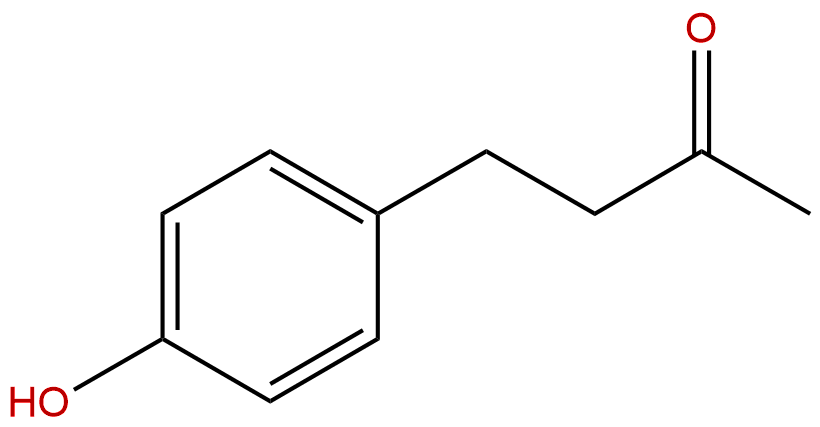
The chemical structure of raspberry ketone is 4- (4-hydroxyphenyl) -2-butanone, which belongs to the class of phenolic methyl ketones. Its molecular formula is C10H12O2 and its molecular weight is 164.2040. The structural feature is that a benzene ring is replaced by a hydroxyl group at position 4 and connected to 2-butanone through a three carbon chain. This structure is the basis of its aromatic properties and biological activity.
In terms of physicochemical properties, the lipid water partition coefficient (LogP) of raspberry ketone is 1.8428, indicating that it has a certain degree of lipophilicity, but not highly hydrophobic. Its topological polar surface area (TPSA) is 37.3000 Å ², which is relatively small and conducive to transmembrane transport. The water solubility data is 1.6749 mg/mL, belonging to the range of slightly soluble to soluble, which has a significant impact on its absorption and distribution in organisms. Preliminary evaluation of its pharmacological properties shows that raspberry ketone has a high blood-brain barrier permeability, suggesting that it may have an impact on central nervous system related targets. In addition, the key toxicity risk screening results were negative: no hERG potassium channel inhibitory activity (No), indicating a low risk of cardiac toxicity; The Ames test result is 0.0, indicating no significant mutagenicity. These preliminary pharmacological parameters provide a favorable physicochemical and safety basis for it as a potential drug lead compound.
Plant sources and extraction methods
Raspberry ketone naturally exists in various Rosaceae berries, among which raspberry (Rubus idaeus) is the most abundant and the main contributor to its characteristic aroma. In addition, there are also small amounts present in fruits such as blackberries and cranberries. The natural source of raspberry ketone has extremely low content, usually only accounting for 1-4 ppm of the fresh weight of the fruit. Therefore, direct extraction from plants is costly and difficult to meet industrial demand.
At present, commercially available raspberry ketones are mainly obtained through chemical synthesis, with commonly used routes including Aldol condensation reaction using p-hydroxybenzaldehyde and acetone as raw materials, or biosynthesis through microbial fermentation engineering, the latter of which has attracted much attention due to its green and sustainable characteristics. The methods for extracting from natural plants mainly include organic solvent extraction (such as ethanol, ethyl acetate), supercritical CO2 fluid extraction, and molecular distillation technology. Supercritical CO2 extraction is considered an effective method for obtaining high-purity natural raspberry ketone due to its low operating temperature, no solvent residue, and good selectivity, but the cost is still high. The optimization of extraction process aims to improve yield and purity, which is a key link connecting its resources with downstream applications.
Pharmacological activity research
The pharmacological activity research of raspberry ketone has expanded from its initial fragrance function to multiple biomedical fields, and its main activities are summarized as follows:
-
Regulating metabolism and weight loss potential One of the most notable activities of raspberry ketone is its regulation of lipid metabolism. Research has shown that it can activate peroxisome proliferator activated receptor - α (PPAR - α), promote fatty acid beta oxidation, inhibit adipocyte differentiation, and increase noradrenaline induced lipolysis, thereby reducing fat accumulation, lowering body weight, and liver lipid content. In animal models, raspberry ketone has shown potential to improve obesity, fatty liver, and insulin resistance induced by a high-fat diet.
-
anti-inflammatory activity The anti-inflammatory effect of raspberry ketone has been a research focus in recent years, especially in prostatitis models. Experimental studies have shown that raspberry ketone can significantly inhibit prostate tissue inflammation induced by chemicals or bacteria, reduce tissue edema, inflammatory cell infiltration, and histopathological damage. Its anti-inflammatory effect is closely related to the downregulation of key pro-inflammatory mediators.
-
Antioxidant and hepatoprotective effects As a phenolic compound, raspberry ketone has the ability to scavenge free radicals and inhibit lipid peroxidation. In animal models of acute liver injury induced by carbon tetrachloride, acetaminophen, etc., raspberry ketone pretreatment can significantly reduce serum transaminase levels and improve liver histological lesions. Its hepatoprotective mechanism is related to enhancing the antioxidant defense system (such as increasing the activity of superoxide dismutase and glutathione peroxidase) and inhibiting oxidative stress.
-
Other activities Preliminary studies also suggest that raspberry ketone may have anti androgen activity (possibly related to improving androgen related diseases such as acne and hair loss), inhibit melanin production (used for cosmetic whitening), and some antibacterial activity.
Mechanism of action and molecular targets
The pharmacological effects of raspberry ketone, especially its anti-inflammatory activity, involve a complex regulatory network of multiple targets and pathways. Regarding its role in prostatitis, research has revealed interactions with the following key targets and pathways:
-
Nuclear transcription factor kappa B (NF - κ B) signaling pathway NF - κ B is the core transcription factor of inflammatory response. Raspberry ketone can inhibit the nuclear translocation of NF - κ B p65 subunit and its binding activity with DNA, thereby blocking the transcription of a series of downstream pro-inflammatory genes. target NFKB1 It is a key component of this pathway.
-
Inflammatory cytokines and mediators Raspberry ketone can effectively inhibit the expression and release of various pro-inflammatory factors
- Tumor necrosis factor alpha (TNF - α)Raspberry ketone downregulated TNF The expression of, blocks the initiating factors of this inflammatory cascade reaction.
- Interleukin-s (ILs): Significantly reduced IL6 and IL1B The levels of these two factors play a central role in acute and chronic inflammation.
- Inducible nitric oxide synthase (iNOS) and cyclooxygenase-2 (COX-2)Raspberry ketone inhibition NOS2(Encoding iNOS) and PTGS2 The expression of genes and proteins encoding COX-2 reduces the production of excessive nitric oxide (NO) and prostaglandin E2 (PGE2), thereby alleviating tissue damage and pain caused by inflammation.
-
Peroxisome proliferator activated receptor - α (PPAR - α)As mentioned earlier, raspberry ketone is an agonist of PPAR - α. The activation of PPAR - α not only regulates lipid metabolism, but also has anti-inflammatory effects, which can be suppressed by trans inhibiting pathways such as NF - κ B. This may be another important pathway for its anti prostatitis effect.
In summary, raspberry ketone synergistically acts on multiple targets such as TNF, IL6, IL1B, NOS2, PTGS2, NFKB1, and inhibits key inflammatory signaling pathways such as NF - κ B. It may also exert anti-inflammatory effects by activating PPAR - α, thereby alleviating the pathological process of prostatitis at multiple stages.
Evaluation of drug properties and pharmacokinetics
Preliminary evaluation of the pharmacological properties of raspberry ketone based on given parameters and existing research:
-
Absorption, distribution, metabolism, excretion (ADME)Raspberry ketone has a small molecular weight (164.2), moderate LogP (~1.84), and small TPSA (37.3 Å ²), indicating its good oral bioavailability and transmembrane absorption ability. Its high blood-brain barrier permeability has been confirmed in prediction and experimentally validated in some studies, which expands its potential central range of action. Animal pharmacokinetic studies have shown that raspberry ketone is rapidly absorbed after oral administration, but its metabolism is also fast. The main metabolic pathways include glucuronic acid binding, sulfation, and benzene ring hydroxylation, among other Phase II metabolic reactions. The half-life of the prototype drug in vivo is relatively short. This suggests that formulation improvements (such as sustained-release formulations) or structural modifications may need to be considered in development to enhance their metabolic stability.
-
Preliminary evaluation of safety The existing data is relatively optimistic. The absence of hERG inhibition means a low risk of inducing QT interval prolongation in the heart. A negative Ames test indicates that the genetic toxicity risk is controllable. In reported animal experiments, raspberry ketone has shown good tolerance at appropriate doses. However, as a widely used food additive, its potential toxicity at extremely high doses or long-term use still needs to be systematically evaluated, especially its long-term effects on the liver and kidneys.
-
Challenges and optimization directions in drug development The main challenges lie in its low natural content, synthetic cost, relatively fast in vivo metabolism, and lack of precise therapeutic window and long-term safety data. Future research can focus on: 1) developing more economical and efficient green synthesis or extraction processes; 2) Improve its pharmacokinetic properties through prodrug strategies or structural modifications; 3) Conduct systematic preclinical toxicology studies and standardized clinical trials to clarify the safe and effective dosage range.
Clinical application prospects and prospects
The clinical application prospects of raspberry ketone are based on its multiple pharmacological activities. Although it has not yet been marketed as a drug, its potential is enormous
-
Adjuvant therapy for metabolic diseases As a PPAR - α agonist and lipolysis promoter, raspberry ketone has clear prospects in the adjuvant treatment of metabolic diseases such as weight loss, non-alcoholic fatty liver disease (NAFLD), hyperlipidemia, and the development of health foods. Rigorous human clinical trials are needed to verify its efficacy and safety.
-
Inflammatory disease therapeutic agents For inflammatory diseases such as chronic non bacterial prostatitis/chronic pelvic pain syndrome (CP/CPPS) that lack specific therapeutic drugs, the multi-target anti-inflammatory properties of raspberry ketone make it an attractive candidate drug. Oral or local administration formulations can be developed to alleviate prostatitis and related pain symptoms.
-
Dermatology and Cosmetic Applications Its anti-inflammatory, antioxidant, and potential anti androgen, whitening properties can be applied in medicinal cosmetics or functional skincare products for treating acne and skin inflammation. At present, some high-end cosmetics have added it as an active ingredient.
-
Potential applications of neuroprotection Its high blood-brain barrier permeability and antioxidant anti-inflammatory properties suggest that it may have exploratory value in neuroinflammatory related diseases such as Alzheimer's disease and Parkinson's disease, but this requires further mechanistic research and animal model validation.
Looking ahead to the future, research and development of raspberry ketone should focus on: ① Deep exploration of mechanisms By utilizing omics techniques, molecular docking, and validation experiments, new targets and signal networks were discovered. ② structural optimization Using raspberry ketone as the parent nucleus, reasonable structural modifications are carried out to improve activity, selectivity, and pharmacokinetic properties, and to develop a new chemical entity with independent intellectual property rights. ③ clinical translation Promote well-designed, multicenter clinical trials to obtain conclusive evidence of their effectiveness and safety in specific indications such as prostatitis and NAFLD. ④ Multidisciplinary cross application Develop novel delivery systems (such as nanoparticles and liposomes) by combining pharmacology and materials science to enhance their targeting and bioavailability.
Conclusion
Raspberry ketone, a natural molecule that gives berries a sweet aroma, is gradually transforming into a potential drug lead compound with multi-target pharmacological activity. Its role in regulating metabolism, anti-inflammatory, antioxidant and other aspects, especially in alleviating prostatitis by regulating key targets such as TNF, IL6, NF - κ B, demonstrates its potential as an anti-inflammatory therapeutic agent. Despite facing challenges such as rapid metabolism and lack of clinical data in drug development, its good physicochemical properties, preliminary safety, and clear multi effect activity have laid a solid foundation for its further development. With the collaborative innovation of multiple disciplines such as chemistry, pharmacology, and clinical medicine, raspberry ketone is expected to successfully transform from a food flavoring and develop new therapeutic drugs or functional products in the fields of metabolic and inflammatory diseases, achieving a leap in value from the "dining table" to the "medicine cabinet". Future research should focus on deepening understanding of mechanisms, optimizing compound structures, and advancing clinical evaluations, ultimately translating the modern medical value of this ancient natural product into practical applications that benefit human health.