
| Catalog No | Package | Original Price | Price | Inventory | Quantity | Operating |
|---|---|---|---|---|---|---|
| BP1155-100mg | 100mg | $30.00 | Sign in |
|


Synonym name: Carbohydroquinonic acid; Catechol-4-carboxylic acid; Hypogallic acid
Catalogue No.: BP1155
Cas No.: 99-50-3
Formula: C7H6O4
Mol Weight: 154.121
Botanical Source: Can be extracted from lignin. Isol. in free state from various higher plants, e.g. Fagopyrum and Alnus spp. and some Allium spp.
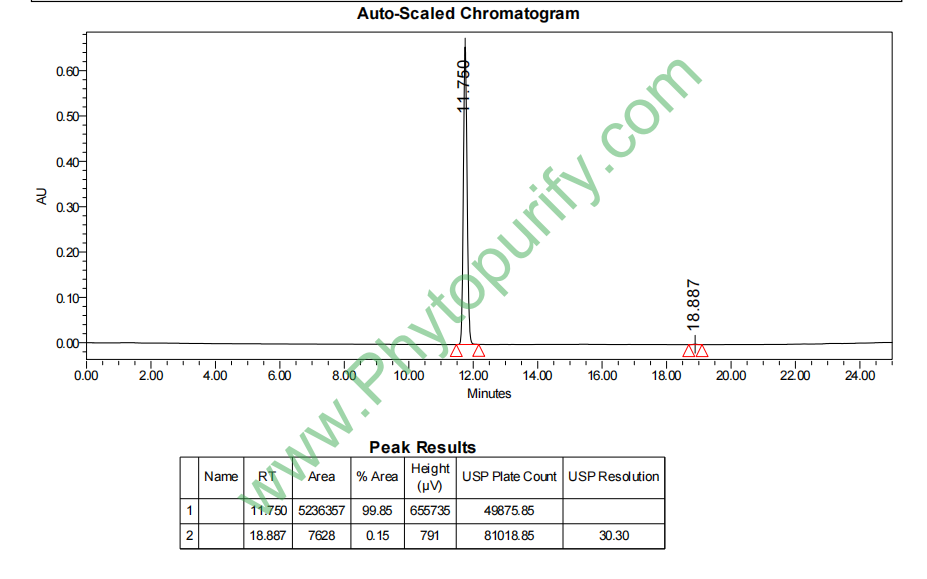
Purity: 95%~99%
Analysis Method: HPLC-DAD or/and HPLC-ELSD
Identification Method: Mass, NMR
Packing: Brown vial or HDPE plastic bottle
Can be supplied from milligrams to grams.
For Reference Standard and R&D, Not for Human Use Directly.
Inquire for bulk scale.
HPLC of Protocatechuic Acid
Storage conditions:Short-term storage at 2~8℃, long-term storage at -20 ~ -80℃
77.7600
1.2015
-1.2834
5.2655
3.2392
1.8331
Low
73.6403
1.7135
Yes
No
No
No
Yes
No
0.0
Yes
No
Yes
Yes
As an important treasure trove for drug discovery and development, natural products continue to provide modern medicine with lead compounds with novel structures and diverse activities. Among them, polyphenolic substances have attracted much attention due to their extensive biological activity and low toxicity. Protocatechuic acid (PCA), also known as 3,4-dihydroxybenzoic acid, is a simple phenolic acid widely present in various fruits, vegetables, and traditional Chinese medicine. Its CAS number is 99-50-3, which is a typical representative of catechins and one of the key metabolites of many complex polyphenols (such as anthocyanins and anthocyanins) in the body.
PCA has long been recognized for its significant antioxidant activity. However, in-depth research in the past two decades has revealed that PCA is far more than an antioxidant. It shows a wide range of pharmacological potential in neuroprotection, anti-inflammatory, anti-tumor, cardiovascular protection, anti diabetes and liver protection. Especially its protective effect in neurodegenerative disease models has made it a research hotspot in the field of neuropharmacology. This article aims to systematically review the chemical properties, plant sources, pharmacological activities, molecular mechanisms of action, pharmacological evaluation, and clinical application prospects of PCA, in order to provide comprehensive scientific references for the in-depth development and transformation research of this natural product.
The chemical structure of protocatechuic acid is relatively simple, consisting of a hydroxyl group connected to the benzoic acid parent nucleus at positions 3 and 4, forming a catechol hydroxyl group (catechol) structure, and a carboxyl group connected to position 1. Its molecular formula is C7H6O4 and its molecular weight is 154.1210. This structure endows PCA with unique physicochemical properties and biological activity.
Firstly, the ortho dihydroxy structure endows it with strong electron donating and metal ion chelating abilities, which form the structural basis for its outstanding antioxidant activity. It can effectively remove various reactive oxygen/nitrogen species such as superoxide anions, hydroxyl radicals, peroxynitrite, and inhibit lipid peroxidation. Secondly, the presence of carboxyl and phenolic hydroxyl groups results in different dissociation states at different pH environments, affecting their solubility and transmembrane transport. Its theoretical topological polar surface area (TPSA) is 77.7600 Å ², indicating strong molecular polarity. The calculated lipid water partition coefficient (LogP) is approximately 1.20, indicating a certain degree of lipophilicity, but overall it still leans towards hydrophilicity. The experimental data shows that its water solubility is about 5.27 mg/mL, which is a moderately soluble compound.
PCA is typically a white to pale yellow crystalline powder in the solid state. The phenolic hydroxyl groups in its structure make it sensitive to light, heat, and oxidants, and particularly unstable under alkaline conditions, easily oxidized into quinone substances. Therefore, attention should be paid to avoiding light, low temperature, and inert gas protection during extraction, storage, and formulation processes. Its simple structure also facilitates chemical modification to improve its stability, bioavailability, or targeting, providing possibilities for PCA based structural optimization and derivative development.
PCA is widely distributed in nature and mainly exists in various plants in the form of free acids, esters, or glycosides.
Plant-based:
1. Fruits and Vegetables Olives, blueberries, blackberries, kiwis, mangoes, onions, radishes, potato peels, corn, broccoli, etc. all contain a certain amount of PCA or its derivatives.
2. Chinese medicinal herbs and medicinal plants PCA is one of the effective ingredients in many traditional Chinese medicines. For example, in Danshen(Salvia miltiorrhiza)PCA is an important component of water-soluble salvianolic acid compounds; In honeysuckle(Lonicera japonica)Angelica sinensis(Angelica sinensis)Summer withered grass(Prunella vulgaris)It has also been detected during the waiting period. In addition, it is also a metabolic product of polyphenols in beverages such as green tea and red wine.
3. Other sources Some edible mushrooms and fermented foods (such as vinegar) also contain PCA.
extraction method:
The extraction method of PCA follows the general principles of natural product extraction, and is selected based on its polarity and form of existence.
1. Solvent extraction method The most commonly used method. Due to the high polarity of PCA and its glycosides, water, methanol, ethanol, acetone, or their different ratios of aqueous solutions are often used for leaching or reflux extraction. Acidizing solvents (such as alcohol/water solutions containing small amounts of hydrochloric acid or formic acid) can help convert PCA salts into free acid forms and improve extraction efficiency.
2. Ultrasound assisted extraction and microwave-assisted extraction Using the energy of ultrasound or microwave to destroy plant cell walls, accelerate solvent penetration and target component dissolution, has the advantages of short extraction time, high efficiency, and low solvent dosage.
3. Enzyme assisted extraction Using cellulases, pectinases, and other enzymes to disrupt the structure of plant cell walls and release intracellular components, particularly suitable for the extraction of bound PCA.
4. Purification Method After preliminary filtration and concentration, the crude extract is often enriched and purified using macroporous adsorption resins (such as AB-8 and D101), and separated by the adsorption of phenolic hydroxyl groups in PCA with the resin. Further purification can be achieved through techniques such as silica gel column chromatography and preparative high-performance liquid chromatography (HPLC). Crystallization is also a common method for obtaining high-purity PCA, usually using water or alcohol water systems for recrystallization.
A large number of in vitro and in vivo studies have shown that PCA has broad and significant pharmacological activities. The following is an overview of its core activities.
1. Neuroprotective effect
This is one of the most highly regarded activities of PCA. PCA has shown clear protective effects in various neurological disease models such as Alzheimer's disease, Parkinson's disease, cerebral ischemia/reperfusion injury, and epilepsy. It can improve learning and memory impairment induced by scopolamine or A β protein, alleviate dopaminergic neuron damage induced by MPTP or 6-OHDA, reduce cerebral infarction volume, and alleviate epileptic seizures. Its function is related to multiple mechanisms such as reducing oxidative stress, inhibiting neuroinflammation, anti apoptosis, and regulating neurotransmitter levels.
2. Anti inflammatory effect
PCA has a good inhibitory effect on both acute and chronic inflammation models. PCA can significantly reduce tissue edema and inflammatory cell infiltration in acute inflammation models such as carrageenan induced rat foot swelling and xylene induced mouse ear swelling. PCA can improve pathological damage and reduce disease activity index in chronic inflammation models such as colitis induced by sodium dextran sulfate and arthritis induced by Freund's complete adjuvant. Its anti-inflammatory effect involves the inhibition of various inflammatory mediators.
3. Antitumor effect
PCA can inhibit the growth, proliferation, migration and invasion of many cancer cell lines (such as breast cancer, liver cancer, lung cancer, prostate cancer, colon cancer, etc.), and can induce cell cycle arrest and apoptosis. In animal transplant tumor models, PCA administration can inhibit tumor growth and metastasis. Its anti-tumor activity has the characteristics of multi-target and multi pathway.
4. Cardiovascular protective effect
PCA can improve atherosclerosis induced by high-fat diet, alleviate vascular endothelial dysfunction, inhibit abnormal proliferation of vascular smooth muscle cells, and show anti platelet aggregation and anti thrombosis effects. In addition, it has also shown cardioprotective effects in myocardial ischemia/reperfusion injury models.
5. Other activities
PCA also has significant antioxidant, liver protection (against liver damage caused by alcohol or carbon tetrachloride), anti diabetes (improving insulin resistance, protecting pancreatic β cells), antibacterial, anti-virus and anti ultraviolet damage activities. These broad pharmacological effects collectively form the basis of PCA as a multifunctional health promoting molecule.
The pharmacological effects of PCA are not achieved through a single target, but by regulating a complex cellular signaling network, with its core mechanism revolving around antioxidant and anti-inflammatory Two main threads unfold and interweave key pathways that affect cell survival, proliferation, and death.
1. Core molecular targets and pathways for anti-inflammatory effects
The anti-inflammatory effect of PCA is the cornerstone of its numerous pharmacological activities, which involve extensive regulation of inflammatory signaling pathways
* Nuclear factor kappa B signaling pathway PCA can effectively inhibit the activation of NF - κ B (encoded by the NFKB1 gene). It inhibits the translocation of NF - κ B p65 subunit to the nucleus by blocking the degradation and phosphorylation of I κ B α, or suppressing the activity of IKK, ultimately downregulating the expression of a series of pro-inflammatory genes.
* Inflammatory cytokines and mediators PCA can significantly reduce the production of key pro-inflammatory cytokines such as interleukin-6 (IL-6) and tumor necrosis factor alpha (TNF) in macrophages or tissues stimulated by lipopolysaccharides. At the same time, it can also inhibit the expression of inducible nitric oxide synthase (NOS2) and cyclooxygenase-2 (PTGS2/COX-2), reduce the production of inflammatory mediators such as nitric oxide (NO) and prostaglandin E2 (PGE2).
* STAT3 signaling pathway PCA can inhibit the phosphorylation and activation of signal transduction and transcription activator 3 (STAT3). STAT3 is an important hub connecting inflammation and tumors, and its inhibition not only enhances anti-inflammatory effects but also contributes to its anti-tumor activity.
* Inflammasome Research has shown that PCA can inhibit the assembly and activation of NLRP3 inflammasomes, reduce the activation of caspase-1 (CASP1), and thus inhibit the maturation and release of interleukin-1 β (IL-1 β) and IL-18, which are particularly important in neuroinflammation and metabolic inflammation.
* Transient receptor potential channel PCA has been found to antagonize the activity of transient receptor potential vanillic acid subtype 1 (TRPV1) and anchoring protein subtype 1 (TRPA1), which are involved in the transmission of pain and neurogenic inflammation, and may be one of its mechanisms for relieving inflammatory pain.
2. Antioxidant and activation of endogenous defense system
In addition to directly clearing free radicals, the more important mechanism of PCA is to activate the cell's own antioxidant defense system. It can promote the dissociation and transfer of nuclear factor E2 related factor 2 (Nrf2) from Keap1 into the nucleus, activating the expression of a series of antioxidant enzymes and phase II detoxifying enzymes such as heme oxygenase-1 (HO-1), quinone oxidoreductase 1 (NQO1), superoxide dismutase (SOD), glutathione peroxidase (GPx), etc., thereby systematically enhancing the cell's ability to resist oxidative damage.
3. Regulating cell apoptosis and autophagy
In tumor cells, PCA induces apoptosis by upregulating pro apoptotic proteins (such as Bax), downregulating anti apoptotic proteins (such as Bcl-2), and activating the caspase cascade reaction. Meanwhile, it can also regulate the expression of autophagy related proteins (such as LC3-II, p62), inducing protective or cytotoxic autophagy, depending on cell type and microenvironment.
4. Metabolic regulation
PCA can improve energy metabolism, promote glucose uptake and inhibit lipid synthesis by activating AMP activated protein kinase (AMPK) pathway, which plays a key role in its anti diabetes and cardiovascular protection.
In summary, PCA exerts its pharmacological effects through multiple targets and pathways, with the core of its action network being the synergistic inhibition of oxidative stress and inflammatory response, two closely related pathological processes.
Although PCA has a wide range of pharmacological activities, its successful development as a drug depends on its pharmacological properties, including absorption, distribution, metabolism, excretion (ADME) properties and safety.
Pharmacokinetic characteristics:
PCA is rapidly absorbed after oral administration, but its absolute bioavailability is affected by factors such as dosage form and species, and has been reported differently in different studies (ranging from about 20% to over 80%). Overall, it shows that PCA can be absorbed orally, but there may be a first pass effect. The absorption site is mainly in the small intestine, mediated by monocarboxylate transporters (MCTs). After entering the bloodstream, PCA has a higher binding rate with plasma proteins. Its distribution volume is relatively small, mainly distributed in organs with abundant blood flow, such as kidneys, liver, lungs, etc. However, its ability to penetrate the blood-brain barrier (BBB) is limited (predicted as "low"), which poses a major challenge for its central nervous system protective effects. PCA is rapidly metabolized in the body, mainly through methylation, glucuronidation, and sulfation, producing corresponding methylation products (such as vanillic acid), glucuronide, and sulfate ester complexes. These metabolites are mainly excreted through urine, with less excretion of the original drug. The short half-life of PCA suggests that frequent administration or use of sustained-release formulations may be necessary to maintain effective blood drug concentrations.
Analysis of drug properties parameters:
According to the provided parameters, the molecular weight (154.12) is much smaller than 500, which complies with Lipinski's five rules; LogP (1.20) is within the ideal range (-0.4 to+5.6); TPSA (77.76 Å ²) is less than 140 Å ²; the number of hydrogen bond donors (2 phenolic hydroxyl groups+1 carboxyl group? Actually, it can be dissociated, but the hydrogen of hydroxyl and carboxyl groups is usually considered when calculating) and acceptors are within an acceptable range. These data indicate that PCA has a good drug like basis. Moderate water solubility, beneficial for formulation development. The key toxicity screening results showed no significant inhibition of hERG potassium channels ("No"), indicating a low risk of cardiac toxicity; The Ames test result is 0.0, indicating no mutagenicity and low genetic toxicity risk in this testing system.
safety:
A large number of animal experiments have shown that PCA has high safety at appropriate doses. Acute and subchronic toxicity studies have shown that its toxicity is relatively low. However, the safety of long-term high doses, potential drug interactions, and the safety of specific populations such as pregnant women still need further evaluation.
Main challenges and strategies:
The main challenges of PCA commercialization are:① The oral bioavailability needs to be further improved and stabilized; ② The low permeability of the blood-brain barrier limits its central application; ③ Fast metabolism and short half-life in the body.
To address these challenges, the following strategies can be adopted:① Formulation technology Develop novel delivery systems such as nanoparticles, liposomes, microemulsions, and solid dispersions to improve solubility, stability, and bioavailability.② Prodrug modification Esterification and other modifications are carried out on carboxyl or phenolic hydroxyl groups to prepare prodrugs with higher lipid solubility, improve their membrane permeability and BBB penetration ability, and release the original drug through enzymatic interpretation in vivo.③ Structural optimization On the basis of retaining the pharmacophore (catechol structure), structural modifications are carried out to obtain derivatives with more stable metabolism and stronger targeting.
PCA, as a safe and multifunctional natural small molecule, has broad clinical application prospects, but solid research is still needed to promote its transformation.
Potential clinical application directions:
1. Adjuvant treatment and prevention of neurodegenerative diseases As a dietary supplement or adjuvant therapy for Alzheimer's disease and Parkinson's disease, the focus is on overcoming BBB disorders through pharmaceutical means, or for early prevention and delay of disease progression.
2. Prevention and treatment of metabolic diseases: In metabolic inflammation related diseases such as non-alcoholic fatty liver disease, type 2 diabetes, atherosclerosis, PCA can play a comprehensive regulatory role through its anti-inflammatory and antioxidant properties, and is expected to be developed as a functional food or drug.
3. Anti inflammatory and analgesic: Based on its inhibitory effect on COX-2, TRP channels and inflammatory mediators, we can explore its application in topical analgesic and anti-inflammatory preparations (such as gel and plaster) to avoid the first pass effect and BBB problem of systemic administration.
4. neoadjuvant therapy Combined with conventional chemotherapy/radiotherapy, it may enhance sensitivity, reduce toxicity (protect normal tissues), and improve the overall efficacy of tumor treatment.
5. Cosmetics and Skin Care Due to its antioxidant, UV resistant, and anti-inflammatory properties, PCA can be used as an active ingredient in cosmetics for anti-aging, whitening, and soothing sensitive skin.
Future research prospects:
1. In depth mechanism exploration Using omics techniques (proteomics, metabolomics) and gene editing tools, we aim to systematically and accurately elucidate the role nodes and upstream downstream relationships of PCA in complex disease networks, and discover its novel targets.
2. Overcoming the bottleneck of traditional Chinese medicine This is the top priority of current research. Efforts should be focused on developing efficient, stable, and targeted delivery systems for diseased tissues, especially targeted delivery technologies for the central nervous system (such as exosomes, receptor-mediated transporter modified nanoparticles).
3. High quality preclinical and clinical research We need to design rigorous and standardized long-term toxicity, pharmacokinetics, and pharmacodynamics animal experiments to provide reliable basis for clinical trials. Ultimately, conducting multicenter, randomized, double-blind, placebo-controlled clinical trials is the gold standard for verifying the efficacy and safety of PCA.
4. Derivative development and structural optimization Based on PCA parent nucleus, carry out reasonable drug chemical modification, systematically evaluate its structure-activity relationship, in order to obtain candidate compounds with stronger activity and better drug properties.
5. Research on the synergistic effect of multiple components PCA often coexists with other polyphenols in plant extracts, and studying its synergistic effects with other components can help develop more effective compound natural medicines or health products.
As a natural polyphenol with a simple structure, wide sources, and high safety, protocatechuic acid has significant pharmacological activities, especially neuroprotective and anti-inflammatory effects, which endow it with enormous potential for drug development. From direct antioxidant activity to systematic regulation of key signaling pathways such as Nrf2, NF - κ B, STAT3, etc., the mechanism of action of PCA has been studied from phenomenon description to molecular network level. Despite facing challenges in terms of bioavailability, blood-brain barrier penetration, and metabolic stability, the development of modern pharmaceutical, medicinal chemistry, and molecular biology technologies provides powerful tools to overcome these bottlenecks. In the future, through continuous deepening of basic research and active exploration of translational applications, protocatechuic acid is expected to transform from a common phytochemical component into an innovative drug or functional factor for the prevention and treatment of various modern diseases such as neurodegenerative diseases, metabolic syndrome, chronic inflammation, etc., and play a more important role in the field of human health. The research process once again confirms that finding inspiration from natural products and utilizing modern technology for optimization and improvement remains a promising path for drug discovery.
