


Synonym name:
Catalogue No.: BP1443
Cas No.: 2182-14-1
Formula: C25H32N2O6
Mol Weight: 456.539
Botanical Source: Main alkaloid of Catharanthus roseus (Vinca rosea) also in Vinca pusilla (Apocynaceae)
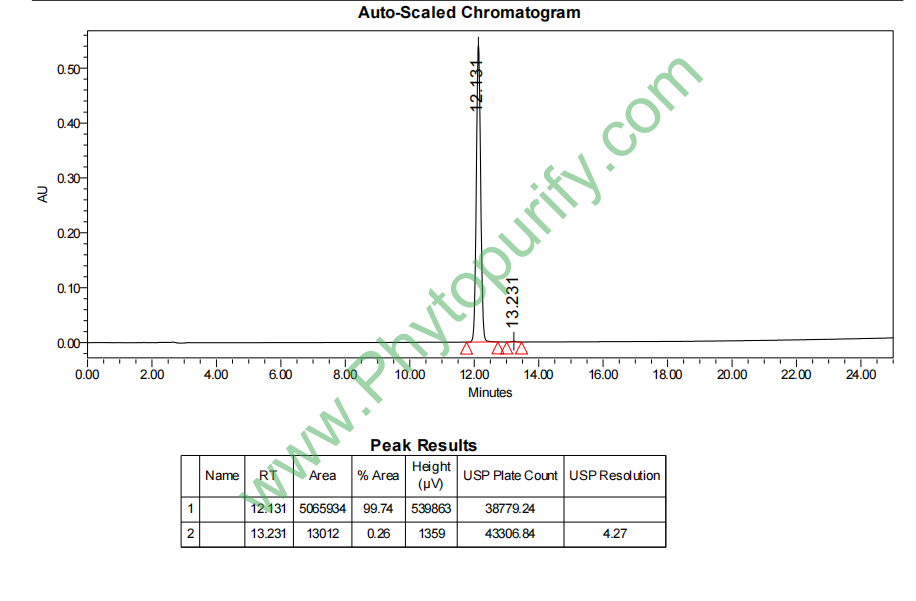
Purity: 95%~99%
Analysis Method: HPLC-DAD or/and HPLC-ELSD
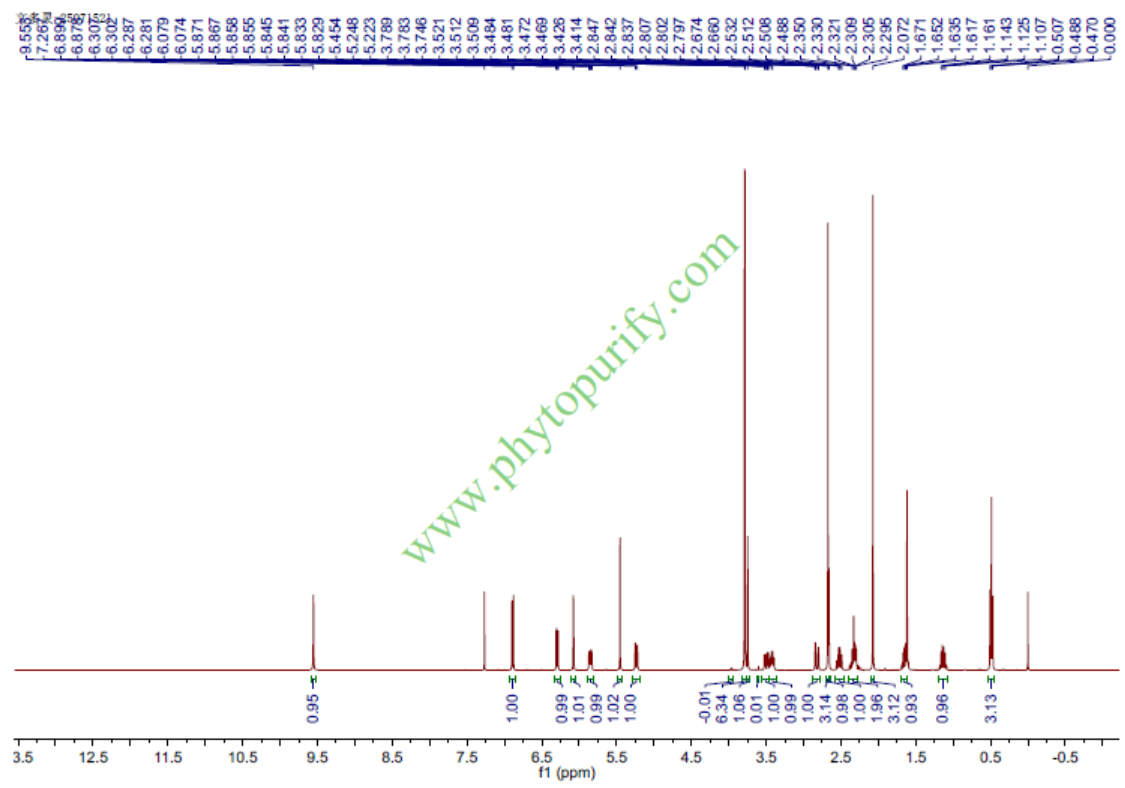
Identification Method: Mass, NMR
Packing: Brown vial or HDPE plastic bottle
Can be supplied from milligrams to grams.
For Reference Standard and R&D, Not for Human Use Directly.
Inquire for bulk scale.
HPLC of Vindoline
HNMR of Vindoline
Storage conditions:Short-term storage at 2~8℃, long-term storage at -20 ~ -80℃
88.5400
2.2449
2.1824
.6901
1.9483
4.4194
High
75.2198
4.9097
Yes
Yes
No
No
No
No
0.0
No
No
Yes
Yes
Natural products have long been an important source of innovative drug discovery, among which alkaloids have attracted much attention due to their significant biological activity. Vindoline, as an important indole alkaloid, is mainly derived from the medicinal plant Changchun flower(Catharanthus roseus). It was initially known as a key precursor for the anti-cancer drugs Vinblastine and Vincristine, which play an important role in clinical tumor chemotherapy. However, recent studies have gradually revealed that Wendolin itself is not just a synthetic precursor, but a compound entity with independent, diverse, and important pharmacological activities.
Traditional understanding suggests that the anti-cancer activity of Chinese Duoling is relatively weak, but new scientific evidence continues to expand the boundaries of its biological functions. Research shows that Wenduoling has shown a clear improvement effect in many chronic disease models such as diabetes and its complications, bone metabolic diseases (such as bone loss and osteoarthritis), and kidney injury. Its mechanism of action involves the regulation of cell apoptosis, inhibition of key signaling pathways such as NF - κ B and MAPK, and weak effects on microtubule dynamics. Especially in the study of breast cancer, Wenduoling showed the potential of multi target intervention, including the regulation of AMPK, STAT3, BCL2 family proteins and drug efflux pump.
Given its oral activity, good pharmacokinetic prediction parameters, and relatively low toxicity risk, Wendolin is transforming from a classic natural product chemical molecule to a lead compound with multi disease therapeutic potential. The purpose of this article is to systematically review the chemical properties, plant sources, pharmacological activities, molecular mechanisms of action, and pharmacological evaluation of Wendolin, and to look forward to its future clinical application prospects, in order to provide comprehensive academic references for the in-depth research and development of this compound.
Wendolin (CAS number: 2182-14-1) is a structurally complex monoterpene indole alkaloid. Its molecular formula is C25H32N2O6 and its molecular weight is 456.5390. Its core structure consists of an indole ring system (composed of indoline and indole moieties) and a complex polycyclic skeleton, which includes a dihydroindole unit and a coupled oxygen-containing six membered ring (D ring). Its structural features include a methyl ester group at C-16 position, an acetoxy group at C-17 position, and a hydroxyl group at C-4 position, which have a critical impact on its biological activity and physicochemical properties.
From the analysis of physical and chemical properties, Wendolin exhibits typical lipophilic alkaloid characteristics. The calculated LogP value is about 2.24, indicating that it has moderate lipid solubility, which is beneficial for transmembrane absorption and distribution. The topological polar surface area (TPSA) is 88.54 Å ², indicating that the molecule has a certain polarity, which is mainly attributed to the multiple oxygen atoms (ester groups, hydroxyl groups) in its structure. The predicted water solubility value is 0.69 mg/mL, which falls within the range of slightly soluble to poorly soluble, and this is a factor that needs to be considered in actual formulation development. It is worth noting that its predicted blood-brain barrier (BBB) permeability is "high", suggesting that Wendolin may have the potential to penetrate the central nervous system, providing a theoretical basis for its application in central related diseases such as certain neuropathic pain or brain tumors. Preliminary drug risk prediction shows that the hERG inhibition and Ames mutagenicity risks are both negative (0.0), indicating that it may have good cardiac safety and genetic toxicity safety margin.
Wen Duoling mainly comes from the Apocynaceae plant Changchun Flower(Catharanthus roseus Extracted from the leaves of (L.) G. Don. Changchun flower is an important medicinal plant, native to Madagascar and widely cultivated in tropical and subtropical regions around the world. This plant is a famous "alkaloid synthesis factory", containing over 130 terpenoid indole alkaloids. Its Chinese compound carbendazim and Catharanthine are direct precursors for the synthesis of dimeric anticancer drugs vinblastine and vinblastine. In the plant body, the biosynthetic pathway of Wendolin is extremely complex, involving about 20 enzymatic reactions, starting from serotonin and split ring verbascoside, and finally forming its unique four ring skeleton through strict stereochemical control.
Organic solvent extraction combined with chromatographic separation technology is commonly used to extract and separate Wendolin from plant materials. The classic process includes crushing dried Changchun flower leaves and leaching or percolating them with polar solvents such as methanol or ethanol. After concentrating the extract, dissolve it in acidic water (such as dilute hydrochloric acid or citric acid solution) to convert the alkaloids into salts and dissolve them in the aqueous phase, separating them from non alkaline impurities. Subsequently, alkalize the aqueous phase to free the alkaloids, and then perform back extraction with organic solvents such as chloroform or dichloromethane. The crude total alkaloids obtained were repeatedly separated and purified using methods such as silica gel column chromatography, high-performance liquid chromatography (HPLC), or preparative thin layer chromatography (PTLC), ultimately obtaining high-purity Wendolin monomers. With the development of technology, separation techniques such as high-speed countercurrent chromatography (HSCCC) that do not require solid carriers have also been applied to the efficient preparation of Wendolin. In addition, plant cell culture and synthetic biology strategies have also been explored for sustainable and controllable production of metoclopramide and its precursors.
In recent years, research has broken through the traditional understanding that Wendolin is only a synthetic precursor, revealing its wide and diverse pharmacological activities.
1. Antitumor activity:
Although the inhibitory effect of Wendolin on microtubule protein polymerization is weaker than its derivative dimer vinblastine, it exhibits unique anti-tumor effects in various tumor models. Especially in breast cancer research. Wenduoling can effectively inhibit the proliferation, migration and invasion of a variety of breast cancer cells (including MCF-7, MDA-MB-231, etc.). Its function is not limited to cytotoxicity, but also involves inhibition of tumor stem cell characteristics and epithelial mesenchymal transition (EMT) processes. In addition, Wenduoling has been proved to enhance the sensitivity of traditional chemotherapy drugs (such as doxorubicin) to drug-resistant breast cancer cells, showing the potential of chemotherapy sensitizers.
2. Improvement effect on metabolic diseases:
In the model of diabetes and its complications, Wenduoling showed significant protective effects. Animal experiments show that Wenduoling oral administration can reduce fasting blood glucose, improve glucose tolerance and insulin sensitivity in diabetes model animals. Its hypoglycemic mechanism may be related to regulating hepatic gluconeogenesis and improving peripheral tissue insulin signaling pathway. More importantly, Wenduoling can significantly reduce renal damage caused by diabetes, reduce proteinuria, inhibit mesangial matrix proliferation and fibrosis, and protect renal function.
3. Protective effect of skeletal system:
Wendolin has dual benefits for bone health. In the postmenopausal osteoporosis model induced by ovarian resection, Wendolin can effectively inhibit excessive activation of osteoclasts, reduce bone resorption, and may promote osteoblast activity, thereby alleviating bone loss and increasing bone density and strength. In the osteoarthritis model, Wendolin inhibits the degeneration of articular cartilage, reduces synovitis and subchondral bone remodeling, delays disease progression, and alleviates pain.
4. Anti inflammatory and anti apoptotic effects:
One of the core pharmacological properties of Wendolin is its anti-inflammatory and anti apoptotic activity. In various tissue injury models, such as renal ischemia-reperfusion injury and chemical liver injury, Wendolin can significantly reduce the release of pro-inflammatory cytokines (such as TNF - α, IL-6, IL-1 β) and inhibit cell apoptosis. This protective effect is closely related to its regulation of key inflammation and survival signaling pathways.
The multiple pharmacological activities of Wendolin stem from its diverse interventions on cellular signaling networks. Its mechanism of action is complex, involving multiple molecular targets and pathways.
1. Signal pathway regulation:
* NF - κ B pathway: Wendolin can significantly inhibit the activation of nuclear factor kappa B (NF - κ B), specifically by reducing the phosphorylation level of its key subunit p65 (p-p65). NF - κ B is a core transcription factor for inflammation, cell survival, and stress response. Its inhibition can downregulate the expression of a series of pro-inflammatory factors, adhesion molecules, and anti apoptotic proteins, which explains the strong anti-inflammatory and partial anti-tumor effects of Wendolin.
* MAPK/ERK pathway: Wendolin can inhibit the phosphorylation of extracellular signal regulated kinase (ERK) (p-ERK). The ERK pathway is involved in the transmission of signals related to cell proliferation, differentiation, and survival. In cancer and inflammatory diseases, inhibiting the overactivated ERK pathway helps to curb abnormal cell proliferation and inflammatory cascade reactions.
* AMPK pathway: In the model of breast cancer and metabolic disease, Wenduoling has been proved to activate AMP activated protein kinase (AMPK). AMPK is an energy receptor in cells, and its activation can inhibit synthetic metabolism (such as adipogenesis and gluconeogenesis), promote catabolism, thereby exerting anti-tumor effects (inhibiting proliferation) and improving metabolic disorders (promoting glucose uptake).
2. Apoptosis and autophagy regulation:
Wendolin affects cell apoptosis by regulating the balance of B-cell lymphoma 2 (BCL2) family proteins. It can downregulate the expression of anti apoptotic protein BCL2, while possibly upregulating pro apoptotic proteins such as BAX, leading to a decrease in mitochondrial membrane potential, release of cytochrome C, and ultimately activating the Caspase cascade reaction, inducing tumor cell apoptosis. In addition, it may also affect the autophagy process, but its specific role in autophagy remains to be clarified.
3. breast cancer related specific target network:
In the context of breast cancer, Wenduoling's target network is particularly rich:
* STAT3: Signal transducer and activator of transcription factor 3 (STAT3) is a key factor in maintaining cancer stem cells and facilitating tumor immune escape. Wendolin can inhibit the phosphorylation and nuclear translocation of STAT3, thereby suppressing the transcription of downstream target genes such as Cyclin D1, BCL2, MMPs.
* Estrogen receptor beta (ESR2): Wendolin may act as a regulator of estrogen receptor beta, exerting selective anti proliferative effects through this receptor mediated pathway.
* Drug efflux pump: Wendolin has inhibitory effects on ATP binding cassette transporters B1 (ABCB1/P-gp) and G2 (ABCG2/BCRP). These two proteins are the main causes of multidrug resistance (MDR) in tumors. Wendolin can reverse the efflux of chemotherapy drugs by tumor cells and restore drug sensitivity by inhibiting its function.
* Protein kinase C alpha (PRKCA) and microtubule associated protein tau (MAPT): These targets are related to cell signal transduction and skeletal stability, and the intervention of Wendolin may affect the migration and invasion of tumor cells.
* Matrix metalloproteinase-2 (MMP2) and lymphocyte specific protein tyrosine kinase (LCK): They are respectively related to extracellular matrix degradation (invasion and metastasis) and immune cell signaling, suggesting that Wendolin may affect the tumor microenvironment.
4. Weak effects on the cytoskeleton:
As a member of the Changchun flower alkaloid family, Wendolin has a weak inhibitory effect on microtubule protein polymerization. Although it is not sufficient to cause strong mitotic arrest, it may affect intracellular material transport and signal transduction through subtle microtubule dynamics interference, and synergize with other mechanisms.
Based on computational predictions and preliminary experimental data, Wendolin exhibits attractive pharmacological characteristics.
Pharmacokinetic (PK) characteristics: Wendolin has oral activity, which is a significant advantage over many natural anti-cancer products that require intravenous administration. Animal pharmacokinetic studies have shown that after oral administration, Wendolin can be effectively absorbed. Its moderate LogP value (~2.24) balances the lipid solubility required for intestinal absorption and the water solubility required for in vivo distribution. The higher predictive value of blood-brain barrier permeability provides the possibility for its treatment of central nervous system diseases or brain metastases. However, its specific human bioavailability, distribution volume, plasma protein binding rate, metabolic pathway (presumably mainly metabolized by the liver CYP450 enzyme system), and excretion mode still require systematic preclinical and clinical research to clarify. Its properties as a P-gp substrate or inhibitor may affect the pharmacokinetics of itself and other co administered drugs, and should be given special attention in drug interaction assessments.
Preliminary safety assessment: Computational toxicology predictions provide positive signals. The risk of hERG channel inhibition is negative, reducing the potential risk of causing QT interval prolongation and apical torsion type ventricular tachycardia, which is an important reason for the failure of many drug development. The Ames test predicted a negative result (0.0), indicating that it may not have direct genetic toxicity and has a high safety threshold. However, these computational predictions require rigorous validation through in vitro and in vivo experiments. Whether the dose limiting toxicity (such as neurotoxicity and bone marrow suppression) commonly found in the Changchun flower alkaloid family is significantly reduced in Wendolin monomers is a key safety consideration for whether it can be independently developed into a drug.
Formulation development considerations: The poor water solubility of Wendolin may be a challenge in the development of its oral formulations. It may be necessary to use formulation techniques such as solid dispersion, cyclodextrin inclusion, nanocrystals, liposomes, etc. to improve its dissolution and bioavailability. For targeted delivery, especially for tumors or bone tissues, drug delivery systems based on nanotechnology can be designed to enhance efficacy and reduce systemic toxicity.
The transformation of Wendolin from a phytochemical molecule to a potential therapeutic drug has broad but cautious prospects.
Potential indications:
1. Adjuvant treatment and drug resistance reversal of breast cancer: In view of its multi target anti breast cancer activity (especially for STAT3, AMPK, drug efflux pump) and chemosensitivity enhancement, Wenduoling is the most promising adjuvant drug for breast cancer, which can be used in combination with standard chemotherapy, endocrine therapy or targeted therapy to enhance efficacy and overcome drug resistance. Its potential role in ESR2 is also worth exploring in specific subtypes.
2. Management of complications of diabetes: Its clear protective effect on diabetes nephropathy is expected to become a new candidate drug for prevention and treatment of this common and serious complication. Its anti-inflammatory and anti fibrosis mechanisms fit in with the pathological core of diabetes nephropathy.
3. Bone and joint diseases: In the fields of osteoporosis and osteoarthritis, Wendolin has demonstrated therapeutic effects through its dual effects of anti-inflammatory and regulating bone metabolism, and may be developed as a drug to improve bone health and alleviate joint degeneration.
4. Other inflammation related diseases: Its strong NF - κ B inhibitory activity suggests that it may have potential applications in other chronic inflammatory diseases, such as certain types of hepatitis, nephritis, and arthritis.
Challenges and Future Directions Faced:
1. Deep exploration of mechanisms: At present, the known targets still need to be confirmed at a more precise molecular level, such as eutectic structure and covalent binding verification. Its "multi-target" characteristic is both an advantage and a challenge, and it is necessary to clarify which are the main targets of action and which effects are downstream results of upstream regulation. It is crucial to systematically identify the directly interacting proteome using chemical biology methods such as affinity fishing and proteomics.
2. System preclinical development: A comprehensive pharmacodynamic, pharmacokinetic, and toxicological evaluation that complies with Good Clinical Practice (GLP) standards must be completed. Clarifying its treatment window, species differences, long-term toxicity, reproductive toxicity, etc., is the cornerstone of advancing clinical trials.
3. Structural optimization and derivative development: It is an important task for medicinal chemists to modify the structure of Wendolin as a lead compound in order to improve its water solubility, target selectivity, potency, or metabolic stability. For example, by modifying its C-4 hydroxyl group or C-16 methyl ester group, derivatives with better activity and properties may be obtained.
4. Exploration of Combination Therapy Strategies: Exploring the synergistic effect of Wendolin with existing standard therapies (chemotherapy drugs, immune checkpoint inhibitors, anti osteoporosis drugs, etc.) and designing a reasonable combination therapy plan may be a shortcut for its rapid clinical application.
5. Application of modern formulation technology: Developing intelligent delivery systems targeting specific diseases such as bone targeting and tumor targeting can maximize their therapeutic efficacy while minimizing potential impact on normal tissues.
Wendolin, a classic indole alkaloid derived from the long spring flower, is undergoing a cognitive transformation from a "famous precursor" to a "multifunctional protagonist". Beyond its traditional role as a synthetic block of anticancer drugs, modern pharmacological research has revealed its independent biological activity in many aspects, such as anti-tumor (especially breast cancer), improving metabolic diseases, and protecting bones and kidneys. Its mechanism of action involves the regulation of multiple key signaling pathways such as AMPK/STAT3/NF - κ B, as well as intervention in functional proteins such as cell apoptosis and drug efflux pumps, forming a multi-target, networked mode of action. Combined with its excellent oral activity, favorable pharmacokinetic prediction parameters, and preliminary safety signals, Wendolin is undoubtedly a highly valuable natural lead compound for development.
However, translating its potential into practical clinical treatment methods still has a challenging journey ahead. Future research needs to continue to deepen in precise elucidation of molecular mechanisms, completion of standardized preclinical evaluations, rational structural optimization, and development of efficient delivery systems. With the advancement of interdisciplinary research, Wendolin is expected to not only find its position as a sensitizer or adjuvant drug in the field of tumor treatment, but also occupy a place in the new treatment strategies for chronic metabolic, inflammatory, and degenerative diseases, continuing the glorious chapter of natural products in the history of drug discovery.
