


Synonym name:
Catalogue No.: BP1446
Cas No.: 125317-39-7
Formula: C45H54N4O8•2C4H6O6
Mol Weight: 1079.11
Botanical Source:
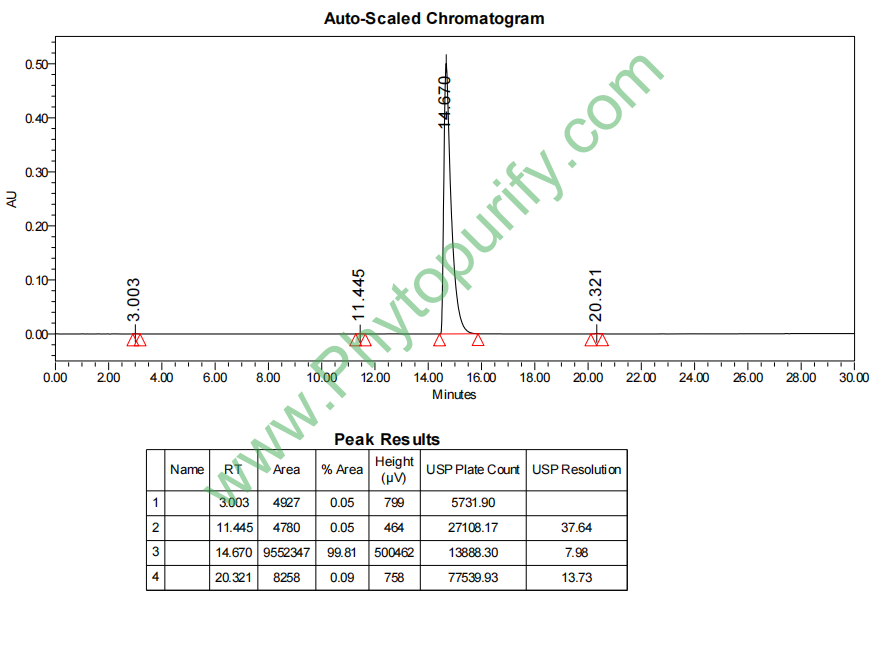
Purity: 95%~99%
Analysis Method: HPLC-DAD or/and HPLC-ELSD
Identification Method: Mass, NMR
Packing: Brown vial or HDPE plastic bottle
Can be supplied from milligrams to grams.
For Reference Standard and R&D, Not for Human Use Directly.
Inquire for bulk scale.
HPLC of Vinorelbine Tartrate
Storage conditions:Short-term storage at 2~8℃, long-term storage at -20 ~ -80℃
133.8700
4.7652
4.2685
.0092
1.5593
4.0927
Low
87.3324
7.4975
No
Yes
No
No
Yes
No
0.0
No
No
Yes
Yes
Malignant tumor is a global public health problem that seriously threatens human health, among which the incidence rate and mortality of lung cancer remain high for a long time. In the long river of anti-tumor drug development, natural products and their derivatives have always played a crucial role, providing a rich arsenal for clinical treatment. Changchun flower alkaloids, as a class of alkaloids with significant anti-tumor activity extracted from the Apocynaceae plant Changchun flower, have become one of the cornerstone drugs in the field of chemotherapy since their discovery. Vinorelbine tartrate, as a semi synthetic derivative of vinblastine, represents an important milestone in the structural optimization and pharmacological properties improvement of this class of compounds. Through chemical modification, it aims to improve its therapeutic window, reduce neurotoxicity, and expand its clinical application range while retaining its core anti mitotic activity. Since it was approved for clinical use in the 1990s, vinorelbine tartrate has become a first-line or important choice for the treatment of non-small cell lung cancer, breast cancer and other solid tumors. This article aims to systematically review the chemical structure, sources, pharmacological activities, multi-target mechanisms of action, pharmacological characteristics, and clinical application progress of Changchun Ruibin Tartrate, in order to provide a comprehensive academic perspective for the in-depth research and rational application of this drug.
The chemical name of Vinorelbine Tartrate is 3 ', 4' - Dihydro-4 '- Deoxy-C' - Norvinblastine Tartrate, and its CAS number is 125317-39-7. Structurally, it is a product of specific modifications to the parent nucleus of vinblastine. Compared with the classic vincristine and vincristine, the key structural change of Changchun Ruibin is that the nine membered ring of its Catharanthine part has been modified to an eight membered ring, while the pyridine ring of the Vindoline part has been opened. This unique structural modification is the molecular basis for the differentiation of its pharmacological properties.
Its molecular formula is C ₄₅ H ₅₄ N ₄ O ₈ · C ₄ H ₆ O ₆, with a molecular weight of 778.9470. This compound exhibits typical characteristics of indole alkaloids and has a certain lipophilicity. Its calculated LogP value is about 4.77, indicating strong lipid solubility. The theoretical polar surface area is approximately 133.87 Å ². These physicochemical parameters directly affect its solubility and in vivo distribution. Experimental data shows that its water solubility is low, about 0.0092 mg/mL, which usually requires formulation methods (such as making tartrate salts to increase solubility, or preparing nano delivery systems such as liposomes and micelles) to improve its drug delivery performance. The prediction analysis of drug properties shows that its ability to penetrate the blood-brain barrier is relatively low, which may be partly related to its larger molecular weight and polarity, but also partially explains its reduced peripheral neurotoxicity compared to other vinblastine drugs (such as vinblastine). In addition, preliminary in vitro safety screening suggests that it has a low risk of inhibiting hERG potassium channels, and the Ames test result is negative (0.0), indicating that its potential mutagenic risk is small, providing certain supporting data for its clinical safety.
Vinorelbine tartrate is a semi synthetic derivative, and its initial natural precursor material is derived from the Oleander family plant Changchun flower. Changchun flowers contain over a hundred alkaloids, among which the main ones with anti-tumor activity are indole alkaloids such as vinblastine and vinblastine. The yield of these natural alkaloids is extremely low, usually accounting for only a few ten thousandths or even lower of the dry weight of plants, and the extraction and separation process is complex.
Traditional extraction methods typically involve multi-step purification processes such as solvent extraction, acid/alkali treatment, and chromatographic separation. Firstly, crush the dried whole plant of Changchun flower and extract or percolate it with organic solvents such as methanol and ethanol. After concentration, the extract is dissolved in acidic water to convert alkaloids into salts. Then, by adjusting the pH value and using organic solvents for back extraction, the total alkaloids are preliminarily enriched. Subsequently, using techniques such as silica gel column chromatography and high-performance liquid chromatography, fine separation was performed based on the differences in polarity of each alkaloid to obtain high-purity vinblastine or related precursors.
After obtaining Changchun alkaloid, its structure was modified through a specific chemical synthesis route to prepare the free base of Changchun Ruibin. The key synthesis step involves the reconstruction of the partial ring structure of Catharanthine to form its unique eight membered ring structure. Finally, Changchun Ruibin alkali was salted with tartaric acid to obtain Changchun Ruibin tartrate, which has better water solubility and is more suitable for formulation development. Modern biotechnology, such as plant cell culture and synthetic biology methods, have also been explored for the production of these precious alkaloids and their precursors, in order to achieve more sustainable and controllable supply. However, industrial production still mainly relies on plant extraction combined with chemical synthesis.
The core pharmacological activity of Vinorelbine Tartrate is its strong anti mitotic effect. As a microtubule inhibitor, it belongs to the "microtubule destabilization" subclass of anti microtubule drugs. Its strength of action is significant, and in vitro experiments have shown that it can effectively inhibit the proliferation of human cervical cancer Hela cells, with an IC50 value as low as 1.25 nM, demonstrating extremely high in vitro anti-tumor potency.
In extensive preclinical studies, Changchun Ruibin has shown significant growth inhibition and killing effects on various human tumor cell lines and animal transplant tumor models. It is particularly sensitive to non-small cell lung cancer, breast cancer, ovarian cancer, lymphoma and other malignant tumor models. In addition to its direct cytotoxic effects, research has also revealed its multifaceted biological effects. For example, Changchun Ruibin can induce apoptosis in tumor cells, which is one of the key pathways for its anti-tumor effect. It can also affect the migration and invasion ability of tumor cells, which may be related to regulating the cytoskeleton and adhesion molecules. In addition, there is evidence to suggest that Changchun Ruibin may have a certain inhibitory effect on tumor angiogenesis by interfering with the microtubule function of endothelial cells, disrupting the formation of new blood vessels, and thereby cutting off the nutritional supply to tumors.
Its anti-tumor activity has significant concentration and time dependence. In vivo, Changchun Ruibin shows a good dose-response relationship, but its treatment window still needs to be carefully controlled, as toxicity such as bone marrow suppression at high doses can become limiting factors. Compared with other vinblastine drugs, Changchun Ruibin maintains high anti-tumor activity while having relatively low affinity for axonal microtubules, providing a pharmacological explanation for its relatively mild neurotoxicity in clinical applications.
The classic mechanism of action of Changchun Ruibin tartrate is to bind to a specific site of microtubule protein (Changchun alkaloid binding site), inhibit microtubule polymerization into microtubules, promote microtubule depolymerization, and disrupt the normal formation and function of the spindle. In the mid stage of cell mitosis, this interference leads to the inability of chromosomes to separate properly, causing the cell cycle to stagnate in the M phase and ultimately triggering cell apoptosis.
With the deepening of molecular pharmacology research, the effect of Changchun Ruibin goes far beyond simple microtubule inhibition. Research has revealed that it forms a complex anti-tumor network by affecting multiple signaling pathways and molecular targets. According to the provided target information, its mechanism of action can be extended to the following aspects:
Apoptosis regulation Changchun Ruibin can affect members of the B-cell lymphoma 2 protein family, such as BCL2 BCL2 is an important anti apoptotic protein, and Changchun Ruibin may alleviate its inhibition of apoptosis and promote programmed cell death of tumor cells by downregulating the expression or function of BCL2. Meanwhile, transcription factors RELA It is a core component of the NF - κ B pathway, which often promotes cell survival and proliferation. Changchun Ruibin may inhibit the activity of NF - κ B, thereby weakening the survival signal of tumor cells.
Intervention of signal transduction pathways:STAT3 It is a key protein in the Janus kinase/signal transduction and transcriptional activator pathway, and its sustained activation is closely related to tumor growth, metastasis, and immune escape. Changchun Ruibin may inhibit the phosphorylation and nuclear translocation of STAT3, blocking the expression of downstream oncogenes. Phosphatidylinositol 3-kinase catalytic subunit gamma(PIK3CG)It is a member of the PI3K/Akt/mTOR pathway, which regulates cell growth, metabolism, and survival. Interference with this pathway can enhance the pro apoptotic effect of Changchun Ruibin.
Tumor microenvironment and metastasis inhibition Matrix metalloproteinase-2(MMP2)It is a key enzyme that degrades extracellular matrix, promotes tumor invasion and metastasis. Changchun Ruibin may inhibit the expression or activity of MMP2, thereby reducing the invasive potential of tumors. Toll like receptor 4(TLR4)Plays a role in tumor associated inflammation and immune regulation, and its regulation may affect the immune status of the tumor microenvironment.
Other potential targets Microtubule associated protein tau(MAPT)The abnormality is related to the stability of the cytoskeleton and certain tumor drug resistance. Topoisomerase II α(TOP2A)It is a key enzyme for DNA replication and transcription. Although Changchun Ruibin does not directly inhibit its activity, multi-target effects may involve cross talk. Estrogen receptor beta(ESR2)Adenosine triphosphate binding cassette transporter A1(ABCA1)This suggests that the effects of Changchun Ruibin may involve hormone response pathways and cholesterol metabolism/drug transport pathways, and these associations need further clarification.
In summary, Changchun Ruibin exerts multi-target and multi-level anti-tumor effects by synergistically regulating multiple pathways such as apoptosis, survival signaling, invasion and metastasis through the microtubule system as the core.
The pharmacological characteristics of Vinorelbine Tartrate are an important basis for its successful clinical application. Its weak blood-brain barrier permeability, as mentioned earlier, reduces the risk of central neurotoxicity, but at the same time, it also means that its therapeutic effect on brain metastases is limited. The good non mutagenicity (Ames negative) and low risk of hERG inhibition provide preliminary guarantees for the long-term safety of its use.
In terms of pharmacokinetics, the distribution of Changchun Ruibin in vivo after intravenous administration conforms to a three compartment model. Its large distribution volume indicates that the drug is widely distributed in tissues and has a high protein binding rate (about 80% -90%). It is mainly metabolized in the liver through the cytochrome P450 enzyme system, especially CYP3A4 isoenzymes, producing various metabolites, some of which are still active. Therefore, when combined with strong inducers or inhibitors of CYP3A4, attention should be paid to the possibility of drug interactions.
The elimination of Changchun Ruibin is mainly through bile excretion through feces, with renal excretion accounting for about 10% -20% of the administered dose. Its terminal elimination half-life is relatively long, about 20-40 hours, which supports its weekly dosing regimen. The drug clearance rate of patients with liver dysfunction will significantly decrease, which may lead to increased toxicity and require dosage adjustment. Renal insufficiency has a relatively small impact on pharmacokinetics, but caution is still needed.
The bioavailability of oral administration is low and varies greatly among individuals, so currently intravenous administration is mainly used in clinical practice. To improve therapeutic efficacy and reduce toxicity, new delivery systems such as liposome Changchun Ruibin have been developed and applied in clinical practice. Liposomal formulations can alter the in vivo distribution of drugs, increase their accumulation in tumor tissues (enhancing permeability and retention effects), while reducing exposure to normal tissues, potentially improving the therapeutic index.
Since its launch, Vinorelbine Tartrate has been widely used in clinical cancer treatment worldwide. Its main indication is advanced non-small cell lung cancer, and both monotherapy and combination therapy with platinum based drugs (such as cisplatin) are effective first-line treatments. Vinorelbine also plays an important role in the treatment of metastatic breast cancer, especially in rescue treatment after anthracycline and taxane drugs fail. In addition, it has also shown certain therapeutic effects in ovarian cancer, lymphoma, head and neck tumors, etc.
Looking ahead to the future, the clinical application and research of Vinorelbine Tartrate will present the following important directions:
Optimization of Combination Therapy Strategy The combination of drugs with different mechanisms of action is the key to improving efficacy. In addition to the classic combination therapy with platinum based and gemcitabine chemotherapy drugs, the combination therapy with molecular targeted drugs (such as EGFR inhibitors, anti angiogenic drug bevacizumab, etc.) and immune checkpoint inhibitors (such as PD-1/PD-L1 antibodies) is actively being explored. These combinations aim to exert synergistic anti-tumor effects, overcome drug resistance, and potentially transform "cold tumors" into "hot tumors", enhancing the efficacy of immunotherapy.
Development of new formulations and routes of administration In order to overcome the disadvantages of poor water solubility and high toxicity, new drug delivery systems are a hot research and development topic. In addition to the already marketed liposomes, preparations based on nanotechnology such as albumin and polymer micelles are currently under research, aiming to achieve more precise tumor targeting, sustained release and controlled release, and reduce systemic toxicity. In addition, exploring local drug delivery (such as thoracic perfusion therapy for malignant pleural effusion) is also one of the ways to expand its application.
Individualized treatment guided by biomarkers Finding biomarkers to predict the efficacy or toxicity of Changchun Ruibin is the core of achieving precision medicine. Research may focus on the pathways involved in its function, such as microtubule protein subtype expression, apoptosis pathway related proteins (BCL2 family), drug transporter protein expression, or metabolic enzyme gene polymorphism. By detecting these biomarkers, it is expected to screen the patient population most likely to benefit from treatment with Changchun Ruibin, avoiding ineffective treatment and adverse reactions.
Research on overcoming drug resistance The resistance of tumor cells to vinblastine drugs is multifactorial, involving microtubule protein mutations, overexpression of drug efflux pumps (such as P-glycoprotein), and changes in apoptosis pathways. Thoroughly studying the mechanisms of drug resistance and developing corresponding reversal strategies or alternative therapies is an inevitable requirement for extending the clinical life cycle of drugs.
Vinorelbine tartrate, as a semi synthetic derivative of natural product vinblastine optimized through rational drug design, successfully combines its highly efficient anti mitotic activity with relatively improved safety features, establishing its important position in modern tumor chemotherapy. Its mechanism of action has expanded from classical microtubule inhibition to networked regulation of multiple targets such as apoptosis, signal transduction, and tumor microenvironment, revealing the complexity of pharmacological effects of natural product derivatives. Despite facing challenges such as water solubility, toxicity, and drug resistance in drug development and clinical application, the therapeutic potential of Vinorelbine Tartrate is still being explored and expanded through continuous formulation innovation, exploration of combination strategies, and progress towards precision medicine. It is not only a powerful weapon in the fight against solid tumors such as lung cancer in the past few decades, but its research and development process and clinical application experience also provide valuable paradigms for the future development of innovative anti-tumor drugs based on natural products. With the advancement of science and technology, Changchun Ruibin tartrate will continue to play its unique and important role in the comprehensive treatment system of tumors.
