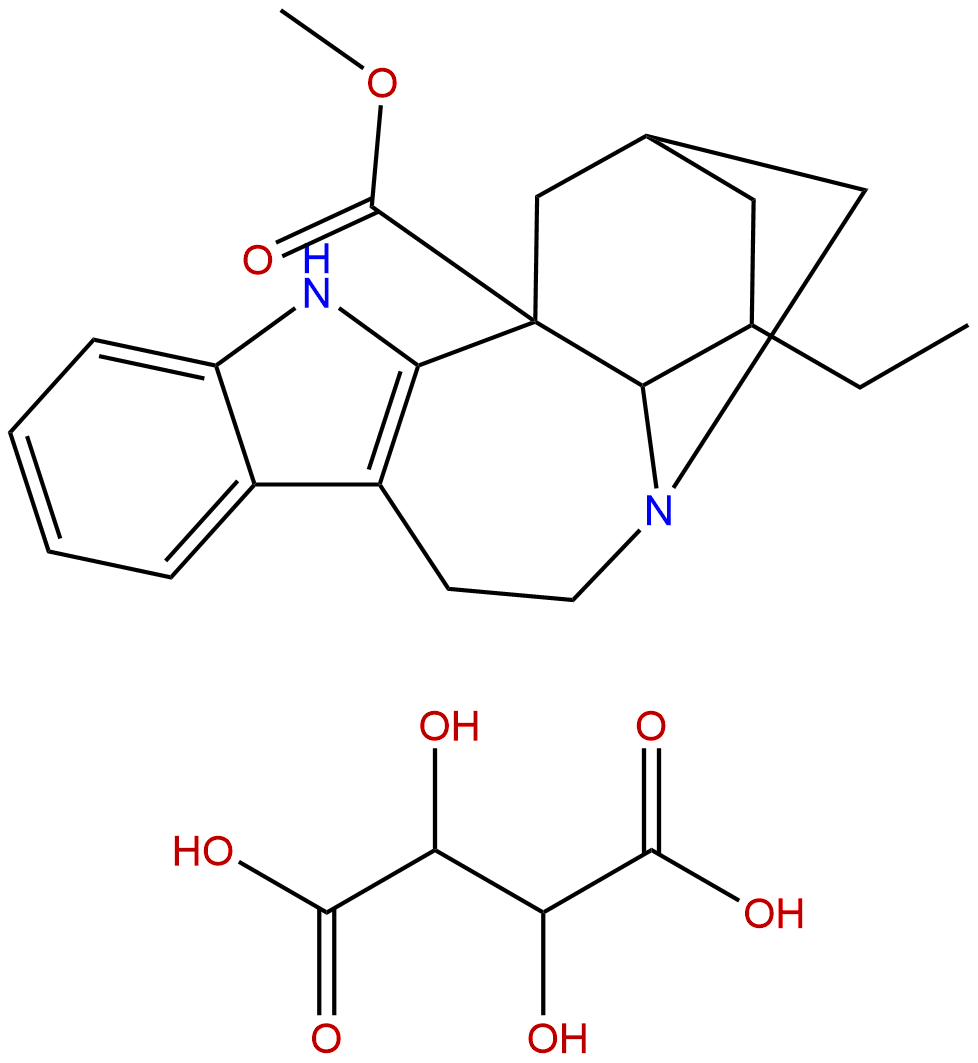
Tartrate Changchun alkaloid: a multi-target anti-tumor candidate molecule extracted from Changchun flowers
1. Overview
Catharanthine Tartrate, also known as Changchun alkaloid tartrate, is an indole alkaloid derivative isolated from the traditional medicinal plant Changchun flower. Its CAS number is 4168-17-6, molecular formula is C25H32N2O8, and molecular weight is approximately 488.54 g/mol. As an important natural product, it is not only a biosynthetic precursor of the famous anti-cancer drugs vinblastine and vinblastine, but also exhibits unique biological activity. The research background can be traced back to the mid-20th century. With the discovery of various alkaloids in Changchun flowers and the revelation of their excellent anti-tumor activity, scientists began to systematically study their various components. As one of them, vinblastine tartrate was initially studied for its role as a building block for the synthesis of complex dimeric alkaloids. However, recent studies have gradually found that monomeric forms of vinblastine and its salts (such as tartrate) also exhibit significant pharmacological activity, especially in Inhibit voltage-gated calcium channels and Regulating multiple tumor related targets aspect. It exhibits a lowering effect on blood pressure and heart rate by affecting the influx of calcium ions into myocardial cells and vascular smooth muscle cells. At the same time, its regulatory ability on key tumor targets such as TP53, CASP3, MYC, etc. reveals its direct application potential in the field of anti-tumor. This article will provide a systematic professional popularization of this promising natural compound from the aspects of its chemical essence, plant origin, multi-target pharmacological mechanism, pharmacological evaluation, and future prospects.
2. Chemical structure and physicochemical properties
Vinblastine tartrate is an organic salt formed between Vinblastine and tartaric acid. Its core structure, Changchun alkaloid, belongs to the "Ipoga" type monoterpenoid indole alkaloid and has a complex polycyclic system. From the provided SMILES expression (CCC1CC2CN3CCc4c ([nH] c5ccccc45) C (C (=O) OC) (C2) C13. O=C (O) C (O) C (O) C (O) C (=O) O), its structural features can be analyzed: the Changchun alkaloid portion contains an indole nucleus, a quinoline ring system, and ester bonds; The tartaric acid moiety provides two carboxyl groups and two hydroxyl groups, enhancing the water solubility and crystallinity of the molecule.
The key pharmacological parameters reveal its basic physical and chemical properties:
- molecular weight The molecular weight of Changchun alkaloid base is 338.45 g/mol, which meets the Lipinski five rule requirement of molecular weight less than 500 Da and is beneficial for oral absorption. After the formation of tartrate, the total molecular weight increases to 488.54, usually to improve solubility and formulation stability.
- Fat water partition coefficient The LogP value is 3.58 and the LogD value is 3.40, indicating that the compound has moderate to high lipophilicity. This is beneficial for its penetration through the cell membrane, but it may also affect its water solubility. The measured water solubility data is 0.0195 (usually measured in mg/mL or mol/L, where the value is lower), confirming its lipophilic properties. The formation of tartaric acid salts is precisely to overcome the disadvantage of poor water solubility of bases.
- Polar Surface Area The topological polar surface area (TPSA) is 45.33 Å ², much lower than the commonly believed membrane permeability limit (140 Å ²), indicating good membrane permeability.
- Penetration data Caco-2 cells have a permeability of 11.0010 (usually on the order of apparent permeability coefficient Papp × 10 ⁻⁶ cm/s), making it a highly permeable compound. The predicted blood-brain barrier (BBB) penetration is "high", which is consistent with the moderate LogP value and TPSA, suggesting that it may have central nervous system activity or side effects.
- Protein binding rate The plasma protein binding rate (PPB) is as high as 86.5%, indicating that most drugs in the bloodstream bind to proteins, which may affect their free drug concentration and efficacy.
These physicochemical parameters collectively depict a small molecule profile with good membrane permeability, but water solubility and plasma protein binding rate may be key factors affecting its pharmacokinetics.
3. Plant sources and traditional applications
The plant source of vinblastine tartrate is single and well-known——Periwinkle, scientific name Catharanthus roseus (L.) G. Don, Belonging to the Apocynaceae family. This evergreen sub shrub, originally from Madagascar, is now widely distributed in tropical and subtropical regions around the world. In the traditional medical system, Changchun flower has a long history of application. In Madagascar, Africa, local residents used it to treat diabetes, malaria and sore throat. In Ayurvedic medicine and folk medicine in some parts of China, Changchun flower is also used to treat wounds, bleeding, and various inflammatory diseases.
However, the revolutionary attention that Changchun flower truly attracted in the modern scientific community began in the 1950s. Canadian scientists Robert Noble and Charles Beer accidentally discovered that extracts from Changchun flowers can significantly reduce the white blood cell count of experimental animals and inhibit bone marrow activity. This discovery ultimately led to the separation from Changchun flowers Changchun alkali and vincristine These two milestone anti-tumor drugs. They become first-line drugs for treating various malignant tumors such as Hodgkin lymphoma and acute lymphoblastic leukemia by inhibiting microtubule protein polymerization and blocking cell mitosis. Changchun alkaloid, as a key monomer precursor of these dimeric alkaloids, has been extensively studied for its biosynthetic pathway and chemical value. The "comeback" process of Changchun flower, from traditional herbs to modern anti-cancer drugs, provides a classic example for searching for drug lead compounds from natural products, and the research on Changchun alkaloids and their derivatives is the continuation and deepening of this legend.
4. Pharmacological activity and mechanism of action
The pharmacological activity of vinblastine tartrate has the characteristics of multi-target and multi pathway, mainly reflected in the cardiovascular system and anti-tumor fields.
4.1 Cardiovascular system function: Targeting voltage-gated calcium channels
The existing description clearly states that vinblastine tartrate is an effective inhibitor of voltage-gated L-type calcium channels. The half maximal inhibitory concentration of this channel current in vascular smooth muscle cells is only 8 μ M, while the IC50 for myocardial cells is 220 μ M, indicating higher selectivity for vascular tissue. This mechanism is its creation Vasodilation, lowering blood pressure, and weakening myocardial contractility The core of its function. By blocking the influx of calcium ions into the membrane of vascular smooth muscle cells, the intracellular calcium concentration decreases, smooth muscle relaxes, and peripheral vascular resistance decreases, thereby lowering blood pressure. Meanwhile, inhibition of calcium channels in myocardial cells negatively regulates heart rate and myocardial contractility, further synergistically reducing cardiac load. This characteristic of action makes it theoretically have potential therapeutic value for hypertension, certain types of angina pectoris, and tachycardia.
4.2 Antitumor activity: Regulating key cell fate proteins
In addition to the classic cardiovascular calcium channel inhibition effect, the target information provided by the database reveals the more complex anti-tumor potential of vinblastine tartrate. It has been predicted or experimentally confirmed to act on multiple key targets closely related to tumor occurrence, development, and apoptosis:
- TP53 Famous "Genome Guardian", a tumor suppressor protein. The regulation of Changchun alkaloids may imply the activation of the p53 pathway, induction of cell cycle arrest or apoptosis, especially in tumor cells with residual p53 function.
- CASP3 Cystatine-3 is a key effector protease in the execution stage of cell apoptosis. Activation of CASP3 is one of the last common pathways through which many anticancer drugs induce programmed cell death in tumor cells.
- MYC A proto oncogene transcription factor that is abnormally overexpressed in over half of human cancers, driving infinite cell proliferation. Inhibiting the activity or expression of MYC is a highly attractive anti-cancer strategy.
- BAX Bcl-2 family proteins that promote apoptosis play a key role in the mitochondrial apoptosis pathway. Upregulation or activation of BAX can promote increased mitochondrial outer membrane permeability, release cytochrome c, and subsequently activate CASP3.
- CDKN1A Encoding p21 protein, it is an inhibitor of cyclin dependent kinase and regulated by p53. Upregulation of p21 can lead to cell cycle arrest in the G1 phase.
Integrated analysis of mechanism of action:
Vinblastine tartrate may exert anti-tumor effects through a multi-target network. Its effect may begin with intervention in cellular signaling pathways (specific upstream targets to be elucidated), and then Activate tumor suppressor factor TP53 Activated p53 can, on one hand Upregulation of CDKN1A transcription Causing cell cycle arrest, creating conditions for DNA repair or preventing damaged cell proliferation; On the other hand, it is possible Transcriptional activation of BAX Genes that promote apoptosis may also inhibit survival signals such as MYC. The activation of BAX initiates the mitochondrial apoptosis pathway, ultimately leading to Activation and executive apoptosis of effector protease CASP3 In addition, its direct or indirect inhibition of MYC can fundamentally weaken the proliferation driving signals of tumor cells. The ability to simultaneously affect cell cycle checkpoints, apoptosis pathways, and oncogene signaling makes vinblastine tartrate a potential multi pathway anti-tumor drug, which may have a synergistic inhibitory effect on tumors with specific target abnormalities.
5. Evaluation of drug properties
Based on the provided pharmacokinetic parameters, we can conduct a preliminary assessment of the potential of vinblastine tartrate (mainly evaluating its base form, as salt form usually improves formulation properties such as solubility), and refer to commonly used standards such as Lipinski's Five Rules:
-
Lipinski Five Rule Compliance:
- Molecular weight (338.45)<500:Comply with。
- Calculate LogP (3.58)<5:Comply with(Although approaching the upper limit).
- Number of hydrogen bond donors (structurally, the base portion mainly contains N-H, with an estimated quantity of ≤ 5):Comply with。
- Number of hydrogen bond acceptors (with N and O in the base portion, expected to be ≤ 10):Comply with。
- Number of rotatable keys: moderate, not significantly exceeding the limit.
Conclusion: The Changchun alkaloid base basically conforms to the "Five Principles of Similar Drugs", indicating that it has good oral absorption potential.
-
Absorption, distribution, metabolism, excretion (ADME) characteristics:
- absorb The high Caco-2 permeability (11.0010) and moderate Peff value (3.58) strongly suggest its good passive absorption ability in the small intestine.
- distribution High BBB penetration prediction means it can enter the central nervous system, which may be advantageous for treating brain tumors, but also increases the risk of central neurotoxicity. A high plasma protein binding rate (86.5%) can affect its distribution volume and free drug concentration, and may require higher dosages to achieve effective blood drug concentration.
- Metabolism and toxicity The Ames test result is 0.0 (usually indicating no mutagenicity), which is a positive signal. However,HERG channel inhibition For 'yes', this is a serious warning signal, as hERG inhibition is associated with potential heart QT interval prolongation and fatal arrhythmia risk, and is a major reason for many drug development failures.chromosome aberration The test shows' yes', indicating that it may have genetic toxicity and requires high attention. Serum biomarkers may indicate potential impact AST (Aspartate Aminotransferase) Has an impact, implying a potential risk of liver cell damage.
-
Comprehensive Assessment:
From the perspective of drug properties and permeability, vinblastine tartrate is an attractive lead compound. Its good oral absorption potential and multi-target anti-tumor mechanism are the main advantages. However, it The road to becoming a traditional Chinese medicine faces significant challenges:
- Prominent security risks HERG inhibition and chromosomal aberration positivity are two major "red alerts" that need to be rigorously validated through in vitro and in vivo experiments in early development, and consideration should be given to reducing these toxicities through structural modifications (SAR).
- Pharmacodynamics may be complex High protein binding rate may affect drug efficacy and requires detailed pharmacokinetic studies.
- Poor water solubility Although the salt form (tartrate) partially solves this problem, it still needs attention in formulation development.
6. Research Status and Application Prospects
At present, research on vinblastine tartrate is still ongoing Preclinical stage Most research has focused on its chemical value as a precursor for the synthesis of Changchun alkaloid dimers, its cardiovascular pharmacological activity (calcium channel inhibition) as a monomer, and preliminary exploration and target prediction of its potential anti-tumor activity. There is still a lack of systematic and in-depth cellular and animal model research data to confirm the specific molecular mechanism of its anti-tumor effect through regulating multi-target networks such as TP53, CASP3, MYC, etc.
Future research and application prospects may focus on the following directions:
-
Mechanism deepening and verification The primary task is to utilize techniques such as gene knockout/knockdown, reporter genes, co immunoprecipitation, chromatin immunoprecipitation, etc. in various tumor cell lines experimental verification It directly interacts with targets such as TP53 and MYC, and elucidates its downstream signaling network. Clarify whether it works by activating p53 dependent or non dependent pathways.
-
Structural optimization and development of lead compounds Targeting the core defects of hERG inhibition and potential genotoxicity Reasonable chemical structure modification of drugs For example, through computer-aided drug design, while retaining its key pharmacophores (which may bind to calcium channels or target proteins), structural regions that are prone to toxicity can be modified to obtain derivatives with higher activity and lower toxicity.
-
Exploration of Combination Medication Strategy Given its multi-target nature, it can be explored to combine it with other anti-tumor drugs with complementary mechanisms of action (such as DNA damaging agents, other signaling pathway inhibitors) to see if synergistic effects can be produced, reducing their respective dosages and thus alleviating toxicity.
-
Application of new drug delivery system The use of nano formulations (such as liposomes and polymer micelles) to encapsulate vinblastine tartrate may further enhance its water solubility, improve its pharmacokinetic behavior (such as reducing protein binding and prolonging circulation time), and achieve tumor targeted delivery, enhancing therapeutic efficacy and reducing systemic toxicity, especially cardiac toxicity.
-
Expand indication research In addition to anti-tumor effects, its clear L-type calcium channel inhibitory activity deserves further efficacy evaluation in cardiovascular disease models such as hypertension and pulmonary arterial hypertension.
In summary, as a natural molecule derived from the legendary medicinal plant Changchun flower, vinblastine tartrate still deserves attention in the field of anti-tumor drug development due to its unique multi-target action characteristics lead compound However, developing it into a safe and effective drug still faces challenges ahead, especially as the resolution of safety issues will be the key to determining its fate. Future research needs to focus on revealing its precise molecular mechanism and utilizing modern medicinal chemistry and pharmacology methods to maximize its strengths and avoid its weaknesses, in order to give birth to new hope for this "Changchun flower" from Madagascar.