


Synonym name: 22-Oxovincaleukoblastine Sulfate; Leurocristine Sulfate; Kyocristine; Novopharm; Oncovin; Onkovin; VCR Sulfate; Vincasar PFS; Vincrisul
Catalogue No.: BP1440
Cas No.: 2068-78-2
Formula: C46H58N4O14S
Mol Weight: 923.044
Botanical Source:
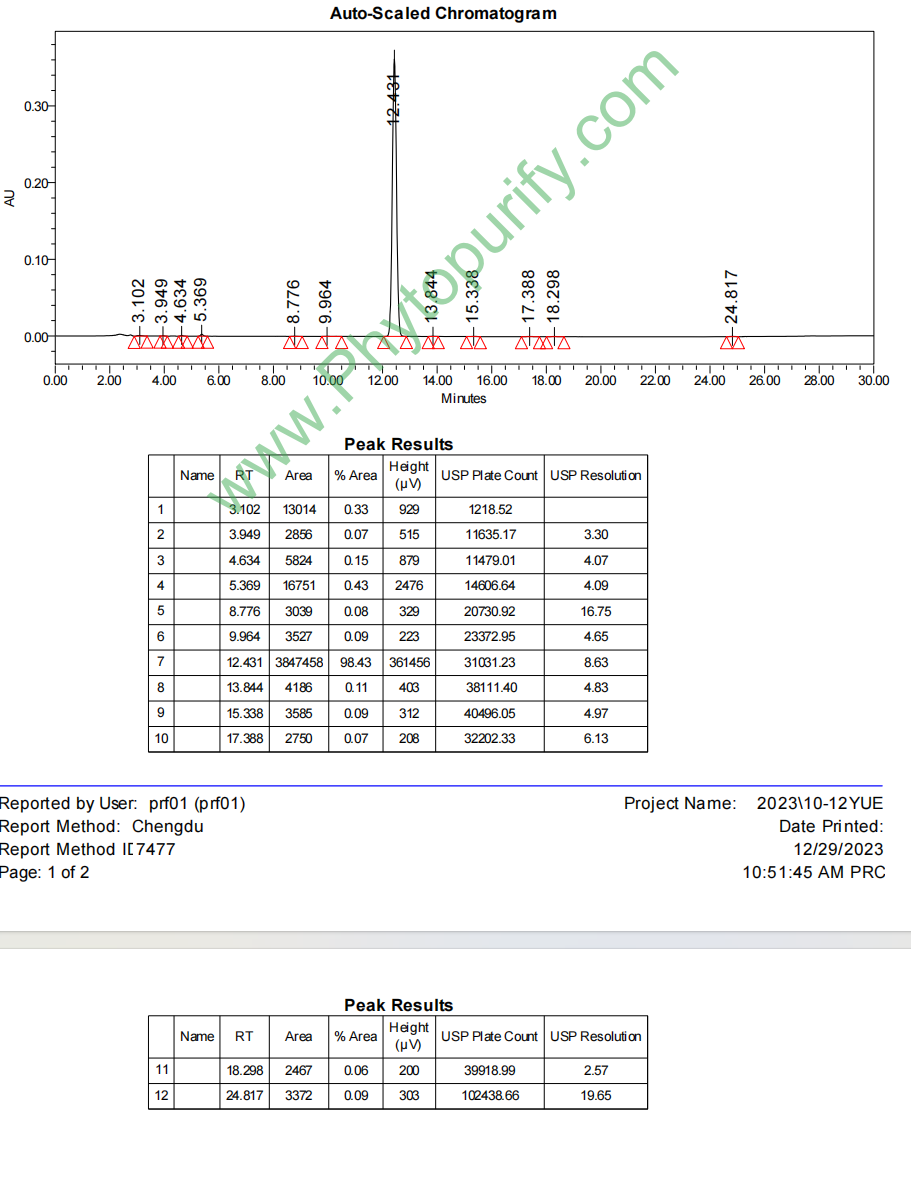
Purity: 95%~99%
Analysis Method: HPLC-DAD or/and HPLC-ELSD
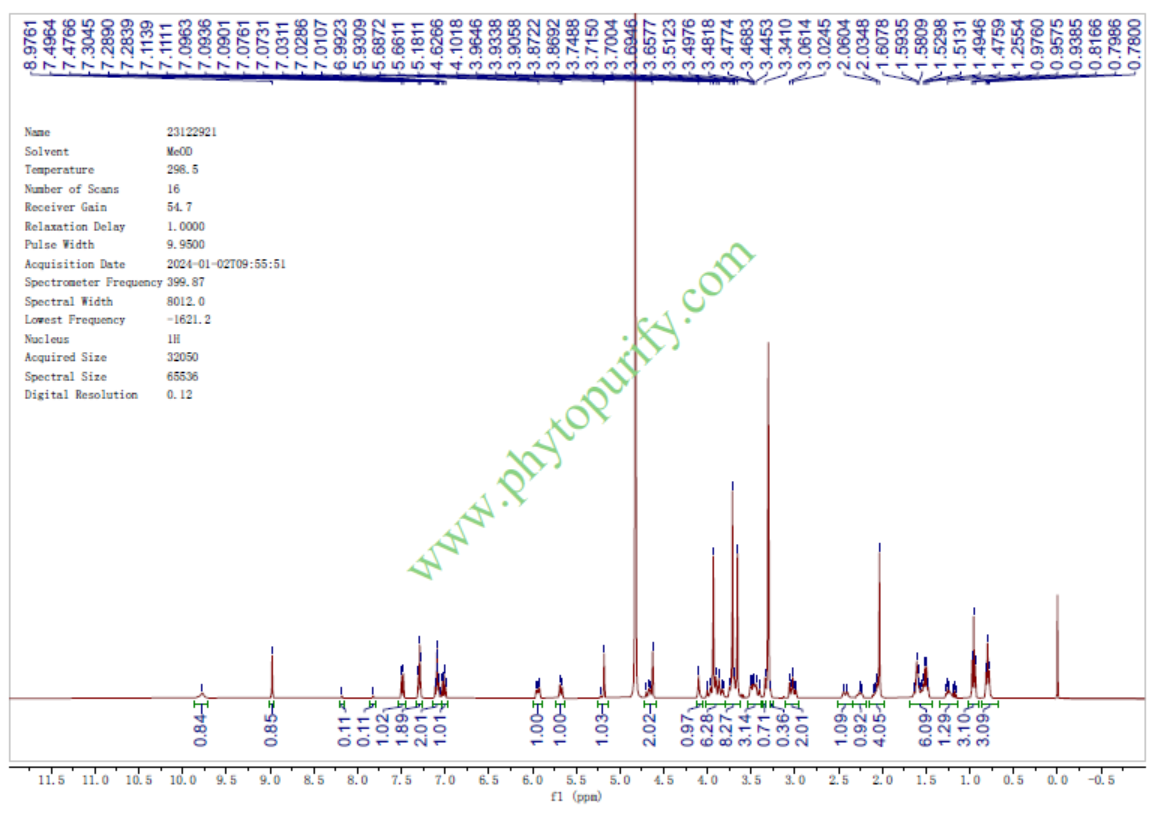
Identification Method: Mass, NMR
Packing: Brown vial or HDPE plastic bottle
Can be supplied from milligrams to grams.
For Reference Standard and R&D, Not for Human Use Directly.
Inquire for bulk scale.
HPLC of Vincristine Sulfate
HNMR of Vincristine Sulfate
Storage conditions:Short-term storage at 2~8℃, long-term storage at -20 ~ -80℃
171.1700
3.6218
3.3459
.0309
1.0295
1.6062
Low
85.0798
7.4054
No
No
No
No
Yes
No
0.0
Yes
No
Yes
Yes
Malignant tumors are a major disease that seriously threatens human health, and the exploration of their treatment methods has always been at the forefront of medical research. Among numerous anti-tumor drugs, natural products and their derivatives play a crucial role, laying the foundation for modern tumor chemotherapy. Vincristine Sulfate (CAS: 2068-78-2) is one of the shining stars. As a plant from the Apocynaceae family, Changchun flower(Catharanthus roseus)Changchun alkaloids, a type of indole alkaloid isolated from Chinese medicine, have become one of the core drugs for treating various hematological malignancies, especially acute lymphoblastic leukemia, since entering clinical practice in the 1960s. Its unique mechanism of action effectively inhibits tumor cell proliferation by interfering with microtubule dynamics during cell mitosis. Despite the presence of certain dose limiting toxicity, its excellent efficacy has solidified its position in combination chemotherapy regimens. This article aims to systematically review the chemical properties, plant sources, pharmacological activities, multidimensional mechanisms of action, pharmacological characteristics, and clinical applications of vincristine sulfate, and to provide prospects for its future research directions.
Sulfuric acid vincristine is the sulfate form of vincristine, with a molecular formula of C ₄₆ H ₅₆ N ₄ O ₁₀ · H ₂ SO ₄ and a molecular weight of 824.9720. From a chemical structure perspective, camptothecin belongs to dimeric indole alkaloids, which are composed of two complex indole units, Vindoline and Catharanthine, connected by carbon carbon bonds. This unique dimer structure is the basis for its high affinity binding with microtubule proteins and strong anti mitotic activity.
The key physicochemical properties of the compound profoundly affect its drug behavior: the calculated lipid water partition coefficient (LogP) is 3.6218, indicating that the compound has a certain degree of lipophilicity; The topologically polar surface area (TPSA) is as high as 171.1700 Å ², mainly attributed to the numerous nitrogen and oxygen atoms and ionizable groups in the molecule, indicating its ability to form strong hydrogen bonding networks. The water solubility data is 0.0309 mg/mL, which belongs to poorly soluble drugs. This explains why special solvents (such as injection water or solutions containing cosolvents) are often used in clinical formulations. The higher TPSA and moderate LogP values together determine its weaker ability to cross biological membranes (such as the blood-brain barrier), and pharmacokinetic parameters show that its "blood-brain barrier penetration: low", which to some extent limits its efficacy in central nervous system tumors, but may also reduce the associated risk of neurotoxicity. In addition, key pharmacological warning indicators show that the hERG channel inhibition risk is "no", and the Ames test result is 0.0, indicating a low risk of cardiac toxicity and genetic toxicity. This provides a certain chemical basis guarantee for its clinical safety.
Sulfuric acid vinblastine comes from the Apocynaceae plant Changchun flower(Catharanthus roseus (L.) G. Don), Also known as Riri Spring or Madagascar Changchun Flower. This plant is native to Madagascar and is now widely distributed in tropical and subtropical regions around the world. Changchun flower is a famous medicinal plant that contains over 130 alkaloids, among which vinblastine and vinblastine are the most valuable anti-tumor components.
Extracting and isolating vincristine is a complex and delicate process, as its content in plants is extremely low (usually less than 0.0003% of dry weight) and coexists with other alkaloids with similar structures. The traditional extraction process generally includes the following steps: first, the dried whole plant of Changchun flower is crushed, and then extracted or percolated with polar organic solvents (such as methanol or ethanol) to obtain the total alkaloid extract. Subsequently, extraction is carried out using acidic water (such as tartaric acid or citric acid solution) to salt the alkaloids and transfer them into the aqueous phase; After alkalization, the free total base is obtained by back extraction with organic solvents such as dichloromethane or chloroform. Further purification relies on chromatographic techniques. In the early days, alumina or silica gel column chromatography was commonly used for preliminary separation, while modern processes widely use high-performance liquid chromatography (HPLC) or medium pressure preparative chromatography (MPLC) for high-resolution separation and purification, ultimately obtaining high-purity Changchun alkaloid. Due to the limited yield and high cost of plant extraction, the chemical total synthesis route is extremely complex and lacks industrial value. At present, the production of Changchun flower alkaloids through plant cell culture technology is a highly promising alternative direction. By optimizing culture conditions, adding inducers, or using genetic engineering methods to regulate the expression of key enzymes in biosynthetic pathways, sustainable and controllable production is expected to be achieved.
The core pharmacological activity of vincristine sulfate is its strong anti-tumor effect, characterized by cell cycle specificity, mainly acting on the M phase of cell mitosis.
1. In vitro anti-tumor activity: Changchun alkaloids exhibit significant proliferative inhibitory activity on various human tumor cell lines. Its high affinity for microtubule proteins (Ki=85 nM) directly translates into efficient cytotoxicity. In blood tumor cell lines such as leukemia, lymphoma, and myeloma, vincristine can effectively induce cell cycle arrest in the G2/M phase and subsequently trigger cell apoptosis. Research has confirmed that its half maximal inhibitory concentration (IC ₅₀) on leukemia cells is typically in the nanomolar (nM) range, with extremely high sensitivity.
2. In vivo anti-tumor activity: In various mouse or rat transplant tumor models, such as P388 leukemia, L1210 leukemia, and human leukemia xenograft models, intravenous administration of vincristine sulfate has shown clear tumor growth inhibition and even regression effects. Its efficacy is dose-dependent, but the treatment window is narrow, and the effective dose is close to the dose that produces neurotoxicity.
3. Other pharmacological activities: In addition to its direct anti mitotic effect, studies also suggest that vincristine may indirectly inhibit tumors by affecting angiogenesis, immune regulation, and other pathways. However, the contribution of these effects to its overall anti-tumor effect is relatively minor.
4. Toxicity study: Dose limiting toxicity is peripheral neuropathy characterized by sensory abnormalities, loss of tendon reflexes, muscle weakness, etc., which is related to the damage of drugs to neuronal axonal microtubules. Bone marrow suppression is relatively mild compared to other vinblastine alkaloids (such as vinblastine), which is one of its advantages in treating patients with poor bone marrow function. Other common adverse reactions include constipation (caused by autonomic neuropathy), hair loss, and local tissue irritation.
The classic and main mechanism of action of vincristine sulfate is as a "microtubule depolymerization inhibitor". It binds to a specific site on β - microtubule protein (the binding site of Changchun flower alkaloids), inhibits microtubule polymerization, disrupts the normal assembly and function of the mitotic spindle, and prevents chromosome separation, causing rapidly dividing cells to stagnate in the metaphase of division and ultimately leading to cell death by activating the apoptotic pathway.
In recent years, with the deepening of molecular pharmacology research, it has been found that the anti-tumor effect of vincristine is far beyond simple microtubule interference. It triggers a complex cascade reaction of intracellular signaling networks, involving multiple key targets and pathways closely related to diseases such as leukemia
In summary, vincristine sulfate primarily targets microtubules, triggering a series of downstream molecular events and forming a synergistic anti-tumor network with multiple targets and pathways. This explains the molecular basis for its excellent therapeutic effects in clinical practice, especially when combined with other mechanism drugs.
Based on its physical and chemical properties, the medicinal properties of vincristine sulfate exhibit both advantages and disadvantages.
Pharmacokinetic characteristics:
* Absorption and distribution: Oral bioavailability is extremely low and unstable, so intravenous administration is strictly used in clinical practice. After intravenous injection, its three-phase elimination occurs rapidly and widely, but it has a high binding rate with tissue proteins. Due to its large molecular weight and high polarity, it is difficult to penetrate the blood-brain barrier, and the concentration in cerebrospinal fluid is only 1/10 to 1/30 of the blood drug concentration.
* Metabolism and excretion: Mainly metabolized by the cytochrome P450 enzyme system (especially CYP3A4) in the liver, the activity of metabolites is mostly reduced. The prototype drug and metabolites are mainly excreted through bile into feces, with a small amount excreted through the kidneys. The clearance rate of patients with liver dysfunction significantly decreases, and the dosage needs to be adjusted.
* Eliminating half-life: The half-life of terminal elimination is relatively long, about 24-48 hours.
Drug analysis:
* Advantage: Unique mechanism of action and extremely high potency (nanomolar activity); Accurate efficacy for specific tumors (such as ALL); There is no cross resistance with multiple chemotherapy drugs with other mechanisms of action, and there is great potential for combination therapy; There is no significant risk of hERG inhibition and genetic toxicity warning.
* Challenge: Narrow treatment window and prominent dose limiting neurotoxicity; Poor water solubility, formulation development requires the use of co solvents; Easy to be excreted by multidrug resistant proteins (such as P-gp), leading to a decrease in drug concentration and resistance in tumor cells; The pharmacokinetics vary greatly among individuals and are significantly affected by liver function and concomitant medications (affecting CYP3A4).
To improve its pharmacological properties, current research is focused on novel delivery systems, such as liposomes (such as the marketed vincristine sulfate liposomes), polymer micelles, nanoparticles, etc. These systems can prolong drug circulation time, enhance tumor targeting (EPR effect), potentially reduce peripheral neurotoxicity, and overcome some drug resistance.
Since its launch, vincristine sulfate has been a cornerstone drug for various chemotherapy regimens, especially for the treatment of acute lymphoblastic leukemia (ALL), Hodgkin's and non Hodgkin's lymphoma, and solid tumors in children (such as Wilms tumor and neuroblastoma). During the induction, consolidation, and maintenance treatment stages of ALL, regimens containing vincristine (such as VDP and VDLP regimens) are a core component of standard treatment.
Current clinical challenges:
1. Drug resistance issue: Overexpression of efflux pumps such as P-glycoprotein and altered expression of microtubule isoforms in tumor cells are the main causes of clinical drug resistance.
2. Neurotoxicity management: How to prevent, alleviate or reverse dose accumulation peripheral neuropathy is the key to improving patients' quality of life and treatment tolerance.
3. Individualized medication: Based on individual differences in pharmacokinetics and pharmacodynamics, achieving dose individualization is the direction to optimize the efficacy/toxicity ratio.
Future prospects:
1. Development of new formulations: The in-depth research and clinical application of targeted delivery systems such as liposomes are expected to reshape the therapeutic pattern of vincristine and achieve increased efficacy and reduced toxicity.
2. Innovative combination therapy strategy: The combination application with novel targeted drugs (such as BCL2 inhibitor Venetoclax, proteasome inhibitors, immunomodulators, etc.) or immunotherapy (such as PD-1/PD-L1 inhibitors) is being explored in clinical trials, aiming to exert synergistic effects and overcome drug resistance.
3. Biomarker guided treatment: Search for biomarkers that predict the efficacy or neurotoxicity of vincristine, such as gene polymorphisms or expression profiles related to microtubule stability, drug transport, or nerve injury repair, to guide patient stratification and individualized medication.
4. Toxicity mitigation strategies: Study the combination of neurotrophic factors, antioxidants, or other protective drugs (such as glutamine) with vincristine to alleviate neurotoxicity.
5. Synthetic Biology Production: By utilizing synthetic biology techniques to reconstruct and optimize the biosynthetic pathway of vincristine in microorganisms or plant chassis cells, it is expected to completely solve its drug supply problem.
As a modern model of anti-tumor chemotherapy derived from traditional medicinal plants, the discovery and application of vincristine sulfate perfectly demonstrates the immortal value of natural products in drug development. It uses microtubules as key targets and exerts powerful anti-tumor effects through complex molecular networks, especially establishing an irreplaceable position in the treatment of hematological malignancies. Despite facing clinical challenges such as neurotoxicity and drug resistance, the therapeutic potential of vincristine sulfate is expected to be further explored and enhanced through pharmaceutical innovation, optimization of combination therapy strategies, and precision medicine based on biomarkers. In the future, interdisciplinary research will continue to promote the revitalization of this classic drug, bringing more effective and safer treatment options to cancer patients worldwide. The continuous exploration of vincristine also inspires researchers to constantly search for more anti-cancer new weapons from the natural treasure trove.
