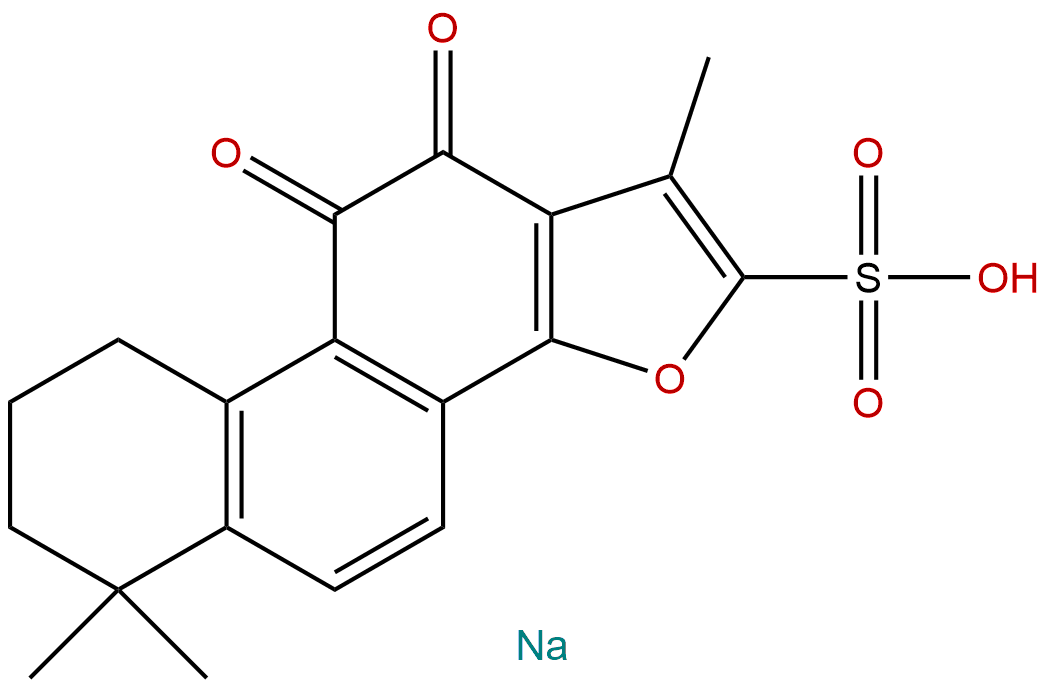


Product name: Tanshinone IIA sodium sulfonate
Synonym name: Sodium tanshinone IIA sulfonate; Sulfotanshinone sodium II-A
Catalogue No.: BP1363
Cas No.: 69659-80-9
Formula: C19H18NaO6S
Mol Weight: 397.397
Botanical Source: Salviae Miltiorrhizae Radix et Rhizoma
Physical Description:
Type of Compound: Diterpenoids
Purity: 95%~99%
Analysis Method: HPLC-DAD or/and HPLC-ELSD
Identification Method: Mass, NMR
Packing: Brown vial or HDPE plastic bottle
Storage: Store in a well closed container, protected from air and light. Put into refrigerate or freeze for long term storage.
Whenever possible, you should prepare and use solutions on the same day. However, if you need to make up stock solutions in advance, we recommend that you store the solution as aliquots in tightly sealed vials at -20℃. Generally, these will be useable for up to two weeks.
The product could be supplied from milligrams to grams
Inquire for bulk scale.
Chengdu Biopurify Phytochemicals Ltd. is a leading company in the research, development, manufacture and marketing of High Quality Phytochemicals and Extracts(especially Active Ingredients from Traditional Chinese Medicine,TCM), Natural Active Pharmaceutical Ingredients worldwide.
The main services:
A. Supply active ingredients and reference standards of TCM, from mgs to kgs scale
B. Custom extraction and purification, target Herb Active Ingredients
C. Custom synthesis and semi-synthesis for Natural Active Ingredients
D. CR(contract research), CM(contract manufacture) and PD(process development) services from lab scale, pilot scale to commercial scale(GMP is also available)
E. TCM compounds library for drug screen,more than 3000 compounds available, many of them are rare and unique.
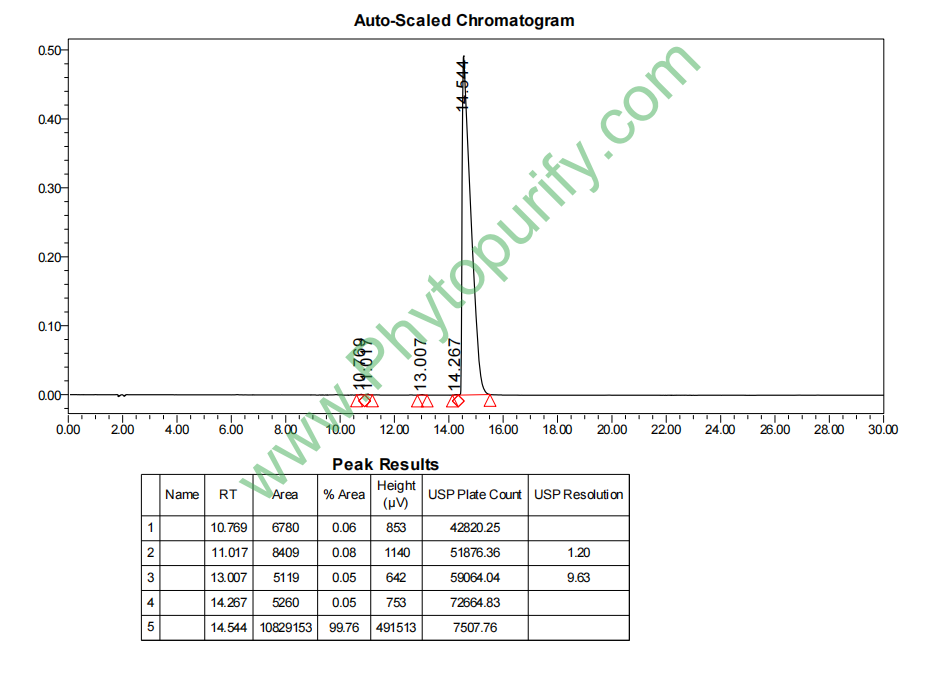
HPLC of Tanshinone IIA sodium sulfonate
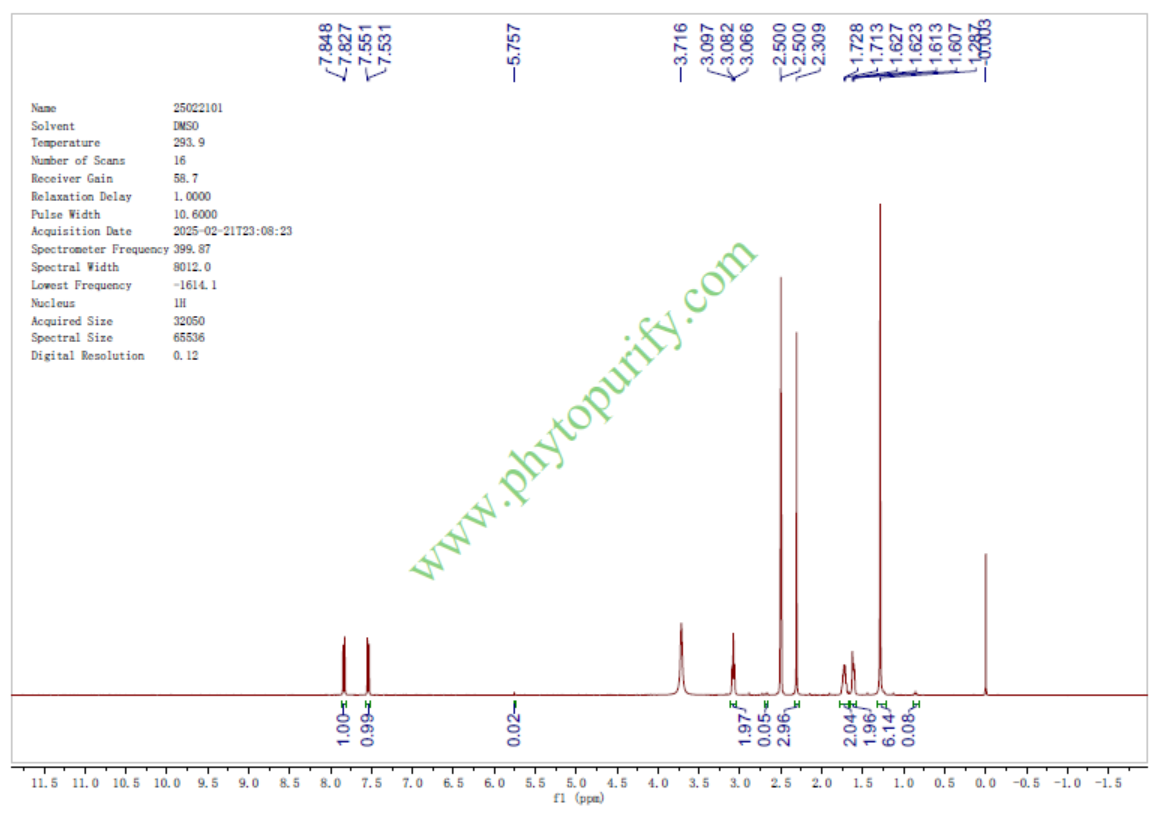
HNMR of Tanshinone IIA sodium sulfonate
Storage conditions:Short-term storage at 2~8℃, long-term storage at -20 ~ -80℃
101.6500
2.9553
.2235
.0182
1.4841
11.1111
Low
90.1448
3.4126
Yes
No
No
No
Yes
Yes
0.0
No
No
No
No
Cardiovascular disease is one of the leading causes of death and disability worldwide, with ischemic heart disease dominating. Myocardial ischemia-reperfusion injury (MIRI) is a challenging problem in clinical practice, commonly encountered in the process of acute myocardial infarction thrombolysis, percutaneous coronary intervention, and cardiac surgery for revascularization. Although restoring blood flow is a necessary means of rescuing ischemic myocardium, reperfusion itself can trigger a series of complex cascade reactions, leading to myocardial cell apoptosis, necrosis, oxidative stress, and increased inflammatory response, ultimately offsetting the benefits of partial reperfusion and even causing additional damage. Therefore, finding safe and effective MIRI prevention and treatment drugs is an important direction in the field of cardiovascular pharmacology.
In this context, it originates from the traditional Chinese medicine Danshen(Salvia miltiorrhiza The active ingredients and derivatives of Bunge have received widespread attention. Tanshinone IIA is the main phenanthrenequinone compound in the lipid soluble fraction of Salvia miltiorrhiza, with clear cardiovascular protective activity. However, its poor water solubility and low bioavailability limit its clinical application. To solve this problem, scientists synthesized its water-soluble derivative, Tanshinone IIA sodium sulfonate (STS), through chemical modification. This compound (CAS number: 69659-80-9) significantly improves solubility and administration convenience while retaining its parent nucleus pharmacological activity, and has become an injectable drug widely used in Chinese clinical practice for the treatment of cardiovascular diseases such as coronary heart disease and angina pectoris. In recent years, a large amount of basic research has revealed the core role and complex molecular network mechanism of STS in the prevention and treatment of MIRI. This article aims to systematically review the chemical properties and pharmacological activities of STS, with a focus on exploring its mechanism of action and molecular targets in MIRI. At the same time, it evaluates and prospects its pharmacological properties and clinical application prospects.
Sodium tanshinone IIA sulfonate is a chemical modification product of tanshinone IIA. The parent nucleus of salvianolic acid IIA belongs to the class of diterpenoid quinones of the rosin alkane type, with a basic framework of phenanthrenequinone. On the basis of the chemical structure of tanshinone IIA, sodium sulfonate groups (- SO3Na) were introduced into its molecule through sulfonation reaction, thus forming STS.
This structural modification has brought about significant changes in physical and chemical properties. Firstly, the introduction of sodium sulfonate groups greatly enhances the polarity of the molecule. The calculated topological polar surface area (TPSA) is 101.65 Å ², which explains the significant increase in its water solubility (measured water solubility is 0.0182 mg/mL, far superior to the lipid soluble tanshinone IIA). Secondly, the lipophilicity of the molecule changes, with a calculated LogP value of 2.96, indicating a certain degree of amphiphilicity, but overall hydrophilicity dominates. Its molecular weight is 374.4140 g/mol.
These physicochemical properties directly affect its biopharmaceutical behavior. The high water solubility enables it to be easily made into stable injection solutions for intravenous administration, quickly achieving effective blood drug concentrations. Moderate LogP values contribute to its distribution and transmembrane transport in the body. However, its high polarity and TPSA also result in a lower ability to penetrate the blood-brain barrier, which to some extent limits its potential application in central nervous system diseases, but also reduces the risk of related central side effects. From the preliminary safety parameters of the drug, STS did not show significant hERG potassium channel inhibitory activity (indicating a low potential risk of arrhythmia), and the Ames test result was negative (0.0), indicating no mutagenicity under this testing system, providing some support for its clinical safety.
The direct source of STS is not plant extraction, but is prepared from tanshinone IIA extracted from Danshen through chemical semi synthesis.
Plant-based The precursor compound tanshinone IIA is derived from the Salvia miltiorrhiza plant in the family Lamiaceae(Salvia miltiorrhiza Bunge's dried roots and rhizomes. Danshen, also known as "red root", is an essential medicine in traditional Chinese medicine for promoting blood circulation and removing blood stasis, with a clinical application history of over a thousand years. Its chemical composition is mainly divided into water-soluble salvianolic acids and fat soluble tanshinones. Tanshinone IIA is one of the most abundant and active components in the latter.
Extraction and Separation The industrial extraction of salvianolic acid IIA usually uses organic solvent method. The common process is to crush Danshen medicinal herbs, heat reflux or percolate extraction with organic solvents such as ethanol, ethyl acetate or acetone, and concentrate the extract to obtain a paste. Subsequently, utilizing the difference in lipid solubility of tanshinones and water-soluble components of salvianolic acids, preliminary separation was carried out through liquid-liquid partitioning. Further refining is often carried out using silica gel column chromatography, with gradient elution using solvent systems such as petroleum ether ethyl acetate, combined with thin-layer chromatography monitoring, to collect fractions rich in tanshinone IIA. After recrystallization, high-purity tanshinone IIA monomers can be obtained.
chemical synthesis After obtaining tanshinone IIA monomer, sulfonic acid groups are introduced through sulfonation reaction. The typical process is to react tanshinone IIA with sulfonating agents (such as concentrated sulfuric acid, chlorosulfonic acid, etc.) at specific temperatures and conditions to produce tanshinone IIA sulfonic acid, which is then neutralized with a base (such as sodium hydroxide) to form a salt, resulting in tanshinone IIA sulfonic acid sodium salt. The key to this process is to control the position and degree of sulfonation reaction to ensure the uniformity and activity of the product. The final product needs to be refined through crystallization, filtration, drying and other steps, and meet the quality standards of the drug.
The pharmacological activity research of STS is extensive and in-depth, with its core being cardiovascular system protection, especially demonstrated in the MIRI model with multiple beneficial effects.
1. Anti cardiomyocyte apoptosis and necrosis STS can significantly reduce apoptosis and necrosis of myocardial cells after MIRI. In animal models, pre-treatment or post-treatment with STS can reduce serum levels of myocardial enzymes (such as CK-MB, LDH, cTnI), alleviate pathological damage to myocardial tissue, and reduce the size of myocardial infarction. Its anti apoptotic effect is closely related to regulating the balance of Bcl-2 family proteins.
2. Antioxidant stress The large amount of reactive oxygen species (ROS) generated during the reperfusion phase is a key damaging factor in MIRI. STS has strong antioxidant capacity, which can directly or indirectly eliminate ROS, reduce the content of malondialdehyde (MDA) in myocardial tissue, and enhance the activity of endogenous antioxidant enzymes such as superoxide dismutase (SOD) and glutathione peroxidase (GSH Px).
3. Anti inflammatory effect STS can effectively inhibit the excessive inflammatory response caused by MIRI. It can reduce the expression and release of pro-inflammatory factors such as TNF - α, IL-1 β, IL-6, inhibit neutrophil infiltration, and may regulate the activation of inflammation related signaling pathways.
4. Improve energy metabolism and mitochondrial function Myocardial ischemia leads to energy metabolism disorders. STS can activate the AMPK signaling pathway, promote glucose uptake and fatty acid oxidation, and improve energy supply. At the same time, it can stabilize mitochondrial membrane potential, inhibit the opening of mitochondrial permeability transition pores (mPTP), protect mitochondrial function, and reduce damage from the energy source.
5. Inhibit calcium overload and endoplasmic reticulum stress STS can alleviate intracellular calcium overload caused by reperfusion by regulating relevant ion channels and proteins. In addition, it can alleviate endoplasmic reticulum stress, downregulate endoplasmic reticulum stress marker proteins such as CHOP and GRP78, and maintain cellular homeostasis.
6. Promote angiogenesis and improve microcirculation In addition to protecting myocardial cells, STS can also promote the establishment of collateral circulation in ischemic areas and improve myocardial perfusion by upregulating angiogenic factors such as vascular endothelial growth factor (VEGF).
The role of STS in preventing and treating MIRI is not through a single target, but through a synergistic network of multiple targets and pathways. Based on the provided target information, the core mechanism of action will be elucidated
1. Regulating cell survival and apoptosis signals:
* BCL2 (Bcl-2)STS can upregulate the expression of anti apoptotic protein Bcl-2 and may downregulate the expression of pro apoptotic protein Bax, thereby inhibiting the initiation of mitochondrial apoptosis pathway, reducing the release of cytochrome C and activation of caspase-3.
* MAPK1 (ERK)STS can activate the extracellular signal regulated kinase (ERK) pathway. As a survival signaling pathway, ERK activation can promote cell proliferation and survival, and counteract apoptotic signals.
* PRKCA/PKC α and PRKCE/PKC εMembers of the protein kinase C (PKC) family play a crucial role in ischemic preconditioning and post adaptation. STS may transmit cardioprotective signals by regulating the activation and translocation of PKC α and PKC ε, involving the regulation of mitochondrial KATP channels.
2. Activate endogenous defense and stress adaptation pathways:
* AMPK (PRKAA1)AMPK is a core sensor for cellular energy metabolism. STS activates AMPK, which not only improves energy metabolism, but also exerts anti apoptotic, antioxidant, and autophagic effects by phosphorylating downstream targets such as eNOS and PGC-1 α.
* SIRT1 Silencing information regulatory factor 1 (SIRT1) is an NAD+- dependent deacetylase. STS can upregulate the expression or activity of SIRT1. SIRT1 plays a central role in antioxidant, anti apoptotic, mitochondrial biosynthesis, and autophagy regulation by deacetylating various substrates such as FOXOs, PGC-1 α, and p53. There is a positive interaction regulation between SIRT1 and AMPK pathway.
* NFE2L2 (Nrf2)Nuclear factor E2 related factor 2 (Nrf2) is the central regulator of antioxidant response. STS can promote the translocation of Nrf2 from the cytoplasm to the nucleus, enhance its binding with antioxidant response elements (ARE), thereby upregulating the expression of phase II detoxifying enzymes such as heme oxygenase-1 (HO-1) and quinone oxidoreductase 1 (NQO1), as well as antioxidant proteins, constructing a powerful cellular defense system.
* HIF1A (HIF-1α)Hypoxia inducible factor-1 alpha (HIF-1 alpha) is stably expressed under ischemic and hypoxic conditions. STS may play a role in promoting angiogenesis and regulating cell metabolism by regulating the stability or activity of HIF-1 α, affecting the expression of downstream target genes such as VEGF and EPO.
3. Inhibit pro damaging mediators:
* ALOX5 (5-lipoxygenase)5-LOX is a key enzyme in leukotriene biosynthesis, involved in inflammation and oxidative stress. STS may reduce the production of pro-inflammatory and pro oxidative leukotrienes (such as LTB4) by inhibiting the activity or expression of 5-LOX, thereby alleviating inflammatory cell infiltration and tissue damage.
In summary, the mechanism of action of STS can be summarized as follows: by activating endogenous protective pathways such as AMPK/SIRT1/Nrf2, it enhances the antioxidant, anti-inflammatory, and metabolic adaptability of cells; Inhibiting apoptosis and necrosis by regulating signals such as Bcl-2, MAPK, PKC, etc; Simultaneously inhibit pro damaging factors such as ALOX5. These pathways intersect and work together to form the complex and efficient pharmacological basis for STS to combat MIRI.
Drugability assessment:
STS, as a water-soluble derivative of tanshinone IIA, has significantly optimized its pharmacological properties. Its good water solubility is the biggest advantage, which enables it to be developed into an injection and achieve rapid onset, especially suitable for the treatment of acute cardiovascular events. Moderate lipid solubility (LogP~2.96) contributes to its distribution in tissues. The low permeability of the blood-brain barrier can reduce central side effects for cardiovascular targeted drugs. The preliminary in vitro safety screening (no hERG inhibition, negative Ames test) suggests a good safety window, laying the foundation for its long-term clinical application. However, as a small molecule drug, the detailed characteristics of its metabolism, distribution, and excretion in vivo still need to be elucidated through systematic pharmacokinetic studies.
pharmacokinetics:
Existing research indicates that the pharmacokinetic process of STS in vivo conforms to a two compartment model. After intravenous administration, it rapidly distributes in the blood and is widely distributed in blood rich tissues such as the heart, liver, lungs, and kidneys, with a higher concentration in the heart, which is consistent with its targeted site of action. The metabolic pathways of STS in the body are not fully understood and may involve reactions such as reduction and binding. It is mainly excreted in the form of its original form and metabolites through the kidneys from urine, and partially excreted through bile from feces. The half-life is relatively short, which requires continuous intravenous infusion or multiple administrations during clinical administration to maintain effective blood drug concentration. It is worth noting that STS has a high binding rate with plasma proteins, which may affect its free drug concentration and efficacy, and is also one of the key focuses of its pharmacokinetic research.
At present, Danshen ketone IIA sodium sulfonate injection has been approved in China for adjuvant treatment of diseases such as coronary heart disease, angina pectoris, and myocardial infarction, accumulating a large amount of clinical experience and confirming its effectiveness and safety in improving myocardial ischemia and relieving symptoms of angina pectoris.
Future clinical application prospects and research directions include:
Danshen ketone IIA sulfonate sodium, as a modernized product of traditional Chinese medicine Danshen, is a successful example of structural modification of active ingredients in traditional Chinese medicine to enhance their medicinal properties. It overcomes the bottleneck of poor water solubility of the parent compound by introducing sodium sulfonate groups, and successfully transforms into a clinically effective injection. Numerous pharmacological studies have confirmed that STS exerts multiple cardioprotective effects, including anti apoptosis, antioxidant, anti-inflammatory, and energy metabolism improvement, through a complex network involving multiple targets such as AMPK, SIRT1, Nrf2, Bcl-2, and MAPK, effectively combating myocardial ischemia-reperfusion injury. Its clear clinical efficacy and good safety profile have been validated in the Chinese market. Looking ahead to the future, through deeper mechanism exploration, dosage form innovation, and high-quality clinical research, STS is expected to establish a more precise position in the field of cardiovascular disease prevention and treatment. Its treatment strategy based on multi-target regulation may also provide new ideas and inspirations for drug development of other oxidative stress and inflammation related diseases.
