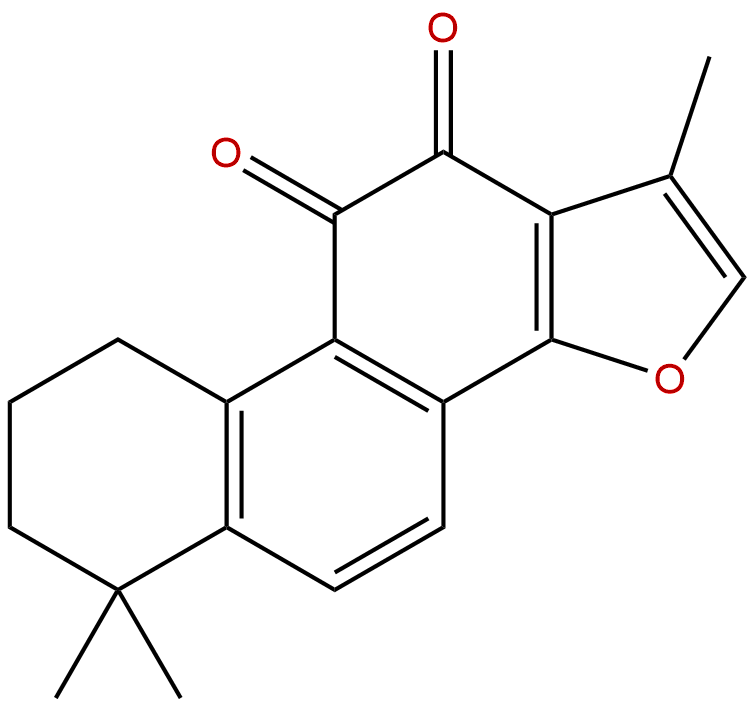


Product name: Tanshinone IIA
Synonym name: Tanshinone II
Catalogue No.: BP1362
Cas No.: 568-72-9
Formula: C19H18O3
Mol Weight: 294.35
Botanical Source: Pigment from the root of Salvia miltiorrhiza and from Salvia scalarea
Physical Description: Red powder
Type of Compound: Diterpenoids
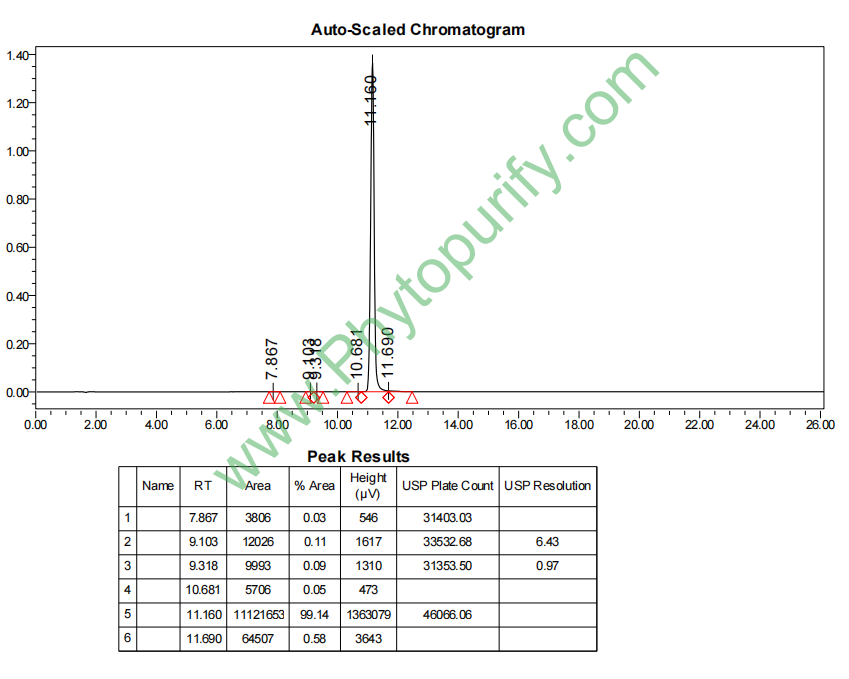
Purity: 95%~99%
Analysis Method: HPLC-DAD or/and HPLC-ELSD
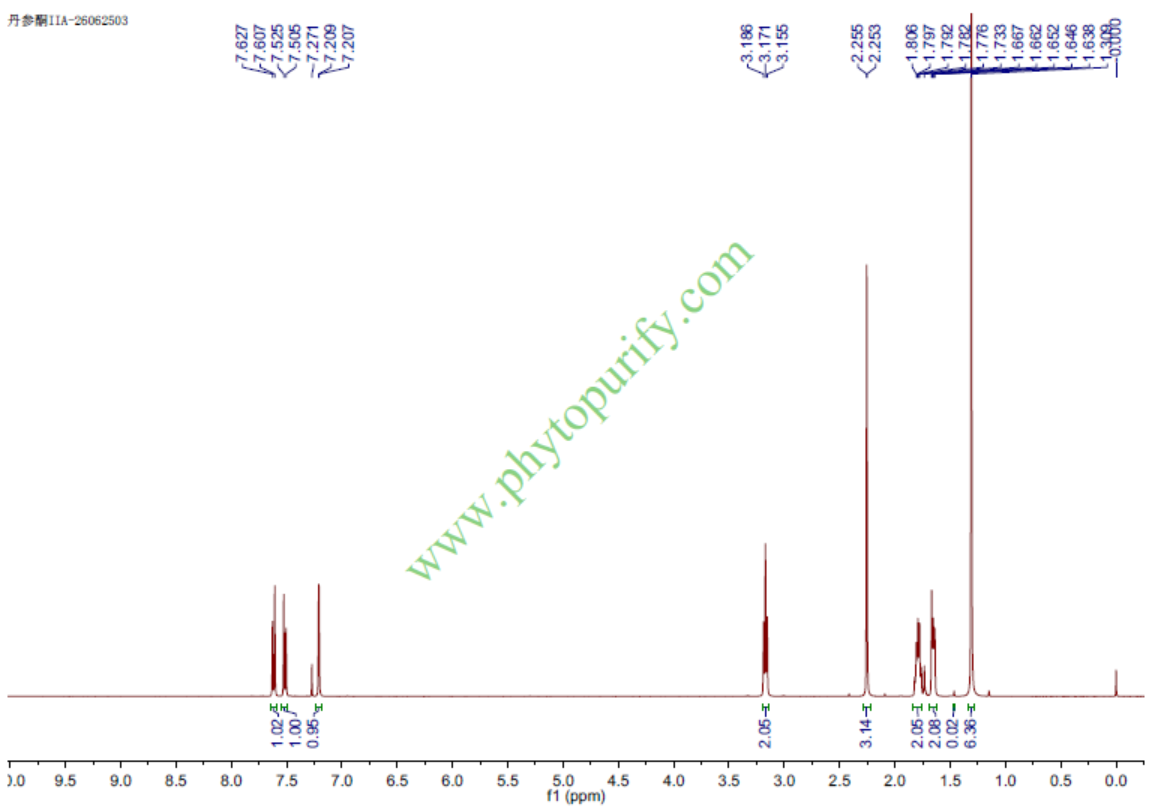
Identification Method: Mass, NMR
Packing: Brown vial or HDPE plastic bottle
Storage: Store in a well closed container, protected from air and light. Put into refrigerate or freeze for long term storage.
Whenever possible, you should prepare and use solutions on the same day. However, if you need to make up stock solutions in advance, we recommend that you store the solution as aliquots in tightly sealed vials at -20℃. Generally, these will be useable for up to two weeks.
The product could be supplied from milligrams to grams, up to kilograms
Inquire for bulk scale.
Descriptions:
Tanshinone Ⅱ-A is a derivative of phenanthrenequinone isolated from Salvia miltiorrhiza BUNGE, a traditional herbal medicine that is known to induce anti-inflammatory, anti-oxidative and cytotoxic activity; tanshione Ⅱ-A induces HL60 and K562 cellular apoptosis that may be associated with the selective members of caspase family[1]
Acetyltanshinone IIA (ATA), a novel anti-cancer agent, preferentially inhibits cell growth of oestrogen receptor positive (ER+) breast cancer cells and that it is more potent than the commonly used anti-breast cancer agent, tamoxifen; ATA also reduces the mRNA levels of the ERα encoding gene, ESR1, and reduces the transcription of an ER-responsive gene, GREB1.[2]
Tanshinone IIA may inhibit LPS-induced IκBα degradation and NF-κB activation via suppression of the NIK–IKK pathway as well as the MAPKs (p38, ERK1/2, and JNK) pathway in RAW 264.7 cells and these properties may provide a potential mechanism that explains the anti-inflammatory activity of tanshinone IIA.[3]
Tanshinone IIA reduces apoptosis induced by hydrogen peroxide in the human endothelium-derived EA.hy926 cells.[4]
Tanshinone IIA has significant growth inhibition effects on THP-1 cells by induction of apoptosis, and that tanshinone IIA-induced apoptosis on THP-1 cells is mainly related to the disruption of Deltapsim and activation of caspase-3 as well as down-regulation of anti-apoptotic protein Bcl-2, survivin and up-regulation of pro-apoptotic protein Bax, suggests Tanshinone IIA may serve as a potential anti-leukemia reagent.[5]
References:
[1] Sung H J, Choi S M, Yoon Y, et al. Experimental & Molecular Medicine, 1999, 31(4):174-8.
[2] Yu T, Zhou Z, Mu Y, et al. Cancer Lett, 2014, 346(1):94-103.
[3] Jang S I, Kim H J, Kim Y J, et al. Eur J Pharmacol, 2006, 542(1-3):1-7.
[4] Jia L Q, Yang G L, Ren L, et al. J Ethnopharmacol, 2012, 143(1):100-8.
[5] Liu J J, Zhang Y, Lin D J, et al. Oncol Reports, 2009, 21(4):1075-81.
[6] Lei M U, Chen G, Zhang X, et al. Lishizhen Medicine & Materia Medica Research, 2011, 22(10):2338-41.
HPLC of Tanshinone IIA
HNMR of Tanshinone IIA
Storage conditions:Short-term storage at 2~8℃, long-term storage at -20 ~ -80℃
47.2800
4.2809
4.2809
.0004
5.7270
27.9424
High
92.2774
2.9557
Yes
No
No
No
Yes
Yes
0.9
No
No
No
Yes
Cardiovascular disease is one of the leading causes of death and disability worldwide, with ischemic heart disease being particularly prominent. In clinical treatment, restoring blood flow supply (reperfusion) to ischemic myocardial tissue is a key measure to rescue dying myocardium, but this process itself may cause more severe damage, namely myocardial ischemia-reperfusion injury (MIRI). MIRI involves complex pathophysiological mechanisms, including oxidative stress, calcium overload, inflammatory response, mitochondrial dysfunction, and cell apoptosis. Currently, there is a lack of highly effective and specific clinical prevention and treatment drugs. Therefore, searching for active ingredients with multi-target and multi pathway regulatory effects from natural products has become an important direction for new drug development.
Danshen (Salvia miltiorrhiza)(Salvia miltiorrhiza Bunge, as a representative traditional Chinese medicine for promoting blood circulation and removing blood stasis, has a clinical application history of over a thousand years. Modern pharmacological research has confirmed that the lipophilic components of Danshen, such as tanshinones, are the core material basis for its cardiovascular protective effects. Among them, Tanshinone IIA (CAS: 568-72-9) is one of the most abundant and extensively studied active ingredients in Danshen roots. Early studies have revealed that it has effects such as dilating coronary arteries, improving microcirculation, and inhibiting platelet aggregation. In recent years, with the development of molecular biology technology, the deep mechanism of Tan IIA in anti MIRI has been continuously elucidated, especially its ability to inhibit pathological angiogenesis by targeting vascular endothelial growth factor receptor 2 (VEGFR2) and exert cardioprotective effects by regulating multiple signaling pathways such as AMPK, SIRT1, and Nrf2, demonstrating enormous therapeutic potential. This article aims to systematically review the chemical characteristics, pharmacological activity, mechanism of action, and pharmacological properties of salvianolic acid IIA, providing scientific basis for its further development.
Tanshinone IIA belongs to the class of diterpenoid quinones of the rosin alkane type. Its molecular formula is C19H18O3 and its molecular weight is 294.3500. Its basic structure is composed of a phenanthrenequinone nucleus (A, B, C rings) coupled with a furan ring (D ring). This unique conjugated quinone structure is the chemical basis for its color (orange red crystals) and significant redox activity.
The key physicochemical property parameters are as follows:
* Lipid water partition coefficient (LogP): 4.2809. This value indicates that Tan IIA has high lipophilicity, which facilitates its penetration into the phospholipid bilayer of cells, but also results in extremely low water solubility.
* Water solubility Approximately 0.0004 mg/mL, it belongs to poorly soluble drugs. This is the main bottleneck restricting its oral bioavailability and formulation development.
* Topological Polarity Surface Area (TPSA)47.2800 Å ², relatively small, further confirms its low molecular polarity.
* Blood-brain barrier permeability Predicted as' high '. Its high lipophilicity enables it to penetrate the blood-brain barrier well, suggesting that Tan IIA may have potential applications in central nervous system diseases such as cerebral ischemia and neurodegenerative diseases, in addition to its cardiovascular effects.
* Preliminary Safety Prediction HERG inhibition is' no ', indicating a low risk of causing QT interval prolongation and apical torsion ventricular tachycardia in the heart. The Ames test value is 0.9 (usually negative with ≤ 1.0), indicating that it has no significant genetic toxicity.
These physicochemical properties determine the absorption, distribution, metabolism, and excretion characteristics of Tan IIA in organisms, and are important starting points for designing its drug delivery system and structural modification.
Tanshinone IIA mainly comes from Salvia miltiorrhiza, a plant of the Salvia genus in the Lamiaceae family(Salvia miltiorrhiza Dry roots and rhizomes of Bge. Its content is significantly affected by the place of origin, cultivated variety, harvesting season, and processing method, usually ranging from 0.1% to 0.3%.
The traditional extraction method mainly focuses on separating the water-soluble and lipophilic components of Danshen:
1. Water extraction method Mainly obtaining water-soluble phenolic acid components such as danshensu and protocatechuic aldehyde, with significant loss of tanshinone IIA.
2. Organic solvent extraction method This is the mainstream method for obtaining tanshinone IIA. Common solvents include ethanol, methanol, ethyl acetate, chloroform, etc. Ethanol is most commonly used due to its low toxicity and high extraction efficiency. Usually, heating reflux or ultrasound assisted extraction is used.
3. Supercritical CO ₂ fluid extraction method This is an advanced extraction technology. By utilizing the high permeability and high solubility of CO ₂ in supercritical state, selectively extract lipid soluble components at lower temperatures. This method has high extraction efficiency, no residual organic solvents, and can effectively protect thermally unstable components, but the equipment cost is relatively high.
After crude extraction, further separation and purification techniques such as column chromatography (such as silica gel column, macroporous adsorption resin) and preparative high-performance liquid chromatography are required to obtain high-purity tanshinone IIA monomer. In order to improve its water solubility and bioavailability, current research focuses on innovative formulation technologies, such as nanocrystals, liposomes, solid dispersions, cyclodextrin inclusion complexes, etc.
Numerous preclinical studies have confirmed that tanshinone IIA has a wide range of cardiovascular protective pharmacological activities, with the core being its ability to counteract multiple pathological processes of MIRI.
The action of salvianolic acid IIA is not through a single target, but forms a synergistic network of multiple targets and pathways to jointly combat MIRI. The following diagram summarizes its core mechanism network:
(This is a textual description of the mechanism diagram)
Danshen ketone IIA acts on myocardial cells, and its effects can be summarized into the following interrelated modules:
1. Energy and Survival Sensing Module Tan IIA activates AMPK and SIRT1. AMPK acts as a cellular energy sensor to improve metabolism; SIRT1, as a deacetylase, forms a positive feedback loop with AMPK, jointly upregulating PGC-1 α, promoting mitochondrial function and biosynthesis, and providing energy basis for cell survival.
2. Antioxidant defense module Tan IIA activates transcription factor Nrf2 to break free from Keap1 inhibition, and upon entering the nucleus, initiates ARE driven transcription of antioxidant genes (HO-1, NQO1), constructing a powerful cellular antioxidant barrier.
3. Anti apoptosis and homeostasis maintenance module By regulating Bcl-2 family proteins (promoting Bcl-2 expression), inhibiting mitochondrial membrane permeability transition pore (mPTP) opening, blocking cytochrome C release and Caspase cascade reaction, and inhibiting apoptosis. The regulation of PKC and MAPK (ERK1/2, MAPK1) signaling pathways is also involved in the regulation of cell survival and proliferation.
4. Environmental adaptation and stress response module Under hypoxic conditions, Tan IIA may stabilize or regulate HIF-1 α, affecting the expression of downstream genes adapted to hypoxia. Meanwhile, its anti-inflammatory effect is achieved by inhibiting pathways such as NF - κ B.
5. Vascular regulation module In endothelial cells, Tan IIA directly binds to VEGFR2, inhibiting its phosphorylation and downstream signals such as PI3K/Akt and ERK, thereby suppressing endothelial cell proliferation, migration, and lumen formation, and exerting anti angiogenic effects.
These modules are not isolated, but highly interconnected. For example, activation of AMPK/SIRT1 can inhibit inflammation and oxidative stress; The activation of Nrf2 helps maintain mitochondrial function. This networked regulatory mechanism enables Tan IIA to comprehensively intervene in the complex pathological process of MIRI from multiple levels.
Although the pharmacological activity of tanshinone IIA is clear, its inherent physicochemical properties pose a challenge to its pharmacological development.
At present, the clinical application forms of tanshinone IIA are mainly its water-soluble derivatives Danshen ketone IIA sodium sulfonate injection It has been approved in China as an adjuvant therapy for coronary heart disease, angina pectoris, and myocardial infarction, demonstrating good safety and certain efficacy. However, the comprehensive development of individual Tan IIA is still in the research stage, with both future prospects and challenges.
prospect:
1. Multi indication expansion Based on its multi target mechanism, Tan IIA's research can go beyond MIRI and extend to chronic cardiovascular diseases such as heart failure, atherosclerosis, pulmonary hypertension, diabetes cardiomyopathy, as well as neurological diseases such as ischemic stroke and Alzheimer's disease.
2. Combination therapy strategy The combination of Tan IIA and traditional cardiovascular drugs (such as statins and antiplatelet drugs) may produce synergistic effects, reduce their respective dosages and side effects, and provide new solutions for complex cardiovascular diseases.
3. Precision formulation development Developing intelligent delivery systems targeting the myocardium or ischemic areas using nanotechnology to improve therapeutic efficacy and reduce systemic side effects. The successful development of new oral formulations, such as self microemulsions and nanocrystals, will greatly improve patient medication adherence.
4. Structural optimization and new drug development Using its phenanthrenequinone parent nucleus as a lead compound, reasonable structural modifications are carried out with the aim of optimizing its water solubility, metabolic stability, and target selectivity while retaining its activity. It is expected to create a class of new drugs with independent intellectual property rights.
Challenges and Prospects:
1. Deep exploration of mechanisms The existing target research is mostly focused on "correlation", and more chemical and biological methods (such as photoaffinity labeling and proteomics) are needed to identify the direct target proteins and draw more accurate target maps.
2. Upgrading clinical evidence We need to design rigorous large-scale, multicenter, randomized double-blind controlled clinical trials that provide high-level evidence-based medicine to drive the transition from adjuvant therapy to first-line or core therapeutic drugs.
3. Quality Control and Standardization From medicinal herb cultivation to formulation production, it is necessary to establish a standardized quality control system for the entire industry chain to ensure the stability and uniformity of active ingredients.
4. Integration of Systems Biology Using omics techniques (transcriptomics, proteomics, metabolomics) and bioinformatics methods, comprehensively analyze the in vivo action network and individualized response differences of Tan IIA at the system level.
Tanshinone IIA, as the core active ingredient of Danshen, is a model that connects the wisdom of traditional Chinese medicine with modern life sciences. It exhibits multidimensional and multi-level protective effects in combating myocardial ischemia-reperfusion injury by regulating a complex network of key targets such as AMPK/SIRT1, Nrf2, Bcl-2, VEGFR2, etc. Although its inherent low water solubility and low bioavailability pose challenges for drug development, these challenges are gradually being overcome through the cross fusion of modern pharmaceutical, medicinal chemistry, and molecular biology technologies. From the successful launch of water-soluble derivatives to the vigorous development of new nano formulations, Tan IIA is steadily moving from an ancient plant ingredient to a modern innovative drug. In the future, with a deeper analysis of its mechanism of action, continuous advancement of clinical research, and continuous innovation in formulation technology, tanshinone IIA is expected to play a more important therapeutic value in cardiovascular disease and even a wider range of diseases, contributing the unique power derived from natural products to human health.
