
| Catalog No | Package | Original Price | Price | Inventory | Quantity | Operating |
|---|---|---|---|---|---|---|
| BP1057-100mg | 100mg | $30.00 | Sign in |
|


Product name: Paeonol
Synonym name: 2′-Hydroxy-4′-methoxyacetophenone; Peonol
Catalogue No.: BP1057
Cas No.: 552-41-0
Formula: C9H10O3
Mol Weight: 166.176
Botanical Source: Paeonia moutan, Xanthorrhoea arborea, Xanthorrhoea reflexa, Betula platyplylla, Paeonia suffruticosa, Exacum affine, Arisaema erubescens, Dioscorea japonica, Primula auricula and other plants
Physical Description: Cryst.
Type of Compound: Phenols
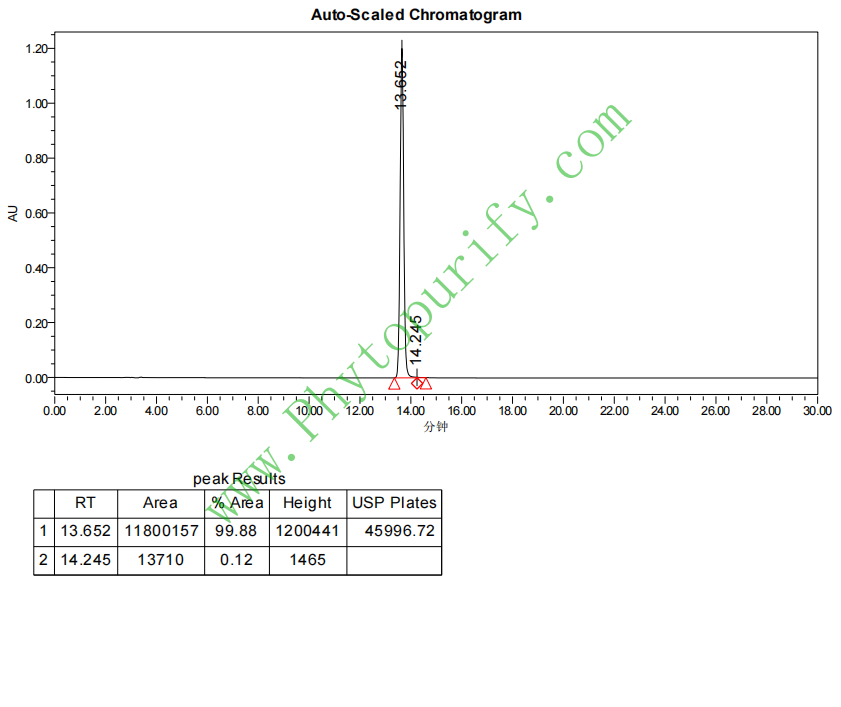
Purity: 95%~99%
Analysis Method: HPLC-DAD or/and HPLC-ELSD
Identification Method: Mass, NMR
Packing: Brown vial or HDPE plastic bottle
Storage: Store in a well closed container, protected from air and light. Put into refrigerate or freeze for long term storage.
Whenever possible, you should prepare and use solutions on the same day. However, if you need to make up stock solutions in advance, we recommend that you store the solution as aliquots in tightly sealed vials at -20℃. Generally, these will be useable for up to two weeks.
The product could be supplied from milligrams to grams, up to kilograms
Inquire for bulk scale.
Descriptions:
Paeonol , the main active compound of the traditionally used Chinese herb Paeonia lactiflora Pallas, has anti-inflammatory, antioxidant and cardiovascular protective activities;Paeonol inhibits U937 monocyte adhesion to HUVECs stimulated by TNF-α, the inhibitory effect of paeonol on ICAM-1 production may be mediated by inhibiting p38, ERK and NF-κB signaling pathways, which are involved in TNF-α-induced ICAM-1 production, thus, paeonol may be beneficial in the treatment of cardiovascular disorders such as atherosclerosis.[1]
Paeonol exerts its anti-inflammatory and analgesic effects in a rat model of carrageenan-evoked thermal hyperalgesia, the mechanism may be associated with decreased production of proinflammatory cytokines, NO and PGE2 and increased production of IL-10, an anti-inflammatory cytokine in carrageenan-injected rat paws, and attenuation of the elevated iNOS and COX-2 protein expression as well as neutrophil infiltration in carrageenan-injected paws may also be involved in the beneficial effects of paeonol.[2]
Paeonol reduces cerebral infarct and neuro-deficit in rat, suggests it might play a similar role in reducing cerebral infarction in humans, it suppresses and scavenges superoxide anion, and inhibits microglia activation and IL-1beta in ischemia-reperfusion injured rats.
Paeonol can attenuates neurotoxicity and ameliorates cognitive impairment induced by d -galactose in ICR mice, suggests that paeonol possesses anti-aging efficacy and may have potential in treatment of neurodegenerative diseases.[3]
Paeonol has antiproliferation and apoptosis induction in HepG_2 cells, also has significantly growth-inhibitory and apoptosis-inducing effects in gastric cancer cells both in
vitro and in vivo.[4,5]
References:
[1] Nizamutdinova I T, Oh H M, Min Y N, et al. Int Immunopharmacol, 2007, 7(3):343-50.
[2] Chou T C. Brit J Pharmacol, 2003, 139(6):1146-52.
[3] Hsieh C L, Cheng C Y, Tsai T H, et al. J Ethnopharmacol, 2006, 106(2):208-15.
[4] Zhong S Z, Ge Q H, Qu R, et al. J Neurol Sci, 2009, 277(1-2):58-64.
[5] Xu S P, Sun G P, Shen Y X, et al. World J Gastroentero, 2007, 13(2):250-6.
[6] Li N, Fan L L, Sun G P, et al. World J Gastroentero, 2010, 16(35):4483-90.
HPLC of Paeonol
Storage conditions:Short-term storage at 2~8℃, long-term storage at -20 ~ -80℃
46.5300
1.9768
1.9147
1.3763
6.4188
30.0075
High
71.5985
1.6939
Yes
No
Yes
No
Yes
Yes
0.6
No
No
Yes
No
Paeonol, also known as 2 '- hydroxy-4' - methoxyacetophenone, is a natural phenolic compound widely found in plants of the Paeonia genus in the Ranunculaceae family. Its CAS number is 552-41. As the core active ingredient of traditional Chinese medicine Moutan Cortex, paeonol has a long history of application. Peony bark has long been recorded in traditional Chinese medicine literature and is commonly used to clear heat, cool blood, promote blood circulation, and remove blood stasis. It is also used to treat symptoms such as warm and toxic spots, blood heat vomiting, and premature cooling at night. Modern pharmacological research reveals that paeonol is one of the important material foundations that carries these traditional effects.
In recent years, with the continuous deepening of research on natural products, paeonol has attracted much attention due to its extensive and significant biological activities. Preliminary studies have confirmed that it has multiple pharmacological effects, including anti-inflammatory, antioxidant, neuroprotective, cardiovascular protective, and anti-tumor effects. Of particular note, paeonol exhibits inhibitory activity against monoamine oxidase (MAO), with half maximal inhibitory concentrations (IC50) of 54.6 μ M for MAO-A and 42.5 μ M for MAO-B, indicating its potential therapeutic value in neurological disorders, particularly depression and neurodegenerative diseases. In addition, its clear anti-inflammatory effects involve multiple key targets such as interleukin-6 (IL-6), signal transduction and transcription activator 3 (STAT3), tumor necrosis factor (TNF), etc., providing a solid scientific basis for its application in inflammation related diseases.
This article aims to systematically review the chemical properties, plant sources, pharmacological activities, molecular mechanisms of action, pharmacological evaluation, and clinical application prospects of paeonol, in order to provide comprehensive references for the in-depth research and development of this natural product.
The molecular formula of paeonol is C9H10O3, with a molecular weight of 166.1760. Its chemical structure is a simple derivative of acetophenone, with two key substituents, hydroxyl (- OH) and methoxy (- OCH3), attached to the benzene ring at the 2 'and 4' positions, respectively. The unique structure of this adjacent hydroxyl para methoxy group is the chemical basis for its various biological activities, making it both hydrophilic and moderately lipophilic.
In terms of physicochemical properties, the lipid water partition coefficient (LogP) of paeonol is 1.9768, indicating its good lipid solubility, which is conducive to transmembrane transport and absorption. Its topological polar surface area (TPSA) is 46.5300 Å ², which is relatively small, further indicating its good membrane permeability. The water solubility data shows that its solubility is about 1.3763 mg/mL, belonging to the range of slightly soluble to soluble, which puts specific requirements on its formulation development. Pure paeonol is a colorless or slightly yellow needle shaped crystal with a unique aromatic odor.
Of particular importance is its ability to cross the blood-brain barrier (BBB). The drug prediction shows that its "blood-brain barrier permeability" is "high", which is closely related to its moderate LogP value and small molecular weight. This characteristic is crucial for its action on central nervous system targets such as MAO enzymes, and is a significant advantage in the development of drugs for the treatment of neurological and psychiatric disorders. In addition, preliminary safety evaluation shows that the risk of hERG channel inhibition is "no", and the Ames test result is 0.6 (usually considered to have a low mutagenic risk when the value is close to 1 and less than 2), indicating that the risk of cardiac toxicity and genetic toxicity is relatively small, and it has a good starting point for drug development.
Danpi phenol mainly comes from plants in the Ranunculaceae family and the Paeoniaceae genus. Among them, the dried root bark of Paeonia suffruticosa Andrews, also known as the traditional Chinese medicine "Paeonia suffruticosa" or "Danpi", is the most important and traditional source. In addition, there is also a certain amount of presence in the roots of the same plant Paeonia lactiflora Pall. Danpi phenol usually exists in the form of glycosides (such as Danpi phenol glycoside) in plants, and can also exist partially in free form.
The method of extracting paeonol from plant materials has been continuously optimized with technological advancements, mainly including:
1. Traditional solvent extraction method The most commonly used method is ethanol or methanol reflux extraction. The method of utilizing the solubility of paeonol in organic solvents is simple to operate and is a commonly used method for laboratory and early industrial preparation. The water extraction method also has applications, but its efficiency is usually lower than that of organic solvents.
2. Ultrasonic assisted extraction method Utilizing the cavitation effect and mechanical vibration generated by ultrasound to accelerate the breaking of plant cell walls and the dissolution of active ingredients. This method can significantly shorten extraction time, reduce extraction temperature, and improve extraction efficiency, and is currently one of the mainstream optimization methods in research.
3. Microwave assisted extraction method By microwave heating, the internal pressure of plant cells increases, causing cell wall rupture and promoting the release of target components. This method has the advantages of uniform heating, fast speed, and low solvent consumption.
4. Supercritical fluid extraction method Supercritical CO2 is usually used as the extractant. This method has mild conditions (close to room temperature), no residual organic solvents, and good selectivity, making it particularly suitable for the extraction of thermosensitive natural products, but the equipment cost is relatively high.
5. Enzyme assisted extraction method Using cellulases, pectinases, and other enzymes to disrupt the structure of plant cell walls, reduce mass transfer resistance, and thus improve the extraction rate of paeonol. This method is environmentally friendly and has mild conditions.
The crude extract after extraction usually needs further separation and purification, such as silica gel column chromatography, preparative high-performance liquid chromatography (HPLC), etc., to obtain high-purity paeonol monomers for in-depth pharmacological and clinical research.
A large number of in vitro and in vivo studies have confirmed that paeonol has a wide and diverse pharmacological activity, which is fundamental to its clinical application potential.
The multiple pharmacological effects of paeonol stem from its regulation of multiple intracellular signaling pathways and intervention in multiple key molecular targets. Its anti-inflammatory mechanism is particularly profound and systematic, involving the following core targets and pathways:
In summary, paeonol exerts its therapeutic effect through a multi-target, multi pathway networked mode of action, rather than acting on a single target, which is in line with the characteristics of many natural products and provides possible advantages for its treatment of complex diseases such as chronic inflammation, depression, and neurodegenerative diseases.
Although paeonol has excellent pharmacological activity, its successful development as a modern drug still depends on its pharmacological properties, namely "pseudo pharmacological" and pharmacokinetic properties.
Pharmaceutical advantages:
1. Low molecular weight(166 Da), The structure is simple.
2. Moderate lipid solubility(LogP ~2), Beneficial for oral absorption and penetration of biological membranes, including the blood-brain barrier.
3. Preliminary safety indicators are good There is no obvious warning of hERG inhibition, and the Ames test suggests a low risk of genetic toxicity.
Drug Challenge:
1. Solubility and permeability Although it has a certain degree of lipid solubility, its absolute water solubility is still limited, which may lead to poor oral bioavailability. It belongs to Class II (low solubility and high permeability) or Class IV (low solubility and low permeability) compounds in the Biopharmaceutical Classification System (BCS).
2. Metabolism and stability Danpi phenol is mainly metabolized by the liver in the body, undergoing glucuronidation and sulfation binding reactions to generate corresponding complexes. The half-life of its prototype drug may be short, which can affect the persistence of its efficacy.
3. Formulation restrictions Traditional oral tablets or capsules may not achieve ideal dissolution and absorption.
Pharmacokinetic study:
Animal pharmacokinetic studies have shown that paeonol is absorbed quickly after oral administration, but its absolute bioavailability is generally not high due to significant species and dosage form differences. It is widely distributed in the body and can quickly enter brain tissue, which is consistent with the predicted high BBB permeability. Elimination is mainly eliminated through the kidneys in the form of metabolites. In order to improve its pharmacokinetic properties, researchers have attempted various strategies:
* Structural modification Synthesize derivatives or prodrugs of paeonol to improve its solubility, stability, and targeting.
* New drug delivery system Developing liposomes, nanoparticles, microemulsions, cyclodextrin inclusion complexes, solid dispersions, etc., significantly improving their dissolution rate, stability, and oral bioavailability. For example, paeonol nano lipid carriers, phospholipid complexes, etc. have been proven to effectively enhance their in vivo exposure levels.
* Expansion of drug delivery routes: To study the transdermal administration (patch, gel), injection administration, etc., in order to avoid the first pass effect and improve the efficacy.
The clinical application prospects of paeonol are broad, but its transformation pathway still needs solid research and promotion.
Potential clinical application directions:
1. Inflammatory diseases: Rheumatoid arthritis, osteoarthritis, colitis, dermatitis, atherosclerosis (as a chronic inflammatory disease), etc. Its multi-target anti-inflammatory properties are suitable for treating such complex diseases.
2. Neurological disorders:
* depression Based on its MAO inhibitory activity, it can serve as a candidate for novel antidepressant drugs, especially for patients with poor response to existing drugs.
* Neurodegenerative diseases Neuroinflammation and oxidative stress are key pathological processes in Alzheimer's disease and Parkinson's disease. The neuroprotective, anti-inflammatory, and antioxidant effects of paeonol demonstrate the potential to prevent or delay disease progression.
* Neuropathic Pain: It may be used to treat diabetes peripheral neuralgia, post herpetic neuralgia, etc. by regulating TRPV1/TRPA1 channel and inhibiting neuroinflammation.
3. cardiovascular disease As an auxiliary treatment or preventive drug for hypertension, myocardial ischemia and atherosclerosis.
4. neoadjuvant therapy May be used as a sensitizer for chemotherapy or radiotherapy, or to alleviate cancer pain and inflammatory reactions caused by radiotherapy and chemotherapy.
Future research prospects and challenges:
1. In depth mechanism research It is necessary to use omics technologies (proteomics, metabolomics) and gene editing tools to more accurately depict the role of paeonol in the overall biological network and discover its key nodes of action.
2. Strengthen preclinical and clinical research Currently, most research is still at the stage of cell and animal models. It is urgent to design rigorous randomized controlled clinical trials to verify their effectiveness, optimal dosage, and safety in humans. Special attention should be paid to the safety of long-term medication.
3. Innovation in formulation technology Continuing to optimize the drug delivery system and developing new formulations with high bioavailability and good patient compliance (such as long-acting injections and intelligent targeted nano formulations) is the key to translating their activity into clinical efficacy.
4. Explore combination therapy Studying the synergistic effect of paeonol with existing standard therapeutic drugs may lead to the discovery of more efficient and low toxicity treatment plans.
5. Source quality control Ensure sustainable supply of raw materials and establish quality control standards for the entire process from plant cultivation, extraction to finished products to ensure product consistency and reliability.
Danpi phenol, a natural small molecule compound derived from the traditional Chinese medicine peony bark, has become a star molecule in modern natural product pharmacology research due to its clear chemical structure, rich pharmacological activity, and unique multi-target mechanism of action. From inhibiting MAO to exert antidepressant potential, to demonstrating strong anti-inflammatory effects by regulating multiple pathways such as NF - κ B and STAT3, its scientific connotation is constantly deepening. Despite facing challenges in drug formulation such as solubility and metabolic stability, these obstacles are gradually being overcome through the intervention of modern pharmacology and medicinal chemistry methods.
Looking ahead to the future, the research on paeonol has moved from the stage of activity discovery to a new era of mechanism deepening and product development. It is not only a bridge connecting traditional medical wisdom with modern scientific research, but also a highly valuable lead compound for development. Through continuous basic research, innovative formulation development, and rigorous clinical validation, paeonol is expected to provide a new, multi effect, and naturally derived treatment option for inflammatory diseases, neurological diseases, cardiovascular diseases, and other fields in the future, demonstrating the enduring vitality of natural products in the development of innovative drugs.
