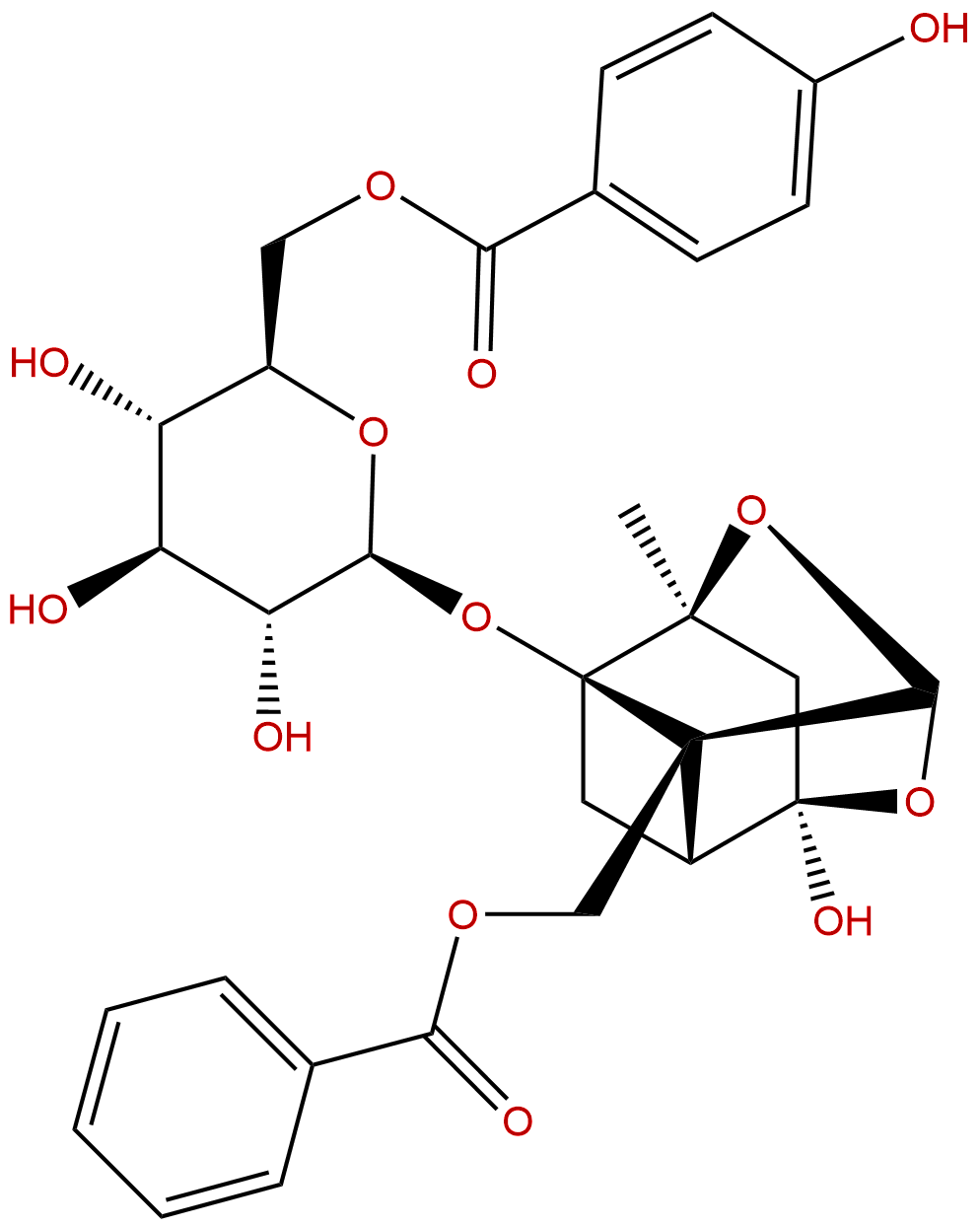


Product name: Mudanpioside C
Synonym name: Oxybenzoylpaeoniflorin
Catalogue No.: BP1562
Cas No.: 172760-03-1
Formula: C30H32O13
Mol Weight: 600.573
Botanical Source: Constit. of Paeonia suffruticosa and Paeonia lactifolia
Physical Description: Powder
Type of Compound: Monoterpenoids
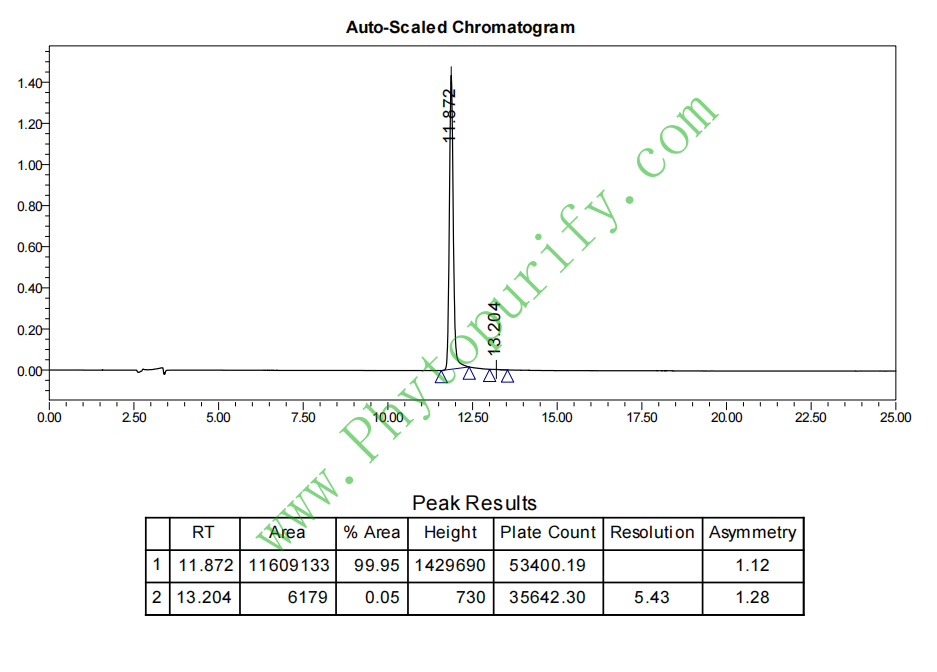
Purity: 95%~99%
Analysis Method: HPLC-DAD or/and HPLC-ELSD
Identification Method: Mass, NMR
Packing: Brown vial or HDPE plastic bottle
The product could be supplied from milligrams to grams. Inquire for bulk scale.
We provide solution to improve the water-solubility of compounds, thereby facilitating the variety of activity tests and clinic uses.
For Reference Standard and R&D, Not for Human Use Directly.
HPLC of Mudanpioside C
Storage conditions:Short-term storage at 2~8℃, long-term storage at -20 ~ -80℃
190.6700
1.2699
1.2633
.1595
.4508
.1570
Low
81.9408
6.1644
No
No
No
No
No
No
0.0
Yes
No
Yes
Yes
Cardiovascular disease (CVD) is the leading cause of death and disability worldwide, with a complex pathogenesis involving multiple pathological processes such as inflammation, oxidative stress, endothelial dysfunction, lipid metabolism disorders, and thrombosis. Although modern medicine has made significant progress in the development of cardiovascular drugs, existing drugs still have problems such as side effects, drug resistance, and single therapeutic targets. Therefore, searching for multi-target, highly efficient and low toxicity cardiovascular protective active ingredients from natural products has always been an important direction for drug development. Paeonia plants, especially Paeonia suffrutiosa and Paeonia lactiflora, have a long history of application in traditional medicine and are commonly used for clearing heat, cooling blood, promoting blood circulation, and removing blood stasis. The root bark (peony bark) is a rich source of various bioactive compounds, among which an important class of active ingredients are terpenoids and their glycosides. Mudampioside C (CAS number: 172760-03-1) is a triterpenoid glycoside with significant pharmacological potential isolated from it. In recent years, with the deepening development of natural product chemistry and molecular pharmacology, the multi-target effects of paeoniflorin C in cardiovascular protection have gradually been revealed, showing multiple effects such as regulating blood lipids, anti-inflammatory, protecting vascular endothelium, and improving myocardial function, making it an attractive candidate molecule in the field of cardiovascular disease prevention and treatment. This article aims to systematically review the chemical properties, plant sources, pharmacological activities, mechanisms of action, pharmacological evaluation, and clinical application prospects of paeoniflorin C, in order to provide comprehensive scientific references for the in-depth research and development of this compound.
Peony bark glycoside C is a monoterpene glycoside compound, whose chemical structure is composed of a hydrogenated monoterpene glycoside element connected to the glycosyl moiety through glycosidic bonds. Specifically, its glycoside part belongs to a special "Paeoniane" type monoterpene skeleton, which has multiple ring systems and chiral centers, which is a characteristic chemical component of Paeonia plants. The sugar moiety is usually linked with monosaccharides or oligosaccharides such as glucose, which has a significant impact on its water solubility and biological activity.
According to its CAS number (172760-03-1) and relevant literature data, its precise molecular weight is 600.5730 daltons. The calculated LogP value of the lipid water partition coefficient is 1.2699, indicating that the compound has moderate lipophilicity but overall leans towards hydrophilicity, mainly due to the presence of sugar groups and multiple hydroxyl groups in its molecule. The topologically polar surface area (TPSA) is as high as 190.6700 Å ², further confirming the presence of a large number of hydrogen bond donors and acceptors (such as hydroxyl groups and oxygen atoms on sugar rings) in its molecules, which make it easy to form hydrogen bonds with water molecules, thereby affecting its solubility and membrane permeability. The theoretically calculated water solubility value is about 0.1595 mg/mL, which belongs to the range of slightly soluble to soluble. This provides a basis for its absorption and distribution in organisms, but may also limit its passive diffusion across highly lipidated biofilms (such as the blood-brain barrier). Preliminary pharmacological prediction analysis shows that the ability of paeoniflorin C to penetrate the blood-brain barrier is relatively low, which to some extent limits its direct effects on central nervous system related diseases, but may also reduce potential central side effects. Importantly, its hERG inhibition prediction is' no ', indicating a low risk of causing QT interval prolongation and apical torsion type ventricular tachycardia, which is crucial for the safety of cardiovascular drugs. In addition, the Ames test predicted a value of 0.0, indicating that it may not have direct genetic toxicity and has a promising safety outlook. These physicochemical and preliminary safety parameters together outline the basic profile of paeoniflorin C as a natural product lead compound with potential for development.
Peony bark glycoside C mainly comes from the root bark of plants in the Paeoniaceae family and Paeoniaceae genus. The traditional Chinese medicine "peony bark" is derived from the dried root bark of peonies (Paeonia suffrutiosa Andrews) or peonies (Paeonia lactiflora Pall.). Among them, peony bark is considered an authentic medicinal herb with a complex chemical composition, rich in monoterpenoid glycosides (such as paeoniflorin, oxidized paeoniflorin, peony bark glycoside series), phenols, tannins, etc. Peony bark glycoside C is one of the monoterpene glycosides with relatively low content but significant activity.
Its extraction and separation usually follow the conventional process of natural product chemistry. Firstly, crush the dried peony bark medicinal material and extract it using an appropriate solvent. Common extraction methods include:
1. Solvent extraction method The most commonly used methods are reflux extraction or ultrasound assisted extraction with different concentrations of ethanol (such as 50% -70%) or methanol. These polar solvents can effectively extract monoterpenoid glycosides, including paeoniflorin C.
2. Water extraction method Due to the certain water solubility of glycoside components, hot water extraction is also an option, but it may also extract a large amount of impurities such as polysaccharides and proteins, which increases the difficulty of subsequent purification.
After obtaining the crude extract, a series of separation and purification steps are required to obtain high-purity paeoniflorin C. These steps usually include:
- Liquid-liquid extraction Using organic solvents of different polarities (such as petroleum ether, ethyl acetate, n-butanol) for segmented extraction of crude extract, paeoniflorin C is usually enriched in n-butanol or water saturated n-butanol fractions.
- column chromatography This is a crucial step. Macroporous adsorption resins (such as D101, AB-8), silica gel, reverse silica gel (such as ODS-C18) or dextran gel (such as Sephadex LH-20) are often used as stationary phases for column chromatography. Separation is carried out by gradient elution (commonly using water methanol or water acetonitrile systems) based on differences in compound polarity.
- Preparation type high performance liquid chromatography (HPLC)For the final stage of fine separation to obtain chromatographically pure compounds, preparative HPLC (usually using a reverse phase C18 column with acetonitrile water or methanol water as the mobile phase) is an indispensable tool.
Modern extraction techniques such as supercritical fluid extraction and microwave-assisted extraction also have potential applications, aimed at improving extraction efficiency, reducing solvent consumption, and protecting thermally unstable components. The optimization of the extraction and separation process is crucial for ensuring the yield of paeoniflorin C and the reliability of subsequent pharmacological research.
Numerous in vitro and in vivo pharmacological studies have shown that paeoniflorin C has broad and significant cardiovascular protective activity, mainly manifested in the following aspects:
1. Lipid regulating and anti atherosclerosis effects:
Animal experiments (such as atherosclerosis model induced by high-fat diet) show that paeoniflorin C can significantly reduce the levels of serum total cholesterol (TC), triglycerides (TG) and low-density lipoprotein cholesterol (LDL-C), while increasing high-density lipoprotein cholesterol (HDL-C). Its strength of action is equivalent to or has a synergistic effect with positive drugs such as statins. In the process of atherosclerotic plaque formation, paeoniflorin C can reduce the lipid deposition and plaque area of aortic intima, inhibit the formation of foam cells, stabilize plaque, and delay the process of atherosclerosis.
2. Anti inflammatory and immune regulatory effects:
Chronic low-grade inflammation is the core pathological mechanism of cardiovascular disease. Peony bark glycoside C can dose dependently inhibit the excessive production of pro-inflammatory cytokines such as interleukin-6 and tumor necrosis factor alpha in various cell models, such as lipopolysaccharide stimulated macrophages and tumor necrosis factor alpha stimulated endothelial cells. At the same time, it can also downregulate the expression of cell adhesion molecules (such as ICAM-1, VCAM-1), thereby reducing the adhesion and migration of white blood cells to the vascular endothelium, and alleviating the inflammatory infiltration of the vascular wall.
3. Endothelial protection and improvement of diastolic function:
Endothelial dysfunction is an early sign of cardiovascular events. Peony bark glycoside C can increase the production of endogenous messenger molecule nitric oxide (NO), which has vasodilation, antiplatelet aggregation, and anti-inflammatory effects, by promoting the activation and expression of endothelial nitric oxide synthase (eNOS). In the ex vivo vascular ring experiment, paeoniflorin C exhibited an endothelial dependent vasodilation effect. In addition, it can alleviate the damage of oxidative stress (such as hydrogen peroxide) to endothelial cells, improve cell survival rate, and maintain the integrity of the endothelial barrier.
4. Myocardial protective effect:
In animal models of myocardial ischemia/reperfusion injury and doxorubicin induced cardiomyopathy, pretreatment or treatment with paeoniflorin C can significantly reduce myocardial infarction area, improve cardiac function indicators (such as left ventricular ejection fraction), and reduce serum myocardial enzyme levels (such as creatine kinase and lactate dehydrogenase). Its mechanism involves inhibiting myocardial cell apoptosis, reducing oxidative damage, and regulating energy metabolism.
5. Antithrombotic effect:
Peony bark glycoside C can inhibit platelet aggregation induced by platelet activating factor (PAF), and its effect may be related to interference with platelet signaling pathways. By improving blood rheology and inhibiting excessive coagulation, it helps prevent the formation of pathological blood clots.
In summary, paeoniflorin C exerts cardiovascular protective effects through multiple pathways and links, demonstrating the advantages of multi-target intervention with natural products.
The cardiovascular protective effect of paeoniflorin C is not achieved through a single target, but through a complex network. Existing research has preliminarily revealed its interactions with multiple key targets:
HMGCR (3-hydroxy-3-methylglutaryl-CoA reductase)This is the rate limiting enzyme for cholesterol biosynthesis and a classic target for statins. Research has shown that paeoniflorin C may inhibit the activity of HMGCR directly or indirectly, thereby reducing the synthesis of endogenous cholesterol, which is one of the core mechanisms by which it exerts its lipid-lowering effect.
PPARG (Peroxisome proliferator activated receptor gamma)PPAR γ is a member of the nuclear receptor superfamily and plays a central role in adipocyte differentiation, glucose and lipid metabolism, and inflammation regulation. Peony bark glycoside C may act as a partial agonist or regulator of PPAR γ, activating the PPAR γ signaling pathway, thereby promoting fatty acid oxidation, improving insulin sensitivity, inhibiting inflammatory gene expression, and comprehensively exerting the effects of lipid regulation, anti-inflammatory, and improving endothelial function.
ACE (angiotensin converting enzyme)ACE is a key enzyme in the renin-angiotensin-aldosterone system, catalyzing the conversion of angiotensin I into the potent vasoconstrictor angiotensin II. Paeoniflorin C has been shown to have ACE inhibitory activity, similar to that of Puli class drugs, thereby reducing the production of angiotensin II, lowering vascular resistance, and improving hemodynamics.
AKT1 (protein kinase B)AKT is the core node of the PI3K/AKT signaling pathway, involved in processes such as cell survival, proliferation, metabolism, and NO synthesis. Peony bark glycoside C can activate AKT, phosphorylate and activate eNOS (encoded by NOS3 gene), promote NO production, which is an important mechanism for improving endothelial function and vasodilation.
NOS3 (endothelial nitric oxide synthase)As mentioned above, paeoniflorin C upregulates the activity and expression of NOS3 through pathways such as AKT, which is a direct means of increasing the bioavailability of NO.
SELP (P-selectin), ICAM1 (intercellular adhesion molecule-1), VCAM1 (vascular cell adhesion molecule-1)These adhesion molecules mediate the rolling, adhesion, and migration of white blood cells and endothelial cells during the early stages of inflammation. Peoniflorin C significantly reduces the expression of these adhesion molecules by inhibiting inflammatory signaling pathways such as nuclear factor - κ B, thereby blocking the recruitment of leukocytes to the vascular wall, and playing an anti-inflammatory and anti atherosclerotic role.
ADRB2 (β 2-adrenergic receptor)It may affect vascular smooth muscle tone and cardiac function by regulating ADRB2 signaling, but its specific mode of action still needs further investigation.
KCNH2 (hERG potassium channel)The prediction of drug properties suggests that paeoniflorin C does not inhibit hERG channels, which is consistent with its observation of no significant arrhythmogenic effect in experiments and is a favorable feature of its cardiac safety.
These targets do not exist in isolation, but form an interconnected signal network. Peony bark glycoside C may act on multiple nodes of the network simultaneously, producing synergistic or additive effects, ultimately achieving steady-state regulation of the overall cardiovascular system. For example, PPARG and anti-inflammatory effects can improve metabolic and inflammatory status, ACE inhibition and AKT/NOS3 activation can improve vascular function and blood pressure, HMGCR inhibition can regulate blood lipids, and jointly delay the development of atherosclerosis.
Based on calculations and preliminary experimental data, the pharmacological characteristics of paeoniflorin C can be summarized as follows:
Advantage:
1. Moderate molecular weight and physicochemical properties The molecular weight is about 600, the LogP is about 1.27, and the TPSA is relatively high, indicating that it belongs to the "drug like" molecular space and has a certain balance of water solubility and permeability.
2. Good predictive security There is no warning of hERG inhibition, and the Ames test predicts negative results, providing preliminary safety assurance for its long-term use.
3. Clear multi-target activity Targeting multiple key pathological stages of cardiovascular disease, it has the potential to be developed as a multi-target drug.
Challenges and unknowns:
1. Oral bioavailability This is one of the biggest challenges in its development as an oral medication. Higher TPSA and polarity may limit its passive diffusion through gastrointestinal epithelial cells. Glycoside structures may be partially hydrolyzed by gut microbiota or enzymes, affecting the absorption of the original drug. The key pharmacokinetic parameters such as oral absorption degree and first pass effect urgently need to be clarified through in vivo experiments (such as rat pharmacokinetic studies).
2. Metabolism and distribution The metabolic pathways, main metabolites, and activities of paeoniflorin C in vivo are still unclear. It is predicted that the blood-brain barrier permeability is low and mainly distributed in the peripheral system, which may be beneficial for cardiovascular targeted therapy, but experimental verification is also needed.
3. Protein binding rate The degree of binding to plasma proteins can affect their free drug concentration, distribution volume, and elimination half-life, and there is currently a lack of relevant data.
4. Eliminating pathways Whether it is mainly eliminated through the kidneys (prototype or metabolites) or the liver and gallbladder system needs to be studied and determined, which is crucial for dose adjustment in patients with liver and kidney dysfunction.
Future pharmacological optimization may include: structural modification of the sugar moiety to enhance its membrane permeability and metabolic stability; Develop new drug delivery systems (such as nanoliposomes, self microemulsions, etc.) to improve their oral bioavailability; Conduct systematic preclinical pharmacokinetic and toxicological studies to comprehensively evaluate its safety window.
As a natural active compound derived from traditional Chinese medicine, peony bark glycoside C has a broad prospect for its application in modern medicine due to its multi target cardiovascular protective properties, but it also faces many challenges.
Potential application directions:
1. Prevention and Early Intervention: As a dietary supplement or functional food ingredient, it is used for the primary prevention of high-risk groups of cardiovascular diseases (such as hyperlipidemia, prehypertension, diabetes), giving full play to its comprehensive advantages of regulating lipid, anti-inflammatory, and improving endothelial function.
2. Adjuvant therapy drugs Combined use with existing first-line cardiovascular drugs such as statins and ACEI/ARBs may produce synergistic effects, enhance efficacy, or allow for a reduction in the dosage of chemical drugs, thereby reducing the risk of side effects. Especially suitable for patients who require comprehensive management of multiple factors.
3. Developing new multi-target drugs Using it as the parent nucleus for structural optimization, with the aim of preserving or enhancing its multi-target activity while improving its pharmacokinetic properties, it is expected to develop new cardiovascular therapeutic drugs with independent intellectual property rights.
Challenges faced:
1. Pharmacological substance basis and quality control Peony bark glycoside C has a low content in medicinal materials, and the cost of obtaining high-purity monomers on a large scale is relatively high. We need to develop efficient extraction and separation processes or explore synthetic and semi synthetic pathways. At the same time, establish strict quality control standards to ensure the stability and uniformity of raw materials and formulations.
2. Systematic and in-depth pharmacological and toxicological research At present, research mainly focuses on the observation of drug efficacy in cell and animal models, lacking large-scale, long-term chronic toxicology studies, as well as comprehensive evaluations of their interactions and potential side effects in complex human systems.
3. Lack of clinical trial evidence All prospects ultimately need to be validated through rigorous human clinical trials (phases I-IV). A reasonable clinical trial protocol needs to be designed to evaluate its effectiveness, safety, optimal dosage, and dosing regimen in real-world patients.
4. Accurate explanation of the mechanism of action Although multiple potential targets have been identified, the direct interactions between paeoniflorin C and these targets (such as whether they bind directly, binding sites, affinity) have largely not been confirmed at the molecular level. By utilizing methods such as chemical biology, structural biology (such as X-ray crystallography, cryo electron microscopy), and computational simulation, in-depth research will provide key basis for precise drug design.
Future prospects:
With the development of new technologies such as systems biology, network pharmacology, and artificial intelligence assisted drug design, research on multi-target natural products such as paeoniflorin C will become more in-depth. Future research should focus on: ① using multi omics techniques (transcriptome, proteome, metabolome) to comprehensively analyze its overall functional network; ② Combining precision medicine to explore the differences in therapeutic efficacy among patients with different subtypes or specific genotypes of cardiovascular diseases, and achieving personalized medication; ③ Actively explore its potential application value in other disease fields, such as metabolic diseases and autoimmune diseases. The research on paeoniflorin C is a bridge connecting the wisdom of traditional Chinese medicine with modern medical science. Its successful development may not only bring new treatment options, but also provide an example for interpreting the scientific connotation of traditional Chinese medicine formulas.
Peony bark glycoside C is a monoterpenoid glycoside compound with significant cardiovascular protective potential isolated from traditional Chinese medicine peony bark. Its chemical structure is unique, with moderate pharmacokinetic parameters and good predictive safety. A large number of preclinical studies have shown that it exhibits comprehensive therapeutic benefits in various cardiovascular disease models such as atherosclerosis and myocardial injury through multiple target mechanisms such as lipid regulation (targeting HMGCR), anti-inflammatory (inhibiting the expression of SELP, ICAM1, VCAM1), protection of vascular endothelium (activating AKT/NOS3 pathway), and inhibition of ACE. These characteristics make it an excellent lead compound for developing new drugs for the prevention and treatment of cardiovascular diseases. However, its low predictive blood-brain barrier permeability and unclear oral pharmacokinetic properties are bottlenecks that need to be addressed in future formulation development and structural optimization. From laboratory research to clinical application, it is still necessary to complete systematic and rigorous preclinical toxicology, pharmacokinetic studies, and ultimately human clinical trials. In summary, the study of paeoniflorin C fully demonstrates the strategic value of searching for multi-target therapeutic drugs from natural products. By delving deeper into its pharmacological mechanisms and overcoming the challenges of drug formation, it is expected to provide a new natural and diverse choice for the prevention and treatment of cardiovascular diseases, while also providing strong scientific evidence for the modernization and internationalization of traditional Chinese medicine.
