Introduction/Overview
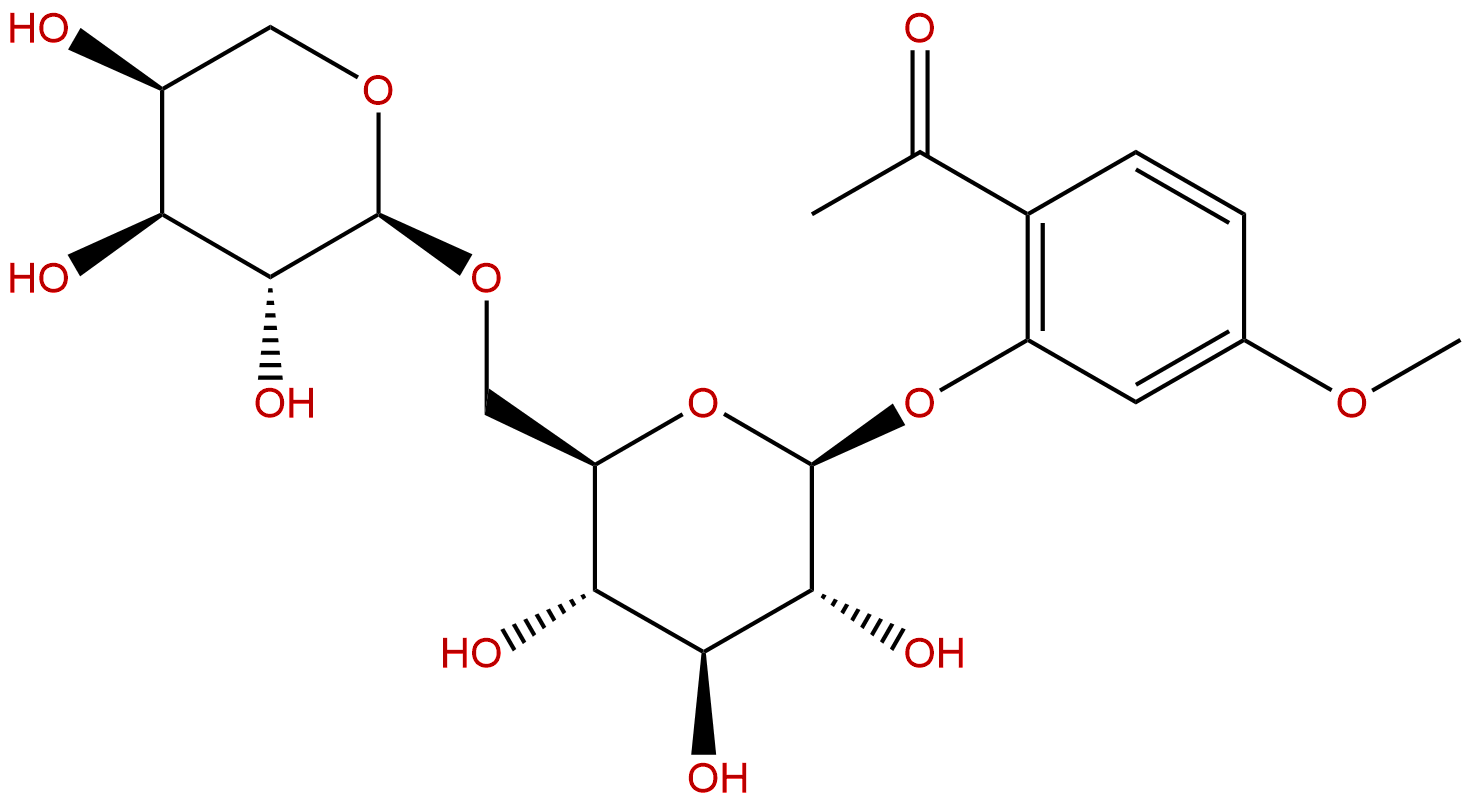
Natural products have always been an important source of innovative drug discovery, among which glycoside compounds have attracted much attention due to their broad biological activity and relatively low toxicity. Paeonolide, as a traditional Chinese medicine derived from Paeonia genus(Paeonia)Plant glycosides isolated from plant roots have gradually entered the field of pharmacology researchers in recent years. Its CAS number is 72520-92-4, and its chemical structure is composed of Paeonol as a glycoside, connected to a non reducing terminal alpha-1-arabinopyranose group. This unique glycosylation modification may have profound effects on its biological activity, solubility, and metabolic characteristics. Peony plants, such as peony bark(P. suffruticosa)And red peony(P. lactiflora)In traditional Chinese medicine clinical practice, it is often used to clear heat, cool blood, promote blood circulation, and remove blood stasis, and has a long history of treating cardiovascular related diseases. As one of its characteristic active ingredients, paeonol has been widely studied for its anti-inflammatory, antioxidant, and cardiovascular protective effects. However, as a precursor glycoside of paeonol, the direct pharmacological activity of paeonol glycoside itself and its value as a "prodrug" converted into paeonol through metabolism in vivo are becoming new research hotspots. In particular, modern pharmacological research has preliminarily revealed the enormous potential of paeoniflorin in cardiovascular protection, involving multiple key links such as endothelial function, lipid metabolism, inflammatory response, and vascular tension regulation. Its action network covers multiple key molecular targets such as SELP, HMGCR, PPARG, ACE, AKT1, NOS3, ICAM1, VCAM1, etc. This article aims to systematically review the chemical properties, plant sources, pharmacological activities, mechanisms of action, pharmacological evaluation, and clinical application prospects of paeonol glycoside, in order to provide comprehensive scientific references for the deep development and utilization of this natural product.
Chemical structure and physicochemical properties
The chemical name of paeonol glycoside is 2-hydroxy-4-methoxyphenyl - α - L-arabinopyranoside. Its molecular formula is C19H24O12 and its molecular weight is 460.4320. Structurally, it consists of two parts: the glycoside part is paeonol (2-hydroxy-4-methoxyacetophenone), which is a simple phenolic compound; The sugar moiety is an α - L-arabinopyranose, which is connected to the phenolic hydroxyl group of paeonol through glycosidic bonds, and the arabinose is a non reducing terminal. This glycosidic structure significantly alters the physicochemical properties of paeonol.
In terms of physical and chemical properties, the introduction of glycosides greatly enhances the hydrophilicity of the molecule. The calculated lipid water partition coefficient (LogP) is -0.8232, indicating that it has good hydrophilic properties. The topologically polar surface area (TPSA) is as high as 184.6000 Å ², mainly attributed to the numerous oxygen atoms (sugar and phenolic hydroxyl groups) in the molecule, further confirming its strong polarity. The theoretically calculated water solubility value is 28.5212mg/L, indicating that it has moderate solubility in water, which is superior to its glycoside paeonol. These properties determine the distribution characteristics of paeonol glycoside in the body, for example, its predicted blood-brain barrier permeability is "low", which means it is not easy to enter the central nervous system. This may help reduce central nervous system side effects for drugs that mainly act on the peripheral cardiovascular system. In addition, preliminary pharmacological predictions indicate that it has no inhibitory activity on hERG potassium channels (hERG inhibition: no), and the Ames test predicted a value of 0.0, suggesting that it may not have mutagenic risk and providing positive clues for subsequent safety evaluations.
Plant sources and extraction methods
Danpi phenol glycoside mainly comes from the Paeoniaceae family and Paeoniaceae genus(Paeonia)Roots of various plants. Among them, the peony has the highest medicinal value(Paeonia suffruticosa Andrews' root bark (also known as traditional Chinese medicine "peony bark") and peony(Paeonia lactiflora The root of Pall. (also known as traditional Chinese medicine "red peony" or "white peony"). These plants have a wide history of cultivation and application in East Asian countries such as China, Japan, and South Korea. Paeoniflorin glycoside, along with paeonol, paeoniflorin, and oxidized paeoniflorin, constitute the characteristic active ingredient group of Paeonia plants.
The extraction of paeonol glycoside from plant materials usually follows the general extraction and separation process of natural product glycosides. Firstly, crush the dried roots of Paeonia plants. The commonly used extraction solvents are methanol, ethanol, or their aqueous solutions (such as 70% -80% ethanol). Reflux extraction, ultrasound assisted extraction, or microwave-assisted extraction methods are used to efficiently dissolve polar glycosides. After the extraction solution is concentrated under reduced pressure, crude extract is obtained.
The subsequent separation and purification steps are crucial. Crude extracts are usually first subjected to liquid-liquid partitioning using organic solvents such as petroleum ether and ethyl acetate to remove lipophilic impurities. Danpi phenol glycoside mainly exists in the aqueous layer or n-butanol extraction layer. Further purification depends on column chromatography technology, which often uses such fillers as macroporous adsorption resin (such as D101, AB-8), silica gel, reverse silica gel (such as C18) and dextran gel (such as Sephadex LH-20). By gradient elution with different ratios of methanol water or ethanol water, paeonol glycoside can be gradually separated. High performance liquid chromatography (HPLC), especially preparative HPLC, is the ultimate means of obtaining high-purity monomers. In recent years, modern separation techniques such as high-speed countercurrent chromatography have also been applied to the rapid preparation of such compounds. During the extraction process, attention should be paid to controlling temperature and pH to avoid acid hydrolysis or enzymatic hydrolysis of glycosidic bonds and ensure the stability of the target compound.
Pharmacological activity research
Although the pharmacological activity research of paeonol glycoside started relatively late, it has shown various biological effects, especially in the field of cardiovascular and cerebrovascular system protection, with outstanding potential.
1. Cardiovascular protective effect: This is the core activity of paeonol glycoside that has received the most attention. In a variety of animal models (such as isoproterenol induced cardiac hypertrophy rat model, high-fat diet induced atherosclerosis ApoE -/- mouse model), paeonogenin showed significant cardiac protective effects. It can reduce myocardial cell damage, inhibit myocardial fibrosis, and improve heart function. At the vascular level, it can dilate blood vessels and reduce peripheral resistance, which may be related to its impact on the endothelial nitric oxide (NO) pathway and ion channels. In addition, it can also inhibit the abnormal proliferation and migration of vascular smooth muscle cells, which is the key pathological link of atherosclerosis and vascular restenosis.
2. Anti inflammatory and immune regulatory effects: Inflammation is a common pathological basis for cardiovascular diseases, metabolic diseases, and other conditions. Research has shown that paeonol glycoside can significantly inhibit the excessive production of inflammatory mediators (such as IL-6, IL-1 β, TNF - α, PGE2) in macrophages and endothelial cells stimulated by lipopolysaccharide (LPS) or inflammatory factors (such as TNF - α). Its anti-inflammatory effect is stronger than that of simple paeonol, indicating that the glycosylated portion may enhance its binding to certain targets or affect its cellular uptake.
3. Antioxidant and endothelial protective effects: Oxidative stress is the initiating factor of endothelial dysfunction. Danpi phenol glycoside can effectively eliminate free radicals such as DPPH and ABTS, and enhance the activity of intracellular antioxidant enzymes such as superoxide dismutase (SOD) and glutathione peroxidase (GSH Px), while reducing the level of malondialdehyde (MDA). In the endothelial cell injury model, it can alleviate oxidative stress-induced cell apoptosis, maintain endothelial integrity, promote NO production, and improve endothelial dependent vasodilation function.
4. Lipid regulating and anti atherosclerosis effects: In a hyperlipidemia model, paeoniflorin glycoside can reduce serum total cholesterol (TC), triglycerides (TG), and low-density lipoprotein cholesterol (LDL-C) levels, while increasing high-density lipoprotein cholesterol (HDL-C). It can not only regulate blood lipids, but also directly act on atherosclerotic plaque, inhibit the formation of foam cells and inflammatory reaction of vascular intima, stabilize plaque and delay the process of atherosclerosis.
5. Other potential activities: Preliminary studies also suggest that paeonogenin may have neuroprotective, anti diabetes, anti-tumor and other potential activities, but the research in these fields needs to be deepened.
Mechanism of action and molecular targets
The multiple pharmacological activities of paeoniflorin stem from its regulation of complex cellular signaling networks, and its mechanism of action has been extensively studied at the molecular target level. According to existing research, its cardiovascular protective effect is closely related to the following key targets:
1. Endothelial function and inflammation related targets:
- NOS3 (endothelial nitric oxide synthase): Danpi phenol glycoside can activate the PI3K/AKT signaling pathway, promote AKT1 phosphorylation, and further phosphorylate and activate NOS3, increasing the production of NO with vasodilatory and protective effects.
- ICAM1 (intercellular adhesion molecule-1) and VCAM1 (vascular cell adhesion molecule-1): By inhibiting the activation of inflammatory signaling pathways such as NF - κ B, paeoniflorin can downregulate the expression of ICAM1 and VCAM1 on the surface of endothelial cells, reduce the adhesion between white blood cells and endothelial cells, and thus inhibit the infiltration of inflammatory cells into the vascular wall.
- SELP (P-selectin): Similarly regulated by pathways such as NF - κ B, paeoniflorin can inhibit the expression of SELP, block the initial rolling of platelets and white blood cells on activated endothelium, and is an important link in anti thrombotic and anti-inflammatory effects.
2. Lipid metabolism and metabolic regulation targets:
- HMGCR (3-hydroxy-3-methylglutaryl-CoA reductase): This is the rate limiting enzyme for cholesterol synthesis. Danpi phenol glycoside may inhibit the activity of HMGCR directly or indirectly, thereby reducing the synthesis of endogenous cholesterol and exerting a lipid-lowering effect.
- PPARG (Peroxisome proliferator activated receptor gamma): As a nuclear receptor, PPARG is involved in regulating lipid metabolism, glucose homeostasis, and inflammation. Danpi phenol glycoside may act as a regulator of PPARG, enhancing its transcriptional activity, promoting adipocyte differentiation, improving insulin sensitivity, and exerting anti-inflammatory effects.
3. Vascular tone and cardiac electrophysiological related targets:
- ACE (angiotensin converting enzyme): Danpi phenol glycoside may have ACE inhibitory activity, reducing the production of angiotensin II, thereby inhibiting vasoconstriction, aldosterone secretion, and cardiovascular remodeling.
- ADRB2 (β 2-adrenergic receptor): It may affect the relaxation of vascular smooth muscle and cardiac function by regulating the signal transduction of ADRB2.
- KCNH2 (hERG potassium channel): Fortunately, predictions and preliminary experiments have shown that paeoniflorin does not inhibit this channel, reducing its risk of inducing acquired long QT syndrome and apical torsion ventricular tachycardia with cardiac toxicity.
4. Core signaling targets for cell survival and proliferation:
- AKT1 (protein kinase B): AKT1 is a core regulatory factor for cell survival, proliferation, and metabolism. Danpi phenol glycoside activates the PI3K/AKT1 pathway, which not only promotes NOS3 activation but also inhibits the activity of pro apoptotic proteins such as Bad and Caspase-9, thus combating apoptosis of cardiomyocytes and endothelial cells.
In summary, paeoniflorin forms the molecular basis of its cardiovascular protection through multi-target and multi pathway synergistic effects: improving endothelial function (via NOS3, AKT1), inhibiting inflammation and adhesion (via ICAM1, VCAM1, SELP, NF - κ B), regulating lipid metabolism (via HMGCR, PPARG), regulating vascular tone and cardiac function (via ACE, ADRB2), and ensuring cell survival (via AKT1). This "network pharmacology" mode of action is precisely the characteristic of many natural products exerting comprehensive therapeutic advantages.
Evaluation of drug properties and pharmacokinetics
Based on its physicochemical parameters and preliminary biological data, paeonol glycoside has shown certain potential as a drug, but it also faces common problems among glycoside compounds.
Drug Evaluation:
- Advantage: The molecular weight is moderate (460.43), with good water solubility, which is beneficial for the development of formulations such as injections and oral liquids. No hERG inhibition or mutagenicity warning, preliminary safety characteristics are good. Its glycoside structure may act as a "prodrug" and be hydrolyzed by gut microbiota or tissue esterases, releasing active aglycone paeonol, achieving dual or synergistic effects, and may also improve the absorption and distribution characteristics of paeonol itself.
- Challenge: Higher polarity (low LogP, high TPSA) may lead to lower oral bioavailability, which is a common issue faced by most glycosides. The low permeability of the blood-brain barrier is beneficial for central side effects, but it also limits its direct application in central nervous system diseases. Its stability in the gastrointestinal tract, as well as the rate and location of hydrolysis as a prodrug in the body, require further research.
Pharmacodynamics:
At present, there are few reports on the systematic pharmacokinetic studies of paeonol glycoside itself, and the data is mostly inferred based on its aglycone paeonol.
- Absorption: After oral administration, the absorption of paeonol glycoside may be limited in the upper small intestine, but the gut microbiota in the colon is rich in glycoside hydrolases, which may hydrolyze it into paeonol and arabinose, and paeonol is subsequently absorbed. Therefore, its oral bioavailability may depend on the metabolic capacity of the gut microbiota.
- Distribution: After absorption, paeonol glycoside and its metabolite paeonol may be widely distributed in tissues and organs with abundant blood flow, such as the heart, liver, kidneys, etc. Due to its hydrophilicity, the depth of entry into tissues and the amount of entry into the brain may be limited.
- Metabolism: In addition to gut microbiota metabolism, it may undergo phase II metabolic reactions in the liver, such as glucuronic acid binding or sulfation, forming more water-soluble metabolites that are excreted through bile or urine. It is not clear whether paeonol glycoside itself directly participates in metabolic interactions.
- Excretion: It is mainly excreted from urine through the kidneys in the form of metabolites of paeonol, and some may also be excreted from feces through bile.
In the future, specialized radioactive labeling or high-sensitivity LC-MS/MS studies are needed to accurately elucidate the kinetic processes of the prototype drug and its main metabolites of paeoniflorin in vivo.
Clinical application prospects and prospects
As a natural glycoside with clear cardiovascular protective activity, paeonol glycoside has broad clinical application prospects, but solid research work is still needed to pave the way for its transformation.
Potential application directions:
1. Cardiovascular and cerebrovascular disease prevention and treatment drugs/health products: Based on its multiple effects of anti atherosclerosis, anti myocardial ischemia, improving endothelial function, lipid regulation, anti-inflammatory, etc., paeonogenin is expected to be developed for the rehabilitation treatment of coronary heart disease, angina pectoris, myocardial infarction, prevention and treatment of early hypertension and atherosclerosis. It can be used as a supplement or alternative to chemically synthesized drugs, especially for chronic disease patients who require long-term medication, and its multi-target properties may bring more comprehensive benefits.
2. Anti inflammatory adjuvant therapy drugs: Its significant anti-inflammatory activity can be used to treat diseases associated with chronic low-grade inflammation, such as metabolic syndrome, non-alcoholic fatty liver disease, etc.
3. Modernization of Traditional Chinese Medicine and Quality Markers: As one of the characteristic components of Paeonia medicinal herbs (Paeonia bark, Paeonia lactiflora), the content of paeonol glycoside can be used as an important indicator to evaluate the quality of medicinal herbs. In depth research on its synergistic effects with other components such as paeonol and paeoniflorin can help clarify the scientific connotation of traditional Chinese medicine formulas (such as Liuwei Dihuang Wan and Guizhi Fuling Wan) in treating cardiovascular diseases.
Challenges and Prospects Faced:
1. Deepening mechanism of action: At present, most target research is based on network pharmacology prediction and preliminary validation, requiring the use of techniques such as gene knockout/knockdown, surface plasmon resonance, and co crystallization to confirm their direct interactions and precise binding modes with key targets such as PPARG and HMGCR.
2. Optimization of drug properties: In response to the potential low oral bioavailability, new drug delivery systems such as nanoliposomes, solid dispersions, phospholipid complexes, etc. can be explored to improve their solubility and membrane permeability. Reasonable structural modifications can also be made to improve its pharmacokinetic properties while retaining its activity.
3. System preclinical and clinical research: It is necessary to strictly follow the new drug development standards, complete systematic pharmacological (on models closer to human diseases), toxicological (long-term toxicity, reproductive toxicity, etc.), pharmacokinetic studies, and ultimately advance them to clinical trials to verify their safety and effectiveness in humans.
4. Value mining of "prodrug": We should conduct in-depth research on the kinetics and pharmacological relationship of the conversion of paeonol glycoside into paeonol in vivo, and clarify whether its value as a "prodrug" is only to improve the bioavailability of aglycones, or whether its glycoside form itself has unique and irreplaceable activity.
Conclusion
Danpi phenol glycoside, a natural glycoside derived from traditional Chinese medicinal herbs of the Paeonia genus, is gradually moving from an active ingredient in traditional Chinese medicine to the center of modern pharmacological research. Its unique chemical structure endows it with improved solubility and potential multi-target properties. The current research has preliminarily outlined its strong potential in cardiovascular protection, anti-inflammatory, antioxidant and other aspects, and revealed its complex network of action by regulating key targets such as SELP, HMGCR, PPARG, ACE, AKT1, NOS3, etc. Although there may be challenges in drug development, especially in oral absorption, its good safety and clear multi effect pharmacological activity have laid a solid foundation for its subsequent development. In the future, through interdisciplinary cooperation, the molecular mechanism of paeoniflorin will be thoroughly elucidated, its administration strategy will be optimized, and standardized clinical evaluation will be promoted. Danpi glycoside is expected to develop from a potential lead compound into a new type of drug or functional ingredient for the prevention and treatment of cardiovascular and cerebrovascular diseases, a major global health problem, achieving a successful transformation from traditional wisdom to modern medical value.