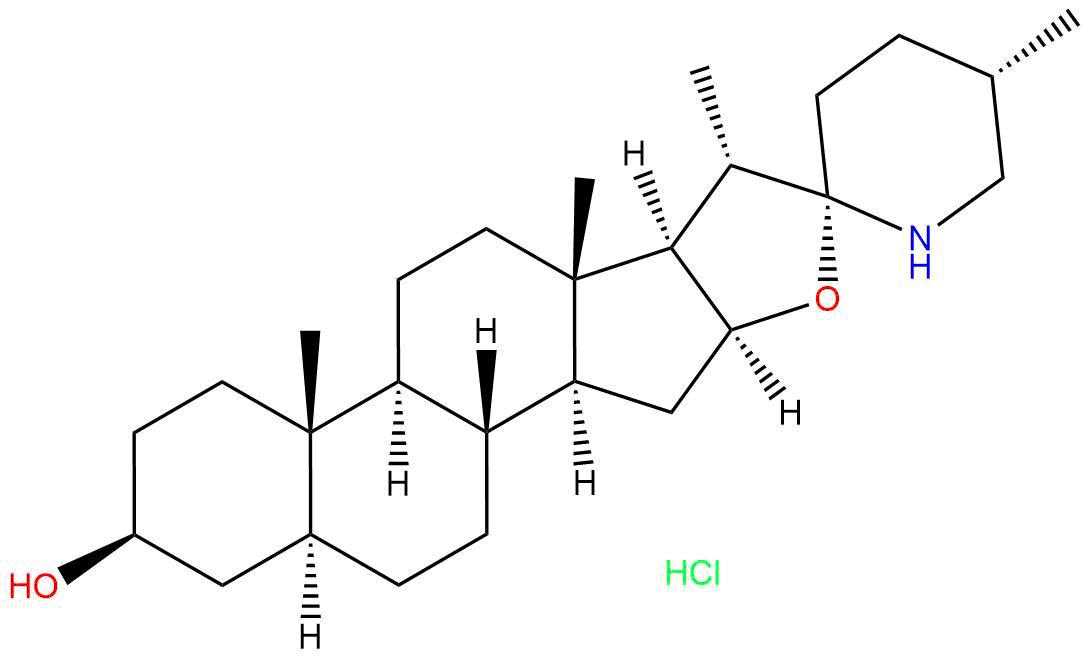


Product name: Tomatidine HCl
Synonym name: Tomatidin hydrochloride;Tomatidine hydrochloride
Catalogue No.: BP1725
Cas No.: 6192-62-7
Formula: C27H46ClNO2
Mol Weight: 452.12
Botanical Source: Lycopersicon esculentum
Physical Description: Powder
Type of Compound: Alkaloids
Purity: 95%~99%
Analysis Method: HPLC-DAD or/and HPLC-ELSD
Identification Method: Mass, NMR
Packing: Brown vial or HDPE plastic bottle
The product could be supplied from milligrams to grams, upto kilograms.
Inquire for bulk scale.
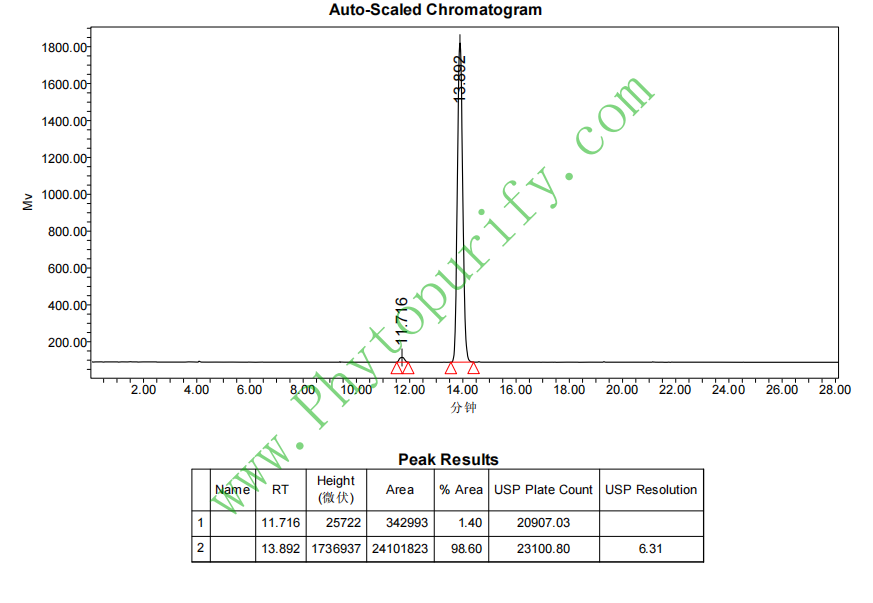
HPLC of Tomatidine HCl
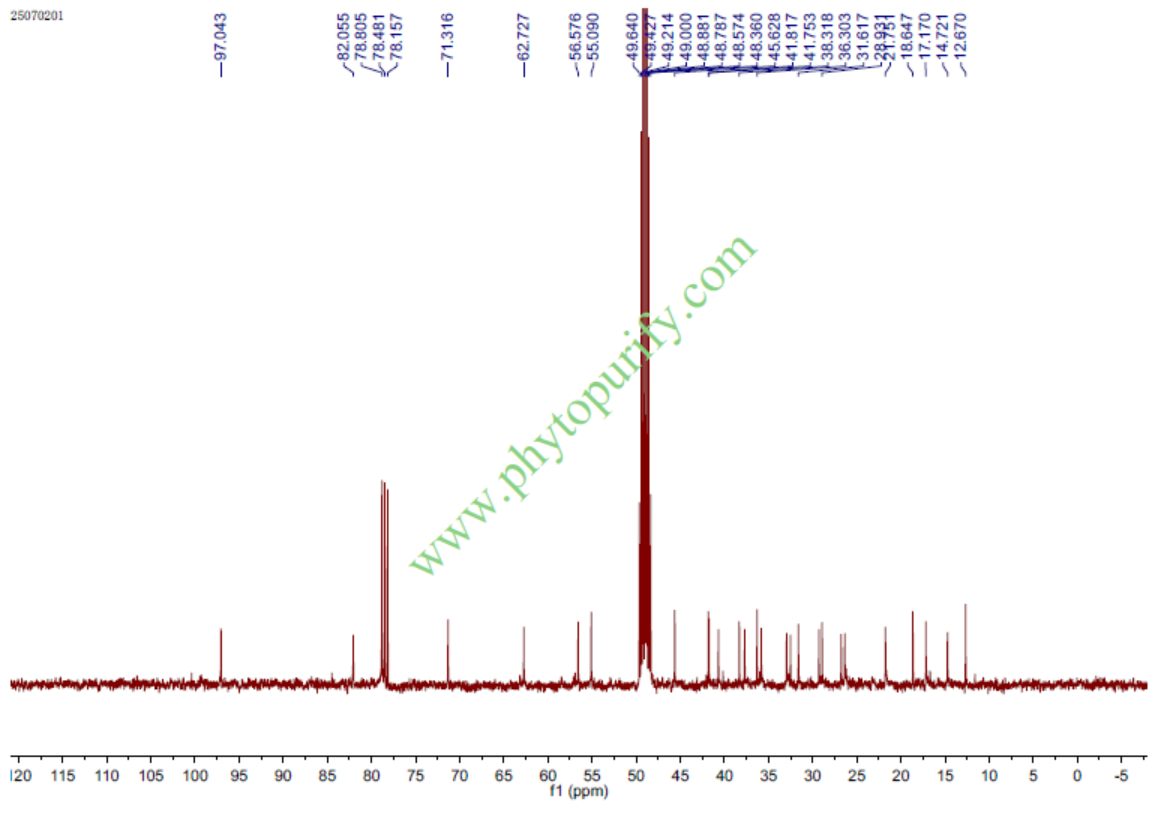
NMR of Tomatidine HCl
Storage conditions:Short-term storage at 2~8℃, long-term storage at -20 ~ -80℃
41.4900
4.9046
3.1609
.0039
3.3896
10.7276
High
80.1881
5.4418
No
No
No
Yes
No
No
0.0
No
No
No
No
Natural products have long been an important source of innovative drug discovery, and their structural diversity and wide range of biological activities provide unique molecular frameworks for addressing complex diseases. Tomatidine is a steroid alkaloid derived from Solanaceae plants, and its hydrochloride form, Tomatidine HCl (CAS: 6192-62-7), has gained increasing attention due to its significant pharmacological activity in various pathological models. Research has shown that lycopene hydrochloride not only exerts core anti-inflammatory effects by blocking the nuclear factor kappa B (NF - κ B) and c-Jun N-terminal kinase (JNK) signaling pathways, but also effectively activates autophagy, a key cellular self-cleaning and homeostasis maintenance process. This phenomenon has been confirmed in mammalian cells and model organism Caenorhabditis elegans. In recent years, its anti-tumor potential, especially in gastric cancer, has been revealed through its regulation BCL2、STAT3、ABCB1、NFE2L2、TOP1、RELA(p65)、MAPK1(ERK2)、CASP9、PIK3CA Intervene in the complex network of tumor cell proliferation, apoptosis, drug resistance, and metastasis by targeting multiple key targets. This article aims to systematically review the chemical properties, plant sources, pharmacological activities, molecular mechanisms of action, medicinal characteristics, and clinical application prospects of lycopene hydrochloride, in order to provide comprehensive academic references for the in-depth development and transformation research of this natural product.
Tomato alkaloids hydrochloride is the hydrochloride form of tomato alkaloids, and its parent nucleus structure is a steroid alkaloid. Its basic skeleton is composed of cyclopentane and perfluorophenanthrene (steroid nucleus) connected to a nitrogen-containing heterocyclic ring (usually spirostane or furan stane type), which gives it a unique spatial conformation and biological activity. The molecular formula is C27H45NO2 · HCl, with a molecular weight of 415.6620.
Its key physicochemical properties directly affect its bioavailability and potential for drug development:
* fat-soluble The calculated LogP value is about 4.90, indicating that the compound has high lipophilicity, which is beneficial for its penetration of cell membranes, but may also limit its dissolution and distribution in aqueous media.
* solubility The low water solubility value (about 0.0039 mg/mL) suggests that although the hydrochloride form has improved some solubility, it is still essentially a poorly soluble compound. This may be one of the main challenges facing its oral bioavailability.
* Polar Surface Area The topological polar surface area (TPSA) is 41.49 Å ², which is relatively small and consistent with the characteristic of easy penetration through biofilms.
* Drug related parameters Preliminary pharmacological evaluation shows that lycopene hydrochloride has a high potential for blood-brain barrier (BBB) penetration, which may provide possibilities for the treatment of central nervous system related diseases. However, it exhibits certain hERG potassium channel inhibitory activity ("yes"), indicating a potential risk of arrhythmia, which is a toxicity issue that needs to be closely monitored in the early stages of drug development. The Ames test result is 0.0, indicating that there is no mutagenicity under the test conditions, which is a positive signal.
These physicochemical properties are the basis for designing its drug delivery system (such as nano formulations, prodrugs, etc.) and optimizing its pharmacokinetic behavior.
Tomato alkaloids are mainly found in Solanaceae plants, especially in tomatoes(Solanum lycopersicum)The content is relatively high in green tissues (stems, leaves, and immature fruits). In the plant body, tomato alkaloids usually exist in the form of glycosides, namely alpha tomatine, which is an important plant antitoxin that can resist pathogens and pests. Alpha tomato alkaloids can hydrolyze and remove sugar chains under acidic conditions or specific glycosidase action, producing glycosylated tomato alkaloids.
Extraction and preparation process Usually includes the following steps:
1. Raw material pretreatment Collect stems, leaves, or immature green fruits from tomato plants, dry them, and crush them.
2. Solvent extraction Methanol, ethanol, or acidic alcohol solutions (such as methanol containing 1% acetic acid) are commonly used for leaching or reflux extraction to fully extract tomato alkaloids and their glycosides.
3. hydrolysis After concentrating the extract, heat it to reflux under acidic conditions (such as dilute hydrochloric acid) to hydrolyze alpha tomato alkaloids into tomato alkaloids.
4. Separation and purification After alkalization of the hydrolysate, tomato alkaloids are extracted using organic solvents such as chloroform and dichloromethane. After concentration of the extract, it can be further purified by techniques such as silica gel column chromatography and preparative high-performance liquid chromatography (HPLC).
5. salt formation Dissolve purified tomato alkaloids in organic solvents, introduce hydrogen chloride gas or add hydrochloric acid to precipitate hydrochloric acid tomato alkaloid crystals. After filtration, washing, and drying, the pure product is obtained.
Modern biotechnology such as plant cell culture and synthetic biology methods have also provided new possibilities for large-scale and sustainable production of tomato alkaloids and their derivatives.
Lycopene hydrochloride exhibits various pharmacological activities, and its research has expanded from traditional antibacterial and anti-inflammatory to fields such as anti-tumor, neuroprotective, and metabolic regulation.
The pharmacological effects of lycopene hydrochloride are achieved by intervening in multiple signaling pathways and molecular targets, forming a multi-target, networked mode of action.
Core anti-inflammatory mechanism:
* NF - κ B signaling pathway blockade NF - κ B is the core transcription factor of inflammatory response. Lycopene hydrochloride can inhibit the activity of I κ B kinase (IKK), prevent the phosphorylation and degradation of I κ B α, and thus retain NF - κ B (especially its subunit RELA/p65) in the cytoplasm, preventing it from entering the nucleus to initiate the transcription of inflammatory genes such as TNF - α and IL-6.
* JNK signaling pathway inhibition JNK is a key kinase involved in stress and inflammatory responses. Lycopene hydrochloride can inhibit the phosphorylation activation of JNK, thereby reducing the activation of its downstream target c-Jun and downregulating the expression of AP-1 mediated inflammatory genes. The dual inhibition of NF - κ B and JNK pathways is the basis for its potent anti-inflammatory effect.
Autophagy activation mechanism:
Lycopene hydrochloride activates autophagy by inhibiting the mTORC1 (mammalian rapamycin target protein complex 1) signaling pathway. MTORC1 is a major negative regulator of cell growth and metabolism, as well as a key inhibitory switch for autophagy. Lycopene hydrochloride may inhibit mTORC1 by affecting upstream signals such as AMPK activation or reduced growth factor signaling, thereby releasing its inhibition of autophagy initiation complex (ULK1/2) and initiating autophagosome formation.
Multi target action network in gastric cancer:
Research on gastric cancer has revealed its complex network of action:
* Inducing apoptosis: Through Downregulation of anti apoptotic protein BCL2 The expression of, disrupts mitochondrial membrane potential, promotes cytochrome C release, and subsequently Activate CASP9 (cysteine protease-9) And its downstream apoptotic executors.
* Inhibition of proliferation and survival signals: Inhibition STAT3 Phosphorylation and nuclear translocation of cells block the transcription of genes that drive cell proliferation, survival, and angiogenesis. Meanwhile, it can also have an impact MAPK1(ERK2) and PIK3CA (PI3K catalytic subunit) Related survival signals.
* Reverse multidrug resistance By inhibiting ABCB1 (P-glycoprotein) Reduce the expression or function of chemotherapy drugs by reducing their efflux from tumor cells, thereby reversing drug resistance.
* Regulating oxidative stress and DNA damage: Impact NFE2L2(NRF2) Pathways regulate the antioxidant response of cells. At the same time, it may affect TOP1 (Topoisomerase I) Wait for the target to interfere with DNA replication and repair.
* synergistic effect The above targets are not isolated, but intertwined with each other. For example, inhibition of NF - κ B can downregulate the activity of BCL2 and STAT3; The activation of autophagy may promote the death of drug-resistant cells or protect normal cells from chemotherapy damage.
Despite the broad pharmacological activity of tomato alkaloids hydrochloride, their drug likeness still faces challenges and requires systematic pharmacokinetic (PK) and toxicological evaluation.
Absorption, distribution, metabolism, excretion (ADME):
Security Warning:
Formulation strategy To improve its water solubility and bioavailability, advanced drug delivery technologies such as nanocrystals, liposomes, polymer micelles, cyclodextrin inclusion complexes, etc. can be considered. The synthesis of better water-soluble prodrugs or structural modification to reduce hERG inhibitory activity is also an important optimization direction.
The clinical application prospects of lycopene hydrochloride are broad, but the road is long and requires exploration and breakthroughs from multiple dimensions.
Disease treatment field:
Research and Development Challenges and Strategies:
Future direction In addition to being developed as a single drug entity, lycopene hydrochloride can also serve as a chemical probe for studying the interactions between life processes such as autophagy, inflammation, and tumors. Its role in promoting healthy aging and extending healthy lifespan is also becoming an emerging research hotspot.
As a natural steroidal alkaloid derived from tomatoes, lycopene hydrochloride exhibits pharmacological potential in various aspects, including anti-inflammatory, anti-tumor, and neuroprotective effects, due to its unique dual inhibition of NF - κ B/JNK and autophagy activation core mechanism, as well as targeting multi-target intervention networks such as gastric cancer. Its clear chemical structure, traceable plant origin, and increasingly clear molecular mechanisms have laid a solid foundation for its deep development. However, its inherent drug-induced defects, particularly poor water solubility and potential hERG cardiac toxicity, are key obstacles between laboratory research and clinical translation. Future research should focus on overcoming these bottlenecks through rational structural modifications, innovative formulation strategies, and systematic preclinical safety evaluations. At the same time, we will further explore its role sites in complex disease networks, clarify its optimal treatment window and applicable population. The research process of lycopene hydrochloride is a typical epitome of the transformation of natural products into modern innovative drugs, and its subsequent development deserves continuous attention and collaborative research in the fields of pharmacology, medicinal chemistry, and clinical medicine.
