


Synonym name: Monocrotalin; Crotaline
Catalogue No.: BP0957
Cas No.: 315-22-0
Formula: C16H23NO6
Mol Weight: 325.361
Botanical Source: Alkaloid from Crotalaria retusa, Crotalaria spectabilis, Crotalaria aegyptiaca, Crotalaria burhia and Lindelofia spectabilis (Leguminosae, Boraginaceae)
Purity: 99%
Analysis Method: HPLC-DAD or/and HPLC-ELSD
Identification Method: Mass, NMR
Packing: Brown vial or HDPE plastic bottle
Can be supplied from milligrams to grams, up to kilograms.
Inquire for bulk scale.
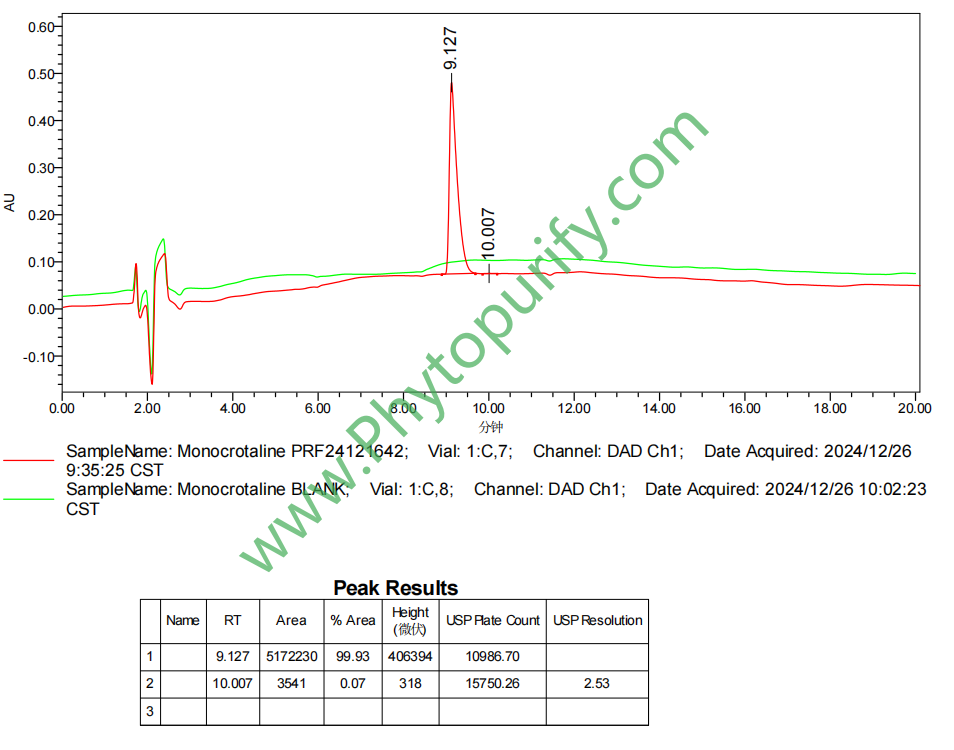
HPLC of Monocrotaline
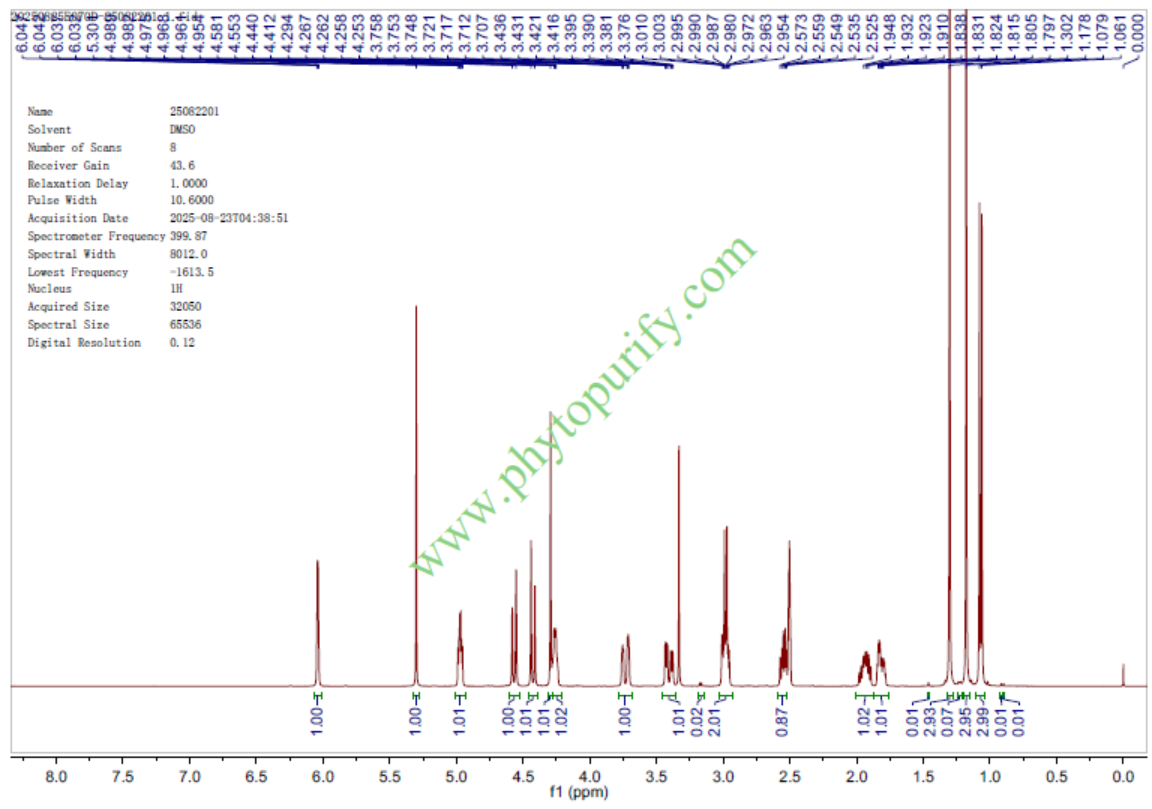
HNMR of Monocrotaline
Storage conditions:Short-term storage at 2~8℃, long-term storage at -20 ~ -80℃
96.3000
-.1084
-.1818
11.1771
.9737
7.3673
High
15.9430
5.0427
Yes
No
No
No
Yes
No
0.6
Yes
No
Yes
Yes
Natural products, as an important source of drug discovery, play an irreplaceable role in the long struggle between humans and diseases. Pyrrolizidine Alkaloids (PAs) are a class of secondary metabolites widely distributed in the plant kingdom, known for their significant hepatotoxicity and pulmonary toxicity, as well as their unique chemical structure and diverse biological activities. Among numerous PAs, monocrotaline (MCT), as a typical 11 membered macrocyclic pyrrolizidine alkaloid, has become a classic model compound in the field of natural product pharmacology research due to its unique pharmacological and toxicological properties.
Wild lily alkaloids were originally derived from the leguminous plant Pachycephalon genus(Crotalaria)Separation and identification in the middle, hence its name. The most striking feature of this compound lies in its duality: on the one hand, it exhibits certain anti-tumor activity, is cytotoxic to specific tumor cell lines, and can exert potential therapeutic effects by inhibiting various signaling pathways and targets closely related to tumor occurrence and development (such as MCL1, BCL2, STAT3, MMP2, TOP1, HIF1A, etc.); On the other hand, it is also a well-known hepatotoxic and pulmonary toxic substance, especially in rodents, where single or multiple doses can stably and repeatedly induce patterns highly similar to the pathological characteristics of certain pulmonary arterial hypertension (PAH) in humans. This characteristic makes wild lily alkaloids an indispensable tool for studying the pathogenesis, pathophysiological processes, and evaluating potential therapeutic drugs of PAH.
From the perspective of drug development, the molecular weight of wild lily alkaloids (325.36 Da) meets the basic requirements of small molecule drugs, but their low lipid solubility (LogP of -0.1084) and high polar surface area (TPSA of 96.30 Å ²) suggest good water solubility but limited membrane permeability. It is worth noting that its blood-brain barrier penetration has been assessed as' high ', suggesting a potential risk of neurotoxicity. In addition, the Ames test result was 0.6, indicating its potential genetic toxicity. These physicochemical properties and safety characteristics together constitute the main obstacles for the development of wild lily alkaloids as candidate compounds for drug development, and explain why their research focus has shifted more towards toxicological models rather than direct therapeutic applications.
This article aims to comprehensively review the chemical structure, plant origin, pharmacological activity, mechanism of action, pharmacological evaluation, and clinical application prospects of wild lily alkaloids, in order to provide a systematic reference for a deeper understanding of the scientific connotation of this classic natural product.
The chemical structure of wild lily alkaloids is the basis for all their biological activities and toxicity. It belongs to the macrocyclic pyrrolizidine alkaloid, and its core skeleton consists of a saturated pyrrolizidine ring (composed of two fused pyrrolidine rings) and a dicarboxylic acid (monocrotalic acid) connected by two ester bonds to form an 11 membered macrocycle. This unique diester macrocycle structure is the structural basis for significant hepatotoxicity and genotoxicity in PAs, as it can be metabolized and activated by cytochrome P450 enzymes (mainly CYP3A4) in vivo to form highly reactive pyrrole metabolites (dehydropyrrolizidine alkaloids), which can covalently bind to biomolecules such as proteins, DNA, and RNA, leading to cell damage and gene mutations.
From the perspective of physical and chemical properties, the molecular formula of wild lily alkaloid is C ₁₆ H ₂∝ NO ₆, with an accurate molecular weight of 325.3610 g/mol. The oil-water partition coefficient LogP is -0.1084, indicating that the compound has hydrophilicity and good solubility in water (water solubility parameter is 11.1771). This characteristic is consistent with the presence of multiple polar groups such as hydroxyl and ester groups in its molecular structure. Higher water solubility is beneficial for its absorption and distribution in the body, but it may also limit its ability to passively diffuse through the cell membrane. Its topological polar surface area (TPSA) is 96.30 Å ², which is higher than the threshold for most drugs that can be well absorbed orally (usually considered TPSA<140 Å ²), indicating that it may have some oral absorption barriers. In addition, the compound is predicted to have high blood-brain barrier penetration, which is related to its small molecular weight and certain lipid solubility (although LogP is negative, the macrocyclic structure may give it some membrane penetration ability), but also increases the risk of central nervous system toxicity. In terms of safety prediction, the inhibitory risk of wild lily alkaloids on hERG potassium channels is "no", indicating a low risk of causing QT interval prolongation and arrhythmia in the heart. However, the Ames test result was 0.6, which is a critical value between negative and positive, clearly indicating its potential mutagenicity, which is highly consistent with the ability of pyrrole metabolites to covalently bind to DNA.
Wild lily alkaloids mainly come from Fabaceae, a genus in the legume family(Crotalaria)Plants. There are over 600 species of this genus of plants worldwide, widely distributed in tropical and subtropical regions. Many species are used in traditional medicine, but are also considered toxic plants due to their presence of PAs. among which,Crotalaria spectabilis(Beautiful Pig Shit Beans) and Crotalaria retusa(Aoye Pig Shit Bean) is a classic source for extracting wild lily alkaloids. In addition, the presence of wild lilies or their analogues can also be detected in some plants of the Boraginaceae and Asteraceae families, but the content is usually low. The content of wild lily alkaloids in plants is influenced by various factors, including species, growth stage, geographical environment, harvesting time, etc., with the highest content usually found in seeds.
The traditional method for extracting alkaloids from wild lilies is mainly based on the principle of acid-base extraction of alkaloids. The basic process includes: percolating or soaking dried and crushed plant materials (usually seeds or whole plants) in an acidic aqueous solution (such as 0.5-2% sulfuric acid or hydrochloric acid) to dissolve alkaloids into salts. After filtration, alkalize the acidic extract (such as adjusting the pH to 9-10 with ammonia or sodium hydroxide) to precipitate free alkaloids, and then repeatedly extract with organic solvents (such as chloroform, dichloromethane, or ethyl acetate). Combine the organic phases, dry with anhydrous sodium sulfate, and concentrate under reduced pressure to obtain the crude extract of total alkaloids. Subsequently, modern chromatographic techniques such as silica gel column chromatography, preparative thin-layer chromatography, or high performance liquid chromatography (HPLC) were used to separate and purify the monocotyledonous compound using a suitable solvent system (such as chloroform methanol ammonia system), ultimately obtaining high-purity monocotyledonous compound. In recent years, with the promotion of green chemistry concepts, some more environmentally friendly and efficient extraction techniques have also been explored, such as supercritical fluid extraction (SFE-CO ₂), ultrasound assisted extraction, and microwave-assisted extraction. These methods improve extraction efficiency and purity while reducing the use of organic solvents.
The pharmacological activity research of wild lily alkaloids mainly focuses on its anti-tumor activity and model effect of inducing pulmonary arterial hypertension.
1. Antitumor activity
Early studies have found that wild lily alkaloids exhibit cytotoxicity towards various tumor cell lines. Its anti-tumor activity is believed to be related to the pyrrole metabolites formed after metabolic activation, which can alkylate DNA, interfere with DNA replication and transcription, and thus inhibit tumor cell proliferation. In recent years, research has further revealed the molecular mechanism of its anti-tumor effect. For example, wild lily alkaloids can induce tumor cell apoptosis by downregulating the expression of anti apoptotic proteins MCL1 and BCL2, while upregulating the expression of pro apoptotic proteins. It can also inhibit phosphorylation of the STAT3 signaling pathway, thereby blocking cell proliferation, survival, and angiogenesis mediated by this pathway. In addition, the inhibitory effect of wild lily alkaloids on matrix metalloproteinase MMP2 suggests their potential for anti-tumor invasion and metastasis. The inhibition of topoisomerases TOP1 and TOP2A directly interferes with the topological structure of DNA, affecting DNA replication and repair. Inhibition of HIF1A may exert anti angiogenic effects by affecting the hypoxic response in the tumor microenvironment. The effects on MAPK1 (ERK2), ESR1 (estrogen receptor α) and CYP19A1 (aromatase) suggest that it may have potential application value in some hormone dependent tumors (such as breast cancer). However, it is worth noting that these anti-tumor activities are often accompanied by significant systemic toxicity, especially hepatotoxicity and pulmonary toxicity, and their therapeutic window is very narrow, greatly limiting their direct clinical application as anticancer drugs.
2. Induced pulmonary arterial hypertension model
The most well-known application of wild lily alkaloids in pharmacology is as a tool drug for inducing pulmonary arterial hypertension models in rodents, mainly rats. A single subcutaneous or intraperitoneal injection of a certain dose of wild lily alkaloid (usually 50-60 mg/kg) can successfully induce a model highly similar to the pathological characteristics of human PAH within 2-4 weeks. This model exhibits typical features such as sustained increase in pulmonary artery pressure, right ventricular hypertrophy, pulmonary vascular remodeling (including media thickening, intimal hyperplasia, and plexiform lesions), and infiltration of inflammatory cells. The mechanism is that after being metabolized and activated by CYP3A4 in the liver, the active metabolites of wild lily alkaloids reach the lungs through blood circulation, selectively damaging pulmonary vascular endothelial cells, causing endothelial dysfunction, inflammatory reactions, and abnormal proliferation of vascular smooth muscle cells, ultimately leading to pulmonary vascular remodeling and pulmonary arterial hypertension. This model has become one of the most commonly used in vivo models for studying the pathogenesis of PAH, screening and evaluating anti PAH drugs (such as endothelin receptor antagonists, phosphodiesterase-5 inhibitors, prostacyclin analogs, etc.) due to its simple operation, low cost, and good reproducibility.
The mechanism of action of wild lily alkaloids is complex, and its core lies in the toxic mechanism after metabolic activation, as well as the multi-target effects triggered by it.
1. Metabolic activation and toxicity mechanism
Wild lily alkaloid itself is a protoxin, and its toxicity mainly originates from metabolic activation in the liver. After entering the body, oxidation reactions mainly occur under the catalysis of cytochrome P450 enzymes (mainly CYP3A4, CYP3A2 in rodents) in liver cell microsomes, generating highly reactive dehydropyrrolizidine alkaloids (such as dehydromonocrotaline). This pyrrole metabolite is a strong electrophilic reagent, and its double bond structure in the molecule easily covalently binds with nucleophilic groups in biomolecules, such as cysteine thiol and lysine amino groups in proteins, as well as the guanine N7 site in DNA, forming adducts. This covalent modification can lead to protein dysfunction, DNA damage (such as chain breakage and cross-linking), lipid peroxidation, and depletion of glutathione, ultimately causing liver cell necrosis, venous occlusive disease (VOD), and subsequent pulmonary vascular damage.
2. Molecular target network
The molecular targets affected by wild lily alkaloids and their active metabolites are very broad, forming a complex network. In terms of anti-tumor effects, its targets include:
- Apoptosis regulatory protein:MCL1, BCL2。 Inhibit these anti apoptotic proteins and promote cell apoptosis through the mitochondrial pathway.
- signal transducing molecule:STAT3, MAPK1 (ERK2)。 Inhibit the STAT3 and ERK signaling pathways, block cell proliferation and survival signals.
- transcription factor:HIF1A。 Inhibit hypoxia inducible factors and reduce the expression of angiogenic factors such as vascular endothelial growth factor (VEGF).
- Matrix remodeling enzyme:MMP2。 Inhibit matrix metalloproteinases, reduce extracellular matrix degradation, and inhibit tumor invasion and metastasis.
- DNA Topoisomerase:TOP1, TOP2A。 Interference with DNA topology, inhibition of DNA replication and transcription.
- Hormone related targets:ESR1, CYP19A1。 May intervene in hormone dependent tumors by affecting estrogen signaling and aromatase activity.
In the induced pulmonary arterial hypertension model, the key targets are mainly located in the pulmonary vessels:
- vascular endothelial cell Active metabolites directly damage endothelial cells, leading to endothelial dysfunction, reduced synthesis of nitric oxide (NO) and prostacyclin (PGI2), and increased release of endothelin-1 (ET-1).
- vascular smooth muscle cell After endothelial injury, the released growth factors (such as PDGF, FGF) and inflammatory factors (such as IL-6, TNF - α) stimulate abnormal proliferation and migration of smooth muscle cells, leading to thickening of the media.
- inflammatory cells Wild lily alkaloids can activate inflammatory cells such as macrophages and T cells, release a large amount of inflammatory mediators, and exacerbate vascular inflammation and remodeling.
- ion channel Studies have shown that monocrotaline may affect the function of potassium channels (such as Kv channels) on pulmonary vascular smooth muscle cells, leading to depolarization of membrane potential, promoting calcium ion influx, and causing vascular constriction.
The pharmacological evaluation results of wild lily alkaloid clearly reveal its enormous challenges as a therapeutic drug.
1. Analysis of pharmacological parameters
According to the provided pharmacological parameters, the molecular weight of wild lily alkaloids (325.36 Da) conforms to the Lipinski five rule (<500 Da). But its LogP is -0.1084, far below the ideal range (0-3), indicating that its hydrophilicity is too strong and its lipophilicity is insufficient, which is not conducive to its penetration of cell membranes through passive diffusion and may lead to low oral bioavailability. Its TPSA is 96.30 Å ², which is lower than the threshold of 140 Å ² but close to the upper limit, indicating that it may not be a substrate for P-glycoprotein (P-gp), but its membrane permeability may still be limited. Good water solubility (11.18) is its advantage, which is beneficial for formulation development. However, high blood-brain barrier penetration (predicted value) is a serious negative signal, indicating a potential risk of neurotoxicity. The most critical obstacles are its genetic toxicity (Ames test positive) and known hepatopulmonary toxicity, which makes its treatment window extremely narrow and poses a high safety risk. Therefore, wild lily alkaloids themselves do not have the basic conditions to become clinical drugs.
2. Pharmacokinetic characteristics
The pharmacokinetic study of wild lily alkaloids is mainly based on animal experiments. After oral administration, it is rapidly but incompletely absorbed in the gastrointestinal tract, with significant first pass effects. After intravenous or intraperitoneal injection, the drug rapidly distributes to various tissues throughout the body, with the liver being its main metabolic organ. As mentioned earlier, it is metabolized and activated by CYP3A4 in the liver, producing more toxic dehydrometabolites. Some of these metabolites are detoxified by binding with glutathione in the liver, while others enter the systemic circulation and reach target organs such as the lungs and kidneys. Wild lily alkaloids and their metabolites are mainly excreted through bile and urine. Its half-life is relatively short, but the covalent binding of active metabolites to tissue proteins may lead to the persistence of its toxic effects. It is worth noting that different species have significant differences in sensitivity to wild lily alkaloids, with rats and guinea pigs being highly sensitive, while mice and hamsters are relatively tolerant, which is related to differences in liver CYP enzyme activity and detoxification ability among different species.
Given the significant toxicity and narrow therapeutic window of wild lily alkaloids, their direct use as clinical therapeutic drugs has extremely limited prospects. However, this does not mean the end of its scientific value and application prospects. On the contrary, based on a deep understanding of its structure and mechanism, wild lily alkaloids still have important application prospects in the following fields:
1. Value as a research tool
The pulmonary arterial hypertension model induced by monocrotaline is its most core and mature application in biomedical research. This model provides an irreplaceable in vivo platform for understanding the pathogenesis of PAH, exploring new therapeutic targets (such as BMPR2 signaling pathway, Notch signaling pathway, epigenetic regulation, etc.), and evaluating novel anti PAH drugs (such as Rho kinase inhibitors, tyrosine kinase inhibitors, gene therapy vectors, etc.). In the future, by combining gene editing technologies such as CRISPR-Cas9 and advanced imaging techniques, this model will help to more accurately analyze the cellular and molecular mechanisms of PAH.
2. Structural modification and new drug discovery
The unique macrocyclic structure and anti-tumor active skeleton of wild lily alkaloids provide inspiration for structural modification for medicinal chemists. By modifying its core structure, such as:
- Reduce toxicity Modify the diester bond on the macrocycle to make it less susceptible to metabolic activation, or introduce protective groups to reduce the generation of pyrrole metabolites.
- Improve selectivity By optimizing its structure, it enhances its selectivity towards specific tumor targets (such as TOP1, STAT3) while reducing toxicity to normal liver and lung tissues.
- Prodrug design Designed as a prodrug that is specifically activated only in the tumor microenvironment, achieving targeted release and reducing systemic toxicity.
These strategies are expected to develop novel anti-tumor candidate compounds with better therapeutic indices.
3. Model compounds for toxicology research
Wild lily alkaloid is a classic model compound for studying the hepatotoxicity, pulmonary toxicity, and genotoxicity of pyrrolizidine alkaloids. In depth research on its toxicity mechanism, especially the formation, identification, and repair processes of its active metabolites and protein and DNA adducts, has important reference value for evaluating the food safety risks of other PAs, establishing biomarkers for PAs exposure, and developing relevant safety standards.
Wild lily alkaloid, an 11 membered macrocyclic pyrrolizidine alkaloid derived from plants, has left a profound mark in the history of natural product research due to its unique chemical structure and dual pharmacological and toxicological properties. It is not only a natural product with anti-tumor activity, but also an indispensable classic tool for studying pulmonary arterial hypertension. The core of its mechanism of action lies in the strong electrophilic pyrrole metabolites produced after liver metabolic activation. These metabolites covalently modify various biomolecules, causing complex signal network disorders, ultimately leading to liver toxicity and pulmonary vascular damage. Despite its extremely poor medicinal properties, Ames test positivity, high blood-brain barrier penetration, and known severe toxicity, it cannot be used as a clinical drug. However, as a double-edged sword, the value of wild lily alkaloids lies precisely in the scientific connotation and application transformation of its toxicity mechanism. In the future, research on wild lily alkaloids will continue to deepen. On the one hand, it will be used to induce disease models to promote understanding and drug discovery of complex diseases such as pulmonary arterial hypertension. On the other hand, it will be used as a lead compound to explore the possibility of developing new anti-tumor drugs through rational structural modification and targeted delivery strategies. The story of wild lily alkaloids is a vivid example of the dialectical relationship between "poison" and "medicine" in natural product research, reminding us to not only respect the power of nature, but also be good at exploring new scientific knowledge from it.
