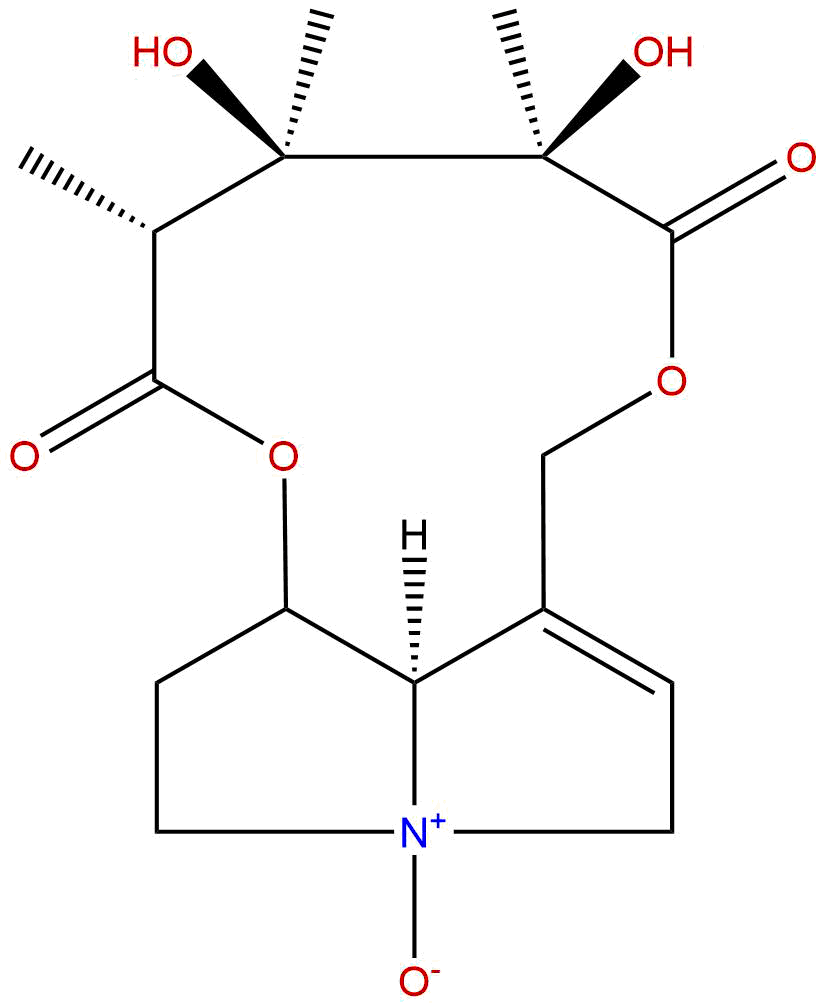


Product name: Monocrotaline N-Oxide
Synonym name: Monocrotaline Oxide
Catalogue No.: BP4091
Cas No.: 35337-98-5
Formula: C16H23NO7
Mol Weight: 341.36
Botanical Source: Crotalaria pallida Ait.
Physical Description:
Type of Compound: Alkaloids
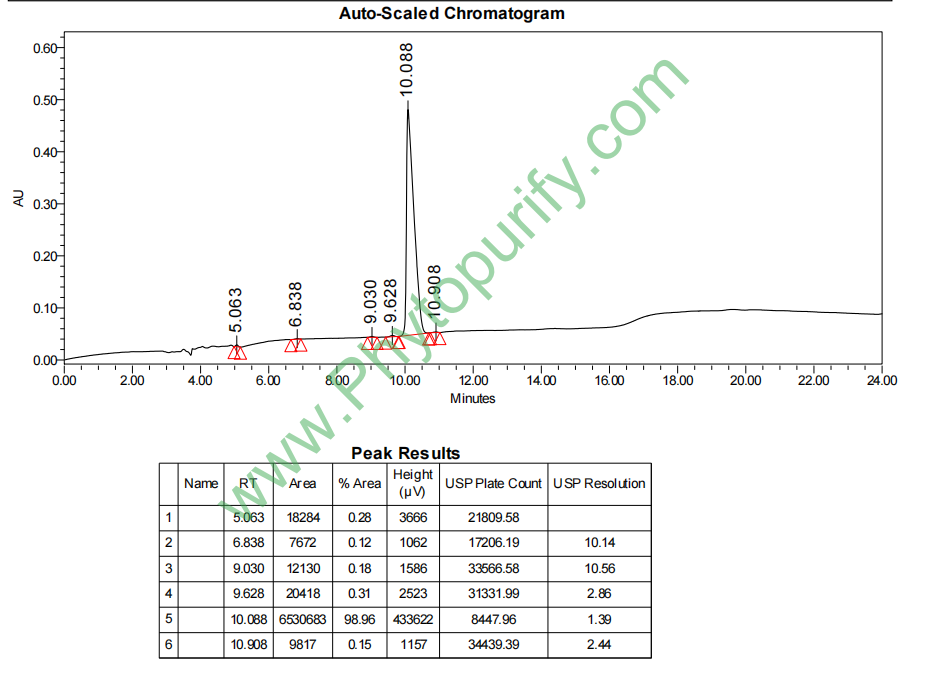
Purity: 95%~99%
Analysis Method: HPLC-DAD or/and HPLC-ELSD
Identification Method: Mass, NMR
Packing: Brown vial or HDPE plastic bottle
Storage: Store in a well closed container, protected from air and light. Put into refrigerate or freeze for long term storage.
Whenever possible, you should prepare and use solutions on the same day. However, if you need to make up stock solutions in advance, we recommend that you store the solution as aliquots in tightly sealed vials at -20℃. Generally, these will be useable for up to two weeks.
The product could be supplied from milligrams to grams
Inquire for bulk scale.
For Reference Standard and R&D, Not for Human Use Directly.
HPLC of Monocrotaline N-Oxide
Storage conditions:Short-term storage at 2~8℃, long-term storage at -20 ~ -80℃
116.1200
-1.1823
-1.1829
198.2762
.8573
2.9016
Low
36.2828
5.7106
Yes
No
No
No
Yes
No
0.9
Yes
No
Yes
Yes
Monocrotaline N-Oxide (MCT-NO) is a metabolite derived from the natural product Monocrotaline (MCT). MCT, as a typical pyrrolizidine alkaloid, mainly exists in Convolvulaceae plants and has attracted much attention due to its significant biological activity and toxicological properties. MCT-NO, as an oxidative metabolite of MCT, has gradually demonstrated its unique biological functions in pharmacological research in recent years, especially its potential application value in the field of anti-tumor. It can induce the formation of DNA adducts in vivo, suggesting that it may exert cytotoxicity through interaction with genetic material, thereby affecting the growth and apoptosis of tumor cells.
This article aims to systematically review the chemical structure and physicochemical properties, plant sources and extraction methods, pharmacological activity and mechanism of action of MCT-NO, with a focus on exploring its molecular targets and drug evaluation in the field of anti-tumor. Combined with the latest pharmacokinetic data, it analyzes its clinical application prospects and development trends. By comprehensively reviewing relevant literature and experimental data, we provide scientific references for researchers in natural product pharmacology and promote the in-depth development of MCT-NO related drugs.
The molecular formula of MCT-NO is C15H21N3O5, with a molecular weight of 341.36 and a CAS number of 35337-98-5. Its chemical structure is based on the pyrrolizidine skeleton of MCT, characterized by the presence of an N-oxide functional group, which significantly affects the polarity and electron distribution of the molecule. The LogP value of MCT-NO is -1.1823, indicating that it has high hydrophilicity and a water solubility of 198.2762 mg/mL, demonstrating good water solubility. This has positive implications for the in vivo absorption and distribution of drugs. Its topological polar surface area (TPSA) is 116.12 Å ², indicating that the molecule has strong polar groups that facilitate binding with biomolecules such as proteins and DNA.
From a molecular structure perspective, the presence of N-oxide not only changes the electron cloud density of the molecule, but may also affect its binding mode and affinity with target proteins. In addition, MCT-NO has low blood-brain barrier permeability, reducing the potential toxicity risk to the central nervous system. The hERG inhibition test result was negative, indicating a low risk of cardiac toxicity. The Ames test score was 0.9, suggesting low mutagenicity and good safety basis.
MCT and its metabolites mainly come from plants in the Convolvulaceae family, especially from the genus Crotalaria spp., such as Crotalaria spectabilis and Crotalaria retusa. This type of plant is widely distributed in tropical and subtropical regions and has traditionally been used in folk herbal medicine to treat various diseases. However, the toxicity of its pyrrolizidine alkaloids limits its direct application.
MCT-NO, as a metabolite of MCT, naturally exists in low levels and is usually obtained through in vitro biotransformation or chemical synthesis. Traditional extraction methods include organic solvent extraction, liquid-liquid distribution, and column chromatography purification. In recent years, supercritical CO2 extraction and high-performance liquid chromatography (HPLC) techniques have been widely used to improve extraction purity and yield. To obtain MCT-NO, researchers typically use in vitro liver microsomal systems or cell culture models to achieve N-oxidation conversion of MCT through specific enzymatic reactions, followed by separation and purification using chromatographic techniques.
In addition, chemical synthesis routes have also been developed, mainly by selectively oxidizing pyrrolidine nitrogen in MCT molecules to obtain MCT-NO. This method has the advantages of high yield, good purity, and strong controllability, providing technical support for large-scale preparation.
The pharmacological activity of MCT-NO mainly focuses on its anti-tumor effect. Numerous in vitro cell experiments and in vivo animal model studies have shown that MCT-NO can significantly inhibit the proliferation of various tumor cells, induce cell apoptosis, and suppress tumor invasion and metastasis. Its anti-tumor spectrum covers lung cancer, breast cancer, liver cancer, colorectal cancer and other solid tumor types.
Experimental data shows that MCT-NO interferes with the DNA replication and repair processes of tumor cells by inducing the formation of DNA adducts, leading to cell cycle arrest and activation of apoptosis signals. In addition, MCT-NO exhibits the potential to regulate the tumor microenvironment, inhibit the activity of tumor associated matrix metalloproteinases (MMPs), and suppress tumor angiogenesis.
It is worth noting that the toxicity of MCT-NO in vivo is reduced compared to MCT itself, and it has a high ability to selectively kill tumor cells, showing a good therapeutic window. Its low blood-brain barrier permeability reduces the risk of central nervous system side effects, while the non inhibitory hERG channel reduces the risk of cardiac toxicity.
The anti-tumor mechanism of MCT-NO involves multiple signaling pathways and key molecular targets, including:
MCL1 and BCL2 family proteins
MCT-NO promotes mitochondrial mediated cell apoptosis by downregulating the expression of anti apoptotic proteins MCL1 and BCL2. This mechanism enhances the sensitivity of tumor cells to apoptotic stimuli by regulating the balance of intracellular apoptotic signals.
STAT3 signaling pathway
STAT3, as a key transcription factor for the proliferation and survival of various tumor cells, MCT-NO can inhibit its phosphorylation activation, block its nuclear translocation, and suppress STAT3 mediated tumor cell proliferation and immune escape.
MMP2 inhibition
MCT-NO significantly inhibits the activity of matrix metalloproteinase MMP2, reduces tumor cell matrix degradation, inhibits cell migration and invasion, and blocks the process of tumor metastasis.
TOP1 and TOP2A Topoisomerases
By forming adducts with DNA, MCT-NO interferes with the functions of DNA topoisomerases TOP1 and TOP2A, blocks DNA replication and transcription, and induces tumor cell apoptosis.
HIF1A regulation
MCT-NO inhibits the expression of hypoxia inducible factor HIF1A, blocks the adaptation mechanism of tumor cells in a hypoxic environment, and inhibits tumor angiogenesis and metabolic reprogramming.
MAPK1 and ESR1 regulation
MCT-NO affects cell proliferation and survival by regulating the MAPK1 signaling pathway, while also inhibiting the expression of estrogen receptor ESR1, particularly in hormone dependent tumors.
CYP19A1 inhibition
CYP19A1 (aromatase) is a key enzyme in estrogen synthesis, and inhibition of its activity by MCT-NO helps to reduce hormone levels and inhibit the growth of hormone dependent tumors.
In summary, MCT-NO achieves effective inhibition of tumor cells through multi-target and multi pathway synergistic effects, demonstrating strong anti-tumor potential.
The pharmacological evaluation of MCT-NO shows ideal drug properties. Its molecular weight is moderate and its water solubility is good. The LogP value indicates that it has good potential for bioavailability. A higher TPSA value suggests that it may form stable binding with target proteins through hydrogen bonding, enhancing drug efficacy. Low blood-brain barrier permeability reduces the risk of central neurotoxicity. The non inhibitory and low mutagenicity of hERG channel (Ames test score 0.9) provide strong support for its safety.
Pharmacokinetic studies have shown that MCT-NO has a short half-life in vivo and is mainly cleared through liver metabolism. Its biotransformation pathway involves the N-redox cycle, and some metabolites may be involved in drug efficacy. Oral administration has good absorption, but the first pass effect is significant, and the dosage form needs to be optimized to improve bioavailability. In terms of distribution, MCT-NO is mainly distributed in liver and tumor tissues, which is consistent with its anti-tumor activity localization.
At present, the pharmacokinetic parameters of MCT-NO still need further improvement, especially in terms of metabolic characteristics and toxicological evaluation in humans, to guide preclinical research and dose design.
MCT-NO, as a natural metabolite, has great potential for clinical development due to its significant anti-tumor activity and good drug properties. Its multi-target mechanism of action gives it unique advantages in overcoming tumor drug resistance and combination therapy. Especially in anti apoptotic pathways such as MCL1, BCL2, and STAT3 that are difficult to directly target, MCT-NO exhibits good regulatory ability.
Future research should focus on the following aspects:
Optimization of dosage form and exploration of administration route
By using novel drug delivery systems such as nanocarriers and liposomes, the bioavailability and targeting of MCT-NO can be improved, while reducing side effects.
Combination therapy strategy
Combining existing chemotherapy drugs, targeted drugs, and immunotherapy to achieve synergistic effects and improve treatment efficacy.
In depth mechanism research
Using multi omics techniques to analyze the role of MCT-NO in the tumor microenvironment and discover new targets and biomarkers.
Preclinical safety evaluation
Conduct toxicology and pharmacokinetic studies on the system, clarify the safe dose range, and evaluate long-term medication risks.
Clinical trial design
Gradually advancing Phase I clinical trials to verify their safety and initial efficacy, laying the foundation for subsequent clinical development.
In summary, MCT-NO, as a natural metabolite with a unique structure and mechanism of action, is expected to become an important candidate molecule for the development of anti-tumor drugs in the future.
As a metabolite of monocrotaline, monocrotaline nitrogen oxide (MCT-NO) exhibits excellent pharmacological activity and drug properties due to its unique chemical structure and multi-target anti-tumor mechanism. It has broad anti-tumor potential by inducing DNA adduct formation, regulating multiple cellular signaling pathways, inhibiting tumor cell proliferation and metastasis. The current research has preliminarily revealed its mechanism of action and safety characteristics, but further pharmacokinetic and preclinical evaluations are still needed.
In the future, with the continuous advancement of extraction and purification technology and drug delivery systems, MCT-NO is expected to overcome the common bioavailability and toxicity limitations in natural product drug development and become a new type of anti-tumor therapy drug. The mechanism research and clinical translation research of the system will be the key to promoting its clinical application. The field of natural product pharmacology should continue to pay attention to the research progress of MCT-NO, promote its transition from laboratory to clinical use, and bring new therapeutic hope to cancer patients.
