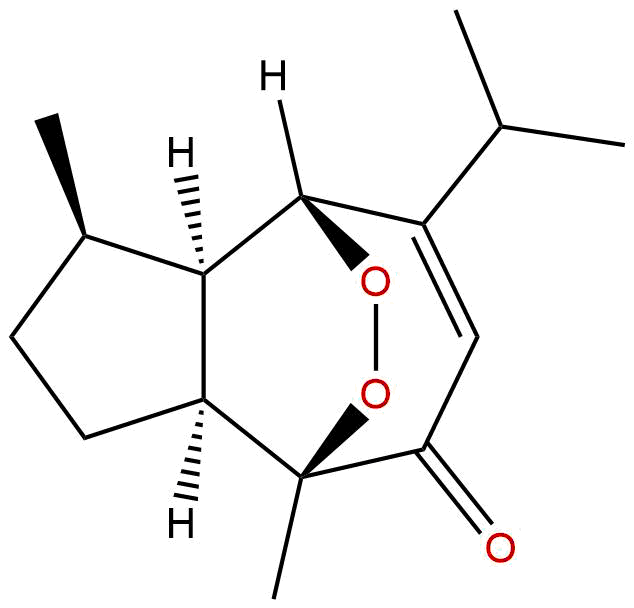


Product name: Isohanalpinone
Synonym name:
Catalogue No.: BP2322
Cas No.: 103476-95-5
Formula: C15H22O3
Mol Weight: 250.338
Botanical Source:
Type of Compound: Terpenoids
Purity: 95%~99%
Analysis Method: HPLC-DAD or/and HPLC-ELSD
Identification Method: Mass, NMR
Packing: Brown vial or HDPE plastic bottle
Storage: Store in a well closed container, protected from air and light. Put into refrigerate or freeze for long term storage.
Whenever possible, you should prepare and use solutions on the same day. However, if you need to make up stock solutions in advance, we recommend that you store the solution as aliquots in tightly sealed vials at -20℃. Generally, these will be useable for up to two weeks.
The product could be supplied from milligrams to grams
Inquire for bulk scale.
For Reference Standard and R&D, Not for Human Use Directly.
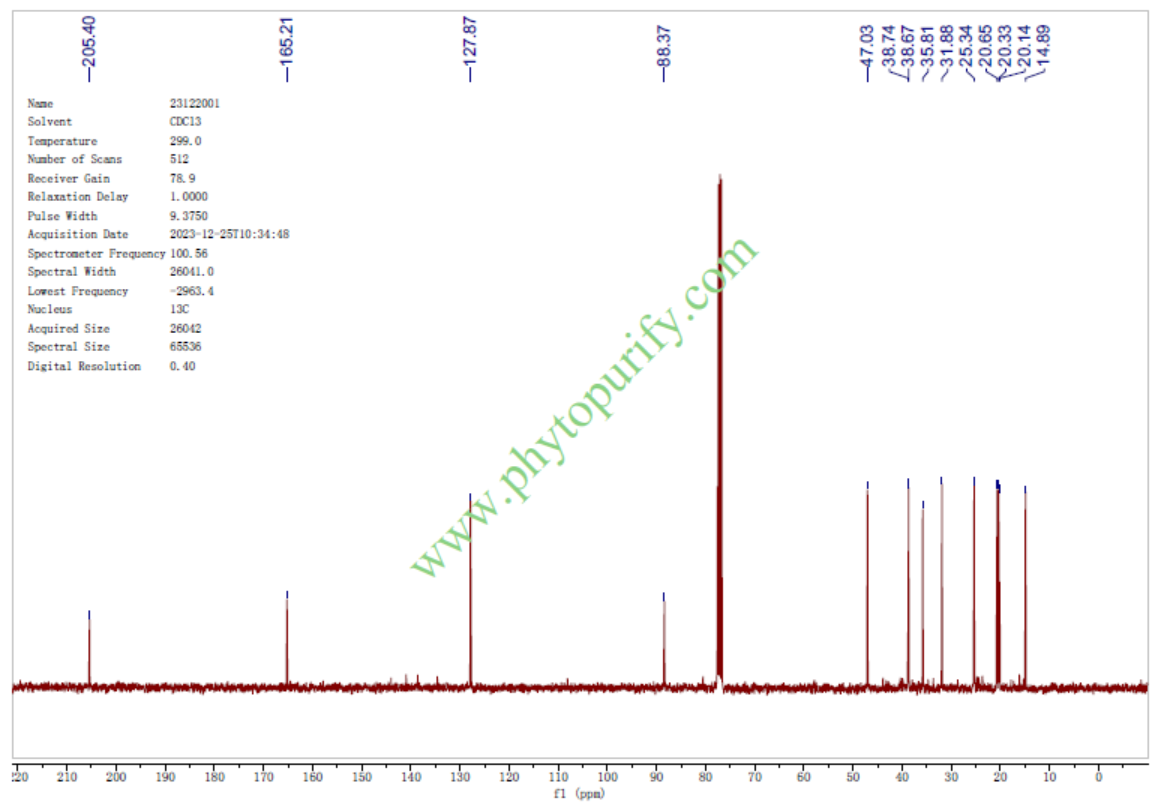
NMR of Isohanalpinone
Storage conditions:Short-term storage at 2~8℃, long-term storage at -20 ~ -80℃
35.5300
3.3262
3.3257
.0620
5.2081
50.5835
High
75.0198
5.4760
No
No
No
No
Yes
No
0.0
Yes
No
Yes
Yes
Natural products, as an important source of drug discovery, play an irreplaceable role in the long history of human fight against diseases. Especially the secondary metabolites derived from Zingiberaceae plants have attracted much attention due to their structural diversity and significant biological activity. Shanjiang genus(Alpinia)As an important member of the ginger family, plants are widely distributed in tropical and subtropical regions of Asia and have long been used in traditional medicine to treat digestive system diseases, inflammation, and tumors. In recent years, the peroxide terpenoids isolated from this genus of plants have attracted strong interest from researchers due to their unique chemical structures and potential anti-tumor activities.
Isohanalpinone (CAS number: 103476-95-5) is a naturally occurring peroxide terpene compound originally isolated and identified from plants of the genus Dioscorea. This compound has a unique peroxide bridge structure, which is rare in natural products and closely related to various biological activities. With the development of the research on the anti-tumor activity of natural products, the potential value of dioscorea zingiberensis peroxyterpene ketone in the treatment of pancreatic cancer and other malignant tumors has gradually emerged. As one of the most malignant tumors in the digestive system, pancreatic cancer has a five-year survival rate of less than 10% for a long time. Traditional chemotherapy drugs have limited efficacy and significant side effects. Therefore, it is urgent to find new, efficient and low toxic anti pancreatic cancer drugs.
This article will provide a systematic review of the current research status of peroxyterpenes in Chinese yam from multiple dimensions, including chemical structure and physicochemical properties, plant sources and extraction methods, pharmacological activity research, mechanism of action and molecular targets, pharmacological evaluation and pharmacokinetics, clinical application prospects and prospects, in order to provide theoretical basis for the in-depth development and clinical translation of this compound.
The peroxoterpenes of Yi Han Shan Jiang belong to the sesquiterpene class, and their core skeleton is a terpene ketone structure connected by peroxide bridges. From a chemical structure perspective, the molecule contains a characteristic peroxide bond (- O-O -), which is relatively rare in natural products but endows the molecule with unique chemical reactivity and biological activity. The presence of peroxide bridges enables molecules to have a high oxidation potential and participate in various redox reactions, which may be an important chemical basis for their anti-tumor activity.
Specifically, the molecular formula of peroxyterpene ketone in Chinese yam is C ₁₅ H ₂₂ O3, with a molecular weight of 250.3380 g/mol. The peroxide bridge in its structure connects two carbon atoms, forming a cyclic peroxide structure. This structure also exists in artemisinin based antimalarial drugs, suggesting that the peroxide bridge may be a key pharmacophore for exerting biological activity. Unlike artemisinin, the skeleton of isopentenone in Chinese yam is more compact and does not contain lactone rings, which determines its unique pharmacological properties.
According to the predicted results of computational chemistry and experimental measurements, the peroxoterpenes in Chinese yam exhibit the following key physicochemical properties:
Lipid water partition coefficient (LogP): 3.3262. This value indicates that the compound has moderate lipid solubility and meets the requirement of LogP less than 5 in Lipinski's "Five Rules". Moderate lipid solubility is beneficial for compounds to penetrate biological membranes, but it also suggests that their water solubility may be limited.
Topological Polarity Surface Area (TPSA): 35.53 Å ². This value is far below the threshold of 140 Å ², indicating that the compound has good oral absorption potential. Lower TPSA values are usually associated with higher intestinal permeability, which is beneficial for oral administration.
Water solubility:0.0620 mg/mL。 The low water solubility of this compound may become one of the challenges in its formulation development. Low water solubility can affect the dissolution rate and bioavailability of drugs, which needs to be improved through formulation techniques such as nanocrystals, liposomes, cyclodextrin inclusion complexes, etc.
Blood-brain barrier penetrability Predicted as high. This characteristic suggests that the peroxoterpenes of Chinese yam may have central nervous system activity, but also increase the risk of neurological toxicity. In anti-tumor applications, high blood-brain barrier penetration may have advantages for the treatment of brain metastases, but for peripheral tumors such as pancreatic cancer, attention should be paid to potential central side effects.
HERG inhibition: Negative. HERG potassium channel inhibition is an important predictor of drug cardiac toxicity, and negative results indicate a low risk of QT interval prolongation caused by isopentenone from Chinese yam, demonstrating good cardiac safety.
Ames test The result is 0.0, indicating that the compound did not exhibit mutagenicity in the bacterial recovery mutation test and had a low risk of genetic toxicity.
Overall, the physicochemical properties of peroxyterpenes in Chinese yam meet the basic requirements of drug like molecules, but poor water solubility is a key issue that needs to be addressed. Its excellent blood-brain barrier penetration and low risk of cardiac toxicity provide favorable conditions for its further development.
The main source of peroxyterpenes in Chinese ginger is from plants of the ginger family and the ginger genus. Shanjiang genus is one of the largest genera in the ginger family, containing about 230 plant species, widely distributed in tropical and subtropical regions of Asia, Oceania, and Pacific islands. In China, there are about 46 species of the genus Shanjiang, mainly distributed in the southwest and southern regions.
Plants that have been reported to contain isopentenone from Chinese yam include:
Red bean cardamom(Alpinia galanga)Also known as Gaoliang ginger, it is one of the most extensively studied species in the mountain ginger genus. Its rhizome is widely used in traditional Southeast Asian medicine to treat digestive disorders, inflammation, and tumors.
Huashan ginger(Alpinia chinensis)Distributed in southern China, its roots, stems, and fruits have medicinal value.
Grass cardamom(Alpinia katsumadai)Seed clusters, as a traditional Chinese medicine called "Caodoukou", have the effects of drying dampness, invigorating the spleen, warming the stomach, and stopping nausea.
It is worth noting that the content of peroxoterpenes in Hedyotis diffusa plants is usually low and belongs to trace components. Its biosynthetic pathway is closely related to the peroxidase system in plants, and may be defensive secondary metabolites induced under specific environmental stresses such as oxidative stress and pathogen infection.
Researchers have developed various methods for the extraction of peroxyterpenes from Chinese yam, including:
Traditional solvent extraction method Soak or reflux extract dried plant materials using organic solvents such as ethanol, methanol, ethyl acetate, etc. This method is easy to operate, but has poor selectivity and requires subsequent separation and purification steps. The gradient extraction strategy is usually adopted, which first uses low polarity solvents (such as petroleum ether) to remove lipophilic impurities, and then uses medium polarity solvents (such as ethyl acetate) to enrich the target compound.
Ultrasound assisted extraction Utilizing the cavitation effect of ultrasound to destroy plant cell walls, accelerate solvent permeation and solute diffusion. Compared with traditional methods, ultrasound extraction can significantly shorten the extraction time (usually 30-60 minutes), improve extraction efficiency, and cause less damage to thermosensitive peroxide structures.
Supercritical fluid extraction Selective extraction is achieved by adjusting pressure and temperature using supercritical CO ₂ as the extraction solvent. This method has the advantages of no solvent residue, low operating temperature, and high extraction efficiency, and is particularly suitable for extracting thermally unstable peroxyterpene ketone compounds. Research has shown that under the conditions of pressure of 25-35 MPa and temperature of 40-50 ℃, supercritical CO ₂ extraction can achieve a high yield of isopentenone from Chinese yam.
The crude extract after extraction needs to undergo systematic separation and purification in order to obtain high-purity isopentenone from Chinese yam. Common separation methods include:
silica gel column chromatography Using a silica gel column with petroleum ether ethyl acetate or n-hexane isopropanol as the mobile phase for gradient elution. Peroxyterpenes in Chinese yam are usually eluted in moderately polar fractions.
High performance liquid chromatography (HPLC)Use a C18 reverse phase chromatography column and perform isocratic or gradient elution with acetonitrile water or methanol water as the mobile phase. This method can obtain compounds with a purity of over 98%, which is suitable for pharmacological research and standard preparation.
High Speed Counter Current Chromatography (HSCCC)Based on the liquid-liquid distribution principle, there is no need for a solid stationary phase, avoiding irreversible adsorption of the sample on the column. This method has unique advantages in preparative separation, especially suitable for separating peroxoterpenoid compounds with similar structures.
Overall, the acquisition of peroxyterpenes from Chinese yam relies on systematic chemical studies of plants in the ginger genus. Due to its low content in plants, large-scale production still faces challenges. In the future, the problem of raw material supply can be solved through methods such as plant tissue culture, biosynthetic pathway analysis, and chemical synthesis.
Pancreatic cancer is the key field of pharmacological study of peroxyterpene ketone in Dioscorea zingiberensis. Several in vitro experiments showed that the compound showed significant proliferation inhibition on a variety of pancreatic cancer cell lines (such as PANC-1, BxPC-3, MIA PaCa-2), and its half inhibitory concentration (IC ≮₀) value was in the micromolar level (5-20 μ M), showing good anti-tumor potential.
It should be noted that the peroxyterpene ketone of Dioscorea zingiberensis also showed inhibitory effect on pancreatic cancer stem cell like cells. Pancreatic cancer stem cells are considered to be the root cause of tumor recurrence and metastasis, and traditional chemotherapy drugs are often ineffective. The study found that isoperoidone can inhibit the self-renewal ability of pancreatic cancer stem cells and reduce the efficiency of tumor ball formation, suggesting that it may play a more lasting anti-tumor effect by targeting tumor stem cells.
In vivo experiments, the peroxyterpene ketone of Dioscorea zingiberensis showed significant tumor growth inhibition in the xenograft tumor model of pancreatic cancer. When administered intraperitoneally at a dose of 10-20 mg/kg, the tumor volume inhibition rate can reach 50% -70%, and no significant weight loss or organ toxicity was observed, indicating that the compound has a good therapeutic window.
In addition to pancreatic cancer, dioscorea zingiberensis peroxyterpene ketone also has inhibitory effects on a variety of other tumor cells, including:
These broad-spectrum anti-tumor activities suggest that isoflavones may exert their effects through a common pathway that acts on tumor cells, rather than a single target specific to a particular cancer species.
The inflammatory microenvironment plays a crucial role in the occurrence and development of tumors. Research has shown that isopentenone from Chinese yam can inhibit lipopolysaccharide (LPS) - induced macrophage inflammatory response and reduce the release of pro-inflammatory cytokines such as TNF - α, IL-6, IL-1 β. In addition, the compound can also inhibit the expression of cyclooxygenase-2 (COX-2) and inducible nitric oxide synthase (iNOS), reducing the production of prostaglandin E ₂ and nitric oxide.
In terms of immune regulation, isohanshan ginger peroxide terpenes can regulate immune cell function in the tumor microenvironment. Research has found that this compound can enhance the killing activity of natural killer (NK) cells, promote the maturation and antigen presentation function of dendritic cells (DCs), while inhibiting the immunosuppressive activity of regulatory T cells (Tregs). These immune regulatory effects may synergize with their anti-tumor activity.
The peroxide bridge structure endows isohanshan ginger with unique redox activity of peroxide terpenes. At low concentrations, the compound exhibits antioxidant activity, capable of clearing free radicals, activating antioxidant enzyme systems such as superoxide dismutase (SOD) and glutathione peroxidase (GPx), and protecting cells from oxidative damage.
In terms of neuroprotection, isohanshan ginger peroxide ketone can alleviate glutamate induced neuronal excitotoxicity, inhibit β - amyloid protein (A β) aggregation, and protect neurons from oxidative stress damage. Combined with its high blood-brain barrier penetration, these findings suggest that the compound may have potential application value in the treatment of neurodegenerative diseases such as Alzheimer's disease.
The pharmacological activity of peroxyterpenes in Chinese yam involves multiple molecular targets and signaling pathways, exhibiting typical multi-target action characteristics. According to existing research, its key targets include:
BCL2 family proteins Peroxyterpenes from Chinese yam can downregulate the expression of anti apoptotic protein BCL2 and upregulate the expression of pro apoptotic protein BAX, leading to mitochondrial outer membrane permeabilization, release of cytochrome c, activation of caspase cascade reaction, and ultimately inducing tumor cell apoptosis. This mechanism has been verified in pancreatic cancer, liver cancer and other tumor cells.
STAT3 signaling pathway Signal transducer and activator of transcription 3 (STAT3) is constantly activated in pancreatic cancer, promoting tumor cell proliferation, survival and angiogenesis. Peroxyterpenes from Chinese yam can inhibit the phosphorylation of STAT3 (Tyr705 site), block its nuclear translocation and transcriptional activity, thereby downregulating the expression of downstream target genes (such as Cyclin D1, Survivor, VEGF).
TLR4/NF - κ B pathway Toll like receptor 4 (TLR4) is a key pattern recognition receptor in the innate immune system, and its activation can activate the NF - κ B signaling pathway, promoting inflammation and tumor development. Peroxyterpenes from Chinese yam can inhibit the binding of TLR4 to its ligands, block downstream MyD88 dependent signal transduction, and reduce nuclear translocation of NF - κ B and expression of pro-inflammatory genes.
ABCB1 (P-glycoprotein)The P-glycoprotein encoded by ABCB1 is an important drug efflux pump, and its overexpression is one of the main mechanisms of multidrug resistance (MDR) in tumors. Research has found that the peroxoterpenes of Chinese yam can inhibit the activity of ABCB1, increase the accumulation of chemotherapy drugs in drug-resistant tumor cells, and reverse the multidrug resistance phenotype. This discovery is of great significance for overcoming the resistance of pancreatic cancer to gemcitabine and other chemotherapy drugs.
PRKCA (protein kinase C alpha)PRKCA is involved in regulating cell proliferation, differentiation, and apoptosis. Peroxyterpenes from Chinese yam can inhibit the activity of PRKCA, block the activation of its downstream MAPK/ERK signaling pathway, and thus inhibit tumor cell proliferation.
MMP2 (Matrix Metalloproteinase 2)MMP2 plays a crucial role in tumor invasion and metastasis, as it can degrade the basement membrane and extracellular matrix. Peroxyterpene ketone from Yi Han Shan Jiang can downregulate the expression and activity of MMP2, and inhibit the migration and invasion ability of tumor cells.
NFE2L2(NRF2)NRF2 is the main regulatory factor of cellular oxidative stress response, which is often abnormally activated in tumor cells, promoting the expression of antioxidant genes and chemotherapy resistance. Peroxyterpenes from Chinese yam can inhibit the nuclear translocation and transcriptional activity of NRF2, reduce the antioxidant defense ability of tumor cells, and increase their sensitivity to oxidative stress and chemotherapy drugs.
TRPV1 Transient receptor potential vanillic acid subtype 1 (TRPV1) is a key ion channel for pain perception. Peroxyterpenes from Chinese yam can activate TRPV1, causing calcium ion influx, which may be related to its anti-inflammatory and analgesic effects.
TOP1 (Topoisomerase I)TOP1 is an enzyme essential for DNA replication and transcription, and also a target for various anti-tumor drugs such as camptothecin. Peroxyterpenes from Chinese yam can inhibit the activity of TOP1, leading to DNA damage and cell cycle arrest.
HIF1A (hypoxia inducible factor 1 alpha)HIF1A is a key transcription factor for tumors to adapt to the hypoxic microenvironment, promoting angiogenesis, glycolysis, and metastasis. Peroxyterpenes from Chinese yam can inhibit the protein stability and transcriptional activity of HIF1A, downregulate the expression of its target genes (such as VEGF, GLUT1, LDHA), thereby inhibiting tumor angiogenesis and metabolic reprogramming.
The peroxide bridge is a key structural unit for the biological activity of peroxoterpenes in Chinese yam. Research has shown that peroxide bridges can be cleaved by reducing substances such as Fe ² ⁺ and glutathione within cells, producing free radical intermediates that can cause oxidative damage and cell death. This mechanism is similar to the antimalarial effect of artemisinin based drugs, but the selectivity of isopentenone in tumor cells is higher, which may be related to higher levels of oxidative stress and iron content in tumor cells.
In addition, peroxide bridges can directly covalently bind to cysteine residues in proteins, modifying the activity of key signaling proteins. This covalent modification mechanism may explain the regulatory effect of the compound on multiple targets, and also suggest that it may have a broader protein target spectrum.
Based on the existing research, the peroxyterpene ketone of Dioscorea zingiberensis plays an anti pancreatic cancer role through the following integration mechanisms:
This multi-target and multi pathway mode of action provides unique advantages for overcoming tumor heterogeneity and drug resistance with isopentenone from Chinese yam, but it also increases the complexity of toxicological evaluation.
Based on the aforementioned physical and chemical properties parameters, the pharmacological properties of isopentenone from Chinese yam can be evaluated as follows:
Complies with Lipinski's rules The molecular weight of 250.34 (<500), LogP 3.33 (<5), number of hydrogen bond donors (predicted to be 1-2), and number of hydrogen bond acceptors (predicted to be 3-4) fully meet the requirements of Lipinski's "Five Rules", indicating its good oral drug potential.
Classification of drug properties According to the prediction of the computational medicinal chemistry software, the class efficacy score of the peroxoterpene ketone in Chinese yam is relatively high, ranging from 0.6 to 0.8 (out of 1.0), indicating that its molecular structure conforms to the characteristics of known drugs.
Toxicity prediction In addition to the negative hERG inhibition and Ames test results mentioned above, other toxicity predictions (such as hepatotoxicity, nephrotoxicity, and skin sensitization) also show low risk. However, it should be noted that the peroxide bridge structure may generate free radicals in the body, and the safety of long-term medication still needs to be verified through systematic toxicology experiments.
At present, there is insufficient pharmacokinetic research on the peroxoterpenes of Eriocheir sinensis. However, based on its physicochemical properties and structural characteristics, the following speculations can be made:
absorb LogP is 3.33 and TPSA is 35.53 Å ², indicating good intestinal permeability and high oral absorption potential. However, its low water solubility (0.062 mg/mL) may limit its dissolution rate, resulting in unsatisfactory oral bioavailability. The expected oral bioavailability is between 20% and 40%, which needs to be improved through formulation technology.
distribution The high blood-brain barrier penetration suggests that this compound can be widely distributed in tissues throughout the body, including the central nervous system. The expected distribution volume (Vd) is large (>1 L/kg), indicating a high tissue binding rate. The plasma protein binding rate is yet to be experimentally determined, but based on its lipophilicity, it is expected to be between 80% and 90%.
Metabolism The peroxide bridge structure is a key metabolic site. In the body, peroxide bridges may be reduced and cleaved by cytochrome P450 enzymes (especially CYP3A4) to produce alcohol or ketone metabolites. In addition, the compound may also undergo a combination reaction of glucuronidation and sulfation. The activity and toxicity of metabolites need further research.
excretion Expected to mainly enter the intestine through bile excretion, with some being excreted from the body through feces. Renal excretion may play a secondary role due to its high lipid solubility and high tubular reabsorption rate.
To address the issue of poor water solubility of peroxyterpenes in Chinese yam, the following formulation strategies can be considered:
Pancreatic cancer is the most potential indication of peroxyterpene ketone in Dioscorea zingiberensis. The current standard treatment regimen for pancreatic cancer (gemcitabine combined with albumin binding paclitaxel or FOLFIRINOX regimen) has limited efficacy and significant side effects. The multi-target mechanism of peroxyterpene ketone from Dioscorea zingiberensis, especially its ability to reverse multidrug resistance, target tumor stem cells and regulate immune microenvironment, makes it have unique advantages in the treatment of pancreatic cancer.
Future clinical development can consider the following directions:
In addition to pancreatic cancer, isosorbinedione has potential value in the treatment of other diseases:
Despite showing promising development prospects, the following challenges still remain:
raw material supply Low natural content, difficult chemical synthesis. The solution strategies include optimizing plant extraction processes, establishing plant cell culture systems, developing fully synthetic or semi synthetic routes, and utilizing synthetic biology techniques to construct microbial cell factories.
Poor water solubility: Affects formulation development and bioavailability. The solution strategy includes developing new formulation technologies, designing water-soluble prodrugs, and exploring eutectic or salt forms.
Mechanism complexity The multi-target effect increases the difficulty of toxicological evaluation. The solution strategy includes conducting systematic toxicology research (including acute toxicity, long-term toxicity, reproductive toxicity, etc.), using omics techniques to comprehensively evaluate its biological effects, and establishing a pharmacological toxicity balance model.
clinical translation The transition from laboratory to clinical requires a significant amount of funding and time. The solution strategy includes: seeking government and corporate R&D funding, conducting clinical trials initiated by researchers, and exploring fast track approval channels (such as orphan drug designation).
As a naturally occurring peroxide terpene compound, Yi Han Shan Jiang's peroxide terpene has shown significant value in the field of anti-tumor drug development due to its unique chemical structure and multi-target pharmacological activity. The inhibitory effect of this compound on pancreatic cancer and other malignant tumors, as well as its ability to reverse multidrug resistance, target tumor stem cells, and regulate immune microenvironment, make it a candidate molecule for developing new anti-tumor drugs.
From a chemical perspective, the peroxide bridge structure is the key pharmacophore for its biological activity and also the structural feature that distinguishes it from other terpenoids. From a pharmacological perspective, the peroxoterpenes of Eriocheir sinensis form a complex signaling network regulatory mechanism by regulating multiple targets such as BCL2, STAT3, TLR4, ABCB1, PRKCA, MMP2, NFE2L2, TRPV1, TOP1, and HIF1A. From the perspective of drug properties, this compound meets the basic requirements of drug like molecules, but poor water solubility is a key issue that needs to be addressed.
Looking forward to the future, with the continuous deepening of the research on the peroxyterpene ketone of Dioscorea zingiberensis, especially the clarification of its mechanism of action, the optimization of preparation technology and the improvement of pre clinical evaluation, this natural product is expected to move from laboratory to clinical, providing new options for the treatment of refractory diseases such as pancreatic cancer. Meanwhile, its unique peroxide bridge structure also provides valuable lead compounds for medicinal chemists, which can be used to design and synthesize artificial derivatives with better efficacy and safety.
Natural products are the treasure trove of drug discovery, and the research process of peroxyterpenes in Chinese yam once again proves this truth. In the context of precision medicine and personalized treatment, delving into the medicinal value of natural products, combined with modern drug research and development technology, will undoubtedly make new contributions to human health.
