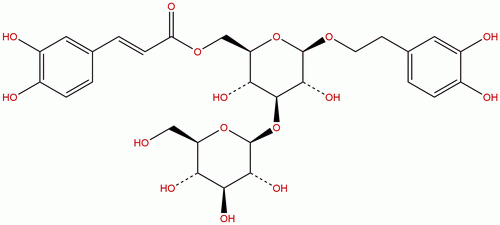


Product name: Plantainoside D
Synonym name:
Catalogue No.: BP3873
Cas No.: 147331-98-4
Formula: C29H36O16
Mol Weight: 640.591
Botanical Source:
Physical Description:
Type of Compound:
Purity: 95%~99%
Analysis Method: HPLC-DAD or/and HPLC-ELSD
Identification Method: Mass, NMR
Packing: Brown vial or HDPE plastic bottle
The product could be supplied from milligrams to grams
Inquire for bulk scale.
For Reference Standard and R&D, Not for Human Use Directly.
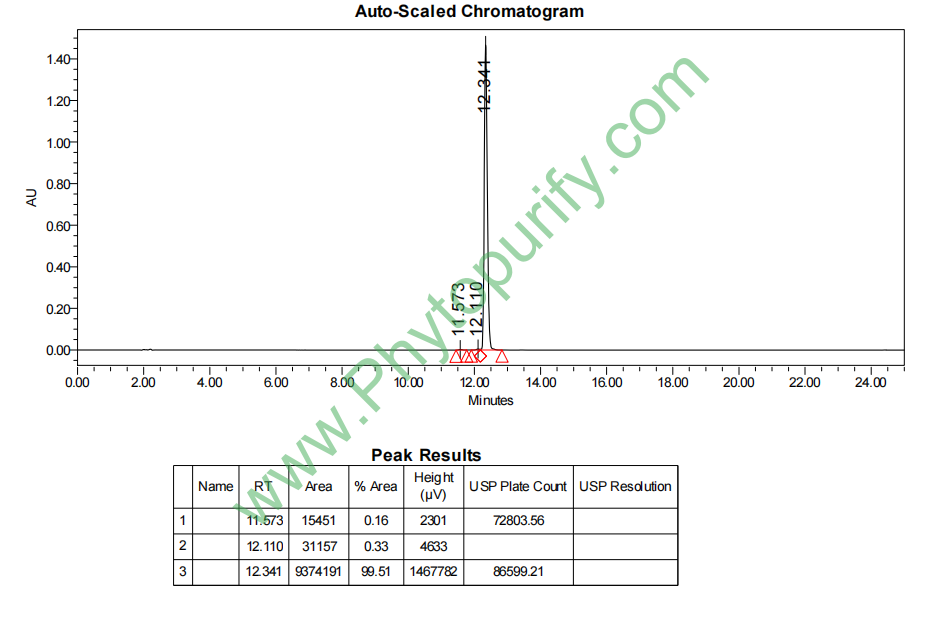
HPLC of Plantainoside D
Storage conditions:Short-term storage at 2~8℃, long-term storage at -20 ~ -80℃
265.5200
-.4262
-.4372
6.1510
.4880
.0706
Low
71.0741
4.7196
Yes
No
No
No
No
No
0.0
Yes
No
Yes
Yes
Natural products, as an important source of drug discovery, play an irreplaceable role in human health maintenance and disease treatment. Phenylethanoid glycosides are a class of secondary metabolites widely present in the plant kingdom, which have attracted much attention due to their structural diversity and significant biological activity. Plantainoside D, as a typical phenylethanoid glycoside compound, was first isolated and identified from plants in the Plantago family. In recent years, it has become one of the hot molecules in natural product pharmacology research due to its unique pharmacological activity spectrum.
The chemical structure of Plantago asiatica glycoside D determines its multi-target action characteristics. Research has shown that this compound can simultaneously act on multiple signaling pathways and molecular targets closely related to the occurrence and development of diseases. Of particular note is that Plantago asiatica glycoside D has been identified as an I κ B kinase beta (IKK - β) inhibitor, revealing its crucial role in regulating the nuclear factor kappa B (NF - κ B) signaling pathway. As the core transcription factor of inflammatory response, NF - κ B abnormal activation is closely related to the occurrence and development of various inflammatory diseases, autoimmune diseases, and tumors. In addition, Plantago asiatica glycoside D also exhibits angiotensin-converting enzyme (ACE) inhibitory activity, with a half maximal inhibitory concentration (IC50) of 2.17 mM, indicating its potential antihypertensive application value.
In the field of the nervous system, Plantago asiatica glycoside D significantly reduces the release of glutamate from rat cortical nerve endings by inhibiting the cascade reaction of voltage dependent calcium channels (VDCCs) and protein kinase C (PKC). This mechanism is of great significance for maintaining neurotransmitter balance and preventing excitotoxic injury. Meanwhile, the compound effectively alleviates the process of cell apoptosis by inhibiting the generation of reactive oxygen species (ROS) and activation of NF - κ B. In the sepsis induced acute lung injury (ALI) model, Plantago asiatica glycoside D exhibits significant protective effects by regulating the Sirt3/NLRP3 signaling pathway. These findings collectively outline the broad prospects of carvacrol D as a candidate molecule for neuroprotection, antioxidant, anti-inflammatory, and antihypertensive effects.
This article will provide a systematic review of the research progress of Plantago asiatica glycoside D from multiple dimensions, including chemical structure and physicochemical properties, plant sources and extraction methods, pharmacological activity research, mechanism of action and molecular targets, pharmacological evaluation and pharmacokinetics, and clinical application prospects, in order to provide reference for the in-depth research and development of this natural product.
The chemical structure of Plantago asiatica glycoside D belongs to the phenylethanoid glycoside class, and its basic skeleton is composed of phenylethanoid glycosides, glycosyl moieties, and phenolic acid moieties. Specifically, the molecule contains a hydroxytyrosol glycoside that is linked to glucose via a β - glycosidic bond. The C-4 'and C-6' sites of glucose form ester and glycosidic bonds with the caffeoyl and rhamnose groups, respectively. This complex substitution pattern endows Plantago asiatica glycoside D with unique chemical properties and biological activity.
From the molecular formula, the precise molecular weight of Plantago asiatica glycoside D is 640.5910 Da, which is a medium-sized natural product molecule. Its lipophilic water partition coefficient (LogP) is -0.4262, indicating that the compound has strong hydrophilicity, which is closely related to the presence of multiple hydroxyl and sugar structural units in its molecule. The polar surface area (TPSA) is as high as 265.52 Å ², further confirming its excellent water solubility characteristics. The water solubility parameter is 6.1510, indicating that Plantago asiatica glycoside D has good solubility in aqueous environments, which provides favorable conditions for its absorption and distribution in organisms.
It is worth noting that the blood-brain barrier penetration ability of Plantago asiatica glycoside D has been evaluated as "low", which has dual significance for its application in central nervous system diseases. On the one hand, low blood-brain barrier penetration may limit its direct action on central nervous system targets; On the other hand, this also means that the compound may have a lower risk of neurotoxicity in the treatment of peripheral diseases. In addition, the hERG inhibition assessment result was negative, indicating that plantain glycoside D is unlikely to cause safety issues related to cardiac QT interval prolongation at therapeutic concentrations. The Ames test result was 0.0, indicating that the compound did not exhibit significant mutagenicity in the bacterial recovery mutation test, and the preliminary safety evaluation is relatively optimistic.
From the perspective of chemical stability, the ester and glycosidic bonds in the molecule of Plantago asiatica D may undergo hydrolysis under specific conditions. In acidic environments, glycosidic bonds are relatively stable, but ester bonds may slowly hydrolyze; Under alkaline conditions, the hydrolysis rate of ester bonds significantly increases. In addition, the presence of phenolic hydroxyl groups makes the compound more sensitive to oxidation conditions, and attention should be paid to avoiding light and antioxidant protection during storage and use.
Plantago glycoside D was initially isolated from plants in the Plantago family, and its main sources include various Plantago plants such as Plantago asiatica, Plantago depression, and Plantago major. These plants have a long medicinal history in East Asia and have traditionally been used to treat various diseases such as urinary tract infections, cough, and hypertension. Modern plant chemistry research has shown that plants of the Plantago genus are rich in phenylethanoid glycosides, among which Plantago glycoside D is one of the important active ingredients.
In addition to plants of the Plantago genus, researchers have also discovered the presence of Plantago asiatica glycoside D in other families and genera in recent years. For example, certain species in the family Lamiaceae, such as Prunella vulgaris and Ajuga decorens, have also been reported to contain this compound. In addition, related reports have also been found in plants of the Scrophulariaceae family, such as Rehmannia glutinosa. These findings suggest that the distribution of Plantago asiatica glycoside D in the plant kingdom may be more widespread than initially expected, and its biosynthetic pathway may have conservative characteristics in different plant groups.
In terms of extraction methods, the extraction of Plantago asiatica glycoside D usually adopts solvent extraction method, using ethanol or methanol aqueous solution as the extraction solvent. Due to the strong polarity of the compound, high concentration ethanol (60% -80%) aqueous solutions often achieve good extraction efficiency. During the extraction process, factors such as temperature, time, and solid-liquid ratio have a significant impact on the extraction rate. Research has shown that using ultrasound assisted extraction or microwave-assisted extraction techniques can significantly improve extraction efficiency, shorten extraction time, and reduce solvent usage.
The crude extract after extraction needs to undergo a series of purification steps to obtain high-purity Plantago asiatica glycoside D. Common purification methods include: macroporous adsorption resin column chromatography (such as D101, AB-8, etc.), using different concentrations of ethanol gradient elution to achieve preliminary separation; Silica gel column chromatography was used for further purification using a chloroform methanol water system; And the preparation of high-performance liquid chromatography (HPLC) technology, using C18 reverse phase chromatography column and acetonitrile water or methanol water system as mobile phase, to achieve the purification of the target compound. In recent years, high-speed countercurrent chromatography (HSCCC) technology has also been applied to the separation and purification of Plantago asiatica glycoside D. This method has the advantages of high sample recovery rate and good separation efficiency.
From the perspective of quality control, the identification of Plantago asiatica glycoside D is usually carried out using analytical techniques such as ultraviolet spectroscopy (UV), infrared spectroscopy (IR), mass spectrometry (MS), and nuclear magnetic resonance spectroscopy (NMR). Among them, the UV spectrum shows a characteristic absorption peak near 330 nm, corresponding to the conjugated system of the caffeoyl moiety; In NMR spectra, the proton signals of sugar end groups and caffeoyl olefins are key features for structural identification. Quantitative analysis is often performed using HPLC-UV or liquid chromatography-mass spectrometry (LC-MS) methods, with a detection wavelength typically set at 330 nm.
The anti-inflammatory activity of Plantago asiatica glycoside D is one of its most prominent pharmacological properties. Multiple in vitro and in vivo studies have confirmed that this compound can effectively inhibit key components of the inflammatory response. In a macrophage model stimulated by lipopolysaccharide (LPS), plantain glycoside D significantly reduced the production of pro-inflammatory cytokines such as tumor necrosis factor - α (TNF - α), interleukin-6 (IL-6), and interleukin-1 β (IL-1 β). Further mechanistic studies have shown that this effect is closely related to its inhibition of IKK - β activity, which leads to a decrease in I κ B α phosphorylation, thereby blocking nuclear translocation and transcriptional activation of NF - κ B.
In the acute lung injury model, Plantago asiatica glycoside D exerts a protective effect by regulating the Sirt3/NLRP3 signaling pathway. Sirt3, as an NAD+- dependent deacetylase, plays a crucial role in maintaining mitochondrial function and regulating inflammatory responses. Plantago asiatica glycoside D treatment can upregulate Sirt3 expression, thereby inhibiting the assembly and activation of NLRP3 inflammasomes, reducing the activation of caspase-1 and mature secretion of IL-1 β. This discovery provides new candidate molecules for the treatment of sepsis related organ damage.
Plantago asiatica glycoside D exhibits significant antioxidant capacity, and multiple phenolic hydroxyl groups in its molecular structure are active groups for scavenging free radicals. In chemical systems, this compound can effectively scavenge 2,2-diphenyl-1-picrylhydrazone (DPPH) radicals, 2,2 '- diazobis (3-ethylbenzothiazole-6-sulfonic acid) (ABTS) cationic radicals, and hydroxyl radicals. In cell models, treatment with Plantago asiatica glycoside D can reduce oxidative stress markers such as malondialdehyde (MDA) and protein carbonylation levels, while increasing the activity of antioxidant enzymes such as superoxide dismutase (SOD), glutathione peroxidase (GPx), and catalase (CAT).
Of particular note is that Plantago asiatica glycoside D significantly alleviates cell apoptosis by inhibiting ROS generation and NF - κ B activation. In the oxidative stress-induced cell damage model, this compound can reduce the loss of mitochondrial membrane potential, inhibit the release of cytochrome c, and thus block the activation of mitochondrial apoptosis pathway. At the same time, there is a synergistic effect between its antioxidant activity and anti-inflammatory activity, and the reduction of ROS further lowers the activation level of NF - κ B, forming a virtuous cycle.
Plantago asiatica glycoside D exhibits unique pharmacological activity in protecting the nervous system. Research has shown that this compound can significantly reduce the release of glutamate from rat cortical nerve endings. Glutamate, as the most important excitatory neurotransmitter in the central nervous system, its excessive release can lead to excitotoxicity, which is closely related to the pathological processes of various neurological diseases such as cerebral ischemia, epilepsy, and neurodegenerative diseases.
Mechanism studies have shown that Plantago asiatica glycoside D inhibits glutamate release through two main pathways: one is to inhibit voltage dependent calcium channels (VDCCs), reduce calcium ion influx, and thus decrease the exocytosis of presynaptic membrane vesicles; The second is to inhibit the protein kinase C (PKC) cascade reaction, and the activation of PKC is closely related to the phosphorylation of presynaptic membrane proteins and vesicle mobilization. This dual mechanism of action gives Plantago asiatica glycoside D a unique advantage in regulating neurotransmitter release.
The effect of Plantago asiatica glycoside D on the cardiovascular system is mainly reflected in its angiotensin-converting enzyme (ACE) inhibitory activity. ACE is a key enzyme in the renin-angiotensin system (RAS), catalyzing the conversion of angiotensin I to angiotensin II with strong vasoconstrictive activity. The inhibitory activity IC50 value of plantain glycoside D on ACE is 2.17 mM, although its efficacy is lower than synthetic ACE inhibitors, its safety advantage as a natural product deserves attention.
In addition, the diuretic activity of Plantago asiatica glycoside D is also related to its cardiovascular protective effect. By affecting targets related to renal water and salt metabolism, such as mineralocorticoid receptors (NR3C2), sodium chloride transporters (SLC12A3), aquaporins (AQP1, AQP2, AQP3), and potassium channels (KCNJ1), this compound may promote urinary sodium excretion and diuretic effects, thereby assisting in lowering blood pressure. Vasopressin V2 receptor (AVPR2) may also be involved in regulating water reabsorption in the renal collecting duct.
Plantago asiatica glycoside D inhibits cell apoptosis through multiple pathways. In the oxidative stress-induced apoptosis model, this compound maintains mitochondrial membrane integrity by clearing ROS and inhibiting NF - κ B activation, reducing the expression of pro apoptotic protein Bax, and increasing the expression of anti apoptotic protein Bcl-2. At the same time, it can inhibit the activation of caspase-3 and caspase-9, blocking the cascade reaction of apoptosis execution stage.
In inflammation induced cell apoptosis, Plantago asiatica glycoside D reduces inflammation mediated cell damage by inhibiting NLRP3 inflammasome activation, decreasing the mature secretion of IL-1 β and IL-18. In addition, it upregulates Sirt3 expression, enhances mitochondrial function, reduces mitochondrial ROS production, and further inhibits the initiation of apoptotic signals.
As an IKK - β inhibitor, the core mechanism of action of Plantago asiatica glycoside D lies in regulating the NF - κ B signaling pathway. IKK - β is the catalytic subunit of the I κ B kinase complex, responsible for phosphorylating I κ B α protein, leading to its ubiquitination degradation, and releasing NF - κ B dimers (mainly p50/p65) into the nucleus to initiate transcription of target genes. Plantago asiatica glycoside D directly binds to the kinase domain of IKK - β, inhibiting its kinase activity and reducing the phosphorylation of I κ B α, causing NF - κ B to remain in the cytoplasm and unable to exert its transcriptional function.
This mechanism explains the extensive anti-inflammatory activity of Plantago asiatica glycoside D, as NF - κ B regulates the expression of various inflammation related genes including TNF - α, IL-6, IL-1 β, COX-2, iNOS. In addition, NF - κ B is also involved in regulating apoptosis related genes, such as Bcl-2 family members and caspase family members, so the inhibition of IKK - β is closely related to its anti apoptotic activity.
In the nervous system, Plantago asiatica glycoside D regulates neurotransmitter release by inhibiting the cascade reaction between VDCCs and PKC. VDCCs are key channels that control the entry of calcium ions into presynaptic terminals. Their opening leads to an increase in local calcium ion concentration, triggering the fusion of synaptic vesicles and presynaptic membranes, and releasing neurotransmitters. Plantago asiatica glycoside D may reduce calcium ion influx by directly binding to the α 1 subunit of VDCCs or indirectly regulating the opening probability of channels.
The PKC signaling pathway plays an important regulatory role in synaptic plasticity and neurotransmitter release. The activation of PKC can phosphorylate presynaptic membrane proteins such as Munc18, SNAP-25, and synaptotagmin, promoting vesicle mobilization and exocytosis. The inhibition of PKC cascade reaction by Plantago asiatica glycoside D further reduces the release of glutamate, forming a synergistic effect with VDCCs inhibition.
Plantago asiatica glycoside D improves sepsis induced acute lung injury by regulating the Sirt3/NLRP3 signaling pathway. Sirt3 is mainly located in mitochondria, maintaining mitochondrial function and redox balance by deacetylating various metabolic enzymes and antioxidant enzymes. Plantago asiatica glycoside D upregulates Sirt3 expression, enhances mitochondrial function, reduces mitochondrial ROS production, and thus inhibits the activation of NLRP3 inflammasome.
NLRP3 inflammasome is a multi protein complex, and its activation requires two signals: a initiation signal (such as LPS activation of NF - κ B upregulation of NLRP3 and pro-IL-1 β expression) and an activation signal (such as ROS, potassium efflux, mitochondrial damage, etc.). Plantago asiatica glycoside D inhibits the assembly and activation of NLRP3 inflammasomes by reducing ROS generation, thereby reducing the activation of caspase-1 and mature secretion of IL-1 β, alleviating inflammation and tissue damage.
The inhibitory activity of Plantago asiatica glycoside D on ACE is the basis of its antihypertensive effect. ACE is a zinc metalloproteinase that catalyzes the hydrolysis of the C-terminal dipeptide of angiotensin I to produce angiotensin II. The phenolic hydroxyl and glycosyl groups in the D molecule of Plantago asiatica may competitively inhibit enzyme activity by coordinating with zinc ions at the ACE active site or forming hydrogen bonds with key amino acid residues. Although its IC50 value (2.17 mM) is relatively high, as a natural product, its multi-target action characteristics may enable it to exert a comprehensive effect in overall blood pressure regulation.
The diuretic activity of Plantago asiatica glycoside D involves multiple targets related to renal water and salt metabolism. The mineralocorticoid receptor (NR3C2) is a target receptor for aldosterone, regulating sodium ion reabsorption; The sodium chloride co transporter (SLC12A3) is responsible for the coordinated transport of sodium and chloride in the distal tubules; Aquaporins (AQP1, AQP2, AQP3) regulate water permeability; Potassium channel (KCNJ1) is involved in potassium ion secretion; Vasopressin V2 receptor (AVPR2) regulates water reabsorption in collecting vessels. Plantago asiatica glycoside D may regulate the expression or activity of these targets, promote urinary sodium excretion and diuretic effects, and assist in lowering blood pressure.
Based on the Lipinski Rule of Five, the drug properties of Plantago asiatica glycoside D were evaluated. The molecular weight of the compound (640.59 Da) exceeded the threshold of 500 Da, and the number of hydrogen bond donors (about 12) and hydrogen bond acceptors (about 16) also exceeded the limits of the Rule of Five. However, the Lipinski rule mainly applies to oral medications, and for natural products, its scope of application needs to be flexibly controlled. Many natural products with good biological activity do not fully comply with the five rules, but can still be administered through non oral routes or achieved through prodrug strategies for clinical use.
The LogP value of Plantago asiatica glycoside D is -0.4262, indicating its strong hydrophilicity, which facilitates its dissolution and distribution in aqueous environments, but may limit its passive diffusion through biofilms. The TPSA reaches 265.52 Å ², further confirming its polarity characteristics. The water solubility parameter 6.1510 indicates that the compound has good solubility in water, which provides favorable conditions for its formulation development.
The pharmacokinetic research on Plantago asiatica glycoside D is still relatively limited, but based on its physicochemical properties and studies of similar compounds, some basic characteristics can be inferred. In terms of absorption, due to its high molecular weight and polarity, the oral bioavailability of Plantago asiatica glycoside D may be low. Glycosidases in the intestine may partially hydrolyze the compound, releasing glycosides and glycosides, thereby affecting its absorption and metabolism. Intravenous injection or transdermal administration may be more effective routes of administration.
In terms of distribution, the blood-brain barrier penetration ability of Plantago asiatica glycoside D was evaluated as' low ', consistent with its high polarity and high molecular weight. This characteristic limits the direct action of central nervous system targets, but also reduces the potential risk of neurotoxicity. This compound is mainly distributed in peripheral tissues and body fluids, and may enter cells through active transport processes mediated by transport proteins such as organic anion transporters (OATs) or organic cation transporters (OCTs).
In terms of metabolism, Plantago asiatica glycoside D may undergo multiple metabolic pathways. Hydrolysis of ester bonds may release caffeic acid, while hydrolysis of glycosidic bonds may release aglycones; Phenolic hydroxyl groups may undergo glucuronic acid or sulfuric acid binding reactions; The caffeic acid moiety may undergo methylation or reduction reactions. These metabolites may retain some biological activity or generate new pharmacological effects.
In terms of excretion, due to its strong hydrophilicity, Plantago asiatica glycoside D and its metabolites are mainly excreted through the kidneys in their original form or in the form of conjugates. Bile excretion may also be an important pathway for clearance, especially for larger molecular weight metabolites.
The preliminary safety evaluation results are relatively optimistic. The hERG inhibition assessment is negative, indicating that Plantago asiatica glycoside D is unlikely to cause cardiac toxicity at therapeutic concentrations. The Ames test result was 0.0, indicating that the compound did not exhibit mutagenicity in the bacterial recovery mutation test. However, a comprehensive safety evaluation still needs to include systematic studies on acute toxicity, chronic toxicity, reproductive toxicity, genetic toxicity, and other factors.
It is worth noting that natural products do not equate to safety. The multi-target action characteristics of Plantago asiatica glycoside D may bring some unexpected pharmacological effects, which need to be optimized in terms of dosage and administration regimen. In addition, its metabolites may have different pharmacological and toxicological characteristics, which require further research.
Based on its IKK - β inhibitory activity and NF - κ B signaling pathway regulation, Plantago asiatica glycoside D has potential application value in the treatment of inflammatory diseases. Sepsis induced acute lung injury is one of its most promising indications, and by regulating the Sirt3/NLRP3 signaling pathway, this compound can alleviate lung inflammation and tissue damage. In addition, chronic inflammatory diseases such as rheumatoid arthritis, inflammatory bowel disease, and chronic obstructive pulmonary disease may also be potential indications for it.
Plantago asiatica glycoside D reduces glutamate release by inhibiting the cascade reaction between VDCCs and PKC, which has protective potential in neurological diseases such as cerebral ischemia-reperfusion injury, epilepsy, and Alzheimer's disease. However, its low blood-brain barrier penetration is an obstacle that needs to be overcome. Nano carrier delivery systems, nasal administration, or prodrug design may be effective strategies for increasing drug concentration in the central nervous system.
The ACE inhibitory and diuretic activities of Plantago asiatica glycoside D provide a theoretical basis for its application in the treatment of hypertension. Although its ACE inhibitory effect is relatively weak, its multi-target nature may enable it to exert a synergistic effect in overall blood pressure regulation. In addition, its antioxidant and anti-inflammatory activities also help to improve vascular endothelial function and delay the progress of atherosclerosis.
The antioxidant activity of Plantago asiatica glycoside D makes it potentially applicable in anti-aging and oxidative stress-related diseases. By clearing ROS and activating the endogenous antioxidant defense system, this compound may delay the process of cellular aging, protect mitochondrial function, and reduce the accumulation of oxidative damage.
Developing Plantago asiatica glycoside D as a clinical drug faces multiple challenges. Firstly, the low oral bioavailability is its main bottleneck, and it is necessary to develop appropriate drug delivery systems or prodrug strategies. Secondly, although multi-target action brings extensive pharmacological activity, it also increases the complexity of mechanism of action research and clinical applications. Thirdly, the large-scale production and quality control of natural products require the establishment of efficient and economical synthesis or biosynthetic methods.
Future research directions should include: in-depth elucidation of the molecular mechanism of action of Plantago asiatica glycoside D, particularly its interaction patterns with targets such as IKK - β, VDCCs, Sirt3, etc; Conduct systematic pharmacokinetic studies to clarify their absorption, distribution, metabolism, and excretion characteristics; Conduct comprehensive safety evaluations, including long-term toxicity and reproductive toxicity studies; Develop new drug delivery systems to improve bioavailability and targeting; Explore structural modifications and structure-activity relationships, optimize pharmacological activity and pharmacokinetic properties.
Plantago asiatica glycoside D, as a typical natural product of phenylethanoid glycosides, has shown important scientific value and development potential in the field of natural product pharmacology research due to its multi-target pharmacological activity spectrum and unique mechanism of action. From IKK - β inhibition to NF - κ B signaling pathway regulation, from VDCCs and PKC inhibition to glutamate release regulation, from ACE inhibition to diuretic activity, from ROS clearance to Sirt3/NLRP3 pathway regulation, the mechanism network of action of Plantago asiatica glycoside D covers multiple key areas such as anti-inflammatory, antioxidant, neuroprotective, and cardiovascular protection.
However, there is still a significant gap between laboratory findings and clinical applications. The physicochemical properties of Plantago asiatica glycoside D determine its low oral bioavailability, which needs to be overcome through drug chemical modification or novel delivery systems. Meanwhile, although its multi-target action characteristics provide broad therapeutic potential, they also increase the complexity of mechanism analysis and clinical indication selection. In addition, the large-scale production and quality control of natural products are also key issues that need to be addressed in the industrialization process.
Looking ahead to the future, with the rapid development of fields such as structural biology, computational chemistry, drug delivery technology, and systems pharmacology, the research on Plantago asiatica glycoside D will enter a new stage. A deep understanding of its molecular mechanism of action, optimization of its pharmacokinetic properties, and development of efficient and low toxicity drug delivery systems will promote the clinical application of this natural product from laboratory research. The research process of Plantago asiatica glycoside D not only provides an example for the development of phenylethanoid glycosides, but also provides important insights for the optimization of natural product drug discovery strategies. In the context of the complementary and synergistic development of natural products and synthetic drugs, Plantago asiatica glycoside D is expected to become a new candidate molecule for the treatment of inflammatory diseases, neurological diseases, and cardiovascular diseases.
