


Product name: Plantamajoside
Synonym name: Plantamoside; Purpureaside A
Catalogue No.: BP1110
Cas No.: 104777-68-6
Formula: C29H36O16
Mol Weight: 640.591
Botanical Source: the leaves of Digitalis purpurea, Lagotis stolonifera and Plantago major
Physical Description: White powder
Type of Compound: Phenylpropanoids
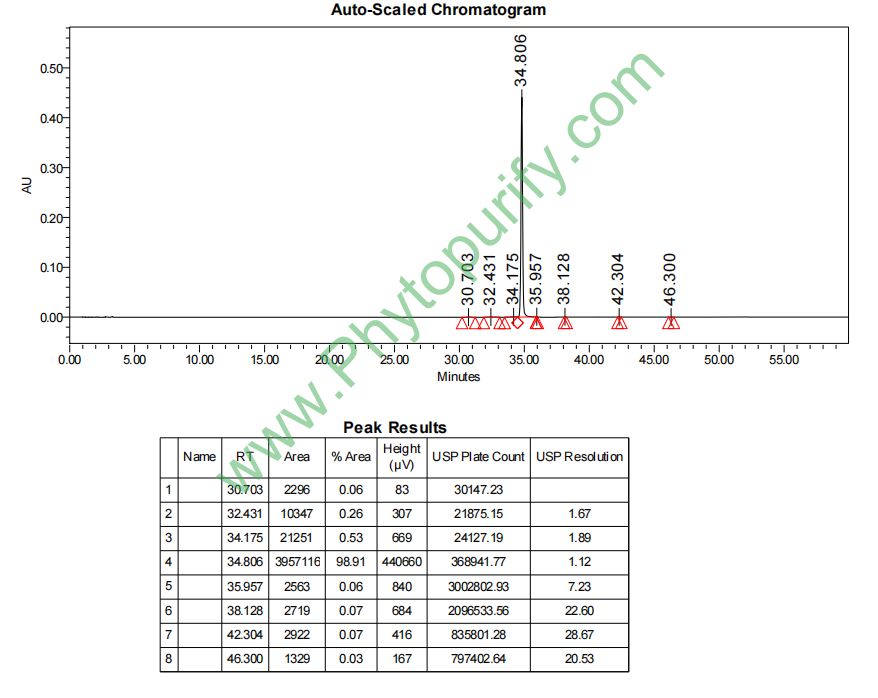
Purity: 95%~99%
Analysis Method: HPLC-DAD or/and HPLC-ELSD
Identification Method: Mass, NMR
Packing: Brown vial or HDPE plastic bottle
Storage: Store in a well closed container, protected from air and light. Put into refrigerate or freeze for long term storage.
Whenever possible, you should prepare and use solutions on the same day. However, if you need to make up stock solutions in advance, we recommend that you store the solution as aliquots in tightly sealed vials at -20℃. Generally, these will be useable for up to two weeks.
The product could be supplied from milligrams to grams, up to kilograms
Inquire for bulk scale.
Descriptions:
Plantamajoside has antibacterial activity, and has inhibition activity against cAMP phosphodiesterase and 5-lipoxygenase and antioxidant activity.[1]
Plantamajoside is a bioactive caffeic acid derivative, a dihydroxyphenethyl glucoside in the group of polyphenolic compounds, it is a protective agent against ultra-violet light in plants and acts as antioxidant agent with very low toxicity. [2]
Plantamajoside ameliorates lipopolysaccharide-induced acute lung injury via suppressing NF-κB and MAPK activation, thus, it may be a potential therapy for the treatment of pulmonary inflammation.[3]
Plantamajoside can inhibit UVB and advanced glycation end products‐induced MMP‐1 Expression by suppressing the MAPK and NF‐?B pathways in HaCaT cells, and attenuate the upregulation of receptor for AGEs (RAGE) by glycer-AGEs with UVB irradiation, suggests that it is a promising inhibitor of skin photoaging.[4]
Plantamajoside is a potential anti-tumor herbal medicine inhibits breast cancer growth and pulmonary metastasis by decreasing the activity of matrix metalloproteinase-9 and -2. [5]
References:
[1] Byung-Gyu Park ?, Hyun-Sun Lee ?, Jung S H, et al. Phytother Res, 2007, 21(12):1118-23.
[2] Ravn H W, Mondolot L, Kelly M T, et al. Phytochem Lett, 2015, 12:42-53.
[3] Wu H, Zhao G, Jiang K, et al. Int Immunopharmacol, 2016, 35:315-22.
[4] Han, Ah‐Ram, Nam, Mi‐Hyun, Lee, et al. Photochem Photobiol, 2016,6.
[5] Pei S, Yang X, Wang H, et al. Bmc Cancer, 2015, 15(1):1-12.
[6] Sun Q, Geng F, Cheng X, et al. China Journal of Chinese Materia Medica, 2010, 35(16):2095-8.
HPLC of Plantamajoside
Storage conditions:Short-term storage at 2~8℃, long-term storage at -20 ~ -80℃
265.5200
-.5207
-.5313
6.7028
.4702
.0646
Low
75.1564
4.7384
Yes
No
No
No
No
No
0.0
Yes
No
Yes
Yes
Natural products, as an important source of drug discovery, play an irreplaceable role in the history of human disease prevention and treatment. Among them, phenylpropanoid glycosides are increasingly becoming a hot topic in pharmacological research due to their wide biological activity and low toxicity. Plantamajoside, a traditional medicinal plant derived from Plantago asiatica(Plantago asiatica L. The phenylpropanoid glycosides isolated from the compound have attracted much attention since their structures were elucidated due to their multi-target and multi pathway pharmacological effects. Its CAS number is 104777-68-6. Modern pharmacological research has revealed that large car glycoside not only has classic anti-inflammatory and diuretic activities, but also shows great potential in anti-tumor, organ protection, and neuroprotection fields. It can induce cell apoptosis, improve autophagy function, and regulate signaling networks such as MAPK and integrin linked kinase/c-Src by inactivating key signaling pathways such as NF - κ B and PI3K/Akt, thereby exerting an improving effect on various cancer models and organ damage such as lungs and kidneys. In addition, its oral activity provides a favorable basis for the development of its pharmacological properties. This article aims to provide a systematic review of the chemical properties, plant sources, pharmacological activities, mechanisms of action, and medicinal properties of daidzein, in order to provide comprehensive scientific references for the in-depth research and potential clinical applications of this compound.
The chemical name of Da Che Qian Glycoside is (2R, 3R, 4S, 5S, 6R) -2- [(2S, 3R, 4S) -4- [(E) -3- (3,4-dihydroxyphenyl) acryloyloxy] -2- [(E) -3- (3,4-dihydroxyphenyl) acryloyloxy] methyl-3-hydroxytetrahydrofuran-2-yl] oxy-6- (hydroxymethyl) tetrahydro-2H-pyran-3,4,5-triol, which is a typical phenylpropane dimer glycoside. Its molecular formula is C29H36O16 and its molecular weight is 640.5910 Da.
Structurally speaking, the core of daidzein is composed of a glucose group and two caffeoyl groups (3,4-dihydroxycinnamoyl) connected by ester bonds. The two caffeoyl groups endow the molecule with significant phenolic hydroxyl properties, which are the main structural basis for its antioxidant and free radical scavenging abilities. The presence of glucose groups greatly enhances the water solubility of molecules. The clever combination of hydrophilic functional groups and hydrophobic aromatic rings determines the unique physicochemical properties of large car precursor glycosides.
According to the provided pharmacological parameters, the theoretical lipid water partition coefficient (LogP) of the compound is -0.5207, indicating that the compound is hydrophilic overall and tends to be distributed in the aqueous phase. Its topological polar surface area (TPSA) is as high as 265.52 Å ², mainly attributed to the numerous hydrogen bond acceptors and donors such as hydroxyl, ether, and ester bonds in the molecule. High TPSA is an important factor limiting its passive transmembrane diffusion. Consistent with this, its water solubility value is 6.7028 (usually measured in mg/mL or log mol/L, indicating good water solubility). These properties indicate that the absorption and distribution of macrolide in the body may face challenges, especially its blood-brain barrier permeability is predicted to be "low", which is related to its larger polarity and molecular weight. However, its oral activity has been confirmed, suggesting the possibility of an active transport mechanism or its local role in the intestine.
The main source of major car glycosides comes from plants in the Plantago genus of the Plantago family, among which Plantago is the main source(Plantago asiatica L. The most common and important. In addition, in plants of the same genus such as Plantago asiatica(P. depressa Willd.)、 In front of the big car(P. major L. And in front of the hairy car(P. lanceolata L. It has also been detected in all cases. As a traditional Chinese medicine, Plantago asiatica has the effects of clearing heat, diuresis, cooling blood, detoxifying, expectorant and cough relieving. Plantago asiatica glycoside is considered one of the key active ingredients that exert its pharmacological effects.
The extraction of daidzein from plant materials is usually carried out using solvent extraction method. Due to its good water solubility and phenolic properties, commonly used extraction solvents include methanol, ethanol, water, and alcohol water mixed solutions in different ratios (such as 70% ethanol). In order to improve extraction efficiency, modern extraction techniques such as ultrasound assisted extraction, microwave-assisted extraction, and pressurized solvent extraction have been widely used. These methods destroy plant cell walls through physical means, accelerate solvent penetration and component dissolution, and can achieve higher extraction rates in a shorter time and with less solvent.
The crude extract after extraction needs further separation and purification to obtain high-purity daidzein. The conventional purification process includes: first, enrichment is carried out using macroporous adsorption resins (such as AB-8, D101 type), and gradient elution is performed using ethanol water solutions of different concentrations to preliminarily separate phenylpropanoid glycosides. Subsequently, silica gel column chromatography and reverse phase silica gel column chromatography (such as ODS-C18) were used for medium or high pressure preparative chromatographic separation. High performance liquid chromatography (HPLC), especially preparative HPLC, is the key technology for ultimately obtaining high-purity daidzein monomers. The optimization of chromatographic conditions usually uses a C18 chromatographic column, with methanol water or acetonitrile water (often containing a small amount of formic acid or acetic acid to improve peak shape) as the mobile phase for gradient elution, and monitored by a UV detector around 330 nm (characteristic absorption wavelength of caffeoyl). At present, the reference standards and high-purity products of Da Che Qian Gan can be commercially supplied, providing material support for pharmacological research.
A large number of in vitro and in vivo studies have shown that daidzein has broad and significant pharmacological activities, covering multiple aspects such as anti-inflammatory, organ protective, anti-tumor, neuroprotective, and diuretic effects.
1. Anti inflammatory and immune regulatory effects:
Da Che Qian Gan is one of the material bases for the anti-inflammatory effect of Plantago asiatica. In the lipopolysaccharide (LPS) - induced macrophage (such as RAW264.7) inflammation model, macrolide can dose dependently inhibit the production of pro-inflammatory mediators such as nitric oxide (NO), prostaglandin E2 (PGE2), tumor necrosis factor - α (TNF - α), interleukin-6 (IL-6), etc. It has also shown good anti-inflammatory effects in various animal models, such as carrageenan induced rat foot swelling and acetic acid induced increased intra-abdominal capillary permeability in mice.
2. Organ protection function:
* Kidney protection: Da Che Qian Gan has a protective effect on kidney damage caused by various reasons. In models of acute kidney injury induced by cisplatin, adenine, or ischemia/reperfusion, pretreatment with large car precursor glycosides can significantly reduce serum creatinine and urea nitrogen levels, alleviate renal tissue pathological damage, and its mechanism is closely related to the inhibition of oxidative stress and inflammatory response. Its diuretic effect (described later) also helps to reduce the burden on the kidneys.
* Lung protection: In the models of bleomycin induced pulmonary fibrosis and LPS induced acute lung injury, macrolide can alleviate alveolar inflammatory cell infiltration, collagen deposition, and lung tissue pathological scores through anti-inflammatory, antioxidant, and anti fibrotic pathways, and improve lung function.
* Liver protection: Research has shown that daidzein has a protective effect on chemical liver damage caused by carbon tetrachloride, acetaminophen, etc. It can reduce serum transaminase levels and improve liver histological lesions.
3. Antitumor activity:
Plantagin has growth inhibitory and apoptosis promoting activities on a variety of human cancer cell lines, including lung cancer, liver cancer, colon cancer, breast cancer, cervical cancer, prostate cancer and glioma. Its function is not limited to inducing apoptosis of tumor cells, but can also inhibit cell migration, invasion, and angiogenesis, indicating its potential for anti-tumor metastasis.
4. Neuroprotective effect:
In cell models of Alzheimer's disease and animal models of cerebral ischemia/reperfusion injury, macrolide showed neuroprotective effects. It can improve cognitive dysfunction, reduce neuronal apoptosis, and its mechanism involves reducing oxidative damage, inhibiting neuroinflammation, and regulating autophagy.
5. Diuretic effect:
As a traditional active ingredient of Plantago asiatica, Caryophyllin does have diuretic activity. Research has shown that its diuretic effect may be related to its impact on the expression and function of renal aquaporins (AQPs) and ion channels, thereby regulating water and salt excretion.
The multiple pharmacological activities of daidzein stem from its complex regulation of multiple key signaling pathways within cells. The core of its mechanism of action network lies in its powerful antioxidant and anti-inflammatory properties, which extend to the regulation of cell fate (apoptosis, autophagy).
1. Inhibition of NF - κ B signaling pathway:
NF - κ B is a core transcription factor for inflammation and cell survival. Da Che Qian Gan can effectively inhibit the phosphorylation and degradation of I κ B α, prevent the nuclear translocation of NF - κ B p65 subunit, and thereby downregulate the expression of a series of downstream pro-inflammatory factors (TNF - α, IL-1 β, IL-6, COX-2, iNOS) and anti apoptotic proteins. This is one of the main mechanisms by which it exerts anti-inflammatory effects and induces apoptosis in certain tumor cells.
2. Regulating the PI3K/Akt/mTOR pathway:
The PI3K/Akt pathway is a key pathway that regulates cell growth, proliferation, and survival. It has been confirmed that daidzein can inhibit the phosphorylation activation of PI3K and Akt. The downstream target mTOR of Akt is the main negative regulator of autophagy. Da Che Qian Glycosides alleviate their inhibition of autophagy by inhibiting Akt/mTOR signaling, thereby "improving autophagy" (i.e. promoting protective autophagy flow). However, sustained autophagy activation in tumor cells may also be associated with cell death. At the same time, the inactivation of Akt promotes the dephosphorylation of downstream pro apoptotic proteins (such as Bad), thereby inducing cell apoptosis through the mitochondrial pathway.
3. Regulating the MAPK family pathway:
The MAPK pathway (including ERK, JNK, p38) is involved in cellular stress, inflammation, and apoptosis responses. The effects of daidzein on different MAPK members are cell and stimulus dependent. For example, in some studies, it inhibits LPS induced phosphorylation of p38 and JNK for anti-inflammatory purposes; In other tumor models, it may activate JNK/p38 pro apoptotic signaling while inhibiting survival signaling ERK.
4. Inducing cell apoptosis:
Da Che Qian Gan induces tumor cell apoptosis through the mitochondrial pathway and endoplasmic reticulum stress pathway. Manifested as reducing mitochondrial membrane potential, promoting cytochrome c release, activating caspase-9 and caspase-3 cascade reactions; Simultaneously upregulate endoplasmic reticulum stress marker proteins such as CHOP and GRP78.
5. Regulating integrin linked kinase (ILK)/c-Src signaling:
ILK is a key node where integrin signaling intersects with cytoskeleton and growth signaling, while c-Src is a non receptor tyrosine kinase. Da Che Qian Gan can regulate the ILK/c-Src axis, which is related to its inhibition of tumor cell migration, invasion, and epithelial mesenchymal transition processes.
6. Molecular targets of diuretic effect:
Regarding its diuretic activity, research suggests that macrolide may exert its effects by affecting multiple kidney water salt transport related proteins, including:
* Aquaporins (AQPs): May regulate the expression or membrane localization of AQP1, AQP2, and AQP3 in the kidneys, affecting water reabsorption.
* Ion channels and transporters: May affect the sodium potassium chloride cotransporter (NKCC2, encoded by SLC12A1), thiazide sensitive sodium chloride cotransporter (NCC, encoded by SLC12A3), extrarenal medullary potassium channel (ROMK, encoded by KCNJ1), and interfere with the transport of sodium, chloride, and potassium.
* Hormone receptors: May antagonize the signals of aldosterone receptor (NR3C2) or vasopressin V2 receptor (AVPR2), indirectly producing diuretic effects. These targets form a complex network that collectively regulates urine production.
Based on the provided calculation parameters and existing research, the preliminary evaluation of the pharmacological properties of Dapagliflozin is as follows:
Advantage:
1. Oral activity: In vivo studies have confirmed the effectiveness of oral administration, which is an important prerequisite for developing oral formulations.
2. High security potential: Calculate and predict that there is no hERG potassium channel inhibitory activity (hERG inhibition: No), indicating a low risk of cardiac toxicity. The Ames test result is 0.0, indicating that there is no mutagenicity alert in this predictive model. These provide preliminary positive signals for its safety.
3. Good water solubility: Good water solubility is beneficial for the development of formulations, especially oral solutions, injections, etc.
4. Multi target effect: It may have comprehensive treatment advantages for complex diseases such as cancer and chronic inflammation.
Challenge:
1. Poor membrane permeability: High TPSA (265.52) and negative LogP value (-0.5207) indicate weak passive transmembrane diffusion ability, which may lead to low oral bioavailability. The low permeability of the blood-brain barrier also limits its direct effects on central nervous system diseases.
2. Metabolism and stability: As ester glycosides, they may be easily hydrolyzed by esterases or glycosidases in the gastrointestinal tract and blood, producing caffeic acid and glucose, which affect the blood concentration and distribution of the prototype drug.
3. Lack of pharmacokinetic data: At present, there is still a relative lack of systematic pharmacokinetic studies on daidzein (such as detailed parameters of absorption, distribution, metabolism, and excretion), and key information on its in vivo metabolites, half-life, protein binding rate, etc. needs to be clarified.
The existing few pharmacokinetic studies suggest that daidzein is rapidly absorbed orally in rats, but its absolute bioavailability may not be high. It is mainly distributed in organs with abundant blood flow such as the kidneys and liver, and its content is extremely low in brain tissue, which is consistent with the prediction. Its excretion pathway may be mainly through the kidneys. In order to improve its pharmacological properties, future research may consider using prodrug strategies (such as modifying phenolic hydroxyl groups to enhance lipid solubility and stability), developing novel drug delivery systems (such as liposomes, nanoparticles, phospholipid complexes to enhance absorption and targeting), or exploring the role of its active metabolites.
As a multi-target natural active molecule, the clinical application prospects of daidzein are broad, but it also faces many challenges.
Potential application directions:
1. Adjuvant treatment for chronic kidney disease and acute kidney injury: In combination with its diuretic, anti-inflammatory, antioxidant and direct renal protection effects, plantain is expected to be developed as an auxiliary drug or functional food ingredient for the treatment of chronic nephritis, diabetes nephropathy or drug-induced renal injury.
2. Anti inflammatory and immune related diseases: It can be used to treat chronic inflammatory diseases such as arthritis, colitis, dermatitis, or as a potential treatment option for pulmonary inflammatory diseases such as chronic obstructive pulmonary disease and pulmonary fibrosis.
3. Tumor adjuvant therapy: Its low toxicity and multi pathway anti-tumor properties make it possible to serve as a sensitizer and adjuvant for chemotherapy or radiotherapy, used to alleviate the side effects of radiotherapy, inhibit tumor metastasis, or treat patients who are resistant to traditional chemotherapy.
4. Prevention and intervention of neurodegenerative diseases: Although the blood-brain barrier has poor permeability, its powerful peripheral anti-inflammatory effect may indirectly exert neuroprotective effects by regulating the "brain peripheral" immune axis. It is also possible to explore direct delivery to the central nervous system through routes such as nasal administration.
Future research prospects:
1. In depth mechanism research: It is necessary to use techniques such as gene knockout and proteomics to more accurately elucidate its primary target and signal network cross-talk under different pathological conditions.
2. System drug optimization: Comprehensive preclinical pharmacokinetic and toxicological studies must be conducted. Based on its physical and chemical properties, actively developing new delivery systems is the key to promoting its clinical application.
3. Structural modification and analog research: Reasonably modifying its chemical structure while preserving pharmacophores and improving its pharmacokinetic properties may lead to more valuable lead compounds for development.
4. Clinical translational studies: After obtaining sufficient preclinical safety and efficacy data support, standardized clinical trials should be gradually promoted to verify their efficacy and safety in specific disease populations.
5. Multi component collaborative research: As the active ingredient of traditional Chinese medicine Plantago asiatica, studying the synergistic effect of Plantago asiatica glycoside with other components in Plantago asiatica, such as verbascoside and aucubin, is in line with the overall view of traditional Chinese medicine and may also discover better compound combinations.
As a phenylpropanoid glycoside derived from traditional medicinal plants, Da Che Qian Glycoside has shown new vitality in modern pharmacological research due to its multi-target and multi pathway pharmacological mode of action. From basic anti-inflammatory and antioxidant properties to complex anti-tumor and organ protection effects, their extensive biological activities reveal the unique value of natural products in addressing complex diseases. Although it faces challenges such as poor membrane permeability and metabolic instability in terms of drug properties, these challenges are precisely the areas that modern pharmacy and medicinal chemistry can focus on addressing. With a deeper understanding of its mechanism of action and the continuous development of structure based drug delivery technology and prodrug strategies, Dapagliflozin is expected to gradually move from a promising lead compound to a candidate drug or functional health product with clear clinical value. It is not only a bridge connecting traditional medical wisdom with modern scientific research, but also provides important molecular templates and research and development ideas for the development of new drugs to treat major diseases such as inflammation, tumors, and organ damage. Future research should focus on the combination of foundation and application, accelerating the modernization and internationalization process of this ancient plant component.
