Miltirone: a multi-target active molecule in Danshen and its pharmaceutical potential
1. Overview
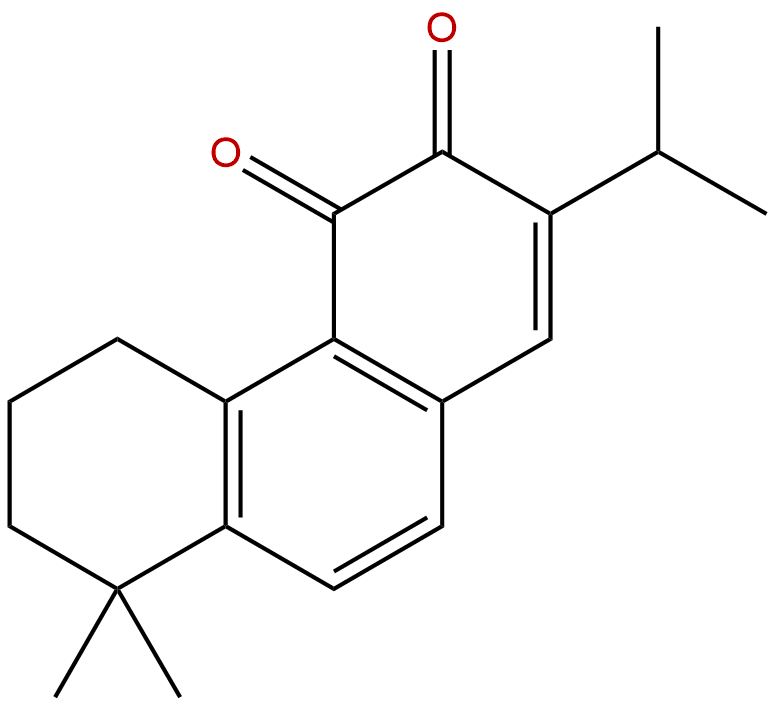
Mildrinone, also known as (3R, 3aS, 9bS) -3-isopropyl-3a, 4,5,9b-tetrahydro-3H-cyclopentane [a] naphthalene-1,8-dione, is a traditional Chinese medicine derived from Salvia miltiorrhiza(Salvia miltiorrhiza Fat soluble diterpenoid quinone natural products isolated from the roots and rhizomes of Bunge. Its CAS number is 27210-57-7, molecular formula is C19H22O2, and molecular weight is 282.38 g/mol. Since its structure was elucidated, salvianolic acid has attracted much attention due to its wide range of biological activities, becoming an important bridge connecting traditional Chinese medicine and modern pharmacological research.
Modern pharmacological studies have shown that salvianolic acid has the characteristics of multi-target and multi pathway effects. It has been identified as an orally active central benzodiazepine receptor partial agonist with an IC50 value of approximately 0.3 μ M, suggesting its potential therapeutic value in neurological disorders, particularly anxiety, epilepsy, and alcohol withdrawal symptoms associated with gamma aminobutyric acid type A (GABAA) receptor dysfunction. In addition, Danshenxin ketone exhibits significant anti-tumor activity and can initiate the apoptosis program of tumor cells through various mechanisms such as inducing reactive oxygen species (ROS) production, activating the p53 pathway, inducing mitochondrial membrane potential collapse, and DNA damage. Its antibacterial, antioxidant, and anti-inflammatory activities have also been confirmed. In recent years, studies have also found that tanshinone can inhibit carboxylesterase 2 (CES2, Ki=0.04 μ M) and severe acute respiratory syndrome coronavirus (SARS CoV) main protease (Mpro), which opens up new ideas for its application in drug interaction regulation and antiviral fields. This article will systematically review this star molecule from its chemical essence, origin, pharmacological mechanism, drug properties, and prospects.
2. Chemical structure and physicochemical properties
The chemical structure of salvianolic acid belongs to phenanthrenequinone diterpenoid compounds, and its SMILES is expressed as: CC(C)C1=Cc2ccc3c(c2C(=O)C1=O)CCCC3(C)C。 This structure contains a phenanthrenequinone nucleus and is connected to hydrophobic groups such as isopropyl and tert butyl at specific positions, which determines its unique physicochemical properties and biological activity.
Based on the analysis of pharmacological parameters, the molecular weight (MW) of Danshenxin ketone is 282.38 g/mol, which meets the requirement of "molecular weight less than 500" in Lipinski's five rules. The logarithm of its lipid water partition coefficient (LogP/LogD) is 4.76, indicating that the compound has a high degree of lipophilicity. This is consistent with its presence in the lipid soluble extract of Danshen, but also results in extremely low water solubility (about 0.0012 mg/mL). High lipophilicity is usually beneficial for compounds to penetrate cell membranes, but it may also lead to problems such as rapid metabolism and low oral bioavailability. Its topological polar surface area (TPSA) is 34.14 Å ², much smaller than the commonly believed membrane permeability threshold (140 Å ²), which explains its good membrane permeability from another perspective.
The experimental data supports the above theoretical prediction: the Caco-2 cell permeability (Papp) of Danshenxin ketone is as high as 31.49 × 10 ⁻⁶ cm/s, indicating its excellent oral absorption potential. More noteworthy is that its blood-brain barrier (BBB) penetration is predicted to be "high", which is highly consistent with its pharmacological activity on central benzodiazepine receptors, providing a key pharmacokinetic basis for its treatment of central nervous system diseases. In terms of plasma protein binding rate (PPB), tanshinone has a high binding rate of 92.25%, which means that it mainly exists in a bound form in the bloodstream, which may affect its free drug concentration and efficacy, and may also prolong its half-life.
3. Plant sources and traditional applications
The plant source of salvianolic acid is single and clear, namely Salvia miltiorrhiza in the family Lamiaceae and genus Salvia(Salvia miltiorrhiza)Its dry roots and rhizomes are called "Danshen" in traditional Chinese medicine. The application history of Danshen has exceeded two thousand years. It was first recorded in the "Shennong Bencao Jing" and is classified as a top-grade product. It is said to "master the evil qi of the heart and abdomen, make the sound of the intestines faint like flowing water, accumulate cold and heat, break down symptoms and eliminate fever, relieve restlessness and fullness, and nourish qi". Later generations of medical practitioners have continuously deepened their understanding of its efficacy, summarizing that it has the effects of "promoting blood circulation and removing blood stasis, unblocking meridians and relieving pain, clearing the heart and eliminating annoyance, cooling blood and eliminating carbuncles".
In clinical practice of traditional Chinese medicine, Danshen is an essential medicine for treating cardiovascular diseases, commonly used for chest pain, epigastric pain, accumulation of pathological conditions, thermal pain, restlessness, menstrual disorders, dysmenorrhea, amenorrhea, and swelling and pain of ulcers. Famous compound preparations such as "Danshen Dripping Pills" and "Compound Danshen Tablets" mainly consist of Danshen and are widely used in the prevention and treatment of diseases such as coronary heart disease and angina pectoris. Traditionally, it is believed that the pharmacological substance basis of Danshen mainly includes two categories: water-soluble salvianolic acid components (such as salvianolic acid B) and fat soluble tanshinone components (such as tanshinone IIA, cryptotanshinone, tanshinone, etc.). Among them, fat soluble components are considered to be an important material basis for their blood activating and stasis removing effects. As an important member of the tanshinone family, the modern pharmacological activity research of salvianolic acid provides a scientific molecular interpretation of its traditional effects of "promoting blood circulation and removing blood stasis" and "clearing the heart and eliminating annoyance". Its functions of anti myocardial ischemia, antioxidant stress, and regulating nerve receptors perfectly correspond to the traditional therapeutic scope.
4. Pharmacological activity and mechanism of action
The pharmacological activity of salvianolic acid is extensive and complex, and its mechanism of action involves the regulation of multiple key targets, forming a multi-target network. By combining its target information (BCL2, HIF1A, SIRT1, NOS3, SOD2) and related diseases (myocardial ischemia), we can delve into its core pathways of action.
4.1 Anti myocardial ischemia and cardiovascular protective effects
The protective effect of salvianolic acid on myocardial ischemia is one of the focuses of its experimental research, which is highly consistent with the traditional use of salvianolic acid. The mechanism may be achieved through multi-target collaboration:
- Antioxidant and anti apoptotic (targeting SOD2, BCL2)One of the core processes of myocardial ischemia-reperfusion injury is oxidative stress and cell apoptosis. Danshenxin ketone can upregulate the expression or activity of superoxide dismutase 2 (SOD2), a key antioxidant enzyme in mitochondria that can clear superoxide anions and alleviate oxidative damage. At the same time, it may protect cardiomyocytes by regulating the balance of B-cell lymphoma 2 (BCL2) family proteins (such as inhibiting pro apoptotic proteins or promoting anti apoptotic proteins), inhibiting the apoptotic pathway of cardiomyocytes.
- Improving endothelial function and regulating blood flow (targeting NOS3)The nitric oxide (NO) produced by endothelial nitric oxide synthase (NOS3) is a key molecule for maintaining vasodilation, inhibiting platelet aggregation, and leukocyte adhesion. Danshenxin ketone may activate or stabilize NOS3, increase the bioavailability of NO, thereby dilating coronary arteries and improving myocardial microcirculation, which directly corresponds to the effect of "promoting blood circulation and removing blood stasis".
- Adapt to hypoxic environment (targeting HIF1A)Hypoxia inducible factor-1 alpha (HIF1A) is a central regulatory factor in cellular response to hypoxia. Under myocardial ischemia, tanshinone may stabilize or regulate HIF1A, activate a series of genes that promote cell survival, angiogenesis (such as VEGF expression), and energy metabolism adaptation, and enhance the tolerance of myocardial cells to ischemia and hypoxia.
- Cellular energy metabolism and stress resistance (targeting SIRT1)Silent Information Regulatory Factor 1 (SIRT1) is an NAD+- dependent deacetylase involved in regulating energy metabolism, oxidative stress response, and cellular aging. Danshenxin ketone may promote mitochondrial biosynthesis and function by activating SIRT1, deacetylation, and activating transcription co activators such as PGC-1 α, while enhancing cellular antioxidant defense capabilities, providing protection from the perspectives of energy supply and cellular homeostasis.
4.2 Central nervous system activity
Danshenxin ketone, as a partial agonist of the central benzodiazepine receptor (CBR), has a unique regulatory effect on GABAA receptors. Partial agonist properties mean that it can exert excitatory effects when endogenous GABAergic neurotransmission is low (such as anxiety, withdrawal states), enhance GABA mediated chloride ion influx, and produce anti anxiety, anticonvulsant, and sedative effects; When GABAergic tension is normal or too high, its effect is weaker, which may reduce the common side effects of complete agonists such as tolerance, dependence, and excessive sedation. This provides a theoretical basis for its use in the treatment of generalized anxiety disorder, alcohol or benzodiazepine withdrawal syndrome.
4.3 Antitumor activity
The anti-tumor mechanism of Danshenxin ketone is diverse and is a research hotspot. In addition to the known induction of ROS/p53 dependent apoptosis and G2/M phase arrest, its target network is also involved:
- Inducing apoptosis High levels of ROS can cause the breakdown of mitochondrial membrane potential (MMP), release cytochrome C, activate the caspase cascade reaction, and at the same time, ROS can cause DNA damage and activate the p53 pathway. As a "genomic guardian", p53 can upregulate pro apoptotic proteins (such as Bax) and downregulate the expression of anti apoptotic protein BCL2, ultimately leading to cell apoptosis. The potential inhibitory effect of salvianolic acid on BCL2 will further promote this process.
- Overcoming multidrug resistance Research has shown that salvianolic acid has "collateral sensitivity" to multidrug-resistant tumor cells overexpressing P-glycoprotein (P-gp), meaning that it not only avoids being excreted by P-gp, but may even exhibit stronger toxicity in these cells. Its mechanism may be related to the unique oxidative stress and apoptosis pathways it induces, bypassing traditional drug resistance mechanisms.
4.4 Other Activities
The potent inhibition of carboxylesterase 2 (CES2) by salvianolic acid ketone (Ki=0.04 μ M) has important pharmaceutical significance. CES2 is a key enzyme in the gut and liver that hydrolyzes ester prodrugs, such as the anti-tumor drug irinotecan. Inhibition of CES2 may alter the metabolic activation rate and site of these prodrugs, thereby affecting their efficacy and toxicity (such as irinotecan's delayed diarrhea), suggesting that tanshinone needs to be carefully evaluated in drug drug interactions and may also be used to design combination therapy regimens to improve the treatment window of prodrugs. Its inhibitory effect on the main protease of SARS CoV demonstrates its potential value in combating coronavirus infection.
5. Evaluation of drug properties
Based on the provided pharmacological parameters, combined with Lipinski's Five Rules, Drug Likenness, and preliminary toxicity data, a systematic evaluation of the pharmacological potential of Danshenxin ketone can be conducted
5.1 Analysis based on Lipinski's Five Rules
The Lipinski Five Rules are empirical rules for evaluating the oral absorption potential of compounds. The relevant parameters of Danshen Xinketone are as follows:
1. Molecular weight (MW):282.38 < 500, Comply with。
2. Lipid water partition coefficient LogP 4.76, usually requires<5, Comply with(But close to the upper limit).
3. Number of hydrogen bond donors (HBDs)From its structural formula (C19H22O2), it can be inferred that there are no non acidic hydroxyl groups, and the HBD number is approximately 0, Comply with(<5)。
4. Number of hydrogen bond acceptors (HBA)Two carbonyl oxides with approximately 2 HBA numbers, Comply with(<10)。
5. Number of rotatable keys The structure is relatively rigid and has fewer rotatable keys, Comply with(Usually<10).
Danshenxin ketone fully complies with Lipinski's five rules, indicating its good oral absorption potential. The experimental/predictive data of its high Caco-2 permeability and high BBB permeability also strongly support this conclusion.
5.2 Pharmacokinetic (PK) characterization evaluation
- Absorption and distribution High LogP and low TPSA ensure its excellent membrane permeability and oral absorption. High BBB penetration is its outstanding advantage as a candidate molecule for central nervous system drugs. However, a plasma protein binding rate of up to 92.25% means that its free drug fraction is low and may require a higher dosage to achieve effective target free concentration.
- Metabolism and clearance The description mentions that 'liver cell metabolism is the main pathway for clearing salvianolic acid'. The quinone ring and ketene structure in its structure may be metabolic hotspots, prone to reactions such as reduction, hydroxylation, and binding. This may lead to significant first pass effects and shorter in vivo half lives, which are aspects that need to be optimized in dosage form design (such as nano formulations, prodrugs) or dosing regimens.
- Potential for drug interactions As a potent inhibitor of CES2, danshenxin ketone may exhibit significant pharmacokinetic interactions when used in combination with ester prodrugs such as irinotecan and oseltamivir, requiring close monitoring.
5.3 Preliminary Safety (Toxicity) Assessment
The toxicity data provided presents a mixed signal, which needs to be focused on in future development
- Genotoxicity The Ames test result is negative (0.0), indicating no bacterial gene mutations. However, the result of 'chromosomal aberration' is' present ', indicating that it may cause chromosomal damage at the mammalian cell level, which may be related to its anti-tumor mechanism of inducing DNA damage, but also poses a potential genetic toxicity risk, and further in vivo genetic toxicity tests are needed to confirm.
- Organ toxicity HERG inhibition as' no 'is a positive signal that reduces the risk of causing QT interval prolongation and apical torsion ventricular tachycardia in the heart. However, elevated levels of serum glutamyltransferase (GGT) and alanine aminotransferase (ALT) suggest potential liver injury ("Ser_GGT: Yes", "Ser_LT: Yes"), which is consistent with their main pathway through liver metabolism and requires special attention in long-term toxicity experiments.
- Other toxicities Skin sensitization (Skid_Sens) and phototoxicity (Photo_tox) are positive, indicating caution in formulation and topical development.
5.4 Comprehensive evaluation of drug properties
Danshenxin ketone is a natural product with an excellent drug like skeleton. Its advantages lie in: good oral absorption, ability to penetrate the blood-brain barrier, clear target of action and relevance to major diseases, and broad activity. The main challenges are: poor water solubility affecting formulation development, high protein binding rate potentially affecting drug efficacy, potential hepatotoxicity and genotoxicity requiring in-depth evaluation and structural optimization. It is highly suitable as a lead compound for developing more potent derivatives through rational medicinal chemical modifications, such as introducing polar groups to improve solubility, modifying metabolic sites to prolong half-life, reducing protein binding rates, and eliminating toxic groups.
6. Research Status and Application Prospects
At present, research on salvianolic acid has gradually progressed from early activity screening and mechanism exploration to translational research stages such as target interaction network analysis, structural optimization, and development of novel delivery systems.
Research status:
1. Deepening mechanism Research is no longer limited to a single target or pathway, but utilizes technologies such as network pharmacology, proteomics, and metabolomics to systematically depict the multidimensional action profile of salvianolic acid in multiple disease models (such as myocardial ischemia, Alzheimer's disease, and various cancers), elucidating the essence of its synergistic effect of "multi-component multi-target multi pathway".
2. Structural modification Using it as the parent nucleus, semi synthetic modification is carried out to improve its water solubility, metabolic stability, reduce toxicity, and enhance selectivity and activity towards specific targets. For example, modifying its quinone ring or side chain is currently a hot topic in pharmaceutical chemistry research.
3. Innovation in delivery system In response to its poor water solubility, researchers have developed various nano delivery systems, such as liposomes, polymer nanoparticles, solid dispersions, cyclodextrin inclusion complexes, etc., to significantly improve its solubility, bioavailability, and tumor targeting.
4. Exploration of combination therapy Based on its CES2 inhibition and induction of unique apoptosis pathways, explore its combination with chemotherapy drugs (such as irinotecan) or targeted drugs to enhance efficacy, reverse drug resistance, or reduce toxic side effects.
Application Prospects:
1. Neurological drugs As a CBR regulator with partial agonist properties, the development of new drugs for the treatment of anxiety disorders, insomnia, and alcohol/drug withdrawal syndrome may have better safety than full agonists.
2. Antitumor drugs/sensitizers Its multi mechanism anti-tumor activity and ability to overcome multidrug resistance make it potential for development as a novel anti-tumor drug or as a sensitizer for chemotherapy/radiotherapy. Optimized derivatives targeting specific targets, such as BCL2, are worth looking forward to.
3. Cardiovascular protectants As one of the key components of salvia miltiorrhiza to play the role of "promoting blood circulation and removing blood stasis", drugs or health products developed to prevent and treat myocardial ischemia reperfusion injury and atherosclerosis have solid theoretical support of traditional Chinese medicine and modern pharmacological basis.
4. Antiviral adjuvant therapy Its inhibitory effect on SARS CoV Mpro provides a new research direction for the use of it or its derivatives in the fight against coronavirus infection.
Summary Danshen Xinketone is a treasure molecule extracted from the traditional Chinese medicine Danshen. It is like a multi toothed key that can simultaneously act on multiple biological targets related to major diseases, demonstrating the vitality of the therapeutic philosophy of multi-target regulation in traditional Chinese medicine under modern science. Although it still faces challenges in solubility, toxicology, and other aspects on the path of drug development, its excellent drug like skeleton and rich biological activity make it a highly valuable lead compound for development. With the continuous advancement of modern drug development technology, salvianolic acid and its derivatives are expected to develop into innovative drugs for the treatment of cardiovascular and cerebrovascular diseases, neurological diseases, and tumors in the future, achieving a magnificent transformation from ancient herbs to modern drugs.