Introduction/Overview
Natural products, as an important source of drug discovery, play an irreplaceable role in the long history of human struggle against diseases. Isolating and identifying active ingredients from traditional herbs, and elucidating their pharmacological mechanisms, is an important paradigm in modern medicinal chemistry and pharmacology research. Di Fu Zi(Kochia scoparia (L.) Schrad., as a traditional Chinese medicine, was first recorded in the "Shennong Bencao Jing". It has the effects of clearing heat and dampness, dispelling wind and itching, and is commonly used to treat conditions such as painful urination, itching under the vagina, rubella and eczema. Modern pharmacological research has revealed that extracts of Kochia scoparia have various biological activities such as anti-inflammatory, anti allergic, anti pathogenic microorganisms, and anti osteoporosis. Among them, Momordin II, as one of its key active ingredients, has attracted widespread attention from researchers in recent years.
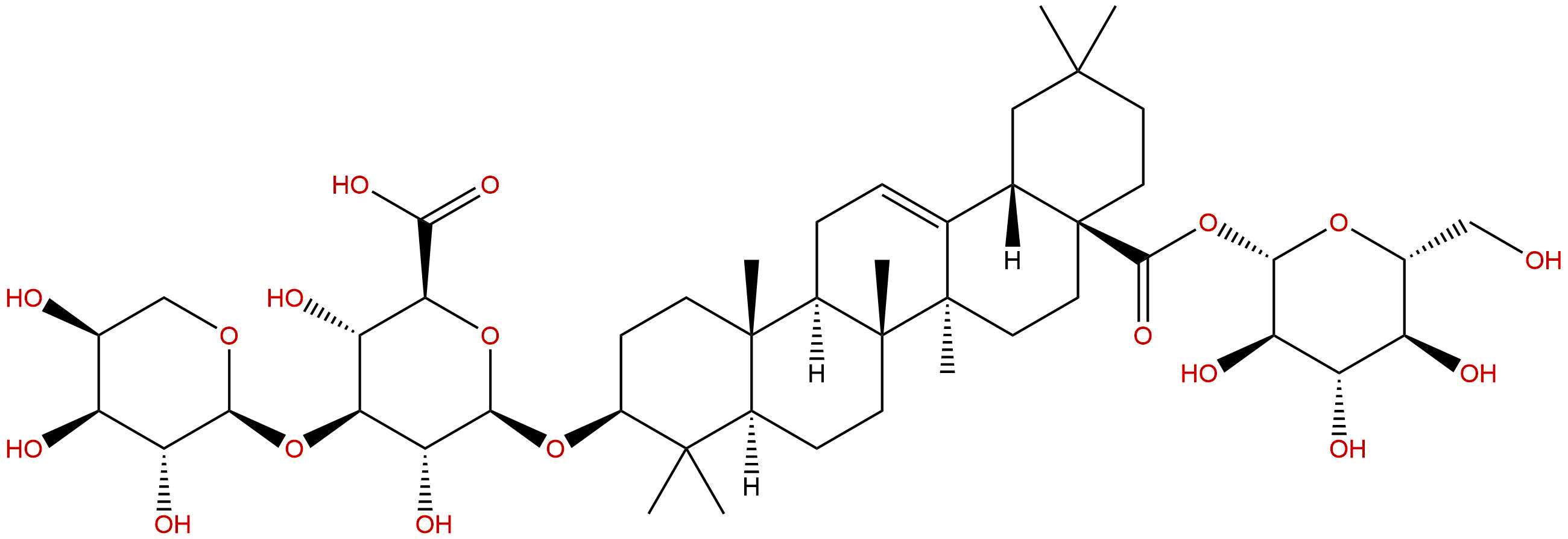
Emodin II is a triterpenoid glycoside of the oleane type, belonging to the family of ribosome activating proteins (RIPs). Ribosomal inactivating proteins are a type of toxin protein or glycoside that can specifically modify ribosomal RNA to inhibit protein synthesis, and are widely present in plants, bacteria, and fungi. The unique chemical structure of Kochia scoparia saponin II endows it with diverse biological activities, especially its potential in anti osteoporosis, making it a research hotspot for candidate compounds for the treatment of metabolic bone diseases. This article aims to provide a systematic review of the chemical structure, physicochemical properties, plant sources, extraction methods, pharmacological activity, mechanism of action, pharmacological evaluation, and clinical application prospects of dioscin II, in order to provide comprehensive scientific basis for the further development and utilization of this natural product.
Chemical structure and physicochemical properties
The chemical structure of Momordin II belongs to the oleane type pentacyclic triterpenoid saponin. Its glycoside is oleanolic acid, a widely present pentacyclic triterpenoid acid in the plant kingdom. Sugar chains are connected to the C-3 and C-28 positions of oleanolic acid, forming a typical disaccharide chain saponin structure. Specifically, the C-3 hydroxyl group of Kochia scoparia saponin II is usually linked to a β - D-glucuronic acid (GlcA), while the C-28 carboxyl group is linked to an oligosaccharide chain composed of glucose (Glc), rhamnose (Rha), and arabinose (Ara) through ester bonds. This complex glycosylation pattern not only determines the hydrophilicity and spatial conformation of the compound, but is also closely related to its biological activity and pharmacokinetic behavior. Its CAS number is 95851-41-5.
From the perspective of physical and chemical properties, the molecular weight of Kochia scoparia saponin II is 927.0910 Da, which is a medium-sized natural product molecule. Its lipophilic water partition coefficient (LogP) is 2.2525, indicating that the compound has a certain degree of lipophilicity, but at the same time, due to the presence of multiple sugar and carboxyl groups in the molecule, its polarity is also high. The topological polar surface area (TPSA) is as high as 291.8200 Å ², which is much higher than the recommended upper limit of 140 Å ² for oral drugs, indicating that its transmembrane permeability may be poor. The water solubility parameter is 0.1284 mg/mL, indicating a low solubility in water. These physicochemical properties collectively determine the absorption, distribution, metabolism, and excretion (ADME) characteristics of Kochia scoparia saponin II in the body. For example, its high TPSA and low water solubility may lead to limited oral bioavailability. In addition, the predictive model shows that its blood-brain barrier (BBB) penetration ability is low, indicating a lower risk of central nervous system side effects. HERG inhibition prediction is negative, indicating a low risk of cardiac toxicity. The Ames test result is 0.0, indicating that it does not have significant mutagenicity. These preliminary drug efficacy evaluations provide important references for subsequent drug development.
Plant sources and extraction methods
The main plant source of saponins II from Kochia scoparia is the Chenopodiaceae plant Kochia scoparia(Kochia scoparia The dried and ripe fruit of (L.) Schrad., also known as the traditional Chinese medicine Kochia scoparia. Difu is widely distributed and has abundant resources in China, and its fruit has a long history of being used as a traditional Chinese medicine. In addition to Kochia scoparia, Kochia scoparia saponin II has also been found in some other plants, such as the woody plant Kochia scoparia(Akebia quinata)And certain types of honeysuckle(Lonicera The content of spp is usually low. Therefore, Kochia scoparia remains the most economical and primary source for obtaining this compound at present.
The extraction of saponins II from Kochia scoparia usually follows the classic extraction process of natural product saponins. Due to the good solubility of saponins in alcohol solvents, the most commonly used extraction method is ethanol or methanol reflux extraction. The specific steps usually include: crushing the dried fruit of Kochia scoparia, using a certain concentration (such as 70% -95%) of ethanol or methanol for multiple extractions or reflux extraction under heating conditions, combining the extracts, and concentrating under reduced pressure to obtain the total extract. Subsequently, preliminary separation was carried out using liquid-liquid extraction method, such as dispersing the total extract in water and sequentially extracting with solvents of different polarities such as petroleum ether, ethyl acetate, n-butanol, etc. Due to its high polarity, saponins II from Kochia scoparia are mainly enriched in the n-butanol extraction layer.
After obtaining the n-butanol extract, various chromatographic techniques need to be further used for purification. Classic separation methods include silica gel column chromatography, macroporous adsorption resin column chromatography, ODS (octadecylsilane bonded silica gel) reverse phase column chromatography, and preparative high-performance liquid chromatography (Prep HPLC). Macroporous adsorption resins (such as D101, AB-8, etc.) are often used for the preliminary purification and enrichment of saponin components due to their low cost, large sample loading capacity, and ease of scaling up. Most impurities can be removed by gradient elution using ethanol water systems of different concentrations. Subsequently, a combination of silica gel column chromatography (chloroform methanol water system) and ODS column chromatography (methanol water system) was used for fine separation, and ultimately high-purity dioscin II monomer was obtained by preparative HPLC. Throughout the entire extraction and purification process, it is necessary to strictly control conditions such as temperature and pH to avoid hydrolysis of glycosidic bonds or breakage of ester bonds, ensuring the structural integrity of the target compound. In recent years, some new extraction techniques such as ultrasound assisted extraction, microwave-assisted extraction, and supercritical fluid extraction have also been attempted for the extraction of saponins from Kochia scoparia, aiming to improve extraction efficiency and reduce solvent consumption.
Pharmacological activity research
The pharmacological activity research of Kochia scoparia saponin II mainly focuses on its anti osteoporosis effect, while other potential activities such as anti-inflammatory and anti-tumor effects have also been studied.
Anti osteoporosis activity It is the most widely studied pharmacological effect of saponins II from Kochia scoparia. Osteoporosis is a systemic bone disease characterized by low bone mass, destruction of bone microstructure, increased bone fragility, and susceptibility to fractures. The pathogenesis mainly involves the imbalance between bone resorption (osteoclast activity) and bone formation (osteoblast activity). Multiple in vitro and in vivo studies have shown that saponins II from Kochia scoparia can regulate bone metabolism through various pathways. At the cellular level, saponins II from Kochia scoparia can promote the proliferation, differentiation, and mineralization of osteoblasts, while inhibiting the formation of osteoclasts and bone resorption function. For example, in bone marrow mesenchymal stem cells or osteogenic precursor cell lines (such as MC3T3-E1), treatment with dioscin II can upregulate the expression of osteogenic differentiation marker genes (such as Runx2, Osterix, COL1A1, BGLAP, etc.) and enhance alkaline phosphatase (ALP) activity and calcium nodule formation. In osteoclast precursor cells (such as RAW264.7 or bone marrow macrophages), dioscin II can inhibit RANKL induced osteoclast differentiation, reduce the number of mature osteoclasts, and decrease the area of bone resorption cavities. In animal models of osteoporosis induced by ovariectomy (OVX) in rats or mice, treatment with dioscin II orally or intraperitoneally can significantly improve bone density (BMD), trabecular microstructural parameters (such as bone volume fraction, trabecular thickness, quantity, etc.), and reduce the levels of serum bone resorption markers (such as TRAP-5b, CTX-I).
Other pharmacological activities In addition to its anti osteoporosis effect, literature reports indicate that saponins II from Kochia scoparia also have other biological activities. For example, as a ribosome inactivating protein, it can inhibit cell-free protein synthesis and release adenine from rat liver ribosomes and DNA without RNase activity. This characteristic has attracted attention in anti-tumor research, and theoretically can exert cytotoxic effects by inhibiting protein synthesis in tumor cells. In addition, some studies suggest that saponins II from Kochia scoparia may have anti-inflammatory activity, which can inhibit the production of inflammatory mediators (such as nitric oxide, prostaglandin E2) and the expression of inflammatory factors. However, there is relatively little research on these aspects, and their specific pharmacological effects and clinical application value still need further exploration.
Mechanism of action and molecular targets
The molecular mechanism of the anti osteoporosis effect of Kochia scoparia saponin II is the result of the synergistic action of multiple targets and pathways. Based on existing research, its mechanism of action mainly involves regulating the functions of osteoblasts and osteoclasts, with core targets including ESR1, MMP9, VDR, RUNX2, SP7, CTSK, TNFRSF11B, SOST, COL1A1, and BGLAP.
1. Promote osteogenic differentiation and bone formation:
Emodin II can activate key transcription factors involved in osteoblast differentiation.RUNX2(Runt related transcription factor 2) and SP7 Osterix is the main controlling gene for osteogenic differentiation, and saponins II from Kochia scoparia can upregulate their expression, thereby initiating the transcription of downstream osteogenic related genes. These downstream genes include those encoding the alpha 1 chain of type I collagen COL1A1 The main organic components of bone matrix and the encoding of osteocalcin BGLAP A non collagenous bone matrix protein that is a marker of osteoblast maturation and bone formation. In addition, saponins II from Kochia scoparia may also be regulated by VDR(Vitamin D receptor) and ESR1 The activity of estrogen receptor alpha exerts its effect. VDR is a nuclear receptor for 1,25-dihydroxyvitamin D3, and its activation is crucial for calcium and phosphorus metabolism and bone mineralization. ESR1 is the main receptor for estrogen and plays a protective role in bone metabolism. Emodin II may promote bone formation by mimicking or enhancing estrogen signaling.TNFRSF11B Osteoprotegerin (OPG) is a bait receptor for RANKL, and dioscin II can upregulate the expression of OPG, thereby inhibiting RANKL mediated osteoclast activation.SOST Osteocalcin is a negative regulator of bone formation, which inhibits osteogenesis by suppressing the Wnt/β - catenin signaling pathway. Emodin II may alleviate its inhibition of bone formation by downregulating the expression of SOST.
2. Inhibit osteoclast activity and bone resorption:
The inhibitory effect of Kochia scoparia saponins II on osteoclasts is mainly achieved by interfering with their differentiation, activation, and function.CTSK Protease K is a key protease secreted by osteoclasts, responsible for degrading type I collagen in the bone matrix. Emodin II can inhibit the expression and activity of CTSK, thereby reducing the degradation of bone matrix.MMP9 Matrix metalloproteinase 9 (MMP-9) also participates in the degradation of bone matrix and the migration of osteoclasts, and dioscin II can downregulate the expression of MMP9. In addition, saponins II from Kochia scoparia may also inhibit the differentiation of osteoclast precursors into mature osteoclasts by suppressing the RANKL-RANK signaling pathway, blocking the activation of downstream key signaling pathways such as NF - κ B and MAPK.
3. Mechanism of ribosome inactivation protein:
As a ribosome inactivating protein, the unique mechanism of Kochia scoparia saponin II is its ability to specifically act on the 28S rRNA of the large subunit (60S) of eukaryotic ribosomes. Through its N-glycosidase activity, it hydrolyzes specific adenine bases at specific positions (such as the A4324 site in rat ribosomes), leading to ribosome inactivation and inhibiting protein synthesis. Although primarily described as a defense mechanism, this mechanism may exert cytotoxic effects in anti-tumor research by selectively inhibiting protein synthesis in rapidly proliferating tumor cells. It is worth noting that saponin II from Kochia scoparia can release adenine from DNA, indicating its potential for broader nucleic acid modification activity, but its biological significance remains to be elucidated. Importantly, it lacks RNase activity, indicating that its mechanism of action is highly specific.
Evaluation of drug properties and pharmacokinetics
Based on the provided pharmacological parameters, Kochia scoparia saponins II have shown certain potential for development, but also face significant challenges.
Pharmaceutical advantages:
1. Low toxicity risk: HERG inhibition prediction is negative, indicating a low risk of causing QT interval prolongation and fatal arrhythmias in the heart. The Ames test result is 0.0, indicating a low risk of genetic toxicity, which is an important positive signal for the preclinical safety evaluation of the candidate drug.
2. Targeted: It has clear regulatory effects on multiple targets related to bone metabolism, such as RUNX2, CTSK, OPG, etc., demonstrating a good pharmacological activity foundation.
3. Central nervous system safety: The low penetration ability of the blood-brain barrier means that it is not easily able to enter the central nervous system, which can reduce potential neurotoxic side effects.
Drug Challenge:
1. Low oral bioavailability: This is the main challenge faced by saponins II from Kochia scoparia. Its molecular weight (927 Da) exceeds the "five rule" threshold of 500 Da, and the combination of high TPSA (291.8 Å ²) and low water solubility (0.1284 mg/mL) results in extremely poor membrane permeability and solubility. These properties predict that its oral absorption rate will be very low, making it difficult to achieve effective blood drug concentrations.
2. Metabolic stability issues: As a glycoside compound, Kochia scoparia saponin II is easily hydrolyzed by enzymes (such as glycosidases) in the gastrointestinal tract and liver, leading to the release of its aglycone (oleanolic acid) or secondary glycosides, thereby altering its pharmacological properties. The metabolic pathways and activity of metabolites in its body are not yet clear.
3. Limitations on administration methods: Given the low oral bioavailability, intravenous or transdermal administration may be a more feasible route of administration. However, intravenous injection requires higher solubility and stability of the drug, while transdermal administration requires overcoming the skin barrier.
Pharmacokinetic characteristics: At present, there are relatively few systematic studies on the pharmacokinetics of saponins II from Kochia scoparia in vivo. Based on its physicochemical properties, it is speculated that after oral administration, it has poor absorption, high plasma protein binding rate, and may have a small distribution volume, mainly distributed in tissues with abundant blood flow such as the liver and kidneys. Its metabolism may mainly occur in the intestine and liver, through reactions such as hydrolysis, oxidation, and reduction. The main excretion pathways may be bile and urine. Future research should focus on pharmacokinetic studies under different routes of administration, including absorption rate, bioavailability, tissue distribution, metabolic pathways, and excretion kinetics, to provide a basis for dosage form design and clinical dosing regimens. For example, developing novel drug delivery systems such as liposomes, nanoparticles, and phospholipid complexes may be an effective strategy to improve their oral bioavailability.
Clinical application prospects and prospects
As a natural product with multi-target regulation of bone metabolism activity, Kochia scoparia saponin II has shown promising clinical application prospects in the treatment of osteoporosis.
1. Development of anti osteoporosis drugs: Osteoporosis is a global public health issue, particularly threatening postmenopausal women and the elderly population. Although existing therapeutic drugs (such as bisphosphonates, selective estrogen receptor modulators, parathyroid hormone analogues, etc.) have certain therapeutic effects, long-term use may have side effects (such as jaw necrosis, atypical femoral fractures, thrombotic risk, etc.) or poor compliance. Kochia scoparia saponin II has the potential to become a "dual effect regulator of bone formation and resorption" through its dual mechanism of promoting bone formation and inhibiting bone resorption. This mode of action may be superior to single acting drugs, and is expected to achieve more effective recovery of bone mass and a more significant reduction in fracture risk. Especially its inhibitory effect on SOST provides new ideas for the development of novel anti osteoporosis drugs.
2. Synergistic effects with other drugs: Emodin II may have a synergistic effect with other anti osteoporosis drugs such as vitamin D, calcium supplements, bisphosphonates, etc. For example, its upregulation of VDR expression may enhance the physiological effects of vitamin D. The combination therapy strategy is expected to improve efficacy and reduce side effects while reducing the dosage of monotherapy.
3. Challenges and Future Research Directions: Despite its broad prospects, the clinical translation of Kochia scoparia saponin II still faces many challenges.
* The issue of bioavailability: This is the biggest bottleneck for its drug development. The future research focus should be on developing efficient drug delivery systems, such as nanoemulsions, lipid nanoparticles, polymer micelles, etc., to improve their solubility, stability, and oral absorption. Structural modification, such as preparing prodrugs or searching for more active analogues, is also an important research direction.
* In depth study of the mechanism of action: Although multiple targets have been identified, their precise molecular binding patterns, signal network regulation, and the specific role of ribosome inactivating protein mechanisms in bone metabolism still need further clarification. Especially, how it selectively acts on bone cells without affecting other normal cells is the key to safe medication.
* Long term toxicity and safety evaluation: A systematic long-term toxicity study is needed, including its impact on liver and kidney function, reproductive system, immune system, and potential carcinogenicity assessment. Although the Ames test is negative, in vivo mutagenicity still needs to be verified.
* Quality control and standardization: Establishing quality standards for saponins II and related preparations of Kochia scoparia, including content determination, purity inspection, fingerprint analysis, etc., is the basis for ensuring the reliability of clinical research results and product consistency.
Conclusion
Di Fu Zi saponin II, a triterpenoid glycoside derived from the traditional Chinese medicine Di Fu Zi, occupies a place in the field of natural product pharmacology due to its unique chemical structure and biological characteristics as a ribosome inactivating protein. It exhibits dual anti osteoporosis effects of promoting osteogenic differentiation and inhibiting osteoclast activity by regulating multiple key targets such as ESR1, RUNX2, CTSK, TNFRSF11B, providing valuable lead compounds for the development of novel bone metabolism regulating drugs. Despite the significant challenges of low oral bioavailability in drug development, these obstacles are expected to be gradually overcome through modern drug chemical modifications, development of novel drug delivery systems, and in-depth mechanism research. In the future, with the continuous deepening of the pharmacological network, in vivo pharmacokinetic behavior, and long-term safety evaluation of saponins II from Kochia scoparia, we have reason to believe that this ancient natural molecule has the potential to bring new vitality to modern drug development and bring new treatment hope to billions of osteoporosis patients worldwide. Drawing inspiration from the wisdom of traditional Chinese medicine and combining it with modern science and technology for innovation is an inexhaustible driving force for the discovery of natural product medicines.