


Product name: Momordin Ic
Synonym name:
Catalogue No.: BP0955
Cas No.: 96990-18-0
Formula: C41H64O13
Mol Weight: 764.95
Botanical Source: Kochiae Fructus
Physical Description:
Type of Compound: Triterpenoids
Purity: 95%~99%
Analysis Method: HPLC-DAD or/and HPLC-ELSD
Identification Method: Mass, NMR
Packing: Brown vial or HDPE plastic bottle
Storage: Store in a well closed container, protected from air and light. Put into refrigerate or freeze for long term storage.
Whenever possible, you should prepare and use solutions on the same day. However, if you need to make up stock solutions in advance, we recommend that you store the solution as aliquots in tightly sealed vials at -20℃. Generally, these will be useable for up to two weeks.
The product could be supplied from milligrams to grams
Inquire for bulk scale.
Chengdu Biopurify Phytochemicals Ltd. is a leading company in the research, development, manufacture and marketing of High Quality Phytochemicals and Extracts(especially Active Ingredients from Traditional Chinese Medicine,TCM), Natural Active Pharmaceutical Ingredients worldwide.
The main services:
A. Supply active ingredients and reference standards of TCM, from mgs to kgs scale
B. Custom extraction and purification, target Herb Active Ingredients
C. Custom synthesis and semi-synthesis for Natural Active Ingredients
D. CR(contract research), CM(contract manufacture) and PD(process development) services from lab scale, pilot scale to commercial scale(GMP is also available)
E. TCM compounds library for drug screen,more than 3000 compounds available, many of them are rare and unique.
HPLC of Momordin Ic
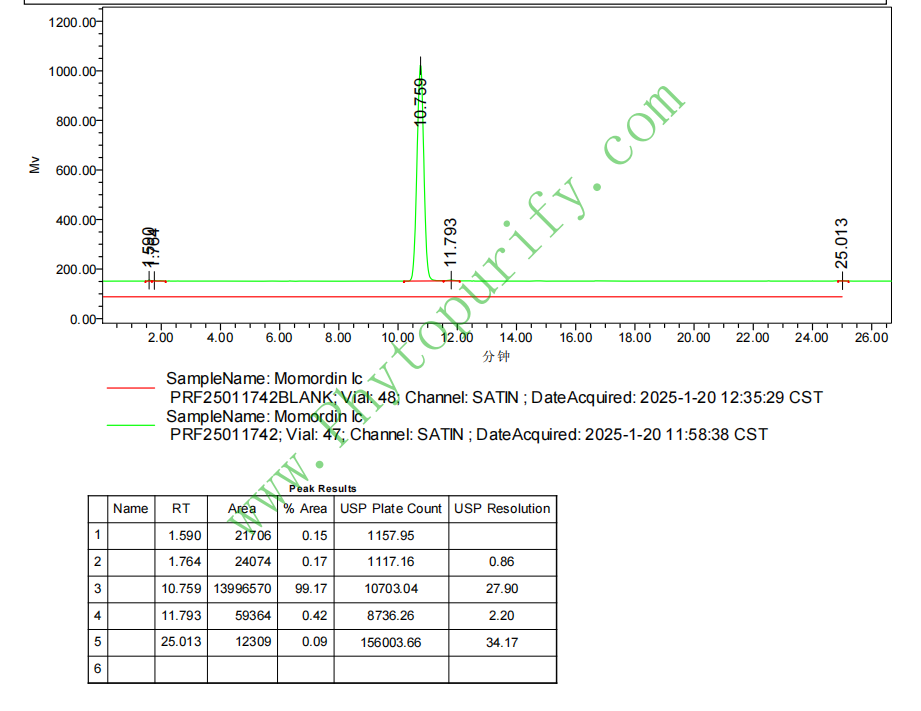
Storage conditions:Short-term storage at 2~8℃, long-term storage at -20 ~ -80℃
212.6700
3.3234
.2547
.0455
.6076
.2635
Low
88.9718
5.7358
No
No
Yes
No
No
No
0.0
Yes
No
No
No
Natural products, as an important source of drug discovery, play an irreplaceable role in the long-term struggle between humans and diseases. Chinese traditional medicinal plant Kochia scoparia(Kochia scoparia The dried and ripe fruit of (L.) Schrad. has been used since ancient times to treat diseases such as damp heat syndrome, skin itching, and rubella. Modern pharmacological research has revealed that Kochia scoparia contains various bioactive triterpenoid saponins. Among them, Kochia scoparia saponin Ic (Momordin Ic) has attracted much attention due to its unique chemical structure and extensive pharmacological activities.
Kochia scoparia saponin Ic is a naturally occurring oleanane type triterpenoid saponin with the molecular formula C ₄₁ H ₆₄ O ₁ ∝ and CAS number 96990-18-0. In recent years, this compound has shown significant therapeutic potential in multiple fields such as anti-tumor, anti-inflammatory, anti allergic, and metabolic regulation. Of particular note is the identification of Kochia scoparia saponin Ic as a selective inhibitor of SUMO specific protease 1 (SENP1), providing a novel molecular basis for its application in cancer treatment. In addition, the compound can induce autophagy and apoptosis in liver cancer cells by regulating the PI3K/Akt and MAPK signaling pathways mediated by reactive oxygen species, demonstrating multi-target and multi pathway pharmacological effects.
With the deepening of precise pharmacological research on natural products, the saponin Ic of Kochia scoparia has gradually evolved from a traditional Chinese medicine active ingredient to a candidate drug molecule with clear molecular targets and mechanisms of action. This article will provide a systematic review of the research progress on the saponin Ic of Kochia scoparia from the aspects of chemical structure, plant origin, pharmacological activity, mechanism of action, pharmacological evaluation, and clinical application prospects, in order to provide reference for the further development and utilization of this natural product.
Kochia scoparia saponin Ic belongs to the oleanane type pentacyclic triterpenoid saponin, and its aglycone is oleanolic acid. The structural feature of this compound is that the C-3 hydroxyl group is connected to a disaccharide chain composed of glucuronic acid (GlcA) and glucose (Glc), forming a typical 3-O-glycosidic bond connection. Specifically, its sugar chain structure is β - D-glucuronide - (1 → 2) - β - D-glucuronide, which endows the molecule with unique physicochemical properties and biological activity.
In terms of molecular weight, the molecular weight of Kochia scoparia saponin Ic is 764.95 Da, which is a medium-sized natural product molecule. The LogP value of its lipid water partition coefficient is 3.3234, indicating that the compound has a certain degree of lipophilicity, which is consistent with the hydrophobic properties of its triterpenoid glycoside skeleton. However, the presence of multiple hydroxyl and carboxyl groups (derived from glucuronic acid) in the molecule results in a polar surface area (TPSA) of up to 212.67 Å ², significantly higher than the recommended upper limit of 140 Å ² for oral medications. This feature suggests that the membrane permeability of icariin Ic may be limited to some extent, but its moderate lipophilicity provides the possibility for its interaction with biofilms and target proteins.
In terms of water solubility, the solubility of Kochia scoparia saponin Ic is only 0.0455 mg/mL, making it a poorly soluble compound. This low water solubility characteristic is more common in saponin compounds, mainly attributed to the amphiphilic balance between the hydrophobic core of their triterpenoid glycosides and the polar sugar chain. It is worth noting that the water solubility of this compound may vary with changes in pH, temperature, and solvent system, which poses challenges for its formulation development.
From the perspective of medicinal chemistry, the saponin Ic molecule of Kochia scoparia contains multiple functional groups that can form hydrogen bonds, including hydroxyl, carboxyl, and glycosidic oxygen atoms. These functional groups not only affect its solubility and stability, but also serve as key structural units for its interaction with biological targets. In addition, there are no obvious alkaline nitrogen atoms in the structure of the compound, which is consistent with its lower hERG inhibition risk (predicted as negative), indicating a lower risk of cardiac toxicity. The Ames test result was 0.0, indicating that the compound did not exhibit mutagenicity in the bacterial recovery mutation test, providing preliminary positive evidence for its safety evaluation.
The main natural source of saponin Ic from Kochia scoparia is the plant Kochia scoparia in the Chenopodiaceae family(Kochia scoparia The dried and ripe fruit of (L.) Schrad., also known as the traditional Chinese medicine Kochia scoparia. Kochia scoparia is widely distributed in China, mainly produced in Hebei, Shanxi, Shandong, Henan and other places, with abundant resources. In addition to Kochia scoparia, this compound is also found in plants of the same genus such as Kochia indica Found in the middle, but the content is usually low.
The extraction of saponins from Kochia scoparia is usually carried out using classical solvent extraction methods. Given the moderate polarity of the saponin Ic in Kochia scoparia, the ethanol water mixed solvent system is the most commonly used extraction medium. Research has shown that using 70% -80% ethanol reflux extraction, a solid-liquid ratio of 1:10-1:15, and an extraction time of 1-2 hours can achieve high extraction efficiency. To improve the extraction selectivity of the target compound, n-butanol extraction or macroporous adsorption resin (such as D101, AB-8 type) can be further used to enrich saponin components.
In terms of separation and purification, the purification of Kochia scoparia saponin Ic usually requires the combination of multiple chromatographic techniques. Firstly, the crude extract was subjected to silica gel column chromatography with chloroform methanol water (65:35:10, lower layer) as the eluent for preliminary separation. Subsequently, reverse phase silica gel (ODS) column chromatography was used with methanol water gradient elution to further enrich the target components. Finally, the high performance liquid chromatography (HPLC) preparation method was used to obtain the saponin Ic monomer of Kochia scoparia with a purity of over 98%. In recent years, high-speed countercurrent chromatography (HSCCC) technology has also been applied to the separation of saponins from Kochia scoparia, which has the advantages of high sample recovery rate and low solvent consumption.
It is worth noting that the content of saponins in Kochia scoparia is influenced by various factors, including place of origin, harvesting time, drying method, and storage conditions. Generally speaking, the content of saponin Ic in Kochia scoparia is between 0.1% and 0.5% (calculated as dry product), which belongs to the category of moderate content components. It is crucial to establish efficient and reproducible extraction and purification processes to meet the needs of pharmacological research and potential drug development. In addition, with the development of synthetic biology and biocatalytic technology, the potential application prospects of using enzymatic or microbial transformation to synthesize Kochia scoparia saponin Ic or its analogues have also been demonstrated.
The anti-tumor activity of saponin Ic from Kochia scoparia is one of its most concerned pharmacological effects. In vitro experiments showed that the compound had a proliferation inhibitory effect on a variety of tumor cell lines, including liver cancer cells (HepG2, Huh7), breast cancer cells (MCF-7), lung cancer cells (A549) and colon cancer cells (HT-29). Among them, the effect on liver cancer cells is particularly significant, and the half maximal inhibitory concentration (IC ₅₀) is usually in the range of 10-30 μ M.
In liver cancer models, the saponin Ic from Kochia scoparia can induce both cell apoptosis and autophagy simultaneously. Research has found that after treating HepG2 cells with this compound, typical morphological changes of apoptosis can be observed, including cell shrinkage, chromatin condensation, and the formation of apoptotic bodies. At the same time, it has been confirmed that the autophagy marker LC3-II/I ratio increases, p62 protein levels decrease, and autophagy flow is enhanced. It is worth noting that autophagy induced by saponins Ic from Kochia scoparia seems to have a dual effect: in the early stages, autophagy may serve as a protective mechanism; As the drug concentration and duration of action increase, excessive autophagy ultimately leads to cell death.
The in vivo anti-tumor experiment further confirmed the therapeutic effect of Kochia scoparia saponin Ic. In a nude mouse xenograft tumor model, oral administration of icariin Ic (20-40 mg/kg/d) significantly inhibited the growth of HepG2 tumors, with an inhibition rate of 40% -60%, and no significant weight loss or organ toxicity was observed. Histopathological analysis showed that the number of apoptotic cells increased and the expression of proliferation marker Ki-67 decreased in the tumor tissue of the treatment group.
Based on traditional applications, the anti allergic activity of Kochia scoparia saponin Ic has been systematically studied. In the degranulation model of mast cells, this compound can inhibit antigen induced β - hexosaminidase release and histamine release, and its strength of action is comparable to that of the positive control drug sodium succinate. Further research has shown that saponin Ic from Kochia scoparia can inhibit the Fc ε RI signaling pathway mediated by IgE, reducing the phosphorylation of downstream signaling molecules such as Syk, Lyn, and PLC γ.
In an allergic airway inflammation model, oral administration of icariin Ic can significantly reduce the number of eosinophils in bronchoalveolar lavage fluid, decrease the production of Th2 cytokines (IL-4, IL-5, IL-13), and inhibit airway hyperresponsiveness. These effects are closely related to their regulation of allergy related targets such as ALOX5, HRH1, STAT6, and TSLP.
In terms of anti-inflammatory effects, the saponin Ic from Kochia scoparia has shown therapeutic potential in rheumatoid arthritis models. In the collagen induced arthritis (CIA) mouse model, this compound can alleviate joint swelling, reduce arthritis index, and inhibit the expression of inflammatory factors (TNF - α, IL-1 β, IL-6) in synovial tissue. In addition, the saponin Ic from Kochia scoparia can inhibit osteoclast differentiation and reduce bone erosion, indicating its potential value in bone protection.
The regulatory effect of saponins Ic from Kochia scoparia on glucose metabolism has also aroused the interest of researchers. In the oral glucose tolerance test, this compound can significantly inhibit glucose induced blood glucose elevation, and its mechanism of action may be related to inhibiting gastric emptying and delaying carbohydrate absorption. In addition, Kochia scoparia saponin Ic can promote glucose uptake in skeletal muscle cells and improve insulin sensitivity by activating the AMPK signaling pathway.
In the acute liver injury model induced by carbon tetrachloride (CCl ₄), pretreatment with icariin Ic can significantly reduce serum transaminase (ALT, AST) levels, alleviate liver cell necrosis and steatosis. Its hepatoprotective mechanism involves antioxidant stress, inhibition of inflammatory response, and regulation of apoptotic signaling pathways. It is worth noting that the saponin Ic from Kochia scoparia has low toxicity to normal liver cells and exhibits a certain selective protective effect.
The mechanism of action of icariin Ic as a SENP1 inhibitor is its most distinctive molecular pharmacology discovery. SENP1 (SUMO specific protease 1) is a key de SUMO enzyme in the SUMO modification process, responsible for cleaving SUMO proteins from substrates, thereby regulating the stability, localization, and function of substrate proteins. SENP1 is highly expressed in various tumors and stabilizes oncogenic proteins such as c-MYC through SUMOylation, promoting tumor proliferation.
Research has found that the saponin Ic from Kochia scoparia can directly bind to the catalytic domain of SENP1, inhibiting its enzymatic activity, with an IC50 value of approximately 5-10 μ M. The inhibition of SENP1 leads to an increase in the SUMOylation level of c-MYC protein, which in turn promotes the ubiquitination degradation of c-MYC. The decrease in c-MYC protein levels further inhibits the transcription of downstream target genes such as cyclin D1, CDK4, LDHA, etc., thereby blocking cell cycle progression and glycolytic metabolism, ultimately inducing tumor cell apoptosis.
Another key mechanism by which saponins from Kochia scoparia induce autophagy and apoptosis in liver cancer cells involves the signaling pathway mediated by reactive oxygen species (ROS). After treating liver cancer cells with this compound, the intracellular ROS levels rapidly increase, leading to the inhibition of the PI3K/Akt signaling pathway and activation of the MAPK pathway (including ERK, JNK, and p38) in response to oxidative stress.
Specifically, ROS mediated Akt dephosphorylation reduces the activity of mTORC1, thereby relieving inhibition of autophagy and initiating the autophagy process. Meanwhile, activation of JNK and p38 can upregulate the Bax/Bcl-2 ratio, promote mitochondrial cytochrome c release, activate the caspase cascade reaction, and ultimately execute the apoptotic program. It is worth noting that the use of antioxidant N-acetylcysteine (NAC) can partially reverse autophagy and apoptosis induced by saponin Ic in Kochia scoparia, confirming the crucial role of ROS in this process.
In terms of anti allergic effects, the saponin Ic from Kochia scoparia exerts its effects through multi-target regulation. Firstly, this compound can directly inhibit the activity of ALOX5 (5-lipoxygenase) and reduce the synthesis of leukotriene inflammatory mediators. Secondly, saponin Ic from Kochia scoparia can downregulate the expression of HRH1 (histamine H1 receptor) and antagonize histamine mediated allergic reactions. In addition, the compound can also inhibit the production of Th2 cytokines (IL-4, IL-5, IL-13) and block the cascade amplification effect of allergic inflammation by regulating the STAT6 and TSLP signaling pathways.
In addition to the main mechanisms mentioned above, the saponin Ic of Kochia scoparia also exerts pharmacological effects through the following pathways: inhibiting the NF - κ B signaling pathway and reducing the expression of inflammatory factors; Activate the Nrf2/ARE pathway and enhance antioxidant enzyme activity; Regulating the Wnt/β - catenin pathway and inhibiting the characteristics of tumor stem cells; And by regulating the composition of gut microbiota, metabolic disorders can be improved.
From the perspective of medicinal chemistry, the pharmacological properties of Kochia scoparia saponin Ic have the following characteristics: the molecular weight (764.95 Da) exceeds the threshold of 500 Da in Lipinski's five rules, indicating that it may face oral absorption challenges; The LogP value (3.3234) is within a reasonable range, balancing hydrophilicity and lipophilicity; The high TPSA (212.67 Å ²) suggests that its membrane permeability may be limited; Poor water solubility (0.0455 mg/mL), belonging to BCS Class IV or II drugs.
However, it is worth noting that many successful drugs in natural products, such as paclitaxel and cyclosporine A, have molecular weights exceeding 500 Da, indicating that the rule of molecular weight is not absolute. The low risk of hERG inhibition (negative) and negative Ames test (no mutagenicity) of saponins Ic from Kochia scoparia provide important guarantees for its safety.
At present, there is insufficient systematic research on the pharmacokinetics of saponins Ic from Kochia scoparia, but preliminary information has been provided by existing studies. After oral administration, the absorption of icariin Ic in the gastrointestinal tract may be limited by its low water solubility and high polarity, resulting in lower oral bioavailability. However, this compound may be metabolized by gut microbiota in the intestine, converting into aglycones or other active metabolites, thereby exerting systemic effects.
In terms of distribution, the predicted blood-brain barrier permeability of icariin Ic is low, indicating limited exposure to the central nervous system, which may limit its application in brain diseases and reduce the risk of central related adverse reactions. In terms of metabolism, this compound may undergo liver first pass effects, with the main metabolic pathways including glycan hydrolysis, glucuronic acid binding, and oxidation reactions. The main excretion pathway may be bile excretion, with some being excreted through the kidneys.
In response to the pharmacological defects of Kochia scoparia saponin Ic, the following formulation strategies can be considered: using solid dispersion, liposome or nanoparticle technology to improve its solubility and oral bioavailability; Design prodrug strategies, such as esterifying carboxyl groups or introducing phosphate groups, to improve membrane permeability; Utilize phospholipid complexes or self microemulsifying drug delivery systems to enhance lymphatic absorption and bioavailability.
Based on the specific inhibition of Kochia scoparia saponin Ic on SENP1/c-MYC signaling pathway, this compound has potential application value in the treatment of c-MYC driven tumors (such as liver cancer, breast cancer, lymphoma, etc.). Especially for tumor subtypes with high expression of SENP1, icariin Ic may become a targeted therapeutic drug. In addition, the combination of this compound with chemotherapy drugs (such as cisplatin, doxorubicin) or targeted drugs (such as sorafenib) may produce synergistic anti-tumor effects, reducing drug dosage and toxic side effects.
The multi-target anti allergic mechanism of Kochia scoparia saponin Ic makes it promising for the treatment of diseases such as allergic rhinitis, asthma, and atopic dermatitis. Compared to traditional antihistamines or glucocorticoids, this compound may provide more comprehensive symptom control and long-term use may have better safety. However, the issue of oral bioavailability needs to be addressed through appropriate formulation techniques.
The blood glucose regulation and liver protection of Kochia scoparia saponin Ic provide a theoretical basis for its application in type 2 diabetes and non-alcoholic fatty liver disease (NAFLD). In particular, its mechanism of controlling postprandial blood glucose by inhibiting gastric emptying is similar to that of GLP-1 receptor agonist, but its mechanism of action is completely different, which may provide new options for the treatment of diabetes.
The anti-inflammatory and bone protective effects of icariin Ic in rheumatoid arthritis models suggest that it may become a candidate drug for anti rheumatic drugs (DMARDs) to improve the condition. Compared with existing biologics, this compound has the advantages of oral administration, low production cost, and low immunogenicity as a small molecule drug.
Despite the various pharmacological activities and good safety features demonstrated by the saponin Ic from Kochia scoparia, its clinical translation still faces many challenges. Firstly, low oral bioavailability is the main obstacle limiting its clinical application, requiring the development of efficient drug delivery systems. Secondly, although the multi-target action characteristics of this compound are beneficial for treating complex diseases, they may also bring about off target effects and insufficient selectivity. In addition, there is currently insufficient toxicological research on the saponin Ic of Kochia scoparia, and the safety of long-term use needs to be systematically evaluated.
Future research directions should include: further elucidating the structure-activity relationship between SENP1 inhibition and anti-tumor activity, and developing derivatives with higher selectivity and activity; Optimize its pharmacokinetic properties using medicinal chemical methods; Conduct systematic preclinical toxicology research; Explore its potential application in combination therapy; And establish a patient stratification strategy based on biomarkers to achieve precise medication.
As the active ingredient of traditional Chinese medicine, Kochia scoparia saponin Ic has shown significant value in the field of natural product drug development due to its unique chemical structure and multi-target pharmacological effects. From specific inhibition of the SENP1/c-MYC signaling pathway, to ROS mediated regulation of the PI3K/Akt and MAPK pathways, to multiple effects such as anti allergy, anti-inflammatory, and metabolic regulation, this compound embodies the characteristic of natural products with "multi-target, multi pathway" effects.
Although there are certain challenges in the development of medicinal properties, the low risk of cardiac toxicity, non mutagenicity, and broad therapeutic potential of dioscin Ic make it a candidate molecule worthy of further exploration. With the integration of modern medicinal chemistry, pharmaceutical science, and precision medicine concepts, the saponin Ic of Kochia scoparia is expected to move from laboratory research to clinical application, providing new treatment options for patients with tumors, allergic diseases, and metabolic diseases. This natural product discovered from traditional Chinese medicine is gaining new vitality from the perspectives of modern pharmacology and medicinal chemistry, interpreting the eternal value of natural products in innovative drug discovery.
