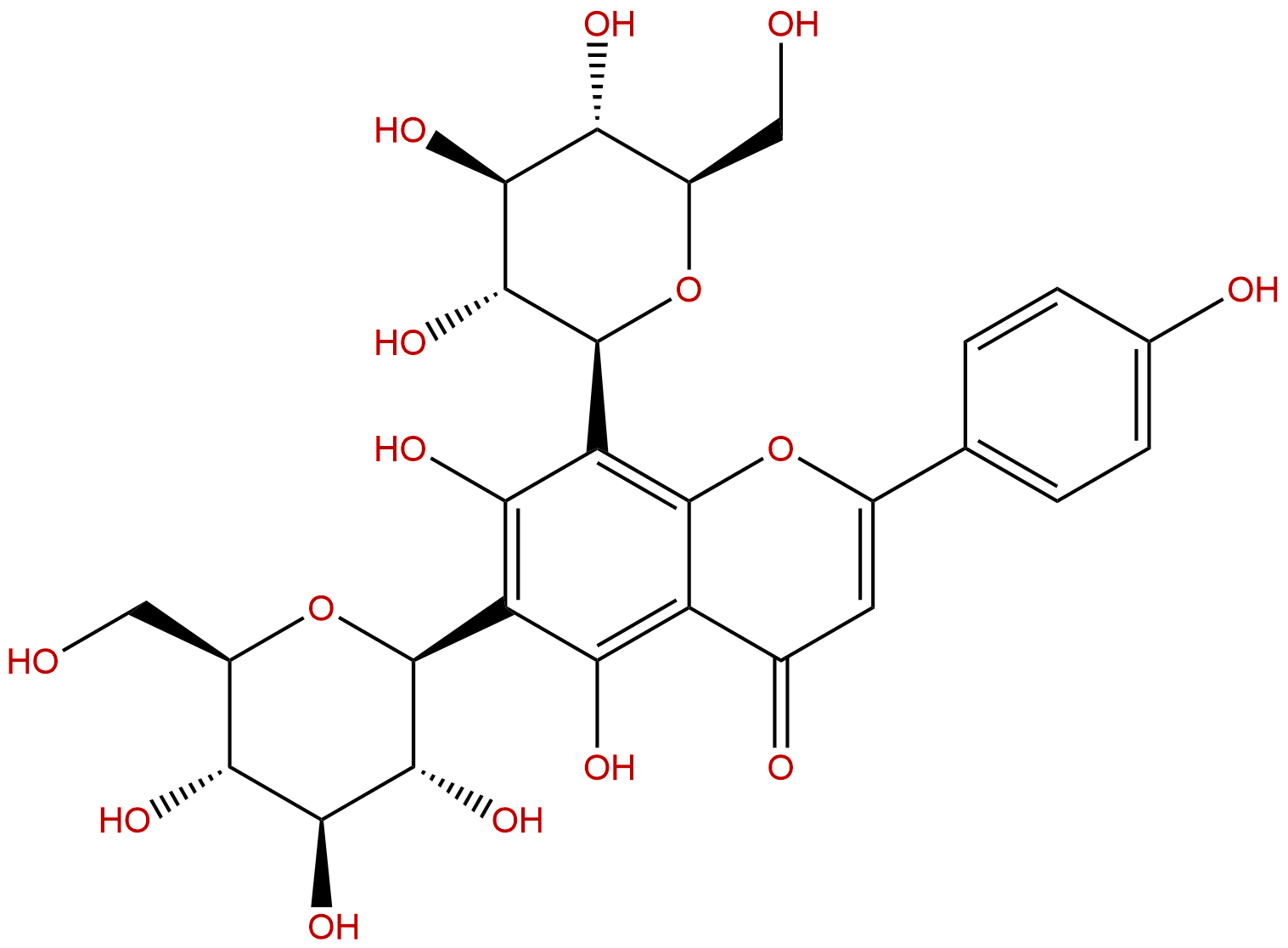


Product name: Vicenin II
Synonym name: 6,8-Di-C-glucopyranosylapigenin; 6,8-Di-C-glucosylapigenin
Catalogue No.: BP1605
Cas No.: 23666-13-9
Formula: C27H30O15
Mol Weight: 594.522
Botanical Source: Constit. of the wood of Vitex lucens, and of lemons Citrus limon, and of quince pips (Cydonia oblonga), Urtica circularis and of many other plant spp
Physical Description: Yellow powder
Type of Compound: Flavonoids
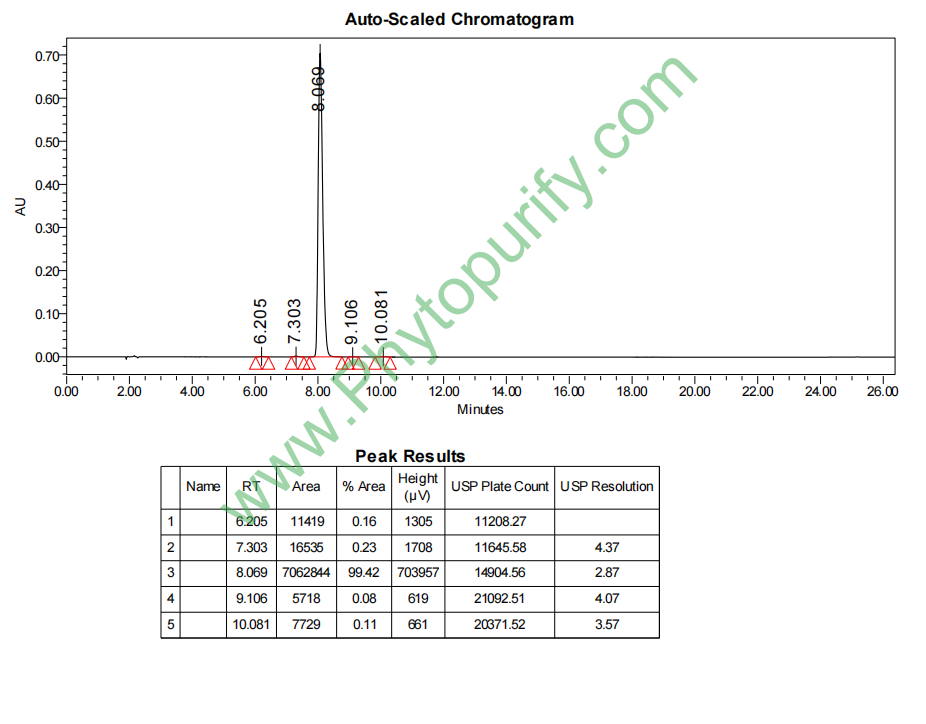
Purity: 95%~99%
Analysis Method: HPLC-DAD or/and HPLC-ELSD
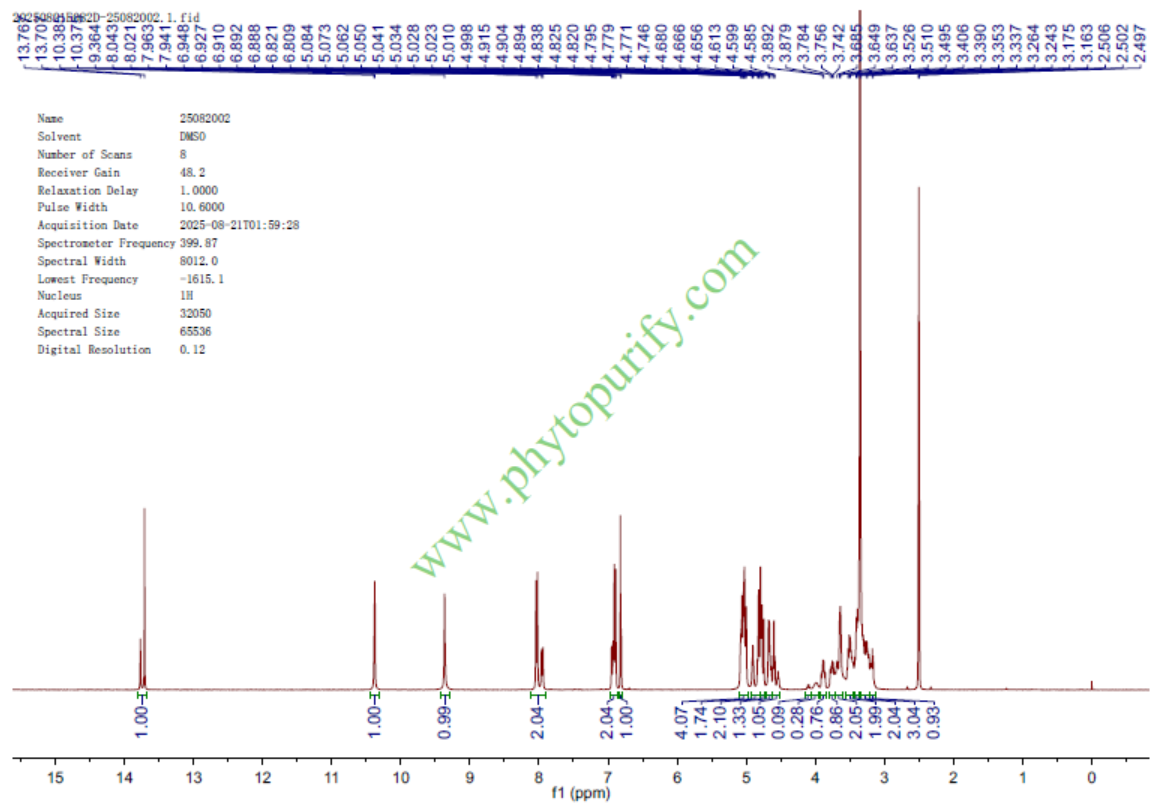
Identification Method: Mass, NMR
Packing: Brown vial or HDPE plastic bottle
Storage: Store in a well closed container, protected from air and light. Put into refrigerate or freeze for long term storage.
Whenever possible, you should prepare and use solutions on the same day. However, if you need to make up stock solutions in advance, we recommend that you store the solution as aliquots in tightly sealed vials at -20℃. Generally, these will be useable for up to two weeks.
The product could be supplied from milligrams to grams, up to kilograms
Inquire for bulk scale.
Descriptions:
Vicenin-2 (VCN-2), an active constituent of the medicinal herb Ocimum Sanctum Linn or Tulsi, it can effectively induce anti-proliferative, anti-angiogenic and pro-apoptotic effect in CaP cells (PC-3, DU-145 and LNCaP) irrespective of their androgen responsiveness or p53 status;VCN-2 in combination with docetaxel (DTL) synergistically inhibited the growth of prostate tumors in vivo with a greater decrease in the levels of AR, pIGF1R, pAkt, PCNA, cyclin D1, Ki67, CD31, and increase in E-cadherin; it could as a single agent and in combination with DTL in carcinoma of prostate (CaP). [1]
Vicenin-2 has potential anti-inflammatory activity, can modify LPS-induced total nitrite and TNF-α production, in addition to the LPS-induced translocation of the nuclear factor NF-κB.[2]
vicenin-2 and scolymoside, can suppress high-glucose (HG)-induced vascular inflammatory processes in human umbilical vein endothelial cells (HUVECs) and mice, HG-induced vascular inflammatory responses are critical events underlying the development of various diabetic complications; therefore, suggests that vicenin-2 and scolymoside have significant therapeutic benefits against diabetic complications and atherosclerosis.[3]
Vicenin-2 or scolymoside can reduce cecal ligation and puncture (CLP)-induced septic mortality and pulmonary injury, indicate that vicenin-2 and scolymoside could be a potential therapeutic agent for treatment of various severe vascular inflammatory diseases via inhibition of the TGFBIp signaling pathway.[4]
Vicenin-2 has antithrombotic and antiplatelet activities.[5]
References:
[1] Nagaprashantha L D, Vatsyayan R, Singhal J, et al. Biochem Pharmacol, 2011, 82(9):1100-9.
[2] Marrassini C, Davicino R, Acevedo C, et al. J Nat Prod, 2011, 74(6):1503-7.
[3] Ku S K, Bae J S. Can J Physiol Pharm, 2016, 3(1): 287-95.
[4] Lee W, Ku S K, Bae J S. Inflammation, 2015, 38(6):2166-77.
[5] Lee W, Bae J S. Blood Coagul Fibrin, 2015, 26(6):628-34.
[6] Qin L U. China Pharmacy, 2015(30):4271-3.
HPLC of Vicenin II
HNMR of Vicenin II
Storage conditions:Short-term storage at 2~8℃, long-term storage at -20 ~ -80℃
271.2000
-.9799
-1.0587
2.4453
.5106
.2214
Low
74.9265
4.8184
Yes
No
No
No
Yes
No
0.6
Yes
No
Yes
No
Natural products have always been an important source of innovative drug discovery, among which flavonoids have attracted much attention due to their broad biological activity and low toxicity. Vicenin II, also known as apigenin 6,8-di-C - β - D-glucoside, is a flavonoid compound with a unique C-glycosylation structure. Since its structure was elucidated, the significant pharmacological activities exhibited by Vicatin II in various disease models, such as anti-inflammatory, antioxidant, anti-tumor, neuroprotective, and metabolic regulation, have rapidly made it a hot molecule in pharmacological research. Unlike common O-glycosylated flavonoids, its C-glycosidic bond has stronger stability against acid, alkali, and gastrointestinal enzymatic hydrolysis, providing potential advantages for its oral bioavailability and drug development. This article aims to provide a systematic review of the chemical properties, natural sources, pharmacological activities, mechanisms of action, and potential for drug formation of Vicatin II, in order to provide comprehensive scientific references for the in-depth research and future development of this compound.
The chemical name of Vitamin II is apigenin -6,8-di-C - β - D-glucoside, with a CAS number of 23666-13-9. Its molecular formula is C27H30O15 and its molecular weight is 594.5220. Structurally, Vicatin II belongs to the C-glycosylated flavonoid class of flavonoids, with its parent nucleus being apigenin (5,7,4 '- trihydroxyflavone). A β - D-glucosyl residue is connected to the 6th and 8th carbon atoms through stable C-C bonds, forming a dual C-glycosidic structure. This C-glycosylation results in significant differences in chemical properties between it and common O-glycosides such as isovitexin.
Its physicochemical properties directly affect its biological activity and pharmacokinetic behavior. The calculated lipid water partition coefficient (LogP) is approximately -0.9799, indicating that the compound has good hydrophilicity. The topologically polar surface area (TPSA) is as high as 271.2000 Å ², which is consistent with the presence of multiple hydroxyl and glycosyl structures in its molecule, suggesting that it may have high water solubility (calculated value of approximately 2.4453 mg/mL) and poor membrane permeability. These parameters preliminarily predict that its ability to cross biological membranes (such as intestinal epithelial cells, blood-brain barrier) through passive diffusion is weak, and the blood-brain barrier permeability is evaluated as "low". However, the stability of C-glycosidic bonds may make them difficult to hydrolyze in the gastrointestinal tract, which is beneficial for them to be absorbed in their original form or reach the colon to exert local effects. In addition, preliminary pharmacological screening data showed that it exhibited a low risk of mutagenicity in the Ames test (score of 0.6) and had no significant inhibitory effect on hERG potassium channels, suggesting a low potential risk of cardiac toxicity and providing preliminary positive signals for its safety assessment.
Vitamin II is widely distributed in nature and mainly exists in various medicinal and edible plants. Its abundant plant sources provide the possibility for its large-scale acquisition. Common plants rich in Vitamin II include:
1. Dai medicine and traditional Chinese medicine plants As follows:Regarding Ye Rong The leaves of Ficus hispida are the classic source of Weicaining II, which is used in traditional medicine to treat diabetes and inflammatory diseases.Wooden Butterfly The seeds and bark of Oroxylum indicum also contain high levels.
2. Vegetables and fruits:celery Apium graveolens is one of the important dietary sources of vitamin II.bell pepper(Capsicum annuum)、citrus fruits The ingredient was also detected in the fruit peel and juice.
3. Other medicinal plants As follows:patchouli(Pogostemon cablin)、Andrographis paniculata(Andrographis paniculata)、Ashwagandha Withania somnifera and other extracts contain Vitamin II, which is often associated with traditional pharmacological effects.
The extraction method directly affects the yield and purity of Vitamin II. Traditional methods include:
- Solvent extraction method The most commonly used solvents are methanol, ethanol, or ethanol water mixed solvents for reflux or ultrasound assisted extraction. Due to the high polarity of Vitamin II, a higher proportion of water (such as 70-80% ethanol) usually results in better extraction efficiency.
- Advanced Extraction Technology To improve efficiency and environmental friendliness, technologies such as microwave-assisted extraction (MAE), ultrasound assisted extraction (UAE), and supercritical fluid extraction (SFE) have been applied. These methods can shorten extraction time, reduce solvent usage, and potentially improve the selectivity of the target compound.
The crude extract after extraction usually requires further separation and purification steps to obtain high-purity Vicatin II. Commonly used techniques include:
- column chromatography Silica gel column chromatography, polyamide column chromatography, and reverse phase C18 column chromatography are commonly used separation methods. Effective separation can be achieved by optimizing the eluent system, such as gradient elution of chloroform methanol water or methanol water.
- Preparation type high-performance liquid chromatography For obtaining high-purity standards or conducting in-depth biological research, preparative HPLC (usually using a reverse phase C18 column with methanol water or acetonitrile water as the mobile phase) is the most effective and accurate method.
A large number of in vitro and in vivo studies have revealed the multifaceted pharmacological activities of Vitamin II, highlighting its potential as a multi-target therapeutic molecule.
1. Antioxidant and anti-inflammatory activities
Vitamin II is an effective antioxidant. The phenolic hydroxyl structure in its molecule can directly scavenge free radicals (such as DPPH, ABTS ⁺, superoxide anions) and enhance the intracellular antioxidant defense system, such as upregulating the activity of superoxide dismutase (SOD) and glutathione peroxidase (GPx). In the inflammatory model, Vicatin II can significantly inhibit the excessive production of nitric oxide (NO), prostaglandin E2 (PGE2), and pro-inflammatory cytokines (such as TNF - α, IL-1 β, IL-6) induced by lipopolysaccharides (LPS) and other factors in macrophages. In acute inflammation models such as carrageenan induced paw edema in rats and acetic acid induced increased intra-abdominal capillary permeability in mice, Vicatin II showed clear anti-inflammatory effects.
2. Antitumor activity
Vitinine II exhibits growth inhibition and pro apoptotic effects on various cancer cell lines. It has been reported that it can inhibit the proliferation of human breast cancer (MCF-7), lung cancer (A549), liver cancer (HepG2), colon cancer (HT-29) and other cancer cells. Its mechanism involves inducing cell cycle arrest (such as G2/M phase arrest), activating mitochondrial dependent apoptotic pathways (regulating Bcl-2/Bax ratio, activating caspase-3/9), and inhibiting cell migration and invasion. It is worth noting that some studies have shown that Vicatin II has low toxicity to normal cells, suggesting that it may have certain selectivity.
3. Neuroprotective activity
In experimental models of neurodegenerative diseases such as Alzheimer's disease and Parkinson's disease, Vicatin II exhibits a protective effect. It can alleviate neuronal toxicity induced by β - amyloid (A β) or 6-hydroxydopamine (6-OHDA), and improve cognitive and motor function deficits. Its neuroprotective effect is related to inhibiting oxidative stress, reducing neuroinflammation, inhibiting acetylcholinesterase activity, and regulating the neurotrophic factor pathway.
4. Metabolic disease regulatory activity
In the study of type 2 diabetes and its complications, Weizening II showed the potential to reduce blood sugar and improve insulin resistance. It can inhibit the activity of alpha glucosidase and alpha amylase, delaying carbohydrate digestion and absorption. In insulin resistance cell model and streptozotocin (STZ) induced diabetes rat model, Weizening II can promote glucose uptake, improve glucose tolerance, and reduce oxidative stress and inflammation associated with complications such as diabetes nephropathy and retinopathy.
5. Cardiovascular protection and organ protective activity
Weicaining II has protective effects on myocardial ischemia-reperfusion injury and atherosclerosis model, and the mechanism is related to antioxidant, anti-inflammatory and anti apoptosis. In addition, in models of liver and kidney injury induced by drugs such as acetaminophen and cisplatin, Vicatin II significantly reduces histopathological damage and functional abnormalities by regulating antioxidant pathways such as Nrf2/HO-1 and inhibiting inflammatory responses.
The multiple pharmacological activities of Vicatin II stem from its regulatory effects on multiple key signaling pathways within cells. The core mechanism of action and molecular targets can be summarized as follows:
1. Regulating oxidative stress and Nrf2/ARE pathway
Vitinine II is an effective activator of Nrf2 (nuclear factor E2 related factor 2). It promotes the dissociation and translocation of Nrf2 from the cytoplasmic chaperone protein Keap1 to the nucleus, where it binds to antioxidant response elements (ARE), thereby initiating the transcription of a series of downstream phase II detoxifying enzymes and antioxidant proteins (such as HO-1, NQO1, GCLC). This is the central mechanism by which it exerts antioxidant and cell protective effects.
2. Inhibit the NF - κ B inflammatory pathway
Vitinine II can effectively inhibit the activation of nuclear factor kappa B (NF - κ B). It downregulates the expression of various pro-inflammatory mediators (iNOS, COX-2, TNF - α, IL-6, etc.) by preventing the phosphorylation and degradation of I κ B α or inhibiting the nuclear translocation of NF - κ B p65 subunit. This is the main molecular basis of its anti-inflammatory effect.
3. Regulating the MAPK and PI3K/Akt pathways
The mitogen activated protein kinase (MAPK) and phosphatidylinositol 3-kinase/protein kinase B (PI3K/Akt) pathways play a central role in cell proliferation, survival, apoptosis, and inflammation. Vitamin II has been reported to regulate the phosphorylation status of these pathways. For example, in anti-tumor research, it may inhibit the survival promoting PI3K/Akt and ERK signals, while activating the pro apoptotic p38 MAPK and JNK signals. In insulin resistance models, it may enhance PI3K/Akt signaling related to insulin receptor base-1 (IRS-1) and promote glucose transporter 4 (GLUT4) translocation.
4. Inducing apoptosis and autophagy
In cancer cells, Vicatin II upregulates pro apoptotic proteins (Bax, Bad) and downregulates anti apoptotic proteins (Bcl-2, Bcl xL), leading to loss of mitochondrial membrane potential and release of cytochrome c, thereby activating the caspase cascade reaction and inducing cell apoptosis. In addition, studies suggest that it may induce protective autophagy by regulating the AMPK/mTOR pathway.
5. Enzyme inhibition
Vitinine II can directly inhibit the activity of various enzymes, including:Alpha glucosidase/alpha amylase(Lowering blood sugar)acetylcholinesterase(Improving cognition)Cyclooxygenase-2 (COX-2) and inducible nitric oxide synthase (iNOS)(Anti inflammatory)Matrix metalloproteinases (MMPs)(Resistance to invasion and metastasis).
Despite its broad pharmacological activity, the drug like and pharmacokinetic (PK) properties of Vicatin II are key factors determining its successful development as a drug.
Analysis of drug properties parameters As mentioned earlier, its low LogP value and high TPSA value comply with the restrictions on hydrogen bond donors/acceptors in the "Rule of Five", but suggest that its oral absorption may face challenges. Its good water solubility is beneficial for formulation development (such as oral liquids and injections), but poor membrane permeability is the main bottleneck. The chemical stability of C-glycosidic bonds is its advantage, which may keep it intact in the gastrointestinal tract, but may also limit its metabolism by intestinal enzymes or gut microbiota into more easily absorbable aglycone forms.
Progress in Pharmacokinetic Research At present, there is relatively limited research on the pharmacokinetics of the Vicatin II system, and most of it is preliminary preclinical exploration.
- absorb Limited animal experiments (such as in rats) have shown that after oral administration, Vitamin II can be detected in plasma, but its absolute bioavailability may be low. Its absorption mechanism may involve active transporters on intestinal epithelial cells, such as glucose transporter SGLT1, rather than simple passive diffusion.
- distribution Due to its hydrophilicity and high TPSA, it is predicted that its tissue distribution is mainly concentrated in the blood and extracellular fluid, with limited distribution towards adipose tissue or across the blood-brain barrier, which is consistent with the prediction of "blood-brain barrier: low".
- Metabolism As a C-glycoside, Vitamin II is not easily hydrolyzed by mammalian β - glucosidase. Its metabolism may mainly be carried out through liver II binding reactions such as glucuronidation and sulfation. The metabolism of gut microbiota may play an important role, and certain gut microbiota may have a unique ability to cleave C-C bonds, converting them into apigenin or other metabolites.
- excretion The prototype drug and its bound metabolites may be mainly excreted through the kidneys via urine, and partially excreted through bile via feces.
Formulation strategy To improve its oral bioavailability, the following formulation techniques can be considered:Phospholipid complex、Cyclodextrin inclusion complex、nano-formulation(such as nanocrystals, liposomes, polymer nanoparticles) and Prodrug strategy(such as esterification modification to increase lipid solubility). These technologies aim to improve their membrane permeability, solubility, and metabolic stability.
The multi-target action characteristics of Vicatin II provide broad prospects for its application in various complex disease fields, but it also faces many challenges.
Potential clinical application directions:
1. Metabolic syndrome and adjuvant treatment of type 2 diabetes As a natural α - glucosidase inhibitor and insulin sensitizer, it can be developed into functional food or plant medicine for blood glucose management in pre diabetes and mild to moderate diabetes.
2. Chronic inflammatory diseases Such as arthritis, inflammatory bowel disease (IBD), chronic hepatitis, etc., their anti-inflammatory and antioxidant properties have therapeutic value.
3. Tumor adjuvant therapy and chemoprevention Can be used as an adjuvant in traditional radiotherapy and chemotherapy to reduce side effects, or as a chemopreventive agent with low toxicity for high-risk populations.
4. Intervention for neurodegenerative diseases Has potential for early intervention or symptom relief in Alzheimer's disease and Parkinson's disease.
5. Organ protectants Used to prevent or alleviate liver and kidney toxicity caused by chemotherapy drugs, antibiotics, etc.
Challenges faced and future research directions:
1. Improved bioavailability This is the core obstacle for the development of Weicetin II into a drug. Future research needs to delve into the specific pathways of absorption and metabolism in the body, and use advanced drug delivery systems to solve its delivery challenges.
2. In depth study on the mechanism of action More research is needed to clarify its most critical molecular targets, distinguish between direct and indirect effects, and explore its systemic pharmacological mechanisms in complex disease networks.
3. High quality preclinical and clinical research Currently, most research is still at the stage of cell and animal models. We need to design rigorous and standardized preclinical toxicology and pharmacodynamic evaluations, and gradually advance them to human clinical trials to confirm their safety and effectiveness.
4. Structural modification and development of analogues Based on the parent nucleus structure of Vicatin II, reasonable chemical modifications (such as methylation of hydroxyl groups, glycosylation modification, etc.) may result in derivatives with stronger activity and better drug properties.
5. Research on the synergistic effect of multiple components Vitamin II often coexists with other flavonoids, alkaloids, etc. in plant extracts. Studying its synergistic effects with other components is of great significance for the development of standardized plant medicines based on whole extracts.
As a naturally occurring double C-glycosylated flavonoid, Vicatin II has become a highly anticipated star molecule in the field of natural product pharmacology due to its unique chemical stability and extensive and significant pharmacological activity. From antioxidant and anti-inflammatory effects to anti-tumor and neuroprotective effects, its multifaceted biological effects reveal its enormous potential in addressing various chronic diseases in modern times. Although its poor membrane permeability poses challenges for drug development, it also prompts researchers to explore its unique absorption and metabolism mechanisms more deeply and actively develop new drug delivery strategies. With more accurate analysis of its molecular mechanism of action, as well as the deepening of pharmaceutical and pharmacokinetic research, Weizening II is expected to gradually move from a potential lead compound to clinical use, and eventually develop into an innovative drug or functional therapeutic agent for the treatment of diabetes complications, chronic inflammation, neurodegenerative diseases and even tumors. The research process once again confirms that discovering and optimizing active natural products from traditional medicinal plants is still a promising path for modern drug discovery.
