


Synonym name:
Catalogue No.: BP1486
Cas No.: 52012-29-0
Formula: C26H28O14
Mol Weight: 564.496
Botanical Source: Flourensia cernua; Catananche caerulea
Purity: 95%~99%
Analysis Method: HPLC-DAD or/and HPLC-ELSD
Identification Method: Mass, NMR
Packing: Brown vial or HDPE plastic bottle
Can be supplied from milligrams to grams. Inquire for bulk scale.
For Reference Standard and R&D, Not for Human Use Directly.
HPLC of Isoshaftoside
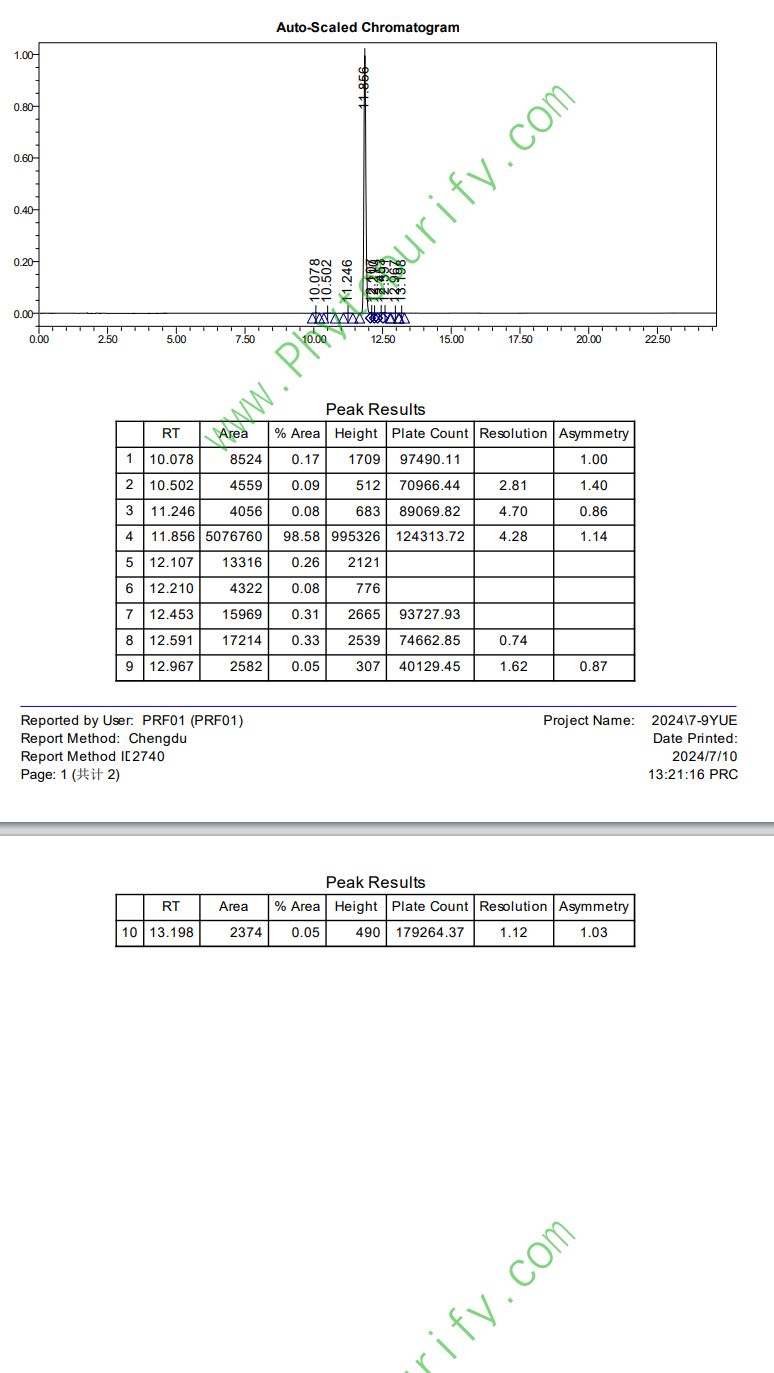
Storage conditions:Short-term storage at 2~8℃, long-term storage at -20 ~ -80℃
250.9700
-.7362
-.8215
1.8667
.5365
.1993
Low
75.6863
4.7667
Yes
No
No
No
Yes
No
0.6
Yes
No
Yes
No
Natural products, as an important source of drug discovery, play an irreplaceable role in the history of human disease prevention and treatment. Flavonoids, as one of the major categories, have attracted much attention due to their wide range of biological activities and low toxicity. Isoshaftoside (CAS: 52012-29-0) is a structurally unique C-glycosylated flavonoid, with its parent nucleus being apigenin. It is replaced by α - L-arabinopyranose and β - D-glucose residues at positions C-6 and C-8, respectively. Compared to common O-glycosidic bonds, this C-glycosidic bond has stronger chemical stability and metabolic resistance, making it potentially more durable in living organisms.
In recent years, with the global prevalence of metabolic diseases, especially type 2 diabetes (T2DM), finding new effective and safe anti diabetes drugs has become a research hotspot. Isoxiafotalin has come into the view of pharmacologists because of its significant anti diabetes potential in the preliminary study. Its function involves multiple key targets closely related to glucose homeostasis, such as AMPK, PPAR γ, SGLT2, etc., suggesting that it may exert therapeutic effects through multi-target and multi pathway synergistic effects, which is in line with the concept of modern natural product multi-target therapy for complex diseases. This article aims to systematically review the chemical properties, plant sources, pharmacological activities, mechanisms of action, and medicinal properties of isoxafotaxin, providing a comprehensive scientific basis for its further research and development.
The chemical name of isoxafotaxin is apigenin 6-C - α - L-arabinopyranosyl-8-C - β - D-glucoside. Its molecular formula is C26H28O14, with a molecular weight of 564.4960 g/mol. Its core structure is trihydroxyflavone (5,7,4 '- trihydroxy), which is the pharmacophore basis for its various pharmacological activities. The most significant structural feature is that both sugar groups are connected to the flavonoid nucleus through stable C-C bonds (C-glycosidic bonds), located at positions 6 and 8 of the A ring, respectively. This connection method makes it less susceptible to hydrolysis by acids or glycosidases in the gastrointestinal tract, which may increase its oral bioavailability.
From the analysis of physicochemical properties, the topological polar surface area (TPSA) of isoxafotaxin is as high as 250.97 Å ², which is mainly attributed to the abundant hydroxyl and glycosyl oxygen atoms in the molecule, indicating its high hydrophilicity. The calculated lipid water partition coefficient (LogP) is -0.7362, further confirming its hydrophilic properties. The predicted value of its water solubility is 1.8667 (usually measured in mg/mL or log mol/L, indicating moderate to high solubility), which is beneficial for its dissolution and distribution in body fluids. However, high TPSA and hydrophilicity also mean that its ability to penetrate the lipid bilayer is limited. It is predicted that its blood brain barrier (BBB) permeability is "low", which limits its potential application in central nervous system diseases. However, it has relatively little impact on the treatment of diabetes, which mainly acts on peripheral organs (such as liver, muscle, fat, kidney). The preliminary pharmacological risk assessment shows that the hERG inhibition risk is "no", indicating a low risk of cardiac toxicity; The Ames test value is 0.6 (usually a value less than 1.1 is considered negative), indicating that it has no obvious mutagenicity and has a good safety basis.
Isoxafotaxin is relatively widely distributed in nature and mainly exists in various medicinal plants. Its common plant sources include:
1. Poaceae plants Early sources of this compound were discovered, such as wheat (Triticum aestivum) seedlings and barley (Hordeum vulgare) leaves.
2. Jacobinia suberecta Many medicinal plants in the family Acanthaceae are rich in C-glycosylated flavonoids, such as Andrographis paniculata、Rostellularia procumbens Wait. As a traditional heat clearing and detoxifying herb, Chuanxinlian has been isolated and identified as isoxafotaxin in its leaves, which is related to its hypoglycemic activity.
3. Other plants It has also been reported in some ferns (such as ferns) and some leguminous plants.
The extraction of isoxafotaxin usually follows the conventional process of natural product chemistry. Firstly, the dried plant material (such as leaves) is crushed and subjected to reflux extraction or ultrasound assisted extraction using a medium polarity solvent (such as methanol, ethanol, or ethanol water mixture) to fully dissolve the flavonoid components. Subsequently, crude extract was obtained by vacuum concentration. Further separation and purification often use chromatographic techniques. Usually, macroporous adsorption resins (such as D101, AB-8) are used for initial enrichment to remove a large amount of impurities such as sugars and proteins. Then, silica gel column chromatography, polyamide column chromatography or Sephadex LH-20 column chromatography are used for repeated separation. The final high-purity preparation usually relies on high-performance liquid chromatography (HPLC), especially preparative HPLC, which uses a reverse phase C18 column and gradient elution with methanol water or acetonitrile water system as the mobile phase. Structural identification involves the comprehensive use of techniques such as ultraviolet spectroscopy (UV), mass spectrometry (MS), nuclear magnetic resonance hydrogen spectroscopy, and carbon spectroscopy (1H-NMR, 13C-NMR). In particular, NMR can clearly distinguish C-glycosides from O-glycosides and determine the connection positions and configurations of sugar groups.
At present, studies on the pharmacological activities of isoxaphoroside mainly focus on the anti diabetes and its related metabolic syndrome, and also show other potential biological activities.
1. Anti diabetes activity
This is the activity of isoxafotaxin that has received the most attention. Multiple in vitro and animal model studies have confirmed its significant hypoglycemic and insulin resistance improving effects.
* In vitro research In HepG2 liver cell models or C2C12 myotube cell models with insulin resistance, isoxafotaxin can significantly promote the uptake and utilization of glucose by cells, and its effect is comparable to that of classical drugs metformin or insulin positive controls. It can also inhibit the gluconeogenesis process of liver cells.
* In vivo research: In the streptozotocin (STZ) - induced type 1 diabetes mouse model or the high-fat diet combined with STZ - induced type 2 diabetes mouse/rat model, oral administration of isoxavotalin can reduce the levels of fasting blood glucose, postprandial blood glucose and glycosylated hemoglobin (HbA1c) in a dose-dependent manner. At the same time, it can improve oral glucose tolerance (OGTT) and insulin tolerance (ITT), indicating that it enhances the body's ability to process glucose and insulin sensitivity.
2. Improve lipid metabolism
Diabetes is often accompanied by lipid metabolism disorder. Studies have shown that isoxaphoroside can reduce the levels of total cholesterol (TC), triglyceride (TG) and low-density lipoprotein cholesterol (LDL-C) in the serum of diabetes model animals, and increase high-density lipoprotein cholesterol (HDL-C). It also has an improvement effect on nonalcoholic fatty liver disease (NAFLD) and reduces liver lipid accumulation.
3. Antioxidant and anti-inflammatory activities
Oxidative stress and chronic low-grade inflammation are the core links in the occurrence and development of insulin resistance and diabetes complications. Isoxafotaxin has strong free radical scavenging ability (such as DPPH and ABTS free radical scavenging experiments) due to its phenolic hydroxyl structure on the apigenin nucleus. It can upregulate the activity of intracellular antioxidant enzymes such as superoxide dismutase (SOD) and glutathione peroxidase (GSH Px), and reduce the levels of lipid peroxidation products such as malondialdehyde (MDA). In the inflammatory model, it can inhibit the production of pro-inflammatory factors (such as TNF - α, IL-6, IL-1 β), and its mechanism is related to the inhibition of inflammatory signaling pathways such as NF - κ B.
4. Other potential activities
Preliminary studies also suggest that isoxafotaxin may have antiviral (such as anti dengue virus), endothelial function protective, and mild anti anxiety effects, but these activities require further systematic research.
The anti diabetes effect of isoxaphoroside is not through a single target, but is characterized by multi target and networked regulation, mainly involving the following aspects:
1. Activate the AMPK signaling pathway
Adenosine activated protein kinase (AMPK) is the master switch of cellular energy metabolism. Isoxafotaxin has been proven to be an effective activator of AMPK (acting on catalytic subunits such as PRKAA1). Activated AMPK can produce a series of beneficial effects: ① In the liver, it inhibits the expression of key gluconeogenic enzymes such as PEPCK and G6Pase, reducing endogenous glucose output; ② In muscle and adipose tissue, promote the translocation of glucose transporter 4 (GLUT4, encoded by SLC2A4 gene) to the cell membrane, increasing peripheral tissue uptake of glucose; ③ Promote fatty acid oxidation, inhibit fat synthesis, and improve lipid metabolism.
2. Regulating the insulin signaling pathway
Isoxafotaxin can enhance tyrosine phosphorylation of insulin receptor substrate 1 (IRS1) and weaken its serine phosphorylation (which can lead to insulin resistance). Furthermore, it activates the classic insulin signaling pathway of phosphatidylinositol 3-kinase (PI3K, whose regulatory subunit is PIK3R1)/protein kinase B (Akt, AKT1). Activated Akt further promotes GLUT4 translocation and regulates metabolic processes such as glycogen synthesis and protein synthesis.
3. Regulating nuclear receptor PPAR γ
Peroxisome proliferator activated receptor gamma (PPAR gamma) is a key nuclear transcription factor that regulates adipocyte differentiation, lipid metabolism, and insulin sensitization. Isoxafotaxin may act as a partial agonist or regulator of PPAR γ, promoting normal differentiation of adipocytes and increasing the secretion of beneficial adipokines such as adiponectin, thereby systematically improving insulin sensitivity.
4. Inhibit intestinal SGLT2 and renal DPP-4
Sodium glucose cotransporter 2 (SGLT2) is mainly responsible for the reabsorption of glucose by the renal proximal tubules. Isoxafotaxin exhibits certain SGLT2 inhibitory potential, possibly by increasing urinary glucose excretion to lower blood glucose, which is similar to the mechanism of action of current SGLT2 inhibitor drugs. In addition, it can inhibit dipeptidyl peptidase-4 (DPP4), reduce the degradation of glucagon like peptide-1 (GLP-1), and promote insulin secretion in a glucose concentration dependent manner.
5. Affects glucokinase (GCK) and others
Isoxafotaxin may have an activating effect on glucokinase (GCK), the rate limiting enzyme of liver glucose metabolism, promoting the liver's utilization of glucose. Its antioxidant and anti-inflammatory effects indirectly protect the function of pancreatic beta cells and alleviate insulin resistance.
To sum up, isoxavotalin exerts its anti diabetes effect from multiple dimensions such as increasing insulin sensitivity, promoting glucose utilization, inhibiting glucose production, and protecting pancreatic islet function through synergistic action on multiple targets such as AMPK, insulin signaling pathway, PPAR γ, SGLT2, and DPP4.
Although the pharmacological activity of isoxafotaxin is clear, whether it can be used as a drug still requires systematic pharmacological evaluation.
1. Absorption, distribution, metabolism, and excretion (ADME)
* absorb Due to its C-glycosidic structure being stable to intestinal enzymes and acids, theoretically it is easier to be absorbed in its original form than O-glycosides. But its high hydrophilicity (low LogP, high TPSA) may limit its transmembrane absorption through passive diffusion. It may be partially absorbed through active transporters of intestinal epithelial cells, such as glucose transporter SGLT1. The overall oral bioavailability needs to be clarified through pharmacokinetic studies in vivo, and is expected to be at a moderate or low level.
* distribution Predict that its tissue distribution is wide, but mainly concentrated in organs with abundant blood flow such as the liver and kidneys, as well as target tissues such as fat and muscle. Due to its low blood-brain barrier permeability, it is rarely distributed in the central nervous system.
* Metabolism The C-glycosidic bond makes it difficult to be hydrolyzed, and the main metabolic pathways may occur in the hydroxylation, methylation, glucuronidation, and sulfation binding reactions of the flavonoid parent nucleus. The sugar moiety may also undergo oxidation or ring opening. It is necessary to use liver microsomes, recombinant enzymes, or in vivo experiments to elucidate its metabolic profile in detail.
* excretion The prototype drug and its metabolites may be mainly excreted through the kidneys in urine, and partially excreted through bile and feces.
2. Challenges and optimization strategies for drug development
* challenge The main challenge may lie in the balance between solubility (although soluble but not extremely high) and membrane permeability, which directly affects its oral absorption. In addition, the metabolic stability in vivo and potential drug drug interactions (such as their impact on CYP450 enzymes) also need to be evaluated.
* Optimization Strategy If its bioavailability is not ideal, medicinal chemical methods can be used for structural modification, such as esterification or etherification of some phenolic hydroxyl groups, to prepare prodrugs to improve lipid solubility and membrane permeability, and then hydrolyze them into active forms in vivo. New drug delivery systems can also be developed, such as nanocrystals, liposomes, solid dispersions, or phospholipid complexes, to improve their solubility and absorption. Based on its multi-target characteristics, it can also be considered as a lead compound to simplify the structure, optimize targeting, and develop innovative drugs with higher selectivity for single or dual targets.
At present, there are insufficient research reports on the pharmacokinetics of the isoxafotaxin system, which is a key data gap that must be filled before it can be developed and applied.
As a kind of natural C-glycosyl flavone with multi target anti diabetes activity, the clinical application prospect of isoxaphoroside is worth looking forward to, but it also faces many challenges.
1. Potential application directions
* Prevention and treatment of type 2 diabetes and its complications: As a dietary supplement or botanical medicine (such as the standardized ingredient of Andrographis paniculata extract), it can be used as an adjunctive treatment for pre diabetes and early T2DM, and may delay disease progression through multi-channel intervention. It can improve lipid metabolism and oxidative stress, and also help prevent cardiovascular complications, nephropathy and neuropathy in diabetes.
* Comprehensive management of metabolic syndrome Suitable for patients with metabolic syndrome who have high blood sugar, abnormal blood lipids, obesity, or fatty liver at the same time, exerting the comprehensive regulatory advantage of "one stone, multiple birds".
* Components of combination therapy In the future, low-dose combination with existing oral hypoglycemic drugs (such as metformin and SGLT2 inhibitors) may be considered to synergistically enhance efficacy through different mechanisms and reduce the side effects caused by high-dose use of a single drug.
2. Future research prospects
* In depth mechanism research Key targets need to be validated one by one in cell and animal models using techniques such as gene knockout and RNA interference, and the interaction networks and dominant pathways between each target need to be elucidated.
* Systematic pharmacokinetics and toxicology research It is necessary to complete preclinical pharmacokinetic (ADME) and systemic toxicology evaluations (acute toxicity, long-term toxicity, reproductive toxicity, etc.) that comply with new drug research standards, and clarify their safety window.
* clinical research Conduct clinical trials from Phase I to Phase III to evaluate its safety, efficacy, and optimal dosing regimen in humans.
* Resources and Preparation Ensure stable and sustainable sources of plant raw materials, or develop green and efficient chemical or biological synthesis processes (such as microbial fermentation, synthetic biology) to meet the needs of future large-scale production.
* Intellectual Property Layout Comprehensive patent protection is provided around its pharmaceutical applications, derivatives, preparation methods, and compositions.
Isoxiafotalin is a potential anti diabetes candidate molecule in the treasure house of natural products. Its unique chemical structure of C-glycosyl endows it with good stability. Through the multi target synergistic action of AMPK, PI3K/Akt, PPAR γ, SGLT2, etc., it shows comprehensive efficacy in regulating glucose and lipid metabolism, improving insulin resistance, anti-oxidation and anti-inflammatory, etc., which perfectly meets the treatment needs of diabetes as a complex multifactorial disease. Although there are still many unknowns regarding its systematic pharmacokinetics, toxicology, and clinical efficacy, the existing pharmacological activity evidence is solid and the mechanism of action network is clear, laying a solid foundation for its subsequent development. With the continuous deepening of modern pharmaceutical research technology, isoxaphoroside is expected to move from laboratory to clinical, providing hundreds of millions of patients with diabetes worldwide with a new multi target treatment option originating from nature and novel mechanism of action, and also providing an important example for innovative drug research and development based on natural products. Its exploration path reflects the inheritance and innovation from traditional medicinal plant experience to modern precision pharmacology research.
